WAKE IN FRIGHT (1971)
A young Australian teacher finds himself trapped in a small Outback town that’s superficially friendly, yet feels oddly threatening too...


A young Australian teacher finds himself trapped in a small Outback town that’s superficially friendly, yet feels oddly threatening too...
The endless landscapes of the American West are rarely presented in film as actively threatening. They may be unforgiving, certainly, but they exist essentially to be survived or even conquered and fought over by the characters. Australian cinema is different. A vein of something not quite supernatural but not fully comprehensible surfaces repeatedly in cinematic portrayals of the Outback—a sense that the land itself is at best mysterious and at worst monstrous, at least to Europeans. You can detect this folk-horror sensibility throughout Australian film, from Picnic at Hanging Rock (1975) and The Last Wave (1977) to Mad Max (1979), and more recently from Wolf Creek (2005) to True History of the Kelly Gang (2019) and The Royal Hotel (2023).
This sensibility figures prominently—even dominates—in two of the first landmark movies of the New Australian Cinema. This movement emerged in the early-1970s after a long period of virtual dormancy for the country’s film industry. The films in question are Nicolas Roeg’s Walkabout (1971) and Ted Kotcheff’s Wake in Fright. Walkabout remains better known, as does its director, but Wake in Fright is every bit its equal. Though they could not be more different in execution, they share a common theme: “civilised”, urban characters encountering the Outback and learning something raw about themselves.
Significantly, both films were directed and written by non-Australians (Roeg was a Brit, Kotcheff a Canadian), and both cast English actors in their lead roles. These are, after all, films about being in the wrong place, about being dwarfed and rendered impotent by the hugeness and strangeness of an unfamiliar land. In both, the setting virtually isthe premise, driving the characters’ arcs. Wake in Fright was, in fact, originally released as Outback in most countries because the producers worried the original title sounded too much like a horror movie—an ironic twist, given that it is widely viewed as one today.
Neither film is particularly subtle, though Wake in Fright is perhaps more nuanced, as its most obvious narrative reading might not be the correct one. But just as the Outback does to their central characters, these films pull you in, immersing you in a disconnected, dreamlike quality that eludes specifics of geography or time. The main action in Wake in Fright takes place over less than three days, yet it feels like an eternity.
The film begins late one morning in a tiny, one-room school in the fictitious settlement of Tiboonda—a mere pinprick in the boiling orange desert—where John (Gary Bond) is about to dismiss his class for the Christmas holidays. After saying goodbye, he collects his things from the small hotel where he has been staying. This and the school are the only buildings we ever see in Tiboonda. Presumably, there are houses scattered beyond the horizon, but the way children of all ages are combined into John’s single class suggests the population is tiny.
He catches a train at a rudimentary railway station consisting of nothing more than a short, crudely constructed wooden platform. The platform clock has no hands—an early hint that John, whom we have just seen checking his watch to dismiss the children at the exact second, does not belong here. It is also an early sign of the meticulous attention Kotcheff and his team paid to minor details.
The train takes John to the larger town of Bundanyabba, where he plans to catch a flight to Sydney to see his girlfriend. It is in Bundanyabba—”the Yabba”, as the residents call it—that the film’s real story begins.
While Tiboonda was constructed purely for the movie, the Bundanyabba exteriors were shot in Broken Hill, New South Wales. Broken Hill had a population of about 30,000 at the time, though Bundanyabba feels slightly smaller. Nevertheless, there is a fierce, almost obsessive sense of local pride. “It’s the best place in Australia,” a cabbie tells John. “Nobody worries who you are or where you come from.” In other words, things are played by Yabba rules.
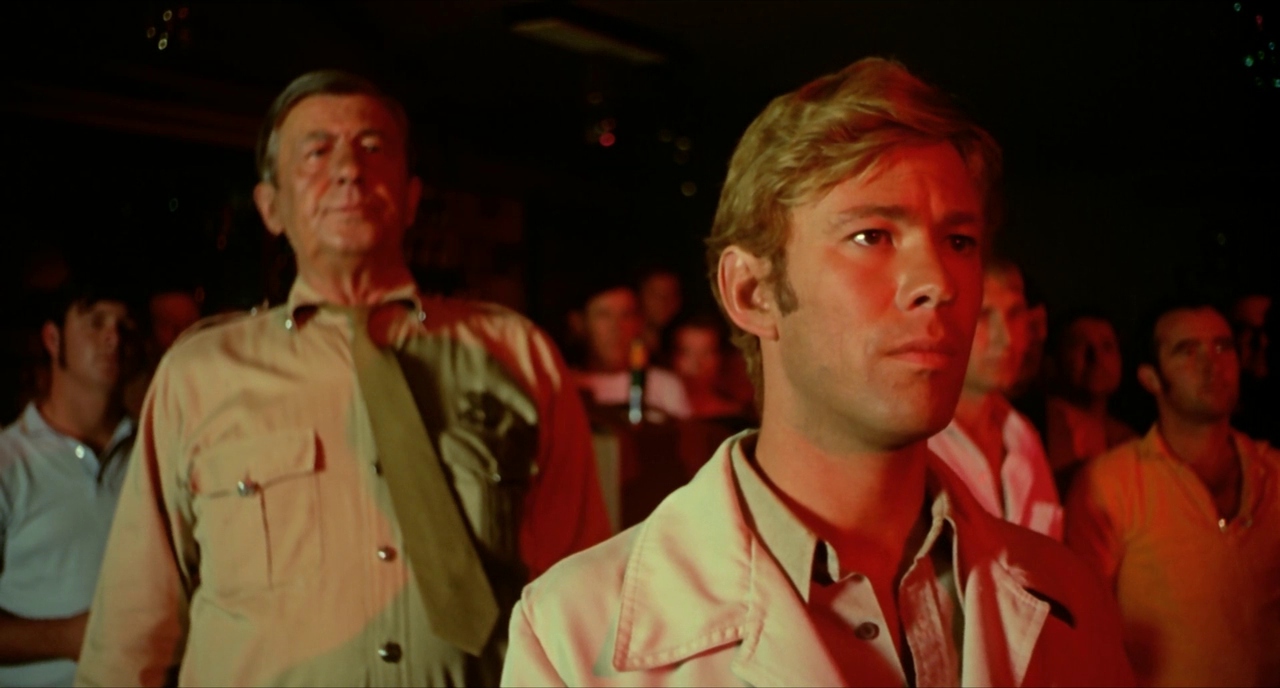
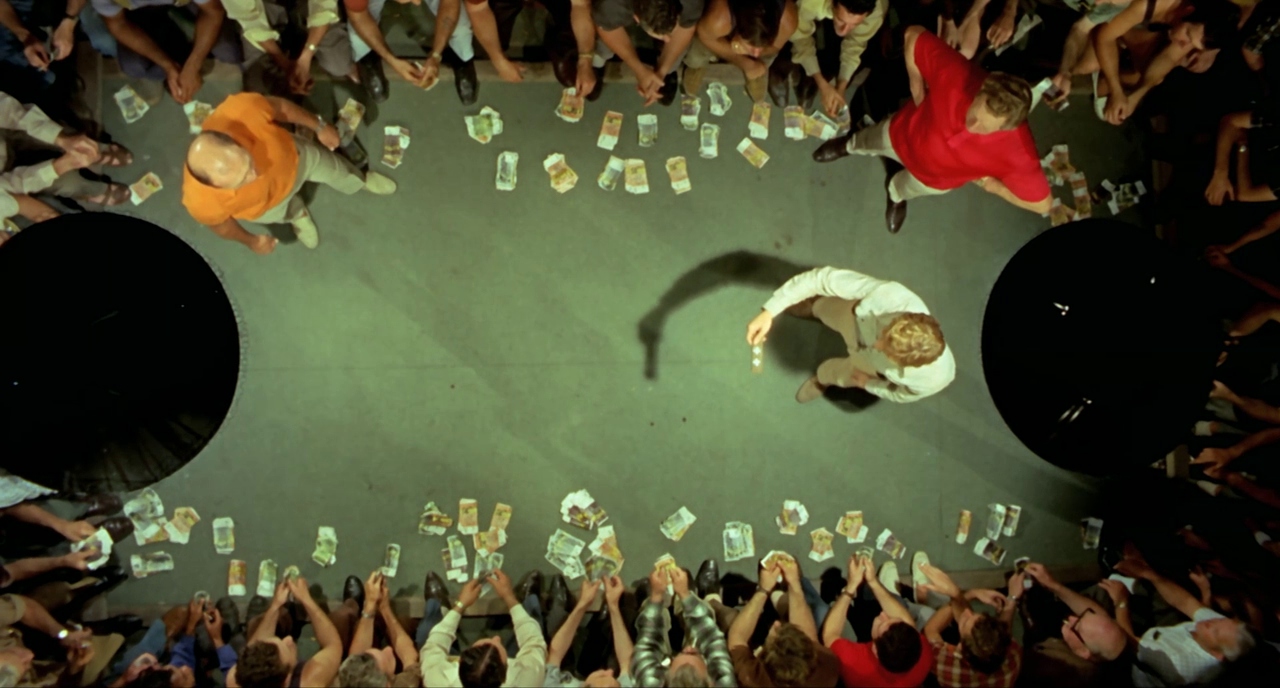
“All the little devils are proud of hell,” the character Doc remarks to John, only half-joking. “We’re so isolated, there’s nowhere to go,” says a local policeman (Chips Rafferty). He is explaining why the crime rate is low, but it is impossible to miss the double meaning. While everyone insists the Yabba is heaven on earth, there are strong indications it might be hell, at least from John’s perspective. Early on, we see a thoroughfare called Sulphide Street (which actually exists in Broken Hill). Meanwhile, the heaving, all-male crowds in a local bar—most bars were still legally all-male at this point in Australian history—obsessively betting on the mindless game of Two-up bear a striking resemblance to the denizens of Dante’s Inferno.
Indeed, the title Wake in Fright may refer to a phrase from the 19th-century English poet Richard Harris Barham’s The Jackdaw of Rheims: “dream of the devil and wake in a fright”. Equally, it could describe the first stage of a brutal hangover (fitting for a movie where most characters are perpetually drunk), a specific incident involving John and Doc later in the film, or the terrifying self-knowledge forced upon John.
Whether the title refers to the devil or not, the Yabba certainly shares hell’s climate. Wake in Fright is unremittingly hot from beginning to end. Sweat, whirring fans, and endless beers (you won’t find any soft drinks in the Yabba) are recurrent motifs. A frost-white Christmas tree and a giant, rather menacing Santa Claus looming over the street provide an ironic counterpoint. When John pictures his girlfriend, it is the refreshing ocean from which she emerges—rather than the woman herself—that draws the eye. A poster of a swimming man in John’s hotel echoes this. In the Outback of Wake in Fright, staying cool is an impossible dream.
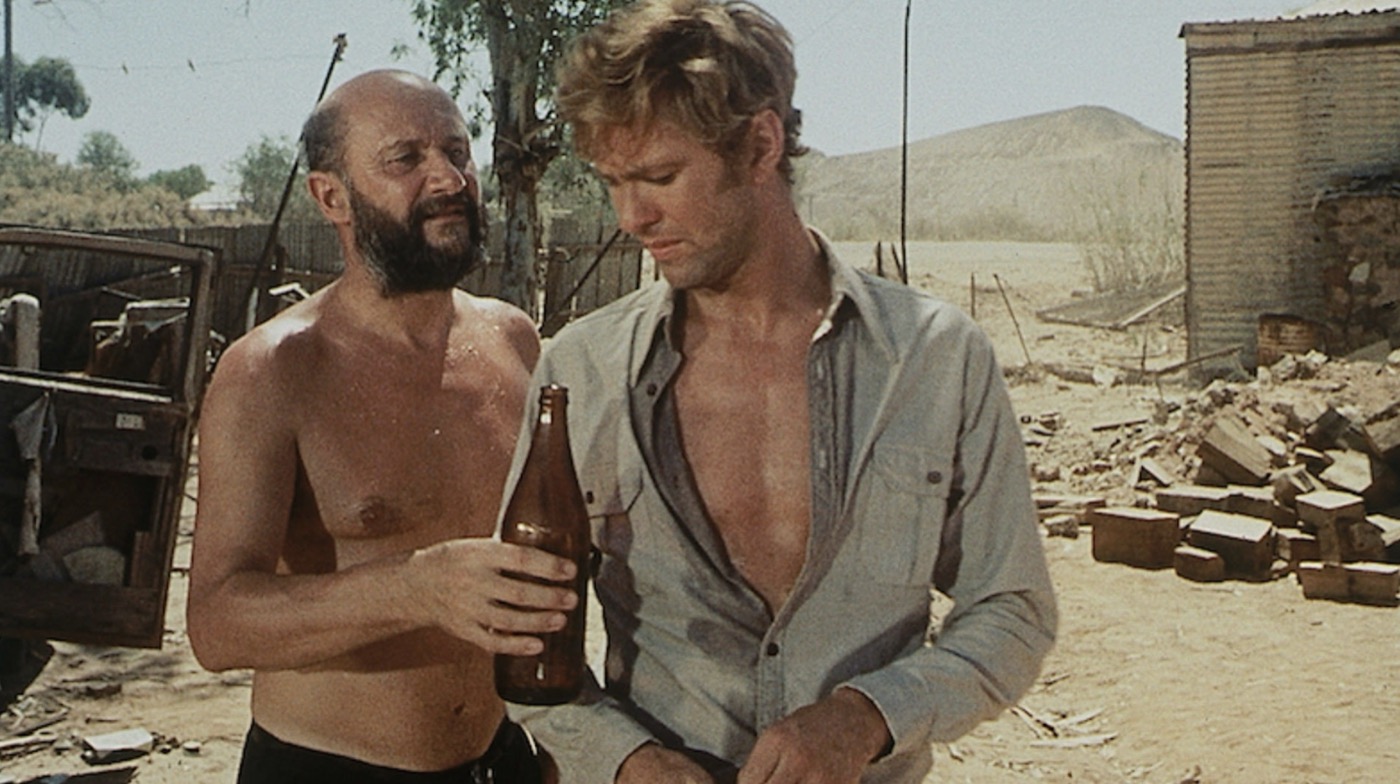
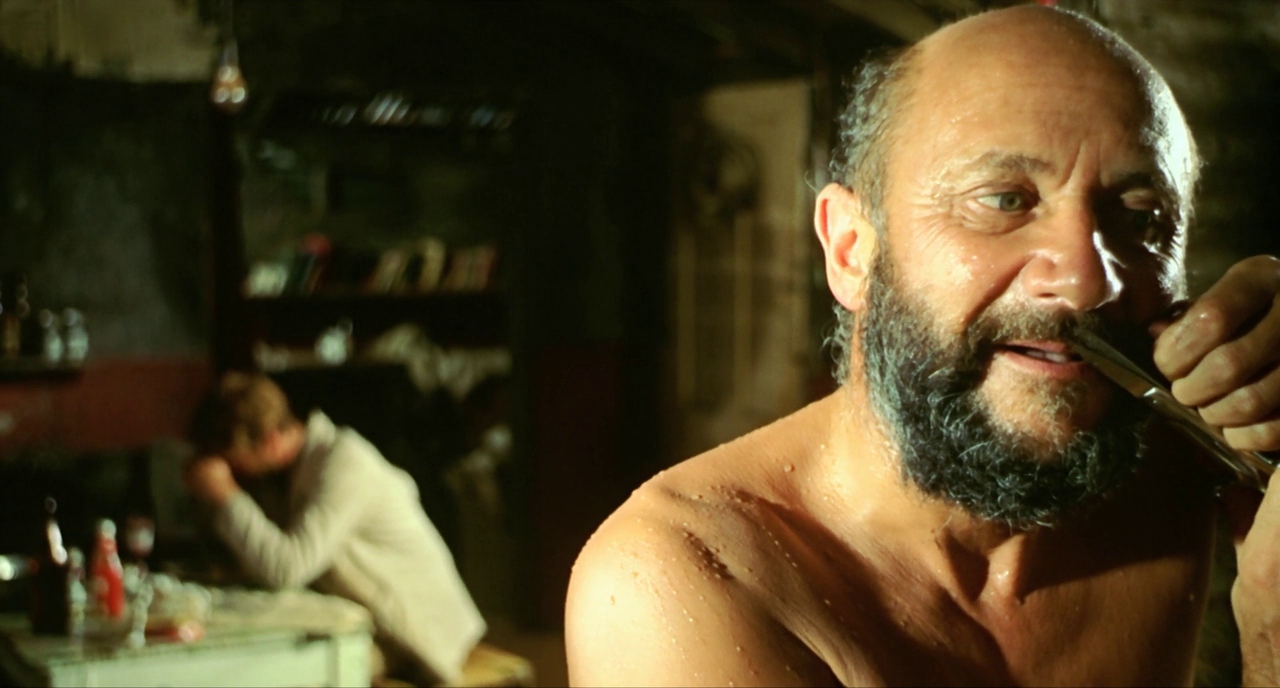
At one of the Yabba’s many bars, John meets Doc (Donald Pleasence), a character who is in many ways equally important and actually billed above Bond. There are clear similarities between them: both are educated, cultured city men stranded in the Outback by force of circumstance. Doc’s alcoholism ruined his medical career in Sydney, while John is trapped by a contractual obligation to teach at the Tiboonda school.
As John sinks into the Yabba’s beer-soaked society over the next few days and misses his flight, it becomes apparent that Doc represents his greatest fear: a civilised man swallowed whole by the orgiastic pointlessness of Yabba life. Yet, while Doc views the Yabba with clearer eyes than the locals, he does not look down on them. When John complains of the town’s “aggressive hospitality” and “stupid” people, Doc counters: “It’s death to farm out here. Worse than death in the mines. Do you want them to sing opera as well?” The line is telling; we learn later that Doc is an opera lover, yet he does not expect everyone else to share his tastes.
The film progresses as John is drawn into a series of encounters with superficially friendly but vaguely threatening locals. A few touches of dark humour do nothing to dissipate the menace, which culminates in a hideous night-time kangaroo hunt.
This episode controversially used footage of a real hunting expedition, which Kotcheff defended on the grounds that it would have happened regardless. The film’s cast and crew did not participate in the culling, and while the killing is real, the blood on the injured animals is fake; yet to the viewer, every moment feels harrowing. The sheer physicality of the animals flying through the air upon impact, and the scrawny pathos of their corpses, makes it almost unbearable to watch. The scenes where one of John’s new acquaintances taunts a wounded creature are even worse.
Throughout Wake in Fright, it is primarily what we see that matters. Dialogue has its place, especially between John and Doc, but this is a highly visual film where most characters are intentionally left under-developed. After all, John does not understand what makes the Yabba’s people tick, and has no interest in finding out. The contribution of cinematographer Brian West, editor Anthony Buckley, and Kotcheff is masterful.
On one level, the film heavily emphasizes the physical reality of the Outback, with a palette dominated by orange, yellow, and brown. The sun is inescapable, even indoors; at night, the disorientingly bright lightbulb in Doc’s cabin takes its place. Sets were sprinkled with dust, and flies settle everywhere with total immunity. We aren’t allowed to escape the heat and grubbiness for a single moment, and neither can John.
Yet some of the cinematography is highly stylised, always with a clear purpose. The opening 360-degree pan around the desert, followed by the minuscule insignificance of Tiboonda’s buildings and the train in the vast, flat landscape, makes an obvious statement. These visual motifs return later, with shots framing John as unusually small even in man-made surroundings, such as when he loses at Two-up or awakes hungover in his hotel room.
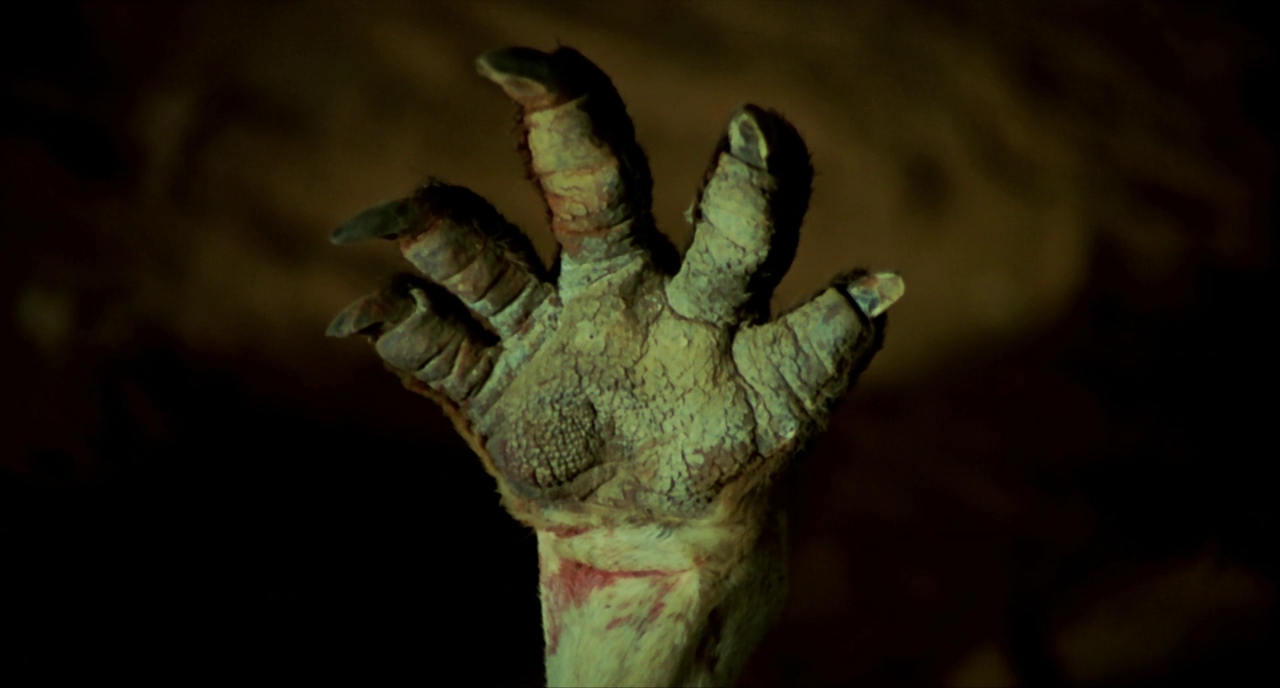
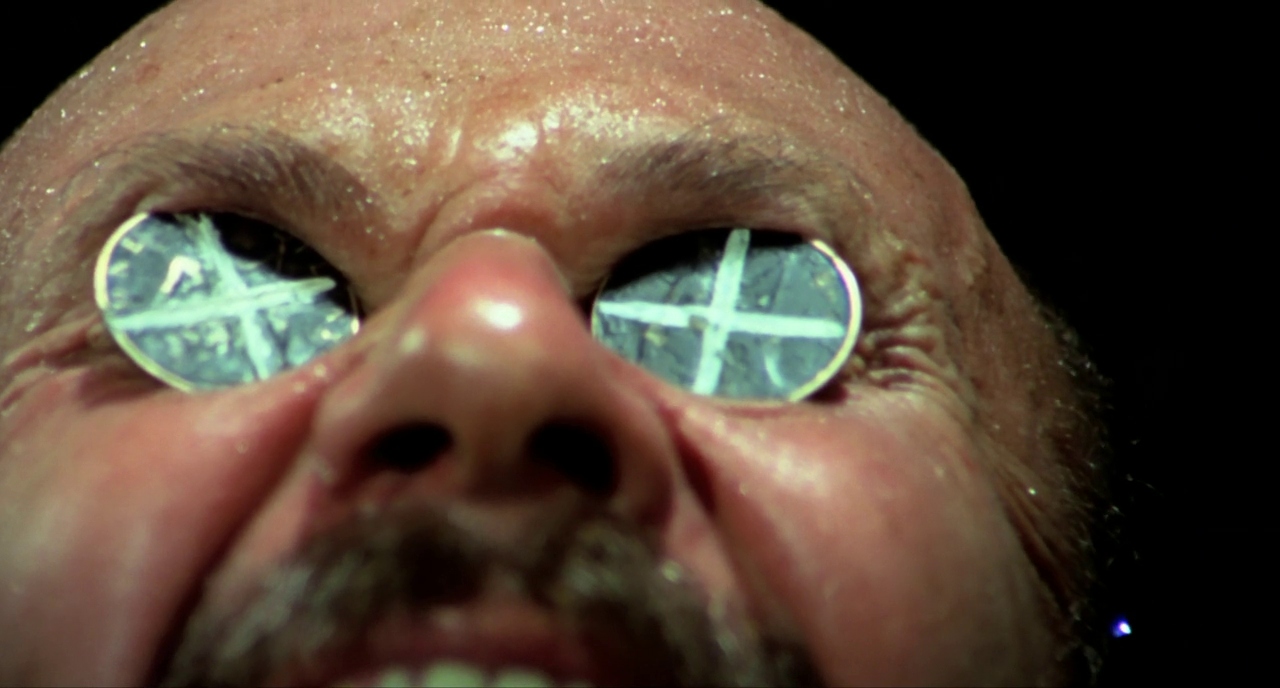
Rapid cuts between the faces of the Yabba bar patrons—hostile, amused, appraising—emphasise his outsider status and anticipate later close-ups of grinning men who embody the hedonistic Yabba lifestyle. One shot of Doc standing on his head during a drinking game is downright disturbing when it suddenly fills the screen. Like the brief zoom onto a dead kangaroo’s paw, this imagery keeps the viewer perpetually on edge.
The atmosphere, location, cinematography, and John Scott’s unsettling score (which makes brilliant use of the ondes Martenot, one of the earliest electronic instruments) are so powerful that the acting is occasionally secondary. However, Pleasence is at his scene-stealing best—intelligent yet dissolute, friendly one moment and combative the next. His sudden violence towards flies hints at deeper, suppressed aggression.
Rafferty’s local cop (the actor’s final role) perfectly embodies the town’s friendly-yet-sinister atmosphere; you sense he would stop at nothing to keep the town exactly as it is. By contrast, there is a genuine amiability to the slovenly, boozy hotelkeeper back in little Tiboonda, played brilliantly in a brief cameo by John Meillon. Sylvia Kay, in one of the very few female roles, is affectingly lonely.
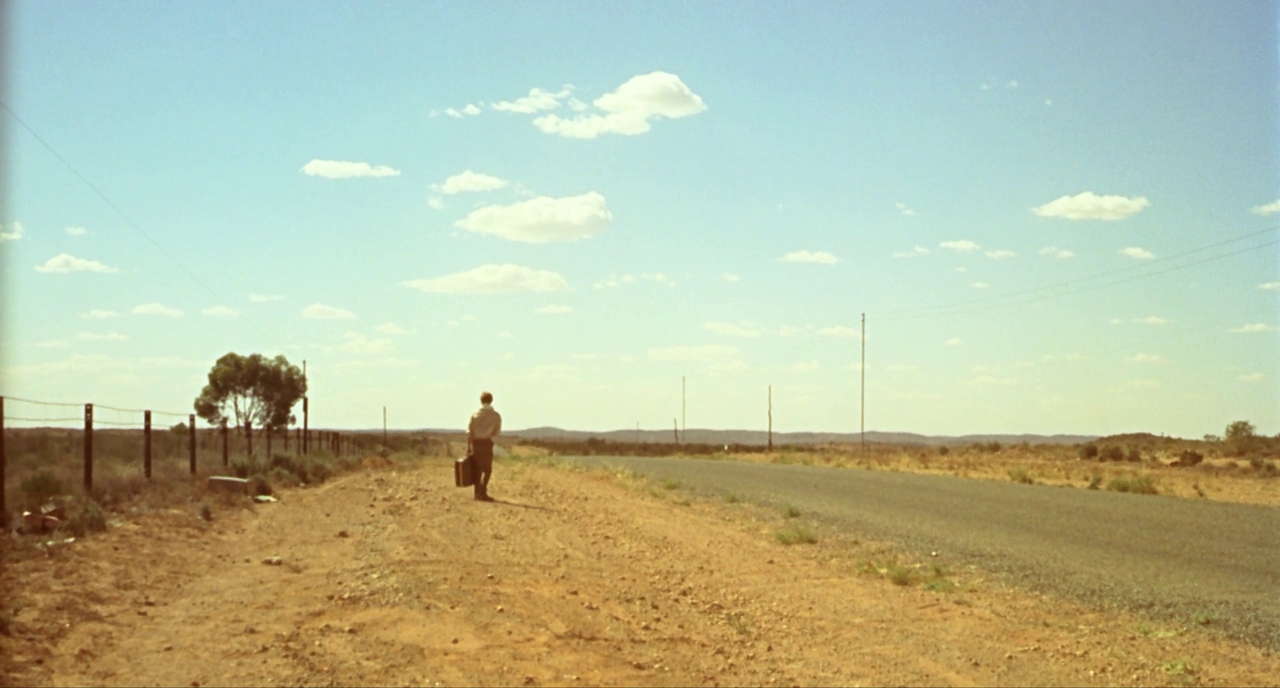
Then there is Bond in the lead, whose resemblance to Peter O’Toole frequently evokes Lawrence of Arabia (1962)—another movie where the desert sun looms large. It was probably unintentional, but it is entirely appropriate. He is a passive character to whom the Yabba simply happens. Neither the novelist Kenneth Cook nor the filmmakers intended him to be particularly likeable, and he frequently comes across as supercilious. However, he also serves as a blank canvas for the audience’s own perceptions.
Consider the opening scene where he checks his watch before dismissing the school. Kotcheff interprets this as a sign that John is a pedantic stickler. However, it is equally possible to read it as a man anxious to escape, yet equally anxious to protect his livelihood. As Peter Galvin notes in his excellent commentary on the Arrow Blu-ray disc, Wake in Fright is a film of conflicting meanings that eludes easy answers.
If the culture of the Yabba is anathema to you, you will likely view John as a sympathetic victim and the town as monstrous. However, two scenes near the end imply that the film’s true stance is far less simplistic.
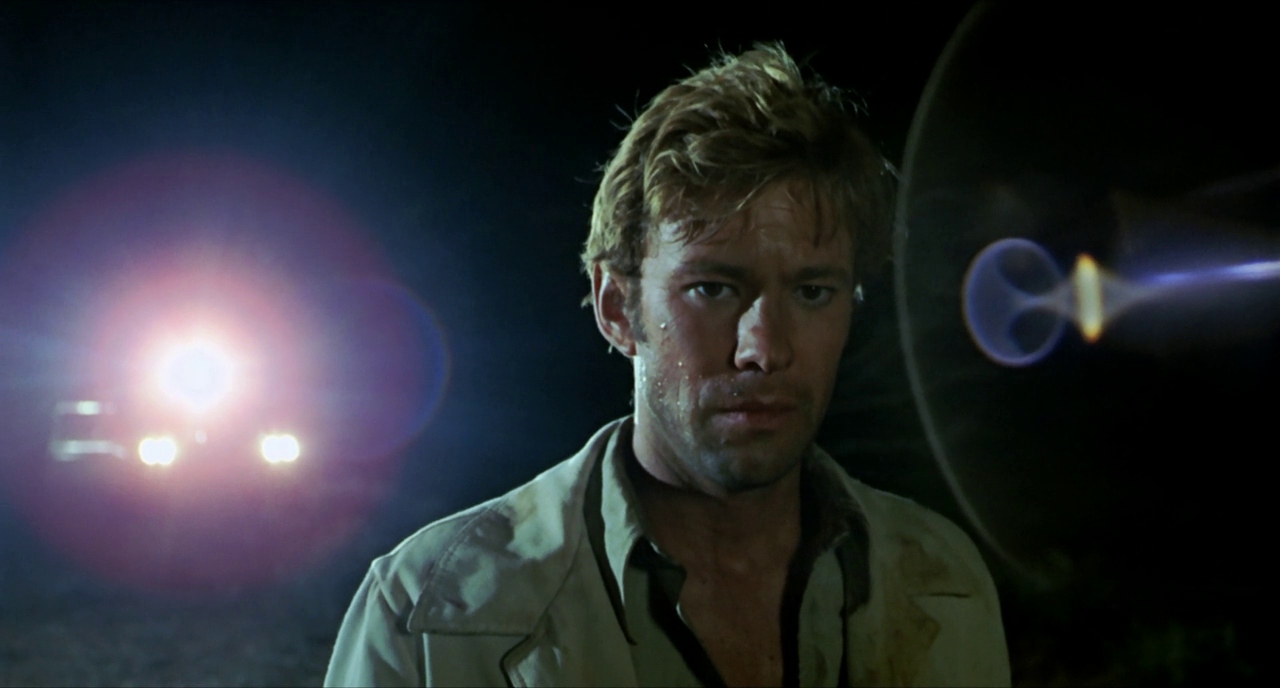
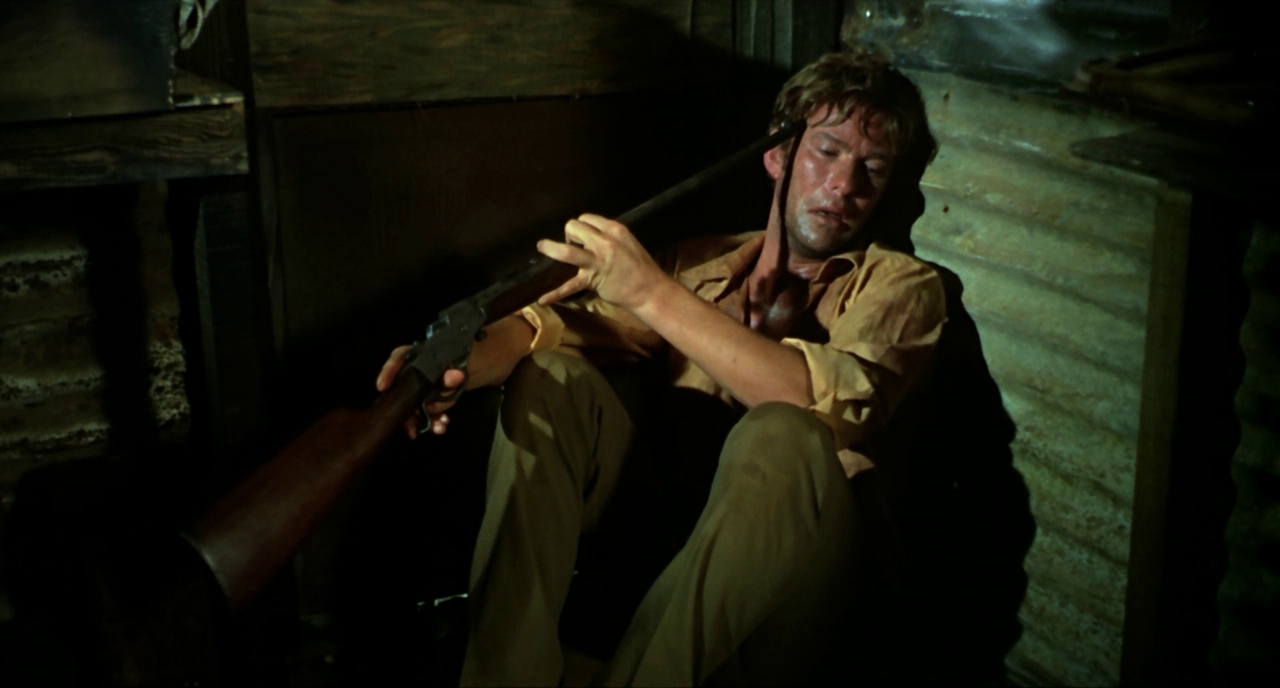
In the first, John is filthy, unshaven, and covered in blood and fluids. He staggers down a Yabba street clutching a rifle, looking debauched even by local standards. He walks into a bar and finds the suitcases he left upon arrival entirely untouched. Perhaps the locals aren’t so bad after all? Lugging the suitcases outside, he promptly dumps his books. Is it because the Yabba has coarsened him, or because he now understands himself better? Perhaps he has realised that, at heart, he is a Yabba man rather than the bookish intellectual he pretended to be.
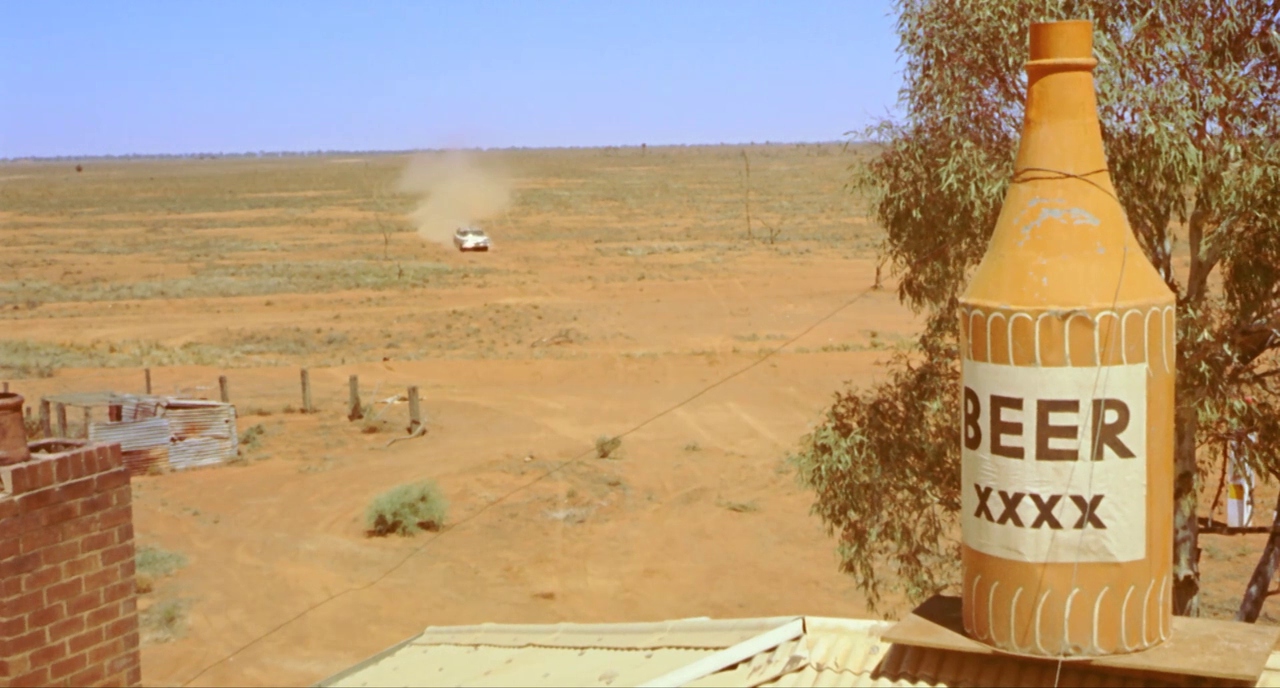
Then there is the fascinating shot in the final seconds of the film, where John looks out over the Yabba from a high vantage point—the first time we see the town clearly as a whole. Gentle green and grey tones emerge; there is shade, clean modern buildings, and a landscape that looks attractive and full of trees. If you have been anti-Yabba up to this point, this sudden shift in the colour palette turns the film on its head. Perhaps the Yabba was never the problem; perhaps the flaw lay entirely within him and his perceptions.
This is Kotcheff’s own interpretation of the story, which he explains in the disc’s bonus features: John becomes more like Doc, less priggish, and more at ease with his true nature—much like Dustin Hoffman’s character in Sam Peckinpah’s Straw Dogs (1971). The Yabba locals he so despises, like the brash, guffawing duo played by Peter Whittle and Jack Thompson, might look like they belong in the backwoods of Deliverance (1972), but they are genuine people simply making the best of harsh circumstances.
Screenwriter Evan Jones’s perspective was more complex still; he viewed the film as an allegory of the intellect struggling against temptation, and redemption through suffering. Whether this fully translates on screen is debatable. While a close reading reveals recurring themes of the seven deadly sins, they are buried incredibly deep.
Wake in Fright does not instantly present itself as a subtle piece of cinema. It grabs you by the arm and forces you to indulge, much like a regular in a Yabba pub. Yet there are clearly far more layers to it than a superficial “good man in a bad place” narrative would suggest.
While the slightly overlong final section—essentially everything after John reclaims his suitcases—loses some of the early claustrophobic urgency, the film remains an intense, visceral experience. It is a haunting, deeply disturbing piece of cinema that lingers for days: like waking from a nightmare knowing something was terribly wrong, but being completely unable to put your finger on what it was.
AUSTRALIA • USA • UK| 1971 | 109 MINUTES | 1.85:1 | COLOUR | ENGLISH

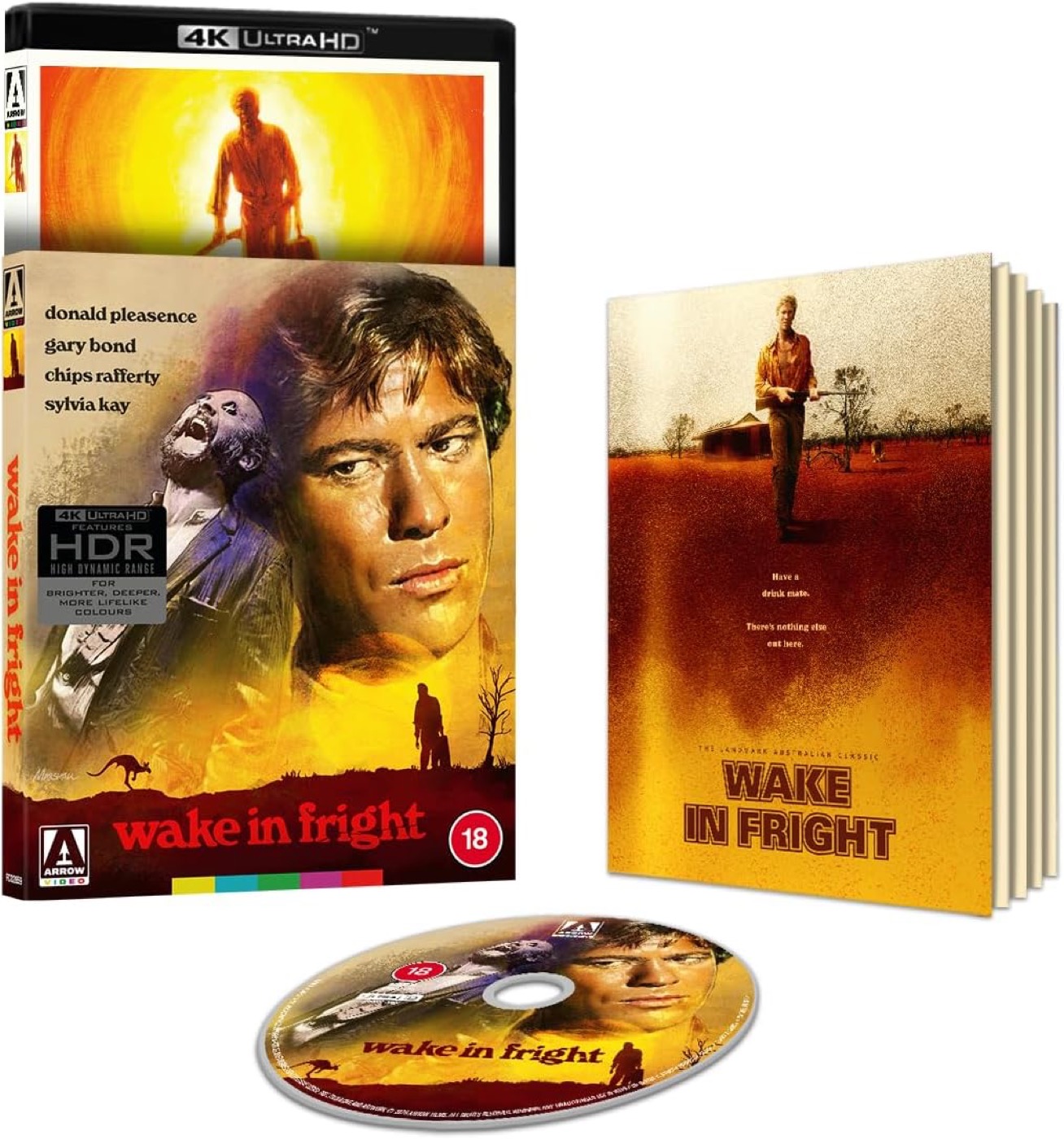
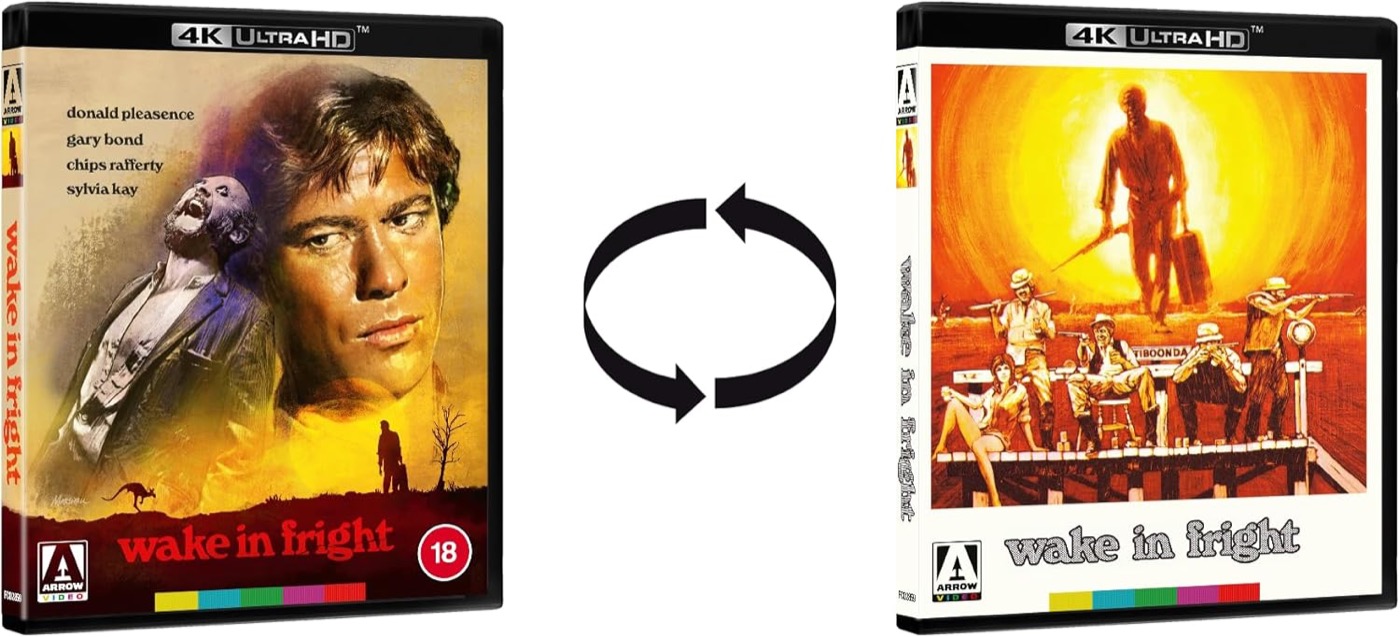

director: Ted Kotcheff.
writer: Evan Jones (based on the novel by Kenneth Cook).
starring: Donald Pleasence, Gary Bond, Chips Rafferty & Sylvia Kay.