THE HOT SPOT (1990)
Upon arriving to a small town, a drifter quickly gets into trouble with the local authorities - and the local women - after he robs a bank.


Upon arriving to a small town, a drifter quickly gets into trouble with the local authorities - and the local women - after he robs a bank.
The Hot Spot is director Dennis Hopper’s magnum opus, an underappreciated masterpiece of noir pastiche. However, on its initial release, it was misunderstood and mismarketed, never garnering the fame or acclaim it deserves. This wonderfully restored print, scanned in 4K from the original camera negative, is a timely release on Ultra HD and Blu-ray from Radiance. The gorgeous photography has never looked better—hardly surprising given that the remastering and colour grading were supervised by its cinematographer, Ueli Steiger. The audio clarity also showcases the moody score featuring jazz giants Miles Davis, John Lee Hooker, and Taj Mahal. The music they recorded, playing live to picture as scenes were screened in the studio, is enough of a selling point on its own.
Drifter Harry Madox (Don Johnson) drives his classic Studebaker Silver Hawk out of the shimmering desert haze. It’s a late-1950s V8 model, and his attire doesn’t contradict the impression that he’s driven straight out of the mid-century past. This blurring of the period setting is pertinent in many ways, relating directly to a nation that often looks to a misremembered golden age in an attempt to redefine a problematic present.
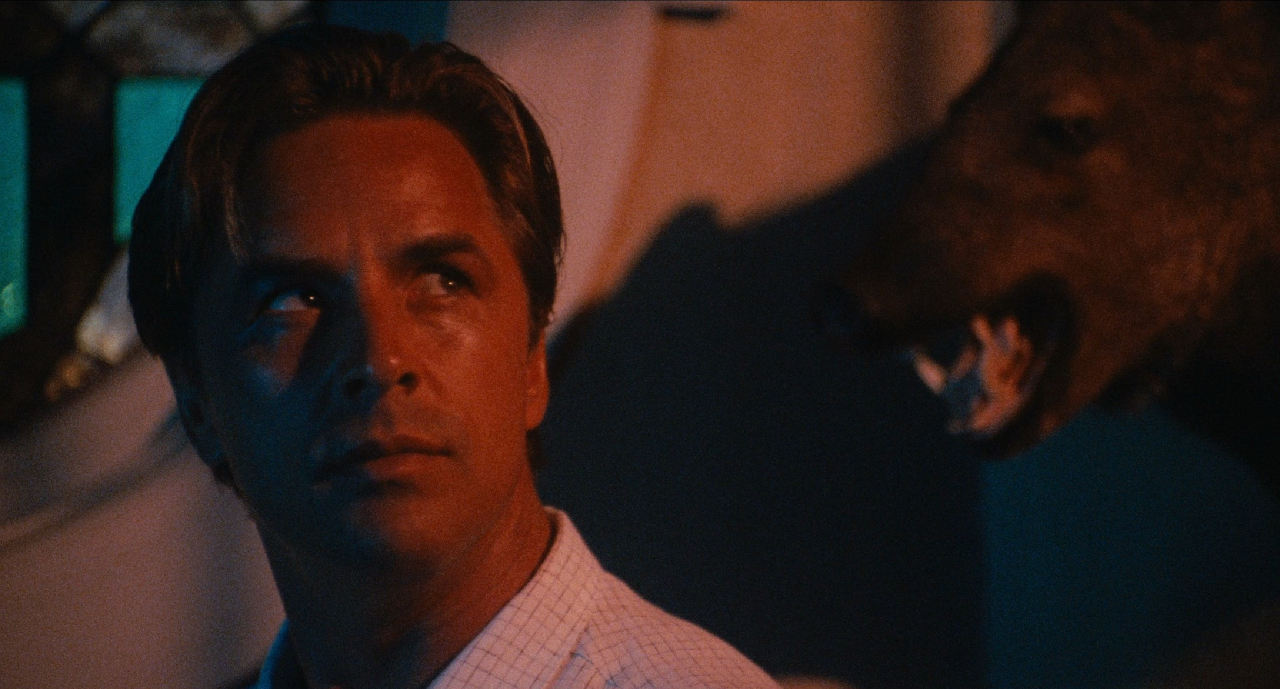
First, we soon gather that Madox is a man escaping his own troubled past who pauses in a dusty whistle-stop town—itself a throwback to the days when America was a great land of big cars, blonde bombshells, bigotry, and rampant chauvinism. Second, despite its glaring desert landscapes and palpable swelter, this is a love letter to the stylishly cool noirs of the 1940s and ’50s: the films Dennis Hopper grew up with that inspired him to pursue a screen career.
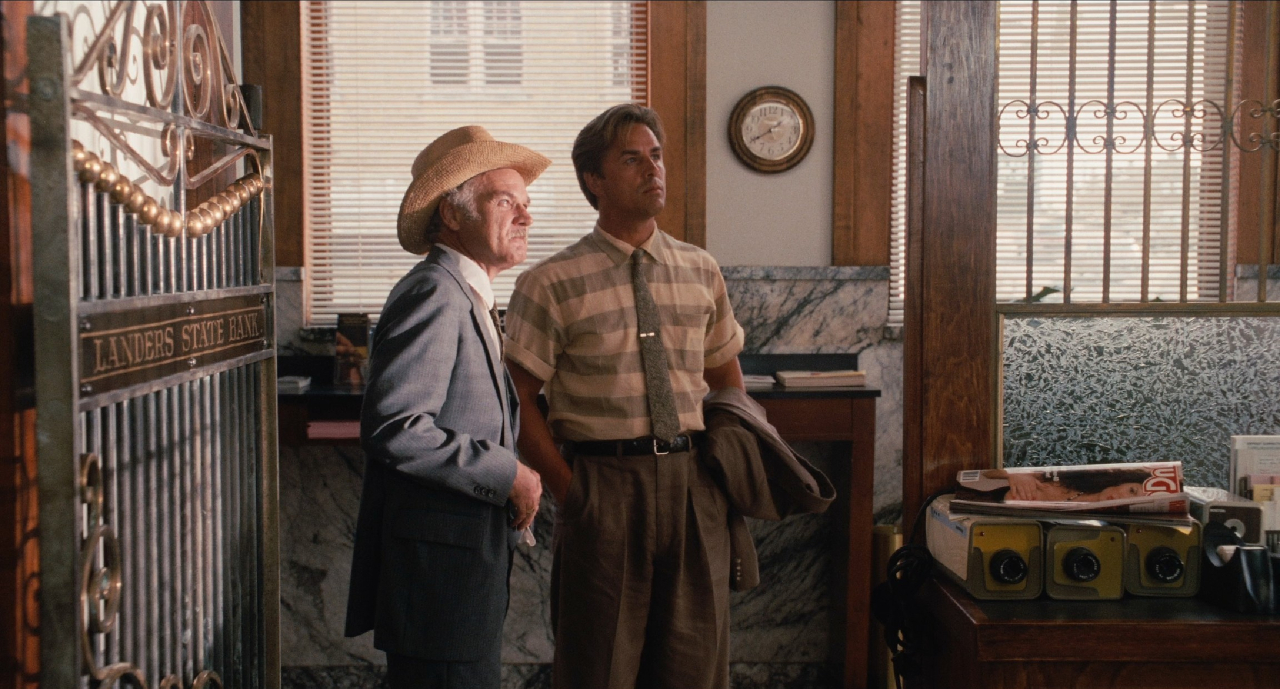
This evocation of the past breaks down as Madox’s first port of call turns out to be the only establishment serving cold beer: a strip joint where he notices the inebriated, lecherous local bank manager, Mr Ward (Jack Nance). Despite the broad daylight, a noir atmosphere is quickly established by Hopper’s framing of the town facades—referencing the famous paintings of his namesake, Edward Hopper—and the languid jazz that seeps through every scene. The mood is further enhanced by the interplay of neon light and shadow inside the club.
Madox crosses to the used-car lot opposite, which offers deals on automobiles alongside a conspicuous number of vintage models. He immediately talks round a customer almost lost by salesman Gulick (Charles Martin Smith). This impresses dealership owner Harshaw (Jerry Hardin), who feels obliged to offer Madox a job.
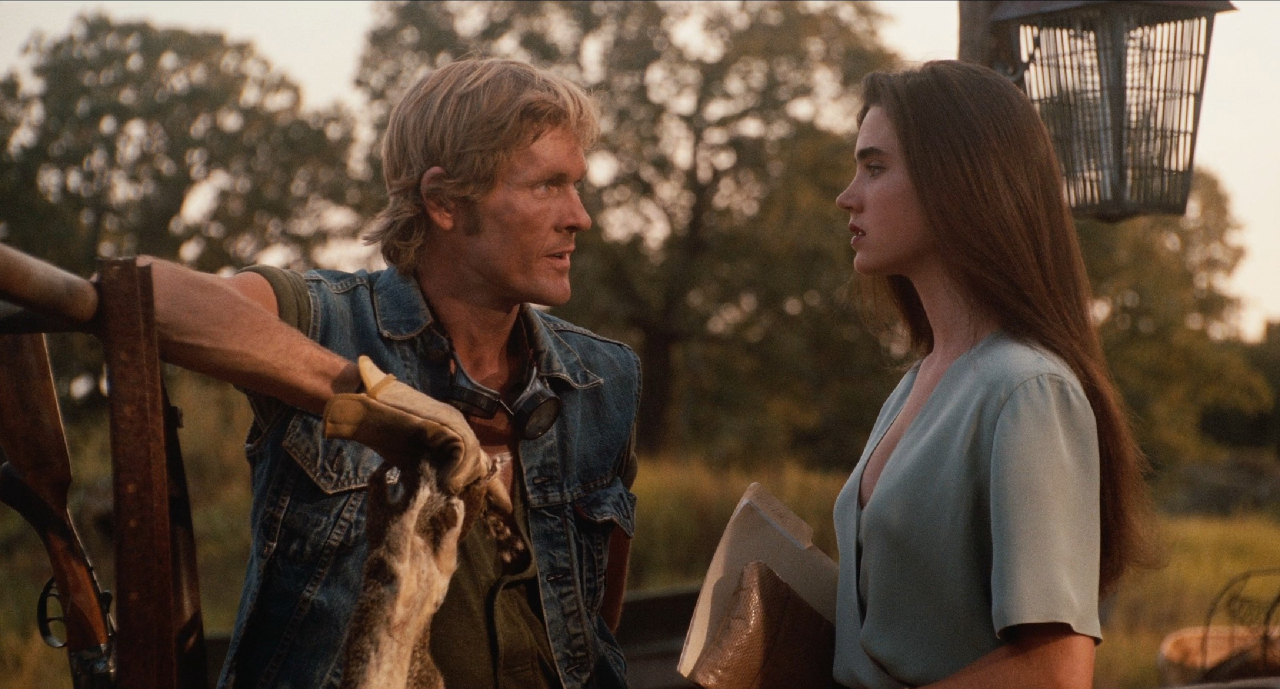
Don Johnson plays the opportunistic Madox with deadpan confidence edged with contempt, befitting a seasoned grifter or hard-boiled detective. We soon get a massive clue to his intentions when the local café burns down and he notes that the bank staff are volunteer firemen. They leave the counters and safe completely unattended, save for their incompetent manager—and Mr Ward hasn’t even managed to get the new CCTV system installed. Even if Madox had been on the lam or trying to go straight, an easy one-man bank job proves too good to pass up.
Anyone well-versed in noir knows that one ‘small’ crime leads to another, triggering a downward spiral towards doom. The thing is, he isn’t the only one in town with a dark history.
The popular television series Miami Vice (1984–89), which made Johnson a superstar, was in its fifth and final season, so he was actively exploring alternative avenues. He’d already embarked on a parallel singing career with two albums and a top-10 single, but what he really wanted was a solid lead role to consolidate his transition to the big screen. The Hot Spot came along at just the right time, presenting an opportunity to play against type.
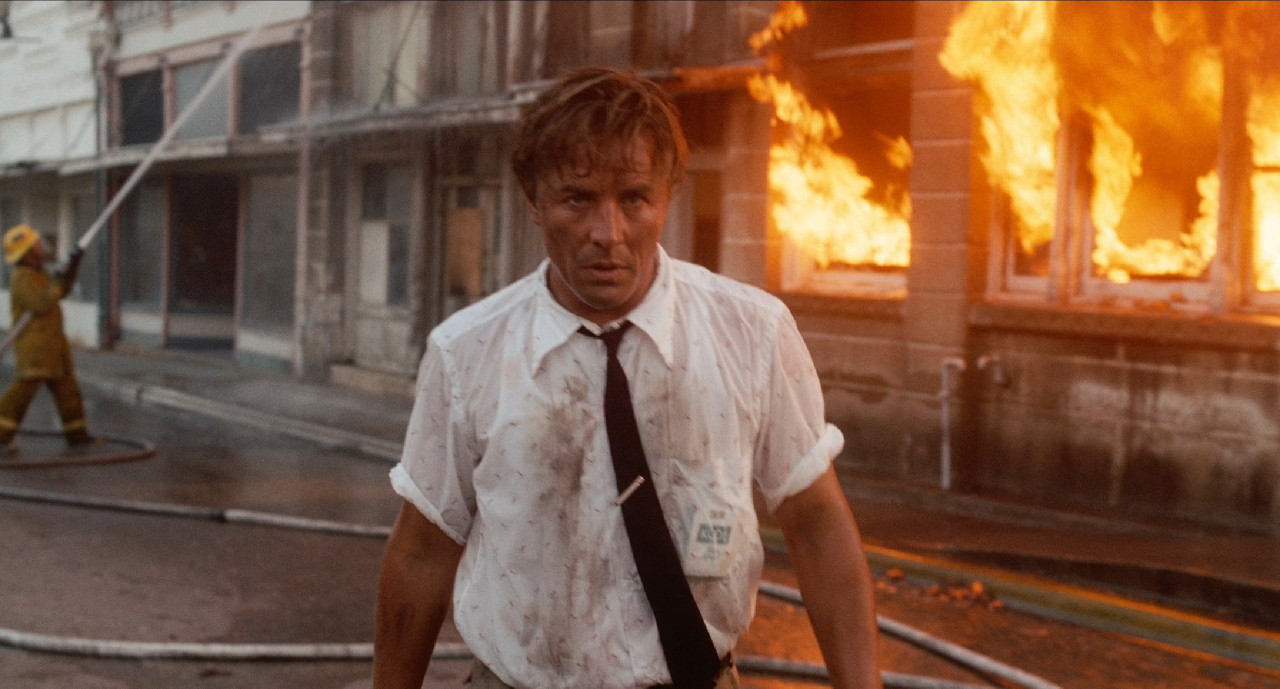
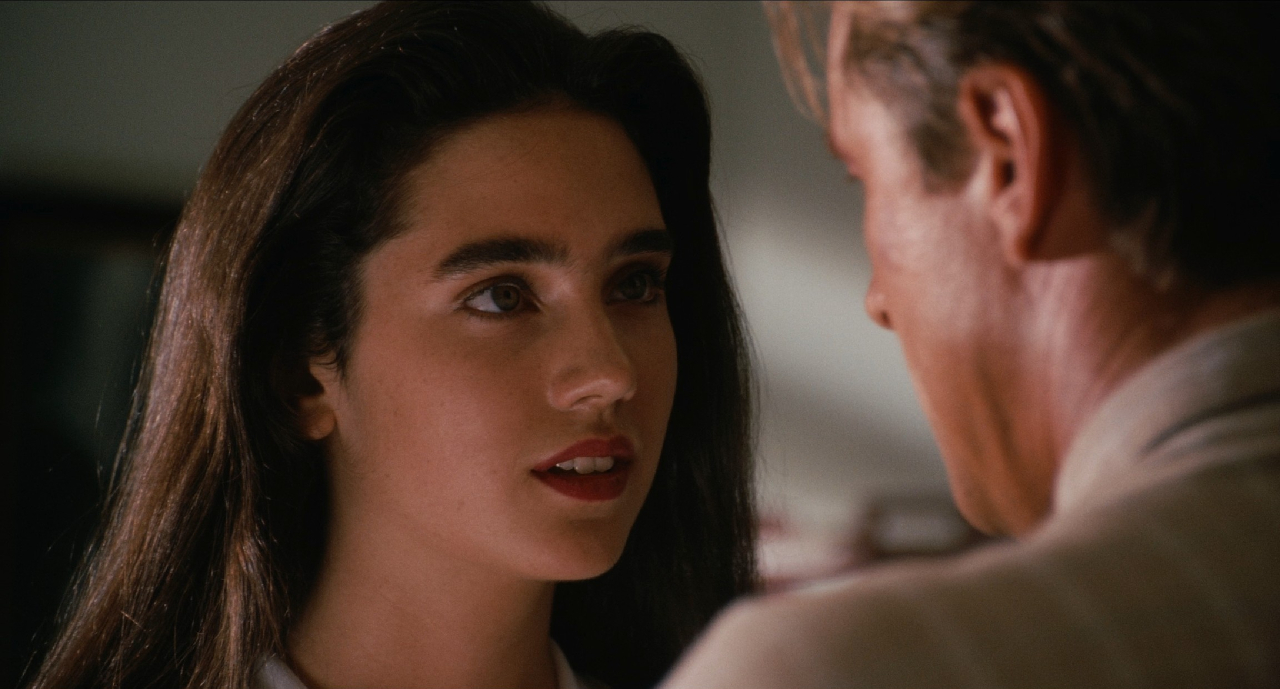
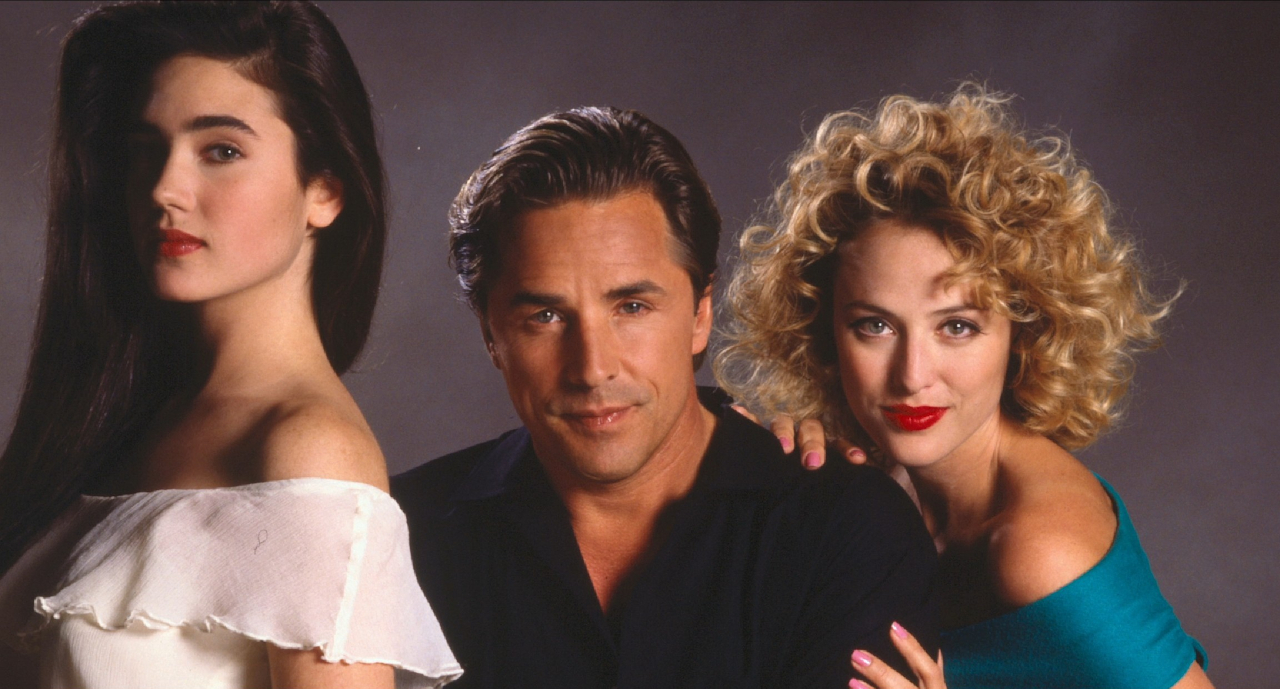
As the handsome new stranger in town, he quickly catches the eye of the sweet, ‘all-American’ beauty Gloria Harper (Jennifer Connelly), a bookkeeper and secretary at Harshaw’s car lot. However, she faces competition from the brazen blonde Dolly Harshaw (Virginia Madsen), the boss’s young wife, who drives an ostentatious pink 1959 Cadillac convertible. There is certainly plenty of coded automotive subtext here.
The casting proved to be impeccable. Jennifer Connelly doesn’t have to do much more than look vulnerable and alluringly naïve, yet she delivers far more than that. With a measured grace and subtlety beyond the plot’s basic requirements, she imbues Gloria with the believability needed to sell some unpredictable character developments.
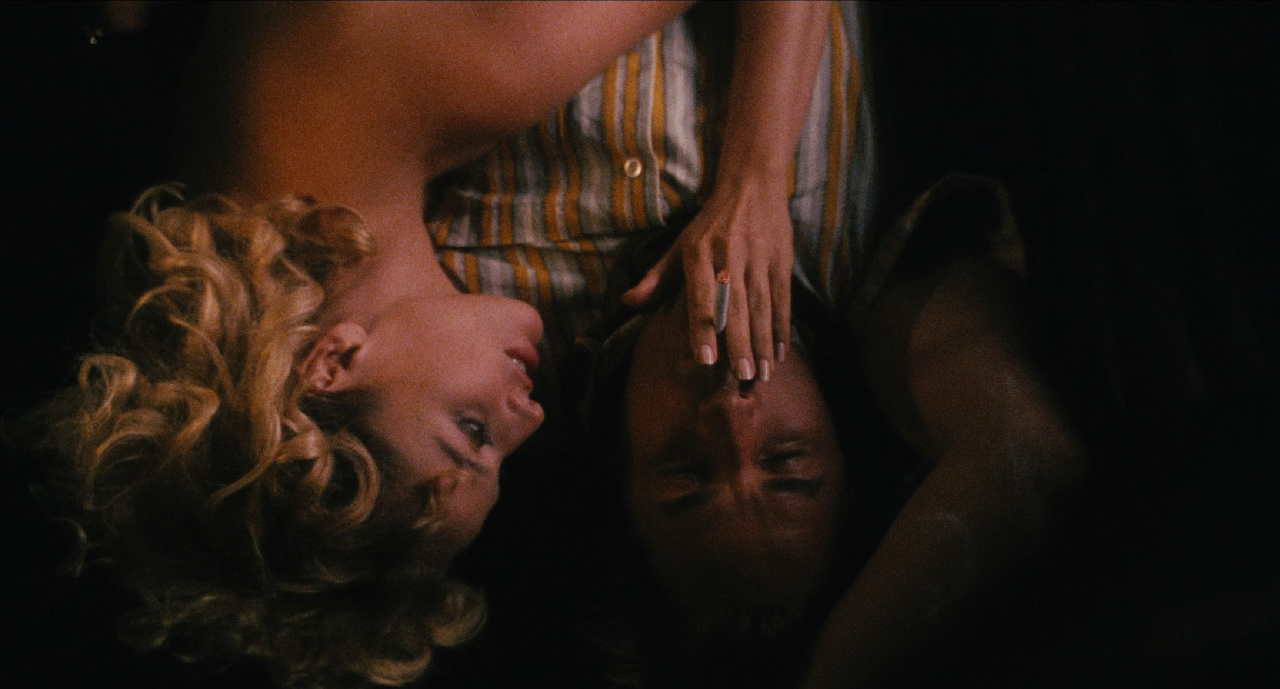
Virginia Madsen is the real scene-stealer here: a sexually charged, manipulative schemer who powers the entire third act towards its satisfyingly cynical climax. That she effortlessly channels the spirit of Barbara Stanwyck is no accident. Hopper likely wanted her for the lead because of their striking resemblance, though it was Madsen’s choice to wear an anklet similar to the one Stanwyck wore as the definitive noir femme fatale in Double Indemnity (1944).
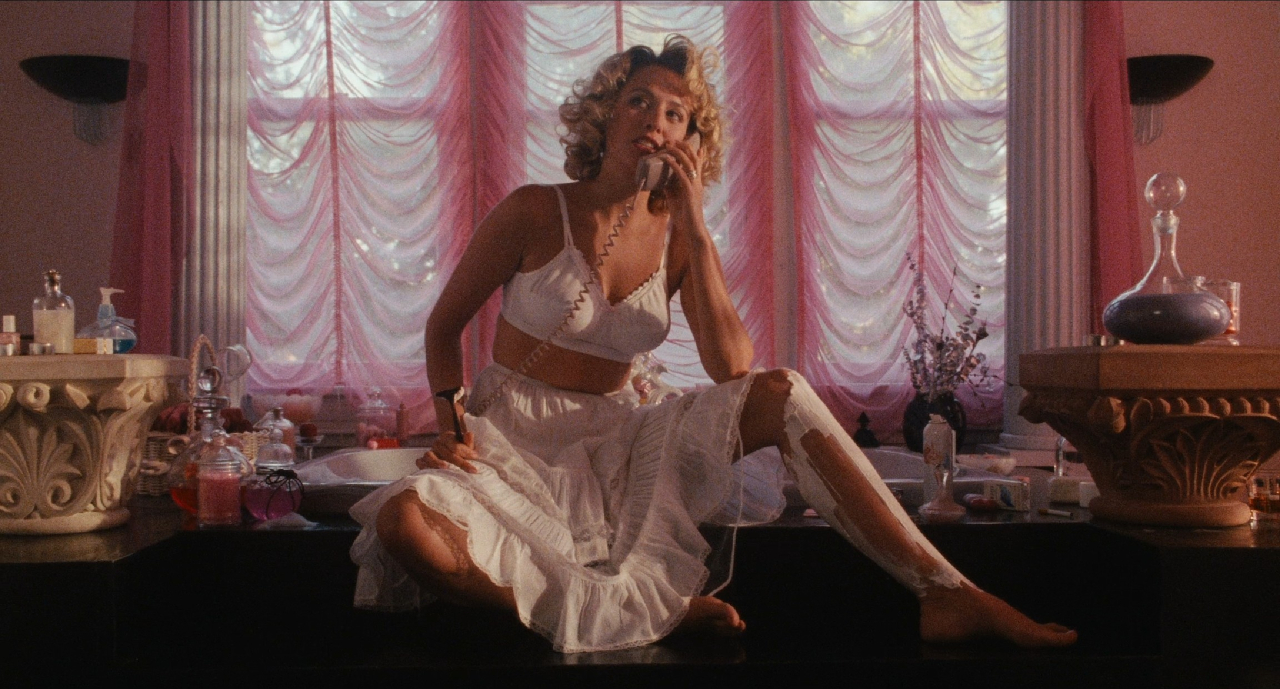
Double Indemnity is just one of the classics that echoes through The Hot Spot. Hopper deploys all the key noir tropes with such mastery that this would be considered a stone-cold classic had it been made half a century earlier. However, casual viewers risk dismissing it all as cliché, despite its status as a knowing reinvention. The ponderous pace of the first act may also lose some viewers before the plot gets hot, dividing the audience between those who find it tedious and those who deem it genius.
Using long scenes measured with sparse dialogue, Hopper immerses us in a meticulously constructed milieu. He creates a space and time that we inhabit alongside the characters, allowing the narrative to take form around us. While using familiar tropes, he delivers them through less conventional storytelling methods. It’s a novelistic approach, yet he uses the visual medium to achieve what its literary source material could not. Instead of relying on the protagonist’s internal monologue, motivations are expressed or obfuscated by the characters’ actions and reactions.
Visual symbolism also anchors important plot points. A distinctive pair of shoes speaks of duality and togetherness, similarities and differences. Elsewhere, background details express internal desires: the neon sign outside Madox’s room flashes on and off, hinting at an internal dilemma, while a distant train comes and goes, representing the wider world. It offers a potential way out while emphasising why he feels trapped.
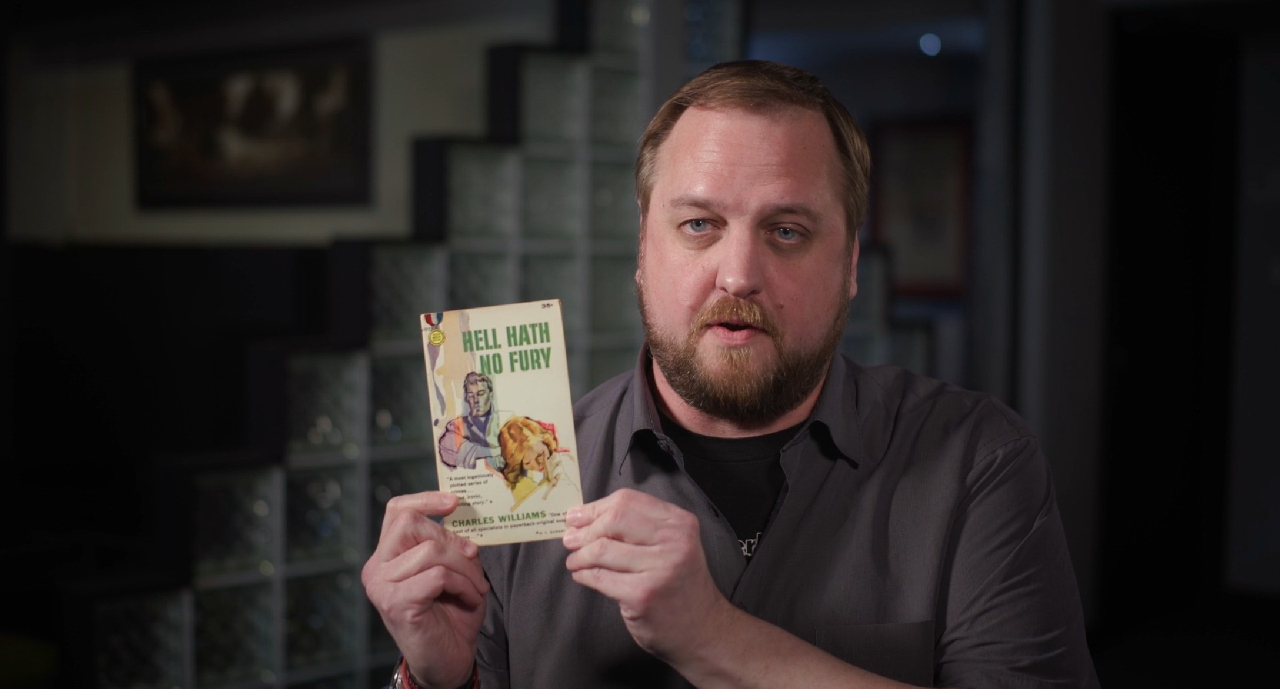
Pre-production for The Hot Spot began long before Hopper took the directorial helm. First published in 1953, Hell Hath No Fury by prolific crime novelist Charles Williams is considered a definitive example of roman noir—a subgenre of pulp crime fiction that relishes dark themes and doomed anti-heroes. In collaboration with Nona Tyson, the author adapted his own novel for the screen, and it was picked up in 1962 by MGM with Robert Mitchum in mind to play Harry Madox.
The project was then shelved for a quarter of a century until MGM resurrected it and brought in British director Mike Figgis, fresh from shooting the noir-adjacent Stormy Monday (1988). He promptly rewrote the script, retitling it The Hot Spot and updating it into what might have been a slicker heist movie. Sam Shepard was set to play Madox, with Uma Thurman as Gloria and Anne Archer as the femme fatale. However, producer interference over casting and foregrounded erotic content caused contractual tussles. By the time the dust settled, Figgis had moved on to Internal Affairs (1990).
Interestingly, another film titled I Wake Up Screaming (originally released in some territories as The Hot Spot in 1941) was based on a pulp crime novel by Steve Fisher. It was an early, dark noir starring Victor Mature opposite Betty Grable, cited as a formative entry in the genre for its atmospheric and psychological tone. Perhaps this influenced Hopper’s approach when MGM brought him in to direct. He jettisoned the Figgis script and based his rewrite more closely on the original novel and Williams’s 1962 screenplay.
His first choice for Madox had been Mickey Rourke, who would have carried the part well—perhaps with too much charisma and screen presence. Johnson, by contrast, manages to blend an imposing physicality with an everyman blandness. This makes Madox easier to relate to; he isn’t a good guy, but part of him seems to want to be. We only root for him because he’s surrounded by lowlifes, losers, selfish schemers, and downright despicable people.
A case in point is Frank Sutton (William Sadler), who habitually fails to pay his car instalments and holds some sway over Gloria, who surreptitiously covers his payments by embezzling funds from the car lot. Sadler gives an astonishing performance as the film’s only straightforward villain: a sleazy serial blackmailer oozing smug overconfidence. With every edgy gesture and loaded comment, the atmosphere crackles with tension awaiting release. Has he met his match in Madox and due a spectacular comeuppance? Or have both men already met their match in Dolly Harshaw?
Perceived by some critics as outdated or out of step with current trends, the film nevertheless sparked a rash of similarly overlooked, sun-baked noirs that have since become slow-burn cult classics. Roger Donaldson’s White Sands (1992), starring Mickey Rourke, Willem Dafoe, and Mary Elizabeth Mastrantonio, was a desert-set noir shunned by the mainstream for its cynicism. John Dahl’s Red Rock West (1993), starring Hopper alongside Nicolas Cage and Lara Flynn Boyle, is another postmodern noir ripe for reappraisal after initial mishandling by confused distributors. Meanwhile, the direct-to-video Baja (1995), starring Molly Ringwald as she tried to shed her teen-crush image, is a low-budget yet effective foray into the same mix of subgenres.
Alongside The Hot Spot, these titles enjoyed a second life during the heyday of video rentals, finding a dispersed but appreciative audience. Now, with this pristine remaster, The Hot Spot will surely please those same film buffs while seducing a fresh audience.
USA | 1990 | 130 MINUTES | 1.85:1 | COLOUR | ENGLISH

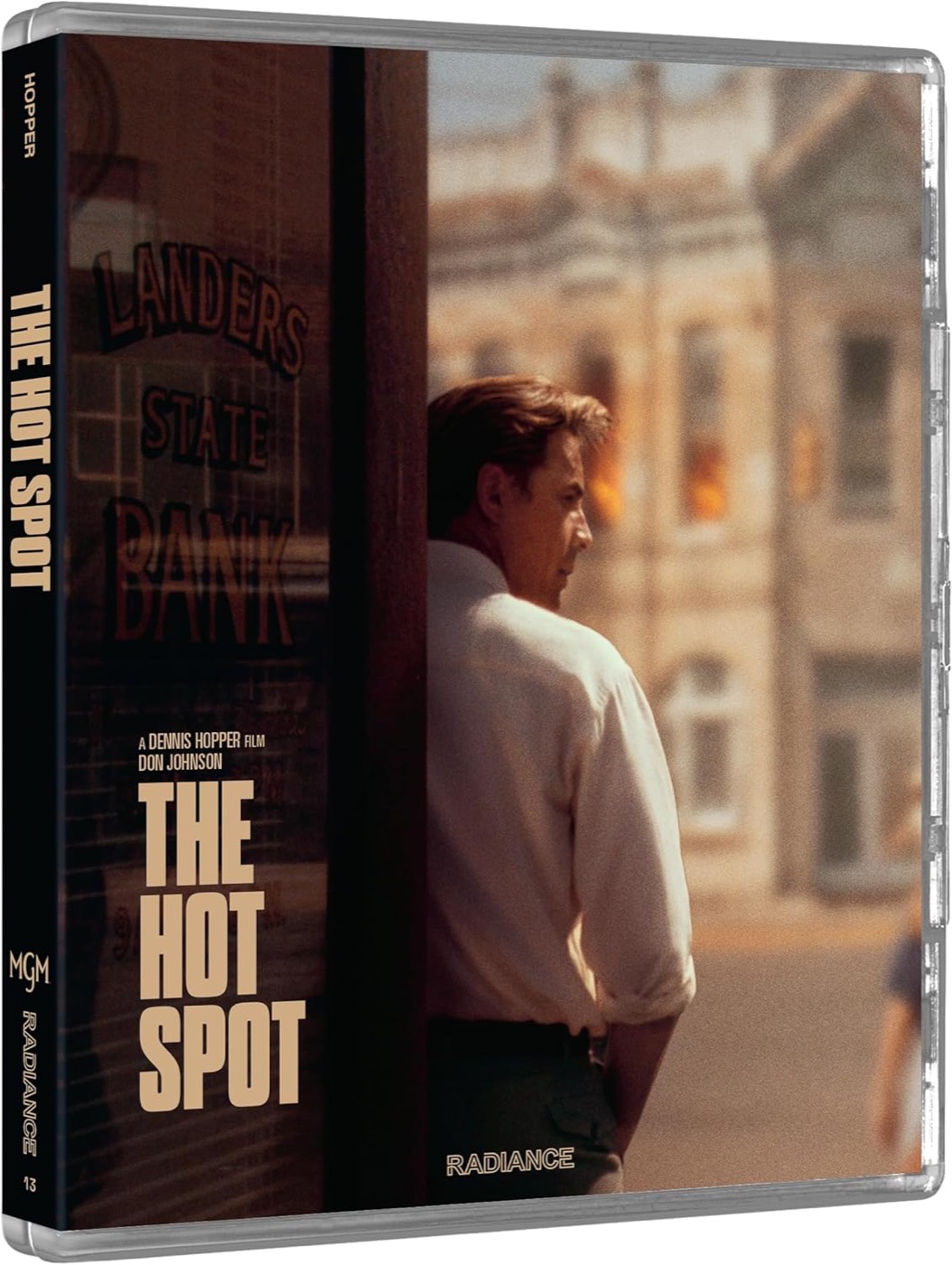
All the extras are legacy material carried over from previous releases. However, Bryan Reesman’s Audio Commentary for the 2021 Kino Lorber 2K restoration is omitted.
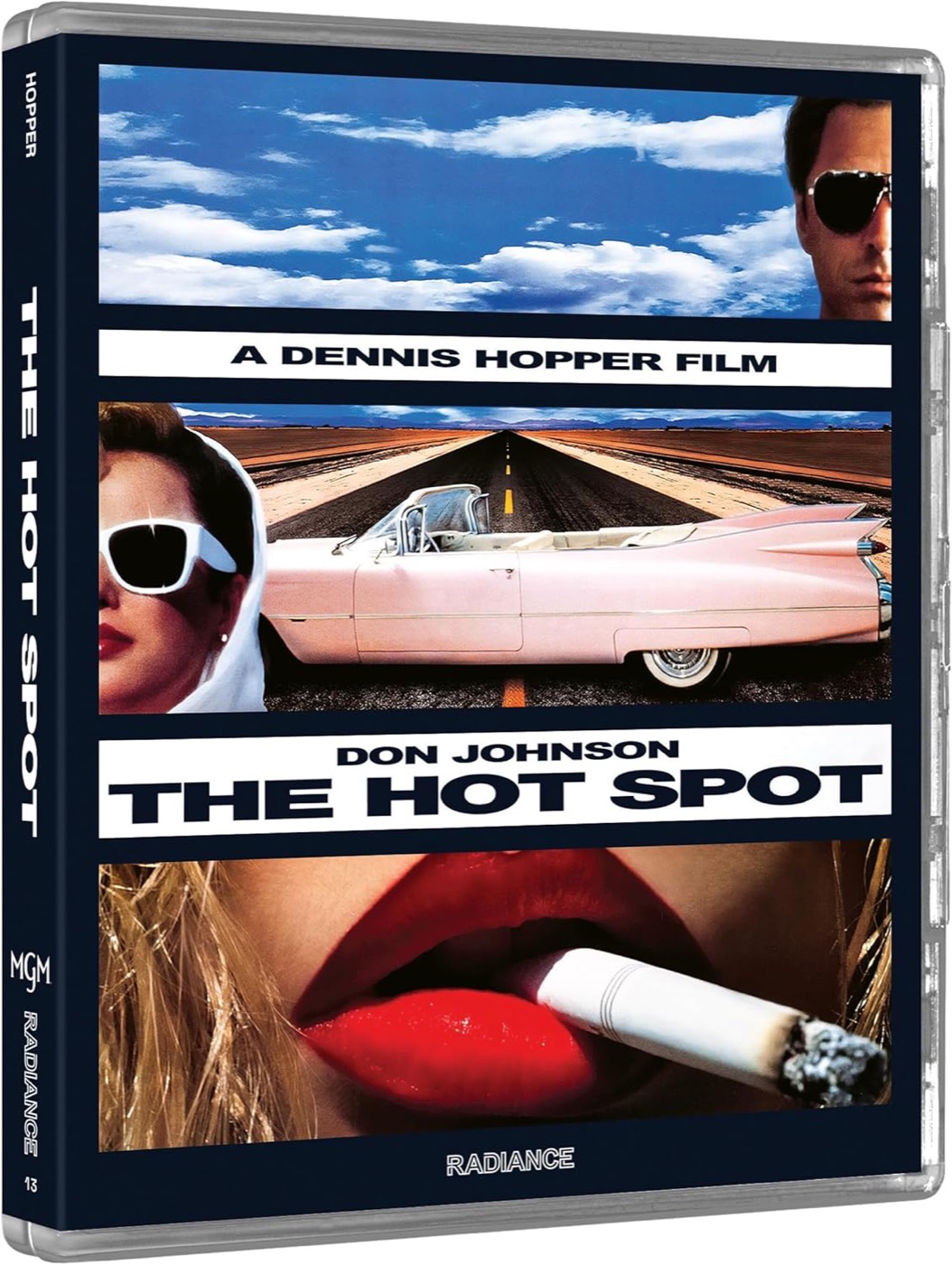

director: Dennis Hopper.
writers: Dennis Hopper, Charles Williams & Nona Tyson.
starring: Don Johnson, Virginia Madsen, Jennifer Connelly, William Sadler, Charles Martin Smith, Jack Nance & Jerry Hardin.