THE SKIN I LIVE IN (2011)
A plastic surgeon, haunted by past tragedies, creates a synthetic skin that withstands any kind of damage. His guinea pig: a mysterious woman who holds the key to his obsession.

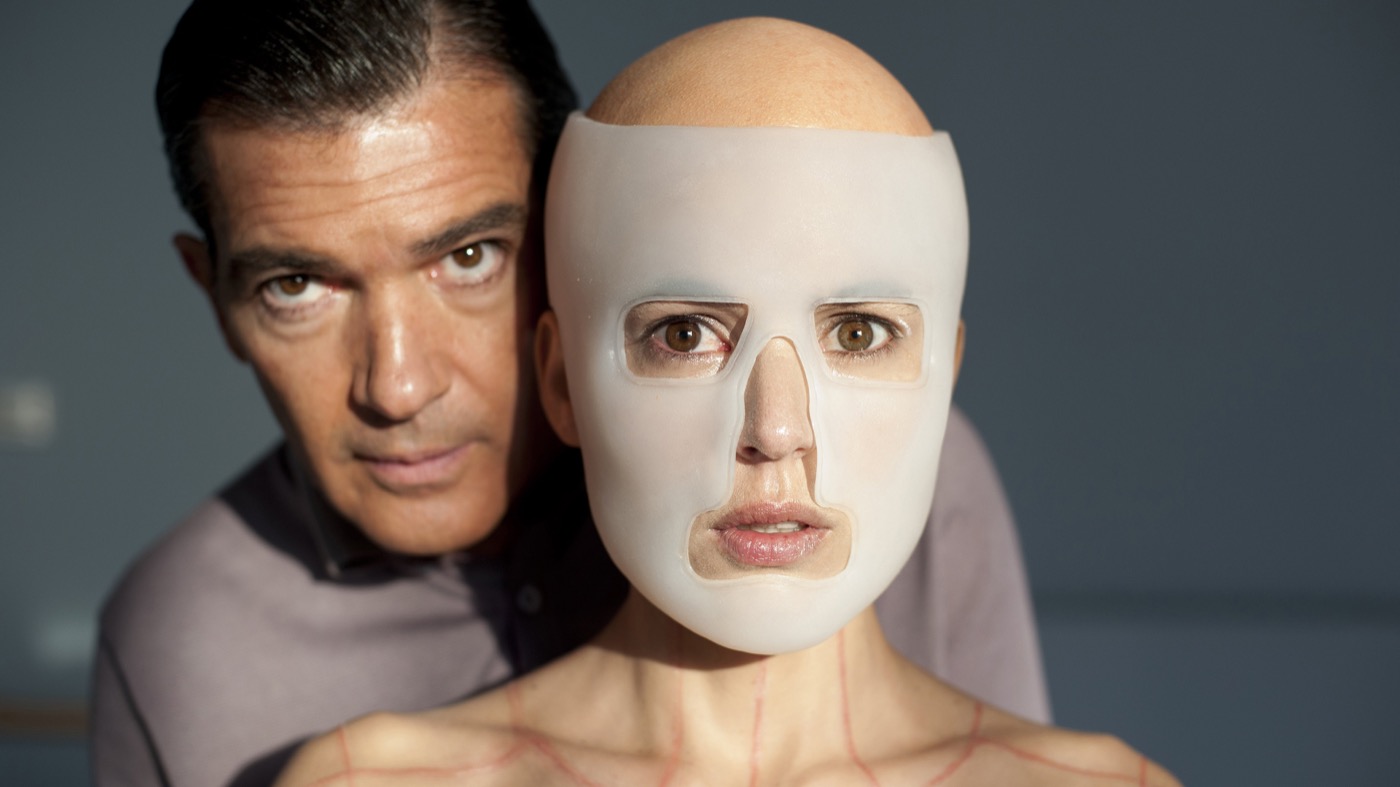

A plastic surgeon, haunted by past tragedies, creates a synthetic skin that withstands any kind of damage. His guinea pig: a mysterious woman who holds the key to his obsession.
Pedro Almodóvar’s career as a writer-director can be easily divided into two distinct periods. The first covers the first two decades or so of his filmography, featuring audacious films bursting with vitality, yet drenched in melodrama. These movies broke open all kinds of social norms, packed as they were with explicit scenes and taboo subject matter that often poked fun at the most gruesome of topics. They were imbued with the spirit of youth and its characteristic sense of urgency.
More recently, the Spanish director’s movies have become interested in the past, portrayed through stories tinged with regret, wistfulness, and bittersweet emotion. They are slower, more sombre affairs, following characters who recognise that they have already experienced most of the major events in their lives, and are now at a point where it only seems right to question what they have made of their existence.
It cannot be easily determined when exactly one period ended and the other began. That is partly due to some overlap between both sides of Almodóvar’s career, but the biggest stumbling block towards simple categorisation is the roughly 15-year period between directing the critically acclaimed All About My Mother (1999) and the panned I’m So Excited! (2013). The former kick-started a wave of some of the director’s most beloved works, which have even proved to be personal favourites in retrospect (in a recent interview, he cited All About My Mother and two of his 2000s films as his most accomplished projects, whilst I’m So Excited! was one of two movies he referred to with distaste).

This era marked a gradual transition between both periods. There are frequent references to taboo subject matter, some of which is explored in a semi-comedic, even garish light. Yet there are also tender, mournful passages here, gradually moving towards a more mature tone. Broken Embraces (2009) is especially similar to Almodóvar’s recent works: a mournful reckoning with the past by an elderly protagonist with nothing left to lose.
Then there is a movie like The Skin I Live In / La piel que habito, which is far harder to categorise. The writer-director made his name by transforming the stuff of everyday life into melodramas and comedies that sparkled with telenovela-style exaggeration. His characters usually wear their hearts on their sleeves, but in The Skin I Live In, the enigmatic Robert Ledgard (Antonio Banderas), a renowned plastic surgeon, is a study in repression.
Having created a form of artificial skin that is resistant to insect bites and burns, his eagerness to share his work does not seem to extend beyond professional rigour. It is only when he returns home that one can start to make sense of this complicated man, smoking opium with his equally unknowable captive, Vera (Elena Anaya)—a gorgeous woman wearing the very skin Robert discusses at medical conferences.

The plastic surgeon’s servant, Marilia (Marisa Paredes), seems completely fine with these circumstances, even as Vera is held against her will. The Ledgard household is strange and disconcerting, yet eerily peaceful on the surface, with a relative quiet permeating its many rooms. It is not until the arrival of Marilia’s half-crazed son Zeca (Roberto Álamo) that any hint of tranquillity is shattered, unearthing terrifying secrets behind these doors and within the darkest entrails of the past.
The Skin I Live In plays with both science fiction and horror, serving as a clear homage to the French horror classic Eyes Without a Face (1960). Banderas portrays Robert through as sensitive a light as should be afforded to such a figure—one who remains continually conflicted by his role in Vera’s life, and hers in his. When she tells him that she would like to pursue a relationship on more equal footing, it is his turn to feel trapped. Acknowledging that she is a prisoner is about as terrifying for Robert as the thought of her retaining some degree of freedom. He is controlling to nightmarish extents: hence the movie’s fantastic title, which reveals how Vera views her body through a deeply dehumanising lens.
Yet there is sensitivity in his sadism. He is almost a paternal figure in Vera’s life, but this role makes him feel far weaker than her, as he is desperately reliant on her presence to mend the holes in his identity. The only way to ward off his insecurities is to force her dependence through more basic means; if he and Marilia were to leave for good, Vera would almost certainly starve to death. It is a masterful tightrope of a performance from Banderas, making this character a wounded, vulnerable, and suave tyrant you cannot help but despise. Even in the movie’s most distasteful moments, Robert remains fascinating to watch.

Discussing the wider plot of The Skin I Live In further would betray the viewing experience. In short, it is a shocking and daring experiment that demands to be seen by any film lover. There are many disturbing moments throughout, with the biggest surprise being a twist that is sure to leave viewers open-mouthed. It is especially interesting to rewatch the film with this in mind, savouring the subtle clues scattered throughout. On a first watch, viewers will likely be too entranced by this hypnotic film to pick up on them.
Like all of Almodóvar’s work, The Skin I Live In is gorgeous to look at, outshining much of the director’s filmography in its overall visual scale, concise pacing, and expressive use of colour. Robert’s house is a wonderful set piece, where secrets lurk around every corner of a space haunted by misery but beautifully adorned. Turbulent backstories, horrific procedures, life-altering choices, and rampant erasures of identity are painted across this movie, punctuated by dashes of odd theatricality that would almost inspire laughter if the consequences were not so brutal.
Unfortunately, knowing what comes next often works to the detriment of the emotional experience. On a second watch, the film feels like an unnecessarily gaudy, unrefined, and cruelly clinical approach to subject matter that requires far more sensitivity than the director affords it. Banderas and Anaya are superb, but they can only provide so much interiority to characters Almodóvar refuses to fully flesh out. The sci-fi premise of constructing a new form of skin is fascinating, especially when someone in Robert’s field realises he is injecting animal genetic material into human DNA.
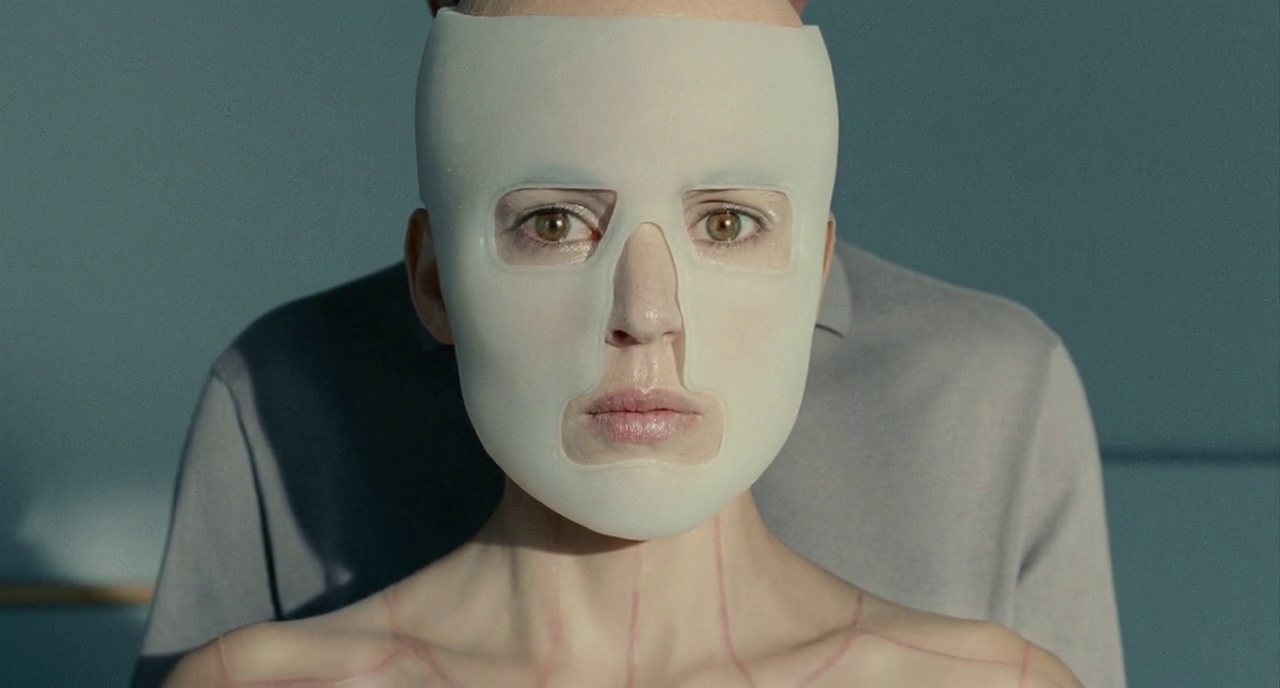
There could be a thrilling, high-intensity noirish tale here—or one exploring other boundaries of transgressed identity—but the story is so focused on shock value that it fails to uncover the depths of its existing psychological profiles, let alone develop other intriguing plot strands. The director explores touchy subject matter with a glee that can often be off-putting (his light-hearted depiction of paedophilia in 1984’s What Have I Done to Deserve This? being a prime example). By this point in his career, that giddy sadism had toned down considerably, but in The Skin I Live In, that eagerness remains. Shades of his vibrant early tone linger here; he does not seem nearly as horrified by the story as he expects viewers to be.
If the film cared as much about captivity and identity as it purports to, it would approach these forms of suffering as ghastly inevitabilities rather than tools to excite and titillate. It is always a shame to rewatch a movie years after first loving it, only to find it no longer ranks nearly so high in your estimation. Prior knowledge of this story’s twists and turns robs it of greater meaning. The themes are still interesting to ponder, even if their thinness becomes grating.
One of the more fascinating lenses through which to view The Skin I Live In is as a commentary from Almodóvar on his own filmography, and the way an artist endlessly reconstructs their stories. Throughout the creative process, the artist must rediscover their work while feeling completely at the mercy of the story on an emotional level. At the same time, they are critical to its survival. This tale could only come from a specific voice during a specific time and creative environment—an artistic petri dish that defies the binary of science to produce magic from the human mind.
Yet it is paramount that you allow yourself to change in the process as you let the creative experience wash over you. It was once a thrilling, disturbing, and heartbreaking joy to let The Skin I Live In do that very same thing. But while it remains a gorgeous movie in how easily it excites the senses (longtime collaborator Alberto Iglesias provides career-best work here), The Skin I Live In ultimately feels hollow once you already know the tricks up its narrative sleeve.
SPAIN • USA | 2011 | 120 MINUTES | 1.85:1 | COLOUR | SPANISH • JAPANESE • PORTUGUESE

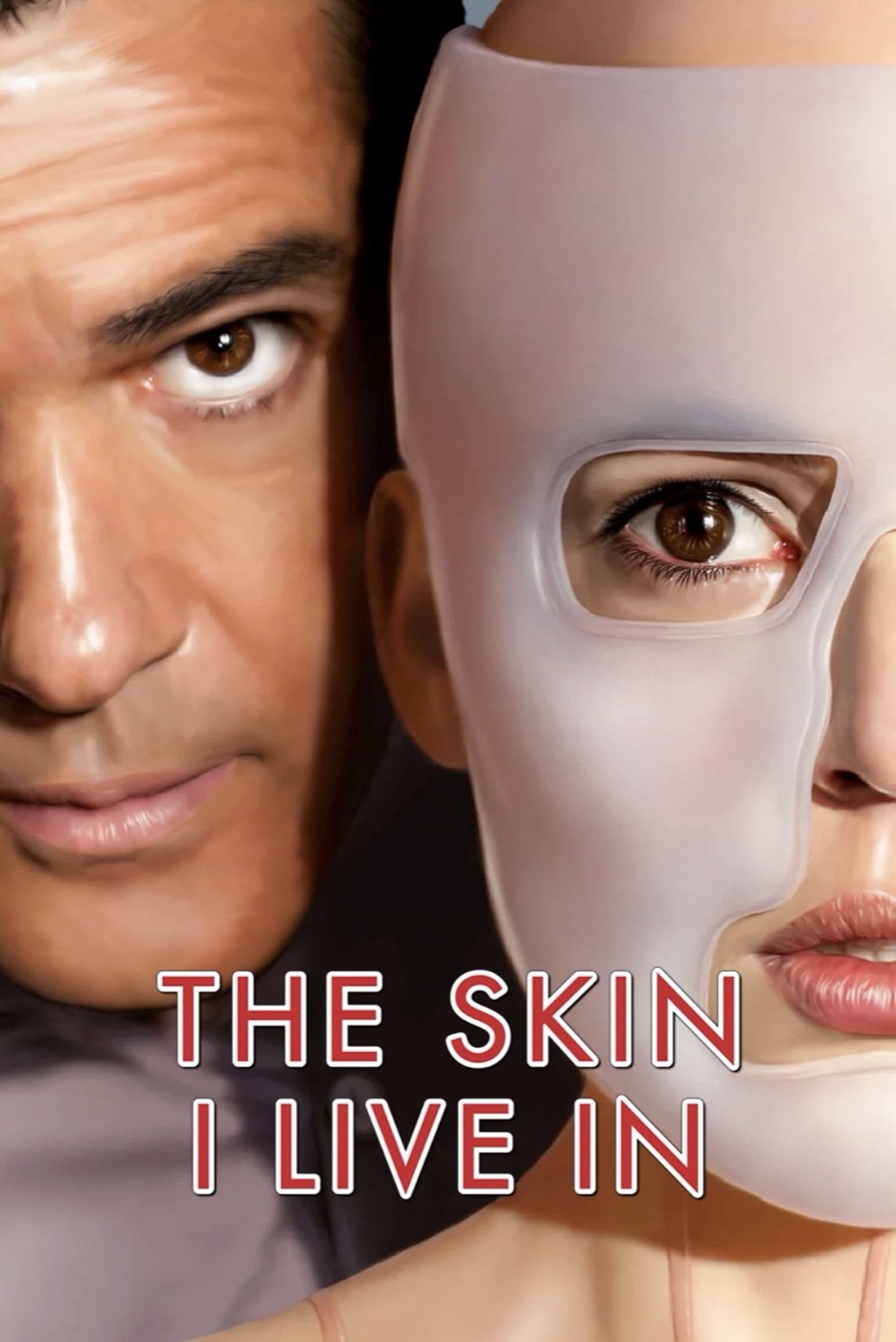
director: Pedro Almodóvar.
writers: Pedro Almodóvar & Agustín Almodóvar (based on the 1984 novel ‘Tarantula’ by Thierry Jonquet).
starring: Antonio Banderas, Elena Anaya, Marisa Paredes, Jan Cornet, Roberto Álamo, Blanca Suárez, Susi Sánchez & Bárbara Lennie.