AUDITION (1999)
A widower has his film producer friend organize a fake audition as a means of helping him find a new girlfriend, but the woman he selects is not who she appears to be.


A widower has his film producer friend organize a fake audition as a means of helping him find a new girlfriend, but the woman he selects is not who she appears to be.
There was no shortage of films in the 1990s that portrayed the dehumanising and often grotesque process of making a movie. The inherent exploitation and seduction of the camera (and its operator) fed into the cinematic excess of Boogie Nights (1997), whilst elsewhere, a film like Robert Altman’s The Player (1992) dug into the feverish nightmare of agents and stars who were never in alignment.
The de rigueur self-awareness of 1990s cinema—this notion that the cameras could be flipped and aimed at the perpetrators themselves—held a keenly pre-millennium appeal. It was a decade of meta and postmodernism that allowed savvy audiences critical distance from the global cinema of the 1970s and 1980s, offering a safely ironic remove from films about people who did not know they were characters in a story.
Consumer-grade camcorders began appearing in every other house in the 1990s; suddenly, anyone—your neighbours, friends, or family—could be characters in a movie. The artifice was part of the novelty, a feature of the joke. With television at the time offering up a slate of reality shows, hard-hitting exposés, and 24/7 news channels, there was a cumulative and persistent sense of going behind the scenes. If the first 80 years of moving images in the 20th century were the feature attraction, then the 1990s were the making-of. The magic trick had been revealed, and it wasn’t pretty.
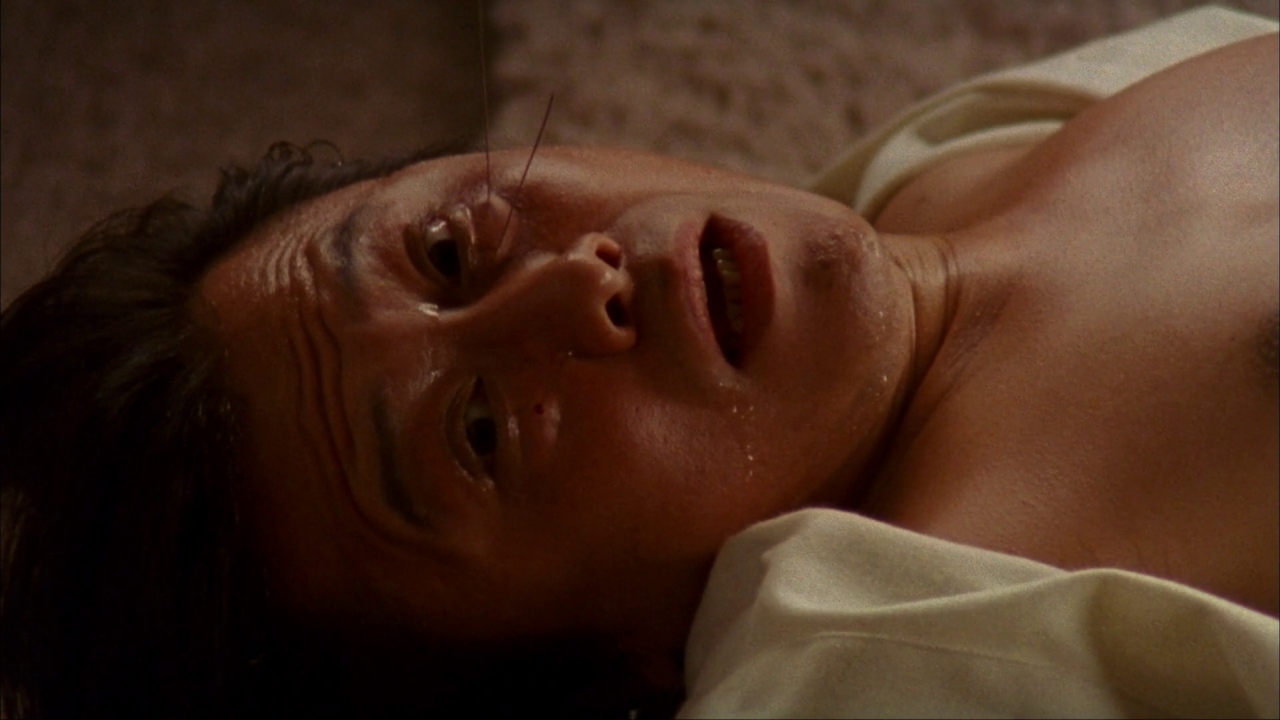
Takashi Miike’s Audition / オーディション zeroes in on perhaps the most demeaning and alienating element of filmmaking—the casting process—and extrapolates it into cringing, nauseating horror. Ryo Ishibashi plays Shigeharu Aoyama, a Tokyo video producer who loses his wife to a long and painful illness; we see her looking angelic in dreamy flashbacks. Seven years go by, and Shigeharu and his teenage son, Shigeheko (Tetsu Sawaki), live together in a house too large for two quiet men and their pet beagle.
They go fishing together, feet planted on jagged rocks as the ocean sprays in arcs. Shigeharu is looking for a large and elusive fish that his son claims is imaginary. “When you grow up, you’ll understand,” he tells the teenager. “It’s called being romantic.” Shigeheko just wants his father to stop moping and find a new wife. Both men are a little deluded.
At home, they are waited on by a female housekeeper whose cooking skills they deride. In an elegant but ghostly bar, Shigeharu sits with his friend and fellow film producer, Yasuhisa (Jun Kunimura), drinking to their own bitter disappointments. They glance at a table of young, beautiful women. “Japan is finished,” Yasuhisa says with scorn.
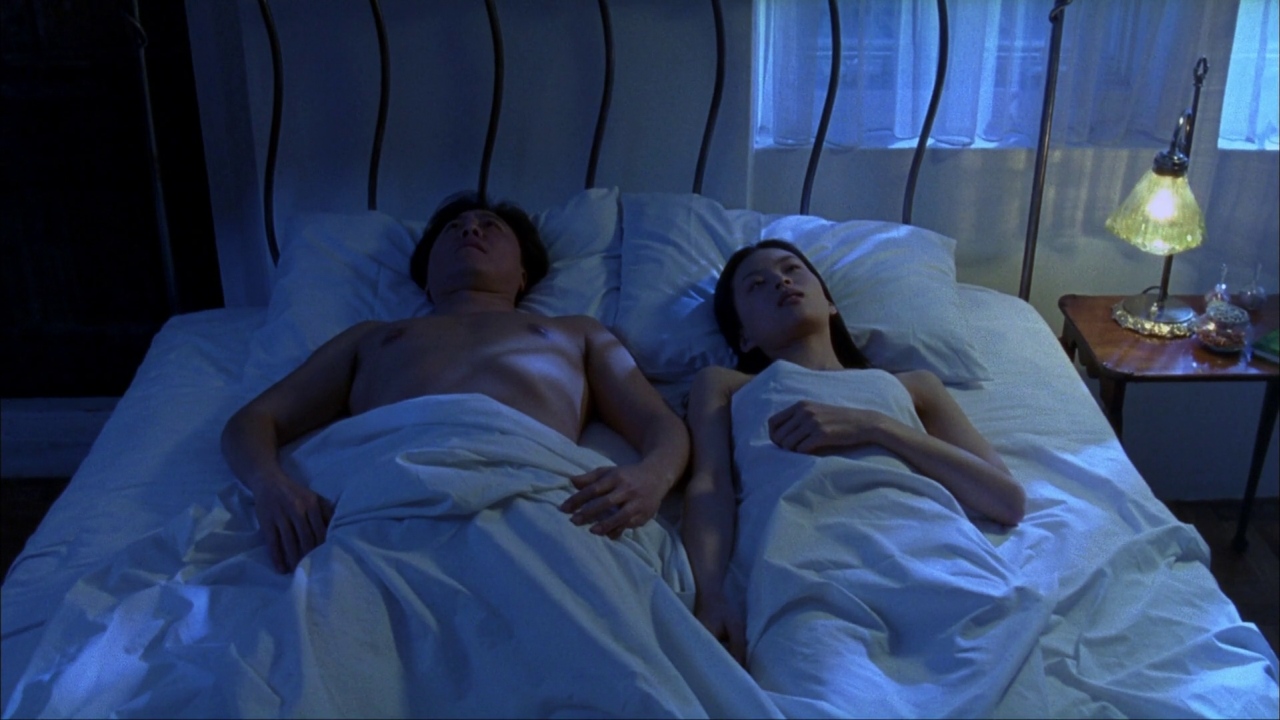
The stock market crash that rocked Japan at the end of the 1980s cast a long shadow over the subsequent decade and beyond—an era dubbed “The Lost Decades” for the calamitous effect it had on the country’s economy. The world that Shigeharu and Yasuhisa haunt is dotted with relics of past glory. For these bitter, impotent men—self-styled exiled kings from a forgotten nation—women are living reminders of a glamour and control that has slipped through their fingers.
Shigeharu thinks he knows a way to seize control, to hook that imaginary fish. If the business is truly damned, he aims to find personal contentment by seeking out “the perfect wife”. Shigeharu and Yasuhisa agree with matter-of-factness that this potential spouse must be “obedient and well trained”. She must be “skilled”, and “possibly” have a job. Should she also be able to roll over, play fetch, and play dead?
Takashi Miike’s filmography has no shortage of stomach-turning imagery, but all the gruesome mutilations of Ichi the Killer (2001) can’t compare with how chilling it is to behold these two men talking about women as if they are domesticated pets. The effect is potent because it’s played so ordinarily. The men are well-dressed and well-spoken. They don’t use coarse language or check themselves. This is just how it is—part of the old way.
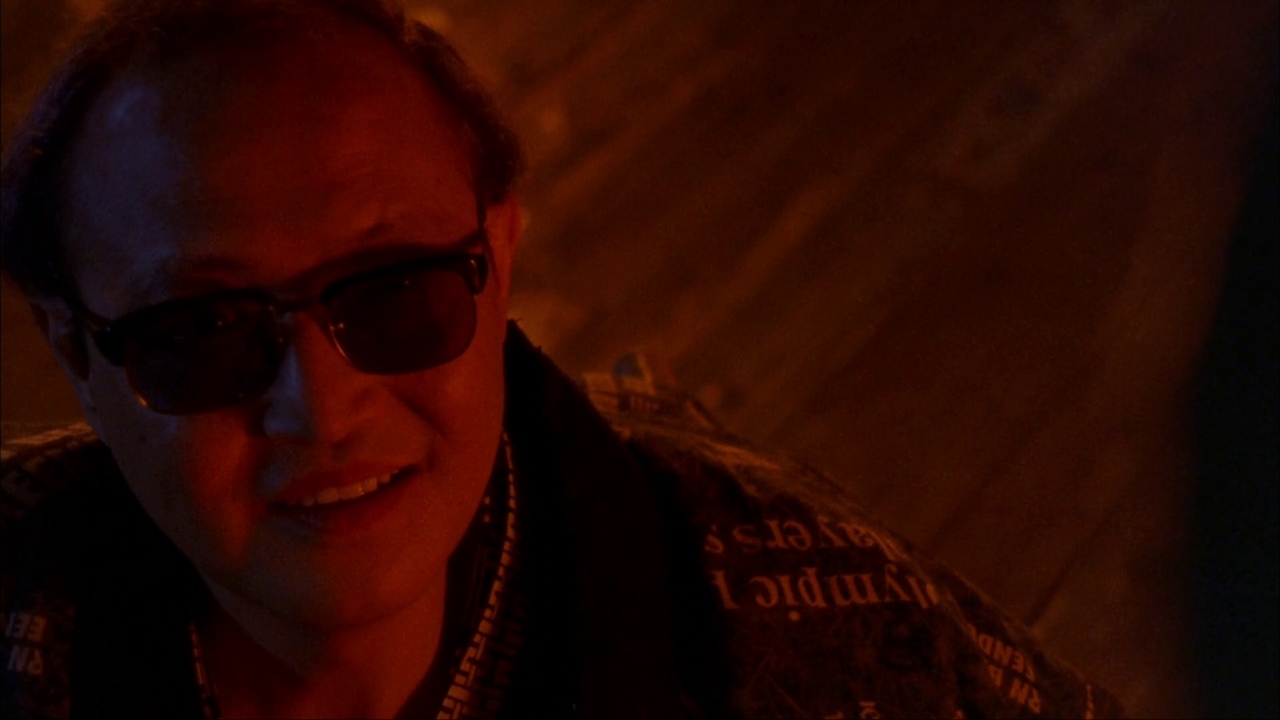
The pair hatch a plan straight out of a screwball comedy. Digging out a script for an unmade romantic TV series, the duo hold a series of auditions for a beautiful female lead. The women requested must fit Shigeharu’s demanding list of requirements, none of them knowing the truth: there is no TV show in production, and they are actually auditioning to become Shigeharu’s real-life wife.
It’s a despicable ruse, and Miike’s tonal subversion wrong-foots us further by playing these scenes with a hybrid of humour and deceptive levity. As the men rifle through headshots and résumés, and a parade of young, hopeful women stand before their blinking camcorder, an ostensible mood of light romantic comedy pervades. The actresses appear one after another, some undressing, some singing, some meeting their gaze, and others looking away.
Miike is keenly aware of the audience’s familiarity with the comedy montage, setting it to a frothy and quirky soundtrack by Kōji Endō. Miike also understands that this is the version of events that Shigeharu and Yasuhisa want us to see—charming and playful. There’s even room in Daisuke Tengan’s screenplay for a magical meet-cute, in which Shigeharu spills tea on a pile of applications, serendipitously pulling one from the pile as twinkling piano music plays.
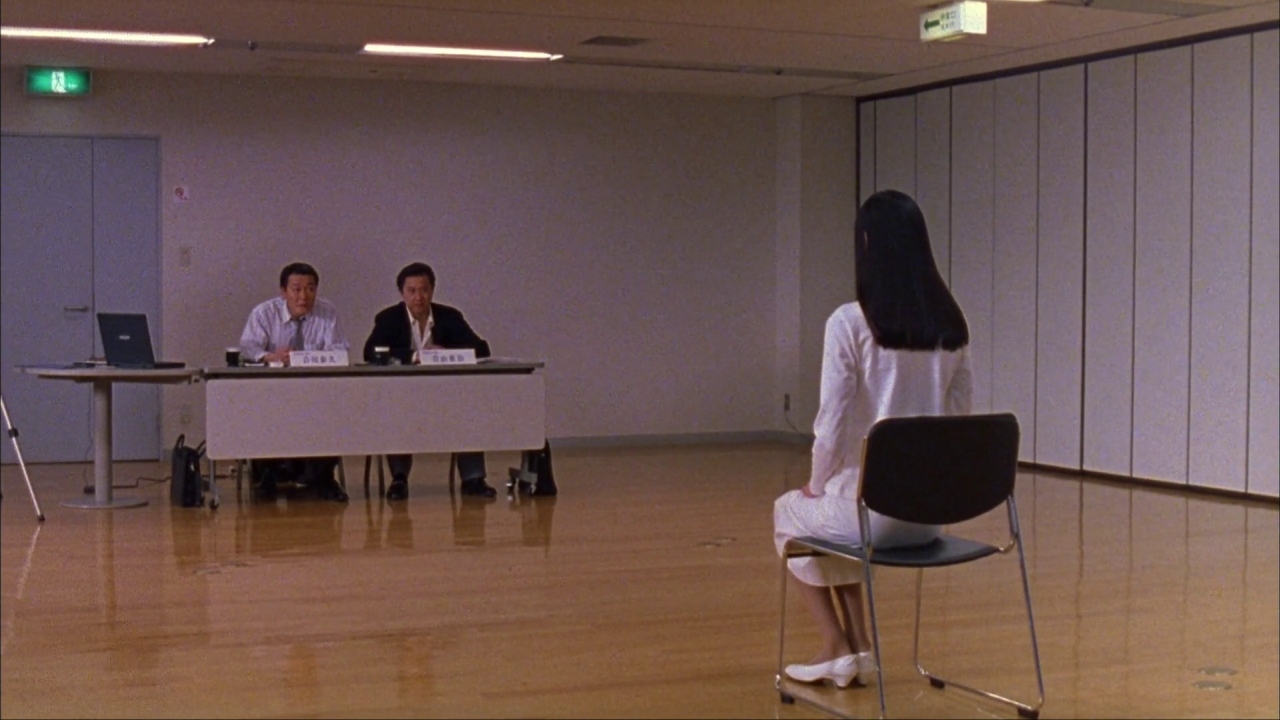
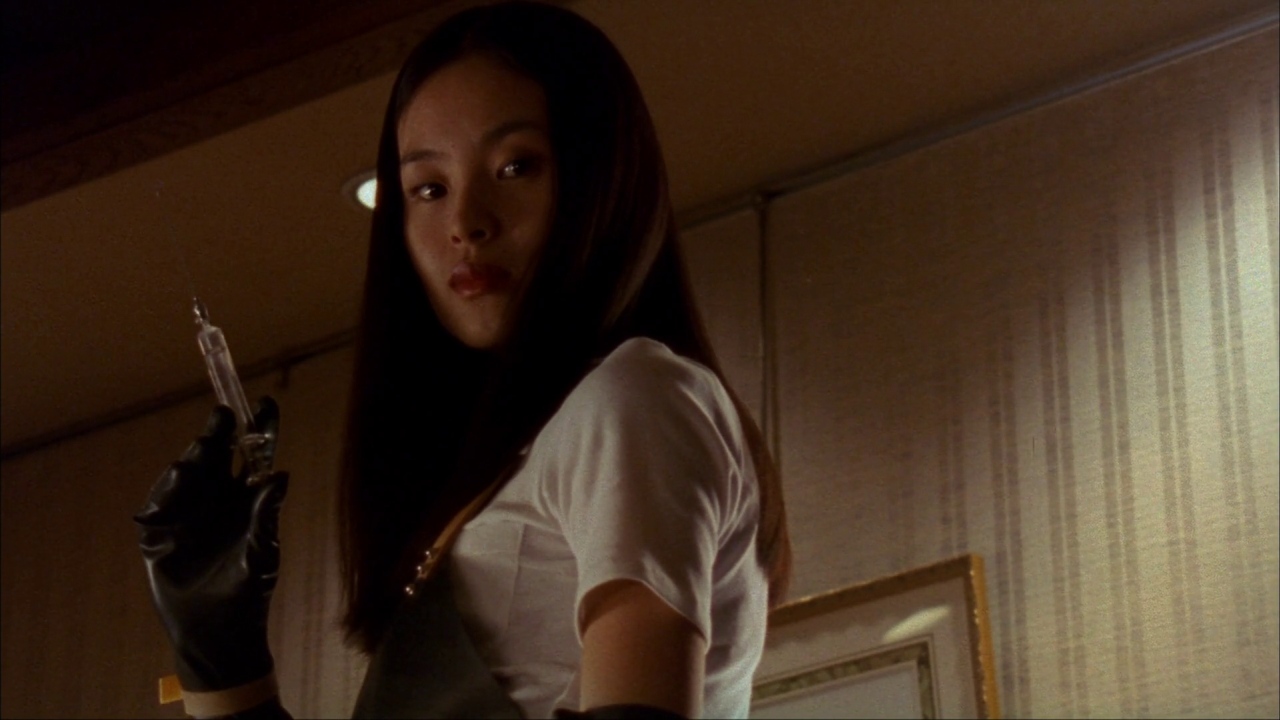
The application belongs to Asami Yamazaki, played by Eihi Shiina, to whom the film belongs the moment she appears on screen. It’s as if there is a gravitational shift, the surface of laissez-faire romance ruptured in an instant. When we meet her, she is centre-framed and facing the panel—facing us. Her black, silken hair hangs over her petite frame. She wears a plain white dress redolent of springtime and picnics, and speaks in a register barely above a whisper. Shigeharu views her as “well-heeled”. She reminds him of his dead wife.
The actresses auditioned are all professionals with valuable, skilled trades, yet they are asked, “Have you ever thought about working in the sex industry?” and told to undress, reduced to spare parts. It’s in his instant infatuation with Asami that Shigeharu gives away how preposterous the entire ruse is.
Like auditioning actors for a film, or scrolling through dating apps today, Shigeharu isn’t looking to fall in love: he’s looking to cast a part in his life. There is no sense of spontaneity or romance, and no deep desire for connection. “All Japanese are lonely,” Yasuhisa notes, and perhaps it’s loneliness and a deep misunderstanding of the difference between people and performers that has led Shigeharu here.
He’s smitten with Asami. Her story seems too perfect. She used to be a ballerina, but hip injuries cut her career short. She has a wealth of references, including music producers and dance instructors. She has the pedigree and body of a dancer, but luckily for Shigeharu, the injury will keep her from straying too far.
Shigeharu knows he has found the girl. Yasuhisa advises his starry-eyed friend to “cool off”. In the audition room, Miike shows us black-out blinds slowly lowering; Shigeharu is a master of blocking things out, pushing nagging questions to the far reaches of his mind where they barely make a whisper. Why can’t he reach any of the references that Asami lists? Why doesn’t she care about money, and why does she seem to have no life outside of the moments they meet?
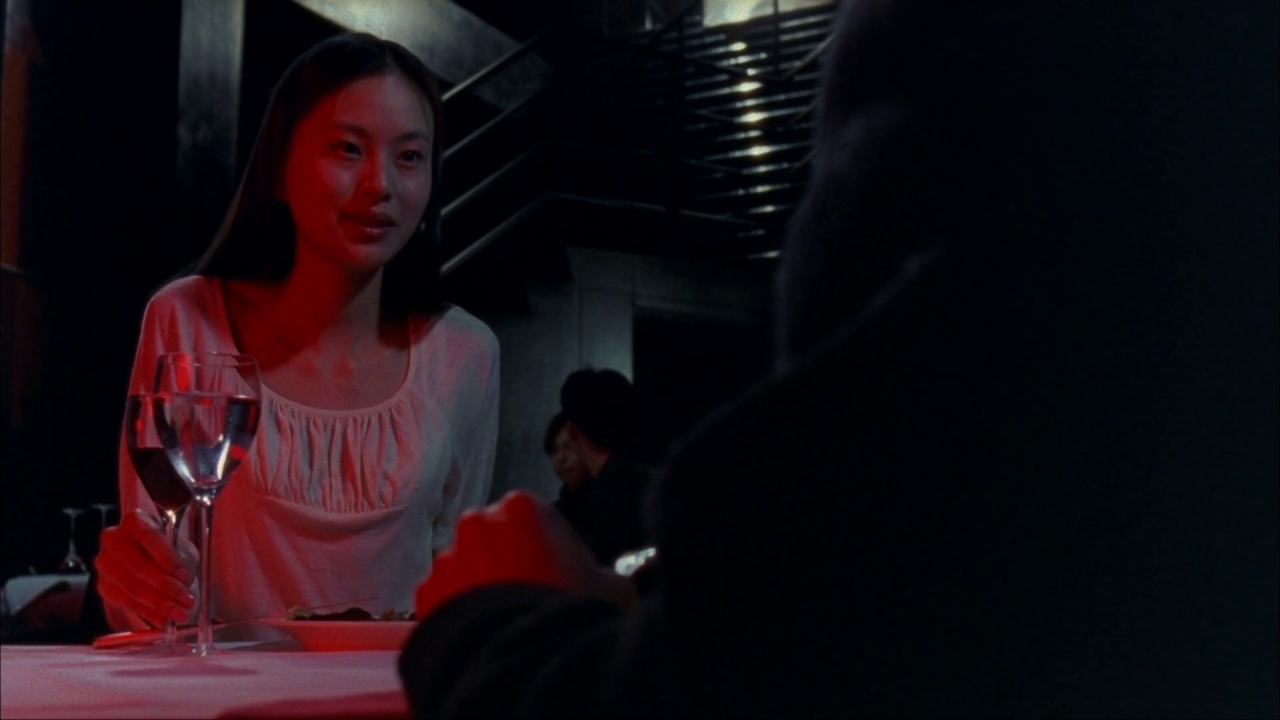
The two have dinner together, where he tries to press her for answers. But when Miike cuts to a wide shot, we see the restaurant is suddenly empty save for Asami and Shigeharu. When finally we see Asami at home, it’s in an ominous tableau: she is sitting motionless on the floor, hair hanging over her face, spine pressing against her skin, with a large burlap sack and a telephone seemingly the only things furnishing her room.
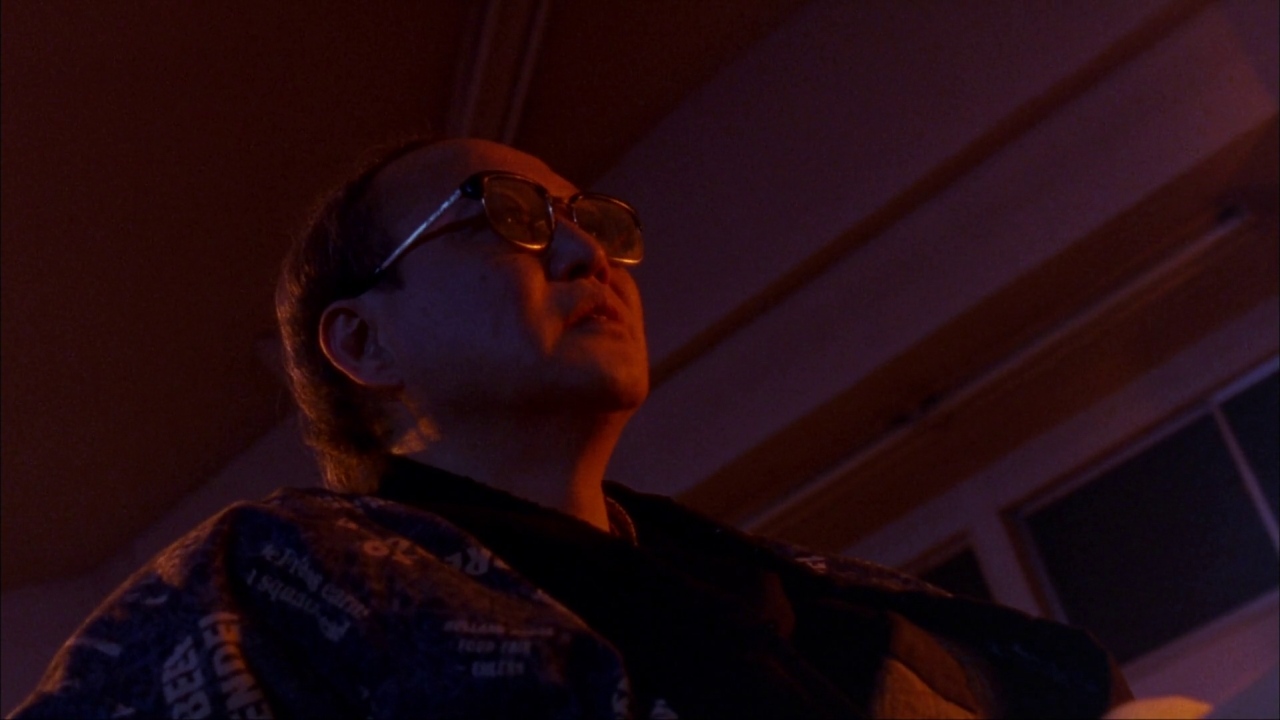
Miike brings us again and again to the precipice of answers before sending us tumbling once more into mystery and encroaching dread. He presents us with a false reality and asks if we really wish to see the truth. Eventually, some of the truth must come out. Shigeharu takes Asami on a trip, where he breaks the news that the TV project is no longer going ahead and intends to propose. Dressed in all-white, like a ghost in Kaneto Shindō’s Kuroneko (1968), Asami disappears into the night.
To describe how Miike’s film plays out from here would do it an injustice. Audition takes on elements of a detective story with a neo-noir patina, yet each time we find a path forward, the film dodges and parries. Like Shigeharu, we stumble forward into darkness, unaware of what is growing in the shadows.
Miike’s flexibility with genre, as well as his undeniable knack for surprise, might have come to define the film. However, whether or not the experience of watching Audition comes loaded with prior knowledge of its most infamous moments, there is endless, perverse pleasure in seeing the pieces slowly fit together—watching a film coalesce into its most savage, horrifying self.
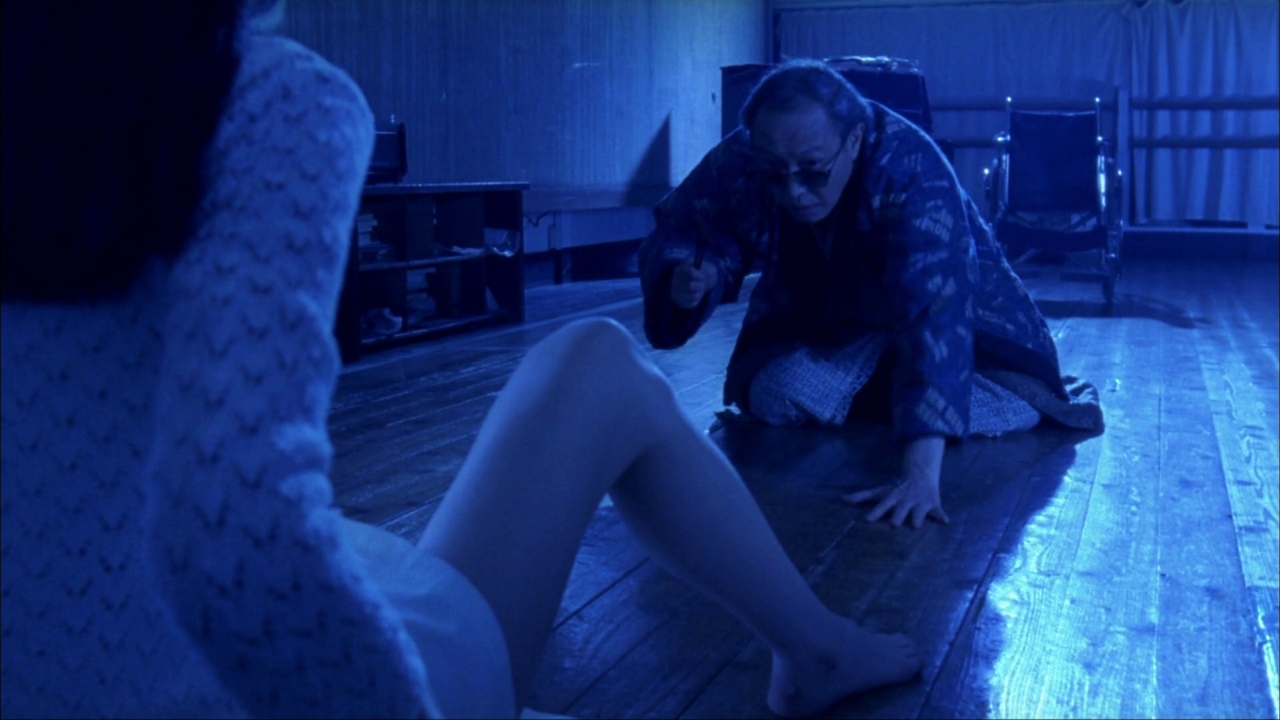
It serves as both an electrifying thriller and a stark commentary on misogyny and entitlement within the genre. “A man can’t function without a woman’s help” is a line repeated multiple times throughout, and rarely has a director taken such giddy, grotesque thrills from putting that statement to the test.
The further we incorporate the moving image into our lives, the deeper we romanticise its aesthetic value—and, ultimately, the less we question its validity. Inundated with images of beautiful people with beautiful lives, we bend reality to fit our own conception of what we think we should want, what we think we need. Blinded by the glare of a camera’s LCD screen, high on the deception, we may already have hit the point of no return when it comes to filmed fantasy. Audition, at least, reminds us that digital daydreaming is a gateway to untold horrors. That Miike implies we deserve it’s what makes Audition one of the great psychological horrors of the 1990s.
JAPAN | 1999 | 115 MINUTES | 1.85:1 | COLOUR | JAPANESE


Audition is a typically stylish film for Miike, but it is refined and subtle in a way that allows its elegant cinematography to flourish. Sourced from the original 16mm camera negatives, this new 4K restoration looks phenomenal, upgrading the level of detail and depth in the image whilst perfectly maintaining its film grain and texture. The colours throughout are rich and eye-catching, particularly as the film moves from the white fluorescence of the office buildings to the neon streets and bars of Tokyo. The film’s second half—particularly that scene—boasts some exceptional sound design, which is represented here with an excellent lossless upgrade. The sound effects are some of the queasiest I can remember hearing, and they’re clearer than ever with this restoration.
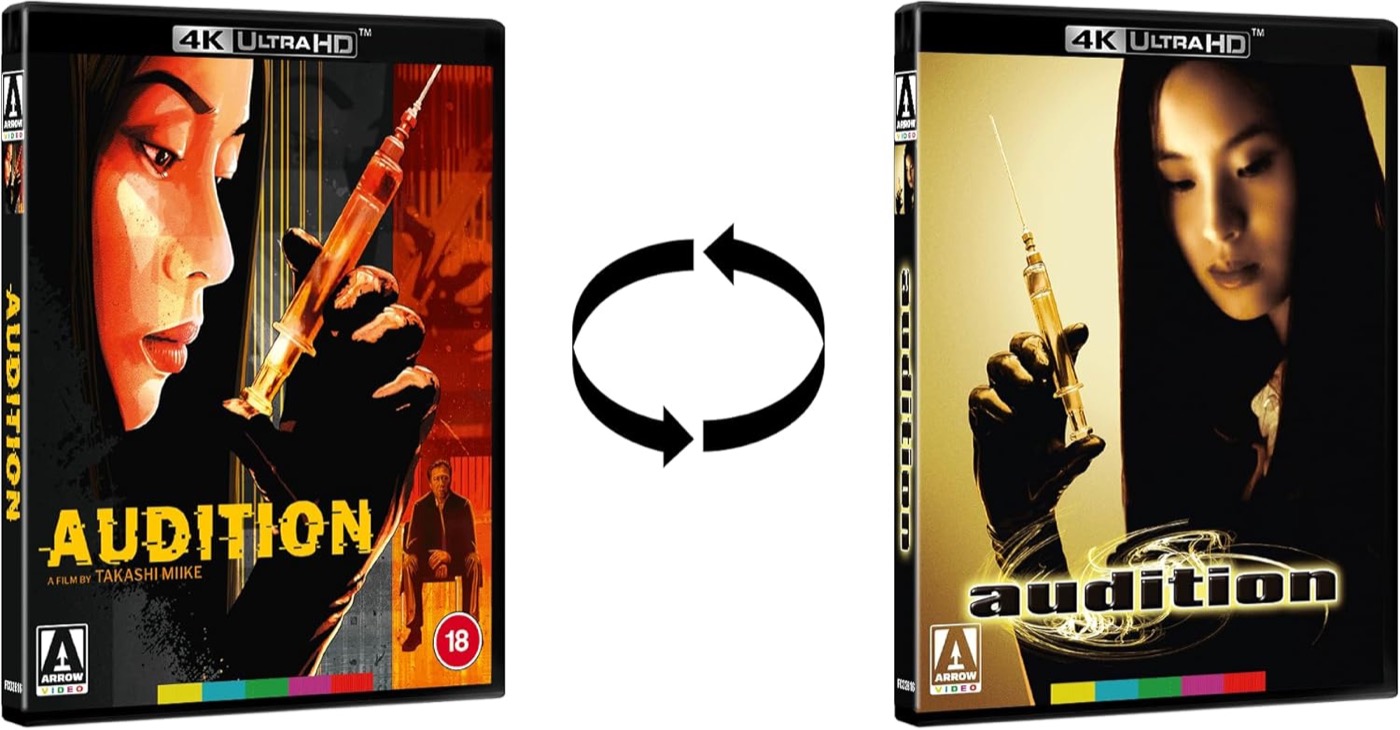

director: Takashi Miike.
writer: Daisuke Tengan (based on the novel by Ryu Murakami).
starring: Ryo Ishibashi, Eihi Shiina, Tetsu Sawaki & Jun Kunimura.