BILL & TED’S BOGUS JOURNEY (1991)
A tyrant from the future creates evil android doubles of Bill and Ted and sends them back to eliminate the originals.

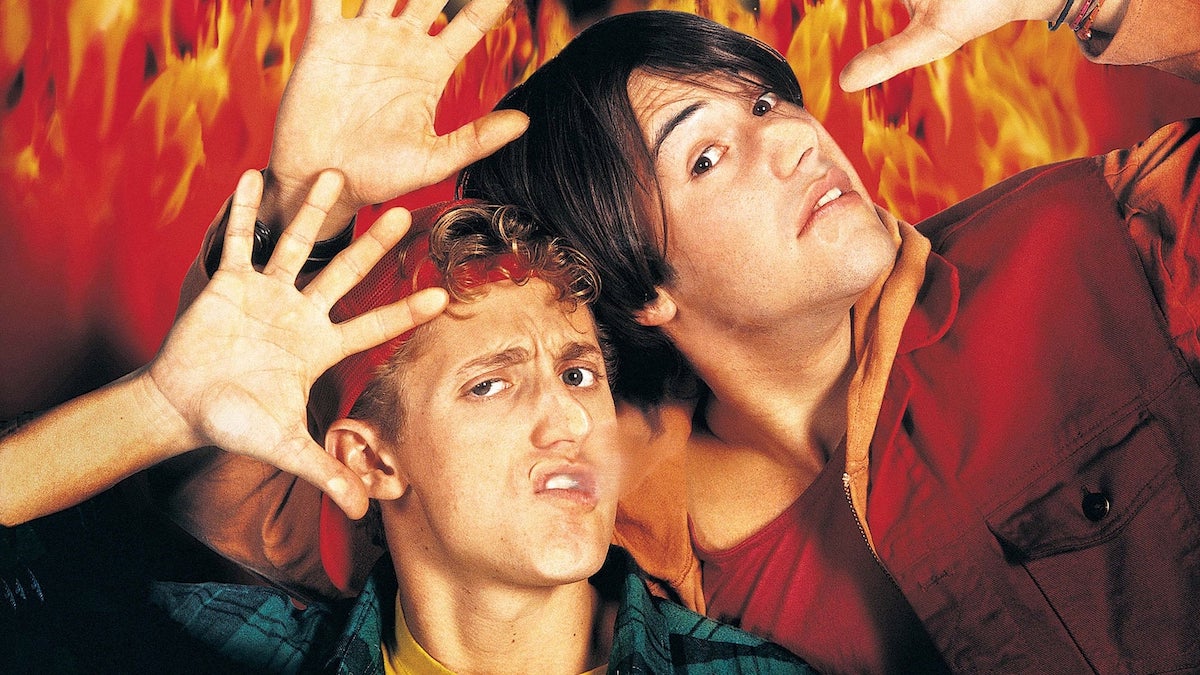

A tyrant from the future creates evil android doubles of Bill and Ted and sends them back to eliminate the originals.
Bill & Ted’s Excellent Adventure (1988) was an unexpected hit —grossing $40M from a $6.5M budget —and kept growing in popularity thanks to its home video afterlife. A sequel was all but guaranteed. Initial ideas revolved around best friends Bill S. Preston Esq. (Alex Winter) and Ted ‘Theodore’ Logan (Keanu Reeves) having to pass their English exam, sending them on an adventure through famous stories like Romeo & Juliet and Tom Sawyer. It’s hard to imagine how that concept could have worked without being too much of a retread of the original, so luckily writers Chris Matheson and Ed Solomon instead settled on a premise best summarised by its working title: Bill & Ted Go to Hell.
Excellent Adventure’s director, Stephen Herek, didn’t want to return, claiming the resulting screenplay was “almost a parody of a movie that was already a parody”. Filmmaker Peter Hewitt was hired on the strength of his short film The Candy Show (1989). It was a huge vote of confidence in the Englishman’s abilities, as Bill & Ted’s Bogus Journey —retitled over concerns about using the word ‘Hell’ in a comedy - was his first feature-length film. Hewitt also cameos as the smoker in the hardware store whom Death (William Sadler) mentions he’ll be seeing “real soon”.
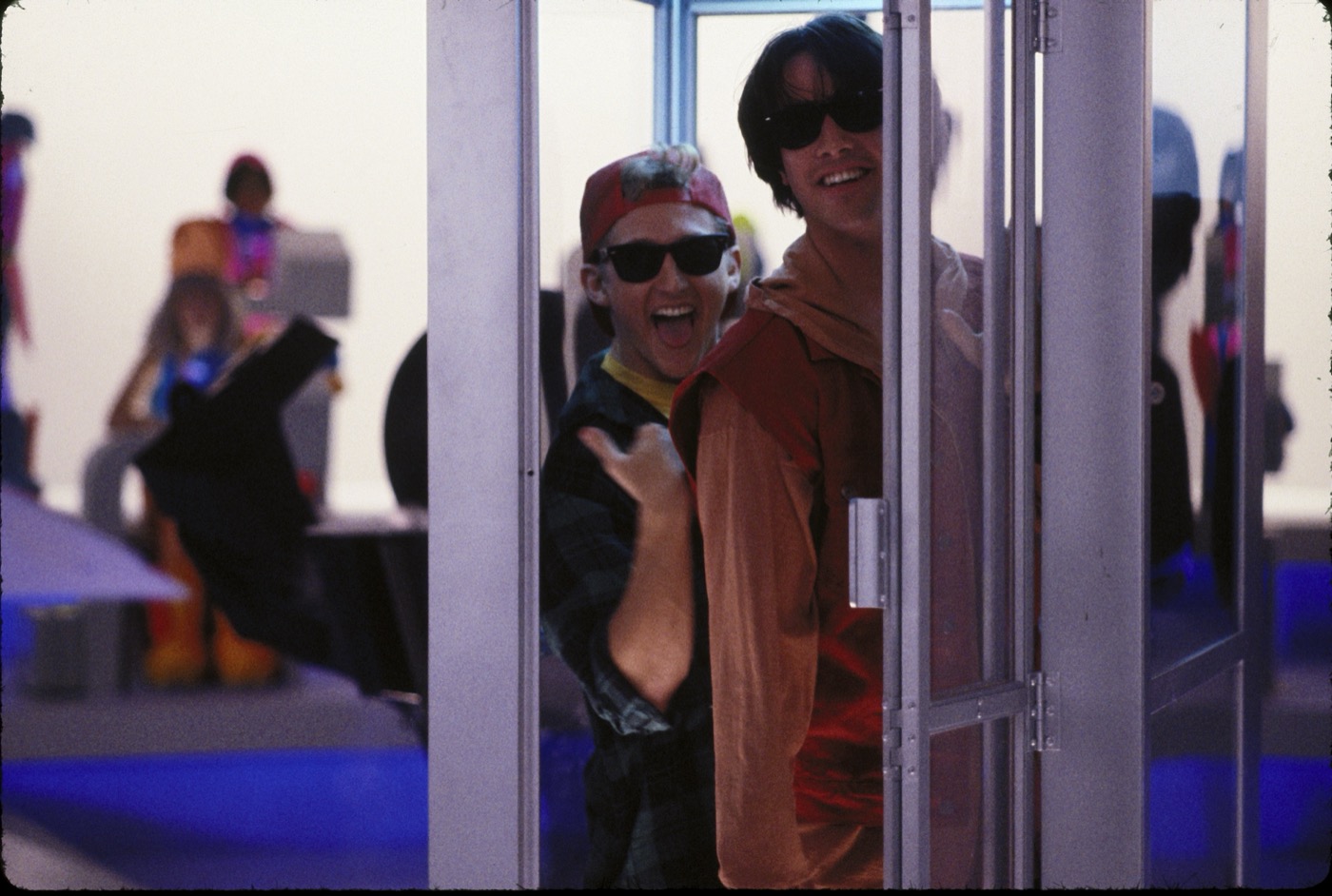
The joy of Bogus Journey is how it broadly follows its predecessor’s template - with Bill and Ted embarking on a wild adventure to achieve their destiny as rock n’ roll legends that shaped society into a utopia —only now they’re trying to win a Battle of the Bands contest rather than pass a history test. It would’ve been understandable to simply tell another time-travel story, particularly given the phone booth’s iconic status, but the writers bravely took an entirely different direction. Indeed, time travel is used only sparingly, and the famous booth barely appears.
Unlike Excellent Adventure, there’s a more prominent villain trying to thwart the pair’s fate: De Nomolos (Joss Ackland), the saturnine leader of a 27th-century movement opposing the paradise ushered in by Bill and Ted’s music. The only reason given for his plot is that he thinks the two teenagers are morons whom people shouldn’t hold in such high regard. He sends two lifelike robots (‘Evil Bill’ and ‘Evil Ted’) back in time to sabotage their Battle of the Bands performance and spread a sinister message to alter history.
It’s a solid setup that lets Winter and Reeves play robotic versions of themselves - characters just as immature, but more inclined to grope their princess girlfriends and try to squash cats. Bogus Journey could have focused solely on malevolent robots destroying their lives and reputations, but the narrative takes a more expansive turn once the evil duplicates succeed in killing their human counterparts. The script’s fantastical elements then truly come to the fore. Trapped on Earth as ghosts, Bill and Ted are ‘exorcised’ after being mistaken for malevolent spirits, before arriving in Hell and having to escape the underworld by defeating Death himself… at Battleships, Twister, and Cluedo.
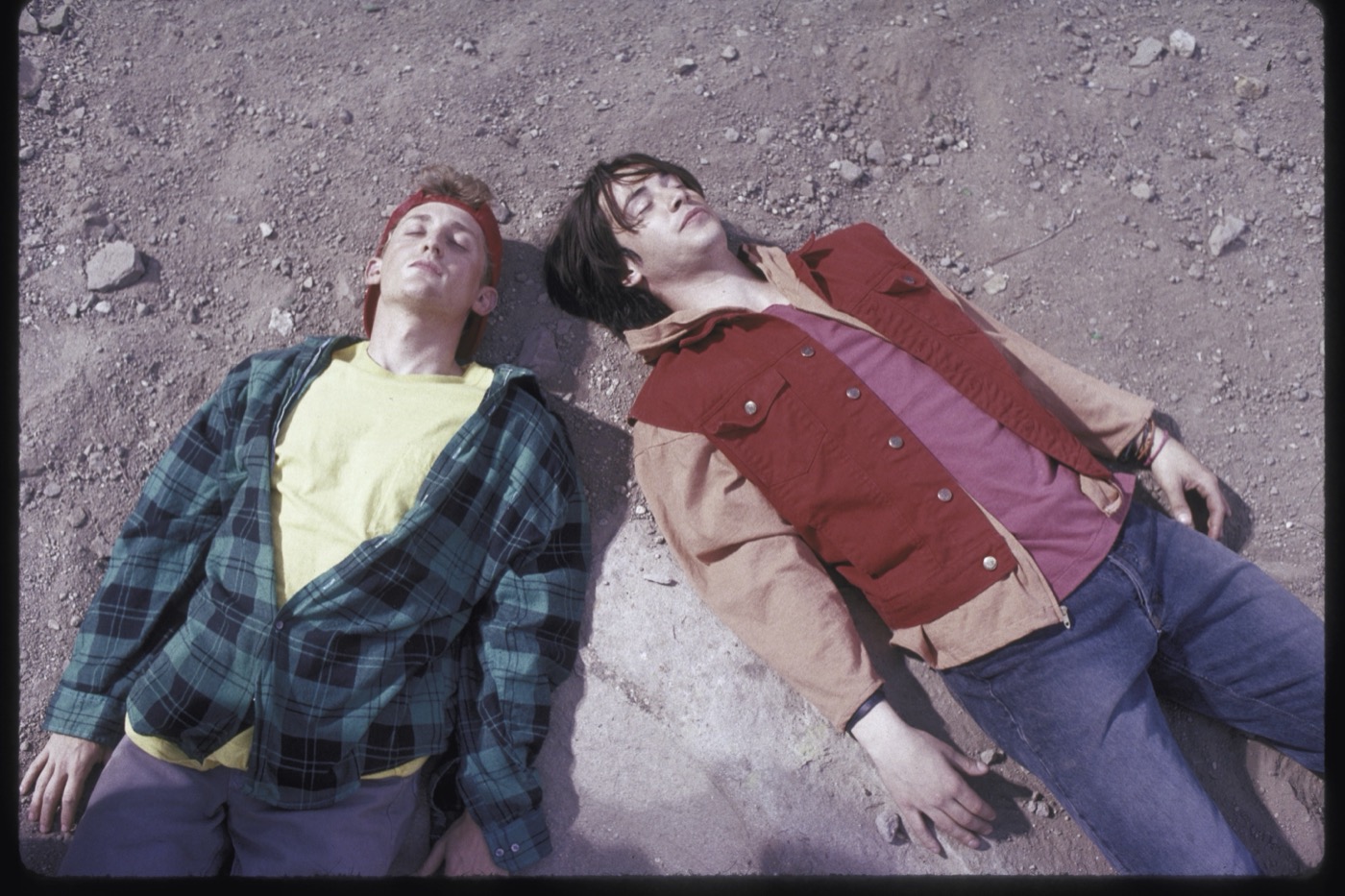
Wacky creativity is the order of the day. The film acts like a live-action cartoon and utilises such logic; Bill and Ted even have ‘whooshing’ sounds added to their jerky movements to accompany their famous ‘air guitar’ stings. Vivid colours and a sense of playful innocence propel the action forward, complemented by surprisingly inventive touches along the way. This is most evident in Hell, which is depicted as a maze of metal corridors impossible to stand upright in, where each cell represents a personal torment. Bill faces an eternity kissing his decrepit Granny (played by Winter himself in old-age makeup), whilst Ted is chased by a creepy Easter Bunny for stealing his younger brother’s Easter basket. Alternatively, they might both end up doing push-ups at military school forever.
Comedically, Bill and Ted are as lovably guileless as ever, though tolerances may vary regarding their airhead shtick and carefree attitude. Winter and Reeves slip back into the roles effortlessly, and the sequel’s versions of the duo are arguably even more likeable. Reeves is noticeably more confident here, with the film releasing on the cusp of his rise to true stardom with the releases of Point Break (1991) and My Own Private Idaho (1991) —performances that paved the way for major hits like Bram Stoker’s Dracula (1992) and Speed (1994).
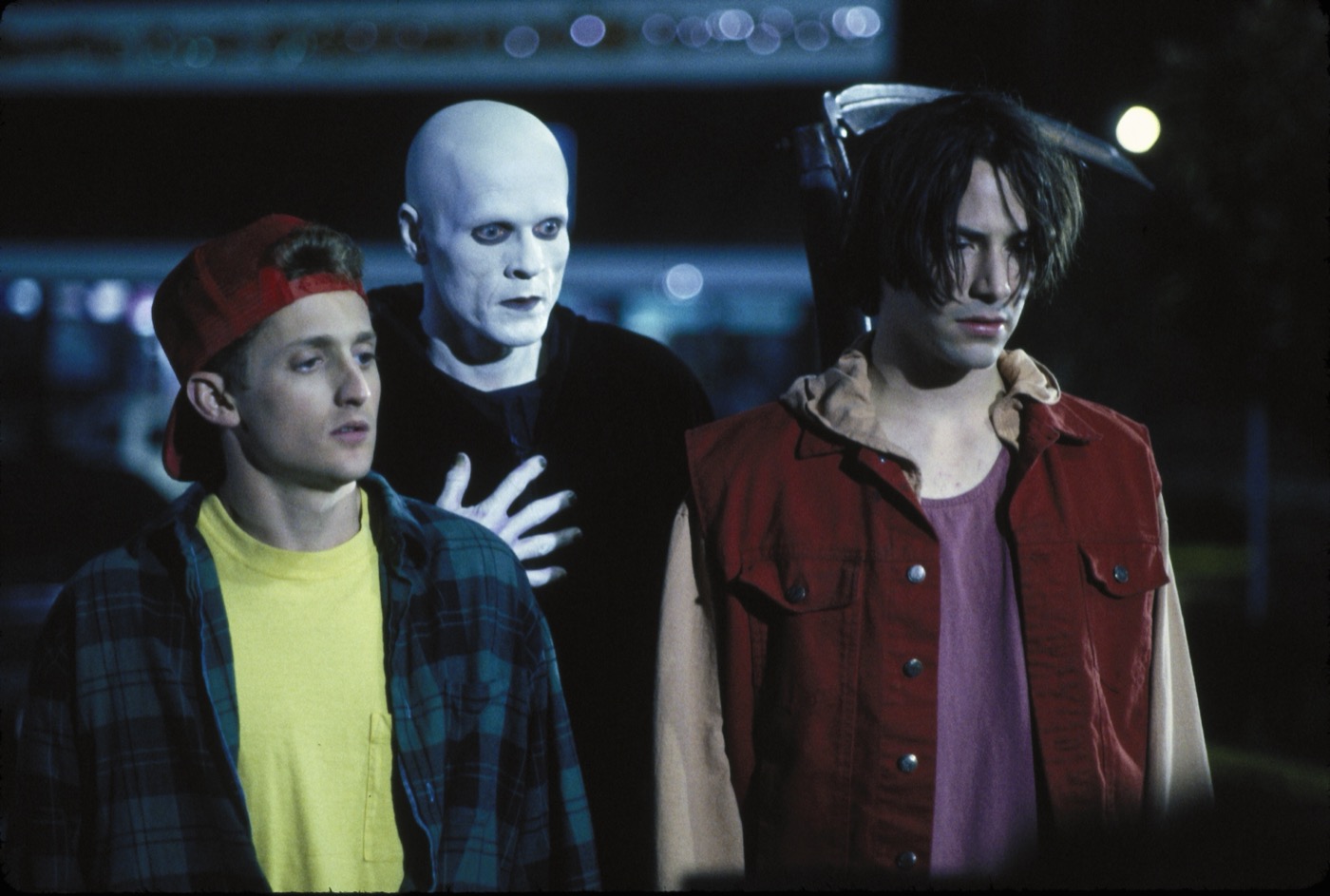
Death also adds a fresh dimension to the film. William Sadler (Die Hard 2) brings a unique flair to the role, combining a heavy Czechoslovakian accent (inspired by his stage-actor friend Jan Tříska) with a sour demeanour that gradually softens. It’s a clever way to illustrate the positive effect Bill and Ted have on everyone they meet - even the Grim Reaper himself, who quickly becomes eager for praise from the happy-go-lucky duo and joins their band, Wyld Stallyns, by the end. It’s no wonder Sadler was invited to reprise his role for the very belated sequel, Bill & Ted Face the Music (2020), even if his screen time was significantly reduced.
While Bogus Journey wasn’t as well received by critics as Excellent Adventure, nor as commercially successful (grossing $38M domestically against a larger $20M budget), its reputation has grown over time. Though the first film captures the heart of these charming characters better and delivers a neater story using its time-travel premise, Bogus Journey is one of the few comedy sequels that isn’t a lazy rehash. It uses its leads to explore bigger, weirder, and more imaginative concepts. It also had the budget to realise its ambitions, even if some of the VFX for Heaven and Hell look dated today due to unconvincing matte paintings. However, the design work and core ideas haven’t aged badly - particularly the absurdity of two big-bottomed aliens named Station merging into a single, hyper-intelligent scientist with a big butt.
The sequel isn’t without its flaws. Rufus (George Carlin) was a memorable guide for the airheads in Excellent Adventure, but his role here is diminished, especially after an opening action scene that hints at greater involvement. Furthermore, while having a larger-than-life villain gives the plot higher stakes, De Nomolos (co-writer Ed Solomon’s name spelt backwards) represents a wasted opportunity. Joss Ackland famously disdained working on the film and expressed regret over taking the role years later, but his frustration likely stemmed from how thin the character was on the page. There’s an exciting setup for De Nomolos as the fascist embodiment of an elderly neighbour telling the local kids to turn their music down, yet he remains absent for most of the film before being defeated far too easily during the climax.
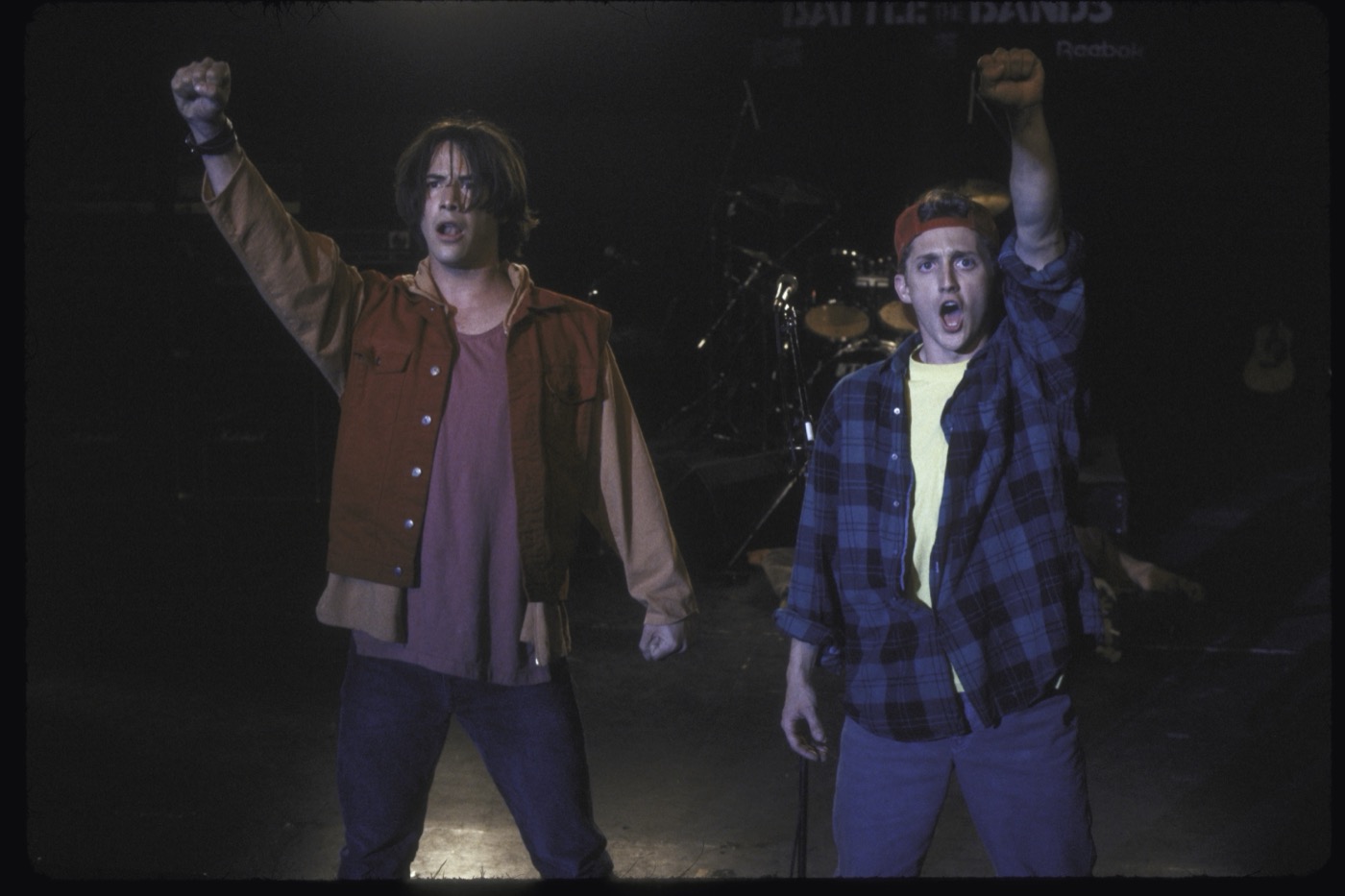
It’s certainly a shame Bogus Journey wasn’t a bigger hit in 1991, as we might have seen at least one more adventure before Keanu Reeves moved on to major Hollywood stardom by the mid-’90s. However, it wrapped up the story in a way that felt definitive at the time: Bill and Ted finally learn to play their instruments after 16-months of high-intensity lessons, to perform an incredible track (a cover of “God Gave Rock ‘n’ Roll to You” by Kiss) broadcast live to the entire world.
The end-credits montage of newspaper and magazine covers revealed how Wyld Stallyns transformed global culture and became bigger than The Beatles, fulfilling the premise of how two tone-deaf Californian idiots could become the catalyst for a lasting world peace. The second sequel, released nearly three decades later, wasn’t necessary, proving to be more of a well-meaning curiosity than an essential addition. Still, in an alternate universe, perhaps the ’90s were filled with Bill and Ted adventures where they travelled to alien worlds and plunged into famous works of fiction. In a way, it’s a pity Keanu Reeves became quite so famous. Bogus, dude.
USA • UK | 1991 | 93 MINUTES | 1.85:1 | COLOUR | ENGLISH

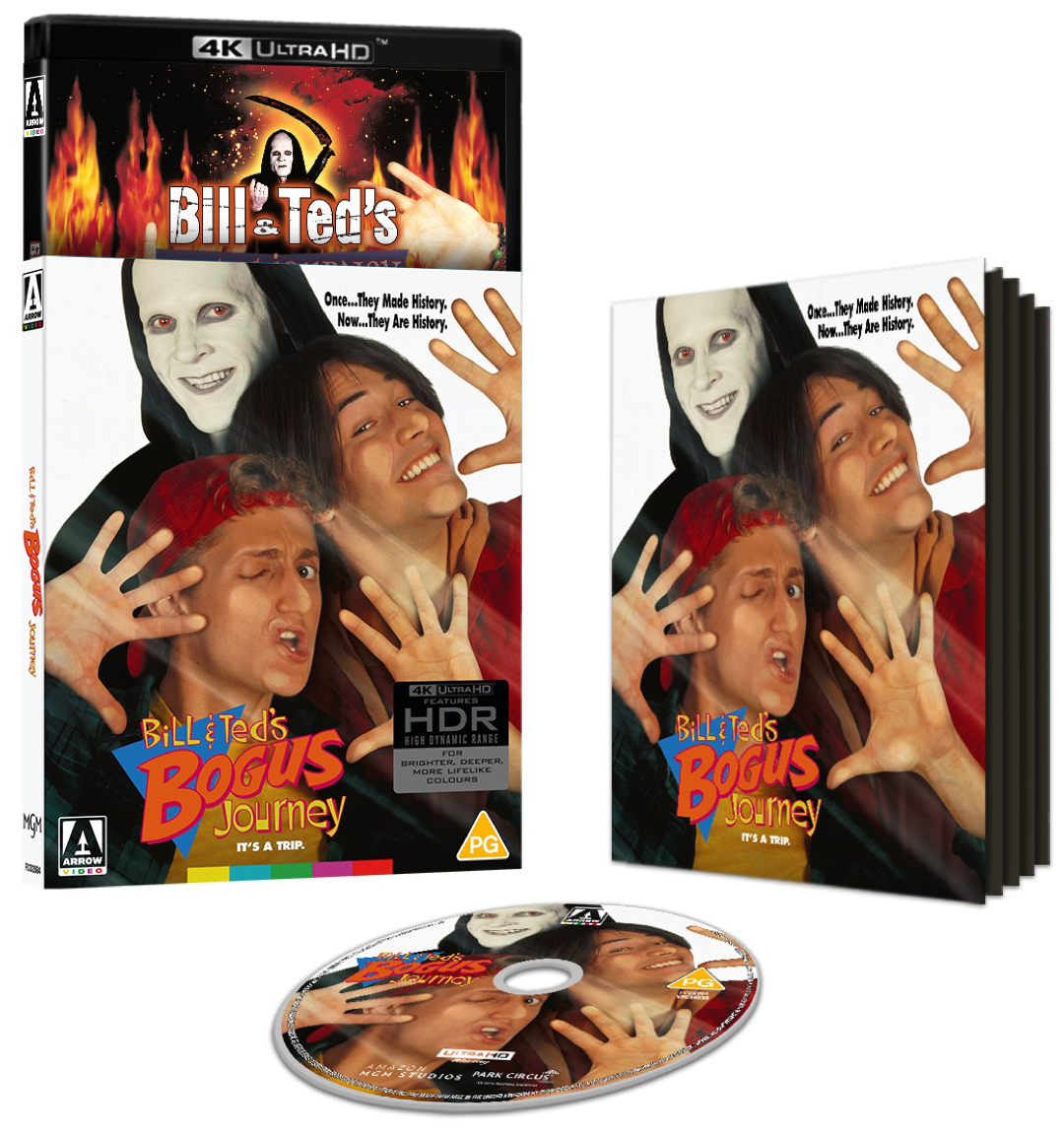
Arrow Video’s new release appears to be a direct port of Shout! Factory’s native 4K scan of the original camera negative, encoded for a single disc in its original 1.85:1 aspect ratio. It features Dolby Vision and HDR10 grading.
Picture quality is naturally variable due to the original analogue elements. Optical compositing and VFX shots coarsen the detail and grain, but this is an inherent trait of the source material rather than a flaw in the transfer. On first-generation elements, fine details are superb, grain remains organic with no signs of digital noise reduction, and the restoration is thoroughly clean. The Wide Colour Gamut and HDR grading deliver punchy primary colours, deep blacks, and natural skin tones without appearing artificially modern.
The release also includes both 5.1 surround sound and 2.0 stereo tracks, which sound strikingly similar in tonal balance. Both options excel at delivering the rock and metal soundtrack with tight bass, crisp highs, and a wide front soundstage.
Dialogue is pristine, perfectly synchronised, and well-balanced within the mix. Surround engagement is relatively light and reserved for key sequences — such as the scenes in Hell — making for a front-focused listen. Nevertheless, clear channel separation ensures the audio remains energetic and distinct without descending into mush.
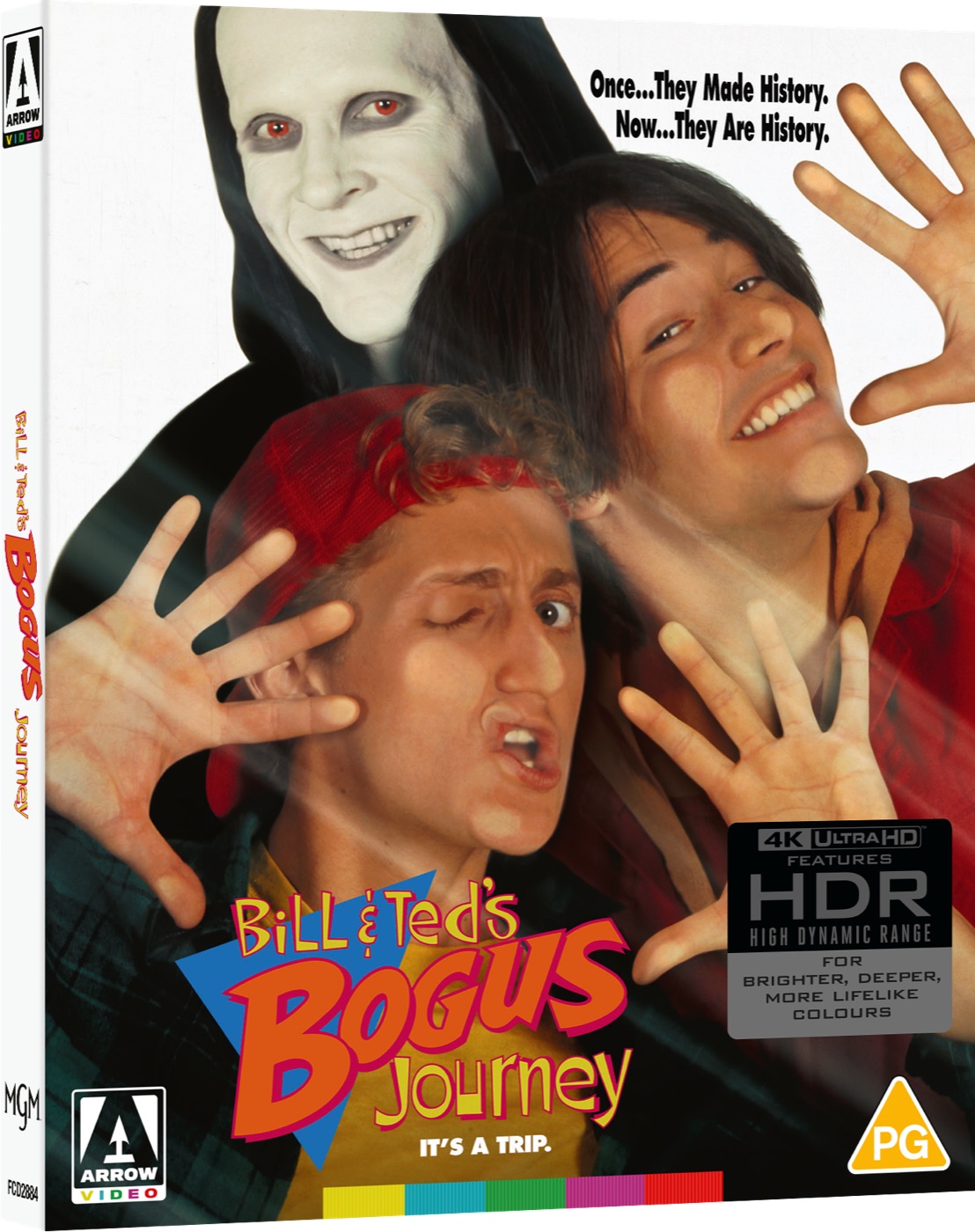
director: Pete Hewitt.
writers: Chris Matheson & Ed Solomon.
starring: Keanu Reeves, Alex Winter, William Sadler, Joss Ackland, Chelcie Ross, Pam Grier, Sarah Trigger, Hal Landon Jr. & George Carlin.