VAMPIRE’S KISS (1989)
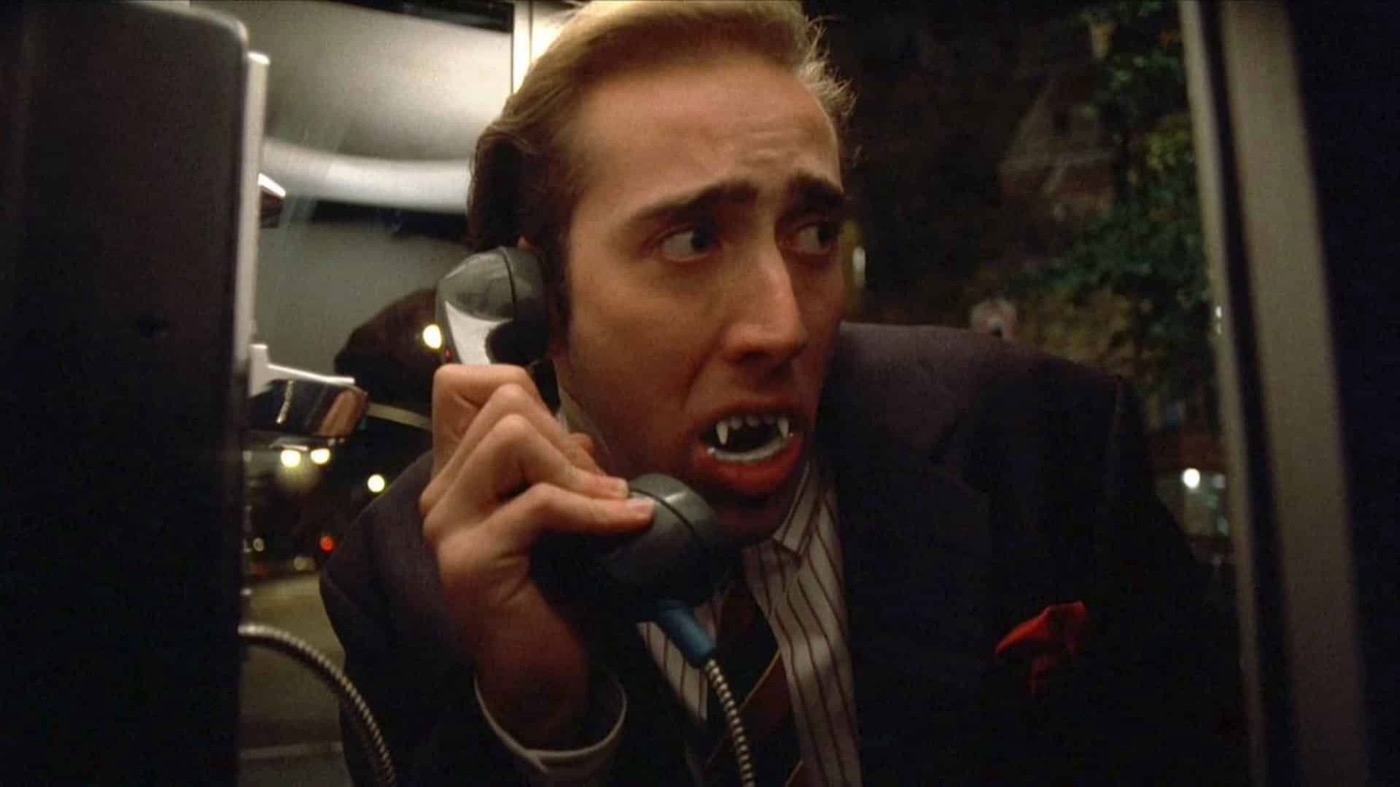
After an encounter with a beautiful woman, a publishing executive thinks that he's turning into a vampire.


After an encounter with a beautiful woman, a publishing executive thinks that he's turning into a vampire.
Vampires have dominated the horror landscape for over a century and, much like the infamous Count himself, seem destined to live for eternity. Since their literary debut in John William Polidori’s The Vampyre, these creatures have captivated generations of writers and filmmakers. Yet between F.W Murnau’s seminal masterpiece Nosferatu (1922) and Werner Herzog’s remake Nosferatu the Vampyre (1979), the cinematic mythos barely changed. Certainly, there were variations. Bela Lugosi injected an unmistakable eroticism into the figure in Tod Browning’s Dracula (1931), and Christopher Lee introduced the iconic white fangs in Terence Fisher’s Dracula (1958). However, these iterations stuck closely to the blueprint established in Bram Stoker’s Dracula.
That changed dramatically in the latter half of the 20th-century, when filmmakers began reshaping the mythology into a vehicle for exploring social and psychological anxieties. Joel Schumacher’s The Lost Boys (1987) used vampirism to express adolescent identity, while Kathryn Bigelow’s Near Dark (1987) employed it as an allegory for addiction. The creature of the night no longer existed merely to haunt Gothic castles or European villages; instead, it had become an unnerving reflection of contemporary society’s moral decay. Arriving amidst this shift was the unconventional black comedy Vampire’s Kiss. Eschewing the tropes of both traditional horror and vampire lore,director Robert Bierman (Keep the Aspidistra Flying) attempted to craft a biting satire on corporate narcissism and masculine insecurity.
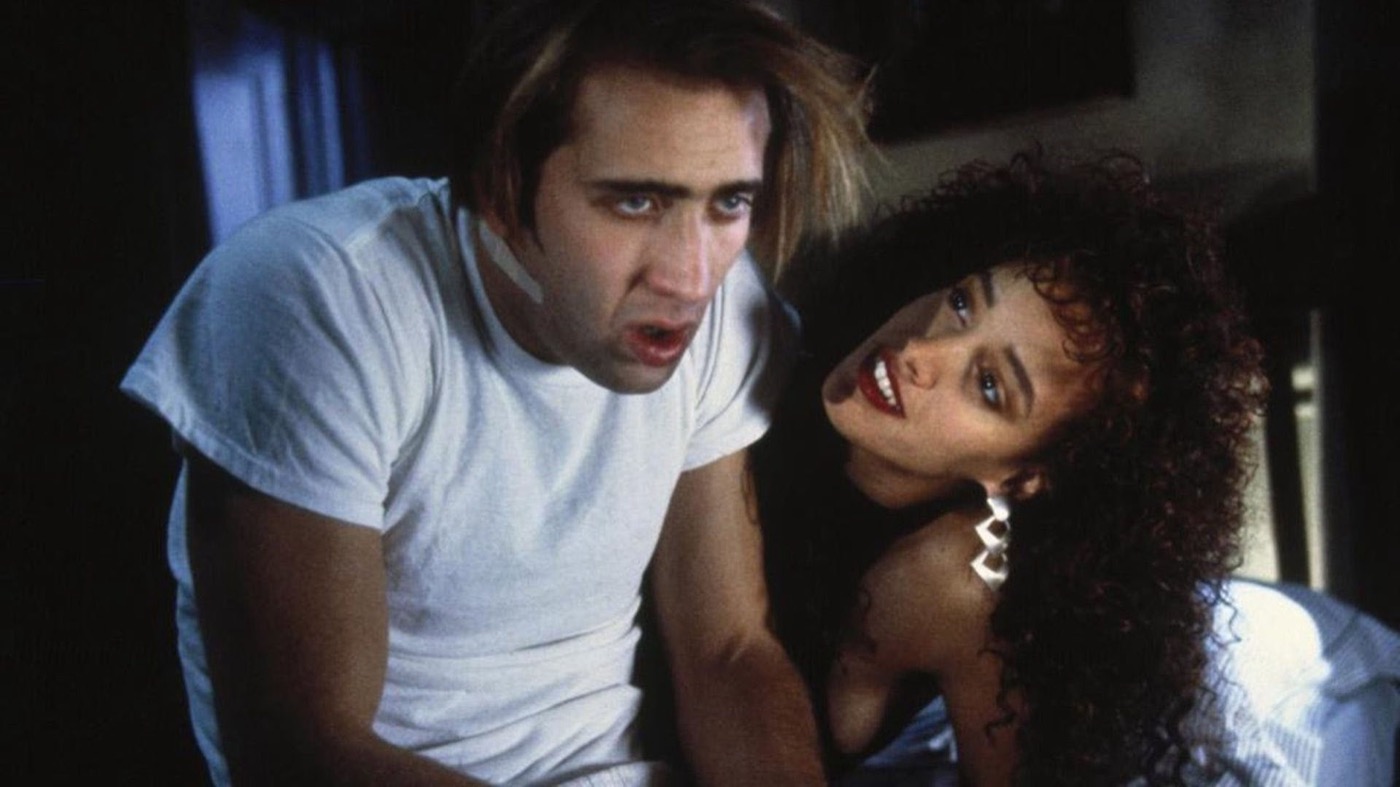
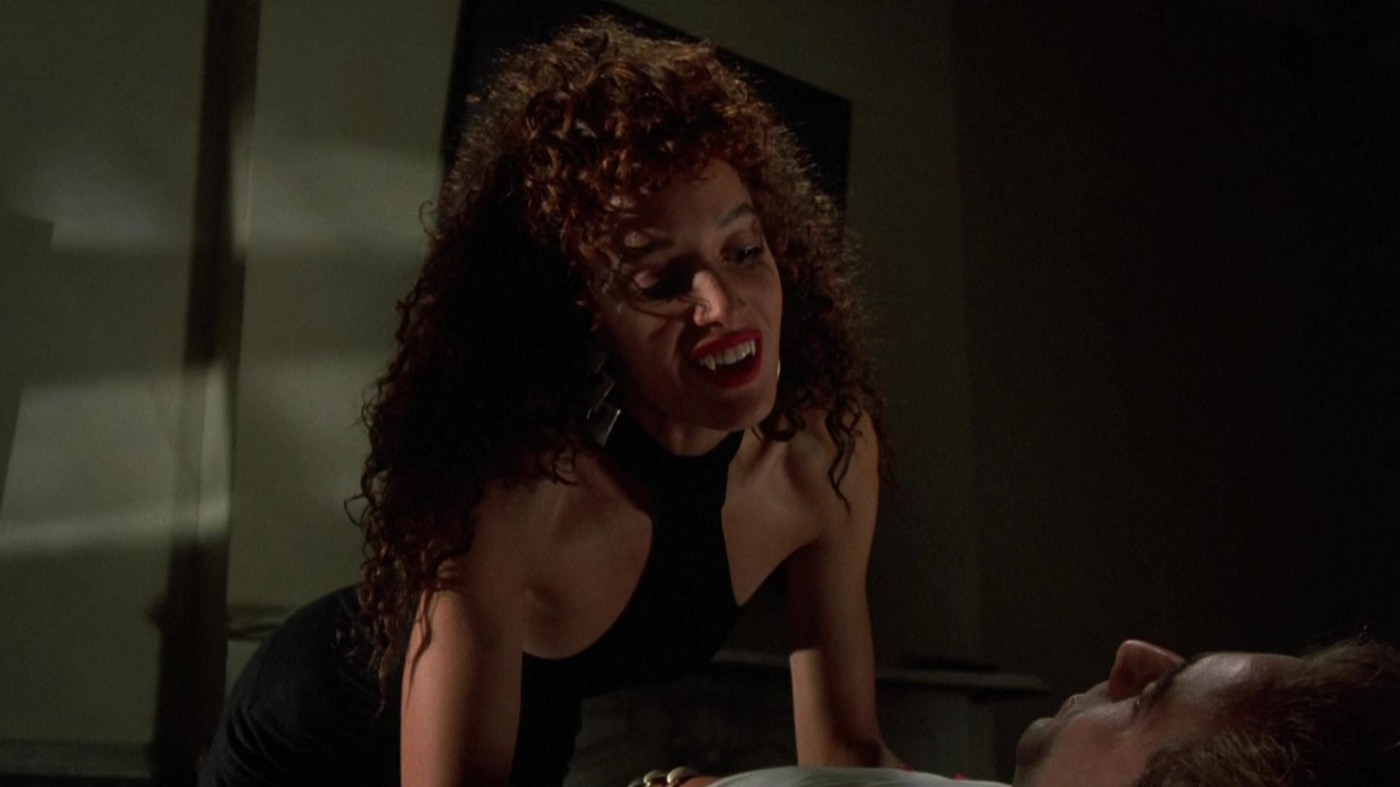
Set against the chaotic backdrop of 1980s New York, the film follows Peter Loew (Nicolas Cage), a narcissistic literary agent whose life is defined by superficial excess. His days are spent humiliating employees and attending therapy sessions, while his evenings revolve around fleeting sexual encounters and cultivating an image of urbane sophistication. During a night of womanising at an exclusive nightclub, Peter meets the enigmatic Rachel (Jennifer Beals). After they return to his apartment, their encounter takes a bizarre turn when Rachel bared vampire fangs and bites his neck. The following morning, Peter discovers the wound and becomes convinced he has been infected. As he believes he is slowly transforming into a vampire, his behaviour grows volatile and detached from reality. He relentlessly intimidates his assistant, Alva (Maria Conchita Alonso), while his public outbursts unsettle his therapist, Dr Glaser (Elizabeth Ashley). Haunted by visions of Rachel’s nocturnal feeding, Peter spirals into paranoia until the boundary between fantasy and reality disappears entirely.
Joseph Minion had already written one of the decade’s defining New York screenplays with After Hours (1985). Although Martin Scorsese’s direction deserves immense praise, the film’s portrait of escalating paranoia and urban alienation belongs entirely to Minion. When viewed alongside Scorsese’s comedy, Vampire’s Kiss functions almost as a spiritual sibling. Both centre on a metropolitan professional whose grip on reality deteriorates as he stumbles through a nightmarish urban landscape.
Unfortunately, Minion’s sophomore effort fails to recapture the balance that made his earlier work so distinctive. The fundamental problem with his script is a total lack of tonal consistency. It’s almost impossible to determine what tone Minion is trying to sustain as the narrative oscillates unpredictably between hyperbolic melodrama, manic black comedy and surreal expressionism. While these shifts aren’t inherently problematic, none of these modes are given room to establish a coherent identity.
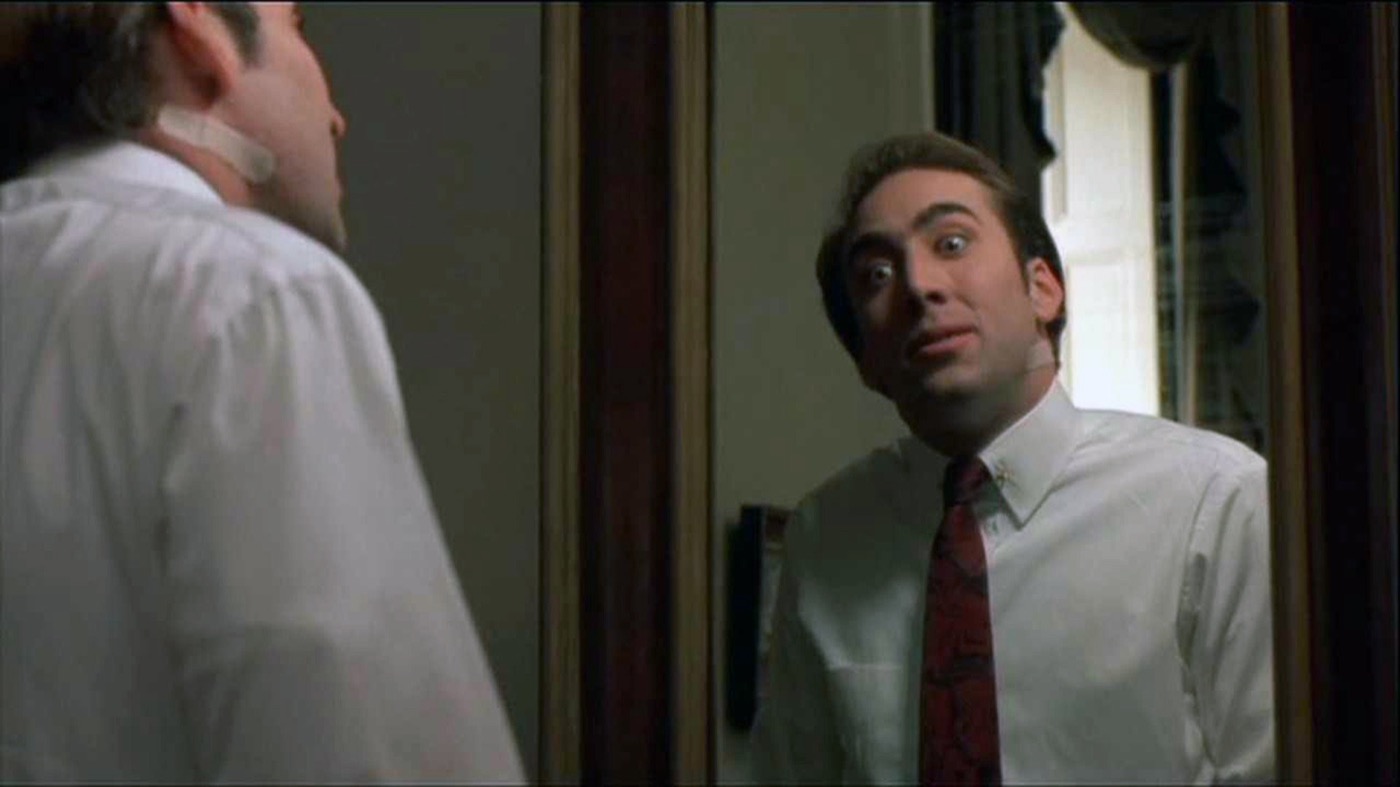
That uncertainty could stem from the screenplay’s genesis. Following the exhausting production of After Hours, Minion found himself creatively drained and unable to write. Encouraged by producer Barbara Zitwer (The Stuff), he isolated himself in a hotel room for a fortnight to produce an erotic horror. Instead, what emerged was a deeply personal tale about alienation, fractured identity and self-delusion.
However, whatever tonal ambiguities existed on the page are undoubtedly heightened by Bierman’s direction, which frequently undercuts psychological unease with broad visual gags and inane comic detours. Perhaps the film’s biggest laugh emerges at the height of Peter’s delusion, when he chases pigeons through Central Park wearing plastic vampire fangs. The evening culminates with him returning home to sleep beneath an overturned sofa as a makeshift coffin.
Yet that absurdity abruptly gives way to disturbing cruelty as Peter sinks deeper into his odyssey. His treatment of Alva crosses the line from eccentricity into outright psychological abuse. His desperate search for a missing contract becomes a bureaucratic obsession, resulting in a sexual assault presented with a degree of realism entirely at odds with the surrounding comic excess. Had Bierman fully committed to the outlandish dark comedy, Vampire’s Kiss might have emerged as an amusing satire of Wall Street arrogance. Had he embraced psychological horror, it might have stood alongside Roman Polanski’s Repulsion (1965) and George A. Romero’s Martin (1977) as a compelling portrait of a disintegrating mind. Instead, it remains suspended in a state of tonal purgatory, fulfilling the potential of neither.
It’s impossible to discuss Vampire’s Kiss without addressing Nicolas Cage’s (Wild at Heart) unforgettable turn as Peter Loew. His performance is one of apocalyptic lunacy—arguably one of the most unrestrained pieces of acting ever captured on celluloid. Drawing clear inspiration from German Expressionism, his physical mannerisms and delivery dominate the screen. As Peter prowls the streets of Manhattan, his hunched posture and angular movements evoke Max Schreck’s Count Orlok in Nosferatu. Meanwhile, every emotional beat is amplified beyond all semblance of naturalism,with simple lines delivered as though part of an avant-garde theatre production. Whether wildly gesticulating, leaping onto office desks or manically reciting the alphabet, Cage distils the character into an inimitable maelstrom of calibrated chaos. While it occasionally strays into camp, it remains astonishing that the studio permitted such an eccentric interpretation.
How much one enjoys Cage’s descent into madness ultimately depends on personal preference. Some viewers will find his idiosyncratic brand of “Nouveau Shamanic” acting an endless source of comedy, while others may find it relentlessly excessive. Regardless, time has been generous to the performance, which has since acquired a cultural afterlife. One particularly unhinged tirade—in which Peter menacingly berates his assistant with a wide-eyed stare—has been endlessly recycled into internet memes.
Crucially, Vampire’s Kiss feels like a precursor to Cage’s broader career. Beneath Peter’s manic exterior lies the same self-destructive melancholy that would later be refined into the Oscar-winning pathos of Leaving Las Vegas (1995). His compulsive gestures anticipate the obsessive behaviour of Roy Waller in Matchstick Men (2003), while his commitment to the absurd foreshadows the delirious theatricality of The Wicker Man (2006).
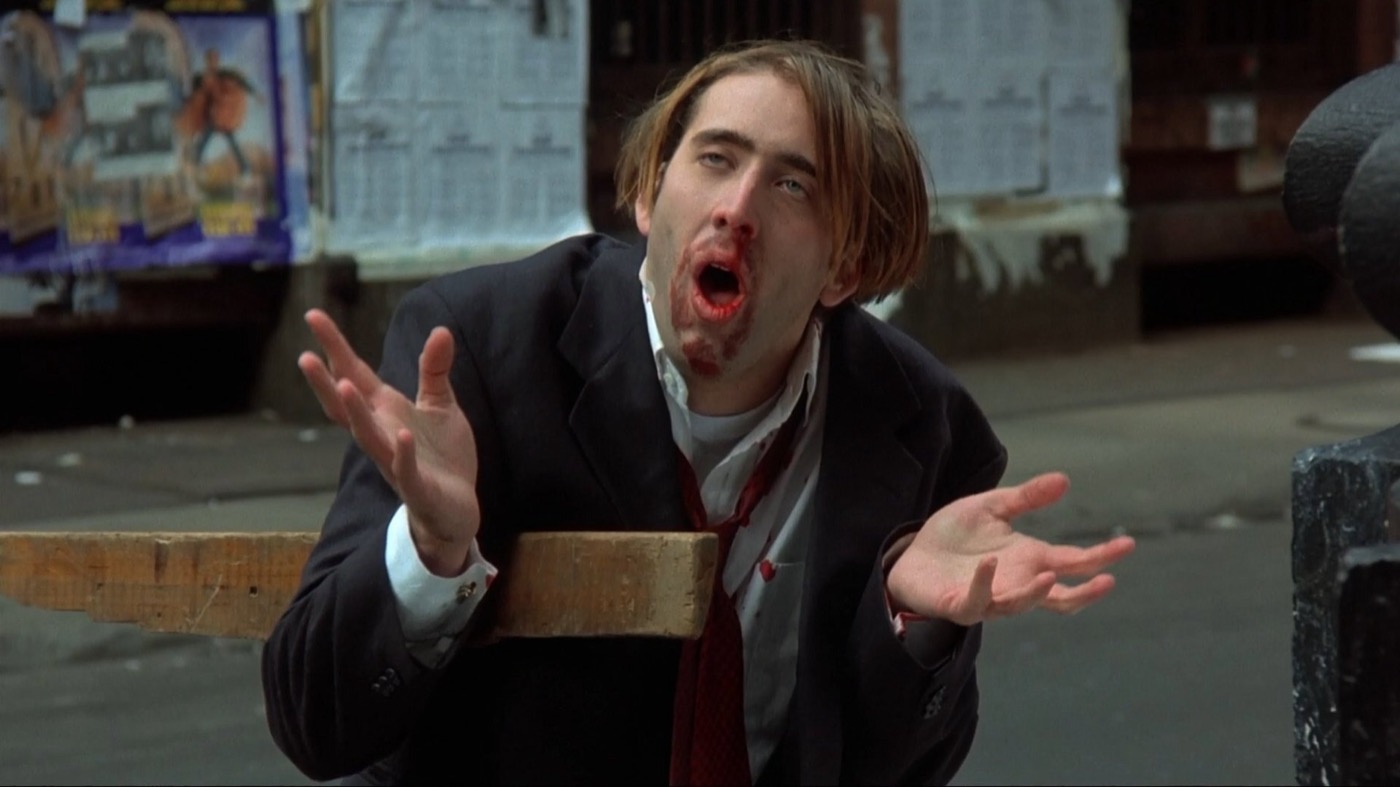
Unfortunately, beyond the notoriety surrounding Cage’s performance—and his decision to consume a real cockroach on camera—Vampire’s Kiss generated little interest upon release. With an estimated production budget of $2M, it grossed a paltry $728,000. While this was partly due to competing against Dead Poets Society, Ghostbusters II, and Batman in the same month, its failure can also be attributed to Hemdale Film Corporation’s misguided marketing. The film was advertised as a conventional horror-comedy, but audiences encountered a tonally uneven psychological satire about the mental collapse of a narcissistic executive.
However, much like Dracula himself, Vampire’s Kiss refused to remain buried. Throughout the 1990s and early 2000s, the home entertainment market introduced the film to audiences who appreciated its peculiar blend of absurdist satire.It quickly became a cult favourite, and Cage’s unhinged performance even served as inspiration for Christian Bale’s portrayal of Patrick Bateman in American Psycho (2000).
For those drawn to the spectacle of Nicolas Cage stumbling through New York while delivering wildly theatrical monologues in an accent of dubious origin, Vampire’s Kiss offers plenty of entertainment. The film functions as a masterclass in the actor’s manic range and has rightly achieved cult status for its sheer audacity. Unfortunately, Bierman is unable to harness that energy into anything beyond meme-worthy eccentricities. Lost beneath the performative excess is a biting satire of how wealth and entitlement distort reality. Ultimately, the director squanders the opportunity to cultivate this rich thematic material, leaving behind a cult curiosity with a far more compelling film lurking just beneath its surface.
USA | 1989 | 103 MINUTES | 1:85:1 | COLOUR | ENGLISH • GERMAN

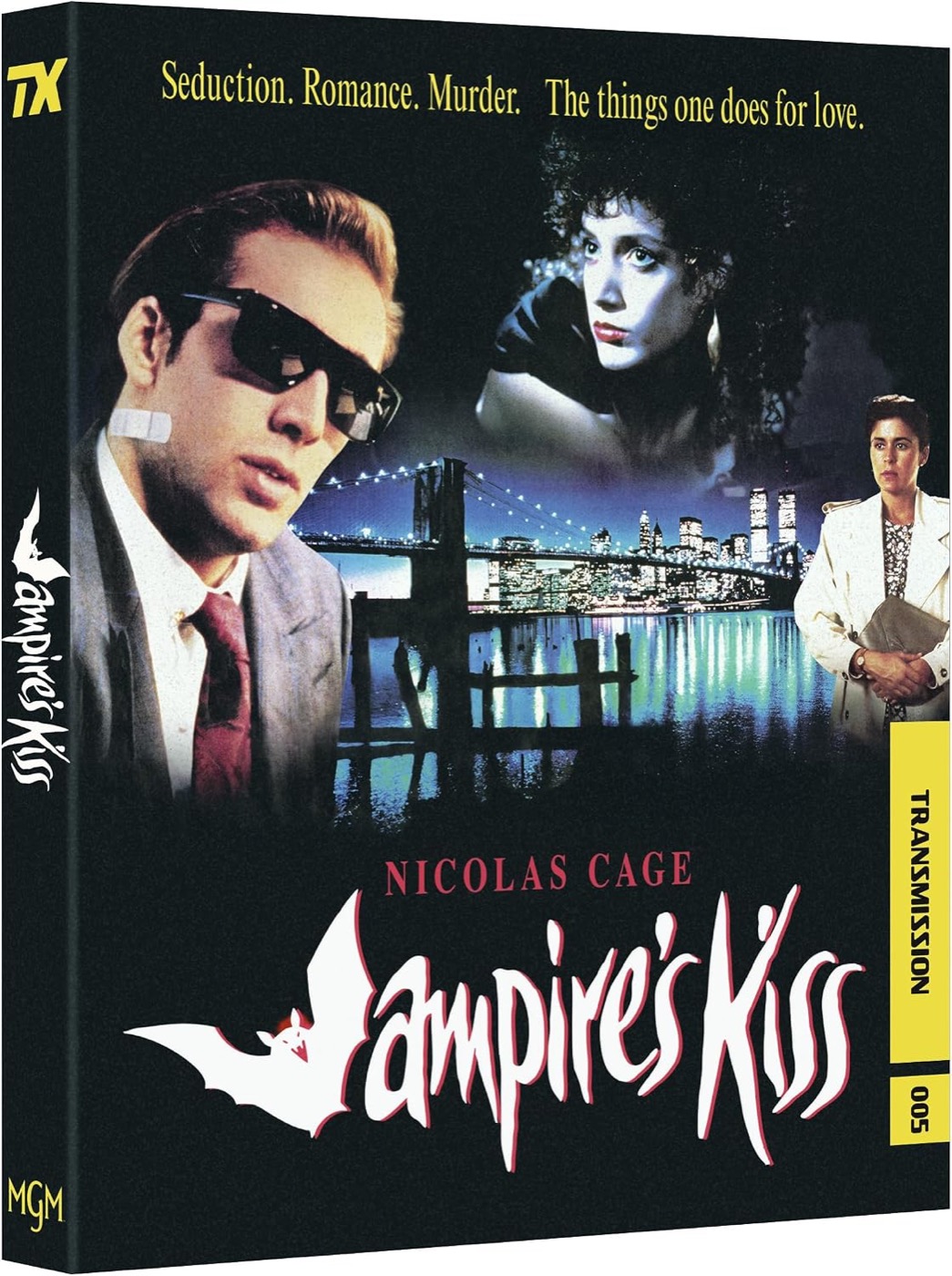
Continuing their commitment to championing underrepresented cult classics through their new Transmission (TX) imprint, Radiance Films brings Vampire’s Kiss to the UK on 4K Ultra HD for the very first time. Boasting an impressive 2160p presentation sourced from the original 35mm camera negative, the film is presented in its native 1.85:1 aspect ratio.
Having languished on home video formats for decades, the leap in picture quality is immediately apparent. The inclusion of Dolby Vision HDR adds depth and dynamism to the presentation without compromising the original cinematic aesthetic. A deliberately muted colour palette is beautifully rendered, lending the image a subtle vibrancy. Primary colours are accurately reproduced, maintaining their punch without undermining the oppressive, nocturnal atmosphere of 1980s Manhattan. Fine detail sees a substantial upgrade: clarity is sharp throughout, uncovering a wealth of texture and depth. Daylight sequences through New York reveal grimy architectural details previously lost on earlier transfers, while tight close-ups benefit immensely from the resolution boost, exposing complex costume weaves and subtle skin textures with striking precision.
Audio duties are handled by a lossless DTS-HD Master Audio 2.0 stereo track, accompanied by optional English subtitles. While the mix is hardly a showcase for surround-sound dynamics, it maintains a consistently clean level of fidelity. Colin Town’s (Full Circle) haunting score sounds rich and well-balanced during key moments, offering impressive clarity, whilst ambient environmental effects are subtly distributed across the front soundstage to build an immersive atmosphere. The low-end rumble of traffic and the persistent hum of crowded city streets become particularly engaging during outdoor sequences, bringing the relentless energy of the Big Apple vividly to life.

director: Robert Bierman.
writer: Joseph Minion.
starring: Nicolas Cage, Maria Conchita Alonso & Jennifer Beals.