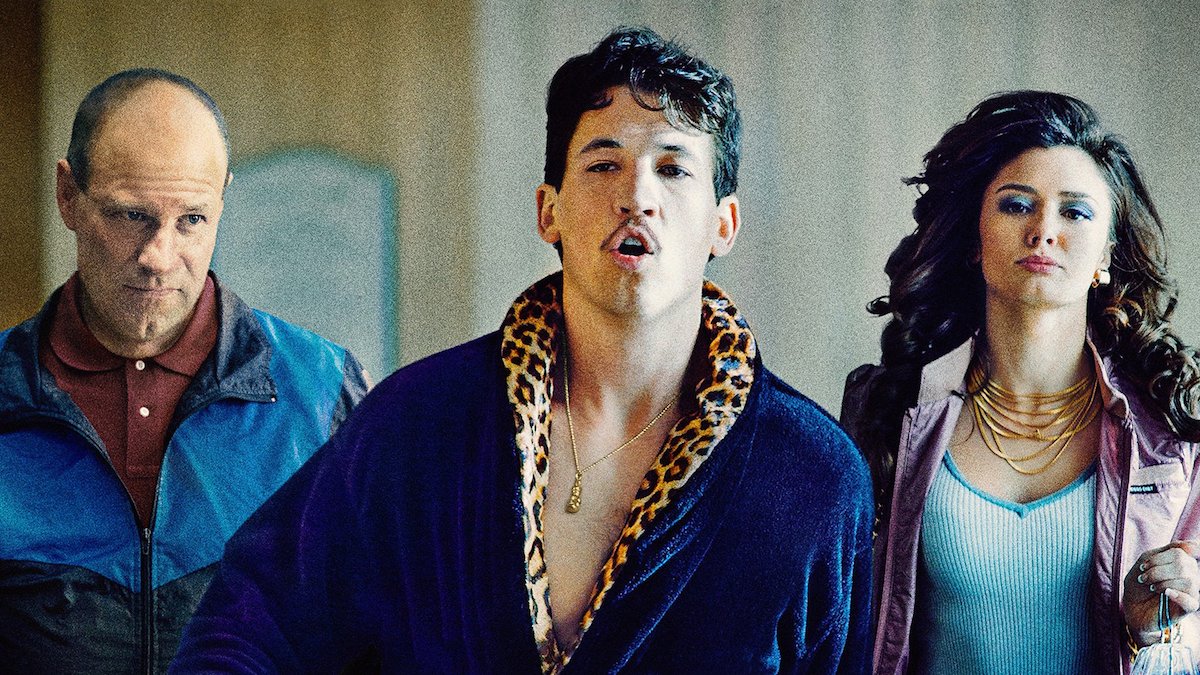
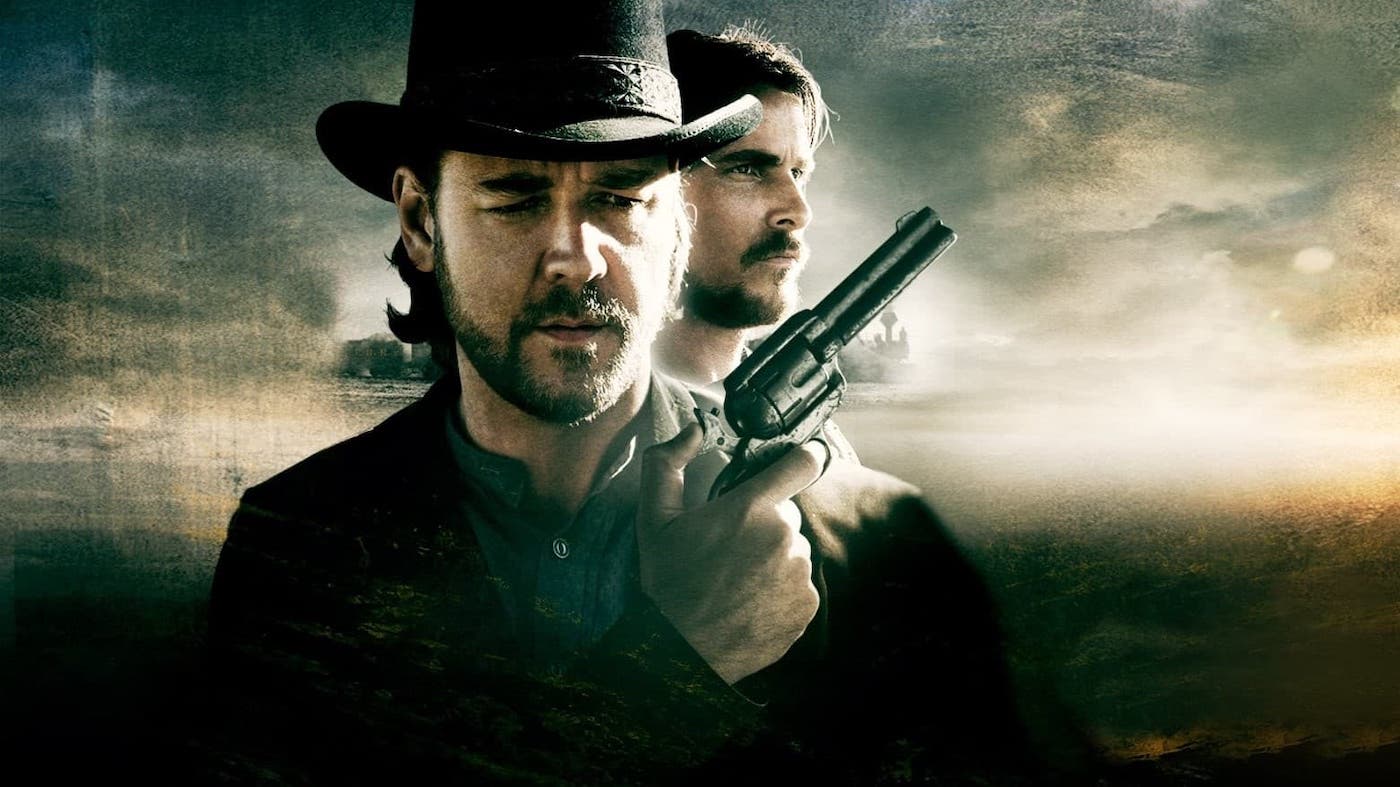
JOHNNY HANDSOME (1989)
After being double crossed and thrown in prison, a deformed gangster gets a new face and rehabilitation, but his desire for revenge looms.

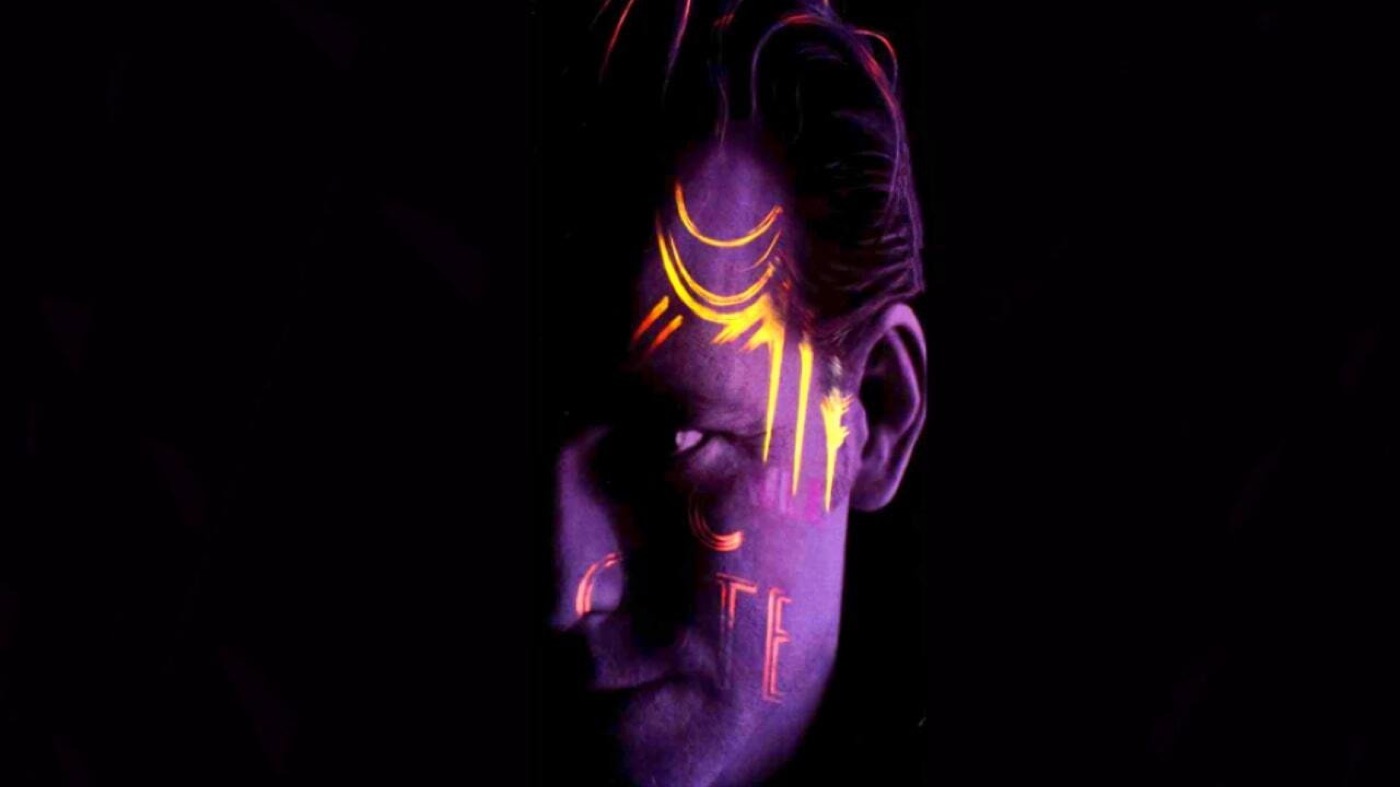

After being double crossed and thrown in prison, a deformed gangster gets a new face and rehabilitation, but his desire for revenge looms.
Johnny Handsome is, for better or worse, a film very much of its time. In today’s cinematic climate of bloated mainstream blockbusters, a movie with a script that leans this hard into B-movie territory would almost certainly bypass a theatrical release and head straight to streaming platforms.
Back in the late-1980s, however, Hollywood was only too happy to churn out a relatively small-budget ($20M) feature—provided it had big stars on the poster and a director of some note at the helm. If it underperformed on its initial run, the studio hardly cared; the home video market was always there to claw back extra revenue and ensure it at least broke even.
If this introduction makes it sound as though I am unimpressed, let me quickly clarify: that is not the case at all. Johnny Handsome is, in fact, a solidly directed action-thriller that makes for perfect Friday-night-with-a-few-beers fare. It may never have made a “best of the year” list, but I would still recommend it to anyone who has not yet seen it. And if you decide to check it out, what better way to do so than via this superb new 4K release?
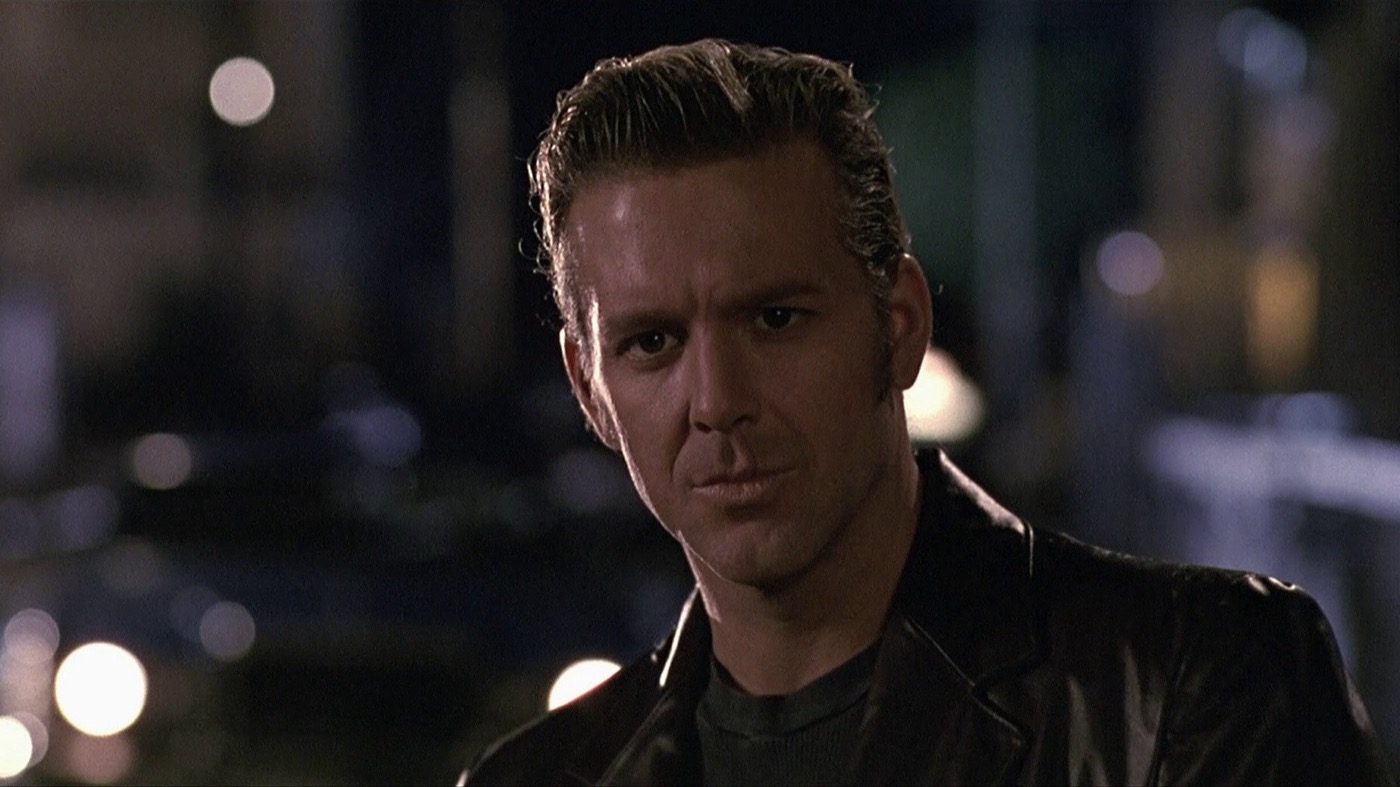
Based on Morton Freedgood’s 1972 novel The Three Worlds of Johnny Handsome (written under the pseudonym John Godey), the film stars Mickey Rourke as John Sedley, a career criminal whose severely disfigured face has earned him the moniker “Johnny Handsome”. The film wastes little time in getting to the crux of the story: Johnny agrees to help a friend with a robbery, only for the pair to be double-crossed by their partners in crime, Sunny Boyd (Ellen Barkin) and Rafe Garrett (Lance Henriksen). Sunny and Rafe kill Johnny’s friend and leave Johnny behind bars to take the fall.
After surviving a near-fatal prison stabbing, Johnny is offered a life-changing opportunity: experimental reconstructive surgery to completely transform his appearance. Given a new identity, he is enrolled in a bold rehabilitation program that secures him a job on the docks. In exchange, he must attend regular therapy sessions or face a return to jail. Once the bandages come off, Johnny has—in theory, at least—a clean slate. Unfortunately, he soon realises that changing your face is considerably easier than changing who you are, especially when you are consumed by a desire to get even with Sunny and Rafe.
On paper, the premise sounds absurd, but the film pulls it off thanks to the formidable talent on both sides of the camera. The surgery scene requires a fairly generous suspension of disbelief, but director Walter Hill has always thrived in realms of heightened reality. Through slick filmmaking and committed acting, this far-fetched conceit succeeds.
Running at just over 90 minutes, the movie is refreshingly lean. Today, a film with this much plot would likely be stretched to two hours, with an extra half-hour squandered on redundant backstory. Hill avoids that trap; he establishes what we need to know and gets on with it.
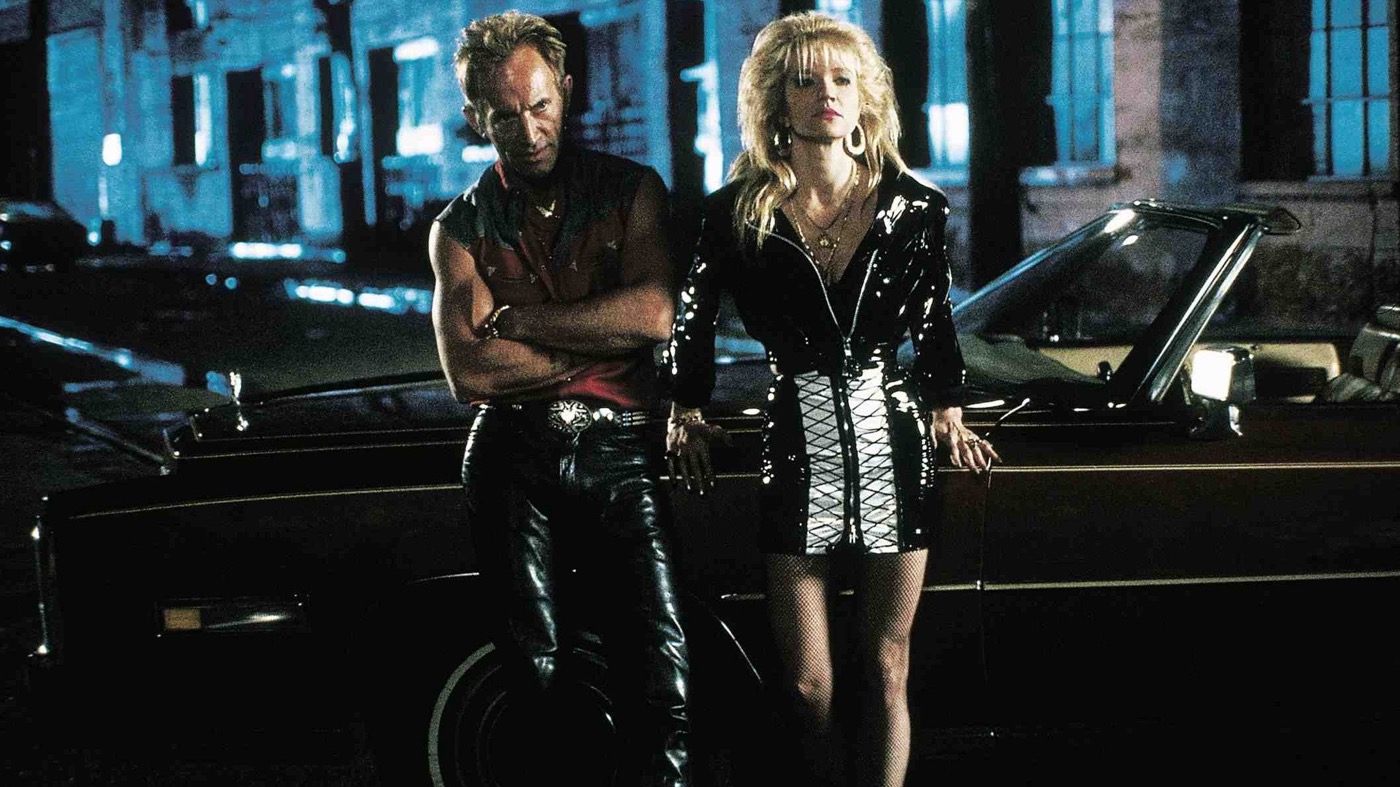
The opening 25 minutes set up the narrative brilliantly. A monochrome prologue shows Johnny and his friend Mikey (Scott Wilson) chatting, with Mikey explaining why he needs Johnny’s help on an upcoming job. Next, the criminal gang—including Rafe and Sunny—meet to plan the operation. Set at night against a dramatic thunderstorm, the scene builds tension masterfully. Finally comes the jewellery store heist: Hill’s close-up use of wide-angle lenses, combined with kinetic editing and Ry Cooder’s driving score, delivers one of the most memorable sequences in the film.
Technical skill aside, Mickey Rourke deserves tremendous credit for making the film work as well as it does. It is easy to forget what a compelling screen presence Rourke was during the 1980s. Before his acting career derailed in the nineties, he had delivered exceptional performances in films such as Diner (1982), Rumble Fish (1983), and Barfly (1987).
Although I was aware of him growing up, I had not actually watched much of his work until the pandemic, when I rented Alan Parker’s Angel Heart (1987). As impressive as that dark, twisted tale was, it was Rourke’s acting—particularly in the final 15 minutes—that blew me away. It was a remarkable performance, which makes his subsequent career lull all the more disappointing.
Johnny Handsome offers another fine showcase for his talent. For the first half-hour, Rourke is buried beneath extensive facial prosthetics, yet he communicates a surprising amount of emotion. He plays Johnny as quiet, withdrawn, and acutely conscious of people staring at him. He also adopts a realistic speech impediment caused by his character’s cleft palate, making the portrayal thoroughly convincing. Even more effective, however, is what happens after the operation.
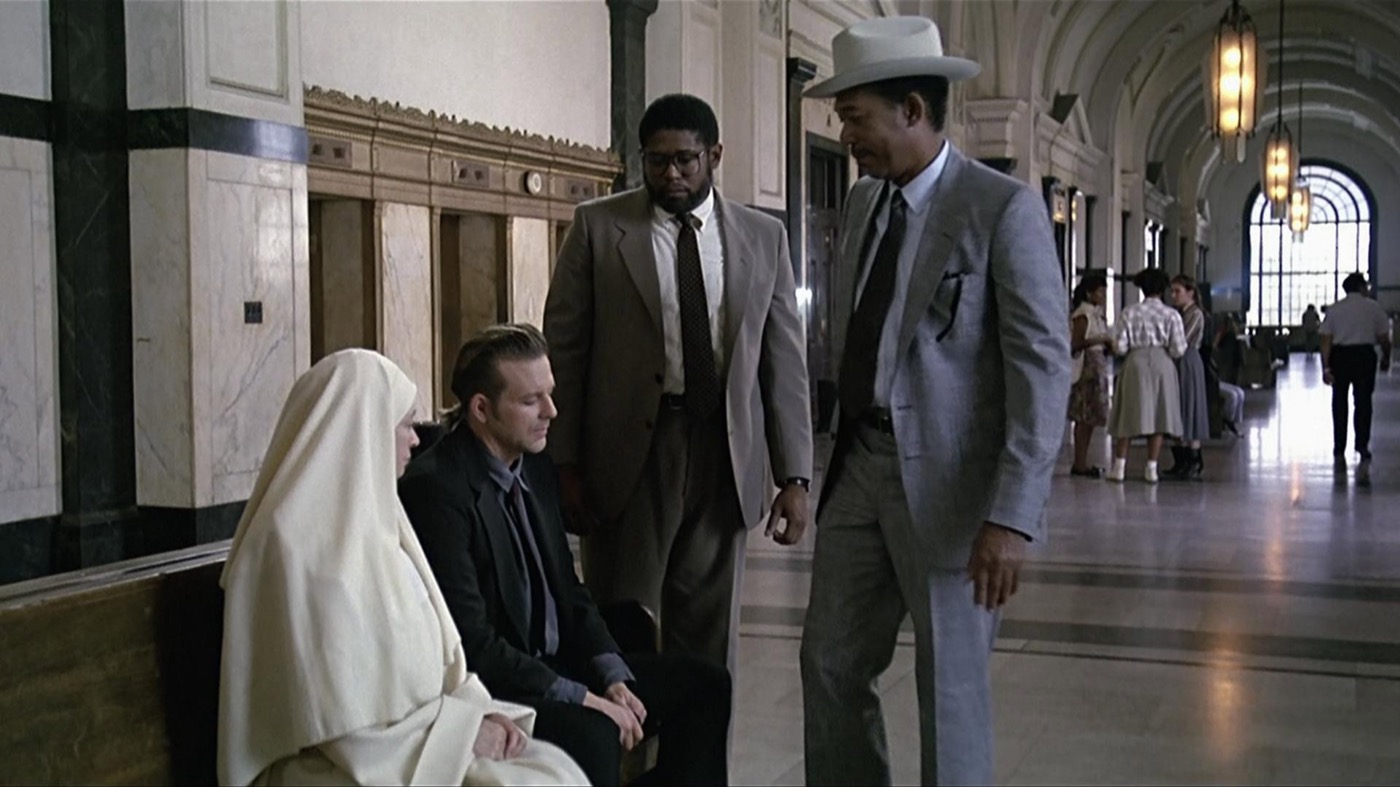
You might expect Johnny’s new face to trigger a dramatic shift in personality, but it does not. He remains the same man—perhaps slightly more confident, but still shaped by his past. That is where Rourke’s performance shines. The film is less about a man becoming someone else, and more about whether he can ever become the person he might have been without his past weighing him down. Rourke keeps his performance admirably restrained, conveying a depth of internal turmoil beneath a calm exterior.
The supporting cast is equally strong. Lance Henriksen may teeter on the edge of high-camp villainy, but given the film’s heightened reality, he gets away with it. His scenes with Barkin carry genuine menace, and he exudes an air of unpredictable danger.
Ellen Barkin is clearly having a ball playing Henriksen’s morally bankrupt lover. Her persona and style can best be described as a classic femme fatale turned up to eleven. She is brash, cruel, and thoroughly unpleasant, but Barkin infuses the role with an intensity that keeps the screen electric.
A relatively young Morgan Freeman crops up as Lieutenant Drones, a cop who knew Johnny before his transformation and remains utterly unconvinced by his supposed rehabilitation. Freeman brings his signature gravitas to the role, balancing a surface-level warmth with a cynical, mean-spirited edge. Elizabeth McGovern and Forest Whitaker provide solid support, though McGovern’s character—a secretary who falls for Johnny—could have been given more depth.
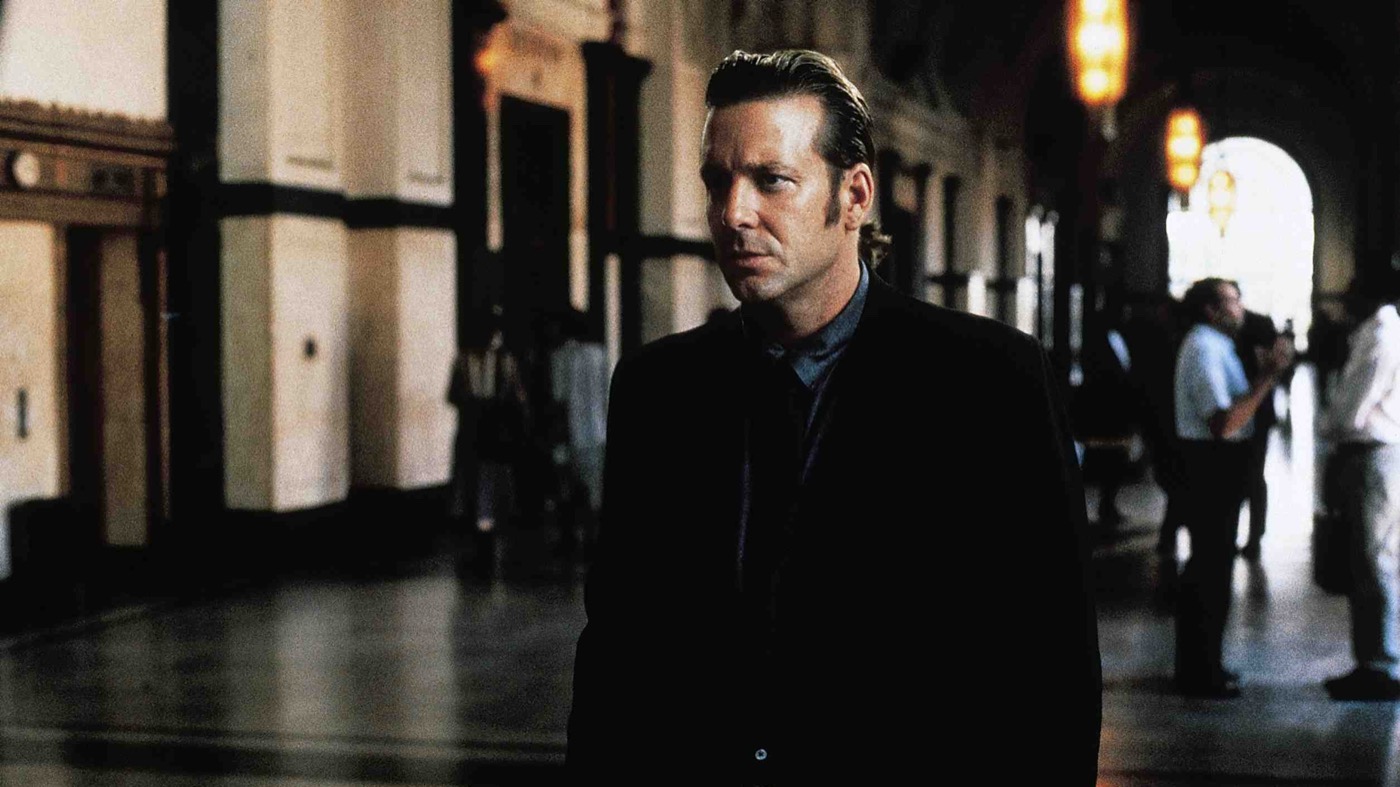
Beyond the performances, Walter Hill’s direction is key to the film’s success. He works with an economical, straightforward style that keeps the story and characters front and centre. Much like The Warriors (1979) and 48 Hrs.(1982), Johnny Handsome possesses a stripped-back confidence. The shoot-outs are clean and easy to follow, avoiding chaotic quick-cuts or shaky camerawork. While the violence is punchy, it never feels gratuitous given the film’s noir roots.
Matthew F. Leonetti’s cinematography makes brilliant use of New Orleans. The docks, bars, warehouses, and run-down streets ooze a grimy, hard-boiled atmosphere, complemented by a muted palette. Meanwhile, Ry Cooder’s blues-heavy score fits the film’s grungy aesthetic like a glove.
While the film remains engaging throughout, it stops short of fully exploring its most interesting themes: identity, nature versus nurture, and whether anyone can truly escape their past. The script flirts with these ideas before ultimately settling for a standard revenge plot. That may be par for the course for a genre film, but it would have been rewarding to see Rourke and McGovern’s characters given more room to breathe.
Even so, Johnny Handsome is an atmospheric, fast-paced thriller that barrels along without ever dragging its feet. It may not rank among Walter Hill’s absolute masterpieces, but it does not need to. It is a tight, effective crime film, and this excellent 4K presentation gives it a very welcome second life.
USA | 1989 | 96 MINUTES | 1.85:1 | COLOUR • BLACK & WHITE | ENGLISH

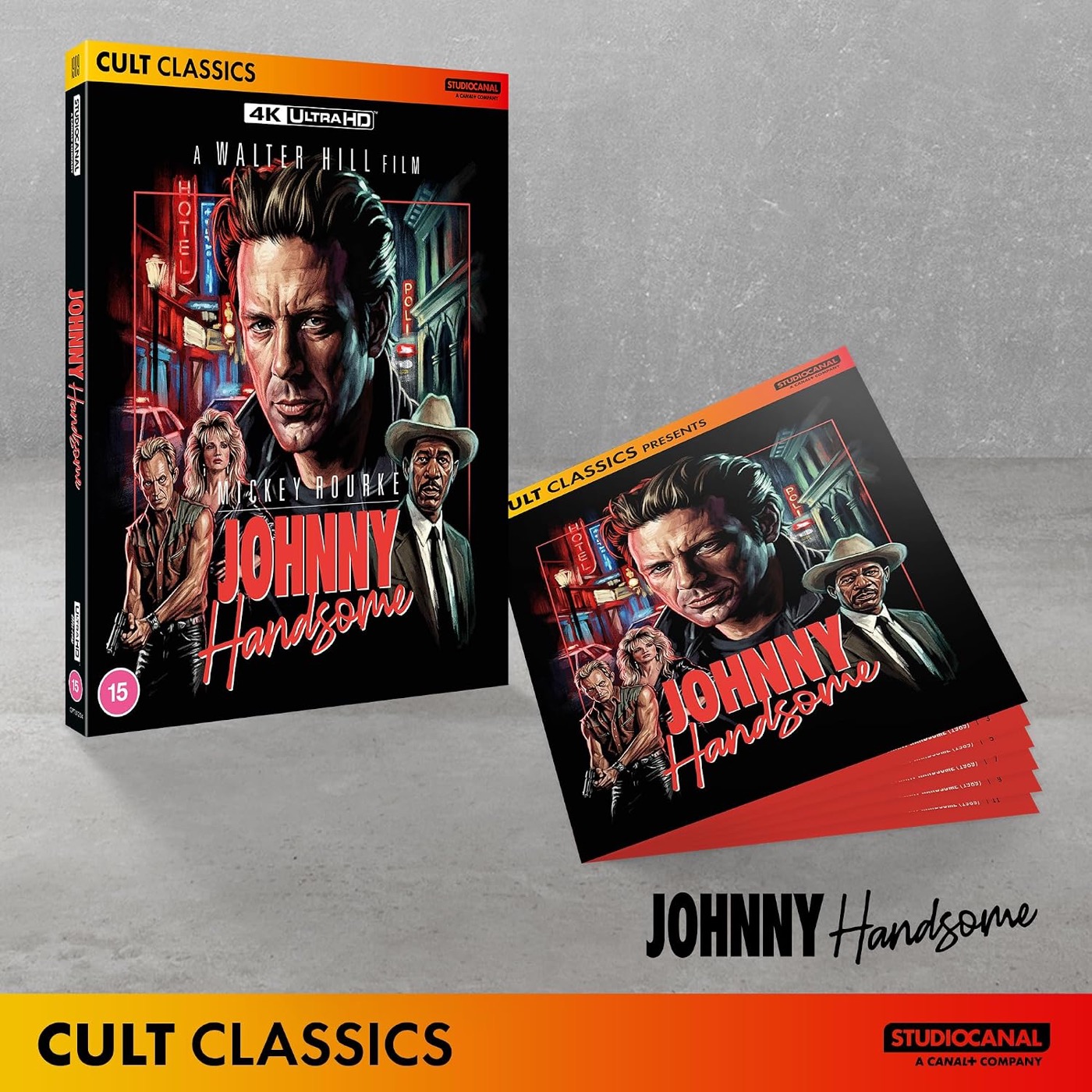
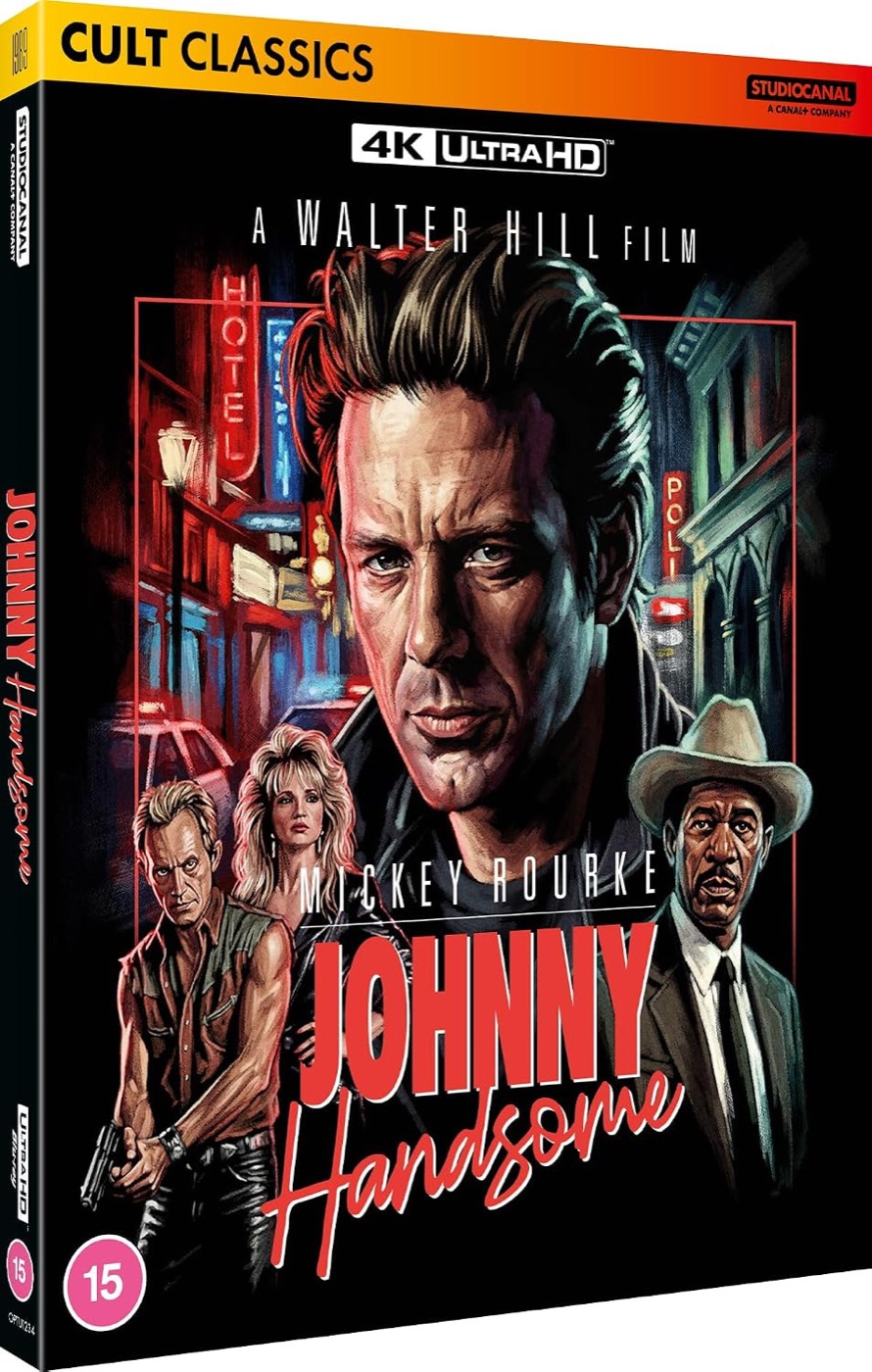
StudioCanal deserves praise for this limited-edition release. The picture and sound quality give this late-eighties thriller a glossy upgrade that leaps off the screen. Restored from the original camera negative with Dolby Vision and HDR grading, the film’s rich contrast and vivid colours ensure both night and day scenes look pin-sharp, with no trace of pixelation in darker sequences. The audio is equally impressive, offering both a 5.1 Surround track and a lossless 2.0 mix. Clean, crisp, and devoid of hiss or distortion, the audio track delivers maximum impact during action scenes while keeping dialogue crystal-clear.

director: Walter Hill.
writer: Ken Friedman (based on the novel ‘The Three Worlds of Johnny Handsome’ bu John Godey).
starring: Mickey Rourke, Ellen Barkin, Lance Henriksen, Elizabeth McGovern & Morgan Freeman.