THE FRIGHTENERS (1996)
After a tragic car accident that kills his wife, a man discovers he can communicate with the dead, and uses that gift to con people.


After a tragic car accident that kills his wife, a man discovers he can communicate with the dead, and uses that gift to con people.
For contemporary audiences, Peter Jackson is one of Hollywood’s most influential cinematic visionaries. His impact on popular culture places him alongside filmmaking luminaries such as Steven Spielberg (Indiana Jones and the Temple of Doom), George Lucas (Star Wars: The Phantom Menace) and James Cameron (The Abyss). Yet long before he redefined the fantasy epic with The Lord of the Rings: The Fellowship of the Ring (2001), Jackson worked on the more disreputable fringes of cinema. Much of his early career was spent turning his warped sense of humour and fascination with homemade special effects into outlandish horror comedies such as the blood-spattered Bad Taste (1987), the debauched Muppet satire Meet the Feebles (1989) and the delirious zombie romp Braindead (1992). These deliberately outrageous productions earned him a cult following but did little to secure his place in the mainstream.
Jackson’s career shifted after his first major critical breakthrough, Heavenly Creatures (1994). Inspired by the notorious Parker–Hulme murder case, which scandalised New Zealand in the 1950s, it was a striking departure from his earlier work. The film showed that Jackson could marry macabre subject matter with psychological depth, and established him as a filmmaker capable of moving beyond the blood-spattered excesses of his beginnings.
While Heavenly Creatures was in production, Jackson and his wife and co-writer, Fran Walsh (King Kong), were developing a screenplay for a supernatural horror comedy. After they submitted a treatment to their agent, the idea eventually attracted the attention of Robert Zemeckis. Impressed by the concept, he encouraged the couple to expand their treatment into what would become The Frighteners. The film was initially conceived as an instalment in the Tales from the Crypt franchise, alongside Demon Knight (1995) and From Dusk Till Dawn (1996), as part of a trilogy that never materialised. After the commercial disappointment of Bordello of Blood (1996), however, Zemeckis suggested that Jackson direct the project instead. With the director of Back to the Future (1985) as executive producer and financial backing from Universal Pictures, Jackson got the opportunity to make his American directorial debut. The result combined the anarchic macabre of his earlier work with the spectacle of Hollywood, creating a distinctly idiosyncratic genre hybrid.
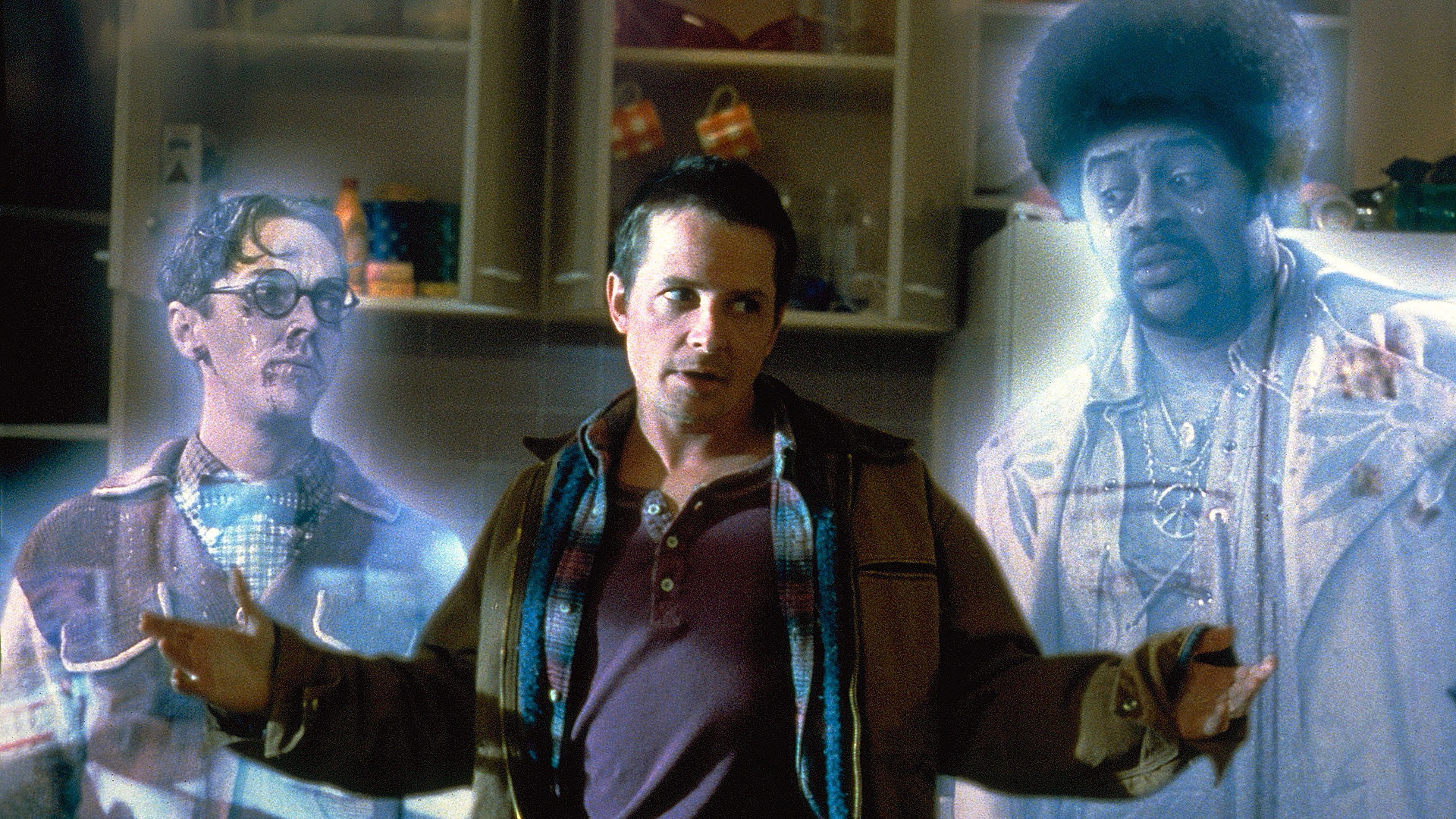
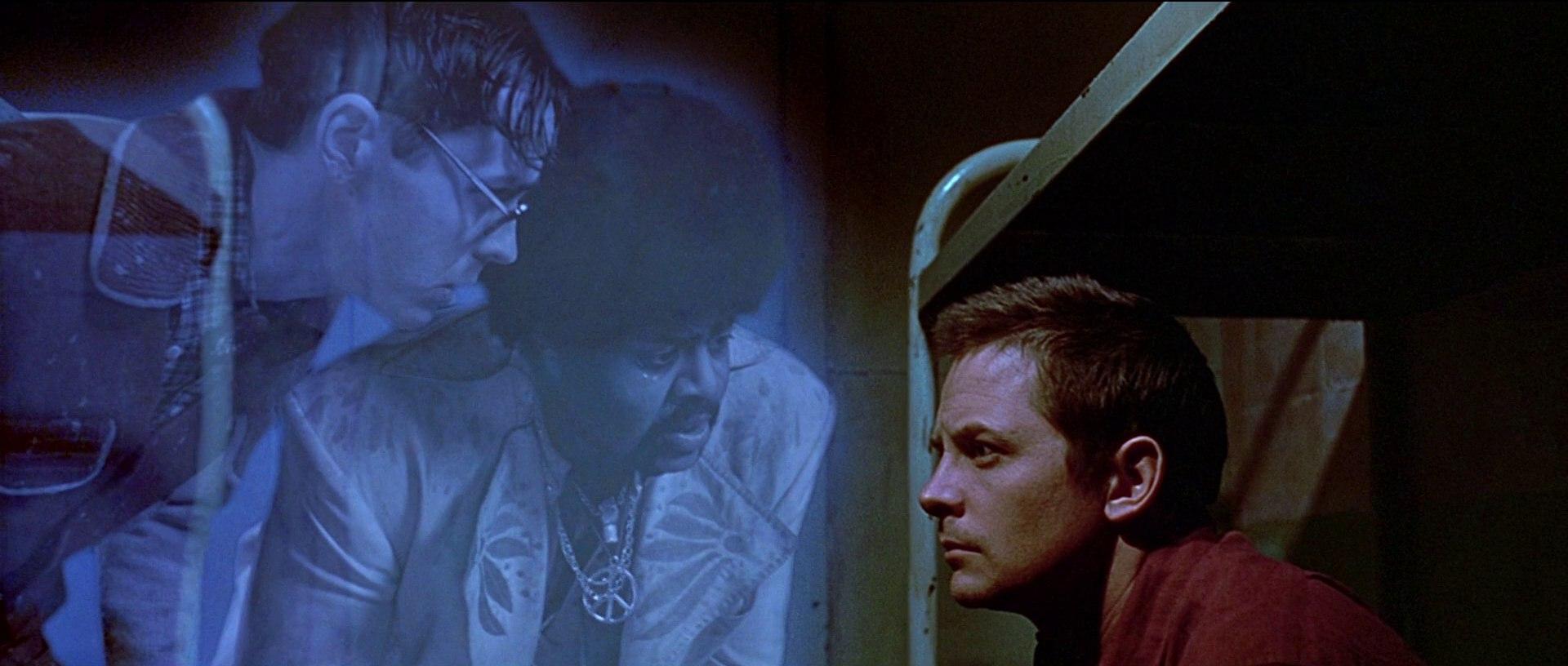
In the ostensibly tranquil town of Fairwater, Frank Bannister (Michael J. Fox) has lived with suspicion and guilt ever since he inadvertently caused his wife Debra’s death (Angela Bloomfield). Although he can’t remember the incident, the trauma gave him the ability to communicate with the dead. Having lost any meaningful sense of purpose, he begins exploiting his supernatural gift. With help from his three ghostly accomplices—Cyrus (Chi McBride), Stuart (Jim Fyfe) and the Judge (John Astin)—Frank devises an elaborate scheme to defraud Fairwater’s residents. The unlikely quartet plays on the townspeople’s fear of the supernatural, staging fake hauntings in local homes. When the terrified residents seek help, Frank poses as a paranormal investigator capable of banishing the unwanted spirits.
Frank’s carefully constructed charade begins to unravel when Lucy Lynskey (Trini Alvarado) contacts him. During an exorcism at her home, he encounters a violent spectre resembling the Grim Reaper. As he investigates, he uncovers a series of unexplained deaths across Fairwater. A malevolent force has been inducing fatal heart attacks and leaving a mysterious number carved into each victim’s forehead. When Lucy later asks to see Frank again, he discovers that she, too, has been marked for death. Faced with a threat beyond his usual fraudulent schemes, Frank uses his supernatural abilities to protect his new friend and solve the mystery behind the killings. But as the death toll mounts, Special Agent Milton Dammers (Jeffrey Combs) turns his attention to Frank. With Lucy’s life hanging in the balance and the entity’s true nature still unknown, Frank must confront his personal demons and stop the Grim Reaper before it claims more victims.
It’s easy to see what attracted Zemeckis to Jackson and Walsh’s screenplay. It offers the same macabre humour and crowd-pleasing mix of broad comedy and genuine thrills found in the executive producer’s earlier films, such as Who Framed Roger Rabbit? (1988) and Death Becomes Her (1992). The Frighteners was the couple’s last original creation before they embarked on a series of adaptations that would occupy much of their subsequent careers. Free from the obligation to remain faithful to an existing source, the film has an anarchic spirit and sense of spontaneous improvisation that have largely disappeared from Jackson’s work since. Those familiar with his earlier films will recognise the same gleefully mischievous tone and affection for the grotesque, now channelled into a considerably more ambitious production. For the first time, Jackson had access to a substantial Hollywood budget, allowing his unruly imagination to flourish on a scale his previous work couldn’t achieve.
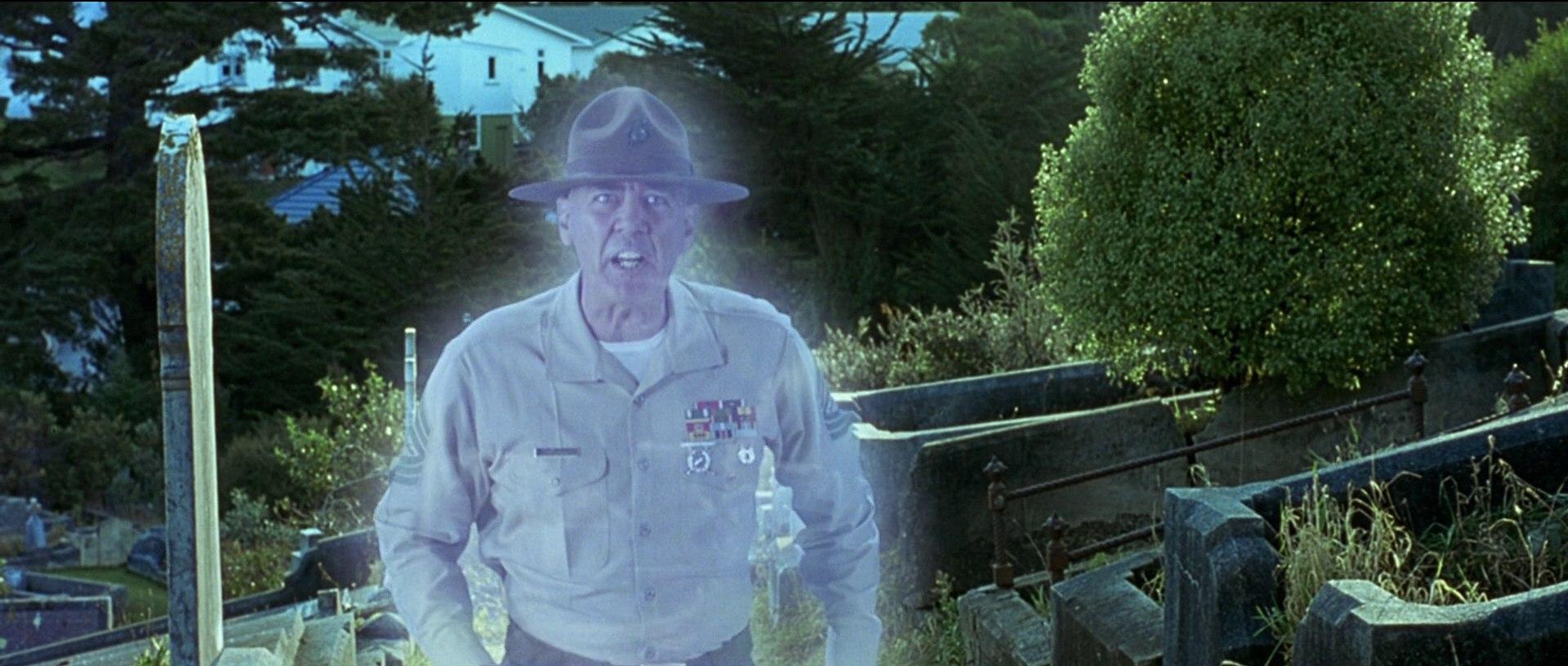
To realise his vision and create the delirious visuals needed to deliver its unsavoury laughs, Jackson entrusted much of the visual-effects work to Weta Digital. Although the company had contributed to Heavenly Creatures, The Frightenerswas its first production to require digital characters to appear throughout most of its 110-minute runtime and interact convincingly with their physical surroundings. The team was unfamiliar with the technology needed for the task, and post-production took 18 months. Staff from Pixel Perfect were brought in to ease the workload, while Zemeckis persuaded Wes Takahashi of Industrial Light & Magic to supervise the work. It was a stressful process that required Weta to develop new software to combine digital imagery with live-action footage.
With a reported 570 digital-effects sequences, The Frighteners wastes little time showcasing Weta’s technical innovations. In the bravura opening sequence, the camera swoops across the roof of a haunted house on a dark and stormy night. It glides through a closed window into the sinister interior, where a malevolent apparition continually morphs across the walls as it pursues its terrified victim. Some of the digital effects have the rubbery quality often associated with the period, but their limitations are offset by moments of genuine ingenuity. The Grim Reaper forcing its way through wallpaper, in particular, has a nightmarish quality comparable to the dream sequences in Wes Craven’s A Nightmare on Elm Street (1984). Despite their occasional awkwardness, the effects are an astonishing achievement for a company still in its technological infancy.
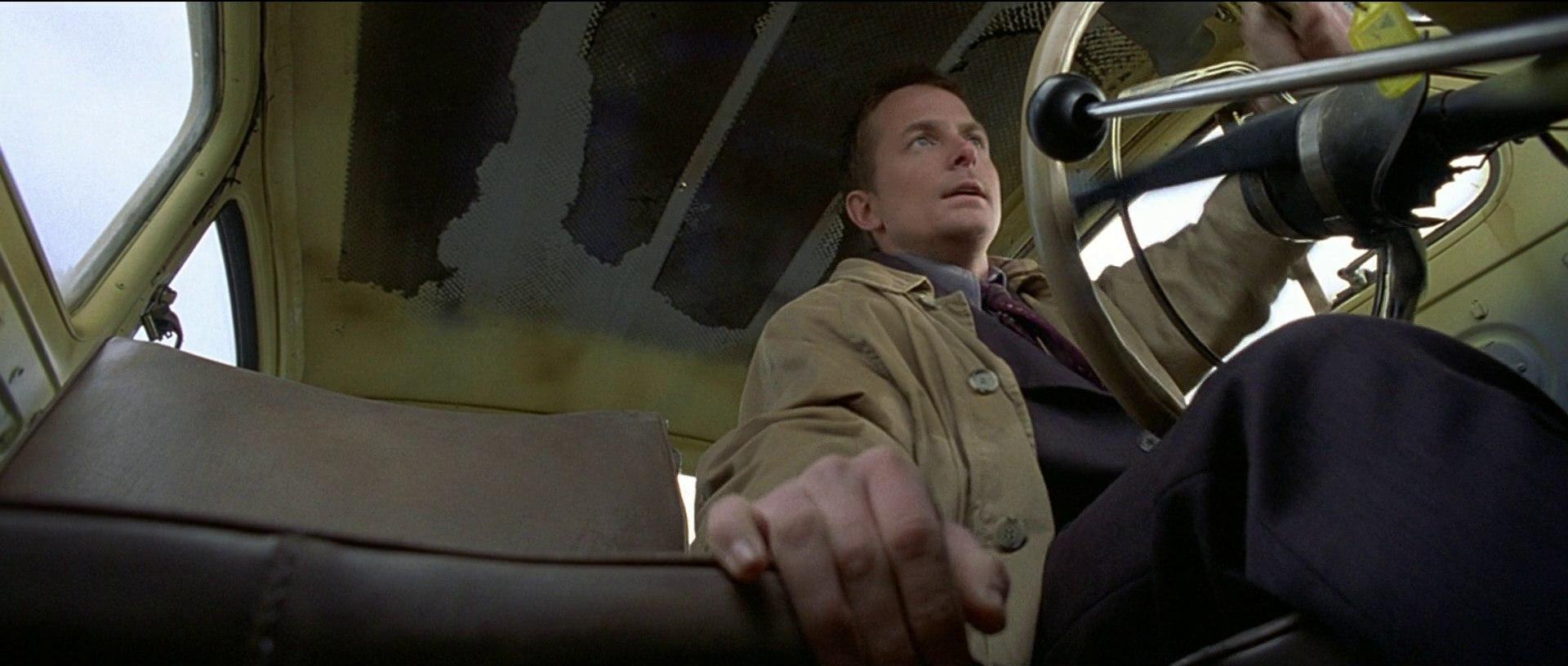
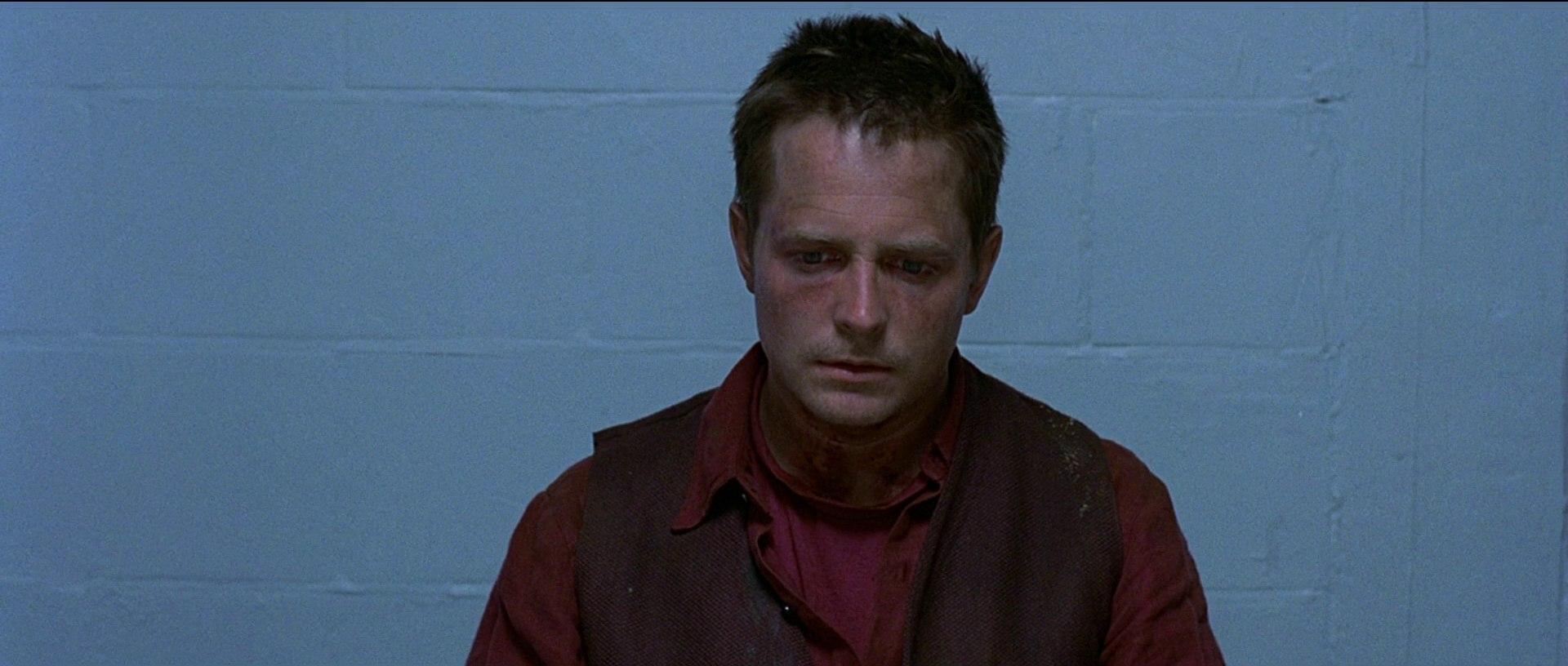
Beyond the exuberant spectral slapstick and computer-generated ectoplasm, a melancholic pall hangs over The Frighteners like a bedsheet draped over a ghost. Michael J. Fox (Back to the Future) had been diagnosed with Parkinson’s disease several years before principal photography, and the film was his final feature-length role. Seen in retrospect, his performance carries an added poignancy: it would effectively be his last in a feature film. As paranormal investigator Frank Bannister, Fox is a whirlwind of nervous energy and quick-witted irreverence. Beneath the blustering façade of cynicism and deception, however, lies unmistakable vulnerability. Frank is a deeply traumatised widower who can’t forgive himself for causing his wife’s death.
Frank is hardly a conventional protagonist. His unscrupulous behaviour makes him difficult to sympathise with, yet Fox imbues him with such effortless charisma and disarming affability that it’s easy to overlook his moral shortcomings. This matters because Frank isn’t particularly likeable. At best, he’s a charlatan capitalising on the public’s fear of the supernatural. At worst, he’s an exploitative opportunist consumed by unresolved guilt over his wife’s death.
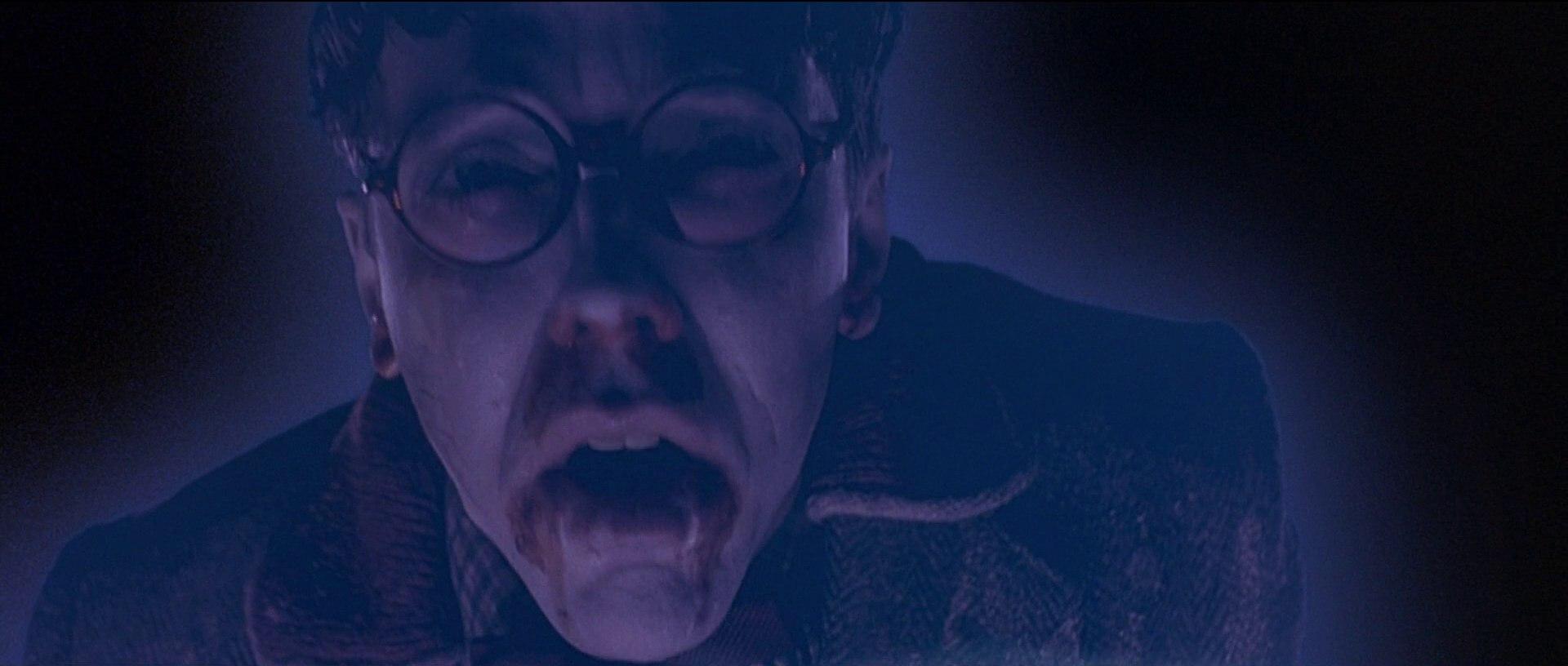
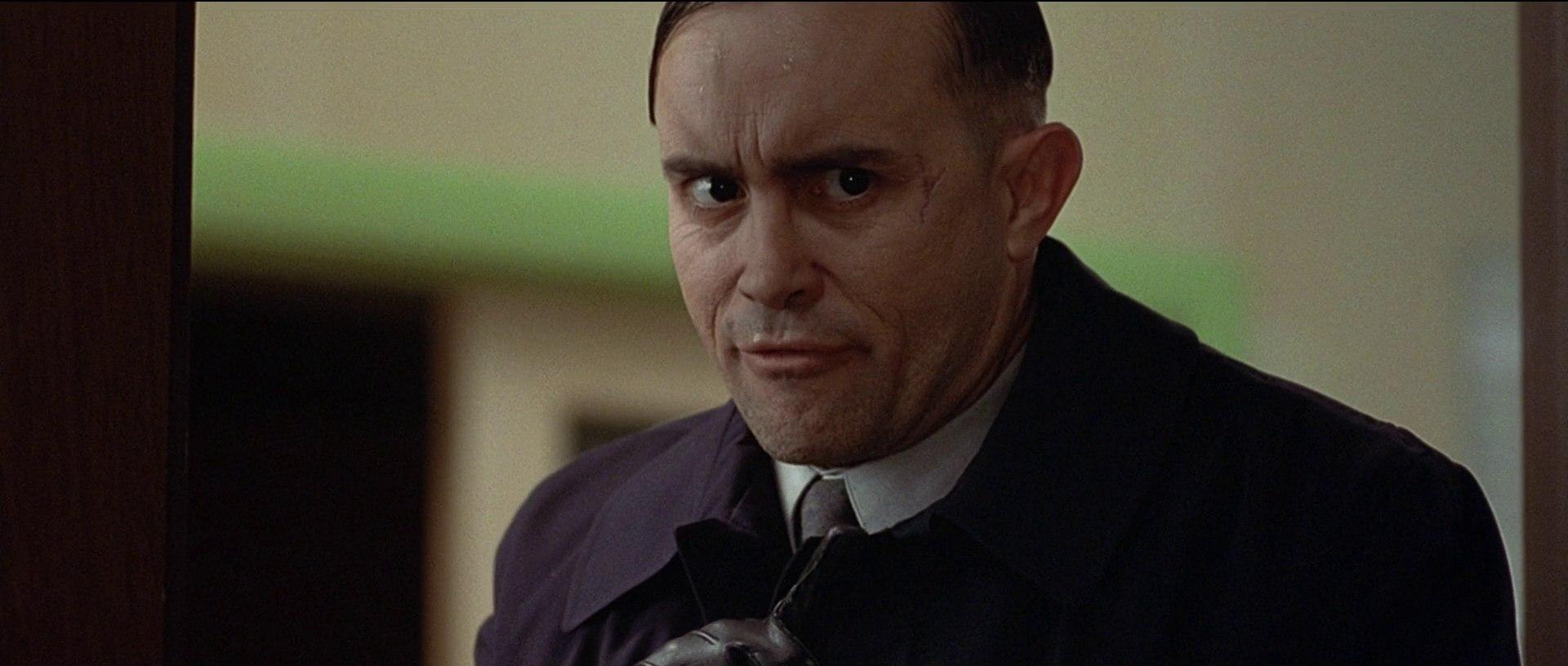
Of the supporting performances, Jeffrey Combs’s is perhaps the most memorable. As Milton Dammers, he brings the same unrestrained intensity he showed in Stuart Gordon’s Re-Animator (1985) and From Beyond (1986). Dammers has spent years undercover infiltrating cults, and his already fragile grip on reality seems to have been eroded by prolonged exposure to the supernatural. He’s convinced Frank is involved in the murders, unsettled by women who raise their voices and uncomfortable in almost every interaction.
Much of the character’s effectiveness comes from the specificity of Combs’s physical performance. The actor helped devise Dammers’s Hitler-inspired haircut and prosthetic appliances, and fashioned the haemorrhoid cushion he perpetually carries from a wheelbarrow inner tube. In the hands of a lesser performer, such eccentricities might easily have veered into caricature. Combs never lets the role become cartoonish. Behind every distant stare and awkward interaction is a man whose neuroses have become inseparable from his professional identity. The result is a performance that’s both deeply unsettling and irresistibly funny.
Unfortunately, The Frighteners made little impression at the box office, partly because of Universal’s mismanaged release strategy. Jackson and Zemeckis had envisaged a Halloween release to suit the film’s peculiar blend of supernatural horror and morbid comedy. The studio reportedly brought the date forward to fill a scheduling gap left by the delayed Sylvester Stallone film Daylight (1996). As a result, The Frighteners opened in the summer of 1996, on the same day as the opening ceremony of the Atlanta Olympics. It also arrived while Roland Emmerich’s blockbuster Independence Day (1996) was dominating the box office and Eddie Murphy’s The Nutty Professor (1996) remained a commercial draw. Overshadowed by these box-office titans, The Frighteners debuted in fifth place and ultimately grossed approximately $29 million against its $30 million production budget.
Despite Universal’s confidence in The Frighteners, the film received faint praise at best and outright critical hostility at worst. Many dismissed it as an awkward creative misstep in Jackson’s burgeoning career; others saw it as a regression from the psychological sophistication and emotional complexity of Heavenly Creatures. It languished in cult-cinema limbo for several years before finding a more receptive audience on home video. In 2005, to coincide with the release of King Kong, the film was given a second life with a Jackson-approved restoration that included footage omitted from the theatrical release. The restored director’s cut did little to convince those who had initially dismissed the film, but it introduced The Frighteners to a new generation of viewers.
Three decades on, rumours of revisiting the property in another form still surface. Charlize Theron’s production company, Denver and Delilah Productions, has reportedly considered adapting the premise for television. While no such project has materialised, the continued interest suggests that Jackson’s peculiar blend of supernatural horror and macabre comedy retains its appeal.
Although largely forgotten today, The Frighteners may be one of the most consequential films in Peter Jackson’s career. It’s a transitional work, bridging the anarchic sensibilities of his earlier cult productions and the spectacle of Hollywood. Perhaps most significantly, it shows Jackson refining the technical and stylistic vocabulary that would inform his most ambitious work. Adapting The Lord of the Rings would involve years of development, numerous delays and persistent uncertainty over whether Jackson and his New Zealand effects company had the resources to realise the project’s scale. The techniques developed for The Frighteners showed that they could meet the challenge. In retrospect, the film stands as an important experiment in digital filmmaking. Beneath its idiosyncratic humour and supernatural spectacle is a work that helped prepare Jackson for a cinematic undertaking that would fundamentally alter the landscape of contemporary cinema.
NEW ZEALAND • USA | 1996 | 110 MINUTES | 2:39:1 | COLOUR | ENGLISH

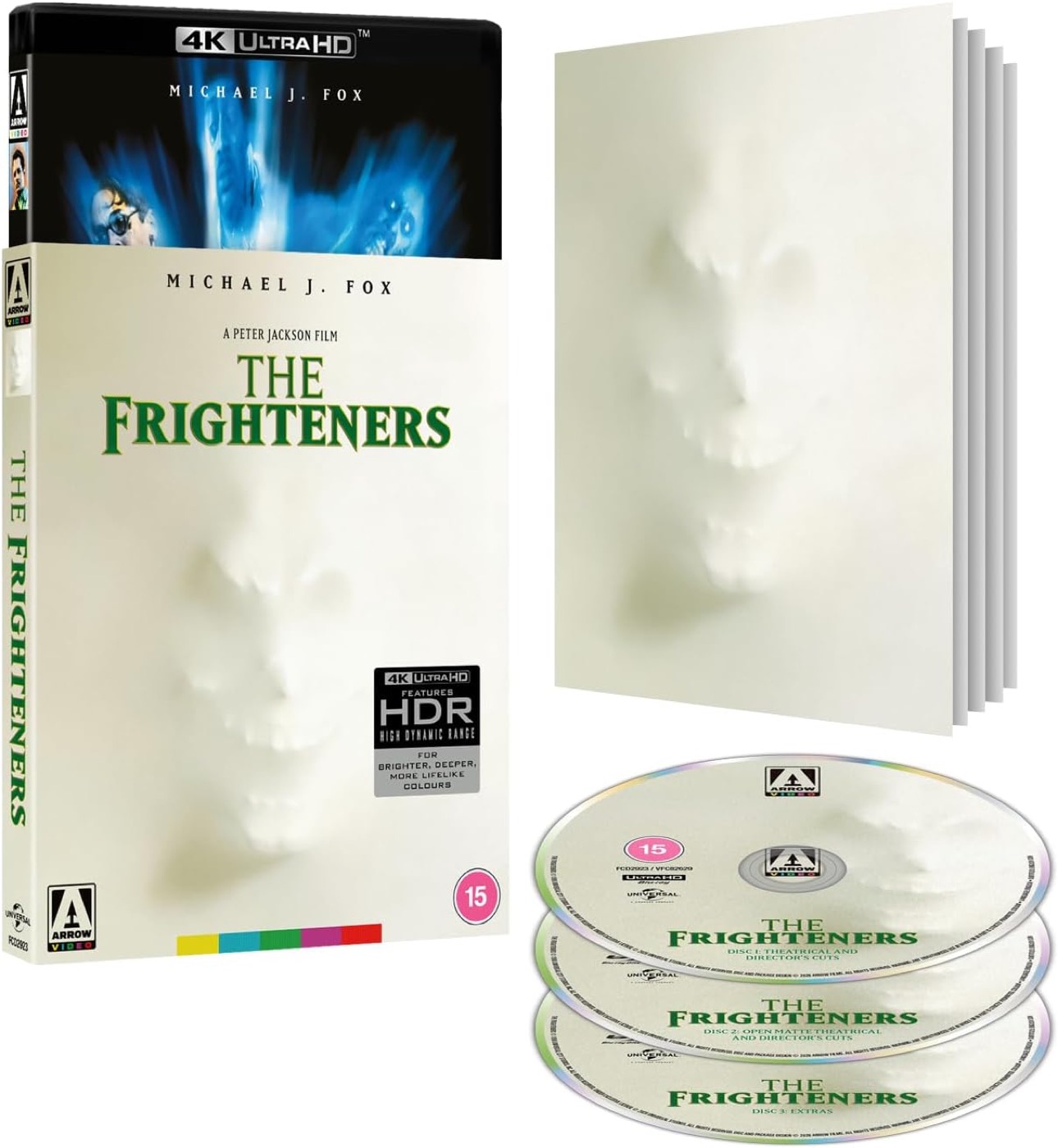
After haunting standard Blu-ray for several years, The Frighteners has finally received a wonderful 4K restoration courtesy of Arrow Video. Both the theatrical version and the director’s cut are presented in 2160p Ultra HD, in their original 2.39:1 aspect ratio. This edition also includes both versions in open-matte 1080p transfers, presented in a 1.85:1 aspect ratio. All the transfers benefit from a fresh scan of the original 35mm camera negative and were approved by Peter Jackson.
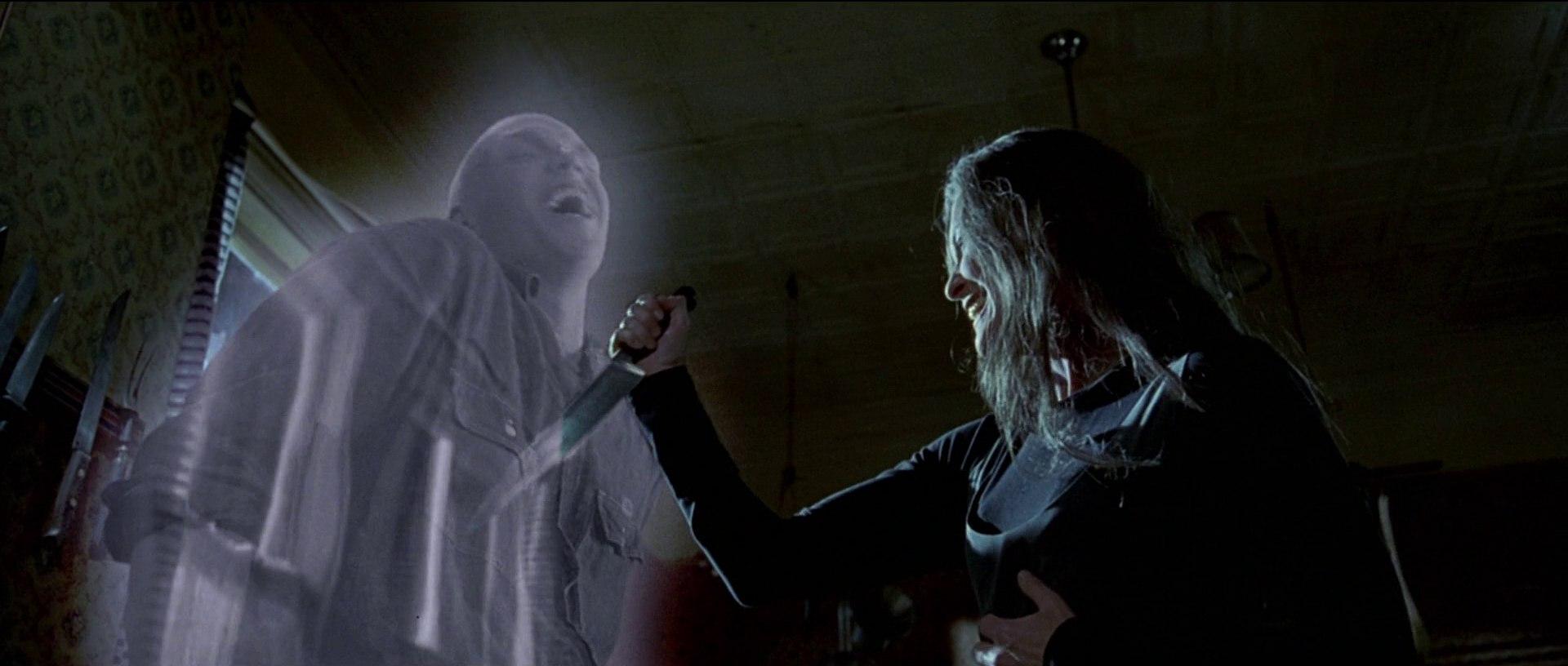
The Frighteners received a 4K restoration from the German boutique label Turbine Medien in 2022. While it’s impossible to compare the two releases without a physical copy, Arrow’s edition seems like a phenomenal alternative for UK fans. The transfer boasts an impressive increase in detail, drawing out striking definition. The antique interiors of Patricia Bradley’s (Dee Wallace) Gothic mansion and the background details inside Fairwater’s local museum remain crisply defined without looking artificially sharpened or digitally processed. Tight compositions reveal a wealth of detail, from subtle skin blemishes to intricate clothing textures.
Some sequences involving extensive digital imagery are slightly soft, and scenes featuring the Grim Reaper, in particular, appear somewhat diffused. This is primarily due to the limitations of the technology used during production. Thankfully, Arrow resists the temptation to sharpen the image artificially with digital noise reduction (DNR), preserving the film’s natural characteristics.
The most significant improvement is in the nighttime sequences. Dolby Vision high dynamic range (HDR) gives the presentation an excellent sense of depth and dimensionality. Several sequences in the final third are breathtaking, particularly the moment Frank moves psychically between dimly lit buildings in the present and the vividly coloured environments of the past. The black levels inside the derelict hospital are satisfyingly deep, almost impenetrable, while the luminous whites of the spectral dimension glisten without becoming overexposed. The ectoplasmic glow of Stuart, Cyrus and the Judge is also handled well, gaining a newfound luminosity that enhances their otherworldly presence. Arrow’s presentation maintains an excellent balance between contrast and shadow throughout. Overall, it’s a wonderful transfer that breathes new life into Peter Jackson’s macabre fantasy.
Viewers may find themselves overwhelmed by the number of audio options across the various versions in Arrow’s 4K release. The theatrical cut offers three options: a DTS-HD Master Audio 5.1 track in both theatrical and home-video mixes, and a DTS-HD Master Audio 2.0 track. The director’s cut also offers three options: a DTS-HD Master Audio 5.1 home-video mix, a DTS-HD Master Audio 2.0 track and an immersive Dolby Atmos upgrade.
As with the differences between the theatrical and director’s cuts themselves, the theatrical mix of the DTS-HD Master Audio 5.1 track is the stronger option. The differences between the two mixes are relatively minor, but the theatrical mix makes more effective use of the soundstage. Both are wonderfully dynamic, though the Dolby Atmos track accompanying the director’s cut deserves the most attention.
It’s an immersive, engaging track that makes full use of the soundstage, enveloping the listener from the outset. The rear and overhead channels are particularly effective, adding a welcome sense of height to the foreboding atmosphere. The sounds accompanying the Grim Reaper sweep across the soundstage, while howling winds, rumbling thunder and heavy rainfall are rendered with exceptional clarity, mostly overhead. The bass gives the suspenseful moments palpable weight, building anticipation as the action approaches.
Danny Elfman’s mischievously macabre score (as heard in Mars Attacks!) also benefits considerably from the Atmos treatment. It sounds precise and is evenly distributed across the soundstage. The side channels envelop the listener with strong piano motifs, while the orchestral strings are placed mainly at the rear.

director: Peter Jackson.
writer: Peter Jackson and Fran Walsh.
starring: Michael J. Fox, Trini Alvarado, Dee Wallace, Jake Busey, Peter Dobson, John Astin, Jim Fyfe, Chi McBride & Julianna McCarthy.


