FUTUREWORLD (1976)
Two journalists investigate the secrets of a theme park populated by robots.

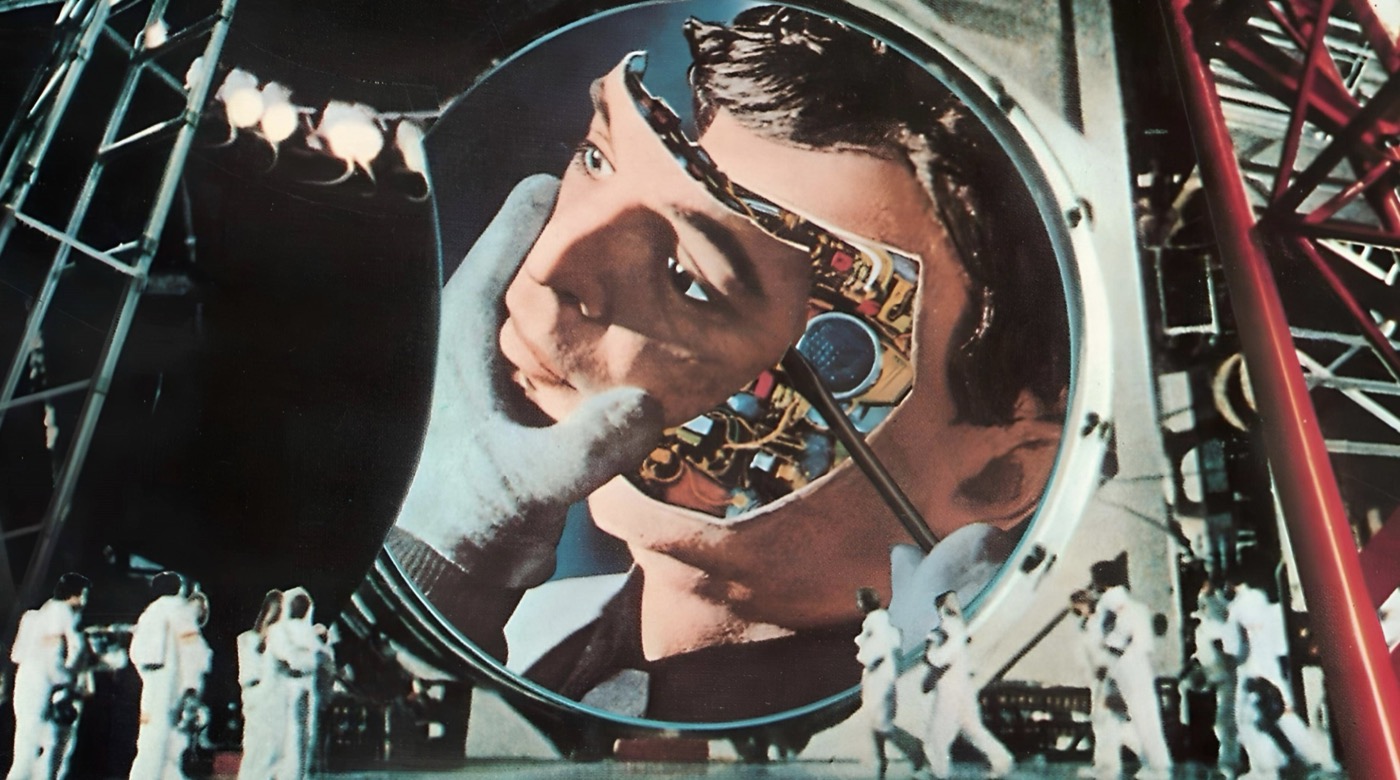

Two journalists investigate the secrets of a theme park populated by robots.
You could call it the Jurassic Park fallacy or, if you’re feeling pessimistic about our ability to learn from our mistakes, perhaps it’s actually the Jurassic Park insight – the notion that even after technology goes cataclysmically wrong, corporations will return to it again and again, only to encounter the same problem.
Futureworld, also set in a theme park and based on a Michael Crichton idea, similarly proposes that despite the deaths of more than 50 guests when robots malfunctioned at the Delos park in the original Westworld (1973), the company behind it would double down with a further investment of $1.5BN – around $10BN today – and reopen after just two years. What’s more, we see at the very beginning of Futureworld that Delos has no problem attracting dignitaries from around the world to take a free holiday in another robot-populated park.
To be fair, at least Richard T. Heffron’s film and the Delos executives in it address the issue, though it should be an early warning that plausibility isn’t going to be Futureworld’s strong point. Given this, what’s surprising – and unlike the rather repetitive Jurassic Park franchise – is that Futureworld doesn’t rehash the storyline of Westworld at all. In some ways it’s much more ambitious, folding in paranoid ideas from The Stepford Wives (1975), The Manchurian Candidate (1962), and even Invasion of the Body Snatchers (1956); but it’s also much less original and effective.
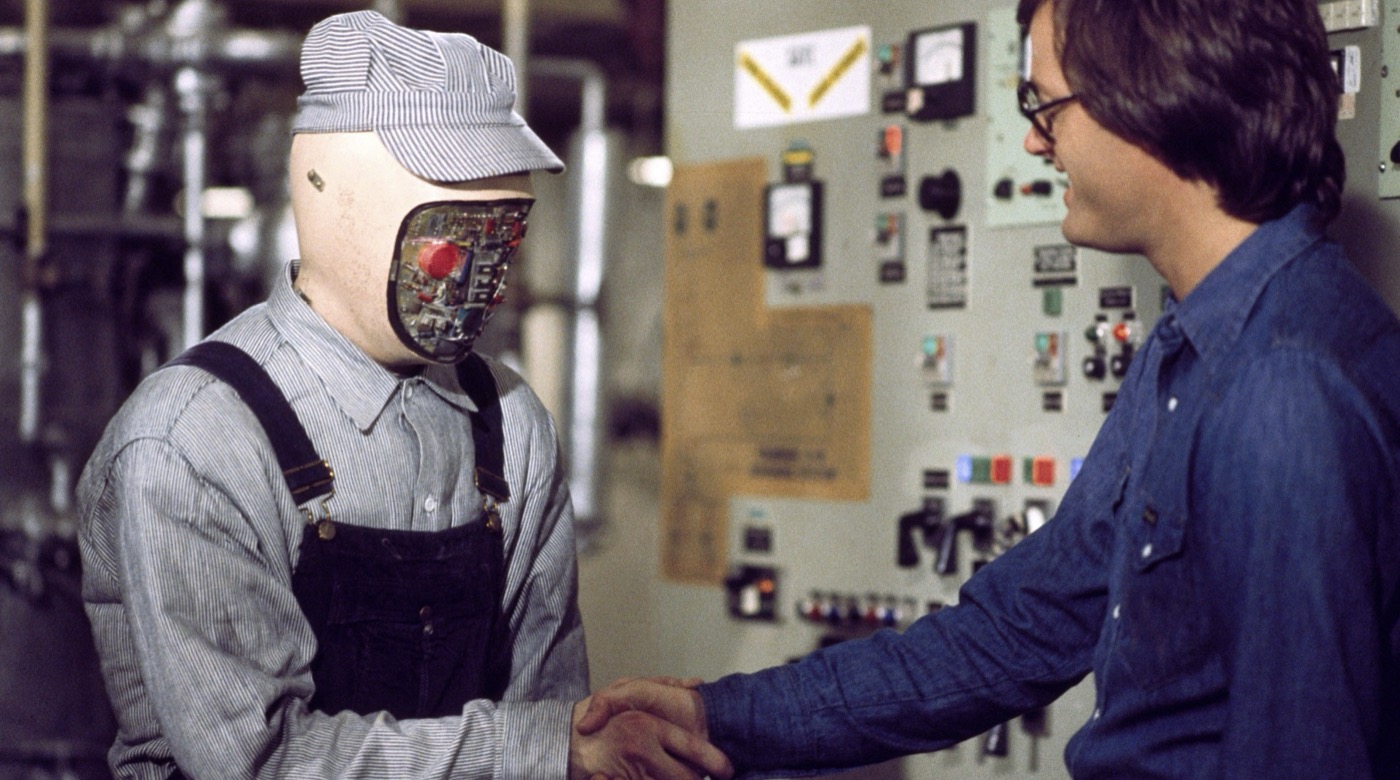
Where Westworld hinges on the risk that people might lose control of technology – a fear that has fresh resonance today – Futureworld is less interested in the robots themselves (and, in fact, isn’t very interested in the theme park either, except as a narrative convenience). They’re essential in literal plot terms, but it’s not a film about robots in the way that Westworld was, and it certainly has no intention of following them down metaphysical rabbit holes as the much later HBO adaptation did. Futureworld is fundamentally an evil-corporation/evil-scientist movie.
It begins in a very similar fashion to Westworld, with a TV promotion for the Delos parks – this time not a commercial,but a game show where Ron (Jim Antonio) wins a free trip. We soon learn that Delos is also inviting influential people from around the world to sample the delights of its MedievalWorld, RomanWorld, SpaWorld, and FutureWorld attractions (at least it’s had the decency to shutter the Wild West-themed one, which oddly is called WesternWorld rather than WestWorld).
These visitors eventually prove collectively important to the plot, even though they never register as individual characters. For the time being, however, the focus is on two members of the media who join the group: newspaper reporter Chuck (Peter Fonda) and TV news celebrity Tracy (Blythe Danner), invited like the foreign guests to rebuild trust in the brand after the marauding-robots debacle. At least, that’s what Delos says…
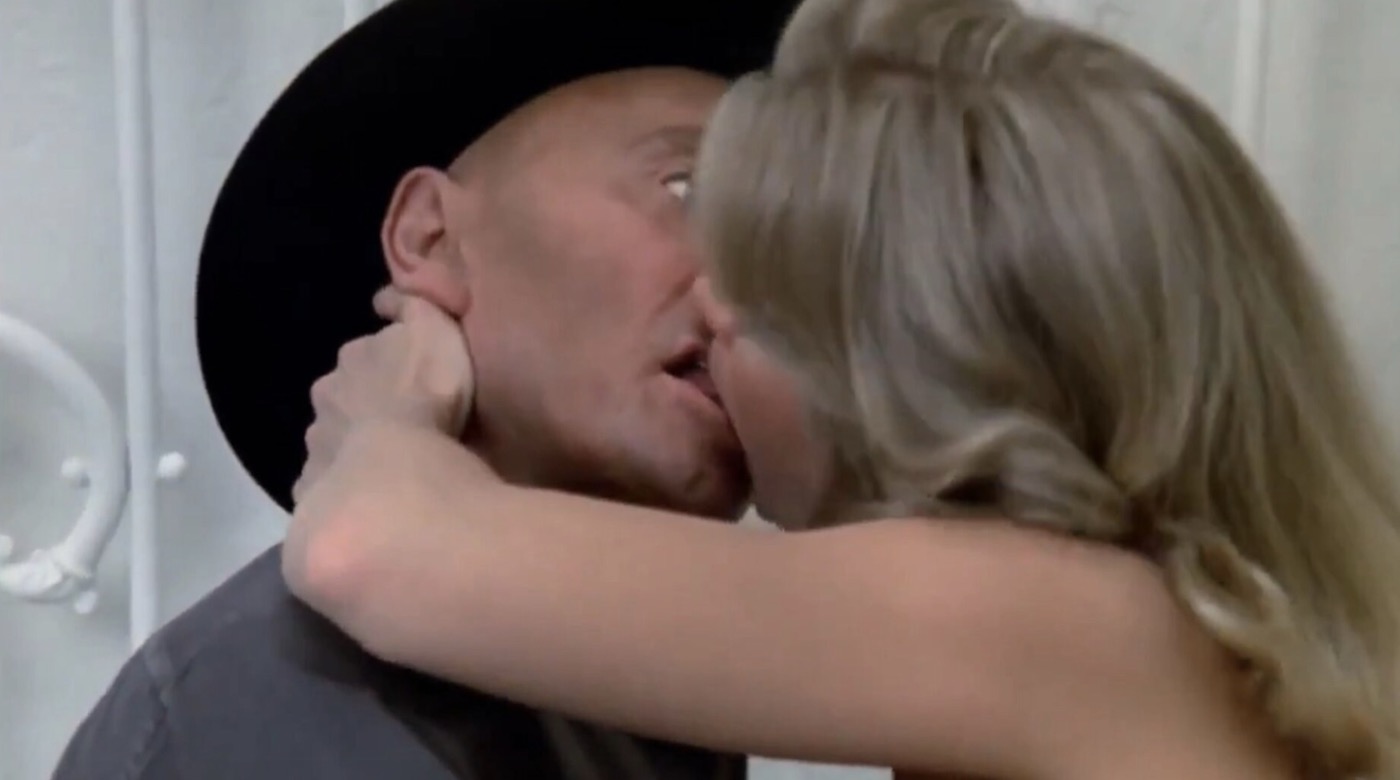
We see bits of each attraction. MedievalWorld is, as you’d expect, all jousting and banquets. RomanWorld features “relaxed morality” – in other words, sex robots. SpaWorld is, well, a spa, albeit one with a Fountain of Youth. A Japanese-themed EastWorld is under development. FutureWorld itself simulates a sci-fi trip to outer space, complete with Martian skiing.
But none of this features much after the first act, as the focus shifts fully to Tracy and Chuck: not just the way their initial squabbling inevitably turns romantic, but Chuck’s determination to investigate a mysterious tip he received at the beginning of the movie from a man called Frenchy (Ed Geldart). Frenchy demands to meet the reporter, utters the single word “Delos”, then keels over and dies – something that’s, incidentally, presented in the movie as a fairly unremarkable part of a journalist’s daily routine. Woodward and Bernstein had it easy.
Chuck and Tracy’s digging brings them into conflict with two Delos bosses: the sinister Dr Schneider (John Ryan) and the smarmy Dr Duffy (Arthur Hill). They also encounter a more helpful Delos technician called Harry (Stuart Margolin) and his pet robot, Clark; get chased by three robotic samurai; and eventually uncover the secret behind the reopening of the Delos parks, at which point Duffy delivers his big Bond-villain explanatory speech.
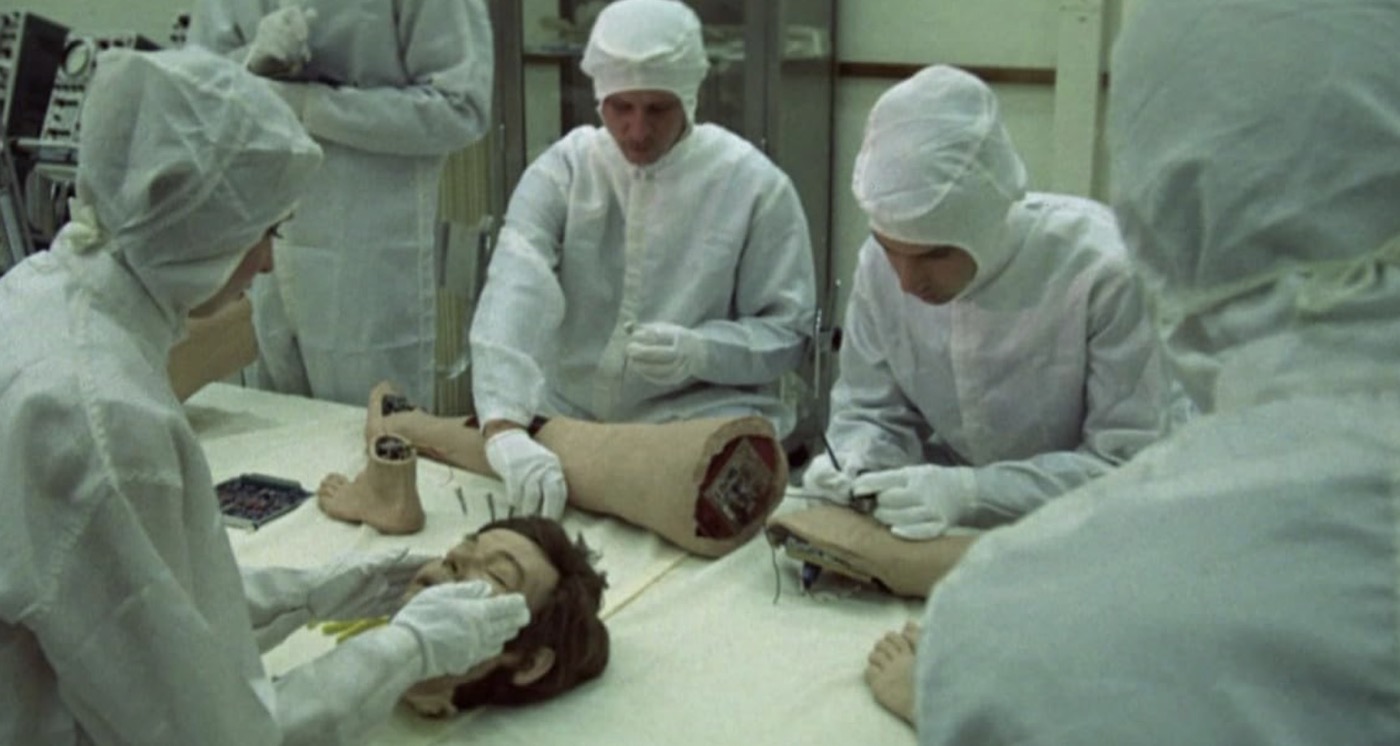
Hill carries off the role of Duffy well enough, even if the polite-but-dastardly executive is something of a period cliché,though Schneider is a bit too obviously nefarious. Fonda and Danner are likeable enough in the lead roles – she’s more characterful than him – and Margolin creates a genuinely believable human being in Harry, unburdened by having to be too good or too wicked. Fred Karlin’s score relies more on pastiche than the unusual music he created for Westworld. At least it doesn’t get in the way, but this lighter approach makes it harder to take the film seriously, and that problem is compounded by the writing and directing.
For Westworld, Michael Crichton took on both responsibilities (unlike Jurassic Park, it was an original screenplay, not based on a novel). Here, though, Crichton didn’t want to be involved, so writing duties were handled by Mayo Simon and George Schenck, while Richard T. Heffron directed. Simon had recently written Saul Bass’s strikingly original Phase IV (1974), but Heffron and Schenck had largely worked in television and had no genuinely noteworthy movies to their names. Whatever the reason, they didn’t seem to grasp what had made Westworld work so well, and while Futureworld is superficially similar, it lacks many of its predecessor’s strengths.
The much bigger budget isn’t always used well – the park’s gimmicky novelties, like holographic chess, add nothing of value, for instance, and a few shots of the deserted WesternWorld facility are far more atmospheric than anything in FutureWorld. The banks of flickering computers must have seemed impressively high-tech in the 1970s – evoking the space programme’s mission control centres – but one sequence highlighting them is far, far too lengthy, with endless dialogue like “I have the resonance frequency on the protein molecules” taking the storyline nowhere.
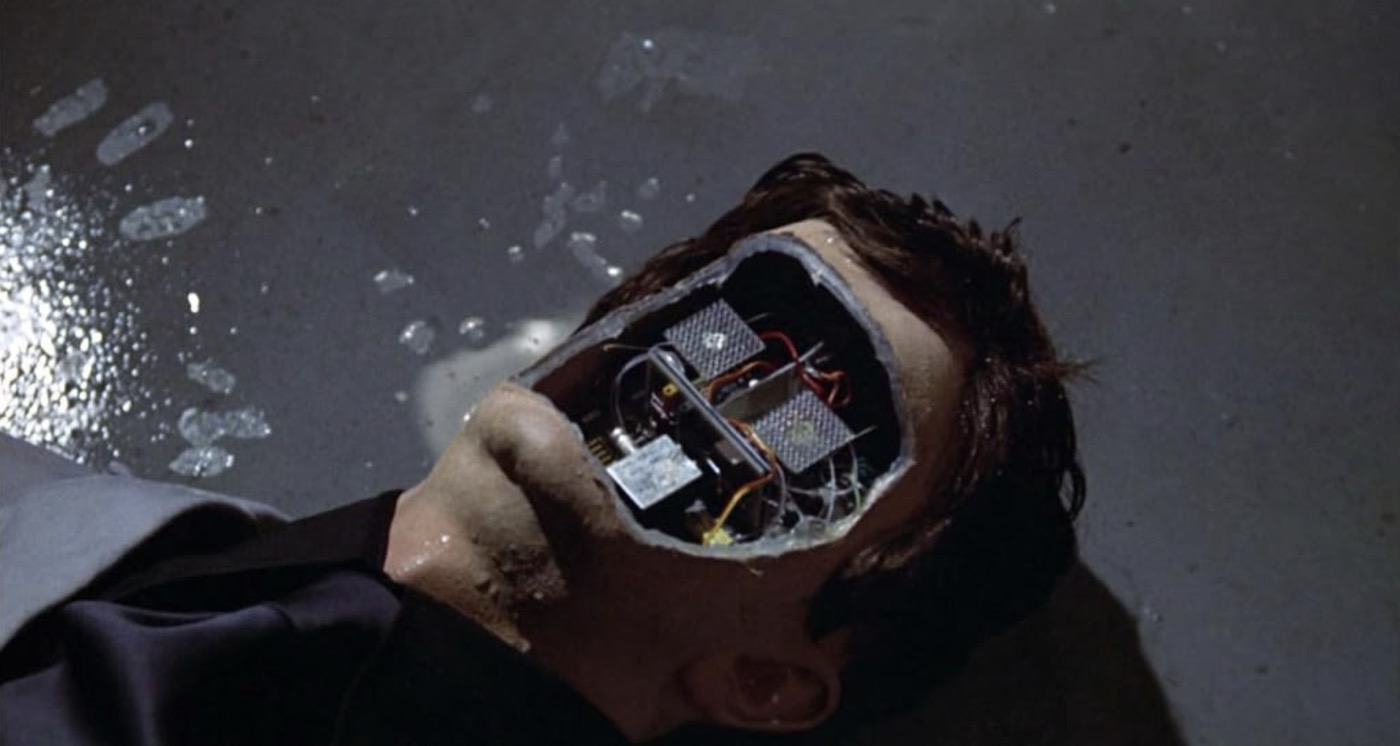
Similarly, a dream sequence for Tracy is overlong and of questionable relevance – though it does provide a cameo for Yul Brynner as the Gunslinger, the rogue android from the first movie, who may well have been included purely so the poster could feature his name. (The Gunslinger robot also made a brief, unhyped appearance in Episode 6 of the HBO series.) Action sequences are strangely anaemic, coming across with no greater intensity than more mundane passages,and the long shootout towards the end of the film is just tedious.
Some of these issues are simply down to poor writing and direction. But a deeper problem with Futureworld derives from being a sequel and needing to offer something new. Westworld’s premise was original and benefited from an element of real mystery, exploited in scenes like the one where a robotic rattlesnake turns aggressive – the audience can’t be quite sure whether it’s alive or not. Later, we really don’t know how far the Gunslinger will go.
In Futureworld, that kind of mystery is no longer available, having been thoroughly mined by Westworld, and is replaced by a more conventional quest to expose the bad guys’ world-domination scheme. There is an attempt towards the end to spring a big (and rather confusingly explained) robot-related twist, but it won’t take anyone by surprise. In any case, though robots are nominally key to the plot and are depicted as being even more sophisticated than in Westworld (they now staff the Delos control room), emergent machine intelligence isn’t the point here.
The agency that matters in Futureworld is human, bringing about a significant shift in tone. Westworld wasn’t lacking in humour (take the bar fight, for example), but unlike Futureworld, it has barely any emotional perspective and certainly couldn’t be accused of cuteness – it’s a cold film, with a weirdly bleak and lonely conclusion in MedievalWorld’s castle,and one especially disturbing scene where we see the pixelated point of view of Brynner’s Gunslinger (an early landmark in the use of digitised images in film). Futureworld can never be chilling in the same way because the protagonists’ relationship is so warm, and the antagonists are driven by very human lusts for money and power.
Perhaps Westworld was a one-off that couldn’t be repeated. Or perhaps Futureworld simply needed the genius of someone like Michael Crichton; while not a writer without flaws, he had an acute ability to spot a technological “what if?” and turn it into a halfway-believable tale. What we get in this sequel, though, often feels like an attempt to replicate something without truly understanding it. And it goes no better than it did with the dinosaurs.
USA | 1976 | 108 MINUTES | 1.85:1 | COLOUR | ENGLISH

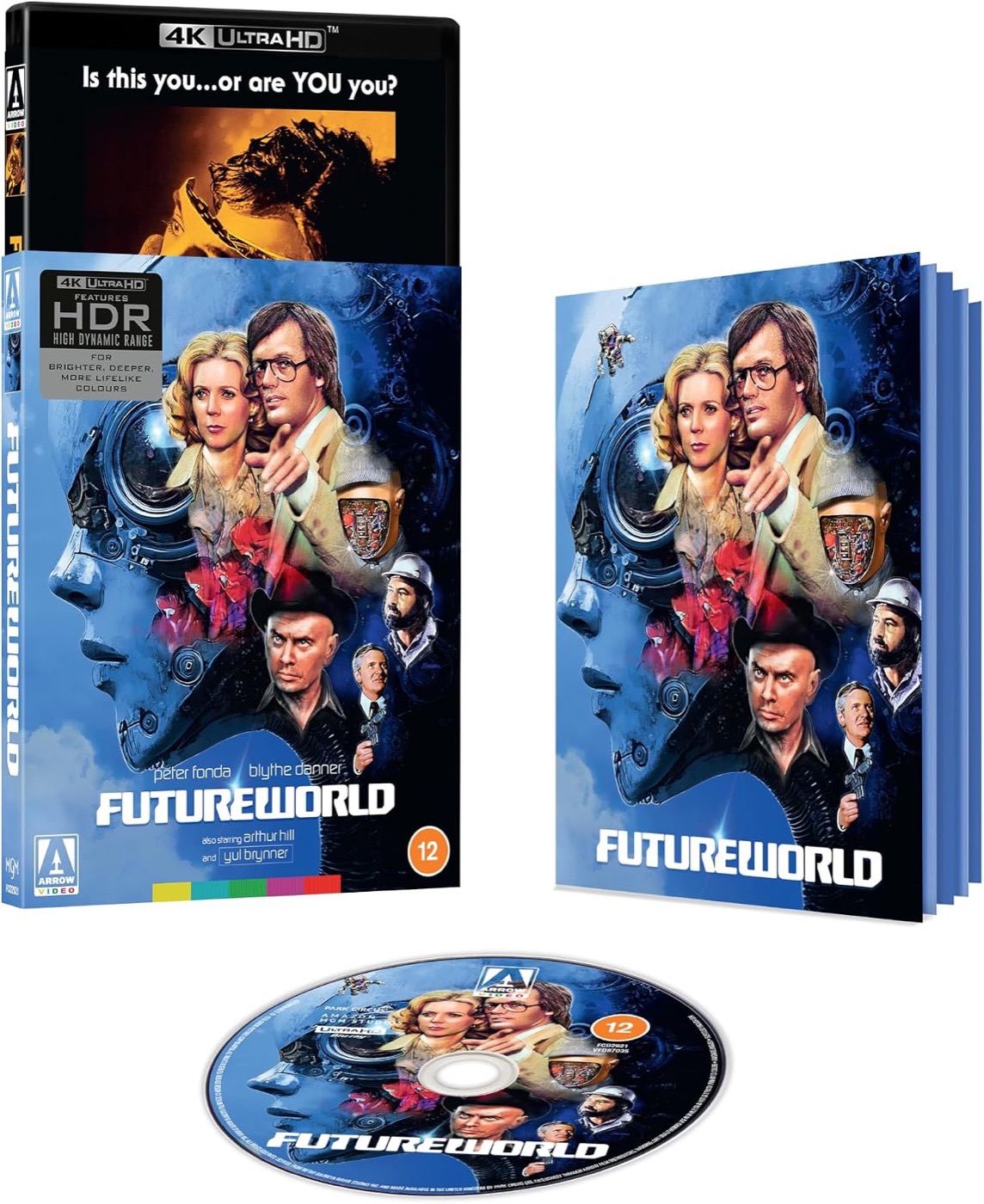
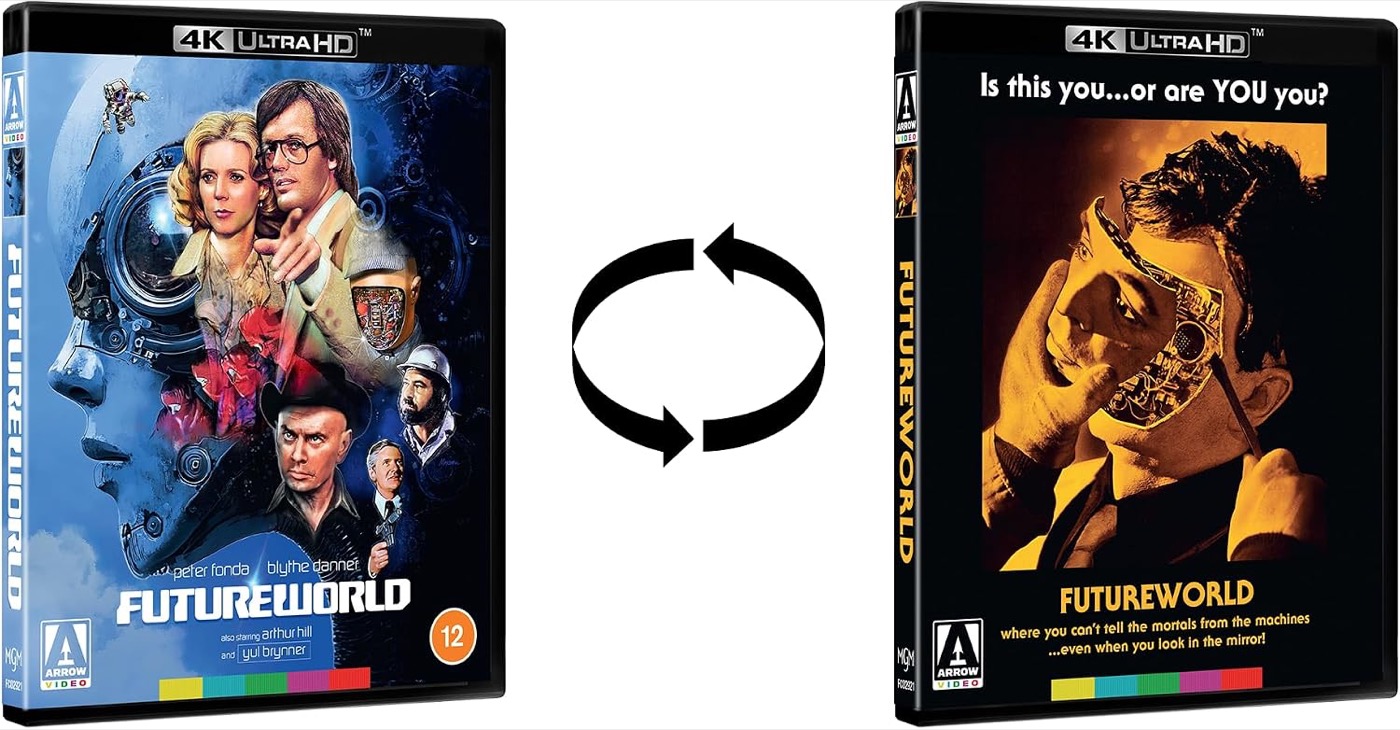

director: Richard T. Heffron.
writers: Mayo Simon & George Schenck.
starring: Peter Fonda, Blythe Danner, Arthur Hill & Yul Brynner.