POINT BLANK (1967)
After being double-crossed and left for dead, a mysterious man single-mindedly tries to retrieve the rather inconsequential sum of money that was stolen from him.

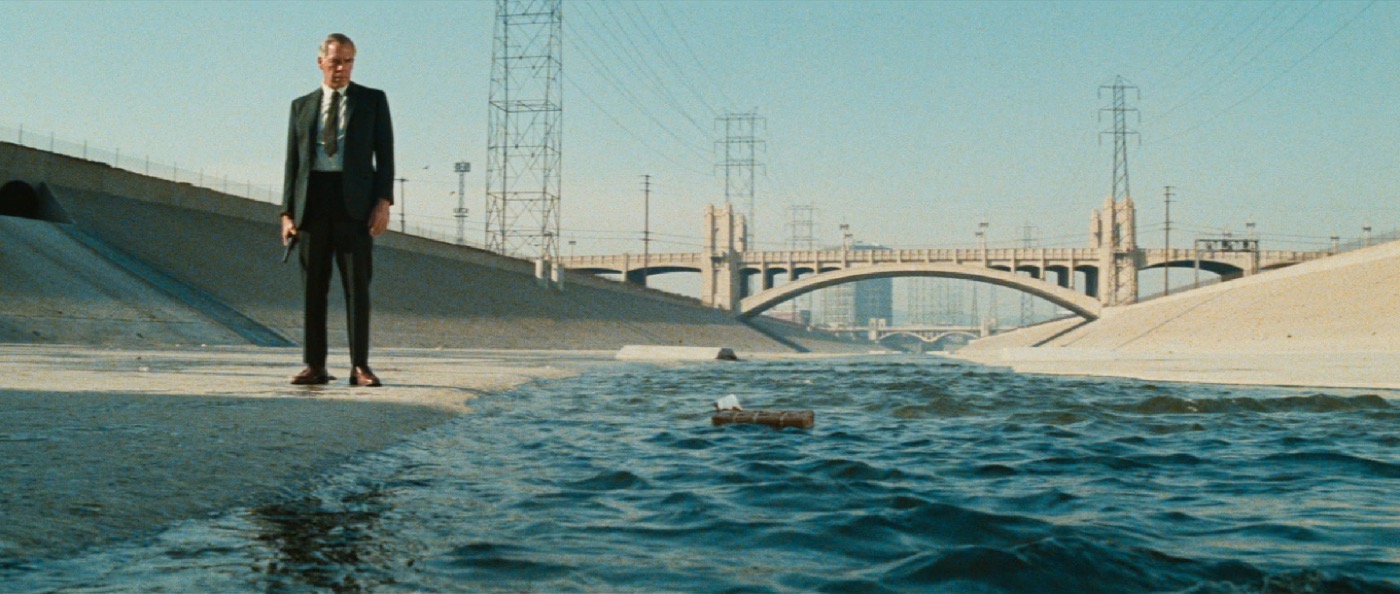

After being double-crossed and left for dead, a mysterious man single-mindedly tries to retrieve the rather inconsequential sum of money that was stolen from him.
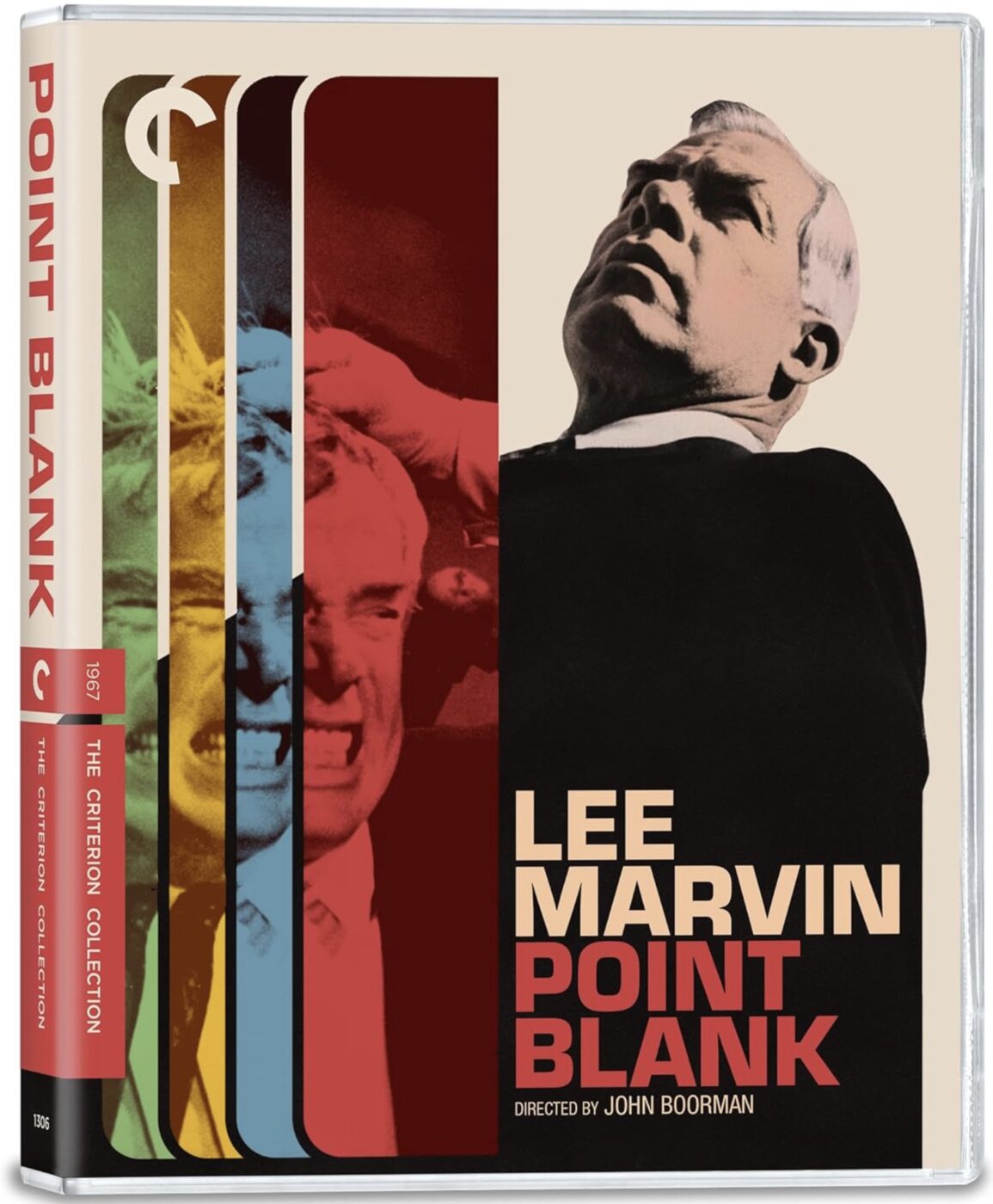
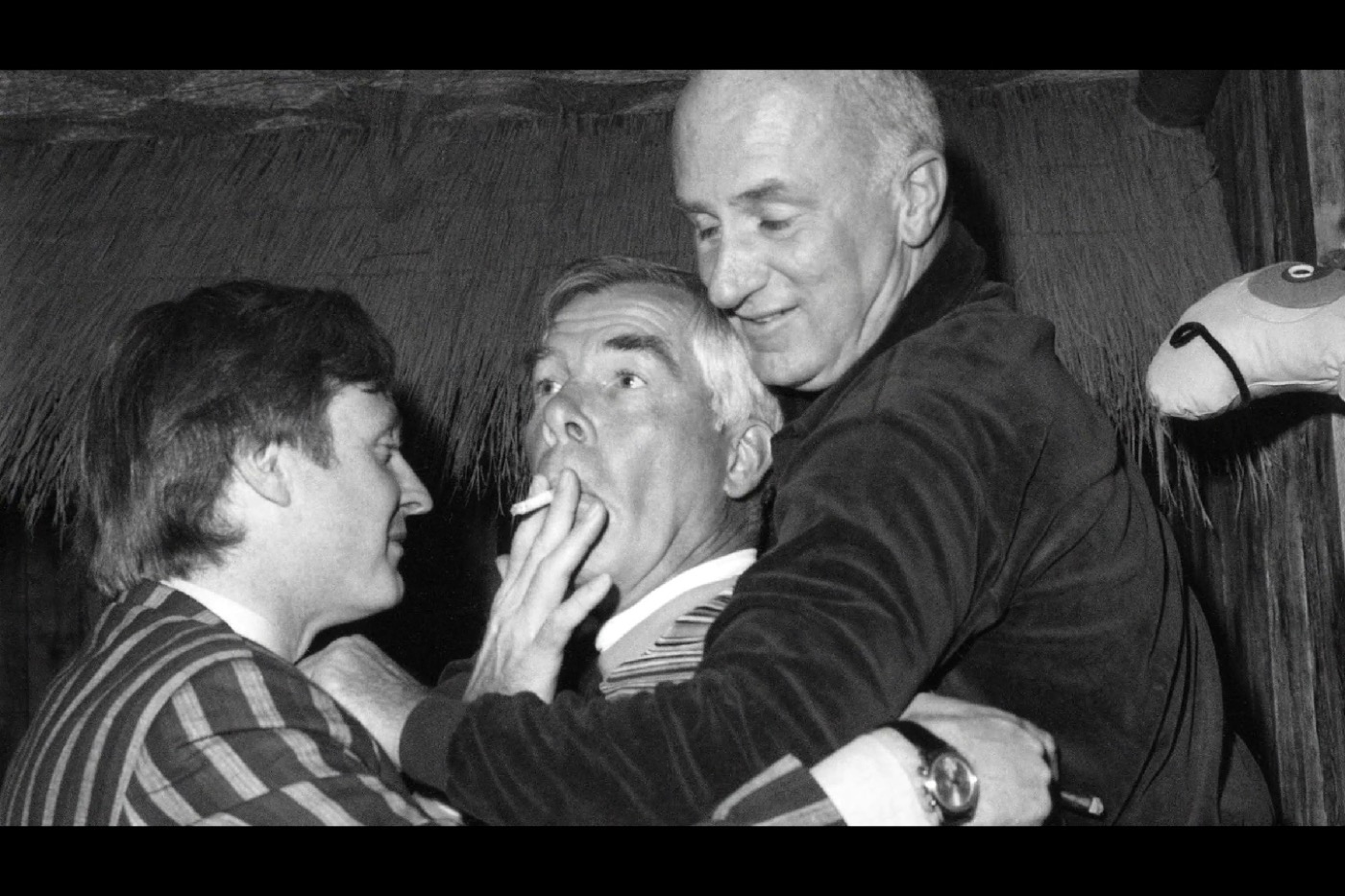
By 1967, Lee Marvin was a bona fide A-list actor with the professional stature to demand veto power over scripts and final cuts. When he signed up to star in Point Blank, he famously deferred those contractual rights to a fledgling British director embarking on his first US film. John Boorman stepped up to the mark and, with significant input from his leading man, produced a visually arresting thriller that became a genre milestone.
Point Blank has never looked better than in this new 4K digital restoration, supervised and approved by Boorman, as the latest title to join the Criterion Collection on Ultra HD and Blu-ray. The saturation and grading are impressive, shifting from muted greys to acid greens, and cool blues to the warmest reds. The film’s use of colour is not just gorgeous but narrative-driven.
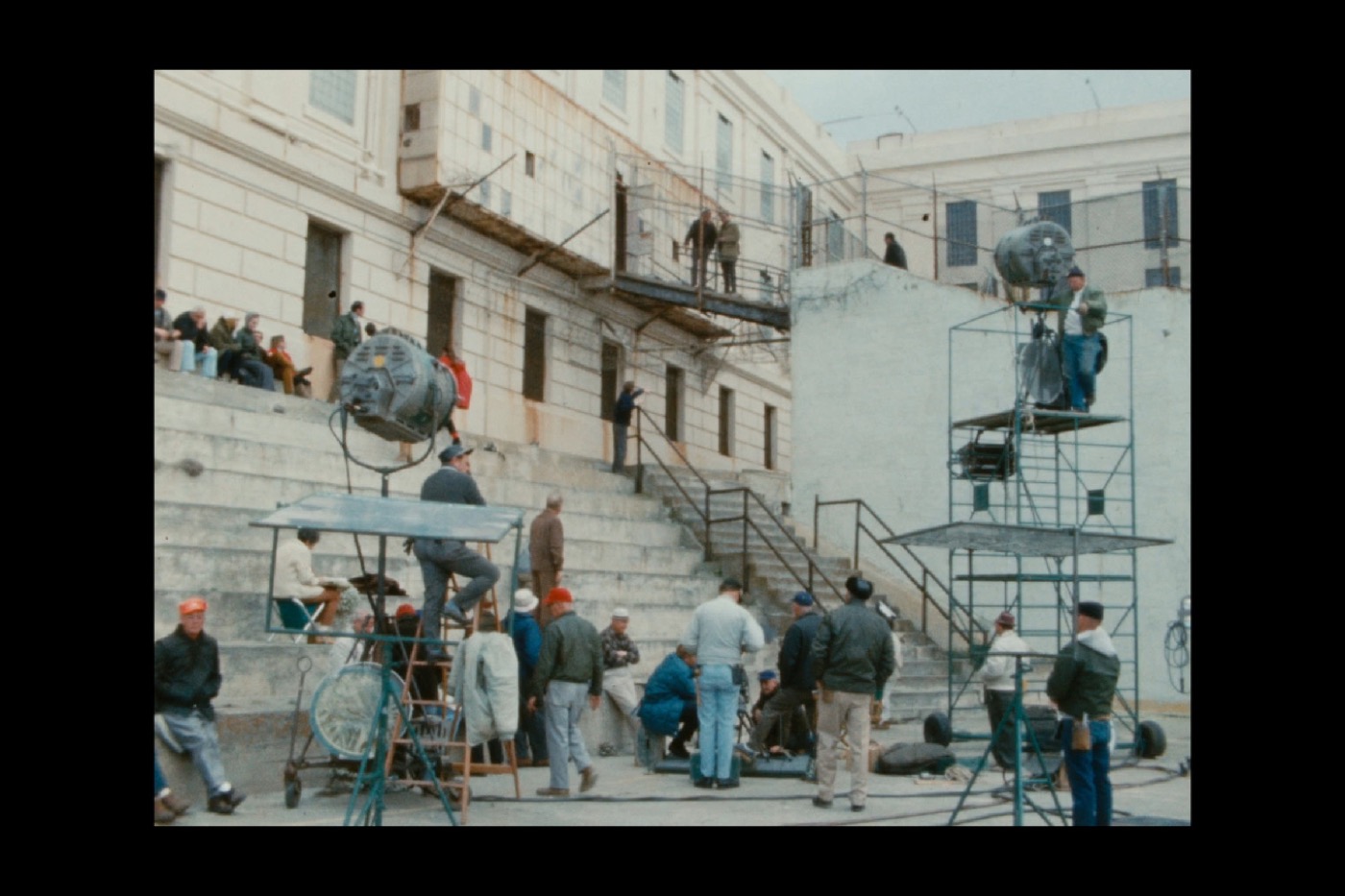
This Technicolor take on noir visual language follows a straightforward plot. A gangster named Walker (Marvin), fresh from a heist, is double-crossed by his partner, Mal Reece (John Vernon). After shooting Walker and leaving him for dead, Reece flees with the loot. We join the story as Walker miraculously regains consciousness in a cell on the newly abandoned Alcatraz. A series of flashbacks fills in the gaps, creating a fractured narrative as Walker seeks both recovery and retribution. Except, that isn’t the whole story.
Walker soon discovers his ex-partner is in a relationship with his ex-wife, Lynne (Sharon Acker). By the time he tracks her down, Reece has already fled. With the help of Lynne’s sister, Chris (Angie Dickinson), Walker eventually catches up with Reece, only to learn the money is gone—used to pay off debts to high-level gangsters. Incredibly, Walker decides to retrieve his share from them instead.
Under a different director, Point Blank might have been a merely passable revenge thriller. After all, Marvin had already left an indelible mark as a monstrous villain in Fritz Lang’s The Big Heat (1953). However, Walker shares the attributes of a movie monster in a different sense: he is relentless, obsessed, and “created” by the evil of others. Some readings suggest Walker is a supernatural force or a “ghost”—a revenant returning from the dead. The character raises existential questions: are we driven by destiny? Is free will an illusion? Are we defined only by our actions while our motivations remain meaningless?
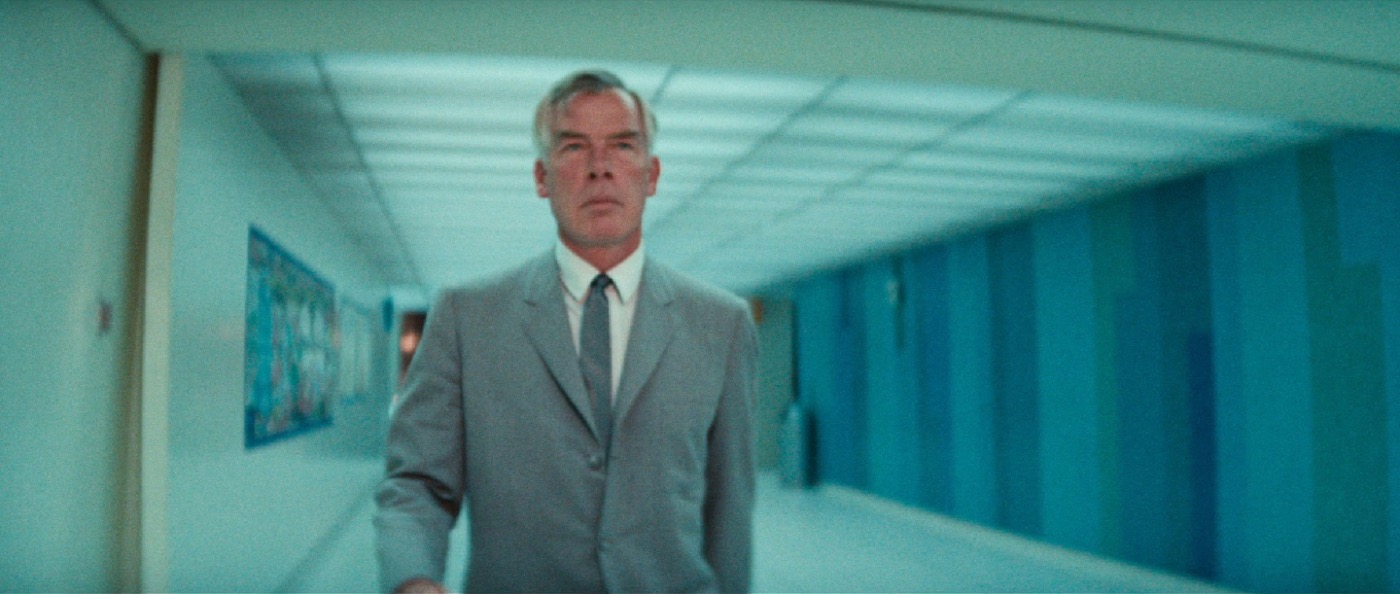
The sequence in which Walker walks down a long terminal corridor is—and I am justified in using the word—iconic. His figure increases in size and importance as he approaches the camera; the passage, devoid of side doors, clearly represents his single-mindedness. This is one of the famous connecting tunnels at LAX, featuring tiled murals by Janet Bennett that progress from cool to warm tones. The film adopts this motif, employing near-monochromatic palettes that match the tunnel. The rhythm of Walker’s footsteps speaks volumes about his momentum. He is absolute.
The shots are cut to the stark sound of relentless footsteps, pushing Johnny Mandel’s incidental music aside. The character now influences the medium he inhabits; the film’s soundtrack and editing become his embodiment. The rhythm continues like a metronome, or a ticking time bomb. Even as Walker drives and later sits in his car waiting, we still hear those footsteps symbolically approaching. The two elements of this montage—the predatory pursuer and his quarry—collide in a startling scene that shocks us from our hypnotic trance with the violent interruption of a door bursting open. Then, the rhythm collapses completely in a volley of gunshots.
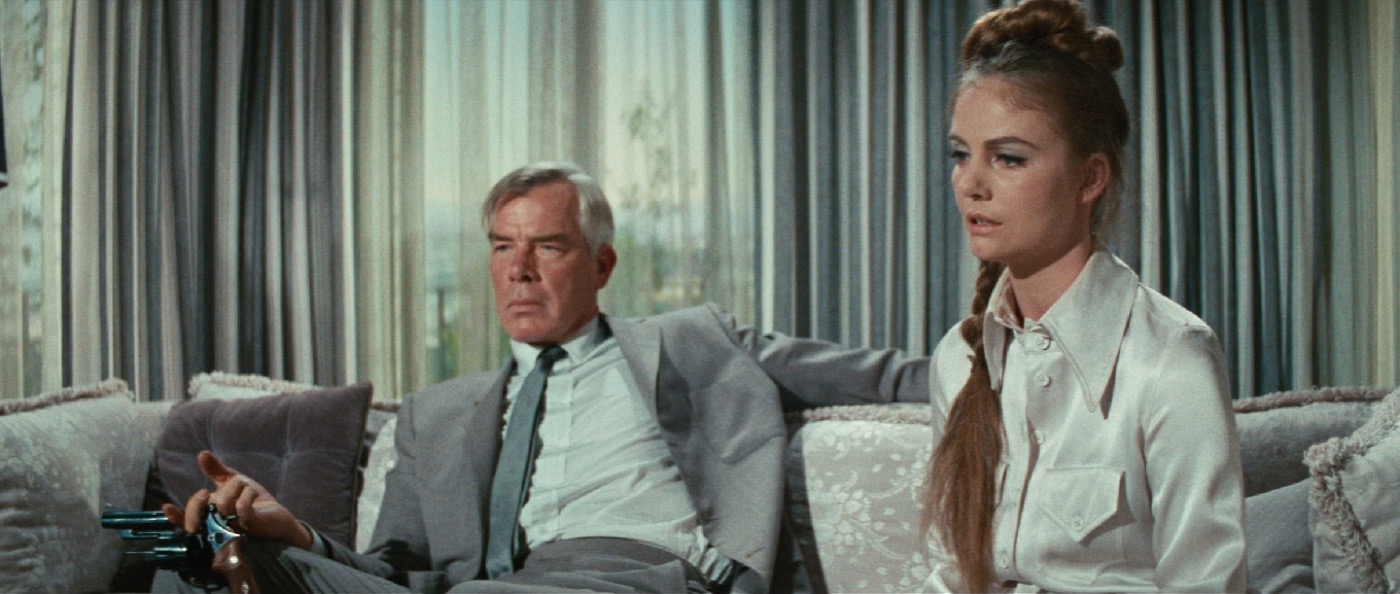
Even when he’s doing ‘nothing’, Lee Marvin carries the film. His performance is remarkable, relying largely on silence and physical presence. His stoic stillness becomes almost a blankness at times, through which brutal outbursts erupt like fireworks against a dark sky. He oozes pent-up violence throughout.
With his business suits, brooding demeanour, and monolithic screen presence, Marvin inhabits a character almost recognisable as Charlie Strom—the part he played in Don Siegel’s The Killers (1964), in which he also starred alongside femme fatale Angie Dickinson. He could be the same man, yet changed. It’s much like how Patrick McGoohan’s Number Six in The Prisoner (1967–68) could be John Drake from Danger Man (1960–66).
Interestingly, a similarly iconic corridor walk—complete with stark, metronomic footsteps—appears in the opening titles of The Prisoner, which first aired just weeks after Point Blank was released. It likewise signifies a grimly determined outsider pitted against ‘the organisation’. As an aside, this same metaphor was recycled in The Suspicious Death of a Minor (1975), when rogue cop Paolo is seen walking the length of a corridor after resigning to single-handedly take on a super-powerful, apparently unassailable syndicate.
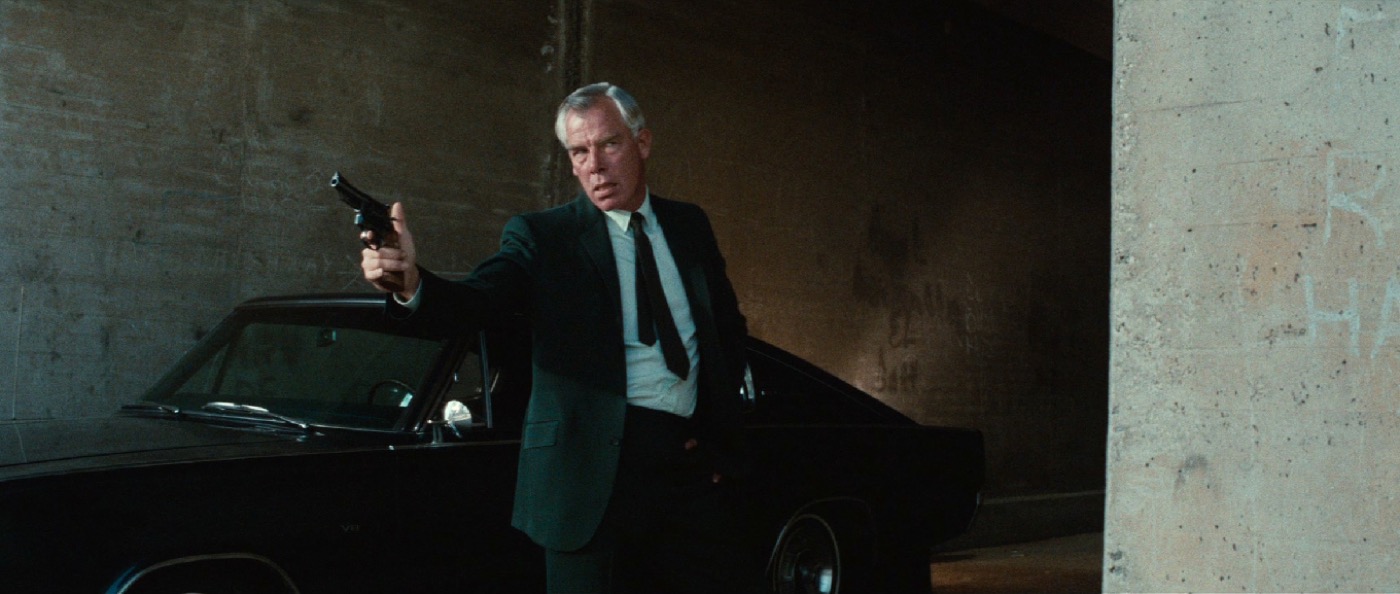
Walker bears parallels to another ‘new mythic’ icon of the 1960s: Clint Eastwood’s ‘Man With No Name’. With Point Blank, Boorman does for the gangster film what Sergio Leone did for the Western with A Fistful of Dollars (1964). Both reimagined American culture, creating a new mythic rendering of well-trodden themes. Leone’s Dollars trilogy balked against countless reiterations of how the West was won, reinventing the genre as a modern fable centred on a character who’s more Knight of the Round Table than cowboy. Boorman takes a similar mythic approach—one he’d later unashamedly explore in Excalibur (1981)—and turns Walker into a kind of anti-Arthur. Remember, he may start as a criminal, but like the fabled English king, he’s also betrayed by his right-hand man and his wife.
Before signing on to the project, both Boorman and Marvin had read the original script adaptation of The Hunter, a pulp novel by Donald Westlake (writing as Richard Stark). They agreed that, while it was terrible and needed a lot of work, it was worth persevering with because the main character was so strong. Once the film was green-lit, Boorman worked with writer Alexander Jacobs to extensively reframe the story, stripping it back, removing hackneyed dialogue, jettisoning secondary characters and subplots, and moving the setting from New York to San Francisco and Los Angeles. In other words, he found focus.
They remained unsatisfied with the rewrite when filming was scheduled to begin, so Boorman took Jacobs with him to continue working as they shot, adjusting and improvising where necessary. Lee Marvin also had a significant hand in refining the script, replacing much of the dialogue with physical acting. In one memorable scene between Lynne and Walker, Marvin chose not to say any of his lines, instead allowing Sharon Acker to either respond to obvious, yet unspoken questions, or to ask them of herself. The result is all the more edgy and effective for this inspired intervention.
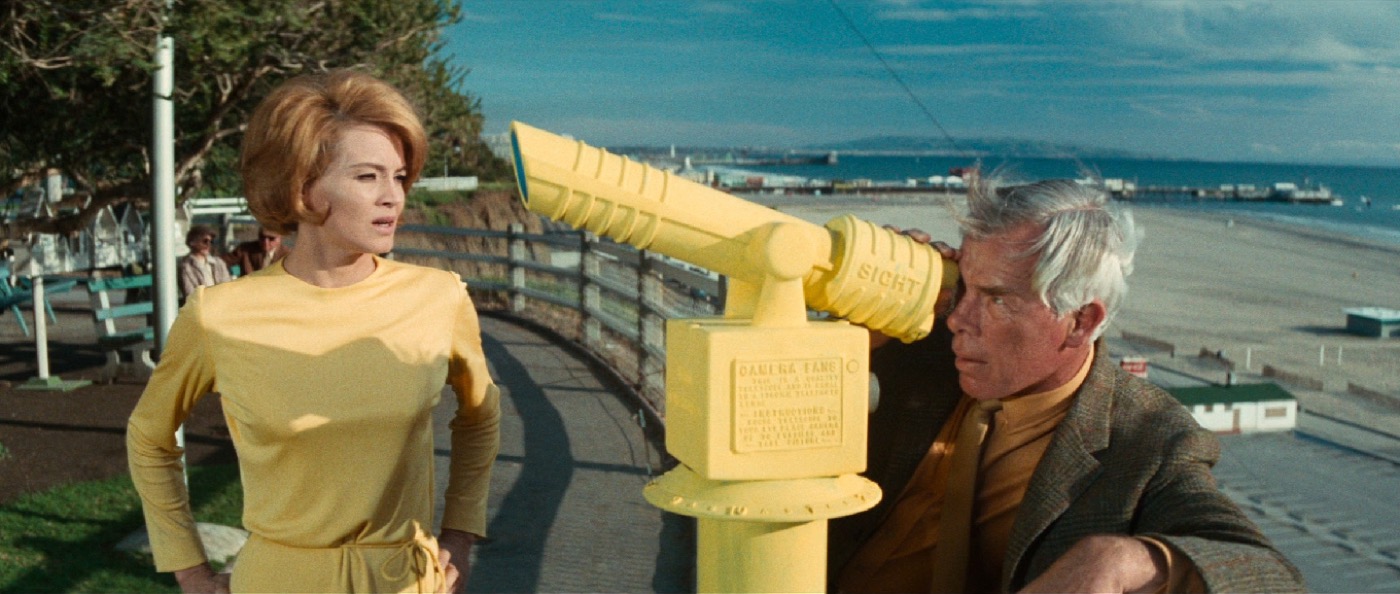
This stripped-down intensity pervades the whole feel of the film. It’s been described as minimalist, and certain key scenes certainly feel that way—especially that iconic sequence of Walker walking. The approach is undoubtedly modernist, but the compositions are too rich to be considered truly minimal; some reach a level of visual complexity reminiscent of a Michel Gondry music video. It’s as though Boorman took everything superfluous from a scene, scrubbed it down to the essential narrative, then built it back up to make it as visually and aurally interesting as possible.
For example, when two characters need to exchange information in a nightclub, the loud music forces them to lean in close, as if about to kiss, while shouting their truncated lines. This pulls us into a very tight two-shot. Then follows a fight scene; Boorman takes the action backstage, behind a projection screen showing the expressive faces of women intercut with what look like religious icons. This backdrop provides the setting for the punch-up, and in place of the fighters’ grunts and screams, we hear the frenzied shouts and squawks of Stu Gardner performing “Mighty Good Times”. The thin fabric of the screen literally screens the crime and violence of the gang-run club from public view.
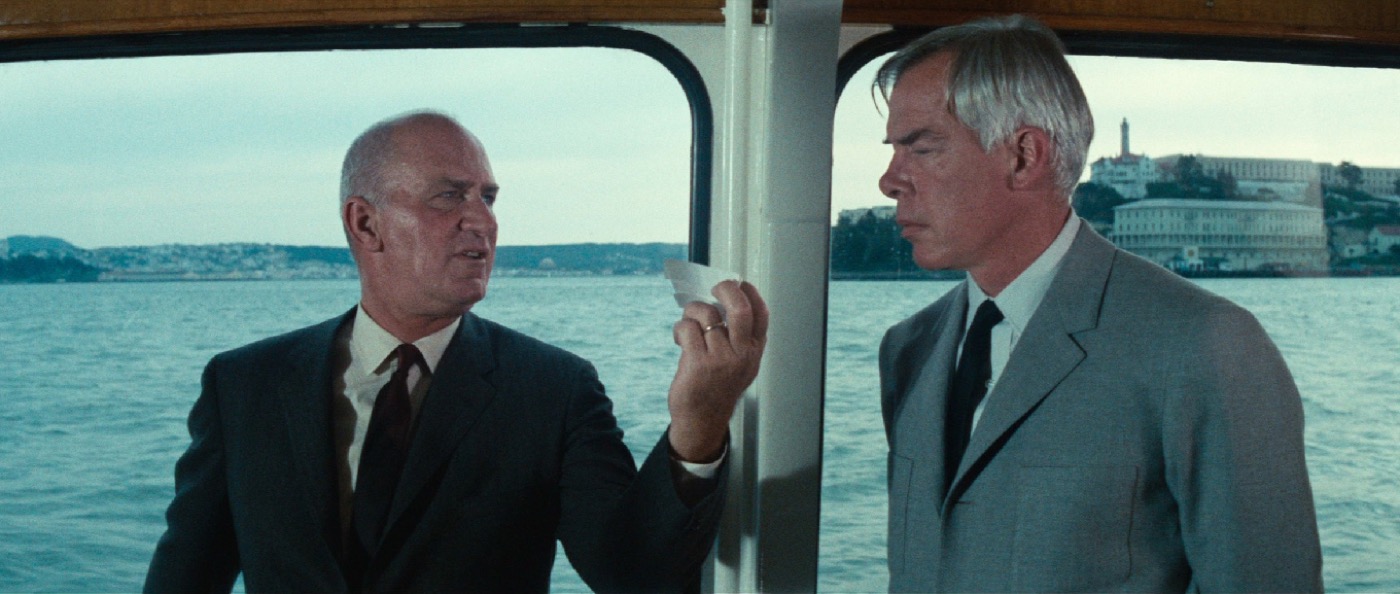
Every exquisite sequence brings visual pleasure, with each shot meticulously composed, framed, and cut with the utmost care. The whole film looks sleek, stylish, and distinctly European. Although this arthouse approach already had a foothold in European cinema (Boorman cites Alain Resnais as an influence), it was something fresh for Hollywood.
When the final cut was shown to studio executives, they were disconcerted by its use of flashbacks and circular narrative; the visual style was at odds with the expected hard-boiled thriller. Heavy editing was suggested, but luckily, they were overruled by Margaret Booth, the senior editor who upheld Marvin’s faith in Boorman. However, the executives may have had a point regarding commercial appeal. The film didn’t perform especially well at the box office, though it has since been recognised as one of the most important films to emerge from Hollywood in that decade.
Point Blank is nearly 60 years old now, but it’s matured beautifully. It still feels fresh and can be enjoyed on many levels. It’s a superb, well-honed thriller in which every frame is visually gratifying. The performances are bravura, particularly from leads Marvin and Dickinson. Today, it also stands as a great period piece—the cars, clothes, and 1960s architecture were all selected with meticulous attention by Boorman’s production team. For film buffs, there’s plenty to discuss, and one could spend hours tracing its influences through cinema history to the present day. If you’ve already seen it, I assure you it warrants a re-watch. If you haven’t… you know what to do.
USA | 1967 | 92 MINUTES | 2.35:1 | COLOUR | ENGLISH

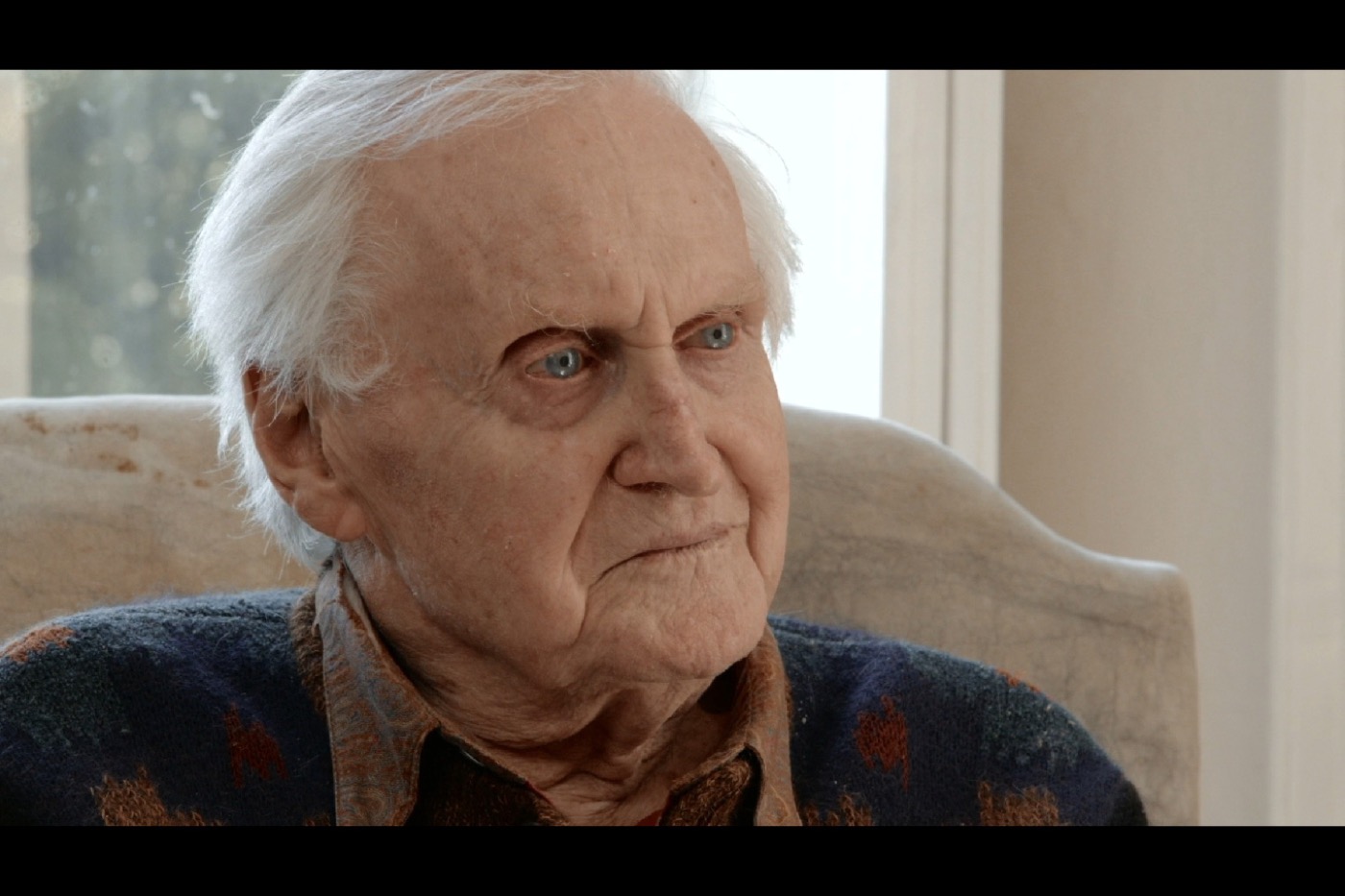
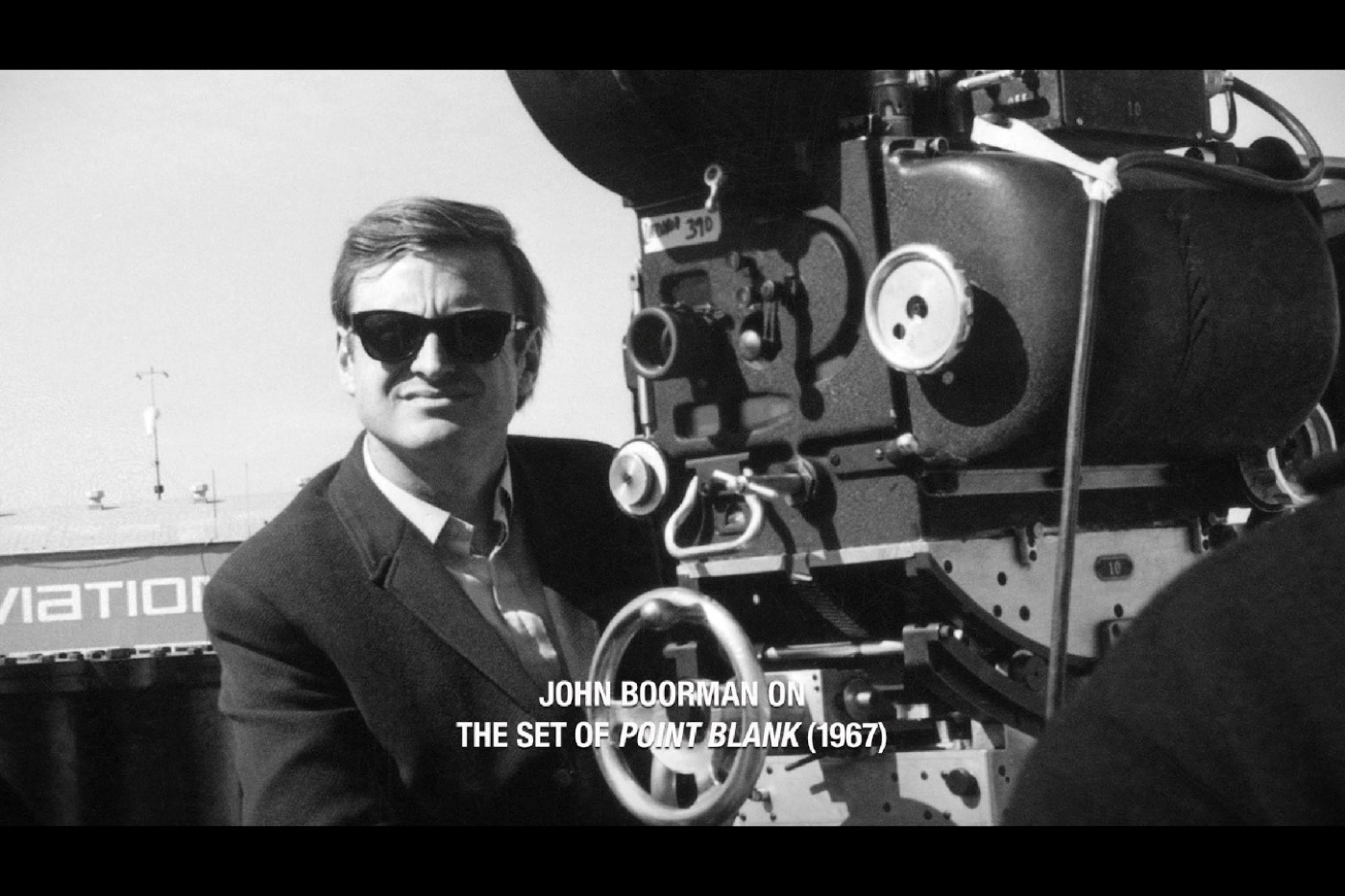

director: John Boorman
writers: Alexander Jacobs, David Newhouse & Rafe Newhouse (based on ‘The Hunter’ by Richard Stark).
starring: Lee Marvin, Angie Dickinson, Keenan Wynn, Carroll O’Connor, Lloyd Bochner, Michael Strong, John Vernon, Sharon Acker, James Sikking, Sandra Warner, Roberta Haynes & Kathleen Freeman.