REMARKABLY BRIGHT CREATURES (2026)
Through unlikely bonds formed during night shifts at a local aquarium, an elderly widow learns of a life-changing discovery...


Through unlikely bonds formed during night shifts at a local aquarium, an elderly widow learns of a life-changing discovery...
Sally Field co-starring with a giant Pacific octopus in an emotive yet uplifting drama? For me, that’s enough to sell the new Netflix movie, Remarkably Bright Creatures. Fans of Shelby Van Pelt’s bestselling debut novel have been awaiting Olivia Newman’s screen adaptation for a couple of years now—some eagerly, others with apprehension. The director’s previous feature, Where the Crawdads Sing (2022), also based on a popular novel, met a mixed reception. However, it seems that with Remarkably Bright Creatures, she hits all the right notes. It’s a heartfelt, animal‑assisted drama with a generous sprinkle of magical realism, where romantic love is but a subplot and more subtle relationships surface.
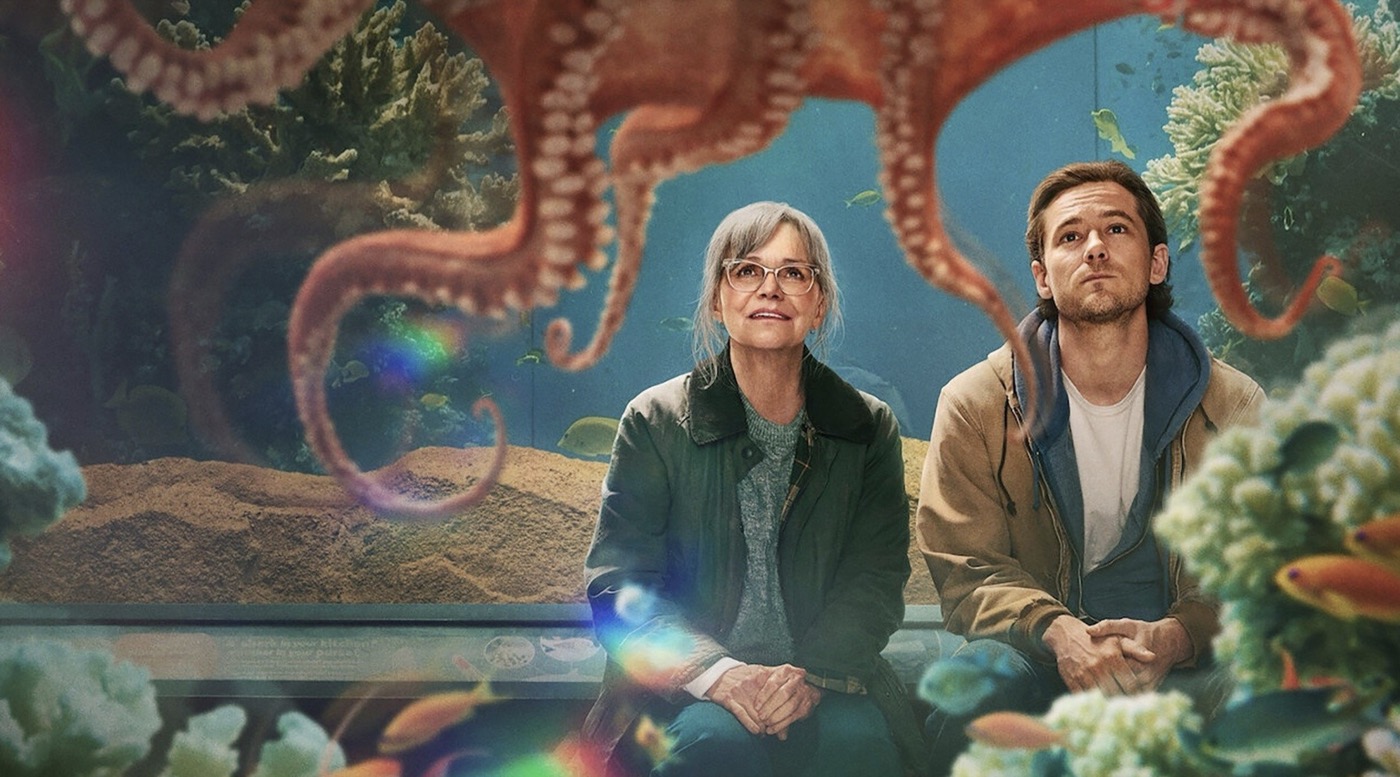
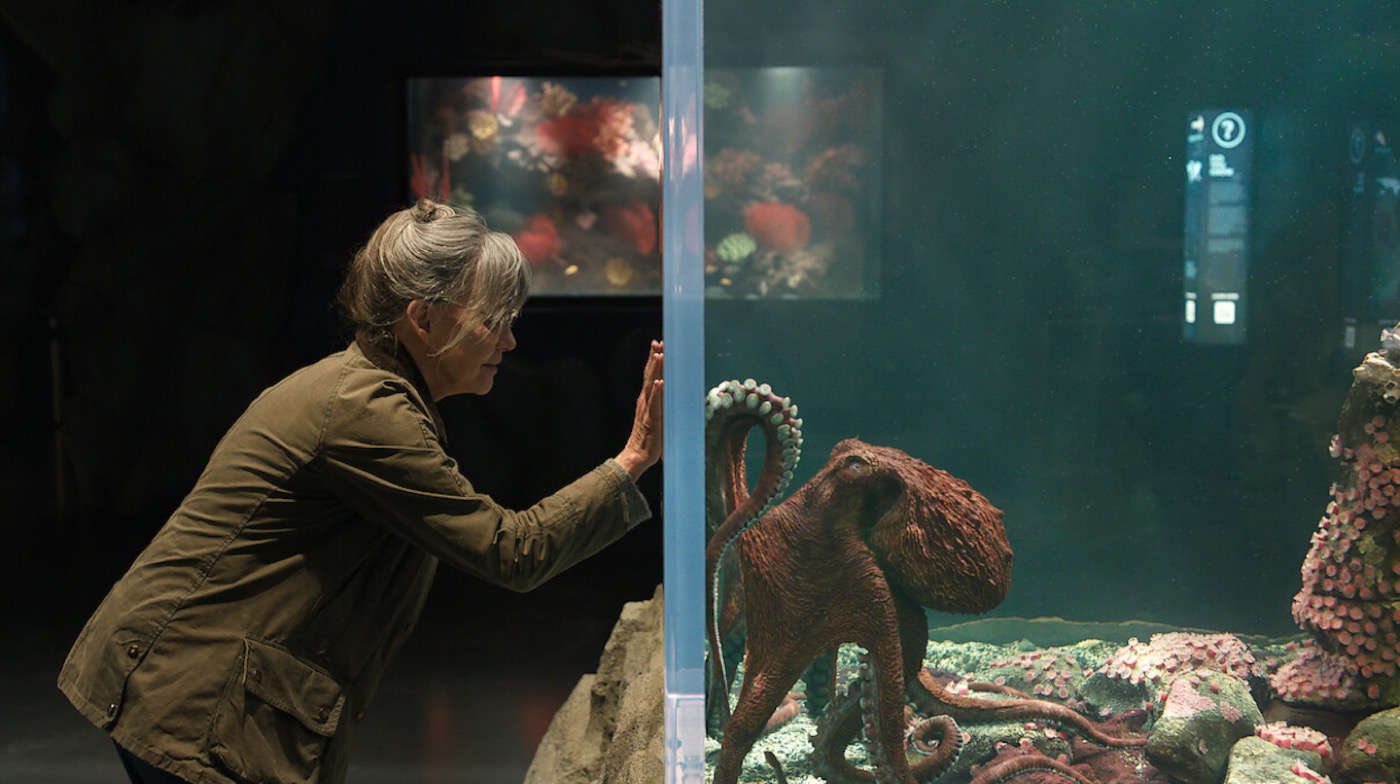
The first voice we hear is that of Marcellus (Alfred Molina), recounting his recurring dream of being back in his homely nook on the seabed, only to awake once more to the reality of his captivity. He’s a giant octopus kept at a small-town aquarium after being found with injuries. He’s all better now but has become the star attraction and hasn’t been released back into the wild. He resents the noisy gawkers but relishes the quiet nights and the bond that’s grown between him and the cleaner, Tova Sullivan (Sally Field), whose sadness and loss he can somehow sense. We eventually learn how he came to be injured and rescued, and it’s a fairly straightforward backstory compared with Tova’s.
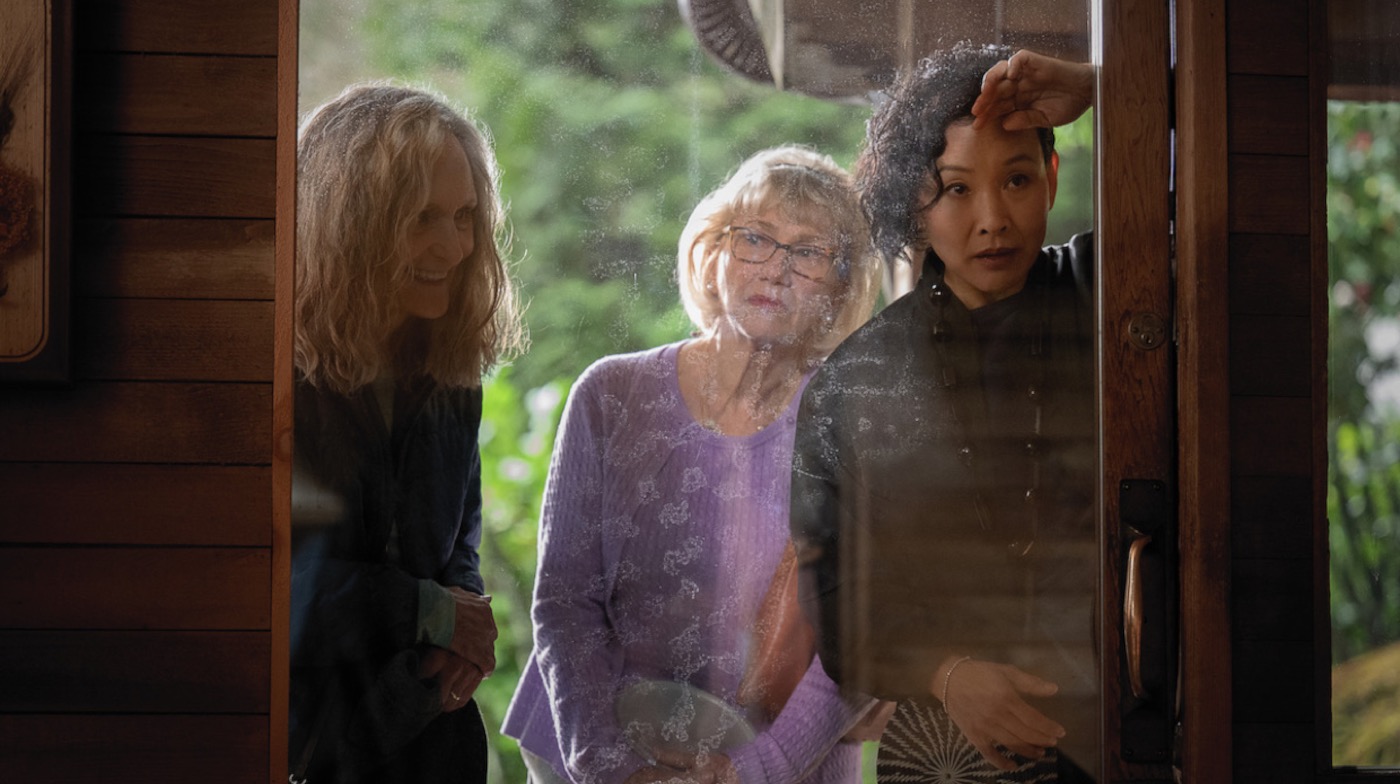
Tova is supported in the human world by her knitting group, the Knit-Wits, and loved in the fictional Washington community of Sowell Bay, where she has an ardent admirer in Ethan Mack (Colm Meaney), proprietor of the local convenience store. This is where Cameron Cassmore (Lewis Pullman) ends up when his old camper van breaks down, stranding him without the finances to cover necessary repairs. Ethan suggests Cameron seek work at the aquarium to assist Tova, who recently sprained her ankle while returning Marcellus to his tank after he managed to slither out one night to raid the rubbish.
The story grows out of coincidence and contrivance, but that’s precisely the point of the cleverly crafted plot. It’s not only thrillers that benefit from a satisfying structure of enigma, complication, catastrophe, resolution, and a beautiful reveal held back for the final minutes. The voice of Marcellus adds an imaginative element of wonder without detracting from the very real emotional core. The device works so well because only the viewer hears his droll commentary; within the mythos, he’s simply a cephalopod for whom Tova and Cameron develop empathy.
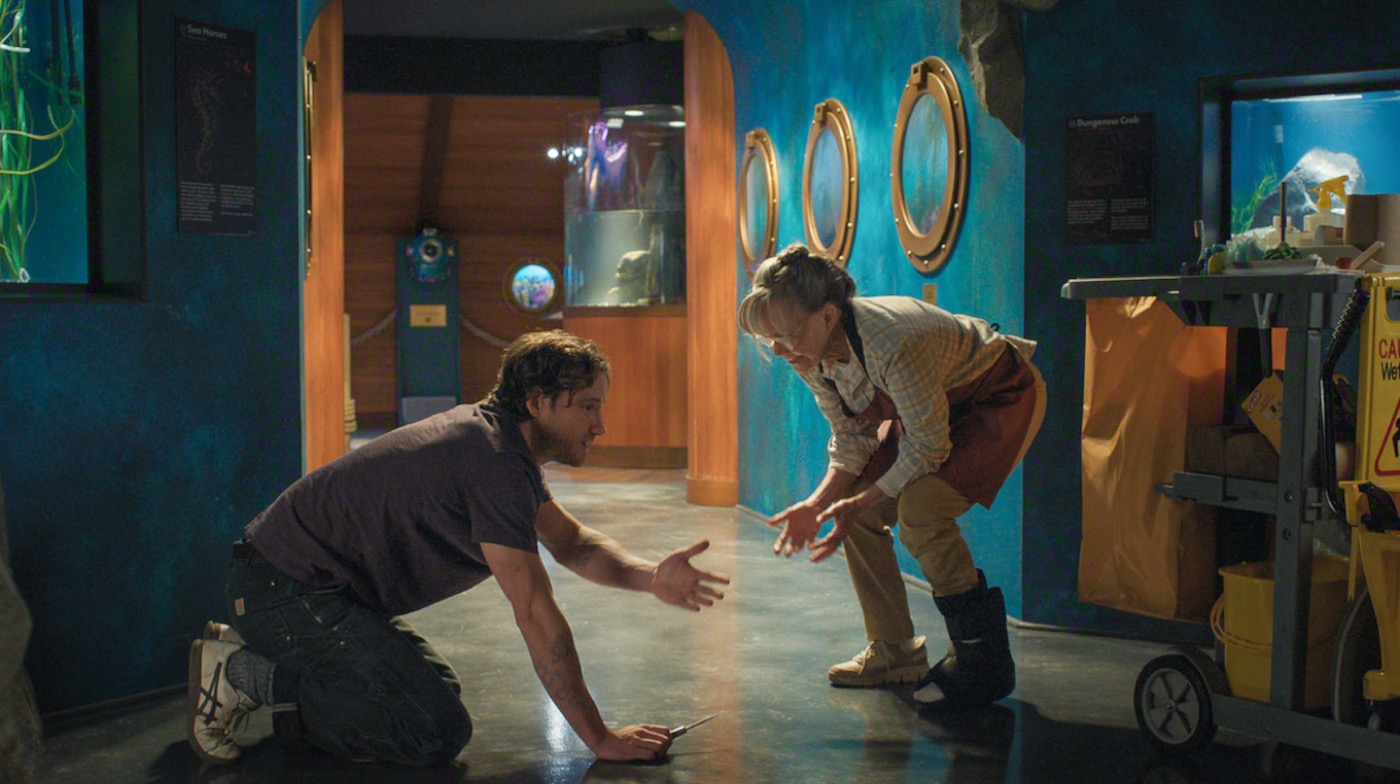
The central characters are unaware of the intricate web of destiny that has them entangled, revealed to us through subtle—and not so subtle—clues, along with broad hints dropped by Marcellus, who seems to understand the humans much better than they know themselves. His presence is a kind of divine intervention that ensures Tova and Cameron stick around long enough to address their murky pasts, find common ground and, by sharing their traumas, move towards mutual healing. But can that which was broken be mended? Fragments of the puzzle are methodically revealed before falling satisfyingly into place. It’s Marcellus who acts as a deus ex machina and, by the time he makes his decisive final move, we totally believe in him, his wit, and his quiet wisdom.
The wonderfully realised octopus is the catalytic character and, although he only interacts directly with Tova and Cameron, he alters how they relate to each other and those around them—like ripples on the surface of a lake. The emotional arc of connection, healing, and change is very human, but the animal’s narrative reframes everything. It’s a film not without darkness, but it’s filled with warmth and characters it would be very hard not to care about.
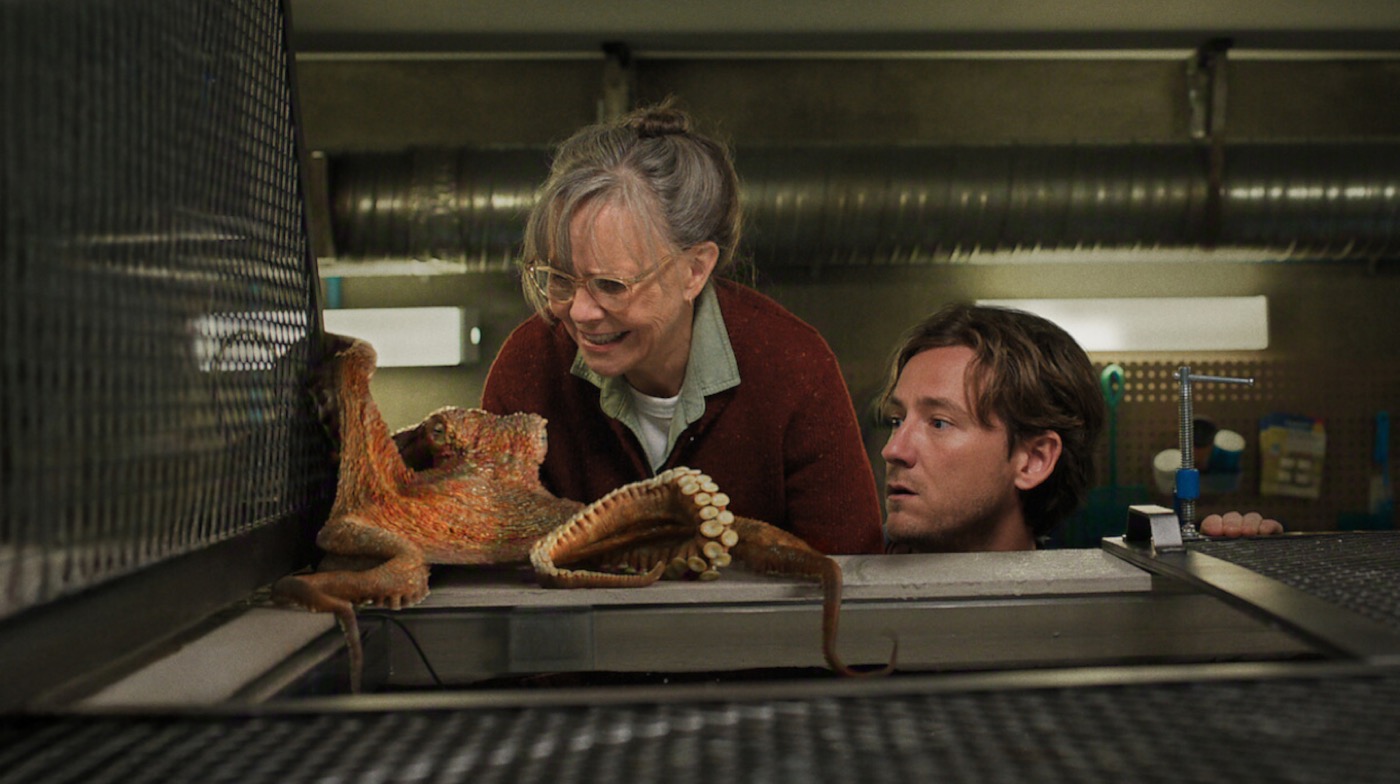
Marcellus was digitally modelled on a real giant Pacific octopus named Agnetha at Vancouver Aquarium and, though mostly what we see is CG animation, there are several shots of her in the movie. Have fun seeing if you can tell the difference.
The VFX team, supervised by Dann Lisik, spent months observing octopuses and learning about their natural behaviour; the results are suitably impressive. Howard Berger and the KNB EFX Group provided the animatronic and practical puppet versions of Marcellus for the physical interactions with the cast. Transitions between the real Agnetha, the digital Marcellus model, and his tangible puppet are seamless.
A lot of the movie’s identity hinged on the casting of Alfred Molina as the voice of Marcellus. The fact he was Doc Ock—in Spider-Man 2 (2004) and Spider-Man: No Way Home (2021)—was never cited as giving him an unfair advantage. It was his erudite tones, tinged with an air of authority and vulnerability, that landed him the role. Plus, he’s no stranger to narration; of his 30 most recent credits, 20 involve providing voices for animation.

Sally Field brings another Spider-Man connection, having appeared as Aunt May in The Amazing Spider-Man (2012) and The Amazing Spider-Man 2 (2014). She’s better known for her two Oscar-winning roles in Norma Rae (1980) and Places in the Heart (1985), along with acclaimed appearances in Steel Magnolias (1989), Forrest Gump (1994), and Lincoln (2013). But I remember her for the astonishing portrayal of a young woman with multiple personality disorder in Sybil (1976), a two-part television movie for which she deservedly won an Emmy.
At 78, she’s playing younger as Tova, who is aged 70 in the novel, and is well matched by Colm Meaney as her romantic interest. Their endearingly awkward relationship has a bumpy start with well-observed humour, but the warmth of their performances is a delight. Field brings out nuances and complexity from Meaney, who’s as good here as he’s ever been. However, she shares more screen time with Pullman and, although their relationship is platonic, their chemistry propels the emotional trajectory of the narrative.
We all accrue experiences in life; that’s unavoidable. But the balance of pain and healing, sadness and joy, varies vastly. Comparisons with others can lead to more or less empathy. Our own direct experiences of love and happiness are the only ones we can truly feel and that belong to us. There will always be others who seem happier but, from their perspective, it may well be the reverse. Likewise, there will always be those in worse circumstances, the direst of straits, but that doesn’t diminish the reality of one’s own pain.
The interpersonal dynamic of the characters is the action here, and it’s fast-moving and well-choreographed. A problematic romance develops between Cameron and Avery (Sofia Black-D’Elia), who runs a surf and sports supply store. When he discovers she has a grown-up son, Cameron is caught off-guard and Avery reads his reaction as judgmental. But we learn that this was not so; he panicked when an uncomfortable truth about his own past surfaced. For all the beautifully crafted dialogue, there’s a lot of miscommunication, but eventually we come to understand that words can get in the way of emotional truths.

Among her influences and inspirations, author Shelby Van Pelt acknowledges A Man Called Ove, a witty novel by Fredrik Backman first published in 2012 and also adapted for the screen—first as En man som heter Ove (2015) and later as A Man Called Otto (2022) starring Tom Hanks. She also cites the excellent documentary My Octopus Teacher (2020) and several stories about octopuses in aquaria escaping to dine on crustaceans in neighbouring tanks before returning to their own. There was also Inky who, in 2016, escaped from the National Aquarium of New Zealand by squeezing through a small gap, squelching his way across the floor and making his way back to the ocean via 50 metres of drainpipe.
With Remarkably Bright Creatures, the sparkle and simplicity of a debut novelist shines through. That’s not backhanded but genuine praise. The metaphors and symbols are in place: the glass aquarium walls representing physical and psychological containment; the ability of the octopus to hide and blend in, to go unnoticed. There’s plenty of subtext exploring the difference between escape and freedom, feelings of loneliness among friends, and making a choice to heal oneself by healing others. Van Pelt avoids the pretension and pose that often swamp the seasoned, over-trained author and retains the joy of the craft. The screenplay, co-written by Newman with John Whittington, manages to capture this rare spirit.
USA | 2026 | 111 MINUTES | 1.85:1 | COLOUR | ENGLISH

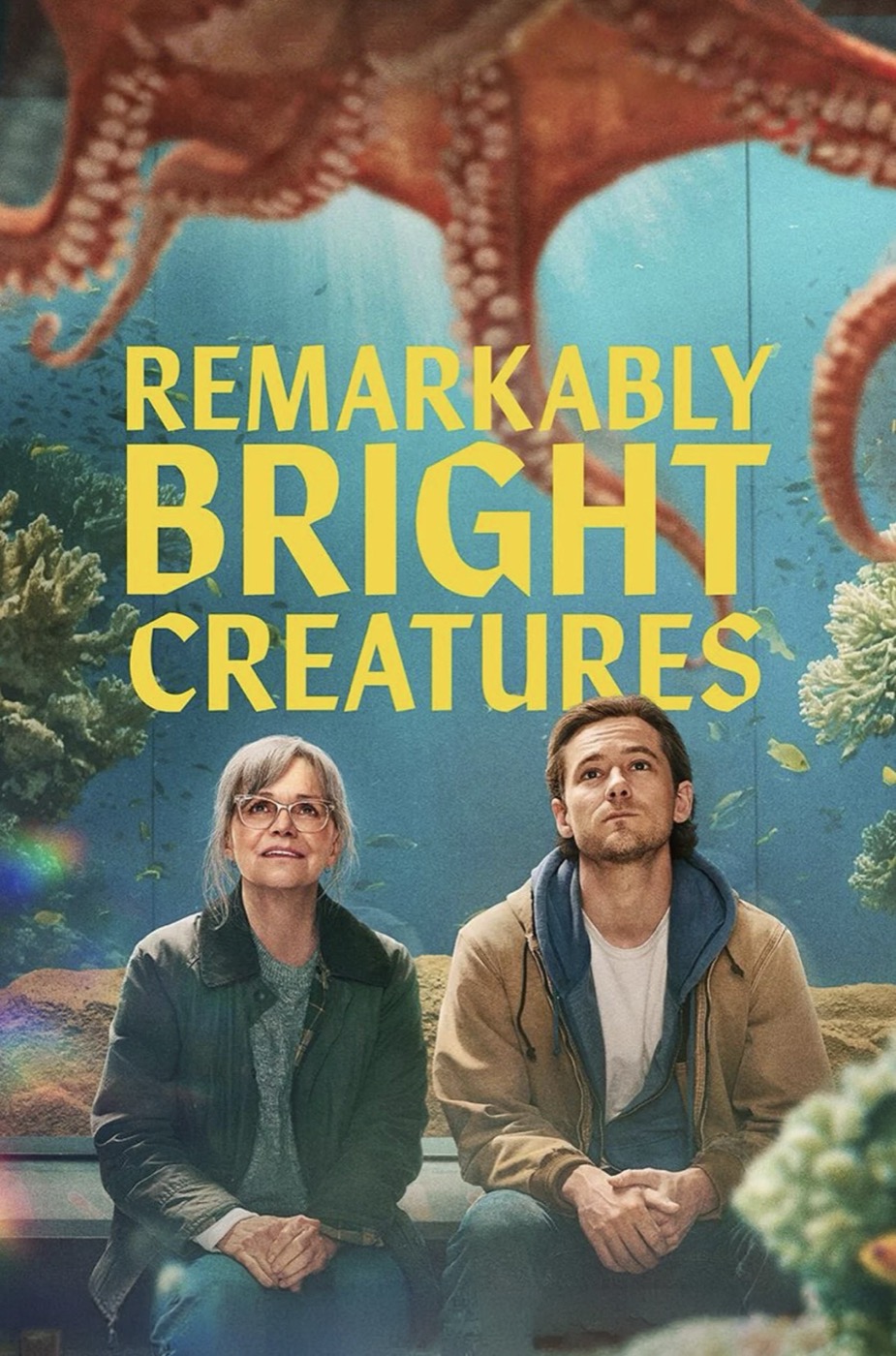
director: Olivia Newman.
writers: Olivia Newman & John Whittington (based on the novel by Shelby Van Pelt)
starring: Sally Field, Lewis Pullman, Colm Meaney, Joan Chen, Kathy Baker, Beth Grant, Sofia Black-D’Elia, Alfred Molina.