IN THE GREY (2026)
When a ruthless despot steals a billion-dollar fortune, a covert team of elite operatives are sent to take it back...


When a ruthless despot steals a billion-dollar fortune, a covert team of elite operatives are sent to take it back...
Bullets rattle, glass shatters, and men shout over the opening credits of Guy Ritchie’s latest action flick, In the Grey. As the movie fades in, Rachel Wild (Eiza González) ducks into the back seat of a van, avoiding the gunfire as window fragments scatter over her face.
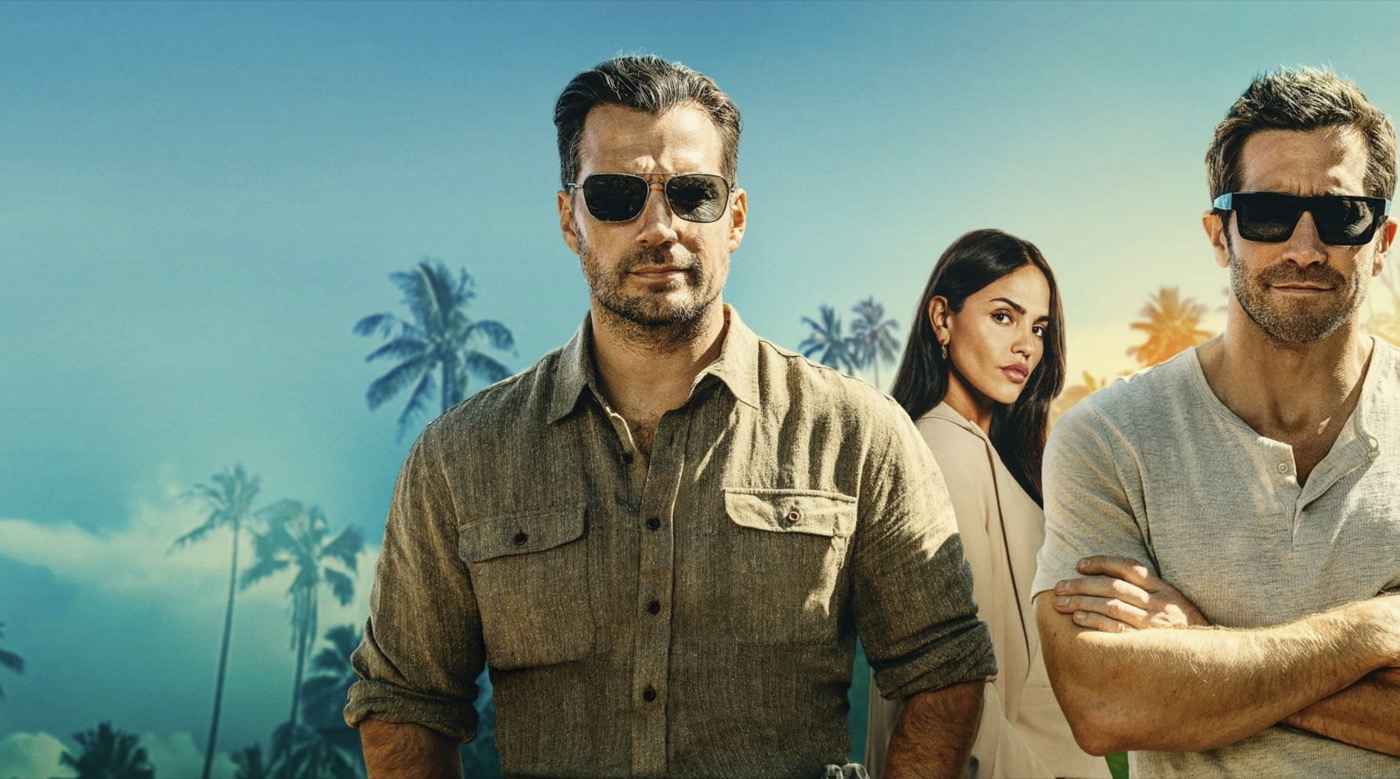
Rachel is an attorney who specialises as a debt collector for some of the world’s wealthiest people. When Bobby (Rosamund Pike) fails to reclaim a billion-dollar debt owed to her firm—owned by banker Spencer Goldstein—by the ruthless criminal Manny Salazar (Carlos Bardem), Rachel steps in. She entrusts her extraction specialists, Sid (Henry Cavill) and Bronco (Jake Gyllenhaal), to begin dismantling Salazar’s operations and assets to ensure she can set up a meeting with him. This leads them straight into the lion’s den: a tiny island entirely under Salazar’s bankroll and control.
When we catch our first glimpse of Rachel, she looks in over her head, helpless against the private army drilling bullets into her van. How did she end up here? That is what In the Grey builds towards in a sloppily written action flick devoid of thematic development and characterisation.
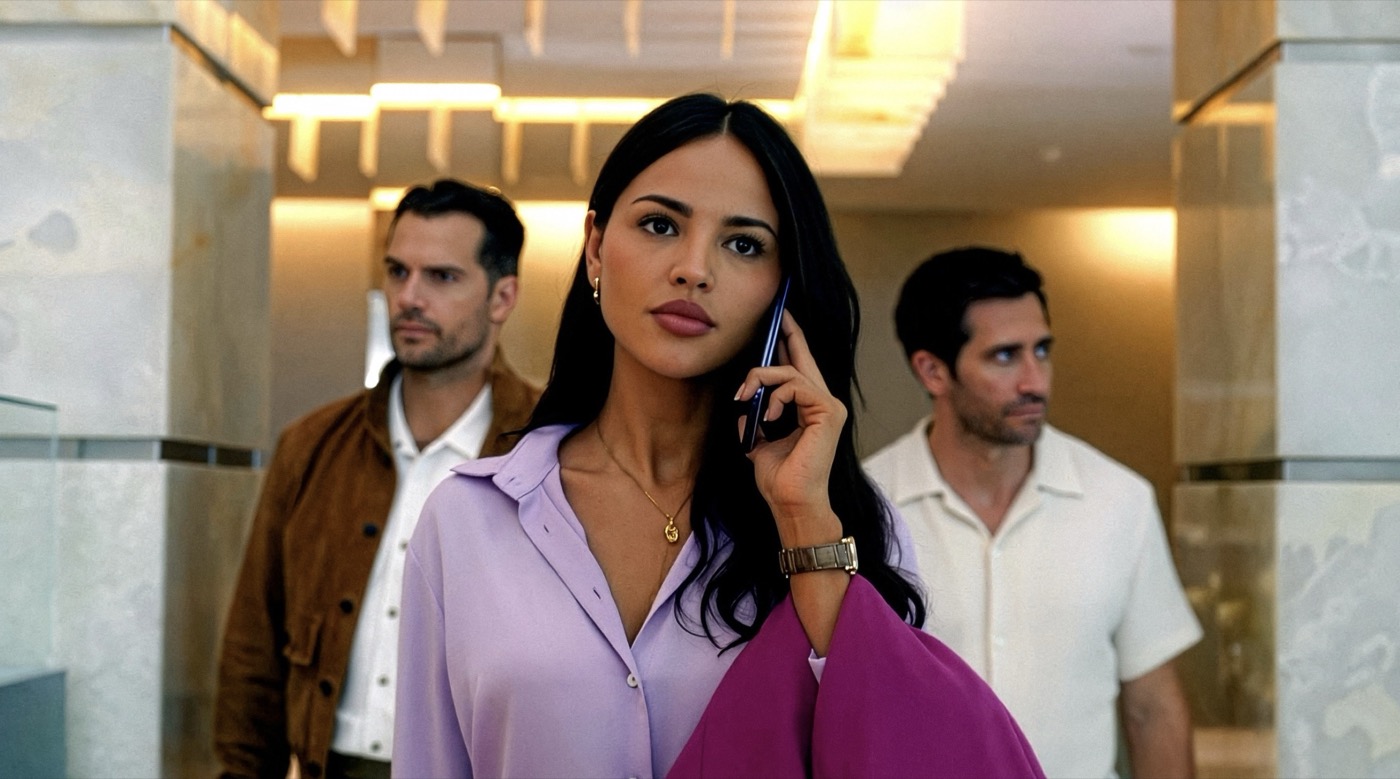
Guy Ritchie writes and directs this action thriller, his follow-up to the disappointing Fountain of Youth (2025) and slightly entertaining The Ministry of Ungentlemanly Warfare (2024). The film was initially slated to be released in January 2025, but the then-distributor, Lionsgate, pulled it from the schedule before eventually selling the rights. Unfortunately, Lionsgate may have foreseen the film’s future: a mess of a script that feels like a pale attempt to capture some of Ritchie’s career bests.
Ritchie’s early films, Snatch (2000) and Lock, Stock and Two Smoking Barrels (1998), were fresh and entertaining, effortlessly mixing fun action and humour with stylistic flair. Despite mixed reviews, I really love Ritchie’s later works, Sherlock Holmes (2009) and The Man from U.N.C.L.E. (2015). Those movies gave intriguing life to older stories in a highly entertaining way. But over the last 11 years, with films like The Ministry of Ungentlemanly Warfare and In the Grey, it feels like he’s trying to recreate the entertainment and sarcastic wit of his earlier films to no avail.
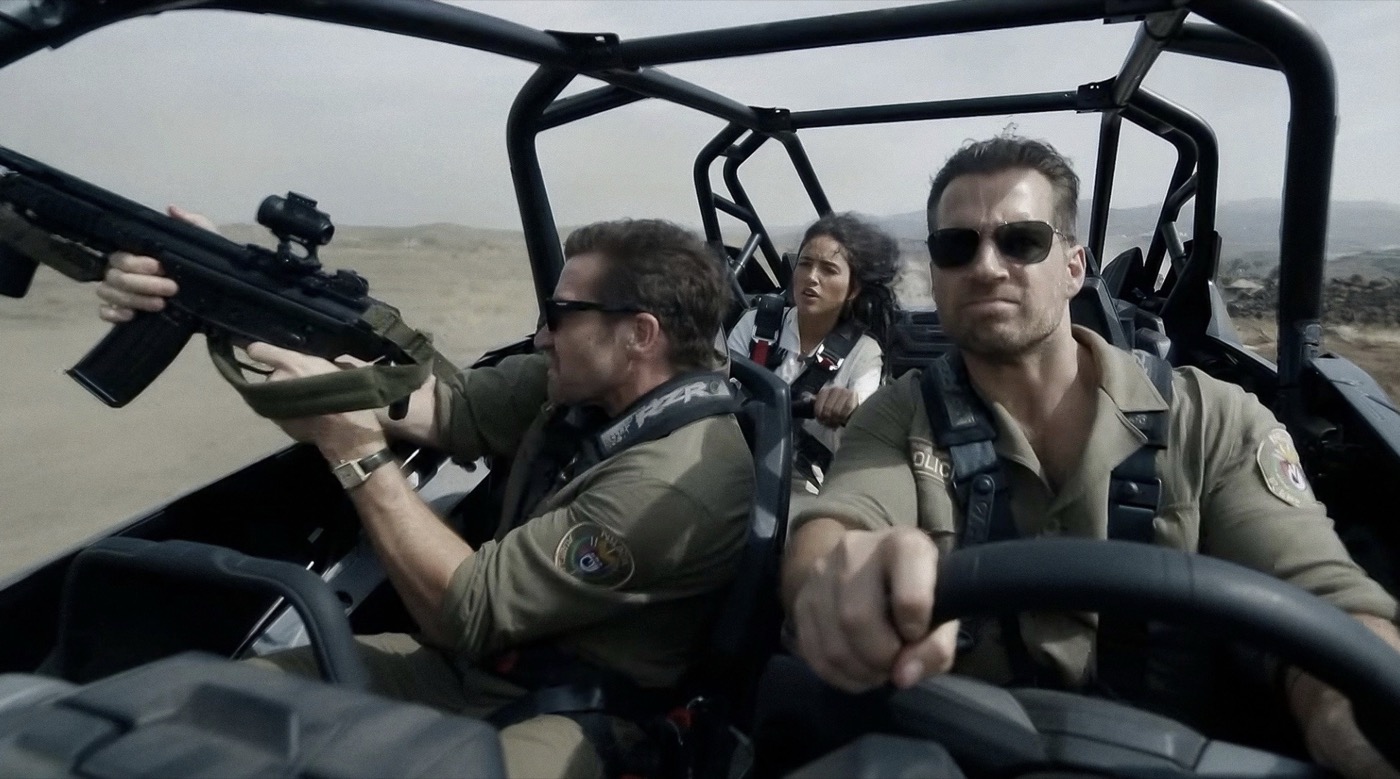
One of the distinctive joys of Ritchie’s films is a dynamic cast able to play off one another: Robert Downey Jr.’s neurotic Sherlock paired with Jude Law’s jaded, caring Watson, or Armie Hammer’s intense Soviet spy forced to work with the suave, playful American agent played by Cavill. In the Grey fails to find that chemistry, despite some great casting choices. Ritchie turns to familiar faces for his main trio of players, all returning to work with the English filmmaker. However, there’s no real depth or personality to any of them. Cavill and Gyllenhaal are poised to exchange witty, even flirty banter, but the film doesn’t give them enough to work with. There also seems to be a genuine connection in the relationship between Rachel and her two top specialists, but, again, the film doesn’t give us more than a passing glimpse. The Oscar-nominated Gyllenhaal, especially, feels wasted. Bronco lacks the charisma or humour we know the actor is capable of.
Overall, the script sets the rest of the movie up for failure. Driven by González’s voiceover, the opening sets up the moral ambiguity—the “greyness”—of the work the team must do to recover the money, working both inside and outside the law to claw back a debt owed to a very wealthy client. But the movie doesn’t offer much reflection on the subject. Rosamund Pike’s character, Bobby, feels like a stand-in for the story’s moral ambiguity. Her boss, Spencer Goldstein, is a shadowy figure off-screen making calls that change the trajectory of lives, almost in the same way as Salazar. Shady dealings occur on both the “legal” and illegal sides of moneymaking—if only we could see more of that.
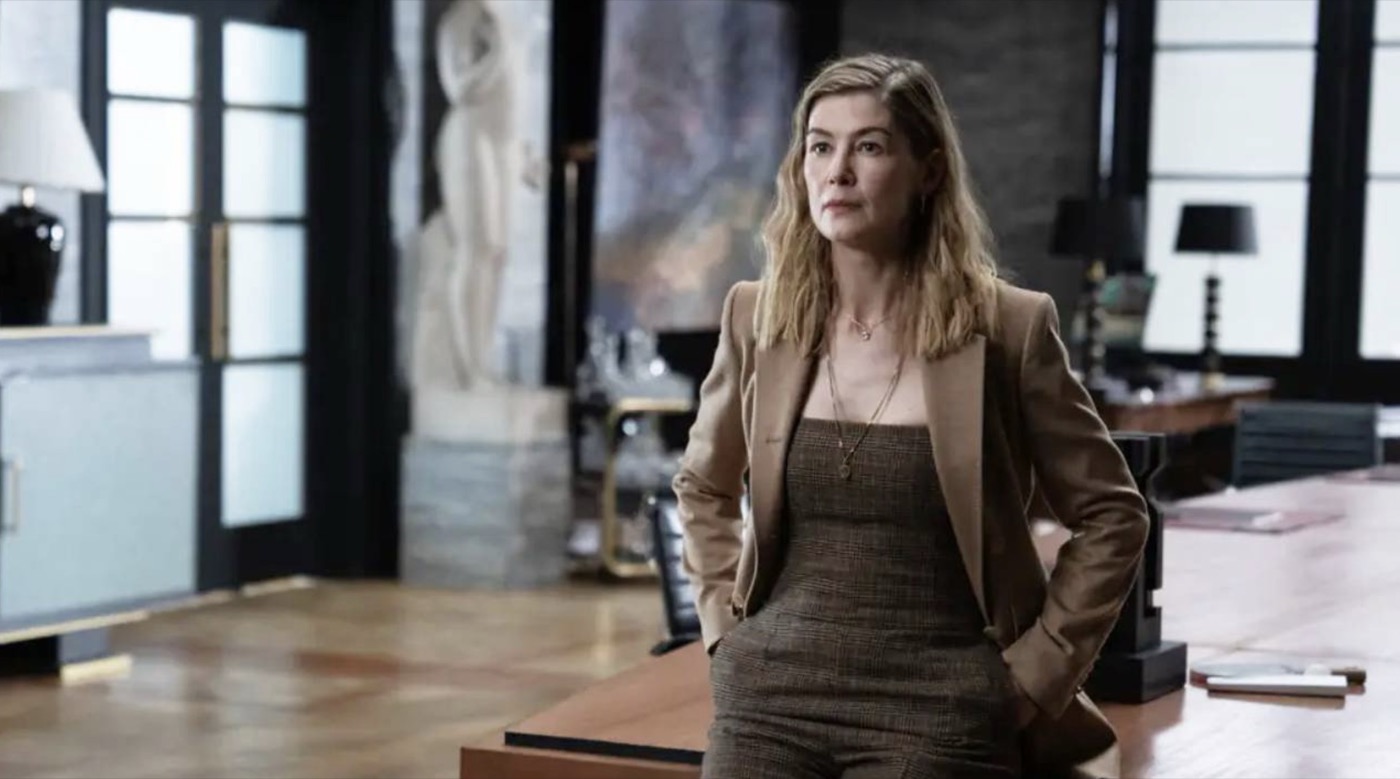
The lack of three-dimensional characters also hurts the film’s chances of building a strong thematic throughline. In the first half, there’s a brilliant moment where Rachel witnesses bloodshed for the first time. Her life is in danger, and Sid and Bronco have to hustle her to safety out of the crossfire. When the ordeal is over, Rachel seeks solace, visibly shaken by the loss of life she has just witnessed. Much like the film’s opening sequence, we see Rachel out of her depth. But this is where the script ends any interest in that emotional moment. Could she be regretting her career for the first time, seeing its messy realities instead of courtrooms and empty threats? Could Rachel have doubts about herself and her own role in recovering the money? Or is this a normal occurrence for her, requiring her to push through the carnage? To the film, it doesn’t matter. We press forward and never think about it again.
Without a strong theme or even the slightest hint of characterisation, In the Grey feels like it’s missing the basic tenets of screenwriting in favour of cool moments. The entire first half of the movie is spent explaining the plot to us because the story is too confusing to play out visually. There are about twenty minutes of explanations and tests of intricate escape routes off the island. By the end, the first hour of In the Grey feels like a rushed setup to get to the final third. Though, I do have to admit, that final third is the film’s saving grace.
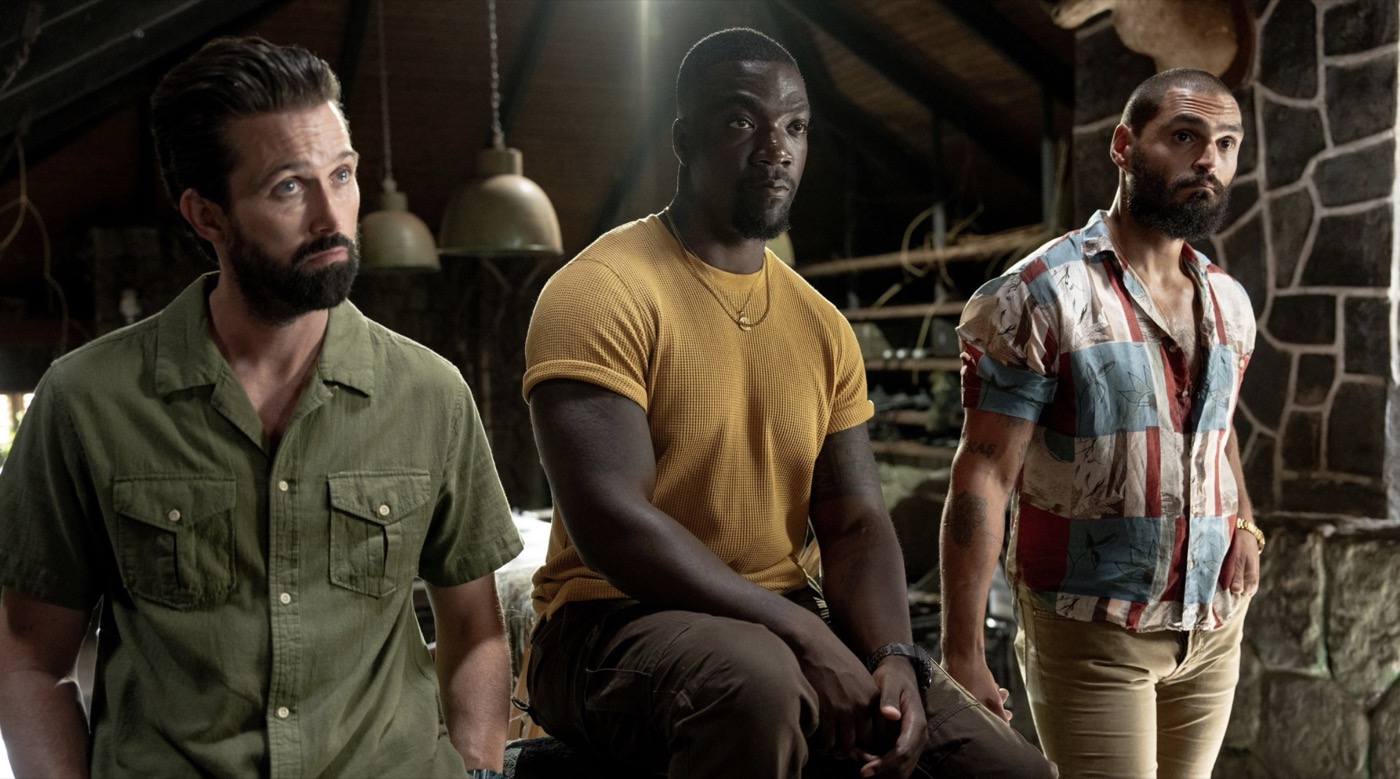
The film’s climax is Ritchie at his best and exactly what you’re looking for from a big-screen action movie. Non-stop tension. Explosions blasting through the screen. Bullets piercing your eardrums. All the excruciating detail used to map out Sid and Bronco’s multiple escape routes comes into play, and it’s exciting to watch them unfold. The stakes are at their highest, and the whole escapade to get off the island feels like a real blockbuster—the ultimate reason to go to the cinema.
However, even at its peaks, In the Grey misses the mark. Everything that came before struggles to give the film the kick it needs to be the entertaining force it aims to be. The characters are too one-dimensional for us to feel any remorse if they die. And because they’re insanely good at their jobs, there’s no real sense of threat; they always feel like they’ll be fine. Consequently, those pulse-pounding moments—a house surrounded by militiamen or a stuck trapdoor handle—don’t put butterflies in your stomach like they should.
In the Grey feels like the cinematic personification of a shrug. The credits roll and you leave the cinema, never to think about the movie again. It’s not terrible enough to be remembered for its faults, yet not competent enough to be reflected upon as one of the year’s top action movies. Guy Ritchie is great at directing action set-pieces, but In the Grey feels too much like a tedious setup for the film’s final payoff. It’s simply not enough. I still count myself a Guy Ritchie fan and defender, despite how tough that’s becoming recently. I’ve seen him at his best, and In the Grey, unfortunately, falls too far from it.
UK • USA | 2026 | 98 MINUTES | 2.35:1 | COLOUR | ENGLISH

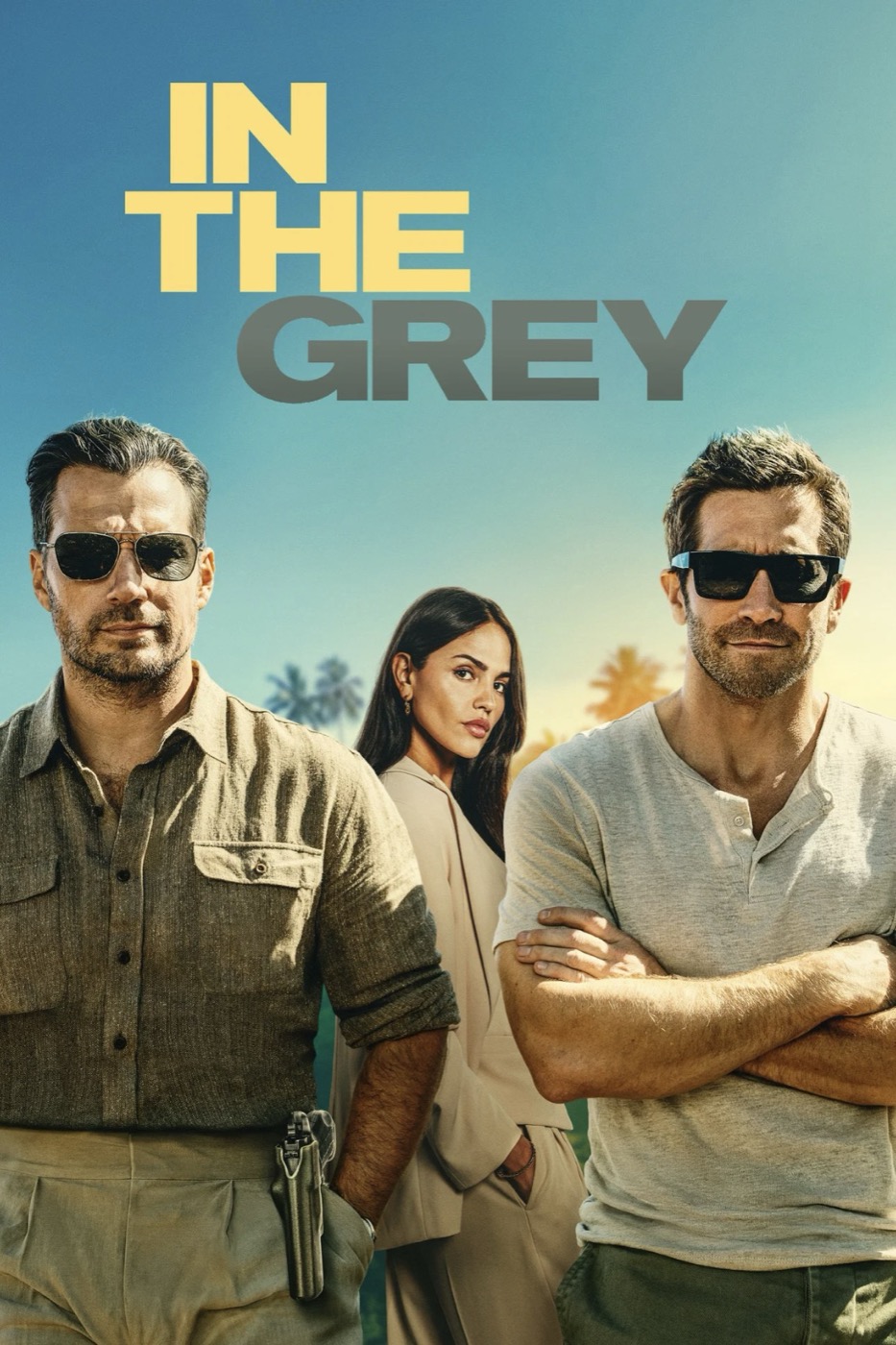
writer & director: Guy Ritchie.
starring: Henry Cavill, Jake Gyllenhaal, Eiza González, Rosamund Pike, Kristofer Hivju, Fisher Stevens, Emmett J. Scanlan, Kojo Attah, Jason Wong, Christian Ochoa Lavernia, & Carlos Bardem.