SHREK (2001)
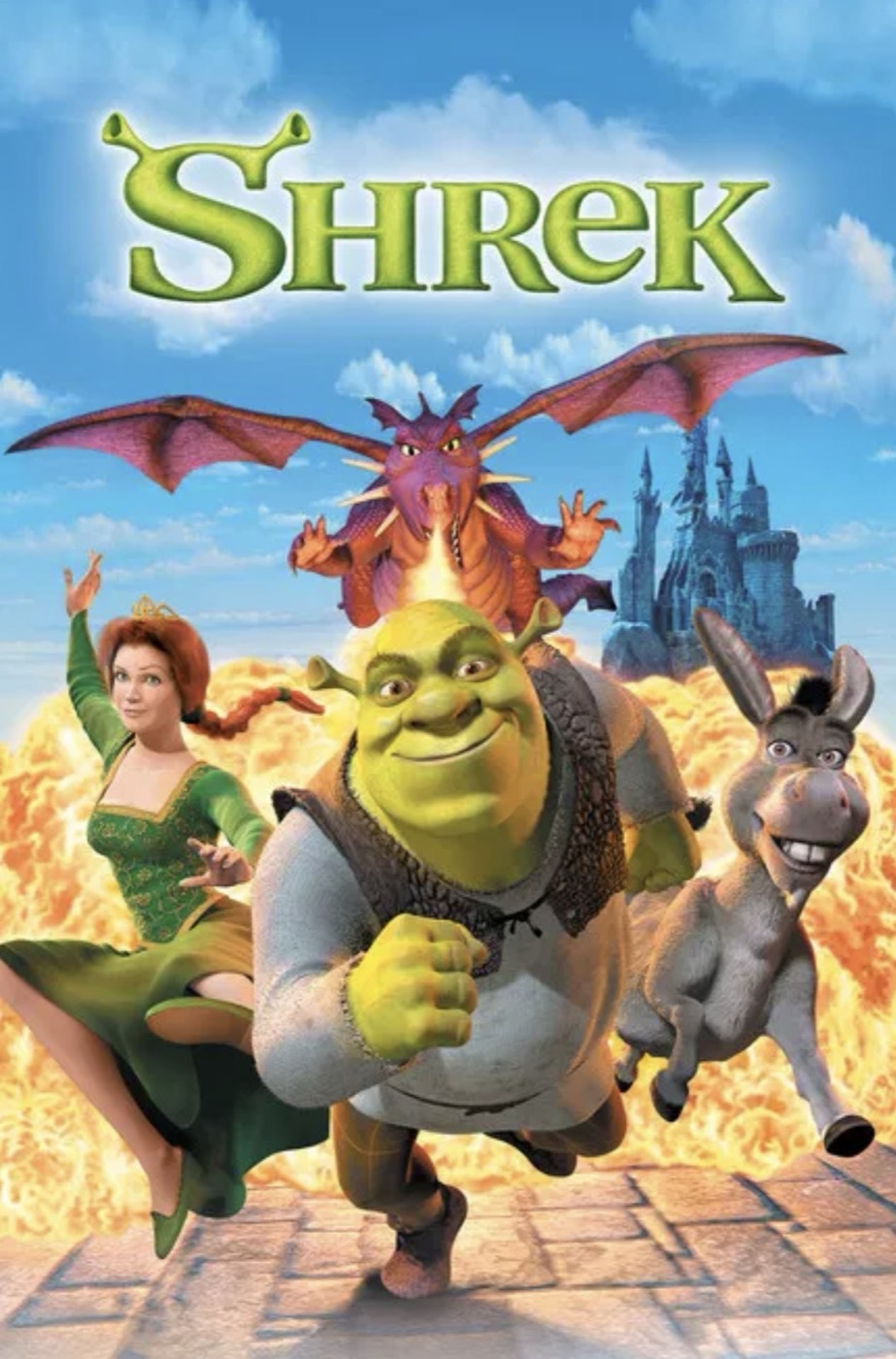
A mean lord exiles fairytale creatures to the swamp of a grumpy ogre, who must go on a quest and rescue a princess for the lord in order to get his land back.


A mean lord exiles fairytale creatures to the swamp of a grumpy ogre, who must go on a quest and rescue a princess for the lord in order to get his land back.
Pro-wrestling fight scenes. Bachelorette intro videos. Real estate jokes. Eviction notices. A waterboarding sequence involving a gingerbread man. A princess whose singing causes birds to explode and who fries the eggs of her potential offspring. Piña coladas—both the traditional and swamp variety. From Easter eggs and adult concepts to crude one-liners punctuated by physical violence, Shrek is arguably even more enjoyable for adults than it is for children. Rather than being a standard kids’ film with a few nudging winks to keep parents awake, it’s one of the few truly layered films to successfully bridge the intergenerational divide.
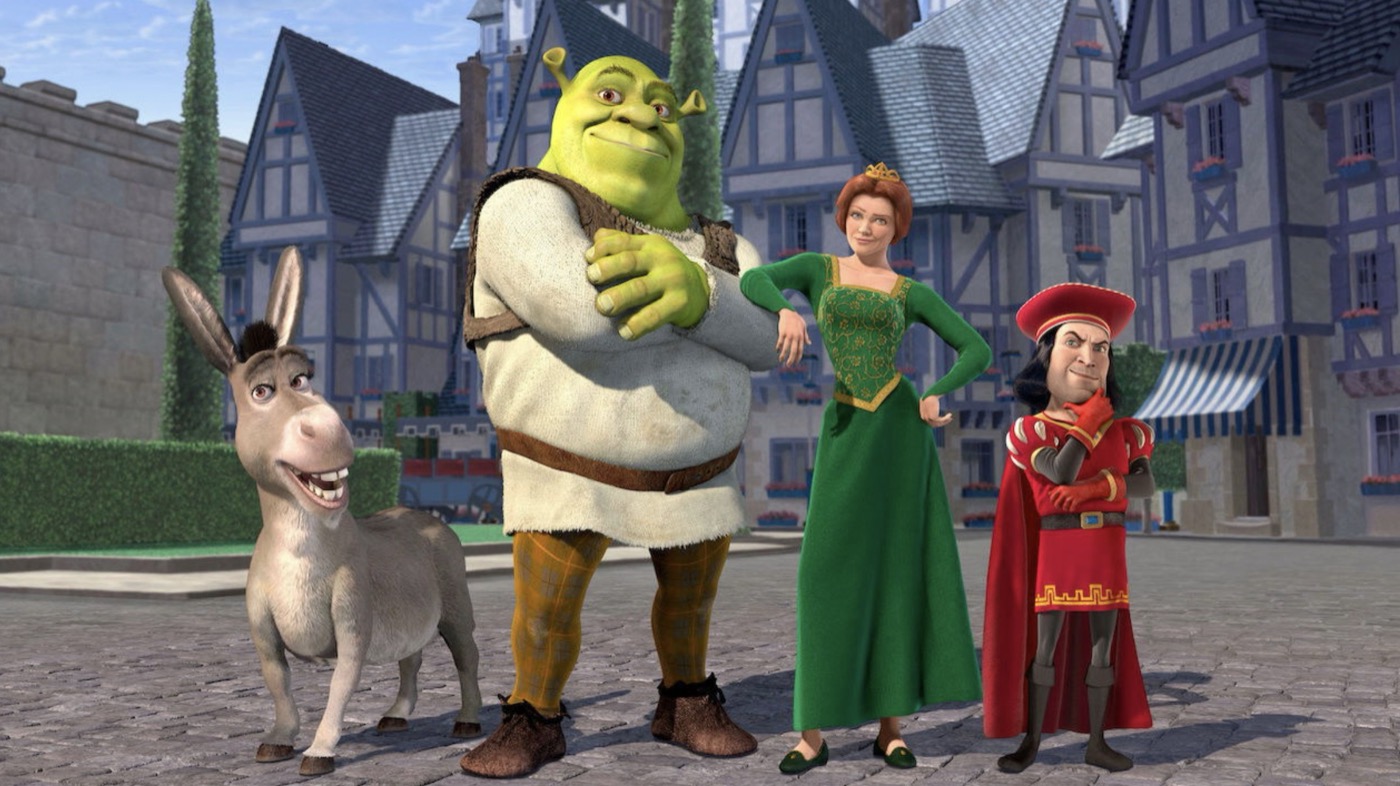
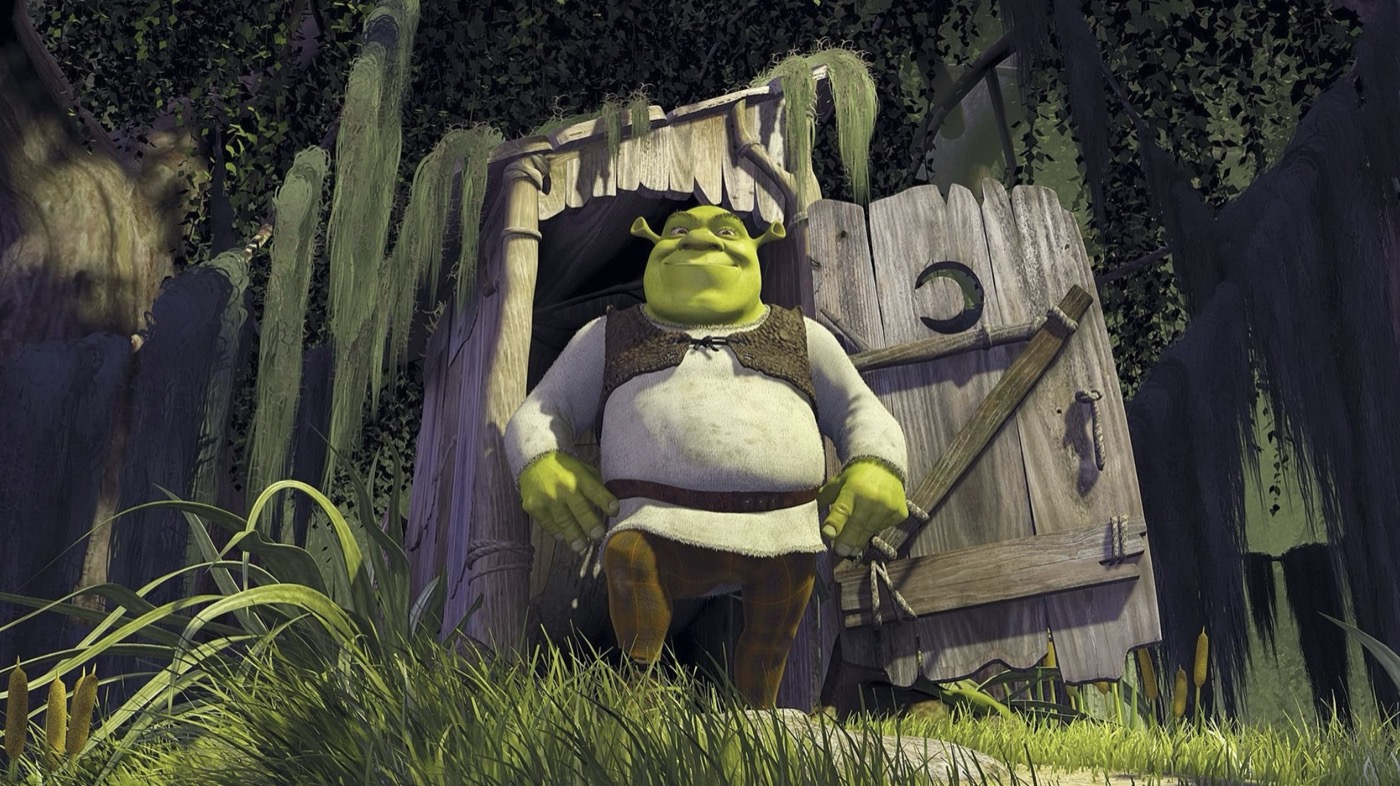
As someone who adored these films as a child, it’s rather baffling to watch them now and realise nearly half the jokes went over my head as a besotted eight-year-old. Back then, one of the few qualities I could appreciate was the unlikely nature of the heroes. Shrek (Mike Myers) has been cast for life in a role he never requested—one where he’s despised and feared in equal measure by anyone who crosses his path. Isolation is peaceful, even if its unseen wounds cut deeper than any failed attempt at connection. For the “ugliest” creature in the kingdom, making an effort feels like a futile endeavour.
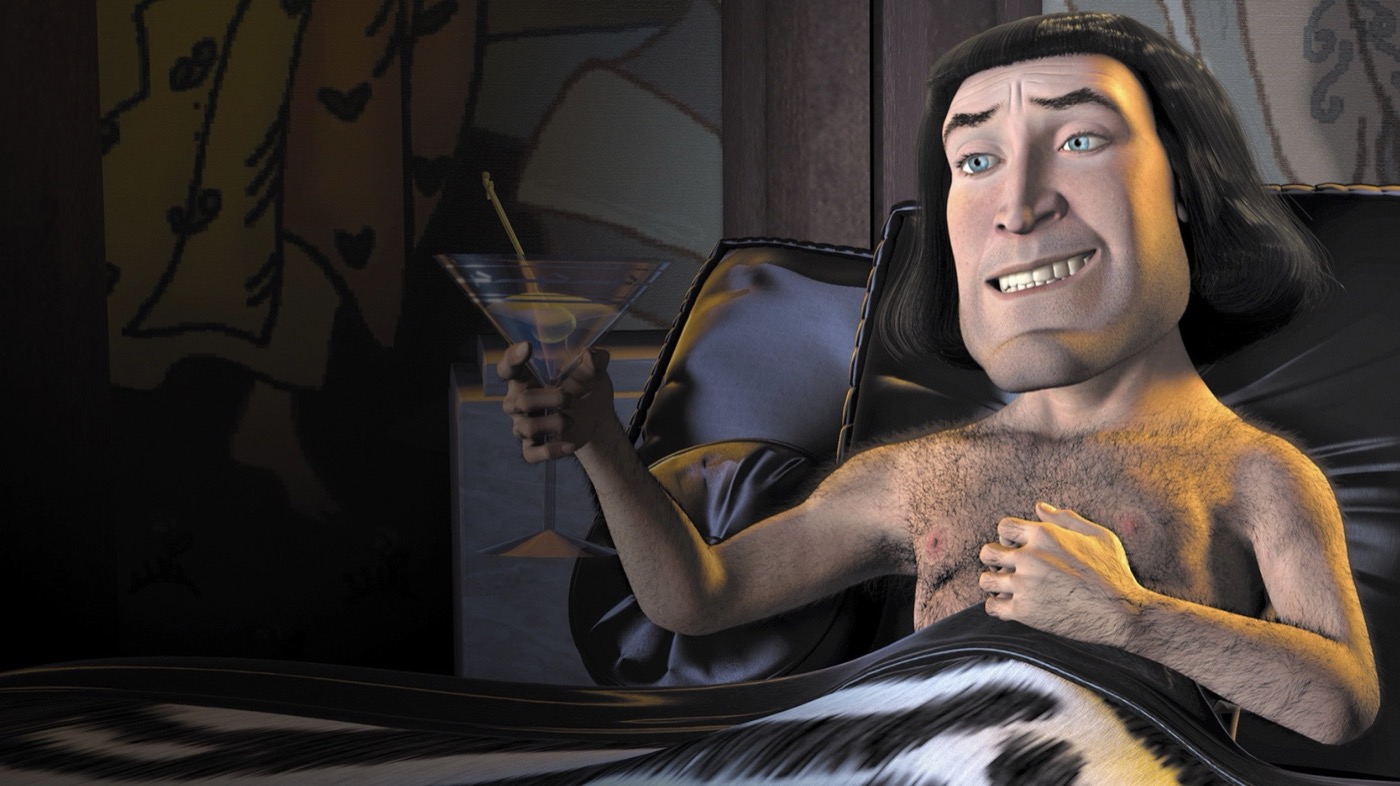
The kingdom’s ruler, Lord Farquaad (John Lithgow), is an impotent little man. The name is the closest DreamWorks could get to a certain profanity, and the character was based on Laurence Olivier’s Richard III (1955) and former Disney CEO Michael Eisner. In one of many inversions of the fairy-tale tropes found in the classic Disney films Shrek satirises, Farquaad compensates for his inadequacies by sending Shrek to do his bidding. It’s up to the reclusive ogre to rescue the gorgeous Princess Fiona (Cameron Diaz) from a castle guarded by a dragon.
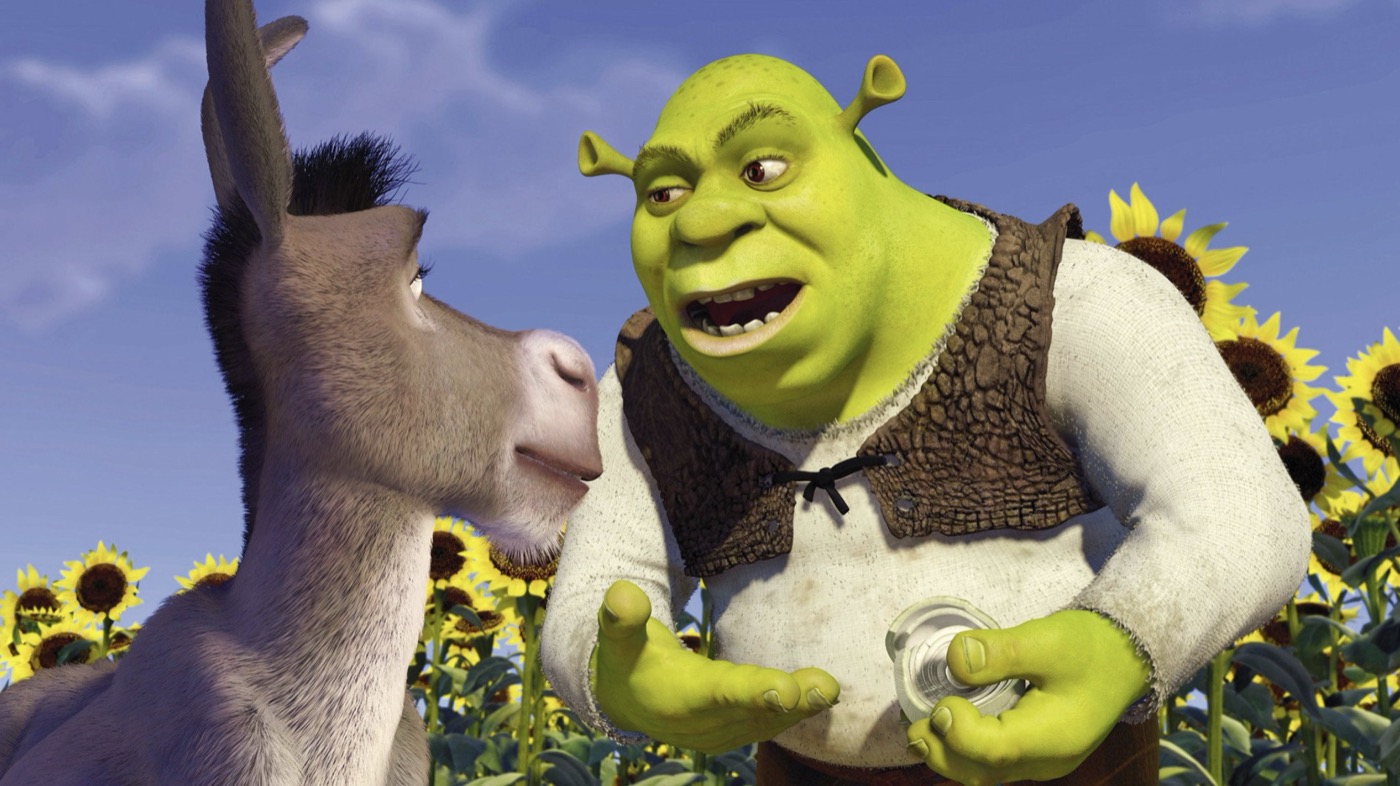
Accompanying him is one of the most loyal, yet annoying, friends imaginable: a talking donkey aptly named Donkey (Eddie Murphy). One might think the low-effort character names suggest Shrek wasn’t well thought out (Myers famously felt Shrek was the “worst fucking title” he’d ever heard). Somehow, it works—just as Myers’ Scottish accent and Murphy’s theatrical flair never feel unnatural or anachronistic.
You don’t even need to ask if Murphy’s comic brilliance was improvised; it’s obvious from the moment this aggravating, surprisingly insightful donkey first opens his mouth. Donkey is a joy to watch, whether he’s acting as an unqualified couples’ therapist or embarking on yet another insufferably long “yap session”. Watching his brain short-circuit and circle back on itself as he forgets his point is a delight. It’s the perfect trait for an actor with Murphy’s improvisational skill, allowing him to reincorporate jokes or steer towards a new train of thought at a moment’s notice.
I often find it difficult to laugh at “larger-than-life” comics. The likes of Chris Farley, Eddie Murphy, and Jim Carrey have always impressed me more than they’ve humoured me. It’s as if they possess too much verve to be contained in one body. No matter how hard they try to win a laugh—and they’re always trying with ferocious effort—it often feels like a mismatch between style and form. Seeing how aggressively they emote can detract from the humour, even while highlighting their fearlessness. But in this animated realm, there’s no worry of excess. Murphy slots into this groove as smoothly as Cinderella into her glass slippers (though, thankfully, Shrek never treats such tropes with any seriousness).
Remarkably, Shrek’s Scottish accent fits the story perfectly, despite Myers recording the entire script without it at first. He wasn’t the first choice for the role—Nicolas Cage turned it down—nor was he even the first to complete a run-through. Chris Farley had been cast and, according to David Spade, had just five days of recording left when he passed away at the tragically young age of 33. This necessitated major script changes. Farley was an irrepressible performer whose commitment was second to none. Given that Murphy shares that trait, it’s difficult to imagine how the two would have gelled as a frustrated loner and his talkative sidekick.
Myers’ performance is largely dramatic because Shrek himself isn’t inherently funny. If he makes us laugh, it’s because he’s said something relatable. He possesses a rare complexity; it isn’t often that protagonists in children’s films are physically unattractive, despised beings brimming with self-loathing. Myers exploits this at every turn. When Shrek can no longer deceive himself, he explodes with anger during his ultimate admission: that he wants to shut everyone out. In other moments, his voice is no louder than a whisper—oddly vulnerable and touching.
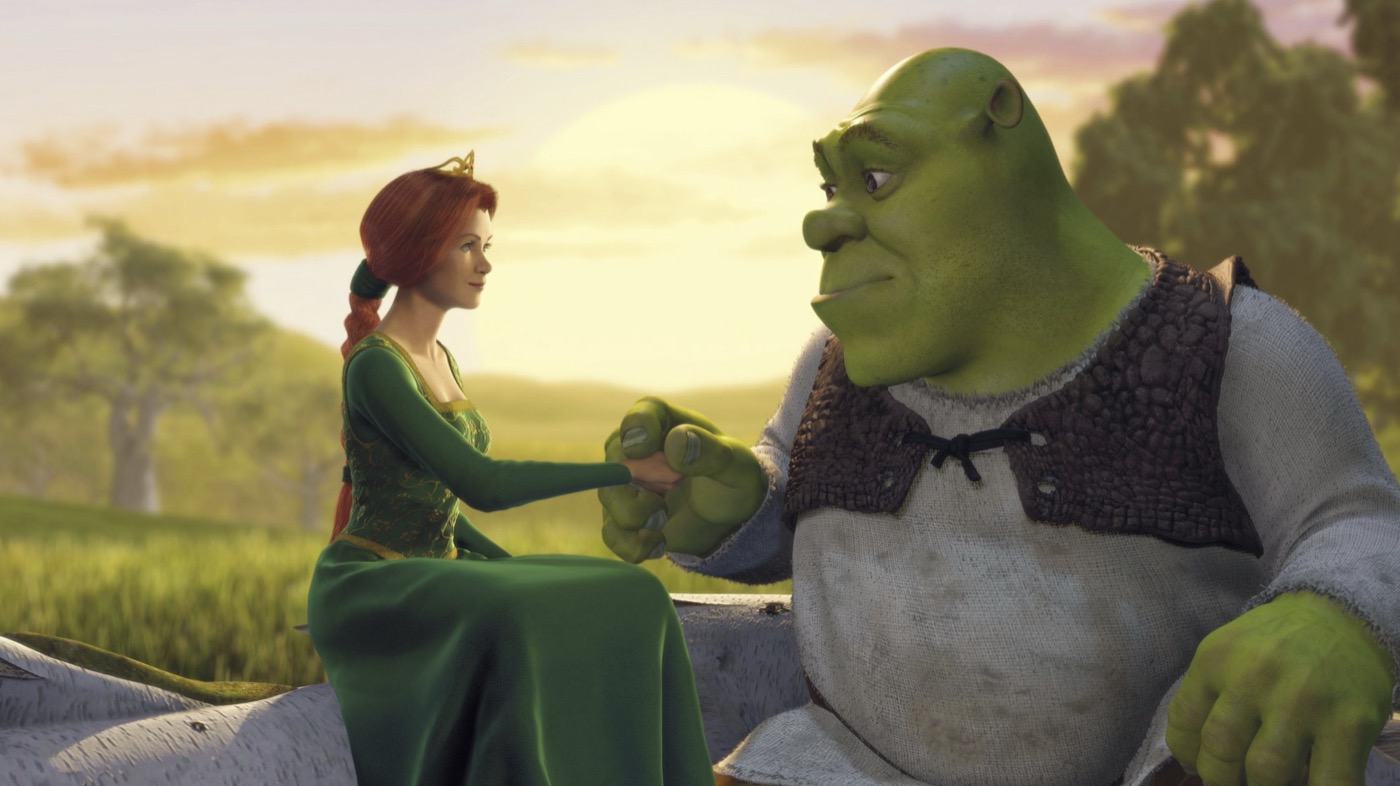
Shrek wasn’t the only character envisioned differently. Princess Fiona was originally cast as Janeane Garofalo, who was let go without explanation. As her replacement, Diaz doesn’t try to make Fiona appear posh or noble, but nor is she crass. Fiona is an ordinary woman thrust into a role she didn’t ask for—much like Shrek, or even Farquaad, though his reprehensible qualities repel our sympathy. He isn’t exceptionally evil, just contemptible, mired in a superiority complex that limits his growth. Shrek and Fiona’s attempts to look beyond their own orbits create an endearing love story rooted in a message of self-acceptance.
Nostalgia can clog one’s critical faculties, so perhaps I’m biased when I say this film and its sequel feature some of the best-paired licensed songs in cinema history. Nothing could make me appreciate the musical stylings of Smash Mouth quite like Shrek does; I’ll never hear “All Star” without thinking of the opening sequence. Similarly, John Cale’s rendition of “Hallelujah” became iconic through its placement in the film’s most emotive scene, which employs surprisingly sensitive transitions.
Shrek may have gained momentum as a brash, anti-Disney parody, but beneath the potty humour and satire is a heartfelt tale of love and acceptance. As a child, I enjoyed that it was different from the films it spoofed. But my lasting love for the film stems from its heart, allowing it to transcend its satirical roots and become a classic fairy tale in its own right.
USA | 2001 | 90 MINUTES | 1.85:1 | COLOUR | ENGLISH

directors: Andrew Adamson & Vicky Jenson.
writers: Ted Elliott, Terry Rossio, Joe Stillman & Roger S.H Schulman (based on the picture book ‘Shrek!’ by William Steig).
starring: Mike Myers, Cameron Diaz, Eddie Murphy, John Lithgow, Vincent Cassel, Conrad Vernon, Chris Miller & Cody Cameron.