SOYLENT GREEN (1973)
A nightmarish futuristic fantasy about the controlling power of big corporations and an innocent cop who stumbles on the truth.


A nightmarish futuristic fantasy about the controlling power of big corporations and an innocent cop who stumbles on the truth.
Before diving into Soylent Green itself, it’s worth remembering what science fiction looked like through much of the 1970s. The genre often swung between low-budget B-movie thrills and big mainstream spectacles. If audiences weren’t watching a Planet of the Apes sequel or yet another alien invasion, they were usually watching nature strike back in increasingly absurd ways: see killer bees in The Swarm (1978) or giant mutated rabbits in Night of the Lepus (1972). It was undeniably entertaining, but amidst all that pulpy fun were a handful of films that aimed for something more substantial. Rather than focusing on monsters or outer space, they asked difficult questions about humanity itself—and few subjects were more sobering than the future of our own planet.
Today, conversations about climate change, pollution, and environmental decline are impossible to avoid. Back in the early-1970s, though, those concerns were only just beginning to enter the public consciousness. As it so often does, Hollywood picked up on those anxieties. Just as 1950s science fiction reflected Cold War tensions and fears of nuclear annihilation, films of the early-1970s increasingly turned their attention towards environmental collapse. One of the earliest—and still one of the most memorable—examples was Soylent Green.
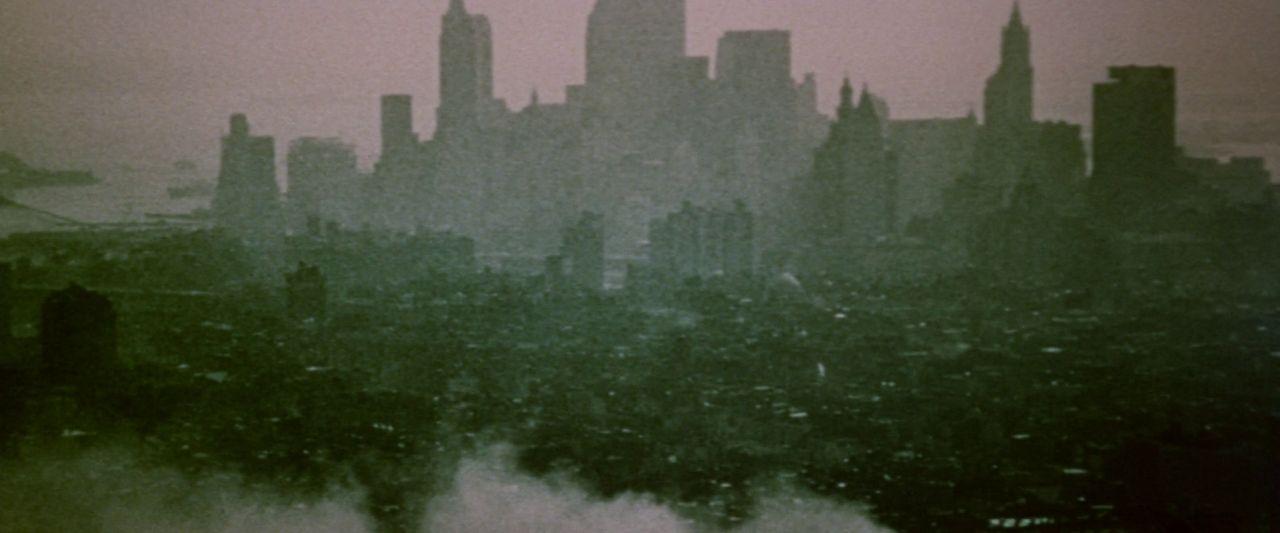
Based on Harry Harrison’s 1966 novel Make Room! Make Room!, the film transports viewers to what was then the distant future of 2022. It’s a bleak vision of New York City: hopelessly overcrowded, suffocatingly hot, and struggling under severe shortages of food and water. Poverty is widespread and everyday life has become a fight for survival, with the masses living on processed wafers produced by the Soylent Corporation. Charlton Heston stars as Detective Frank Thorn, who begins investigating the murder of wealthy businessman William Simonson (Joseph Cotten). What initially seems like a routine homicide investigation gradually uncovers something far more disturbing.
One of the film’s greatest strengths is how believable its world feels. Despite working with a relatively modest budget, Soylent Green creates a convincing vision of societal decline without relying on elaborate special effects. Instead, the production design does the heavy lifting. Edward C. Carfagno fills every frame with overcrowded apartments, decaying buildings, mountains of rubbish, and exhausted people sleeping anywhere they can find a little space. It feels less like a fantastical future than a city simply pushed beyond breaking point.
The film also resists the temptation to imagine futuristic luxury. There are no gleaming skyscrapers or flying cars here. Instead, basic comforts have become privileges reserved for the wealthy: air conditioning is a luxury, running water is tightly rationed, and fresh food has become almost mythical. Rather than imagining a radically different world, Soylent Green asks a far more unsettling question: what if today’s problems simply continue unchecked? That is exactly what gives its vision such lasting power.
Watching it today can be surprisingly uncomfortable because so many of its ideas no longer feel far-fetched. Rising temperatures, food insecurity, water shortages, and widening inequality dominate headlines worldwide. The film certainly pushes those fears to dramatic extremes, but its central concerns prove remarkably prescient. While much of the period’s science fiction looked to alien invasions or technological utopias, Soylent Green suggested humanity might ultimately be responsible for its own destruction.
Released only a year after Douglas Trumbull’s Silent Running (1972), the two films make fascinating companion pieces. Both explore humanity’s relationship with the natural world, but arrive at very different conclusions. Silent Running still believes there is something worth saving, whereas Soylent Green imagines a future where that opportunity has already vanished. One serves as a warning; the other feels like the consequence of ignoring it.
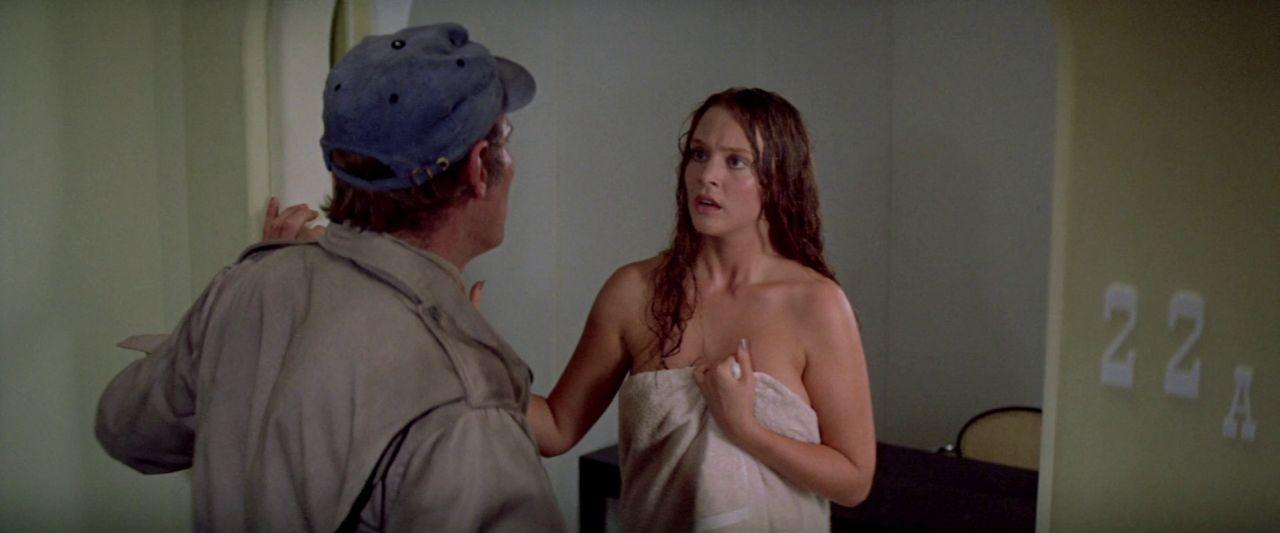
By this stage in his career, Charlton Heston had firmly established himself as one of science fiction’s defining stars through films like the aforementioned Planet of the Apes (1968) and The Omega Man (1971), and he brings that same tough, leading-man machismo to this picture. The character himself isn’t especially complex—he’s cynical, resourceful, and willing to bend the rules—but Heston’s presence gives him weight. Whether bullying suspects, casually helping himself to luxuries at a crime scene, or piecing together the truth, he anchors the film with effortless confidence.
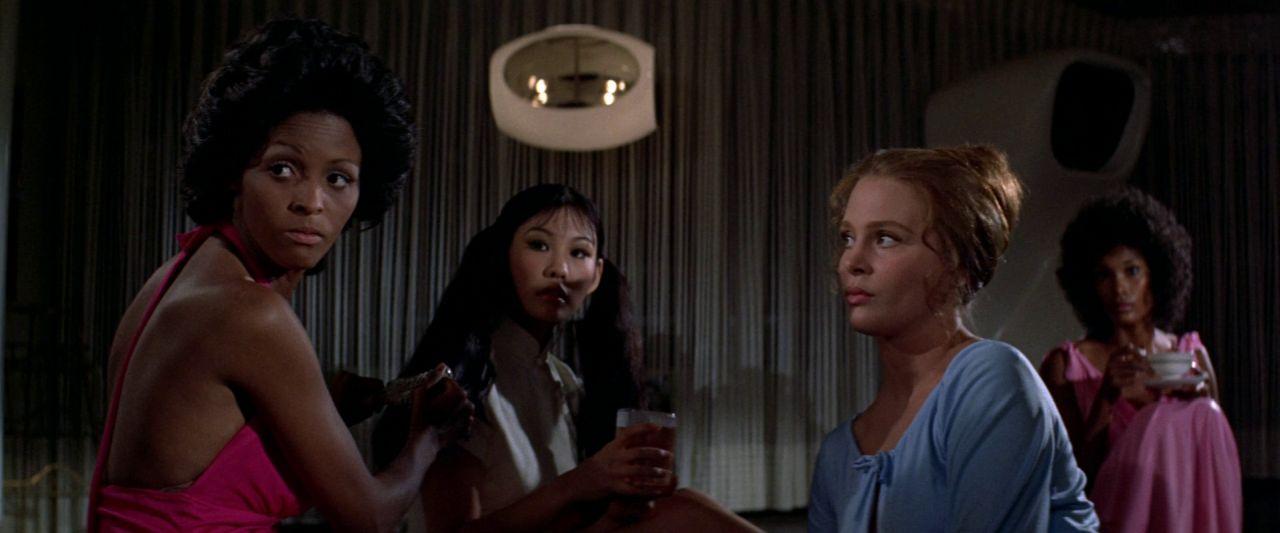
Not every aspect has aged quite so gracefully. Thorn’s relationship with Leigh Taylor-Young’s Shirl is easily the film’s most uncomfortable element. After Simonson’s death, Thorn effectively inherits both his apartment and Shirl, who is treated less like an individual than another piece of property. The film never seriously questions the arrangement. While it reflects attitudes that weren’t uncommon in the early 1970s, it’s undeniably the part of the movie that feels most dated today.
Despite Heston’s effective performance, the standout work comes from Edward G. Robinson. Best known for his classic gangster roles such as Little Caesar (1931), Robinson had been a Hollywood mainstay since the 1920s. Here he plays Thorn’s elderly researcher and close friend, Sol Roth. Even with limited screen time, Robinson makes every minute count through a perfect balance of humour, dramatic weight, and natural presence. Watching Robinson and Heston together, their friendship feels entirely genuine, making Sol’s narrative arc all the more poignant. The knowledge that this was Robinson’s final screen performance renders his role even more moving.

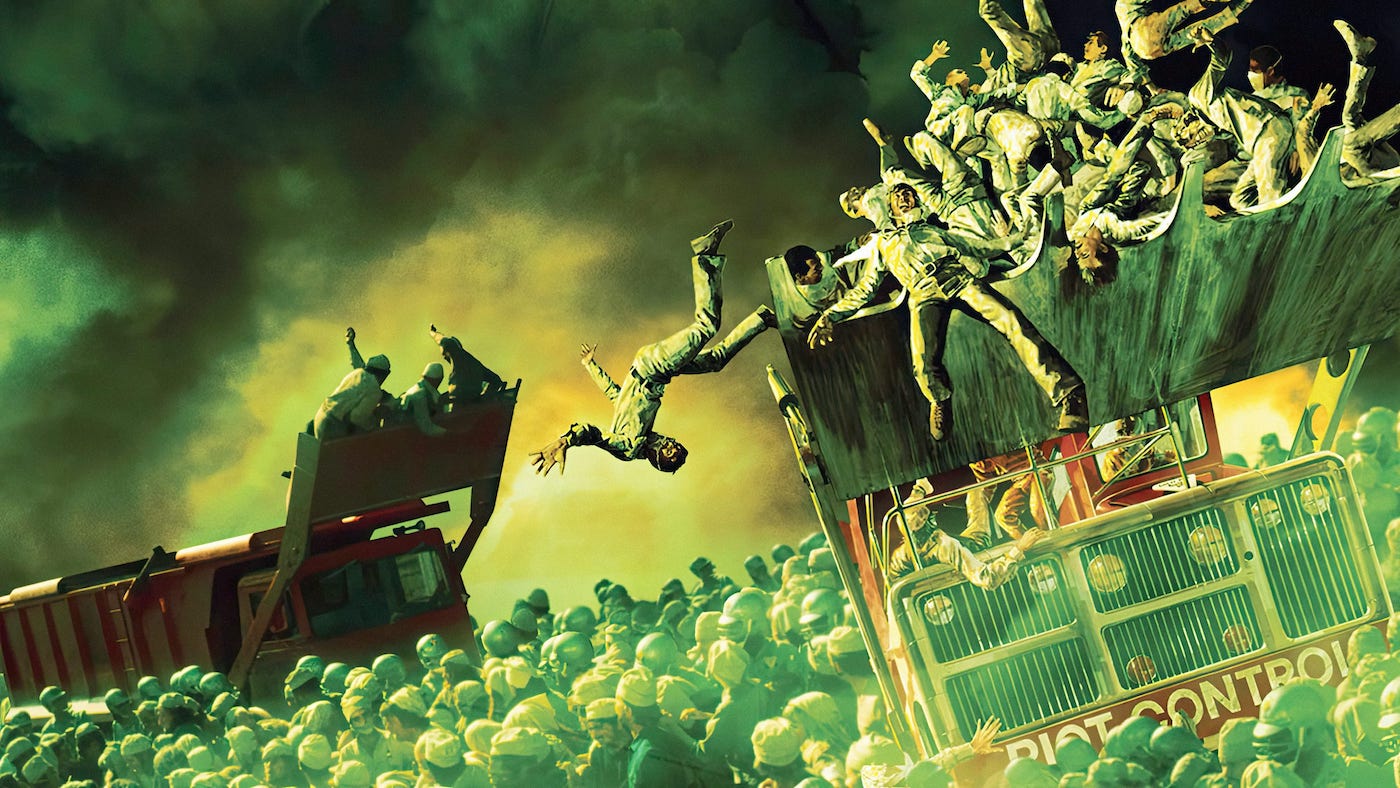
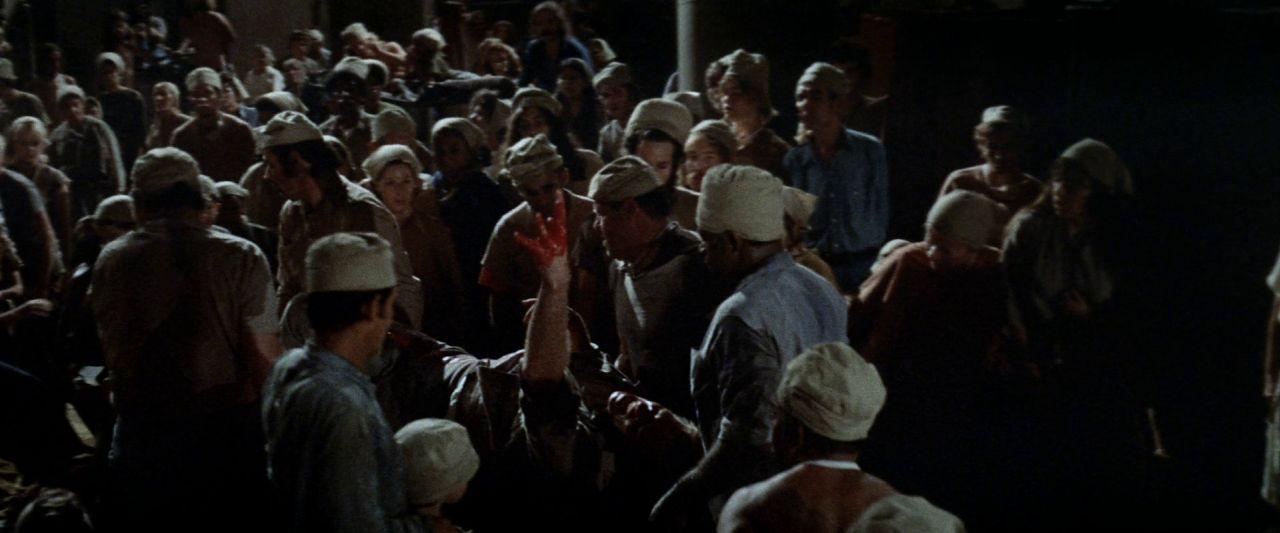
While much of the drama plays out in cramped apartments, one of the most memorable sequences takes place outdoors when the police clash with an angry, desperate crowd rioting after discovering a severe food shortage. The overall scale and intensity make for disturbing viewing, but the visual of authorities using massive refuse diggers—known as ‘Scoops’—to shovel people off the streets and into the back of vehicles adds a extra layer of horror, illustrating how casually human beings are treated as disposable rubbish.
Richard Fleischer directs the sequence with impressive restraint. Wide shots establish the sheer scale of the chaos before cutting to moments of panic and desperation within the crowd. Even today, the scene retains its impact because it feels like a natural extension of the world the film has carefully built. If one sequence captures everything Soylent Green is trying to say, it’s this one.
Much of that consistency comes from Fleischer himself. Although not always mentioned alongside the most celebrated directors of his generation, he built one of Hollywood’s most versatile careers, moving comfortably between films as varied as 20,000 Leagues Under the Sea (1954), Fantastic Voyage (1966), The Vikings (1958), and The Boston Strangler (1968). Whatever the genre, he earned a reputation for clear, confident storytelling.
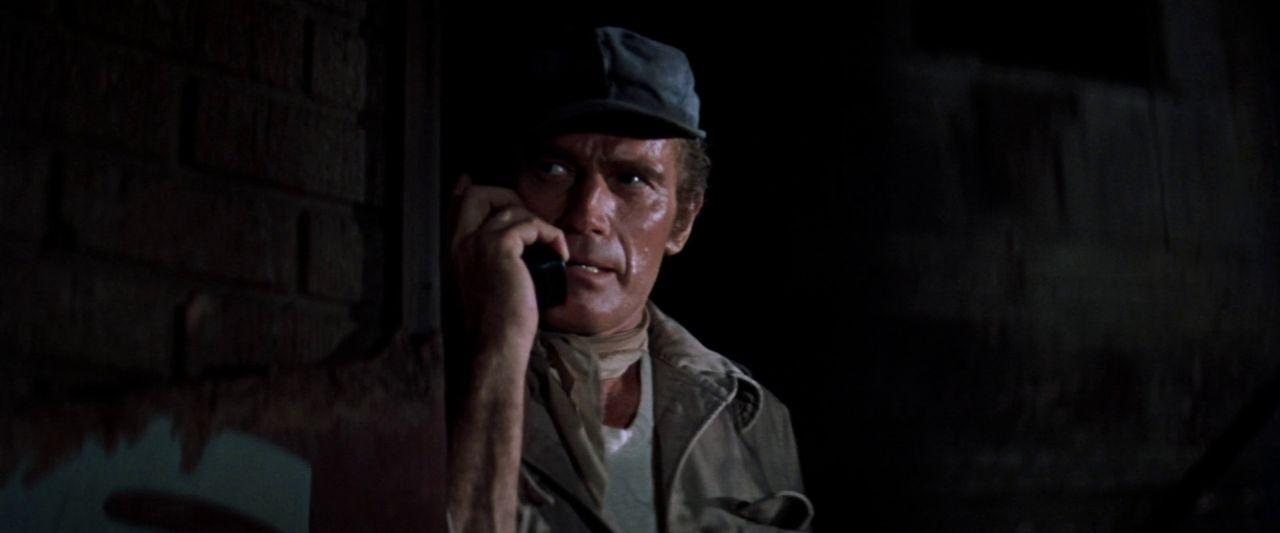
His work on Soylent Green avoids flashy visuals or elaborate stylistic flourishes; instead, Fleischer keeps the focus on the performances, the atmosphere, and the underlying ideas. Even when the detective plot briefly loses momentum, the sense of unease never fades, and the film steadily builds towards its unforgettable conclusion.
If there’s one genuine weakness, it’s the pacing. At just under 100 minutes, the film is hardly overlong, but parts of the investigation occasionally drag before arriving at the inevitable revelation. Viewers accustomed to modern thrillers may find these stretches a little slow, though they do allow the world and its supporting characters time to breathe.
Shirl represents another missed opportunity. Leigh Taylor-Young gives an understated and sympathetic performance, but the screenplay never gives her much agency beyond functioning as Thorn’s love interest. It’s one of the clearest examples of the film reflecting the attitudes of its time rather than rising above them.
Even so, those shortcomings do little to undermine what Soylent Green ultimately achieves. Its warnings about environmental destruction, unchecked consumption, and growing inequality arguably resonate even more strongly now than they did in 1973. Like Silent Running, it deserves recognition as one of the defining ecological science fiction films of the decade, although the two couldn’t be more different in tone.
The film was also a commercial success. Produced for around $4M, it earned roughly $14M at the North American box office, comfortably turning a profit for MGM. Critics praised its performances, ambitious themes, and convincing dystopian world, even if some felt the detective story occasionally distracted from its broader social commentary.
More than fifty years after its release, Soylent Green remains one of the smartest and most thought-provoking science fiction films of its era. Its warnings feel every bit as relevant today as they did in 1973, and while it may never quite sit at the absolute pinnacle of 1970s sci-fi, it remains an intelligent, unsettling thriller that is well worth revisiting.
USA | 1973 | 97 MINUTES | 2.35:1| COLOUR | ENGLISH • SPANISH • HEBREW


As with all Arrow Video releases, the disc’s picture quality is excellent. Thanks to a brand-new 35mm negative scan with Dolby Vision, the restoration brings out an impressive level of detail. Deep blacks, natural film grain, and excellent contrast are all superbly realised. Even though the film is over 50 years old, the overall visual presentation is pin-sharp and, one imagines, as close to the original theatrical release as possible.
On the audio side, Arrow sticks with the original lossless mono track. Although it lacks the expansive soundstage of a modern surround mix, the sound is clean and well-balanced. Dialogue remains crisp and easy to follow throughout, whilst Fred Myrow’s distinctive, pulsating score comes through with surprising richness, adding to the film’s unsettling atmosphere. This upgrade over previous Blu-ray and DVD releases makes the disc an easy recommendation for longtime fans and anyone looking to revisit the film in the best possible quality.

director: Richard Fleischer.
writer: Stanley R. Greenberg (based on the 1966 novel ‘Make Room! Make Room!’ by Harry Harrison).
starring: Charlton Heston, Leigh Taylor-Young, Chuck Connors, Joseph Cotten, Brock Peters, Paula Kelly & Edward G. Robinson.