THE DOUBLE (1971)
A man is shot in an underground car park by a mysterious bearded man. As he dies he recollects the events that led him to this situation, including adulterous liaisons and jealous envy.


A man is shot in an underground car park by a mysterious bearded man. As he dies he recollects the events that led him to this situation, including adulterous liaisons and jealous envy.
Romolo Guerrieri’s The Double / La controfigura (also known as Love Inferno) is an interesting yet problematic movie, limiting its appeal to aficionados of Italian pulp cinema. Therefore, it seems fitting that Radiance are releasing this Blu-ray premiere as a boutique limited edition boasting an excellent 4K restoration, scanned from the original camera negative of the Italian theatrical release. The accompanying bonus material may be modest, but the new audio commentary from the ever-reliable Tim Lucas is top-tier and, for me, the key selling point.
The Double will be a huge disappointment to those expecting anything like Guerrieri’s previous thriller, The Sweet Body of Deborah / Il dolce corpo di Deborah (1968). Whereas that proto-giallo was efficient, elegant, and plot‑driven with a functional editing style, this indulgently experimental offering is anything but—though Jean Sorel is back as the male lead.
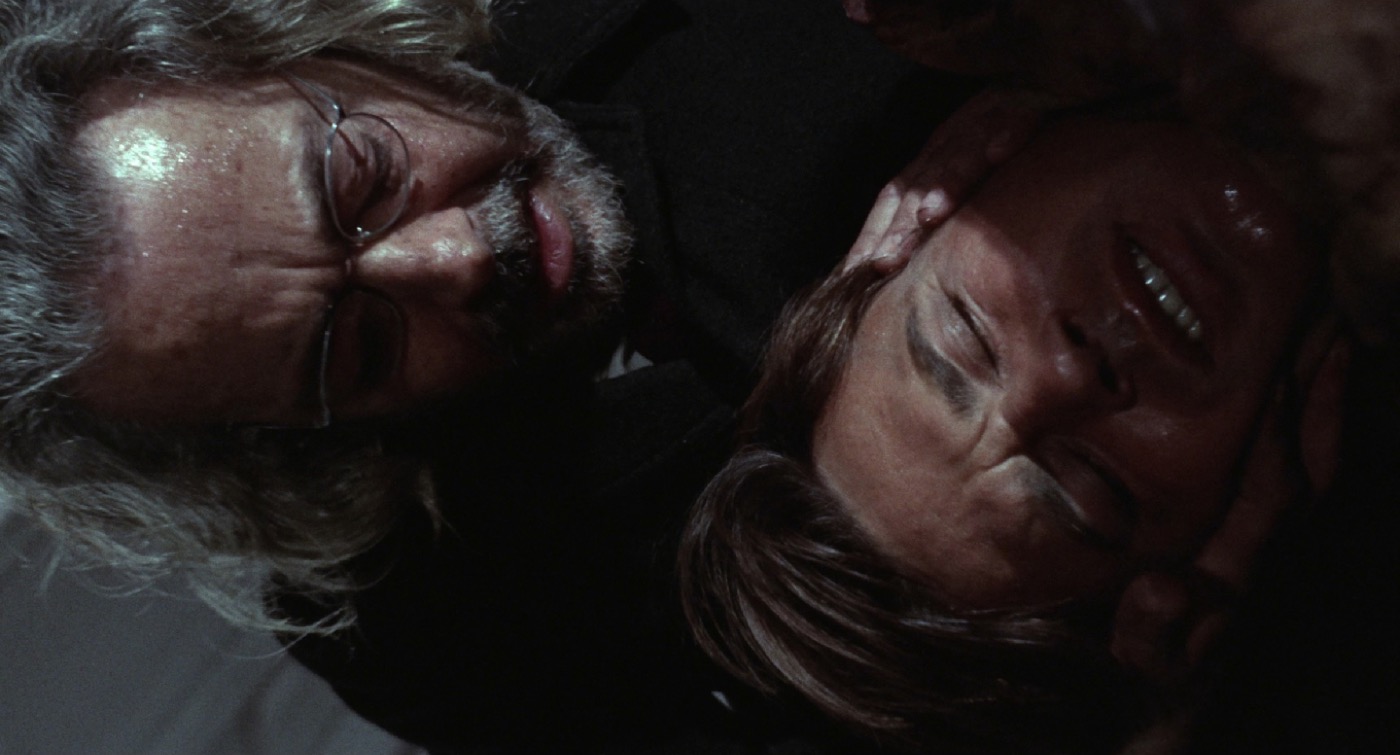
Within the first few minutes, we’re shown a bewildering torrent of images that comprise fragments of every key element to follow, reminiscent of the pre-show episode teasers for television series. After driving his sleek black Citroën DS through the streets of Rome, a man we will soon know as Giovanni (Jean Sorel) pulls into an underground car park where a sinister man in black awaits. We later learn that man is Bergamo (Antonio Pierfederici), a physics professor who shoots Giovanni repeatedly. Between each gunshot, we see incongruous images of other people for whom we have no reference point: a fierce glance from an attractive, mature woman; the alluring smile of a younger blonde; a shirtless man casting nets on a sunny beach; and his dead eyes as he lies on a parquet floor. It’s enough to evoke Giovanni’s own confusion and signal that we are seeing people and places from his past as his mind reels from the shock realisation of his own mortality.
It would be nice if, after establishing that the story is told entirely in flashback, the style settled down. It doesn’t, though we’re granted time to review and reconsider during several long sequences where nothing much happens. It seems that, in Giovanni’s mind at least, the series of events that led him to his demise began with his honeymoon in Morocco…
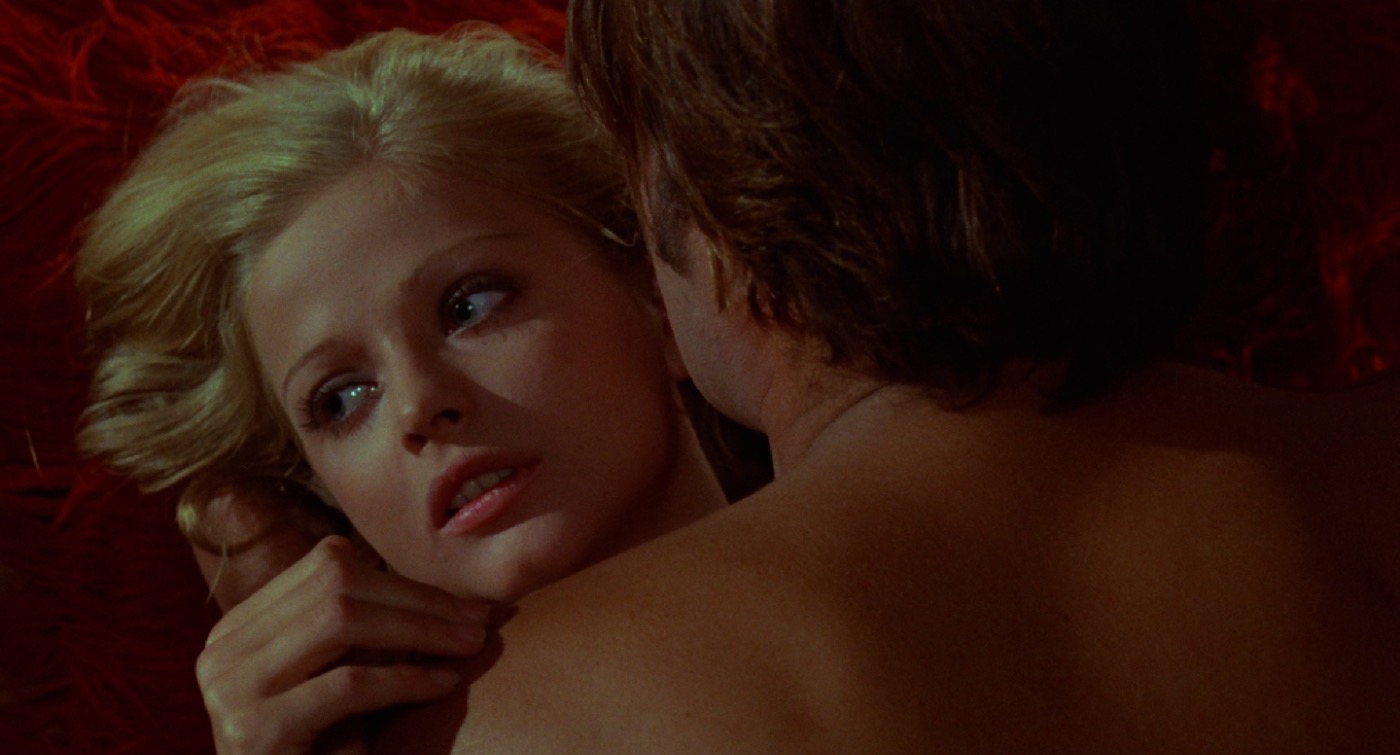
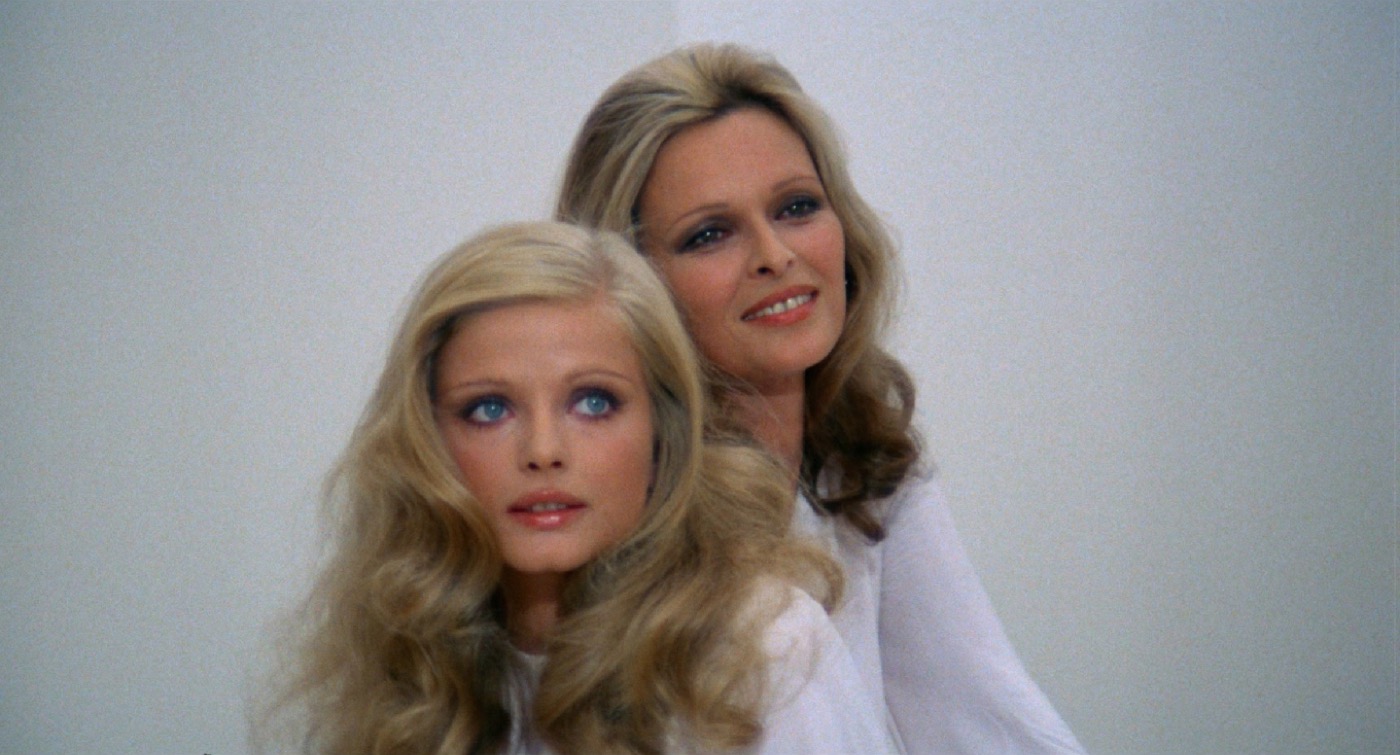
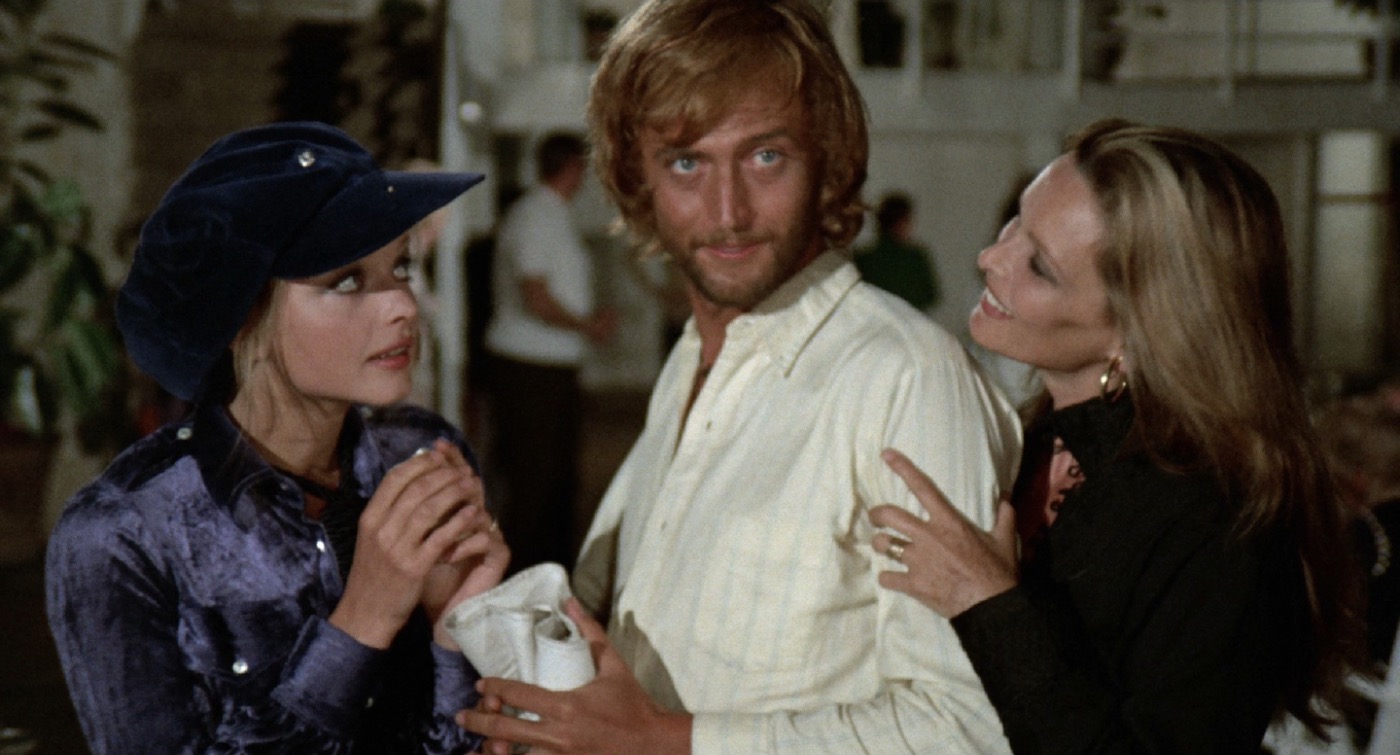
From the fractured and non-linear narrative, we glean that he leads a privileged life with a trust fund that allows him to take sporadic architectural commissions. He appears to have a brattish, immature attitude to life, which explains why he’s married Lucia (Ewa Aulin), a woman at least a decade his junior. Yet, there’s no doubt he’s flirting with her mother, Nora (Lucia Bosé), who must be ten years his senior. No, this isn’t going to be one of those commedia sexy all’italiana, but the ménage à trois dynamic is set up early and will be echoed in various social situations between an array of characters. There always seems to be an individual facing some doubt or dilemma concerning two other similar, yet subtly different, people. Both Lucia and Nora flirt with Eddie (Sergio Doria), a Vietnam veteran they meet on the beach, whom Giovanni comes to resent because he embodies everything Giovanni pretends to be…
The original Italian title is La controfigura, which has a range of subtly different interpretations. Normally meaning a stand-in or stunt double, it’s sometimes used to describe a very close family resemblance or doppelgänger, but can also imply an inferior imitation or counterfeit. The whole film deals with falsity and how misleading appearances can be. Not that the plot rests upon any straightforward mistaken identity—not that there’s much of a plot at all.
The finished film feels like something rescued from a production catastrophe. On first viewing, I guessed that some of the stock had been cooked in the Moroccan heat, necessitating a complete rehash of the script to rescue and rework the surviving footage. That would explain the incongruous scenes of murder that we eventually have to accept as the insubstantial fantasies of our troubled protagonist. However, as there don’t seem to have been any extenuating production problems, we must assume this is exactly what Guerrieri intended. Perhaps we can be kind in affording him some degree of kudos for brave experimentation, despite the decidedly uneven result.
Cutting for atmosphere and psychological tension rather than narrative beats obfuscates the story so much that we can never really be sure what occurs and what is figmental. What plot there is falls nicely into place with the final few lines of dialogue, and that final reveal is a clever little twist, but it doesn’t warrant the stylistic indulgences that seem to be there to detract from the dire lack of narrative integrity. But then again, do we really want just another elegant, cleanly conveyed thriller instead?
In Italy, it would be categorised as a giallo, which simply indicates a thriller. However, used by foreign critics, the term “Italian giallo” refers to a specific subgenre of whodunit, usually with added skin and blood spatter. Typically, there will be multiple murders investigated by an amateur sleuth in a cleverly contrived narrative delivered with stand-out set-pieces. Classic examples often feature audacious camerawork, stylistic flourishes, and a convoluted plot leading up to a surprise, last-minute reveal. Not to mention the maniac. A good giallo needs its maniac.
The Double falls short on nearly all counts, though it is reminiscent of Aldo Lado’s giallo Short Night of Glass Dolls (1971), made the same year, also starring Jean Sorel and following the internal narrative of a dying man. By any meaningful measure, it also pales in comparison to Elio Petri’s disquieting psychosexual thriller A Quiet Place in the Country (1968), which is a far bolder cinematic experiment resting upon the perspective of an unreliable narrator.
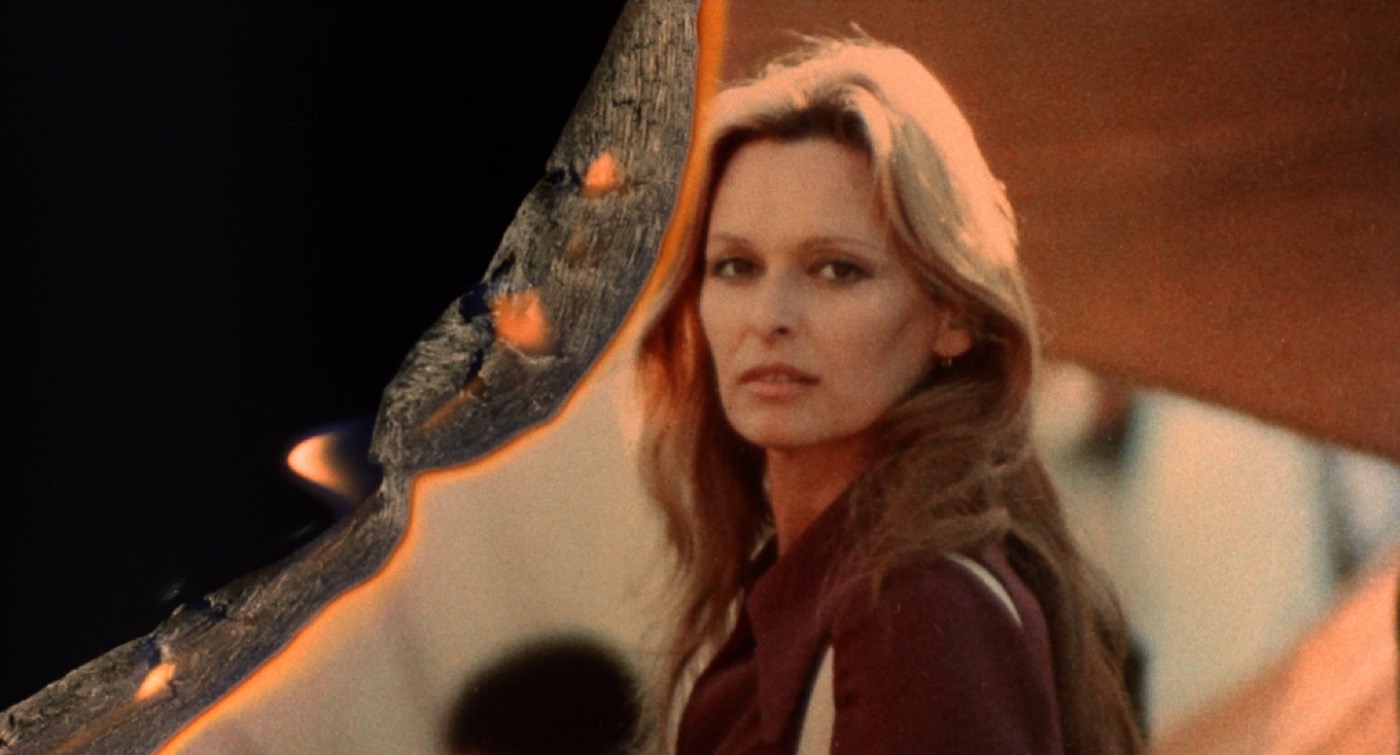
Jean Sorel was fresh from Lucio Fulci’s A Lizard in a Woman’s Skin (1971) and carried some arthouse cachet since starring in Luis Buñuel’s provocative Belle de Jour (1967). Here, his performance is workmanlike and conveys a good spread of arrogance, envy, paranoia, and immaturity well enough. This is mainly expressed through his misogynistic obsession with the two women he’s torn between. The machismo and use of coercion—sometimes physical force—when subduing Lucia and ‘seducing’ Nora will be problematic for some viewers.
The psychological excavation of gender dynamics is a prominent thread, and in some ways we’re dealing with a similar scenario to Akira Kurosawa’s Rashomon (1950); we’re presented with events as he sees them, but we realise the experience of the women involved may differ. For example, in one scene he is clearly assaulting one woman who then becomes compliant. He believes he’s won her over with an impressive show of dominant masculinity; we may see it as rape.
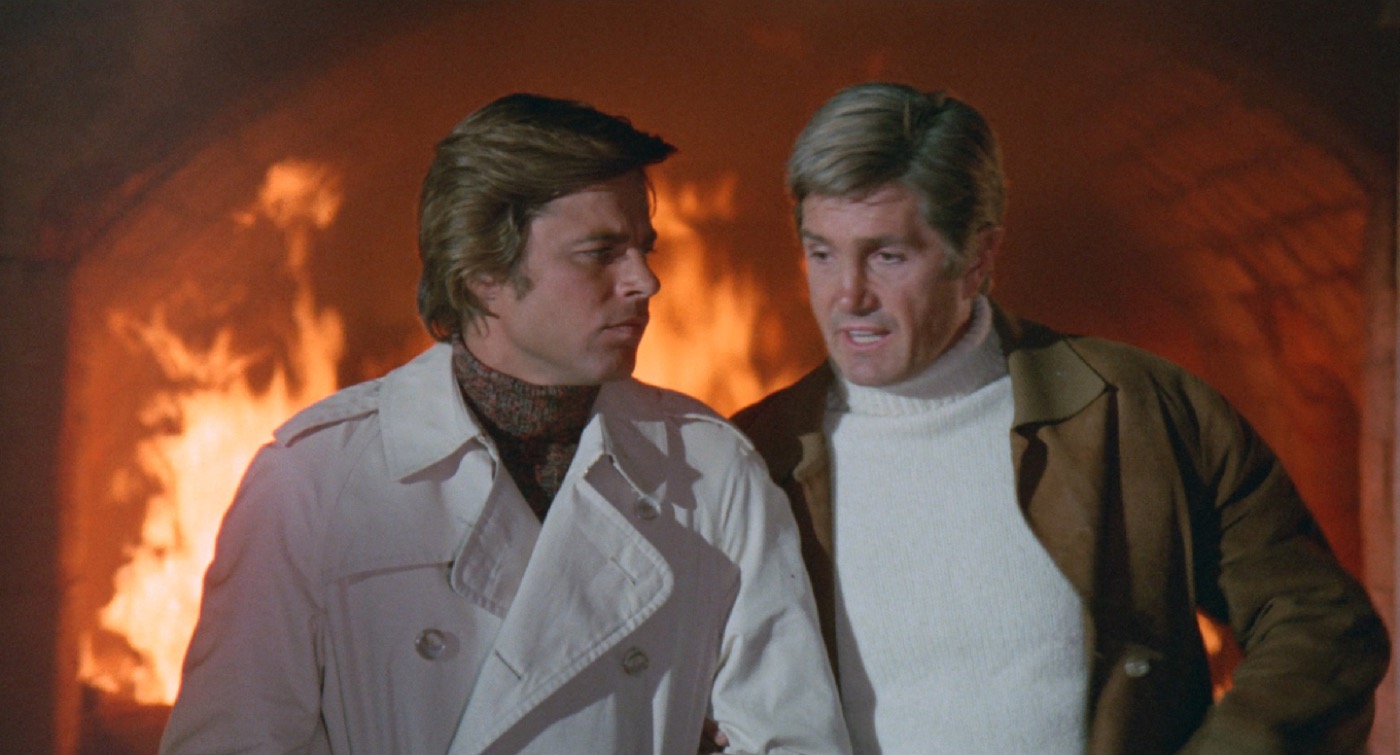
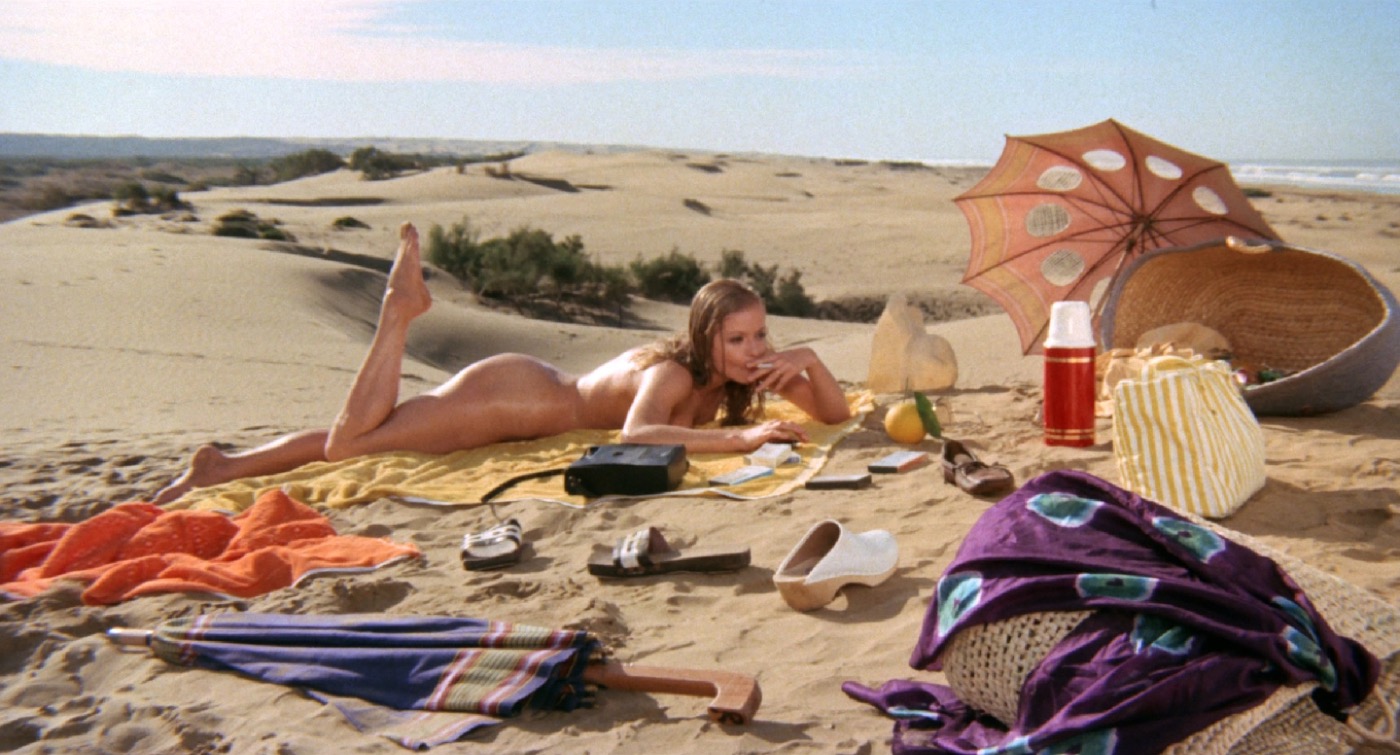
Ewa Aulin is the real star here, and certainly her name would’ve been the bigger box-office draw since earning a certain notoriety as a ‘sex kitten’ for her lead in Christian Marquand’s Candy (1968), a philosophical sex romp and very loose reimagining of Voltaire’s Candide. Though I recognise her from Giulio Questi’s unique giallo, Death Laid an Egg (original title: La morte ha fatto l’uovo, 1968), she was said to have the finest posterior in the business, and Romolo Guerrieri capitalised on this by presenting her fully nude early on in the film. However, she’s more than just ‘eye candy’, as we see her framed by Giovanni’s perception as his property. Our own position as disempowered voyeurs and the male gaze of the lens are also acknowledged here. She’s often presented as an object, shot like part of the landscape, especially when her curves echo those of the dunes and her blonde hair blends with the golden sand. And like sand, Giovanni will have trouble keeping hold of her as she begins to assert her individuality, bucking against traditional notions of what a wife should be.
Our fantasist protagonist is inherited from a story by Libero Bigiaretti, the original source material. This is the second of his literary works to be adapted for the screen after The Fire Trap / La trappola di fuoco (1952), though La controfigura is by far his most successful novel and recipient of the prestigious 1968 Viareggio Prize. Apparently, Guerrieri wished to reflect the thematic nature of the novel, which is written from the first-person perspective and unfolds within a psychological terrain as much as in the so-called ‘real world’. Without having read the book, it’s impossible to gauge how successful he is, but one must concede that book and film are very different media.
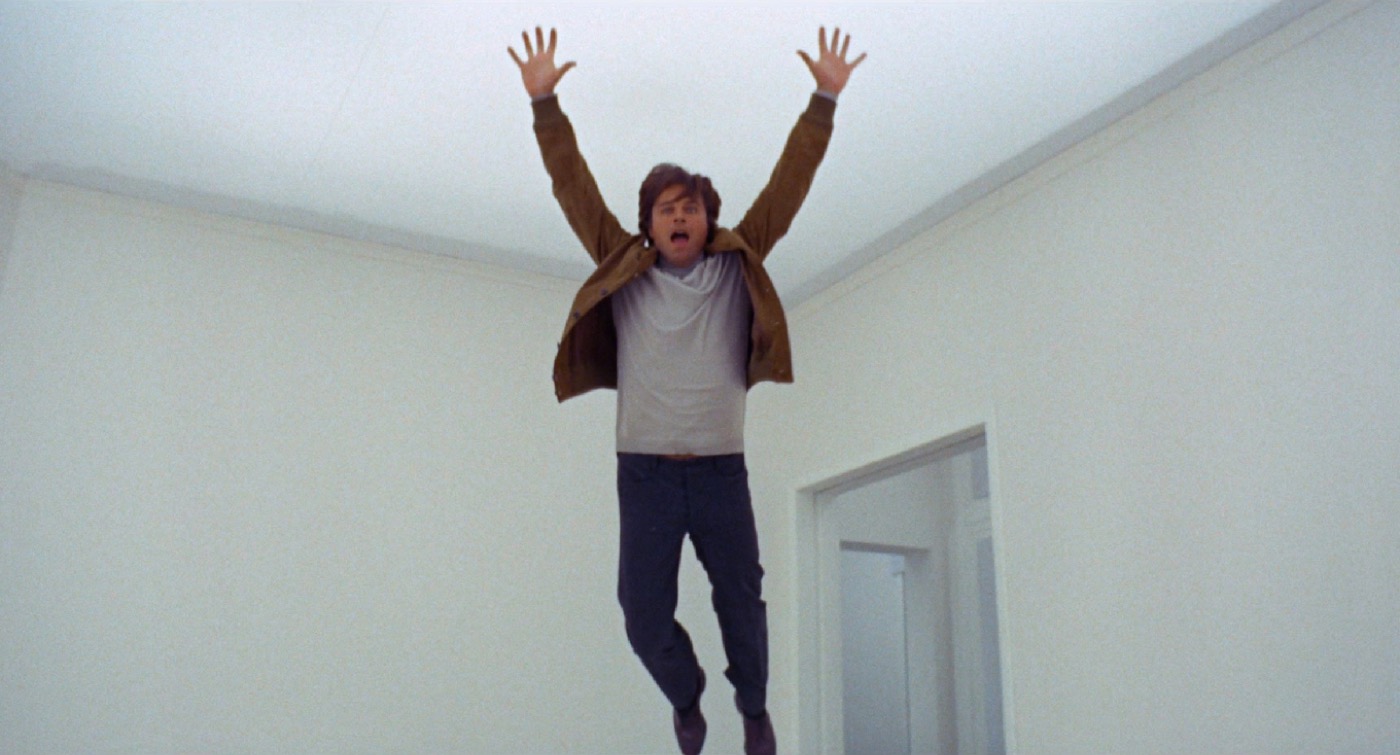
Though the novel was apparently a pleasingly intellectual puzzle, Guerrieri focuses more on emotional logic. The Double is a slow but hypnotic neo-giallo with a psychological narrative that builds around various atmospheres instead of plot points or twists. Sure, there’s an element of mystery, but its resolution only coalesces in the last ten minutes, and it’s always easier to create an enigma than to deliver a satisfying dénouement. Another director could’ve worked that kernel into a gripping narrative, perhaps even a classic thriller. Clearly, Guerrieri’s interests steered him elsewhere. Perhaps attempting to capture the source material’s structure, he deliberately avoids traditional exposition methods, opting instead for visual textures to capture the hot, languid atmosphere of Morocco and pacing to emphasise distance—both spatial and psychological.
During long, voyeuristically detached sequences with minimal dialogue, we are invited to unpick a time-based collage of dreamlike sensuality interrupted by more shocking, disorientating images that evoke the confusion and paranoia of a nightmare. If one doesn’t try to grasp the plot, there are some compelling compositions and inventive cinematography from Carlo Carlini, who provides sparse clues to indicate when psychotic fantasies impose upon perceived reality.
Though often lumped in with early gialli, The Double is more akin to the French nouvelle vague of Jean-Luc Godard or the melancholic character studies of Italy’s Michelangelo Antonioni. Guerrieri edits for the psychological transitions of the characters, not the mechanics of a movie. The picture may blur and dissolve, but this is to imply emotional states along with Giovanni’s failing grasp of boundaries: between reality and expressions of his Freudian impulses; between his own desires and the needs of others. As the narrative progresses, so does his paranoia and panic, and there are enough flashes of his shooting and physical anguish to remind us why it’s the paranoia that wins him over before fantasy intervenes to offer some relief.
ITALY | 1971 | 88 MINUTES | 1.85:1 | COLOUR | ITALIAN

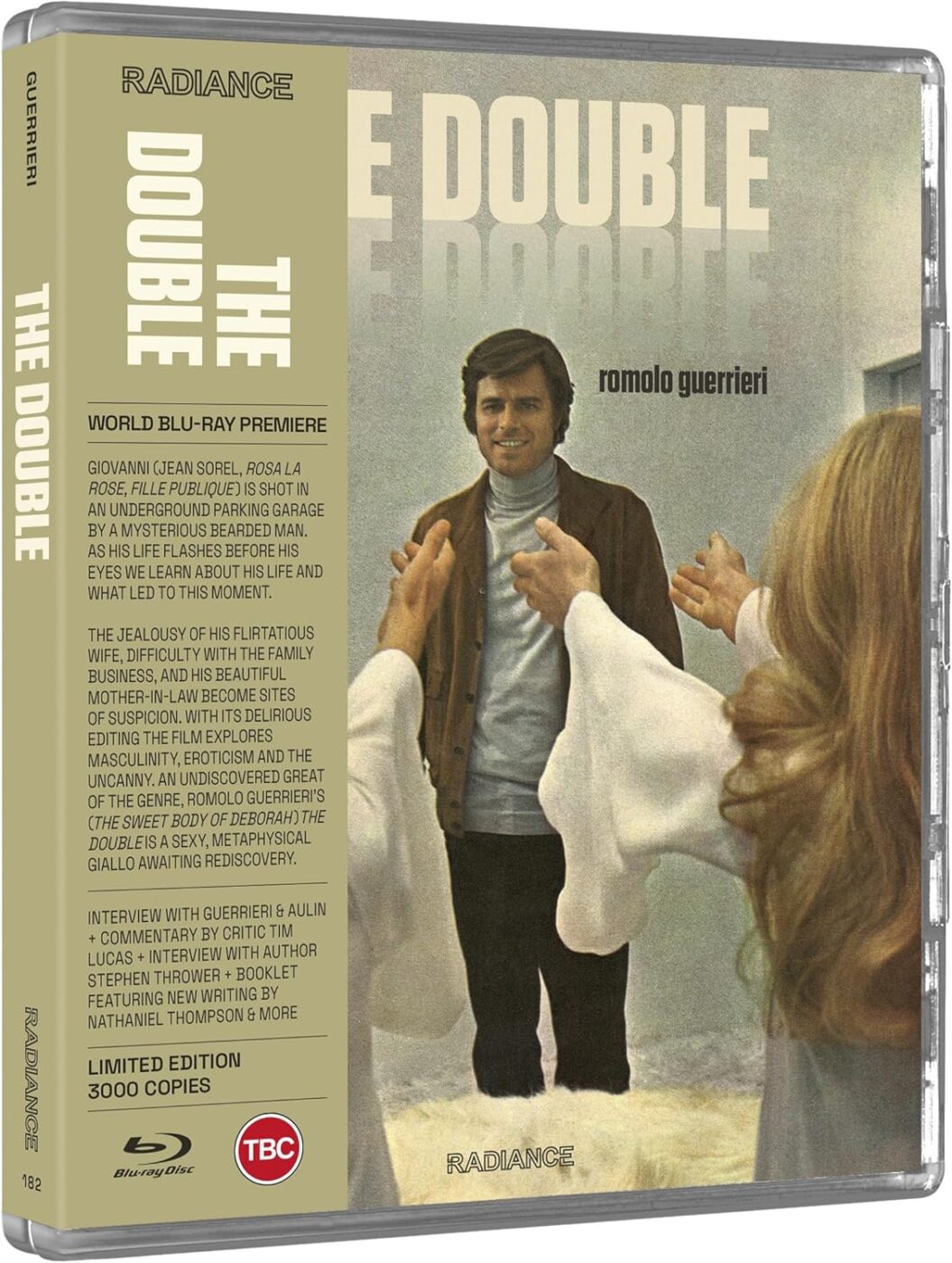

director: Romolo Guerrieri.
writers: Sauro Scavolini, Sandro Continenza & Sauro Scavolini (novel “La controfigura” by Libero Bigiaretti).
starring: Jean Sorel, Ewa Aulin, Lucia Bosé, Silvano Tranquilli, Sergio Doria, Marilù Tolo, Giacomo Rossi Stuart, Antonio Pierfederici.