TO LIVE AND DIE IN L.A. (1985)
Secret Service agents pursue a master counterfeiter... but who’s really the bad guy?

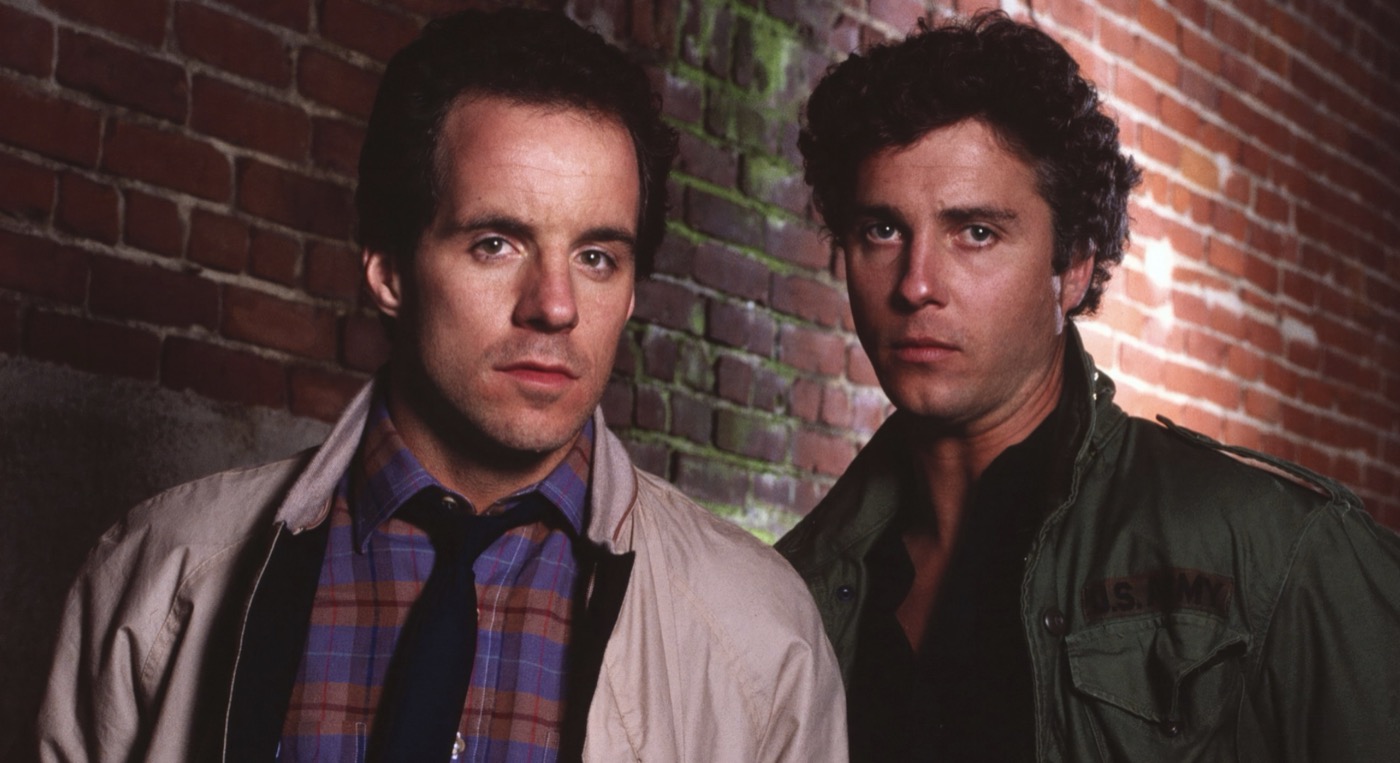

Secret Service agents pursue a master counterfeiter... but who’s really the bad guy?
By the early-1980s, William Friedkin’s star was decidedly fading. The extraordinary back-to-back success of The French Connection (1971) and The Exorcist (1973) had been followed by a major commercial disappointment in Sorcerer (1977), though the film has since become much more highly regarded than it was initially. Friedkin followed up with two comedies barely remembered today (though 1978’s The Brink’s Job is far from a bad film) and the bizarrely flawed, if weirdly compelling, Cruising (1980).
To Live and Die in L.A. – appreciated by many critics and a decent box-office performer, though hardly a smash hit – was a comeback of sorts. Typically for this idiosyncratic director, though, Friedkin didn’t manage to follow it up with anything that could even remotely be described as a hit. Equally typically, despite Live and Die’s strong superficial resemblances to The French Connection (an obsessed law-enforcement protagonist, mean streets, a spectacular car chase, a crime movie where the crime isn’t murder for once…), Friedkin was determined that it shouldn’t be merely The French Connection revisited.
His initial attraction to Gerald Petievich’s source novel came for a quite different reason. Friedkin was – as so many of his films make clear – fascinated by the minutiae of his characters’ jobs. In this case, what caught his attention was the work of US Secret Service agents. The Secret Service is an odd name for an odd organisation: it isn’t really secret at all, and it fulfils two very different principal functions: protecting senior officials and protecting financial systems, including investigating fraud and counterfeiting.
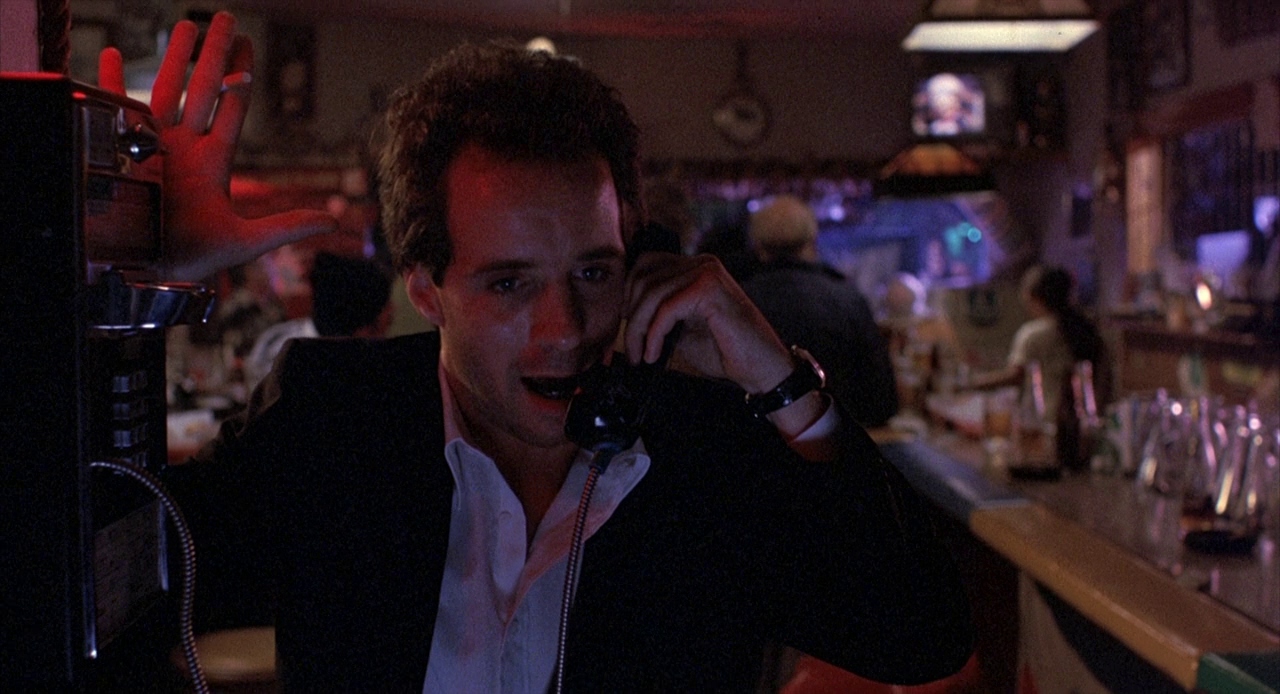
It’s the latter crime on which Live and Die focuses, but Friedkin couldn’t resist briefly depicting the Secret Service’s other main role too. The film begins with an essentially irrelevant but well-handled sequence in which agents Chance (William Petersen) and Hart (Michael Greene) confront an Islamic suicide bomber attempting to kill President Reagan. (That the bomber is a bit of a stereotype is also absolutely characteristic of Friedkin; he never targeted any particular group in his films, but he seemingly never worried about giving offence either.)
From being presidential saviours, the two agents turn their attention to counterfeiting, and – Friedkin having made his point about the peculiar dichotomy of their jobs – this is where the movie stays. As with all good noirs, the storyline is long and involved, though the film’s runtime is average for the period. It takes a while for the narrative to really come into focus, and there aren’t many specific moments that count as turning points, though there are a few surprises (one of which you certainly won’t see coming).
Instead, there’s a gradual shift as it becomes clearer that Chance – who eventually gets a new partner, Vukovich (John Pankow) – isn’t the upstanding lawman we saw in the opening section. It’s not that he’s corrupt as such, but he’s so willing to push the rules to breaking point in his pursuit of the counterfeiter Masters (Willem Dafoe) that he could easily be a criminal himself.
The convoluted plot itself is a little far-fetched and quite episodic – the quest to entrap Masters runs through it consistently, but other storylines come and go. However, the plot in the sense of ‘what happens next?’ isn’t really the point here. Friedkin was always drawn to what he called the ‘thin line’ between cop and crook – far from an original idea, but one at the heart of The French Connection and Cruising. The narrative interest of Live and Die lies in the ways that line is crossed.
The movie’s other main strength – perhaps even more so to today’s viewer than in 1985 – is how it captures its era. Live and Die is, in many ways, the 1980s distilled into 116 minutes. Materialism is at its centre – you get the feeling Masters prints money for the sheer joy of making money – and you don’t have to be overly sceptical to note that so much of the film revolves around fakes. Chance’s spectacular, apparently reckless leap off a bridge turns out to be a relatively safe bungee jump. A criminal turns out not to be a criminal at all. Friedkin himself acknowledges, in an interview on Arrow Video’s disc, that the people and emotions in Live and Die are often as counterfeit as the cash.
If Live and Die indulges the era’s obsession with appearances, it also questions their value. It acknowledges the underbelly – for instance, in the sad existence of Ruth (Darlanne Fluegel), an informant Chance exploits as cruelly as any gangster might. It pointedly shows us the grimy side of Los Angeles far more than the glamorous one (as does 1993’s Falling Down almost a decade later, the otherwise very different film I reviewed just before this). It also adds an intriguing nuance to Masters’ character: as well as being a counterfeiter, he’s an artist who burns his own work. Is this because he considers it worthless compared to the money he prints? Or is it the opposite: because his art is worth so much more that he doesn’t want an appearance-fixated world to get hold of it? Or is it simply an acknowledgement that looking good isn’t permanent?
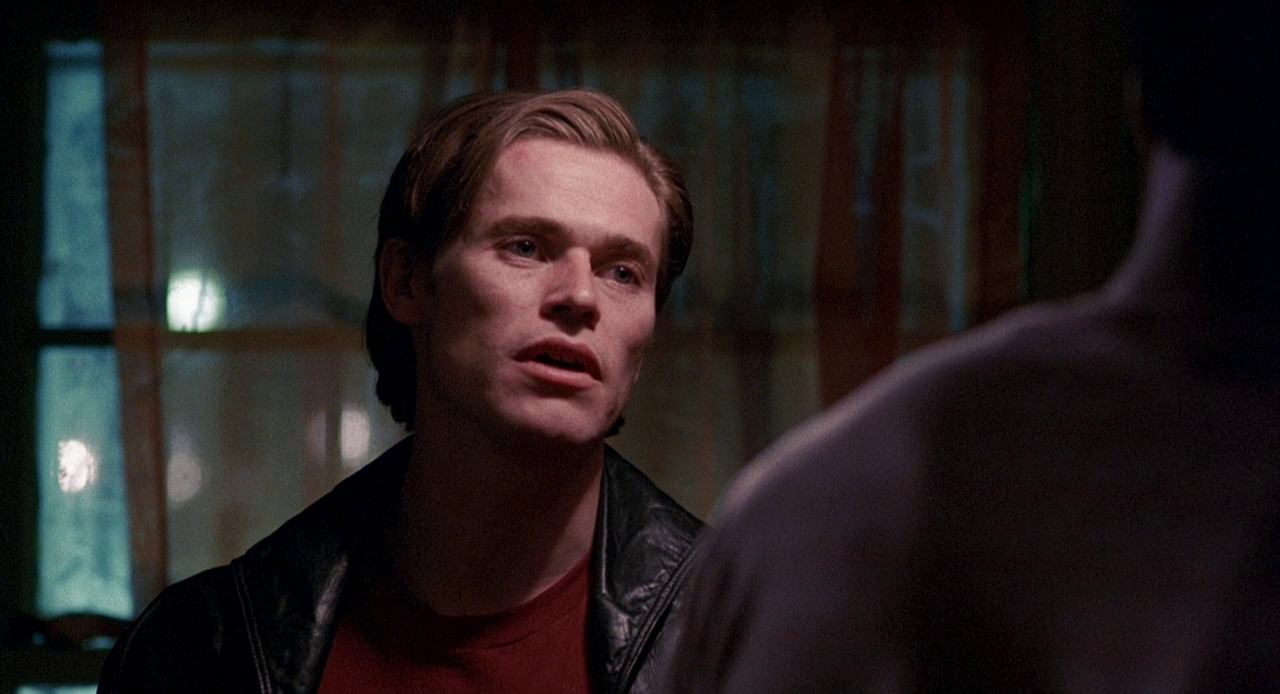
Given this, it’s easy to suspect that the film’s visual language – often simultaneously gorgeous and over-engineered to the point of lifelessness – is ironic, especially bearing in mind that Friedkin was hardly a child of the 1980s. He was nearly 50 when Live and Die was made, and unlikely to have swallowed the era’s aesthetic uncritically. He did, however, explicitly intend something very different from the grey, downbeat look of The French Connection. He got it from director of photography Robby Müller, whose work on Wim Wenders’ Paris, Texas (1984) similarly made use of intense, stylised colours in interior shots combined with much more naturalistic exteriors.
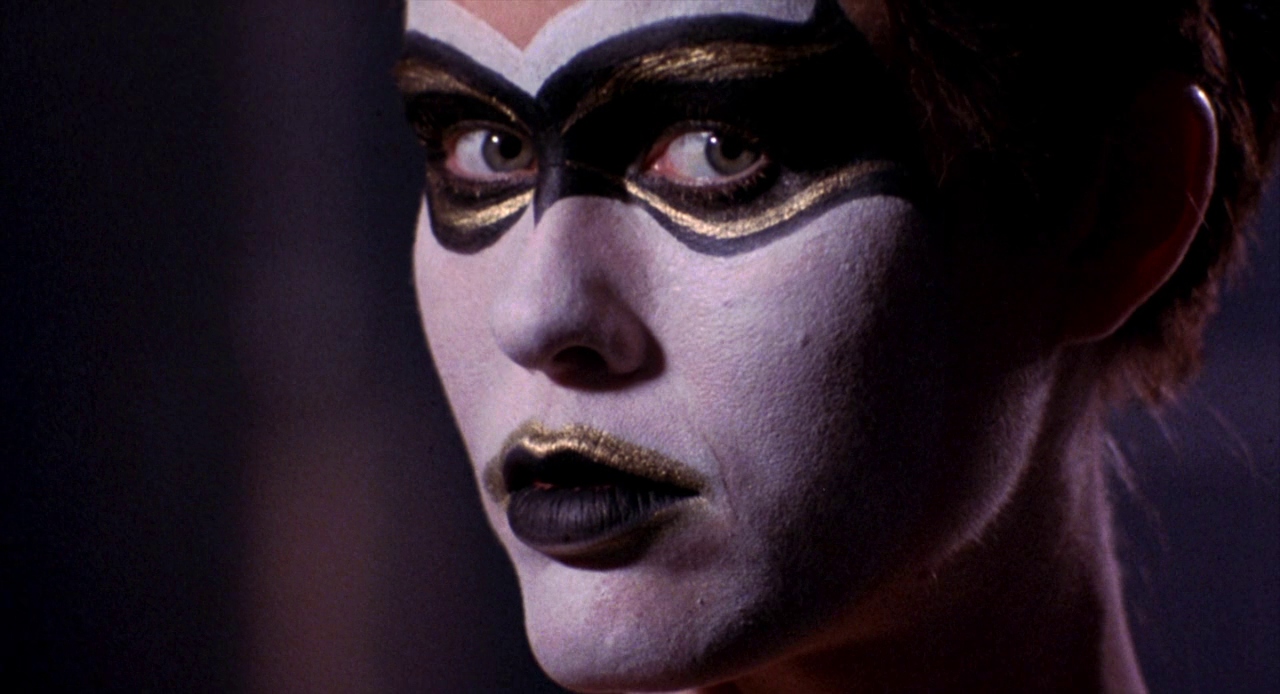
Mostly more naturalistic, anyway. Live and Die opens with a vivid cityscape bathed in red – “a violent, cynical wasteland under a burning sun”, as Friedkin put it – and the title sequence is pure imagery, from the lurid scarlet and lime-green titles to the slightly disturbing paintings that serve as early indicators of the role art plays in the movie. Red remains a visual theme: many scenes throughout are heavily colour-graded (or colour-timed in pre-digital parlance), with red and orange featuring prominently. In one scene, when a man is shot, the whole frame turns bright red for an instant.
These super-warm colours are nothing like the much bleaker The French Connection, and they extend to the diegetic world of Live and Die too. Cinematography apart, there are often colourful objects in the background, underlining the film’s concern with art and appearances. (Even in the functional Secret Service office, there’s clutter all over the walls.) One highly contrived shot shows the lawyer Waxman (Christopher Allport) and Masters’s girlfriend Bianca (Debra Feuer) seen through an aperture in a red wall, with a room full of art beyond. A passage involving an avant-garde dance troupe is so visually striking and heavily stylised that it distracts from the narrative flow, but Friedkin seems to have felt that the impression of opulent, somewhat erotic fakeness was more important than complete coherence.
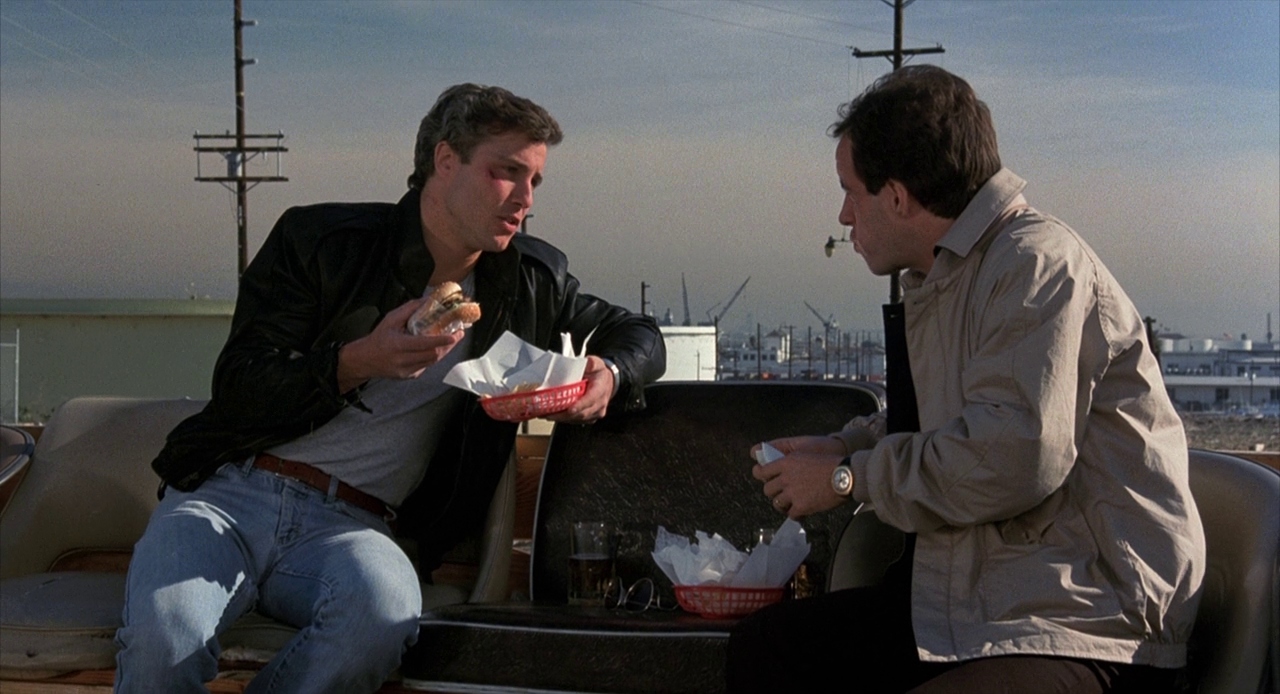
Müller’s composition is clearly careful in exterior scenes too, but the tone is different – mundane, even ugly, and often faster-moving. Live and Die’s car chase is its most famous single sequence, with a great sense of motion propelling the viewer through a crowded truck yard, along the nearly dry bed of the Los Angeles River, and up the wrong side of a highway. Friedkin called car chases “the purest form of cinema” – something no other medium can achieve. For my (counterfeit) money, though, the foot chase through an airport is even better; despite Friedkin’s insistence that the spatial relationship between vehicles and surroundings was all-important, the car chase isn’t really as clear as it could be.
Given all this visual activity and Wang Chung’s justly celebrated, urgent New Wave musical score, the performances in Live and Die inevitably take a back seat. As in most Friedkin movies, there’s little dwelling on inner lives: characters exist primarily in terms of what they do, and we have to guess at their motivations (though names like Chance, Masters, and Grimes – an attorney who gets his hands dirty – certainly give some clues).
Dafoe, not much of a star at the time, is both the smartest character in the movie and far and away the most magnetic. Petersen, despite nominally being the hero to Dafoe’s villain, is harder to warm to; both men are off-puttingsly arrogant. It’s also difficult not to compare Petersen’s performance here to his similar role in Michael Mann’s Manhunter (1986), which of course wasn’t the intention.
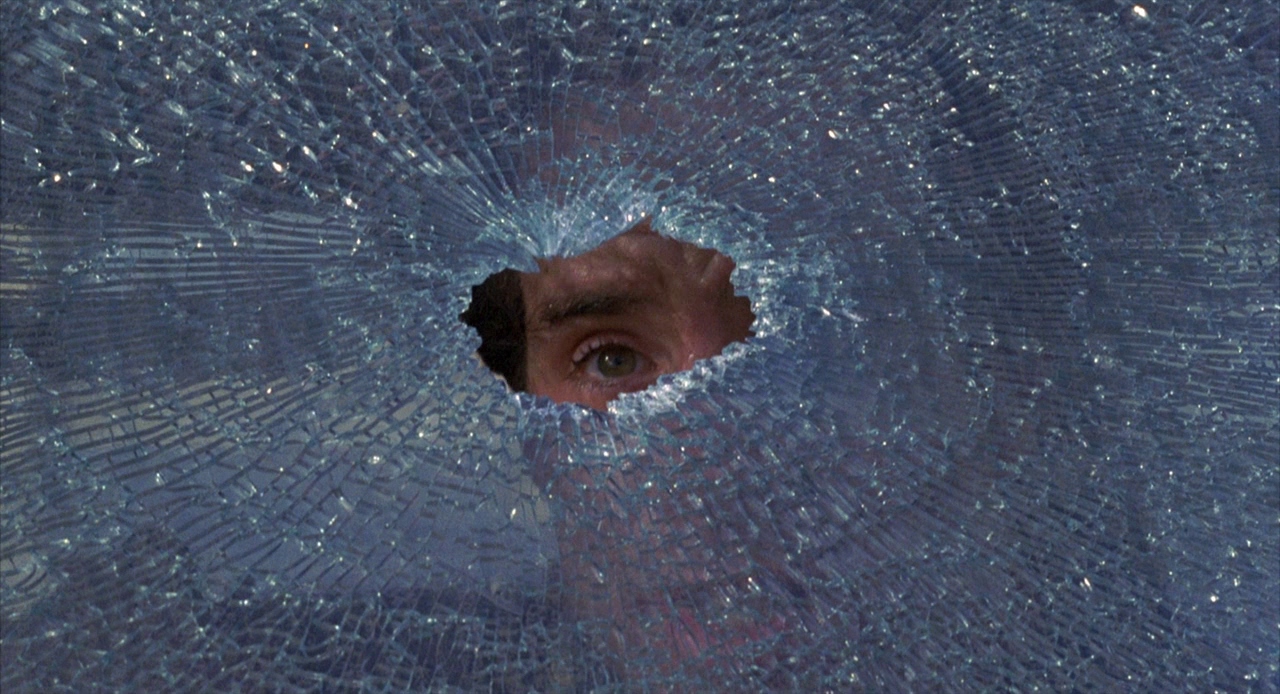
This contrast makes the comparative humanity of Pankow, as Petersen’s partner, stand out. Although he may lack the screen presence of Petersen or Dafoe, he enjoys the most interesting arc. Also notable in the cast are Dean Stockwell as the lawyer Grimes, a young John Turturro – already quite capable of scene-stealing – as a minor criminal, and Fluegel as the informant Ruth. Petievich, the novelist, makes a cameo appearance in an early bar scene.
Ultimately, Live and Die is more a Friedkin film than a star vehicle, and many of his directorial traits are at the fore. His preoccupation with procedural detail shows up most obviously in the marvellous sequence depicting Masters printing his counterfeit currency – platemaking, printing, adding serial numbers, and then literally laundering it in a washing machine. But it’s present elsewhere too, such as in a sauna scene where criminal fees are negotiated: few writers or directors would detail the logistics of crime so thoroughly. Equally characteristic of Friedkin are the sudden turns of random fate that kill off major characters, alongside touches of dark humour: a priest bringing milk and cookies to agents on surveillance, a Mexican standoff in an airport men’s room, and a traffic commentator absurdly underestimating highway chaos.
A 2015 plan for a TV spin-off, directed by Friedkin and written by Robert Moresco of Crash fame, went nowhere – probably a good thing, as Live and Die is so bound to its era. Pauline Kael called it “gaudy pulp”, and she was right on both counts. It can even veer close to absurdity at its most over-the-top moments, notably Masters’s final scene.
The film doesn’t have anything particularly profound to say about the amorality of its characters except that it exists. Like the characters, it’s immensely self-conscious; like them, it’s so cool and moody that it’s cold too. It’s not deep and it’s not the easiest film to love, unless perhaps you still harbour a hankering for the excesses of the 1980s. But it’s not boring for a single moment, either.
USA | 1985 | 116 MINUTES | 1.85:1 | COLOUR | ENGLISH • ARABIC • SPANISH

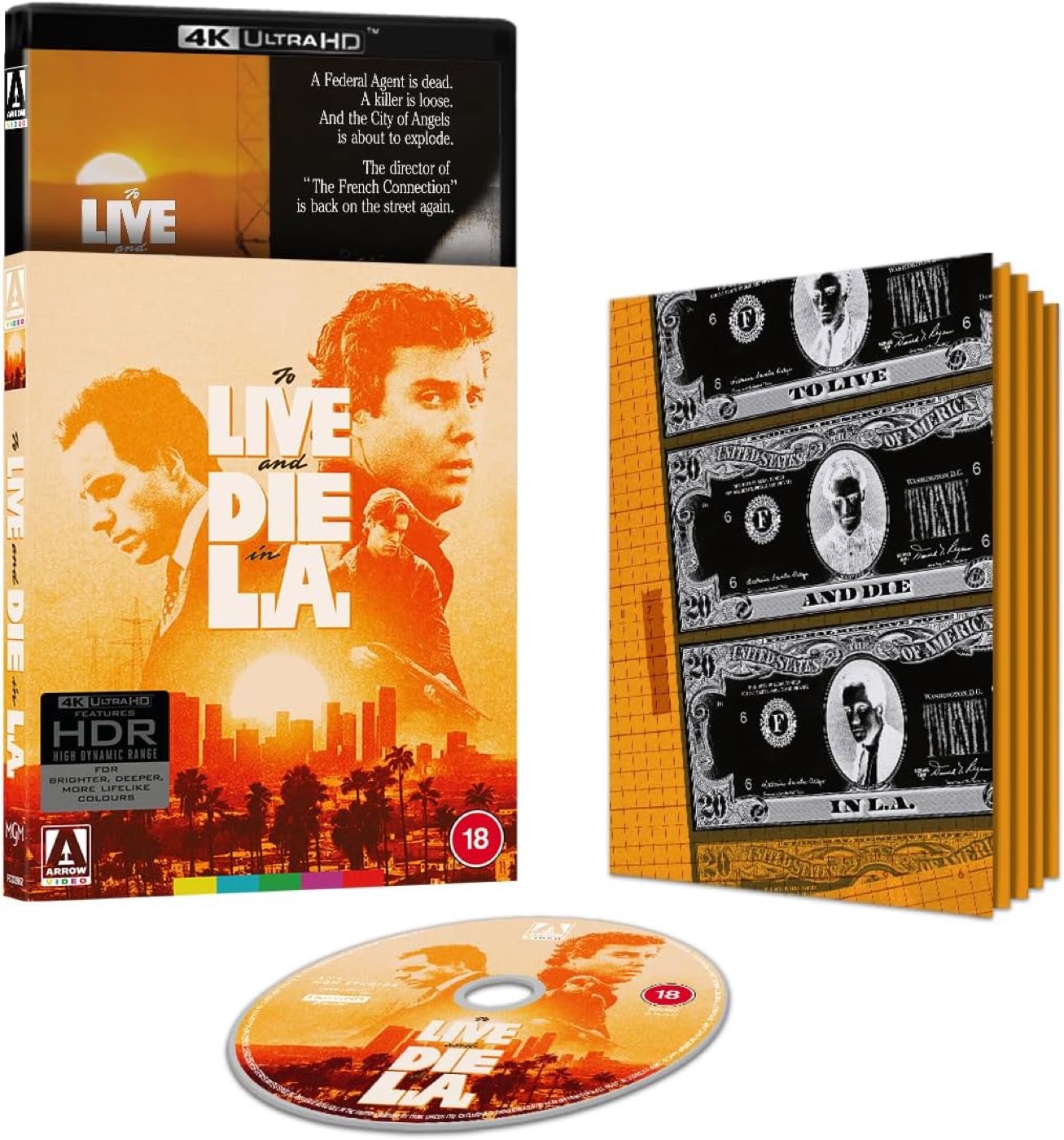

director: William Friedkin.
writers: William Friedkin & Gerald Petievich (based on the novel by Gerald Petievich).
starring: William Petersen, Willem Dafoe, John Pankow, Debra Feuer & John Turturro.