ANOTHER EARTH (2011)
Tragedy connects a young woman and a shattered music professor as an exact replica of Earth is discovered.

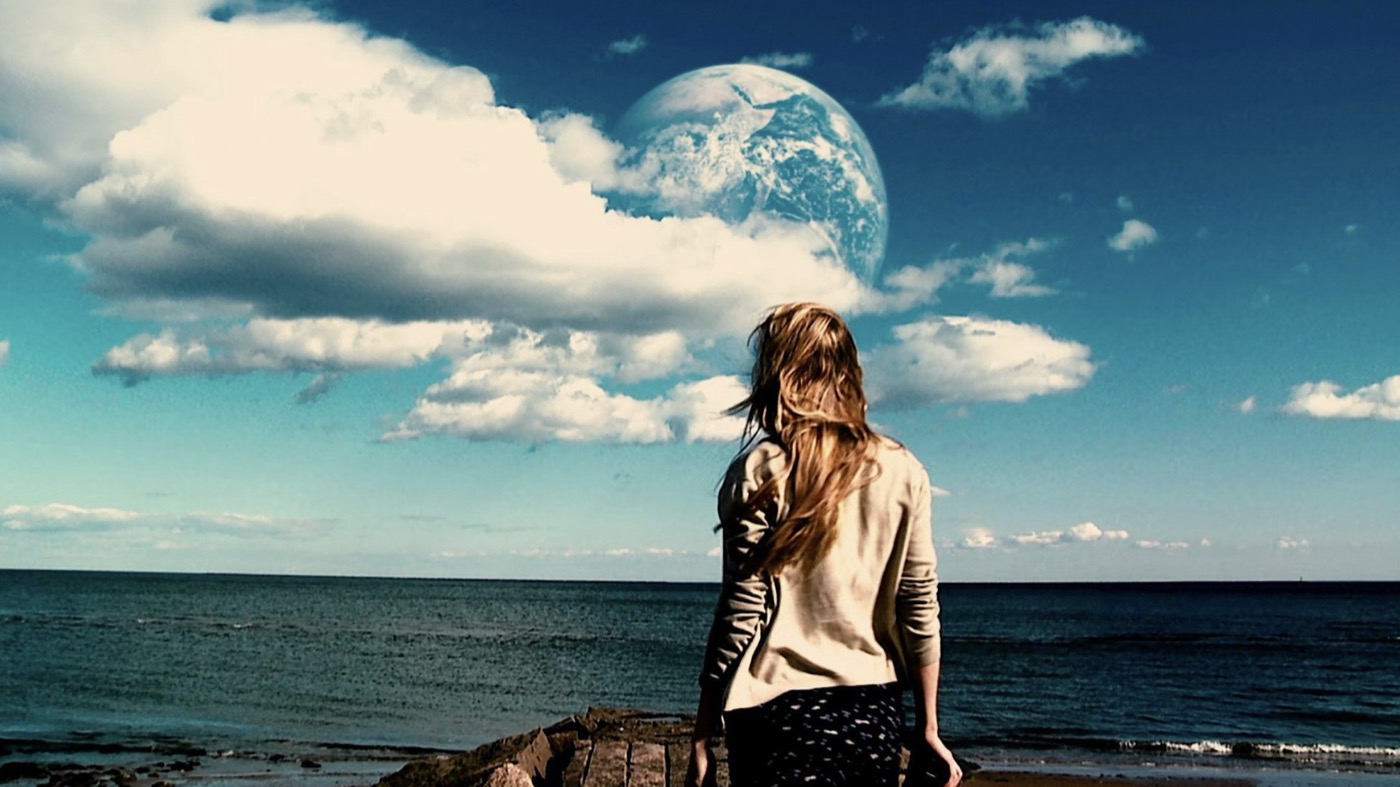

Tragedy connects a young woman and a shattered music professor as an exact replica of Earth is discovered.
How do you atone for the unforgivable? It’s a question without a satisfactory answer—no remorse or good deed can undo the weight of the pain caused—and it almost always lacks room for compromise. In most cases, all you can do is hope there is some way of redeeming your soul, a dream that must seem as absurd as figuring out a way to travel back in time and right your wrongs. You might as well stare helplessly at the night sky, wishing another planet to form where you can escape and try to move past your regrets.
That latter scenario isn’t entirely out of the realm of possibility for protagonist Rhoda Williams (Brit Marling) in Mike Cahill’s Another Earth. Rhoda is a young woman who destroyed her life almost exactly at the same time a new planet resembling our own was discovered. This planet, named Earth 2, appears to strongly mirror our own, lingering in humanity’s eyeline up in the stars—a permanently haunting temptation. For Rhoda, it’s also a lifeline. She enters what might be the most ambitious, meaningful essay contest ever devised. If she wins, she will be granted a ticket to travel to this planet, escaping this world and its agonising reminders of a mistake she can never forgive.
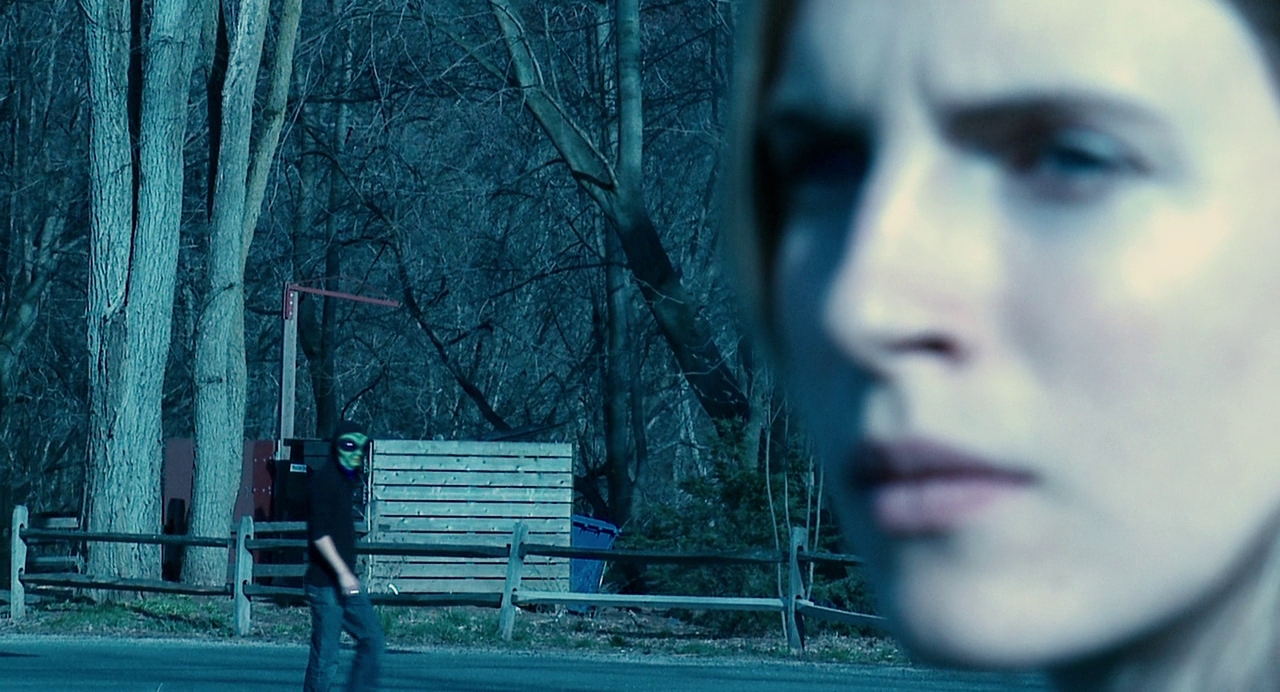
The future MIT student threw all her potential away in one reckless night of drinking when, in her drunken stupor, she drove into another car. Of the occupants of the other vehicle, the father, Yale professor John Burroughs (William Mapother), is left in a coma, whilst his wife and young son are killed. Rhoda is sentenced to four years in prison—a similar timeframe to the number of years John’s son lived on this Earth. The pain of Rhoda’s guilt is always reverberating within her. Marling wears her character’s self-loathing so openly that it’s impossible not to sympathise with Rhoda, who is sapped of contentment from that moment onwards. Mapother, meanwhile, is just as adept at portraying a person fractured by grief, where anger, dejection, and hope undercut one another to present a full portrait of his character’s torment.
After Rhoda completes her prison sentence and moves back into her childhood home with her parents and brother, she finds herself still picking up the pieces of her shattered life. Not that she wants it to be whole again. Her misery is a self-imposed state, a penance for her sins that she knows will never be enough. Upon seeing John leave a toy near the site of the crash, she feels compelled to visit his home and tell him that she is responsible for destroying his life.
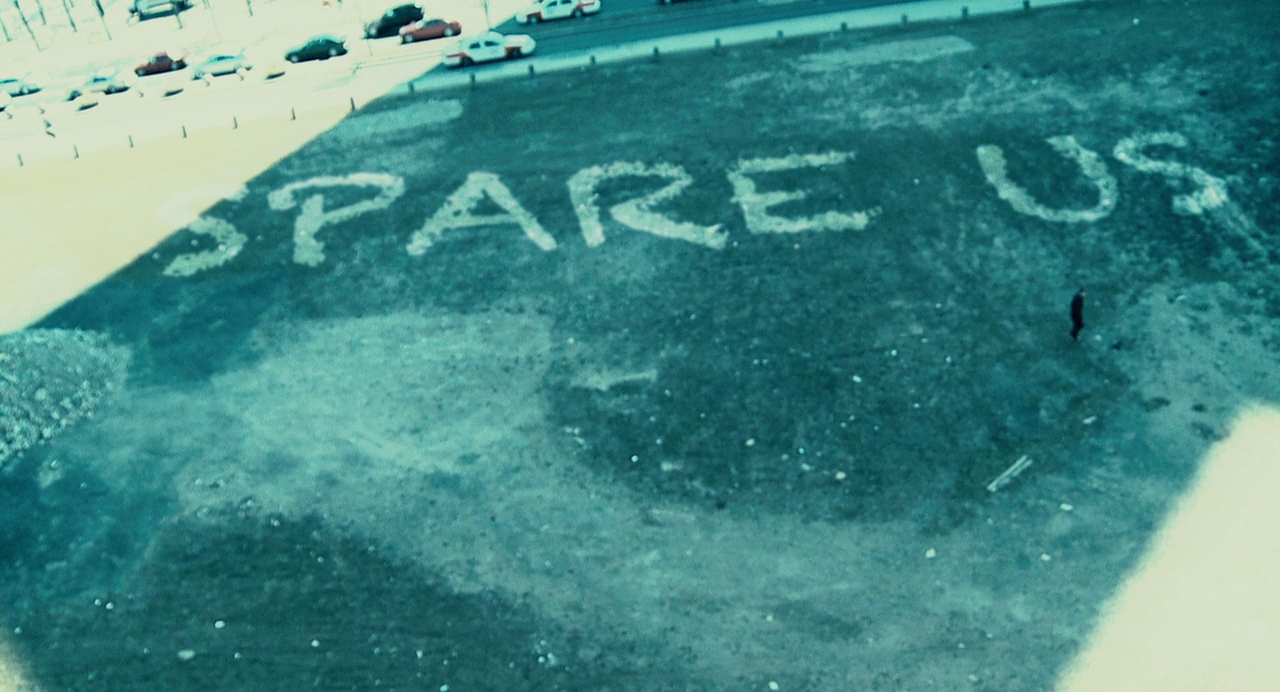
Unable to find the words when face-to-face with the victim of a regret that has defined both their lives, Rhoda pretends to be a cleaning lady, forming a working relationship with John that gradually deepens. Another Earth is about forging a new reality, even when that journey out of misery seems impossible. As a drama, it’s remarkably well-written—by Cahill and Marling—as each of Rhoda’s interactions with John further twists the knife into the tangled web of regret consuming her. Washing one of John’s most coveted items of clothing, likely worn by his wife or child, reminds her of her actions. Helping him to give up his aimless routine of drinking alone is just as punishing, since he is unaware that she triggered this torment. Their dynamic is marked by devastation at every turn, but it’s deeply human all the same.
At the same time as new possibilities emerge for both of them in one another’s company, humanity as a whole is forced to grapple with the seemingly boundless possibilities of a new reality. Is this new planet an exact mirror of ours? Will it try to subjugate us? Should it be conquered? Is our place in the universe meaningful because of our new neighbours, or meaningless because we’ve lost that precious mantle of being the only life forms in the cosmos (that we know of)? Does this revelation shatter or strengthen our trust in religion or science? Another Earth is too committed to Rhoda and her shattered ego to ponder these questions for long.
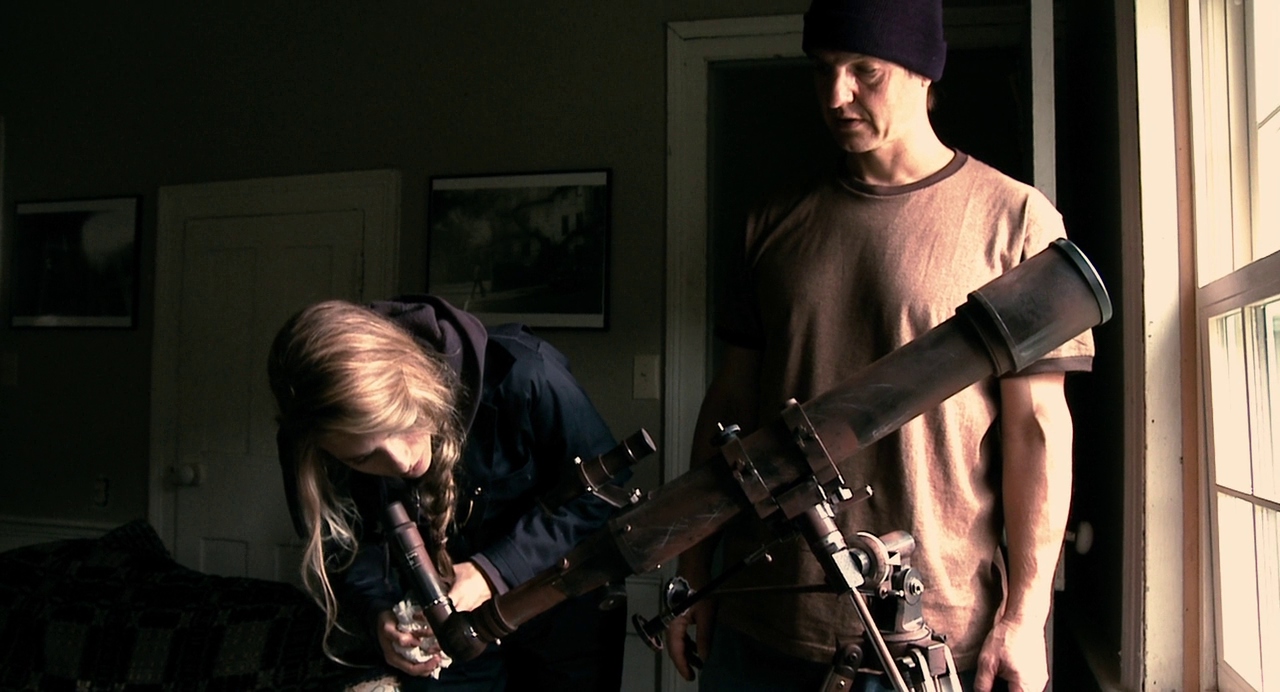
This is a thematically ambitious work, pairing the discovery of a new planet with the equally invigorating, beautiful, and haunting discovery that life can begin again after tragedy. To someone grieving the loss of people who gave their existence meaning, both possibilities seem equally foolish. This is a science fiction film that superficially reaches out to the stars for answers, all whilst knowing that the truest ones existed within us all along. Another Earth cleverly uses its genre premise to toy with our attempts to confront grief. The film’s ambition carries over to its minuscule budget; produced for just $100,000, it easily recouped its costs with a box-office intake of $1.9M.
Similarly to Gareth Edwards’s feature debut, Monsters (2010), Cahill’s debut film is a meditative contemplation on our beautiful, fractured attempts to grow with and trust one another, framed through a blossoming relationship between two weary souls against a sci-fi backdrop. Thematically, Another Earth is more ambitious than Edwards’s debut, and as a result, it’s more moving in its best moments. But it’s also more narratively flawed, with one-note side characters and eye-roll-inducing exposition. Almost every mention of Earth 2 might as well feature the word ‘EXPOSITION’ flashing on the screen in bright lights. Rhoda’s life is so bare that there is no possible way to sneak in these expository sections more nimbly, so instead, minor characters on media stations do the heavy lifting. Starry-eyed wonder abounds in Another Earth, but here it’s replaced by surface-level professionalism. Philosophising about this new planet could have proved fascinating, but the film never finds a way to expand on its premise beyond its exploration of grief.
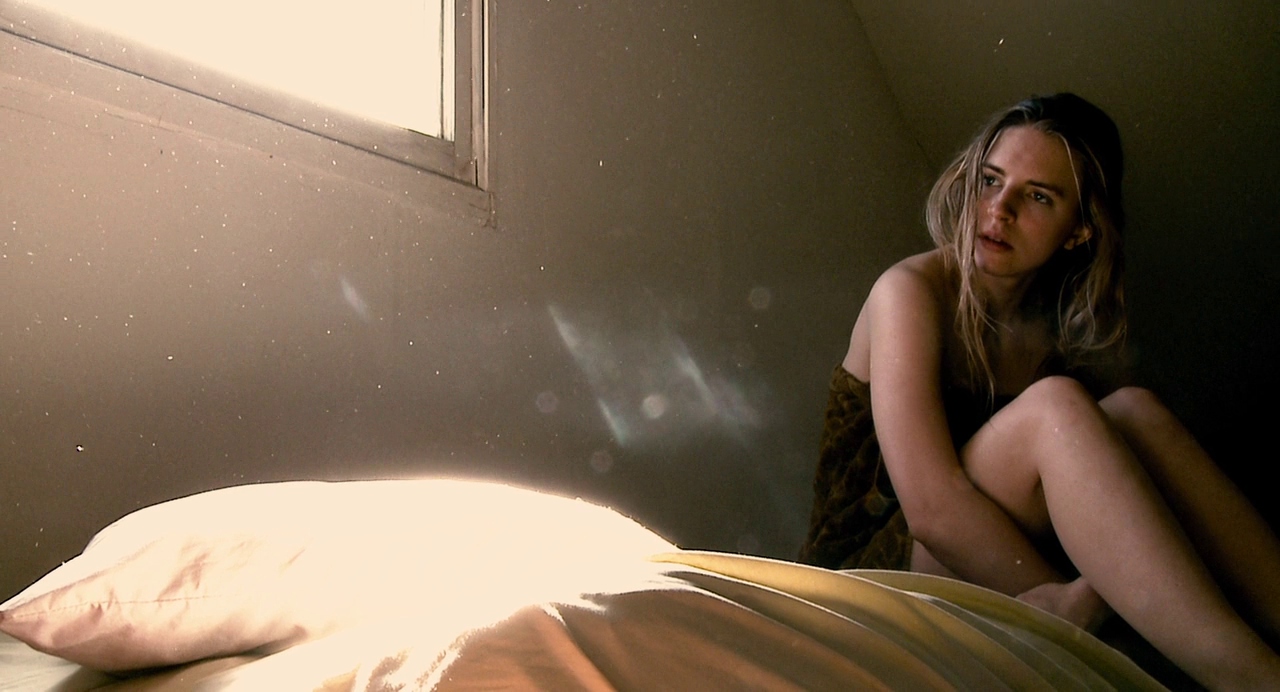
As for obnoxious side characters, Rhoda’s brother, Jeff (Robin Lord Taylor), is impressively irritating, leaning so far in this direction that you almost wish Rhoda had ruined her life by crashing into him instead. Jeff, like Rhoda’s parents, is barely present in the film, existing only superficially. As for Purdeep (Kumar Pallana), the less said of him, the better. A co-worker of Rhoda (who is now cleaning at her old high school—a fitting punishment for a girl who seemed destined to transcend her humble beginnings), he is a variation of the ‘Magical Negro’ stereotype.
Recognising something special in Rhoda and appearing blessed with a unique ability to understand the inner workings of the universe, Purdeep’s faux-spiritual presence means he’s never granted true personhood, whilst his tortured existence might as well only exist for Rhoda’s benefit. I won’t spoil the plot developments for his character, but they are insultingly transparent and heavy-handed. For a film that simultaneously looks towards the stars and deep within our hearts for its emotional resonance, it’s disappointing that Another Earth falls back on ridiculous, old-fashioned racial tropes to further its plot.
USA | 2011 | 92 MINUTES | 1.85:1 | COLOUR | ENGLISH

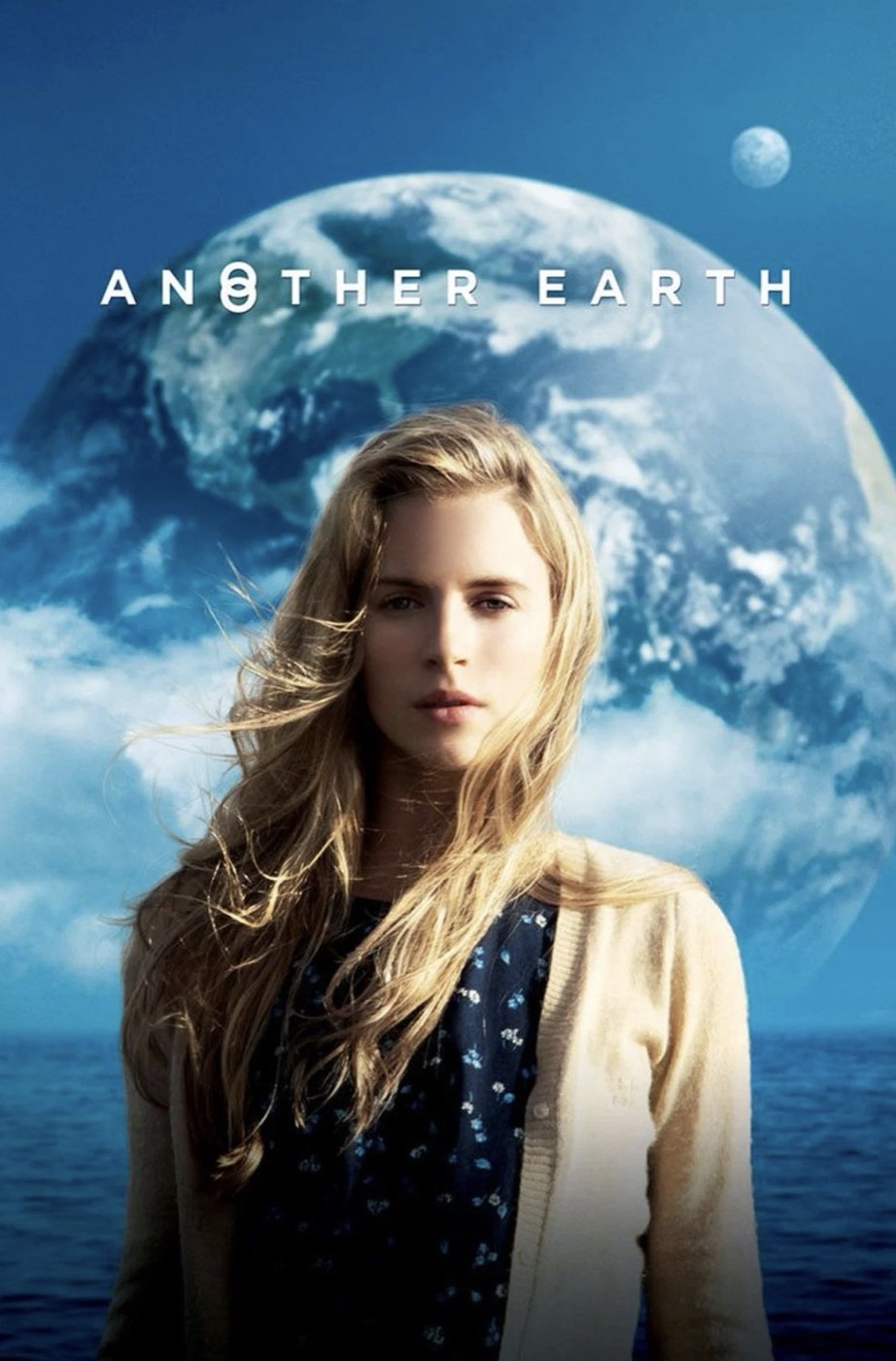
director: Mike Cahill.
writers: Mike Cahill & Brit Marling.
starring: Brit Marling, William Mapother, Jordan Baker, Robin Lord Taylor, Flint Beverage, Kumar Pallana, Diane Ciesla & Rupert Reid.