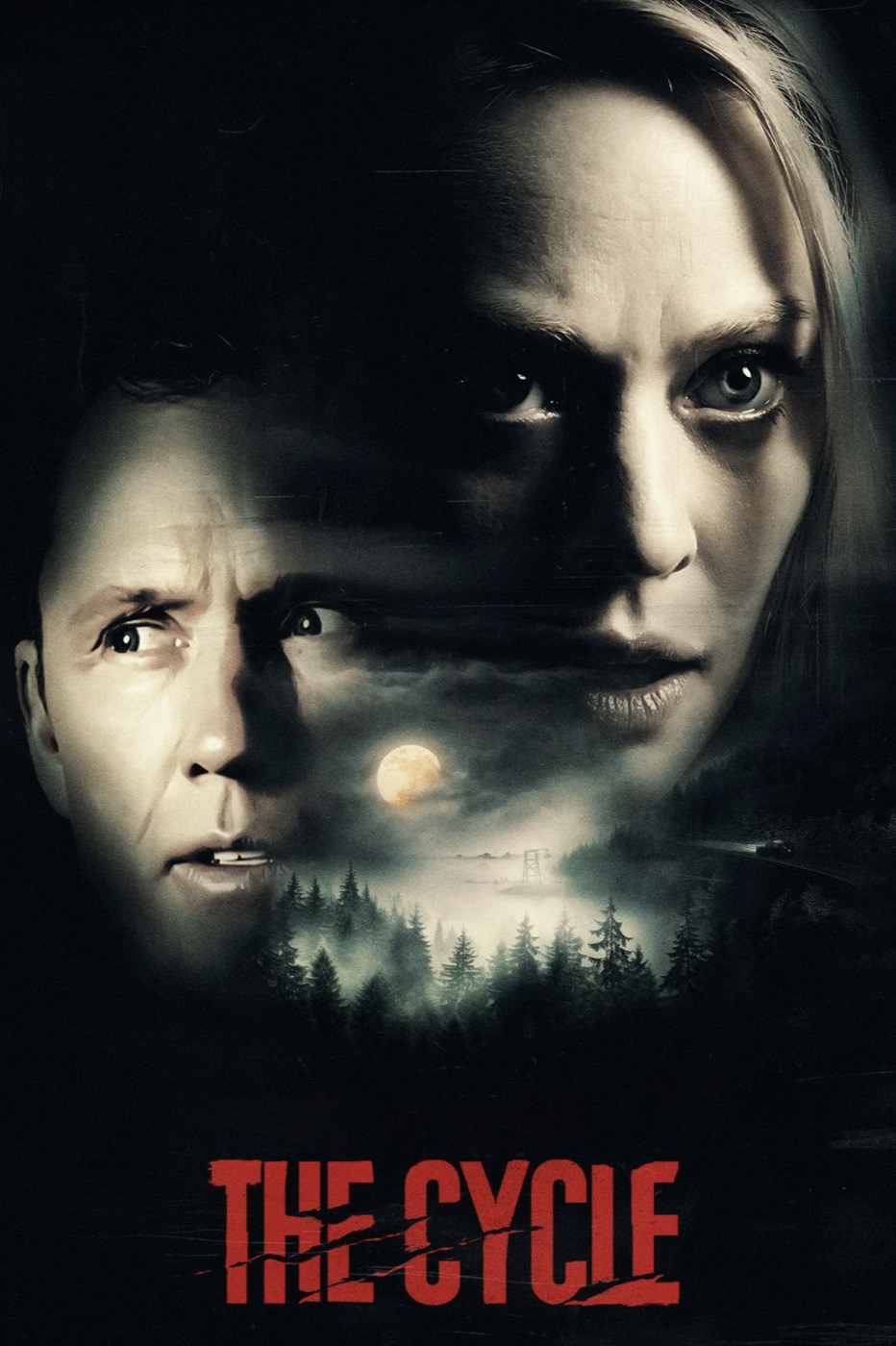
THE CYCLE (2026)
A daughter unravels her father's dark past after his body, missing for 36 years, is found at a horrific crime scene.

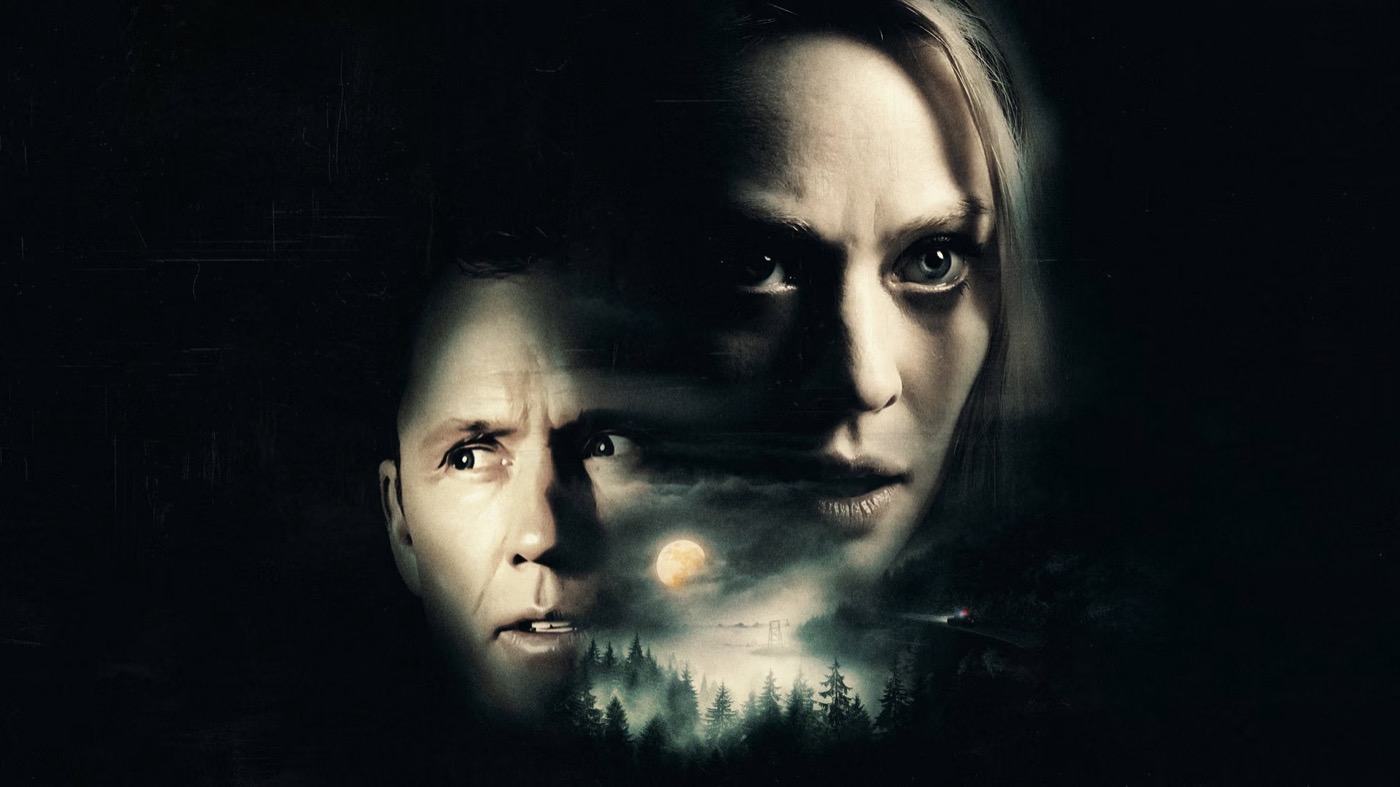

A daughter unravels her father's dark past after his body, missing for 36 years, is found at a horrific crime scene.
What do you do when the dead body of the man who left your family turns up at the scene of a gruesome double murder? That’s the question facing Dr Megan Garland (Deborah Ann Woll), a forensic anthropologist who works at a body farm, training federal investigators in the art of decomposition. But Jordan Downey’s Shudder film doesn’t begin like a conventional horror film, which is precisely why it’s so effective. For the most part.
In the opening scene, Megan sits alone in a diner. She studies photographs of dead bodies as she calmly eats, recording her assessments on a tape recorder. The real mystery begins when the bodies of a six-year-old girl and her mother are found at home, half-eaten and ripped to shreds. A third body, naked and preserved, is discovered on the train tracks opposite the crime scene.
Megan is called in to assist with the investigation after police officer Ian (Will Hochman) tells her that the third body is her biological father, Peter Stump (David Myres Gregory). Peter has been missing for more than 30 years, so Megan has mixed feelings about getting involved. But her work as a forensic anthropologist, and her need to find closure through death, won’t let sleeping dogs lie.
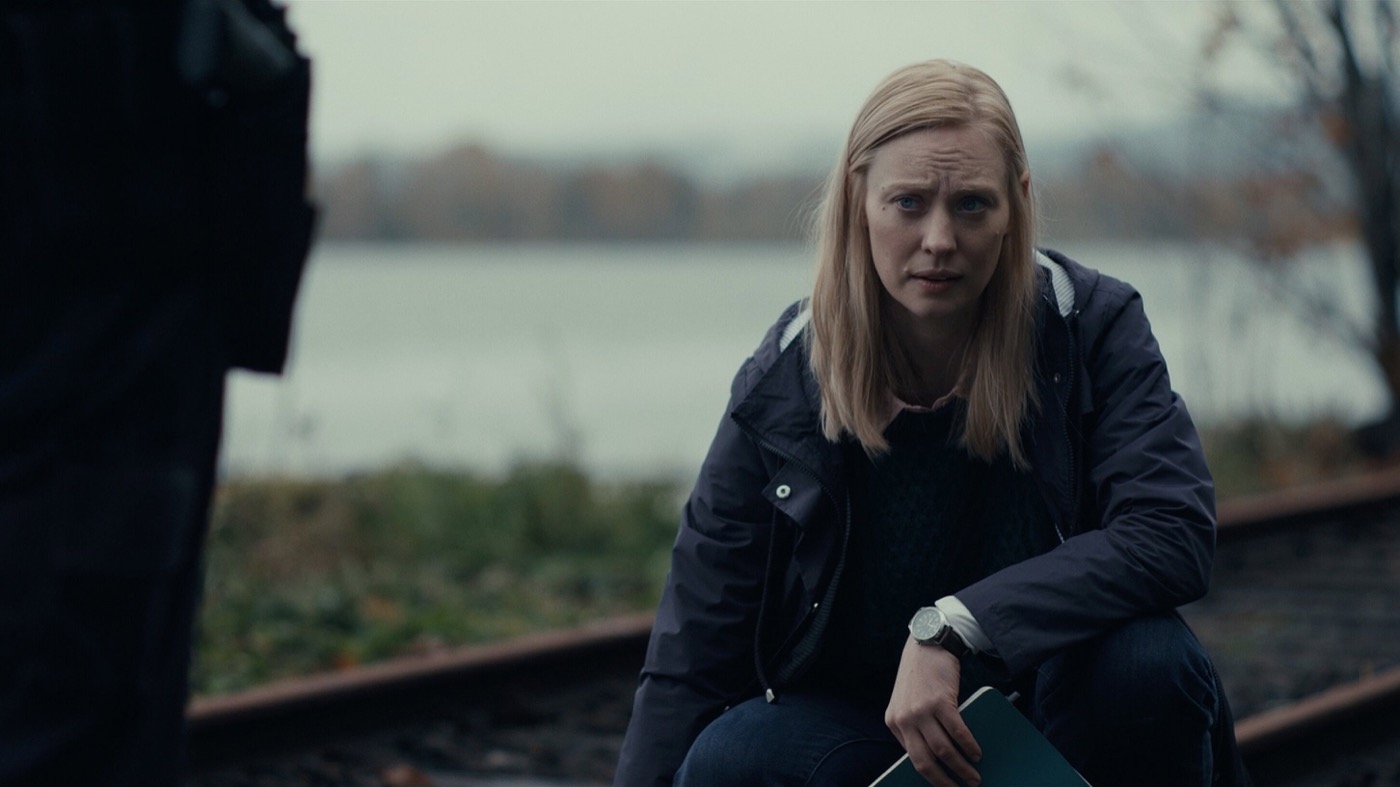
What does her father’s body have to do with such a horrific crime? That’s only half the mystery. The intrigue is enough to keep us watching until the end, as the film uses the structure of a police procedural rather than following the conventions of a typical horror film. We’ve seen this blend of genres before, and The Cycle feels as if it inhabits the same world as The Autopsy of Jane Doe (2016) and Antlers (2021). It also uses cinematic techniques that create an atmosphere at once disgusting and intriguing.
Many scenes are quiet, with high-angle and overhead shots lingering on empty roads, foggy shorelines and the seaside town. Downey makes Astoria, Oregon, look and feel like a place that’s seen better days. Much of the film is shot in dull, cold colours, making the town seem lifeless. It’s as if death has visited the locals one too many times in Lester Bay.
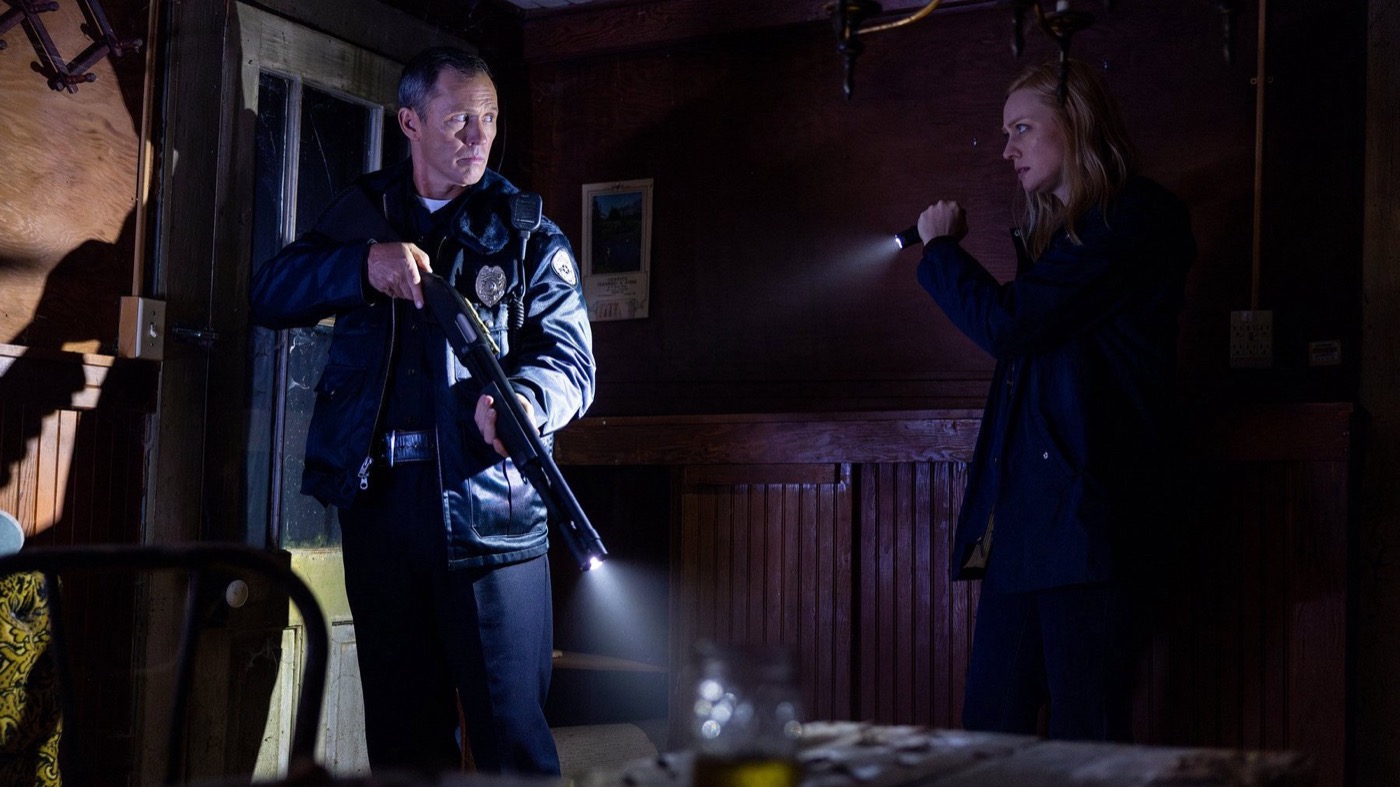
In one scene, Megan’s mother, Joni (Gretchen Corbett), is interviewed by Police Chief Marks (Jeffrey Donovan). Cinematographer Kevin Stewart, who also co-wrote the screenplay, has a good eye for atmosphere. As Joni recalls her relationship with Megan’s father, the camera slowly moves closer to her face, but holds back just enough. It’s a subtle touch that draws us into the family’s uncomfortable past.
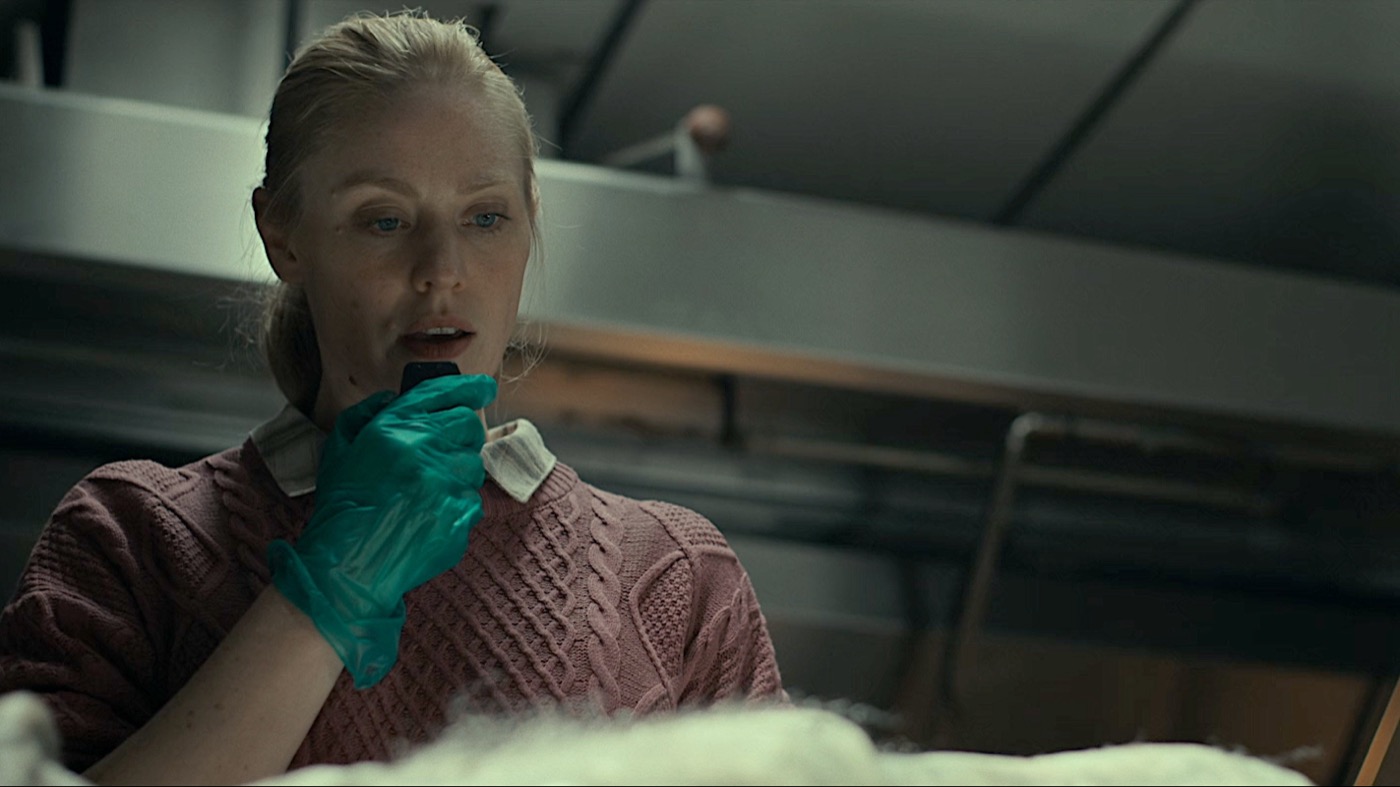
Deborah Ann Woll gives us every reason to care about Dr Megan Garland. Having played Jessica, a teenage vampire with heightened emotions, in True Blood (2008-2014), Woll clearly knows a thing or two about portraying characters with emotional baggage. In many of the scenes that matter, she lets those piercing blue eyes do much of the talking. Megan’s sadness is plain to see. Unlike Police Chief Marks, who never shows a flicker of emotion, even when he loses his son to the supernatural creature, Megan is visibly affected. Her obsession with her work often overrides the psychological trauma left by her absent father, and Woll wisely avoids turning this into melodrama. Unfortunately, the other characters don’t have the same emotional depth.
As the investigation progresses, things get stranger. Peter Stump’s body should be safely tucked away in the morgue, but it turns up at a warehouse where another gruesome murder has taken place. Megan and the forensic team are left scratching their heads. At one point, someone suggests witchcraft as a possible explanation.
The film moves at a decent pace, though some scenes in the first half contain inconsistencies that won’t go unnoticed. The brisk pacing works in most places, but some moments feel underdeveloped or cut short.
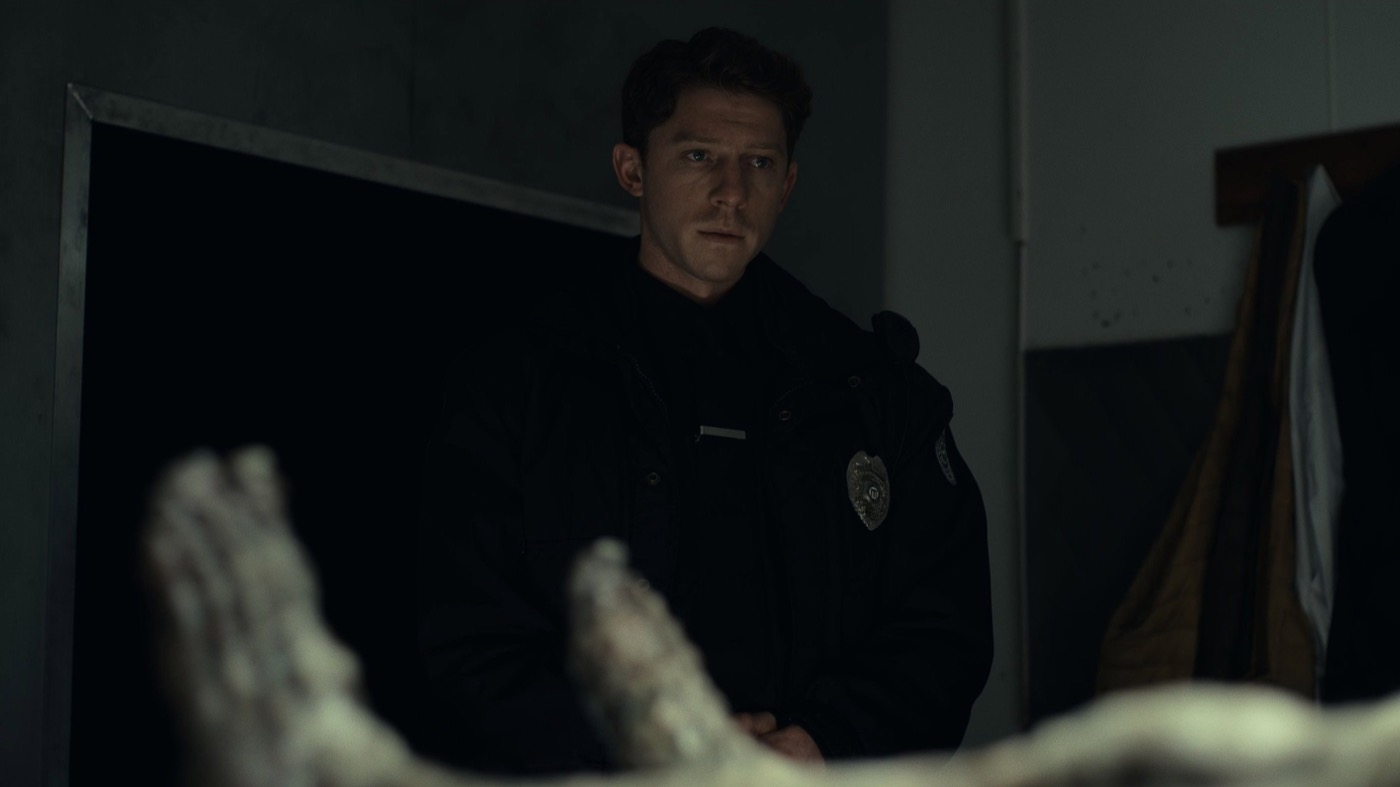
Some characters who initially seem important get only brief bursts of screen time. Marks’s son Ian, who informs Megan of her father’s death, is a notable example. His role ends too soon, making him easy to forget despite his earlier scenes. In the first half, he and Megan have lunch and bond over stories about their fathers, reinforcing the theme of generational trauma. There’s a suggestion of a romance between them, even if it amounts to a quick hook-up, but before anything comes of it, Megan is back in her motel room calling her mother. Maybe they’ll get together later, we think. But Ian is killed, and his place on the investigative team is later taken by Lenny (Jack Doolan), another police officer.
The only other chemistry between the characters comes from the friction between Megan and Dr Ratterman (Jeb Barrier), the county coroner, whose medical opinion often clashes with that of his younger female colleague.
For a moment, Megan, Marks, Lenny and Ratterman seem to be forming a Scooby gang to hunt down the werewolf, much like the teams in Supernatural (2005–2020) or Stephen King’s The Outsider (2020). Had The Cycle been a series, the group might have had more time to develop. Something is still missing. Luckily, the film’s second half, when the werewolf is shown more clearly, is enough to make us forget some of the earlier inconsistencies.
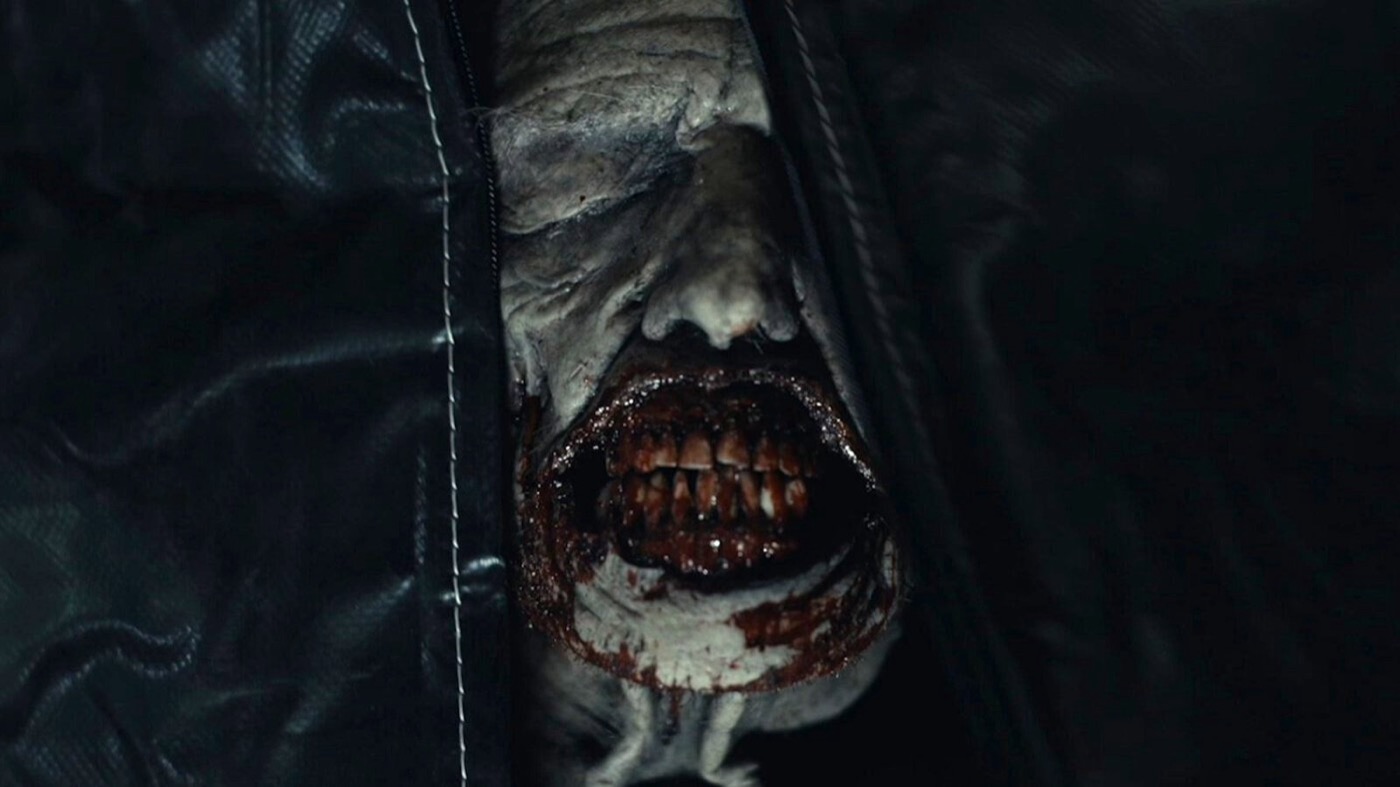
The make-up department deserves praise from horror purists. When the werewolf is revealed, it’s grotesque, and we’re unlikely to take our eyes off the screen. At a time when artificial intelligence is running rampant online—and increasingly infecting films and television series, to the dismay of eye-rolling viewers—it might have been easier and cheaper to create a digital creature that moved unrealistically across the screen. Instead, the team opted for practical effects, and we’re all better off for it.
We’ve seen practical effects like these before, in Howl (2015) and the Underworld franchise (2003–2017), but this work may be closer to the tradition of artistic excellence in horror. Think of Rick Baker’s work in An American Werewolf in London (1981). Baker relied on animatronics rather than CGI to perfect the transformation scenes, which took months to shoot. Director John Landis captured a roughly seven-second shot of David Naughton’s face transforming into a werewolf. You could feel the emotion, pain and torture.
In The Cycle, SFX supervisors Patrick Magee and Eric Wilkinson, Maegan Rebecca and the rest of the team revive this tradition with their own visceral transformation. It may not be new, but it’s creative and effective.
Jordan Downey and Kevin Stewart’s script feels true to werewolf mythology, drawing more from medieval folklore than ancient tales. The idea of an inner wolf lies at the heart of the story. The wolf inside us all is not just a physical presence; it’s also the film’s central theme. Through Megan’s investigation, we come to understand the emotional architecture of monstrosity: resisting one’s capacity for evil can come at the cost of destroying the people one loves. In this respect, the story is thematically mature, putting it alongside films such as The Cursed (2021) and Wolf Man (2025), while still distinguishing itself.
The Cycle is more interested in the way trauma is inherited than in simply asking what we fear most. Despite its flaws of pacing and characterisation, it has a memorable heroine and villain, and its premise drives both the mystery and the character development. What does Megan do when her father’s body lies at the centre of a gruesome murder scene? The longer we watch, the clearer it becomes that the past is never quite as dead as we’d like to believe.
USA | 2026 | 111 MINUTES | 2.39:1 | COLOUR | ENGLISH

director: Jordan Downey.
writers: Jordan Downey & Kevin Stewart.
starring: Deborah Ann Woll, Jeffrey Donovan, Gretchen Corbett, Phillip Andre Botello & Will Hochman.