MAKING MARIE ANTOINETTE (2026)
Follows filmmaker Eleanor Coppola's behind-the-scenes documentation of her daughter Sofia Coppola directing the 2006 film Marie Antoinette, capturing the craftsmanship and challenges of being a young female director.


Follows filmmaker Eleanor Coppola's behind-the-scenes documentation of her daughter Sofia Coppola directing the 2006 film Marie Antoinette, capturing the craftsmanship and challenges of being a young female director.
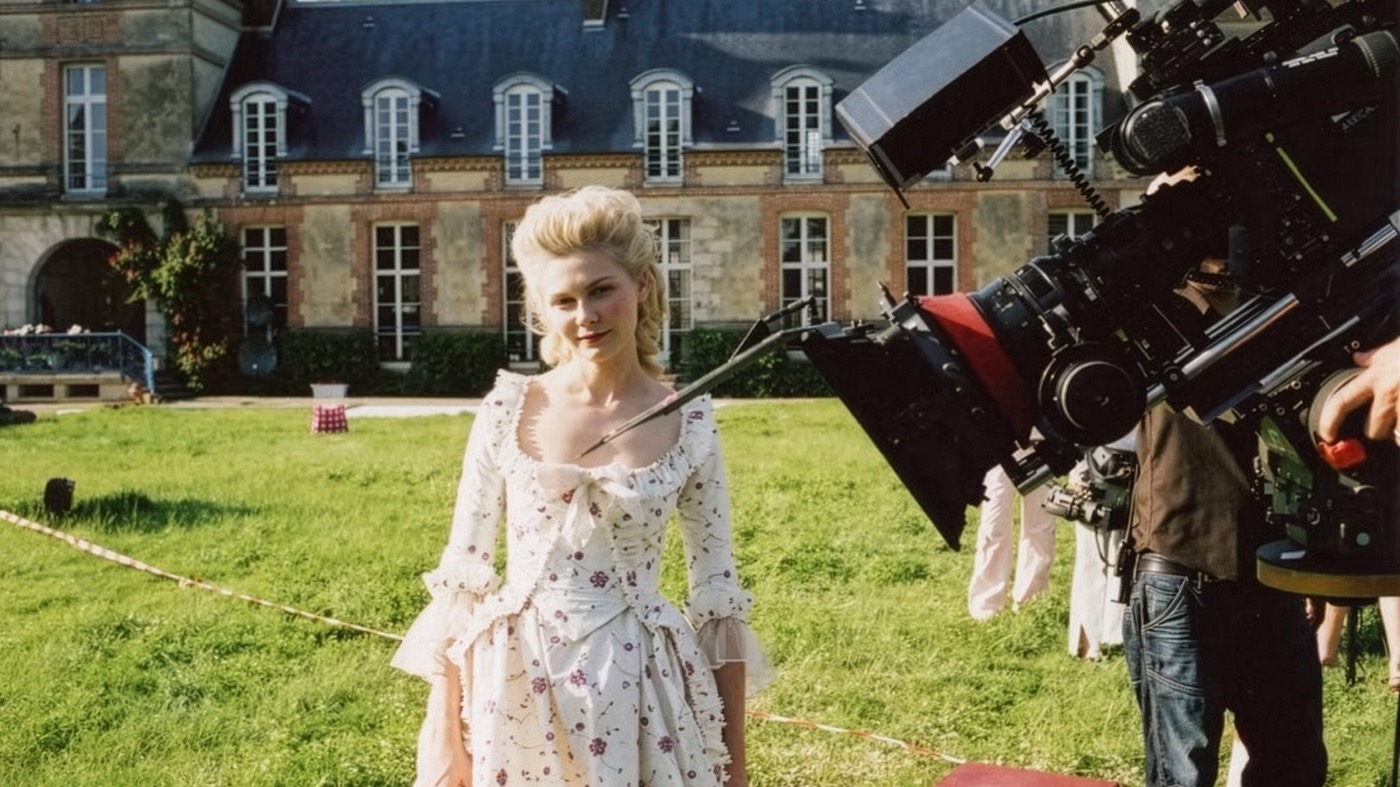
Who among us didn’t swoon at the behind-the-scenes photos from Marie Antoinette (2006), back when the internet was still relatively innocent in its memes? The sight of Marie (Kirsten Dunst) accessorising a Rococo-era dress with pink Converse trainers, while Louis XVI (Jason Schwartzman) sports Ray-Ban Aviators beneath a powdered wig, perfectly captured the brat-punk aesthetic Sofia Coppola was aiming for in her trailblazing biopic: a lively yet intimate revisionist history that bridges centuries of youthful experience and privileged excess. It also hinted at the nitty-gritty magic of filmmaking: a process caught between dream and reality, creation and management, escape and self-consciousness, storytelling and make-believe.
No one understood this subject better than the woman behind the images: Sofia’s mother, Eleanor Coppola. She had already documented the god complexes, rainouts, inconvenient heart attacks and revolutions of her husband’s Vietnam War odyssey, Apocalypse Now (1979), in Hearts of Darkness: A Filmmaker’s Apocalypse (1991) — a masterpiece in its own right. The euphoric grind of film productions was not only familiar to her; it was something she had trained herself to observe as an artist, seizing on narrative arcs and emotional details in raw, fleeting moments, much like a photojournalist.
When Sofia took on the opportunity and challenges of her passion project — a $40M minimalist epic about the complicated, half-misunderstood queen of French history — Eleanor picked up a smaller, slightly less intrusive camera and embarked on a passion project of her own: documenting her daughter at work. The result was initially a 26-minute featurette, enough to titillate us OG Marieheads but little more than the usual snippets from a film shoot. Fast-forward to the 20th anniversary of Marie Antoinette, and we finally have the film Eleanor intended to make.
Making Marie Antoinette is meticulously assembled from nearly 80 hours of Eleanor’s footage, giving us a vivid impression of a set that echoes Sofia’s creative style. We’re immediately drawn in by the joviality, light drama and perennial problem-solving behind the scenes. Moments such as Marianne Faithfull discussing the wardrobe department’s “tit-pushing” and Jason Schwartzman doubting his “woo-hoo-oooh” rejection of Marie in bed are simply golden.
Excerpts from Eleanor’s production journal, narrated by Diane Lane, take the film somewhere more personal: towards a moving mother-daughter portrait of two directors at the height of their respective crafts, and a pivotal chapter in their relationship. A dialogue between Eleanor and Sofia runs throughout, conveyed through images, thoughts and conversations, as well as through an indirect tenderness and melancholy. This is a film shaped by a mother watching her daughter come into her own, then reshaped by a daughter saying goodbye to her mother in loving tribute. Eleanor’s death in 2024, before she could see the film completed, adds a bittersweetness to every frame.
We open on the final day of the Marie Antoinette shoot. An exhausted Kirsten Dunst, sporting Antoinette’s signature pouf and a sinister smear of black lipstick, slumps in a bathtub, fighting sleep and the suffocating effects of hairspray. In a fantasy riff on the queen’s most infamous bullshit quote — an apocryphal line that has pinballed through history, attributed at various times to Maria Theresa of Spain, Jean-Jacques Rousseau and one or both of Louis XVI’s royal aunts before sticking to Antoinette long after her death — Dunst proclaims, “Let them eat cake” directly into the camera, as if addressing France’s starving citizens.
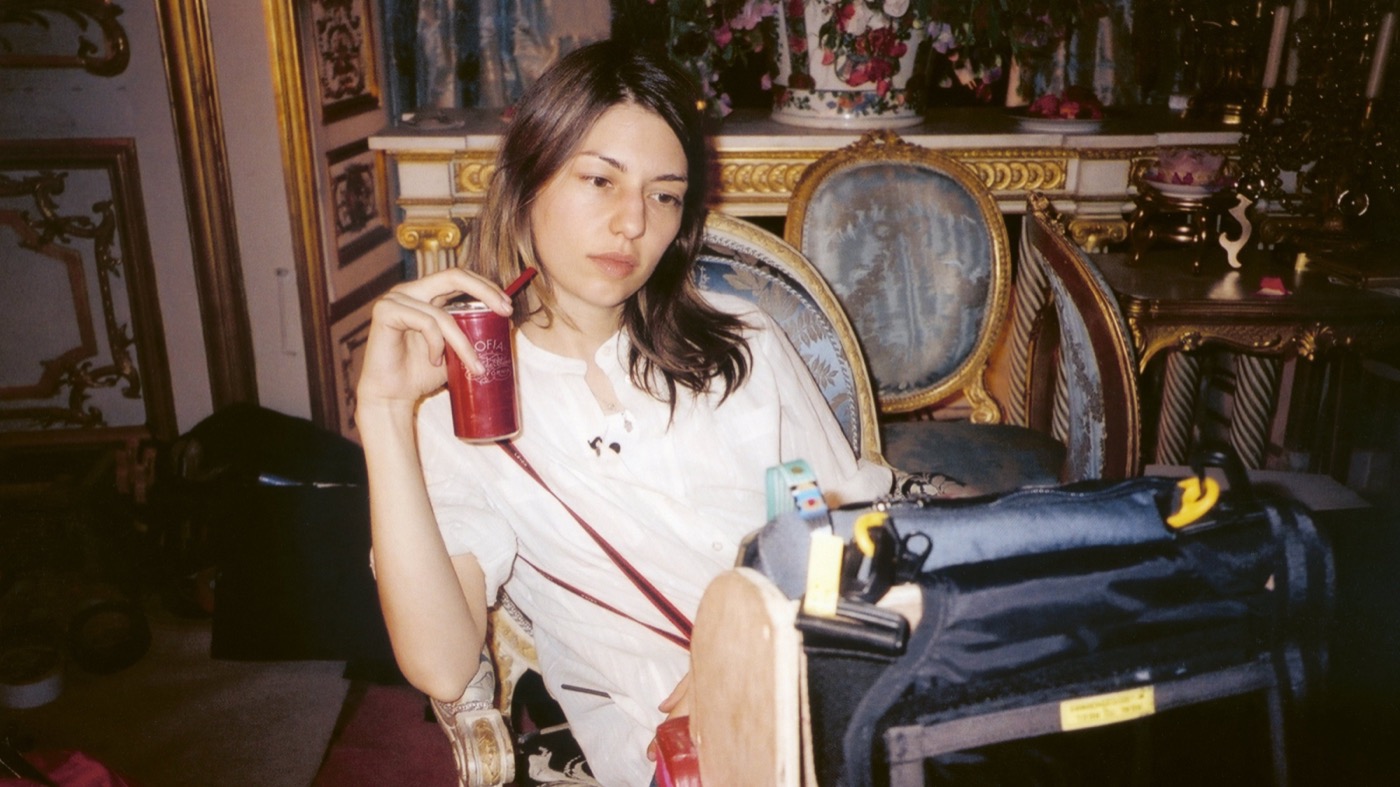
From the corner of the tub, Sofia directs her to make it vapid, then flippant, then a direct order. The director’s warm energy, relaxed stubbornness, microscopic attention to detail and skeletal-ribcage hoodie tell us everything we need to know about a Sofia Coppola shoot. Unlike her father, Francis, with his operatic approach to filmmaking, she never seems to buckle under the weight of her own film. Her laid-back, mildly stoned Californian aura prevails.
There are still plenty of personal and logistical hurdles. Eleanor follows her daughter from the fresh optimism of the shoot’s first day — marked by the Coppola tradition of “puwaba”, in which cast and crew join hands in a circle and wish one another good vibes — through the brilliant chaos of the remaining 56 days.
Communications break down between call sheets and walkie-talkies. Costume-change delays pile up, eating into the production’s unprecedented and highly time-sensitive access to Versailles. A painstakingly coordinated shot involving a horse stunt and several extras lying in rain and mud is soon engulfed in machine-made smoke. “Fucking Spinal Tap me,” Sofia laments.
A quiet battle develops between Sofia and cinematographer Lance Acord. She argues that Marie’s perspective should be paramount in the shot compositions, later acknowledging to her mother’s camera how common such disagreements are with male crew members. She confesses her fear of caving to sexist, conventional expectations and accidentally making a dry period piece in the style of Masterpiece Theatre. Men — from her father and producers to the workers under her leadership — are clueless and occasionally hostile to her maverick vision of young womanhood. Her focus on Marie’s more human, sympathetic qualities, and the film’s anarchic spirit — like a riot-grrrl spin on Lisztomania (1975) and Amadeus (1984) — seem unfathomable to them.
Eleanor worries that her daughter looks too “small and prepossessing” for the enormity of the project and for the task of defending its boldness. Their directing styles and personalities are strikingly similar: both are introverts, gazing at interior worlds from the outside and relying on nuance, ambiguity and impression rather than autocratic persuasion. Eleanor’s understanding of Sofia is underpinned by faith in her intelligence and sensitivity — the two qualities that sustain the shoot’s calm, good-natured confidence through its more frazzled, tiring days.
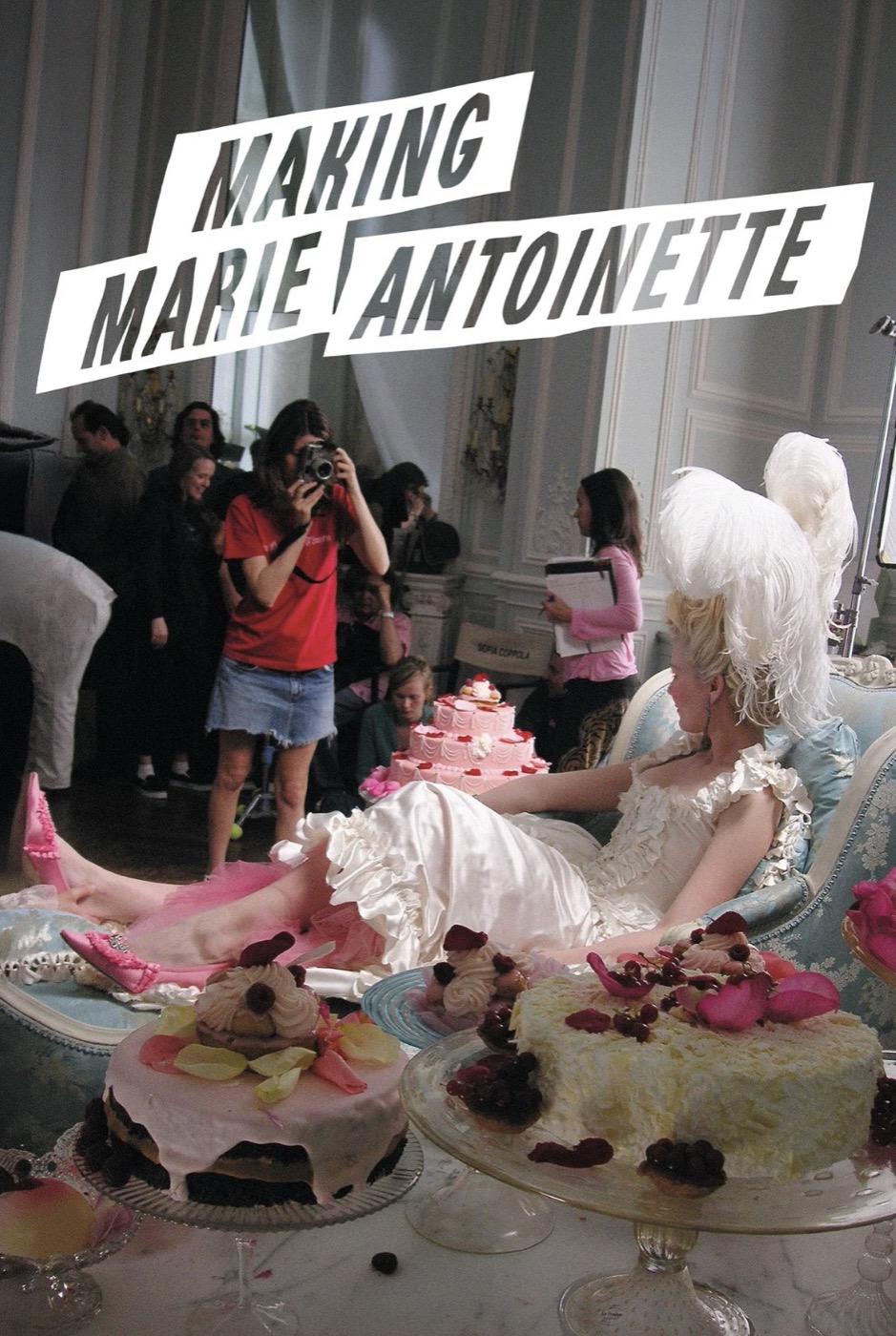
Meanwhile, Eleanor is busy making her own film. In her journal, she notes how embarrassed she feels on a film set, fully aware of how awkward her presence makes cast and crew members feel. Her goal is to become a chameleon, blending into the splendour of Marie’s sets and capturing moments without influencing the performances unfolding in front of her camera.
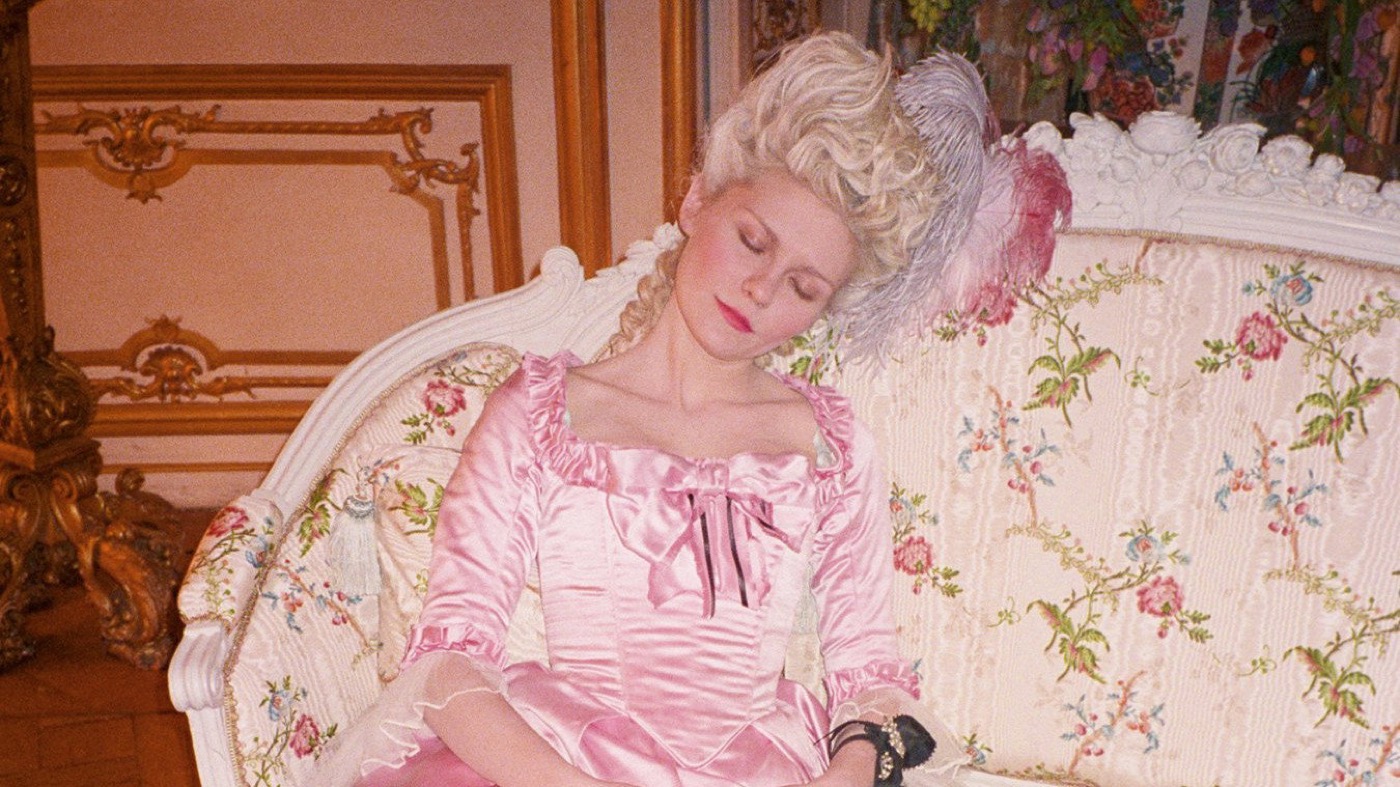
She succeeds about 70 per cent of the time, and even when she doesn’t, the material is wonderful. Dunst observes the parallels between Marie Antoinette’s experiences as an overwhelmed teenager in a world of high expectations, hyper-surveillance and unrestrained decadence, and her own experience as a child actor turned Hollywood celebrity before leaving high school. Schwartzman arrives on set with peach fuzz and natural adorability, performing a 1930s-style comedy bit with a dog as his straight man while being fitted for his costume.
During a delay, Asia Argento reads Schwartzman’s and Rip Torn’s palms, then devilishly (and phallically) tickles an extra back to attention with a light strip, while dressed head to toe in Madame du Barry’s finery. The French alt-rock band Phoenix jams in wigs and stockings while waiting for the cameras to roll on their cameo. Marianne Faithfull tells Sofia how to be accepted into her School of Bad Living, all but winking at Eleanor’s camera as she says her daughter is “a little bit naughty” for the film she’s making.
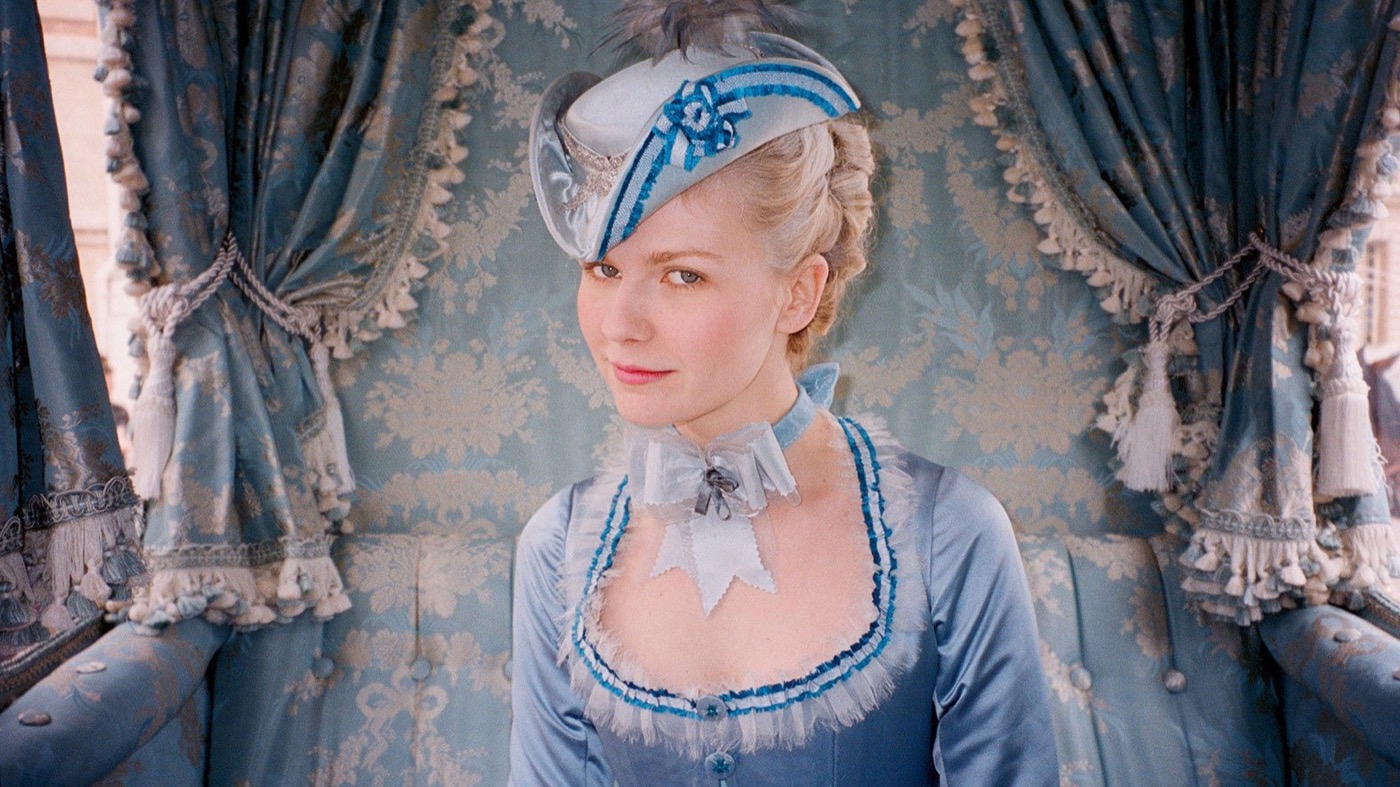
Eleanor visits different crew stations to study the practical side of the film’s wonder. We see costume designer Milena Canonero at work on the stunning array of period clothes, made all the more impressive by learning how fragile and restrictive they were. Real flowers, meats and desserts are delicately arranged, then subtly adjusted by Sofia for symmetry. Acord keeps an impatient eye on the lighting, instructing his assistants on adjustments to capture colours as rich as those in Barry Lyndon (1975).
It’s a lovely blend of François Truffaut’s Day for Night (1973) and Vivian Kubrick’s The Making of The Shining (1980), conveying the beautiful circus of filmmaking and all its implications of makeshift family.
As a joint Coppola venture, the film gives an even greater role to family by blood. Jason and Sofia share an easy, sometimes rascally camaraderie that immediately signals their relationship as cousins. Francis crashes the party, saying he’s happy not to be in charge: a proud papa content to explain the history of the boom-mic pole to anyone who’ll listen. Roman joins the team as second-unit director, listening to his sister’s instructions better than any other man we see on screen. Gia gets made up in a flaming-red pouf for her cameo at the masked Siouxsie and the Banshees ball, then asks her mum what she thinks of the look.
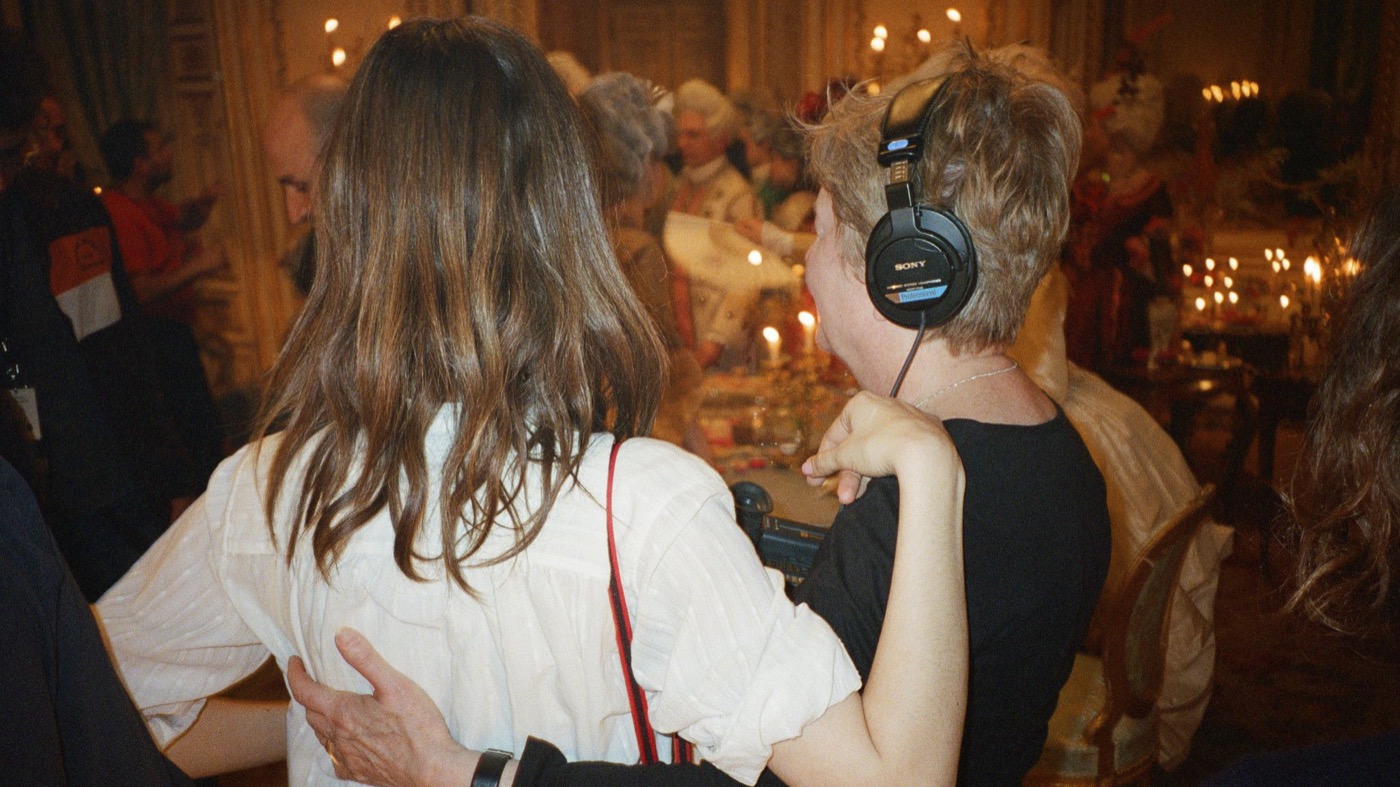
As always, the clan’s fun and closeness make them endearing as hell to this typically nepo-cynical reviewer. They’re probably the only family I’d watch a reality TV show about, outside of the Osbournes.
Eleanor’s mama-bear instincts kick in when Sofia pushes herself too far while directing with bronchitis. On set, Eleanor remains as passively observant of her daughter as she is of everyone else. In her journal, though, more candid emotions and thoughts pour out as she reflects on her relationship with Sofia, with the mixed sense of pride and loss almost every parent experiences. As Sofia grows into the independent woman Eleanor raised her to be, her mother delights in her success while wondering what might have been if she’d had the same opportunities.
Eleanor notes that, by Sofia’s age, she’d already had three children. Constrained by Francis’s career and the responsibilities of motherhood, she became the family’s documentarian, using the camera as both a creative outlet and a personal record — and mastering the art form along the way. Watching Sofia direct Marie Antoinette inspires Eleanor to think about making her own feature film, which she finally does ten years later with Paris Can Wait (2016): her narrative debut, made at the record-breaking age of 80.
Eleanor’s perception of cinema’s strange relationship with time — exhausting hours, long periods of anticipation and sudden bursts of action condensed into 40 seconds, edited to elegance and frozen in place for generations to experience — also sums up her own path to narrative filmmaking.
All the same, this self-proclaimed “observer at heart” deserves more recognition and praise for her talent in capturing fellow artists in their most authentic moments of joy, insecurity, playfulness and ingenuity. Making Marie Antoinette is as much an achievement for Eleanor Coppola as it is a feast for Sofia’s fans.
Bonus points for editor Aaron Matthews’s excellent final cut; for Lane’s unobtrusive yet eloquent delivery of Eleanor’s writing; for the inclusion of several tracks from Marie Antoinette’s all-time-banger new-wave and post-punk soundtrack (because, come on, how could you not?); for Sofia telling Asia to go again after her first elbowing of Marie as du Barry was “too mosh pit”; for Schwartzman positively slaying it on an 18th-century harpsichord while crew members discuss a shot; and for learning that Eleanor was the one who put Antonia Fraser’s Marie Antoinette: The Journey into Sofia’s hands, encouraging her daughter to embark on a journey of her own.
The montage of cast members falling asleep is worth the price of admission.
US • ITALY | 2026 | 87 MINUTES | 1.37:1 | COLOUR | ENGLISH • FRENCH • ITALIAN

director: Eleanor Coppola.
starring: Sofia Coppola, Eleanor Coppola, Kirsten Dunst, Jason Schwartzman, Ross Katz, Lance Acord, Roman Coppola, Francis Ford Coppola, Milena Canonero, Marianne Faithfull & Asia Argento.