THE SHOUT (1978)
A traveller forces himself upon a musician and his wife in a lonely part of Devon, and uses the aboriginal magic he has learned to displace his host.


A traveller forces himself upon a musician and his wife in a lonely part of Devon, and uses the aboriginal magic he has learned to displace his host.
The coastlines of North Devon, rugged and prone to violent storms and year-round rainfall, appear like fossilised giants. The maws of caves swallow up the briny Atlantic, and jagged rocks, like rotten teeth, jut out at low tide. When the battering seas are calm, you might spot the distant movements of sharks on the horizon — makos or threshers, careful to keep their distance from the unforgiving shores.
Further along are the Braunton Burrows, Britain’s largest sand dunes. Ripping winds howl through the marram grass, lending the West Country a strange air of the exotic. It’s here that The Shout offers glimpses of its deepest secrets. Yet for all the sand the wind carries away, twice its weight rushes in to take its place, burying again what has been uncovered.
Polish director and co-writer Jerzy Skolimowski adapted The Shout from the 1929 short story of the same name by English poet and novelist Robert Graves. Skolimowski’s perspective on Britain — and, indeed, the source material — makes for a horror film in which dread is mined from a queasy homesickness in a strange land. Co-writer Michael Austin was from Guernsey, an island separated from the mainland by 200 miles of ocean. Perhaps he, too, sensed the dark land lurking beyond.
On the pastoral grounds of a psychiatric hospital, a cricket match is coming together. Peacocks call out; inmates shuffle to and fro. A church steeple protrudes from the treetops, watching all in quiet judgement. The tranquillity is eerie and insistent, as if something very bad has been painted over with scenes from England’s bucolic past. It recalls the sinister, distinctly British placation masterminded by the villains of the TV series The Prisoner (1967-68).
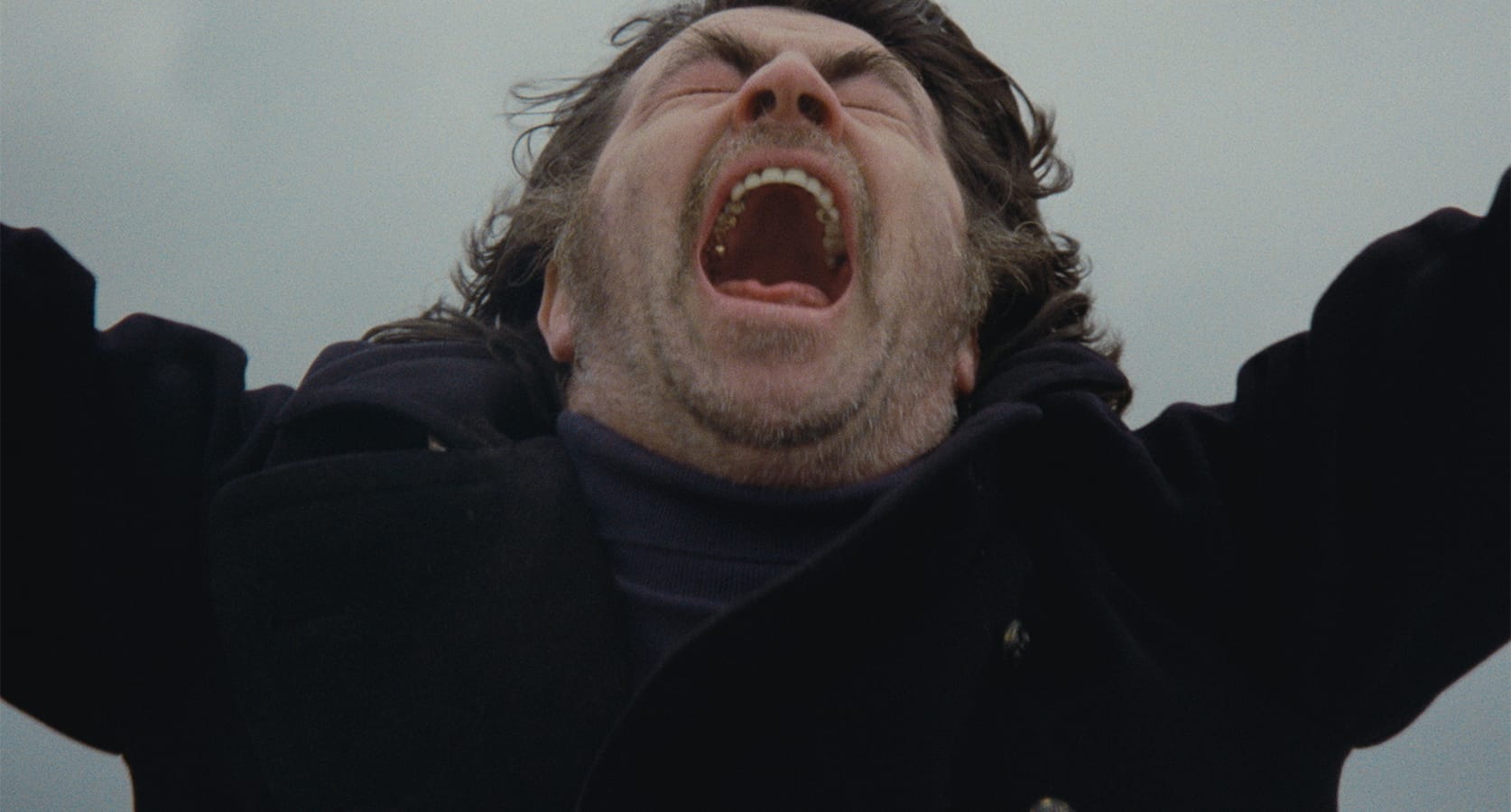
Tearing down country lanes on a motorcycle, with sand dunes and fields whizzing by, is Crossley (Alan Bates). Like T.E Lawrence in the opening of Lawrence of Arabia (1962), no speed short of one that blurs his surroundings and sends the wind rushing around his ears will do. And, like Lawrence, we wonder where the hell Crossley has come from.
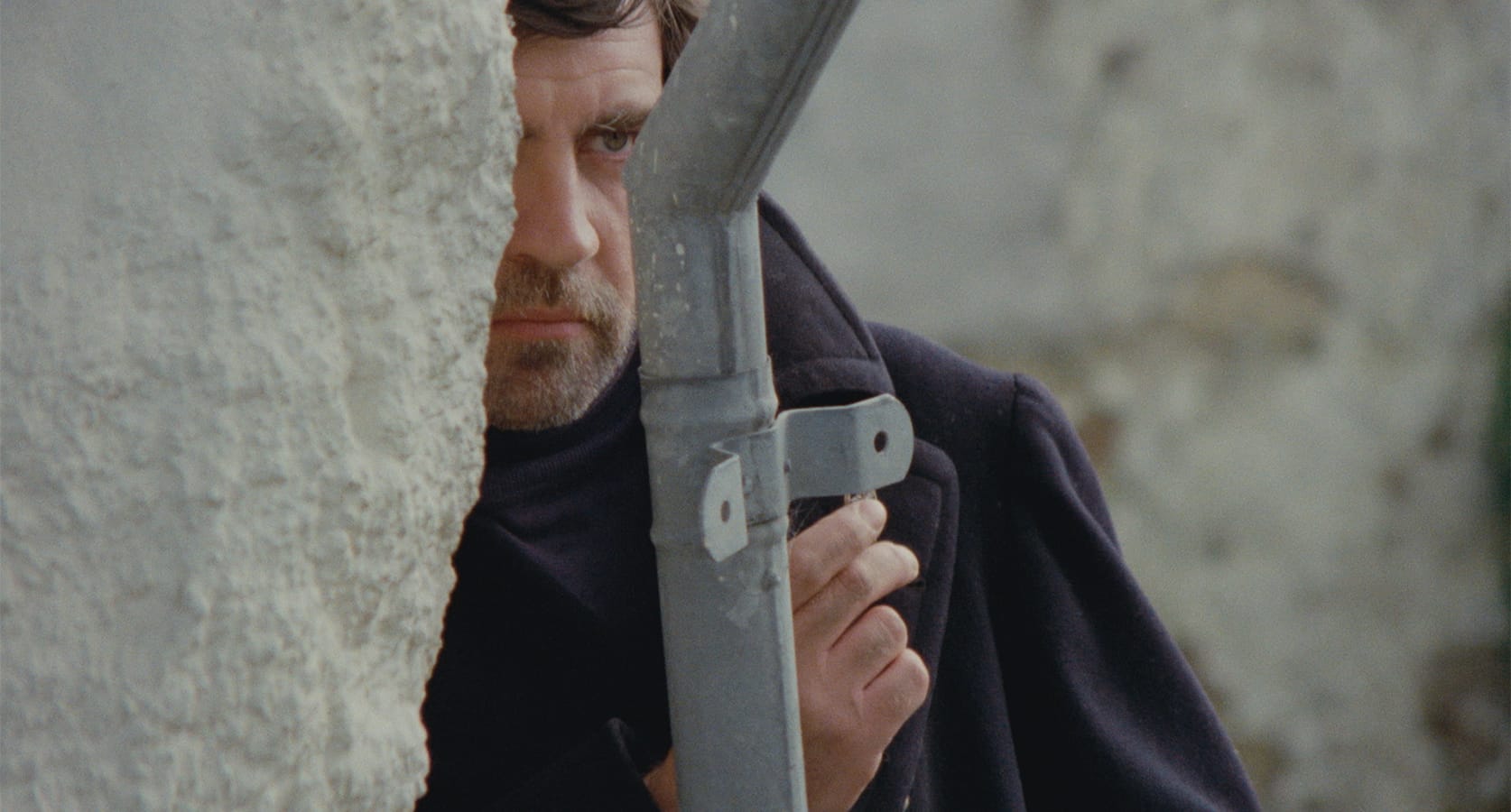
Dressed all in black, with a mop of wild hair and thick stubble lending texture to his haunted face, Crossley seems to carry his own atmosphere, his own weather — more like one of the elements than an ordinary man. Does he live at the facility? Does he come and go when he pleases? The church bells ring in the distance, but to what or whom does Crossley answer?
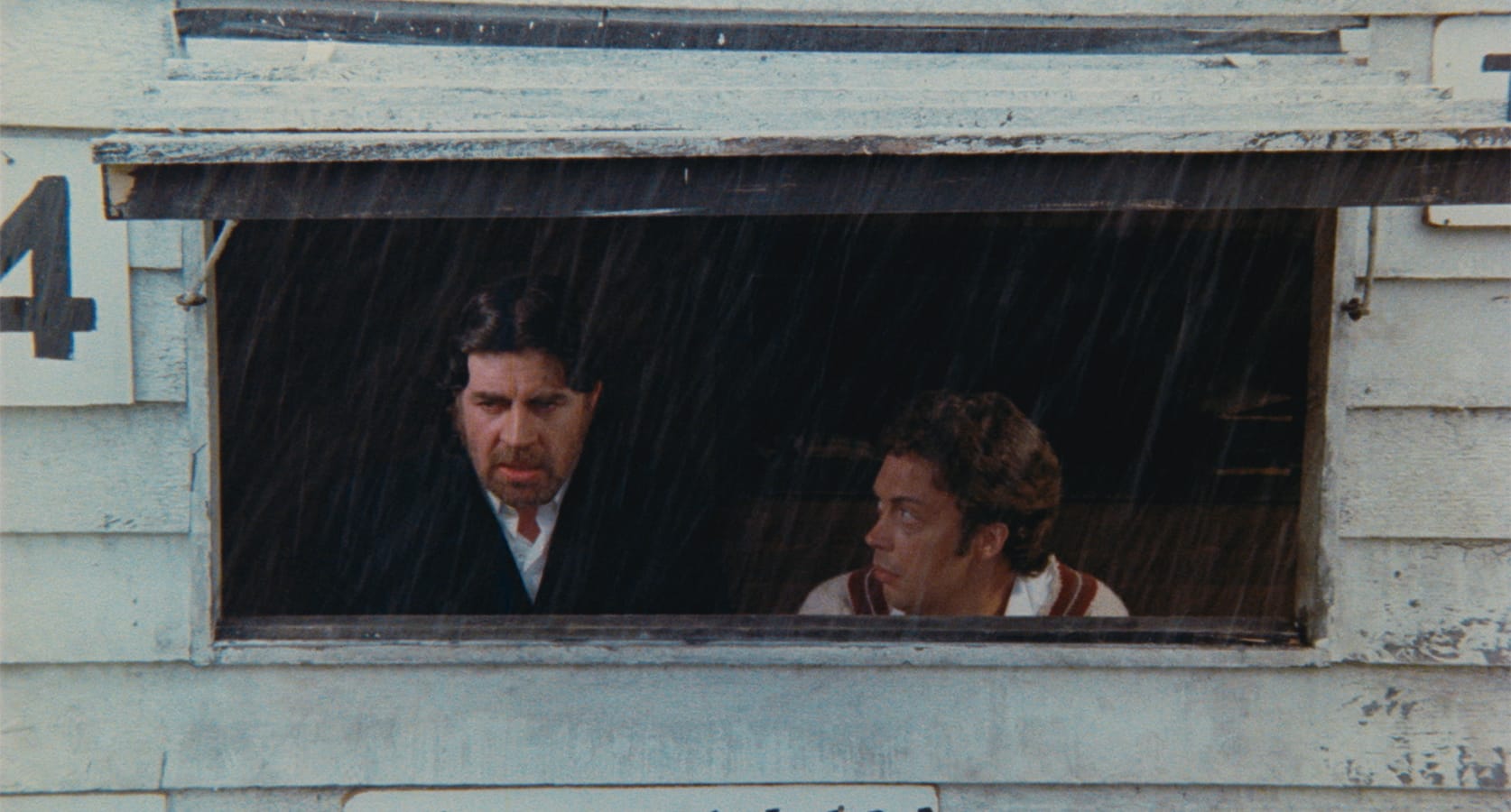
A young employee at the facility, Robert Graves (Tim Curry), is tasked with keeping score at the cricket match. Crossley will assist. “He’s not entirely normal,” a senior member of staff warns Graves. “You see that tree?” he says, pointing to an English oak. “That’s normal.” Crossley is the most well-read and intelligent man in the place, but he believes that “his soul has been shattered into four pieces”.
Taking his place in the scorekeeper’s shed, which has been wheeled onto the grounds and adds to the strange sense of construction and artifice, Graves fidgets and looks anywhere but at his companion. Crossley broods in his seat, glowering with something like serenity.
This is a man who knows who he is, whether we do or not. His tightly held secrets hint at the erotic pleasure he takes in knowing and understanding more than anyone else in this godforsaken place. He has the face of someone who’s been let in on the darkest mysteries of the universe, and so regards everything as a game.
“Every word of what I’m about to tell you is true,” Crossley growls. “It’s always the same story, but I change the sequence of events. I vary the climax a little because I like to keep it alive, you see.” Who is this stranger: a madman or an artist? Perhaps both. The story he spins is told in flashback and concerns an artist — a musician — named Anthony (John Hurt), who lives in a nearby village.
The cobbled streets and shambling rows of cottages offer Anthony little excitement. Nor does his placid, unfulfilling marriage to Rachel (Susannah York), who works as a nurse at the facility. The howl of ocean winds dies away long before it reaches the village, and their house is equally quiet. “Anthony and I haven’t managed to have children,” Rachel confesses dejectedly in one scene.
Like Edward Woodward’s stiff-upper-lip detective in Robin Hardy’s The Wicker Man (1973), these are provincial lives stymied by centuries of quintessentially British repression. What isn’t said speaks as loudly as what is. The villagers’ eyes peep out of windows, on the lookout for things that don’t belong. One young woman watches Anthony, and he watches her in return: a flirtation with something more sinister about it, as if Anthony is being eyed for a fate that no longer belongs to him.
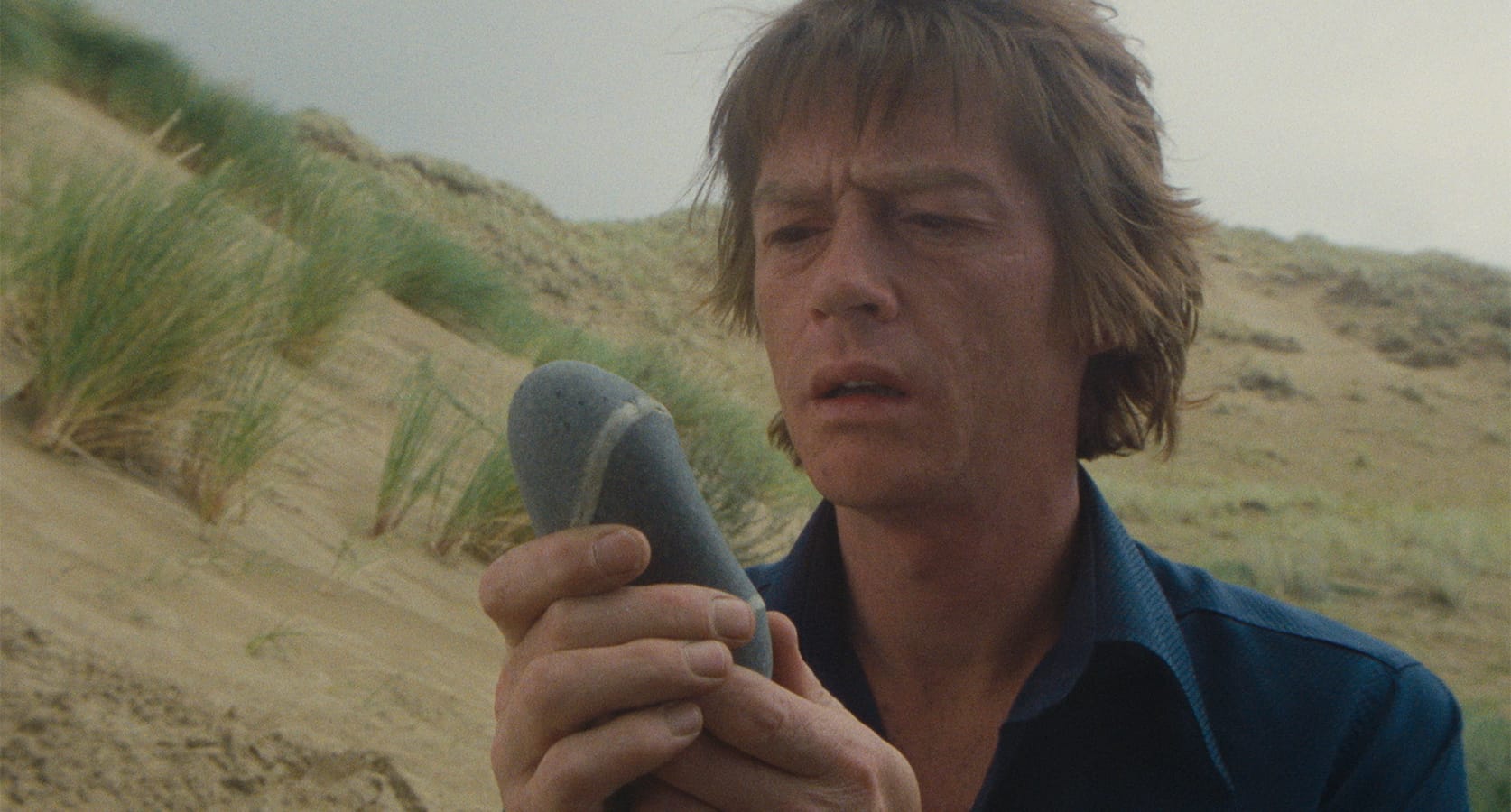
By day, Anthony plays dull hymns on the organ in the village church. By night, in his recording studio, he manufactures noise. He points microphones at trays of marbles and wasps trapped under glass. He lights cigarettes and howls, the waves on his oscilloscope bringing him as close as possible to the sound and fury down the hill. The sounds are amplified and engulfing, distorted and angry, as if the insect’s buzz is inside your ears.
It’s a sort of musique concrète, but whatever patchwork Anthony is building from these sounds, we never hear it. Like the film’s fragmented style, it’s offered only in snippets: strange glimpses of a man and his experiments. On the wall of his studio is a print of Francis Bacon’s “Study for a Portrait (Man Screaming)”, presumably there for inspiration.
Ugliness and pain are created and expressed here: a middle-aged version of a teenage garage band letting out its primordial frustration and eager to dirty up its immaculate surroundings. When Crossley arrives, he’s like a Francis Bacon painting come to life — or perhaps he’s like Francis Bacon himself.
Crossley is everything Anthony isn’t. He’s brooding and direct, imposing and masculine. If Anthony is the overgrown schoolboy, emotionally stunted and English to the core, Crossley is something more exotic and threatening to parochial life. After engineering a run-in with Anthony, Crossley invites himself to dinner at his home.
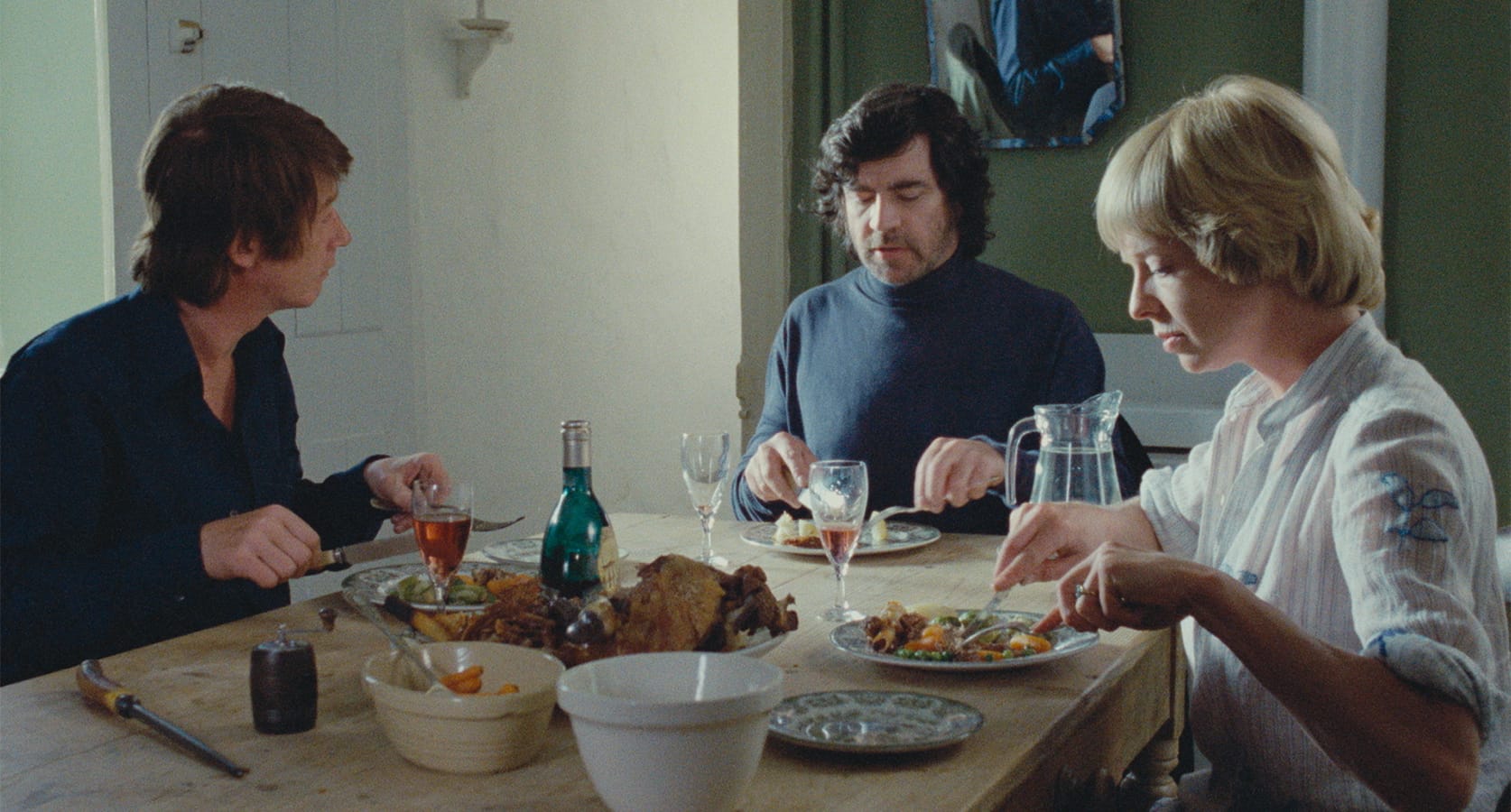
He picks at his food and gulps down a glass of water as if he’s stumbled out of a desert, his hollow eyes recalling those of a traumatised war veteran. He doesn’t make small talk and dispenses with niceties. He tells the couple about his experiences in the Australian outback, which he claims to have explored for 18 years. There, he says, he learned about witchcraft and magic.
He says there are human bones which, when pointed at someone, will curse and eventually kill them. He’s also learned a “terror shout” that, when unleashed, will destroy all life nearby. He claims to have fathered many children in the outback. “I knew I’d leave,” he says, explaining why he killed them all. Rachel and Anthony maintain their awkward politeness through his stories, tucking away their outlandishness alongside ghost stories and urban legends. Soon, it becomes clear that Crossley has no intention of leaving.
It’s here, with Crossley wedged into a domestic life where he’s a dark shadow on the wall, that The Shout is most potent. Like Rachel and Anthony, the viewer is seduced not only by Crossley but by Bates. He’s an alluring figure, still yet commanding. When he talks, you listen. “Has the human a soul? And if so, where does he keep it?” Crossley asks nobody in particular, a poet with an invisible audience.
Later, we hear a far less convincing speaker: a vicar giving a sermon while Anthony waits for his cue at the organ. “We’re like a rudderless ship, no direction. We are in a period of moral starvation,” he says to his dwindling flock. He becomes briefly flustered, then trails off with an inelegant “Uhhh”. Even he doesn’t seem to believe his own rhetoric.
Yet if the vicar is right — if these people are adrift, lost in meaningless patterns and serving no master — that might be exactly what Crossley is exploiting. To Crossley, Anthony is a sexless, childless neophyte, and the sounds he makes in his studio are stupid, undisciplined and meaningless. Rachel, meanwhile, is beautiful, unsatisfied and vivacious: a woman who was never given the child she desperately wanted.
We see Crossley striding confidently through the sand dunes, with Anthony stumbling after him and complaining, “I’ve got a stitch!” The wind inhabits Crossley’s being; although he’s unknowable, he’s here and now, as much a part of the elements and terrain as the cliffs and the surf. Like the blustering wind, he contains a controlled chaos: a merchant of death who has learned that creating and destroying are all there really is in life.
For Rachel, creation may mean children. For Anthony, it more likely means art. His experiments can’t harness or replicate the colossal roar of the waves or the echoes of human voices reverberating through cave systems. Anthony can’t carry life; he can’t create. The sounds he makes might sit on tape for 50 years, then end up in landfill. It’s the artist’s ultimate fear: that their work won’t last or be remembered.
The tension between Anthony and Crossley is charged with the fear of sexual inadequacy, but perhaps more pertinently, The Shout is about artistic inadequacy. What does a person do when their status as a big fish in a small pond is disrupted by a great white shark? Crossley’s worldly experiences — the blood spilled, the seeds sown — are barbaric, but they excite Anthony. Can an artist be great if they’ve only ever experienced the world through books and documentaries?
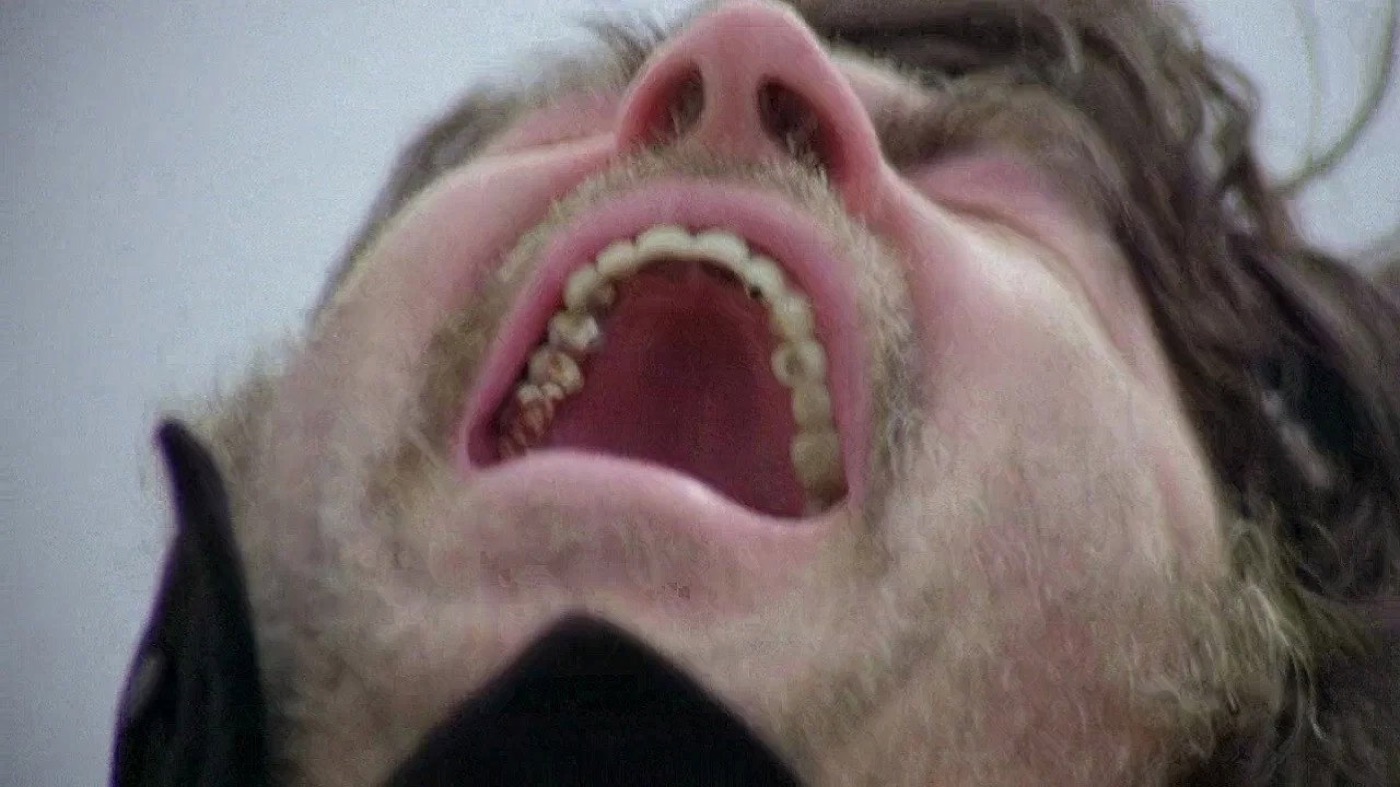
The Shout is described as a horror film, but it unsettles us on a deeper, molecular level. As in Nicolas Roeg’s Don’t Look Now (1973), Skolimowski is interested not in scares but in dread and the uncanny. His filmmaking is oblique, filled with overlapping dissolves, dreamlike fades to black and creeping zooms. The film has a casual surrealism that flows from its confounding story, rather than from any desire for cheap, easy strangeness.
The result is something truly singular and, if not terrifying, deeply uncomfortable in what it suggests about desire, human nature and our inherent drive towards self-destruction. “Our institutions” — religion, family, the arts —The Shout cries out, “won’t save us, and they may not even satisfy whatever basic needs exist in the darkest chambers of our souls.” Art and love might die away, tapes might decay and buildings might crumble, but nature’s eternal shout will reverberate for ever, containing all the pain and love we have failed to express.
UK | 1978 | 86 MINUTES | 1.85:1 | COLOUR | ENGLISH

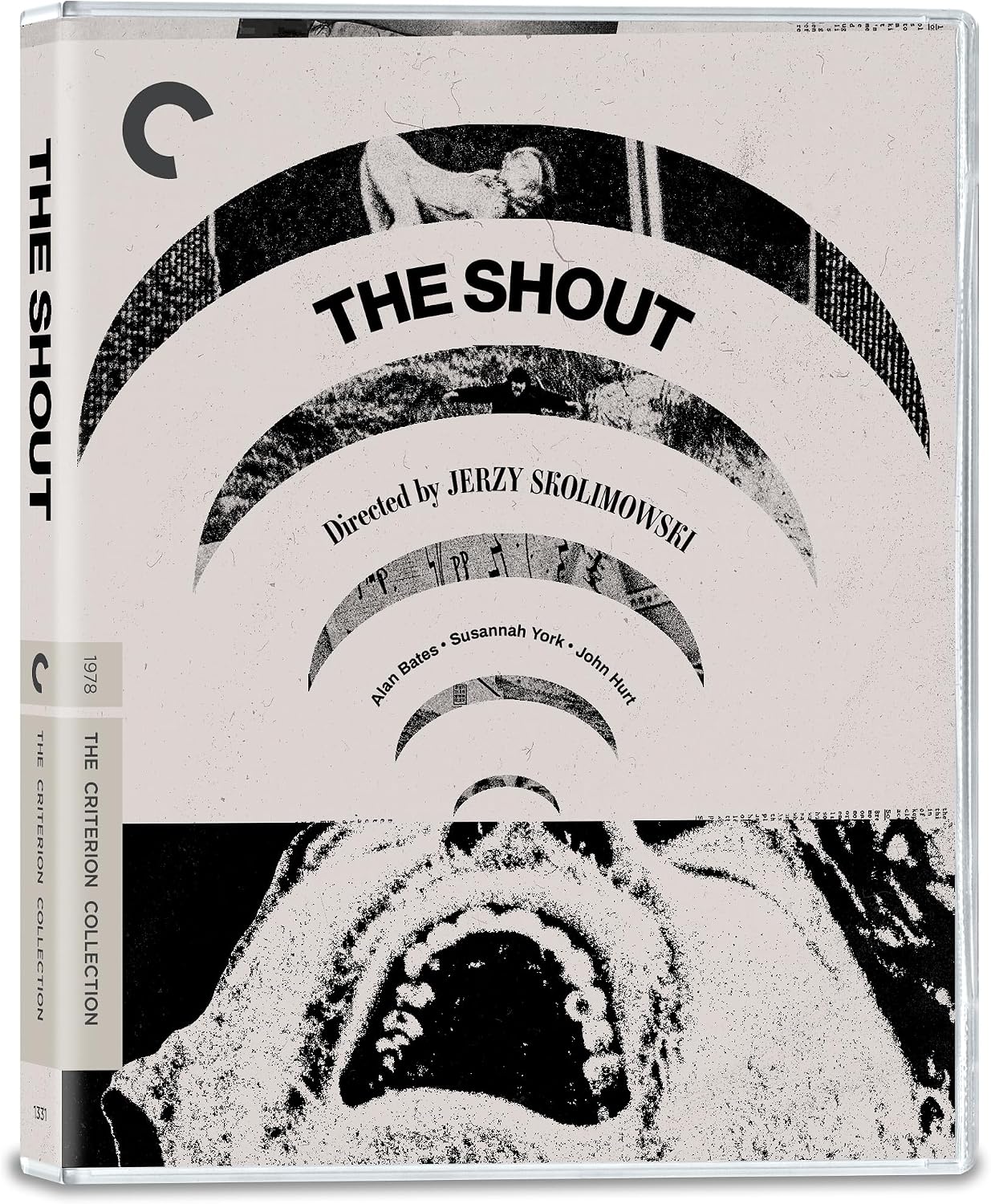
This new release of The Shout from the Criterion Collection features a 2K Digitial restoration of the film approved by Jerzy Skolimowski and DoP Mike Molloy. While a 4K restoration is more common these days, 2K is more than enough here – the film looks gorgeous. The image is crisp with fine detail throughout. In domestic scenes in particular there is a clarity to the image that makes spotting details of the house’s décor extremely rewarding. The colours are rich and natural, which are best demonstrated on those golden sand dunes that reappear throughout.
The 2.0 surround DTS-HD Master Audio soundtrack is perhaps the true standout. This is a film to enjoy on an aural level as much as a visual one, and Anthony’s sound experiments sound astonishing with a decent sound setup. Dialogue throughout is clear and well-balanced, and when the titular shout does arrive it sounds truly terrifying.

director: Jerzy Skolimowski.
writers: Jerzy Skolimowski & Michael Austin (based on the 1929 short story by Robert Graves).
starring: Alan Bates, John Hurt, Susannah York, Robert Stephens & Tim Curry.