NETWORK (1976)
A television network cynically exploits a deranged former anchor's ravings and revelations about mass media for its own profit, but finds that his message may be difficult to control.


A television network cynically exploits a deranged former anchor's ravings and revelations about mass media for its own profit, but finds that his message may be difficult to control.
Every decade of television seems to bring a new phase of exploration and growth. Often regarded as the medium’s “Golden Age”, the 1950s saw the emergence of ambitious dramas and influential sitcoms such as I Love Lucy (1951–57) and Leave It to Beaver (1957–1963). In the 1960s, the industry became more sophisticated and culturally influential. Late-night variety shows such as The Tonight Show combined social and political commentary with comedy and celebrity interviews.
By the 1970s, however, the television landscape was undergoing a significant transformation. Regulatory changes introduced by the Federal Communications Commission (FCC) intensified competition for audiences and advertisers. As a result, some stations prioritised programmes aimed at younger viewers and abandoned familiar shows such as Mayberry R.F.D. (1968–1971) and The Beverly Hillbillies (1962–1971). Meanwhile, the televised Watergate hearings and extensive coverage of the Vietnam War demonstrated the industry’s capacity to shape public opinion and national consciousness. Television was increasingly becoming a ruthless business, prioritising ratings and revenue over creativity.
Few understood the consequences of this transformation as well as Paddy Chayefsky. After earning widespread critical acclaim for Marty, his teleplay for the anthology series The Philco Television Playhouse (1948-1955), he established himself as one of the 1950s’ most distinguished television dramatists. Yet, despite being an early pioneer of the medium, he became disillusioned with an industry that had little interest in quality programming. Having witnessed first-hand the effects of corporate interests and television’s influence on public opinion, Chayefsky grew frustrated by the medium’s power to manipulate as well as inform. Audiences were having their identities and political leanings shaped by the sounds and images coming from their televisions. Rather than simply lament the decline of the industry’s creative ambitions, he channelled his anxieties into a screenplay. What began as a satire of television became Network, a blistering indictment of corporate media and journalistic irresponsibility that remains remarkably prescient five decades after its release.
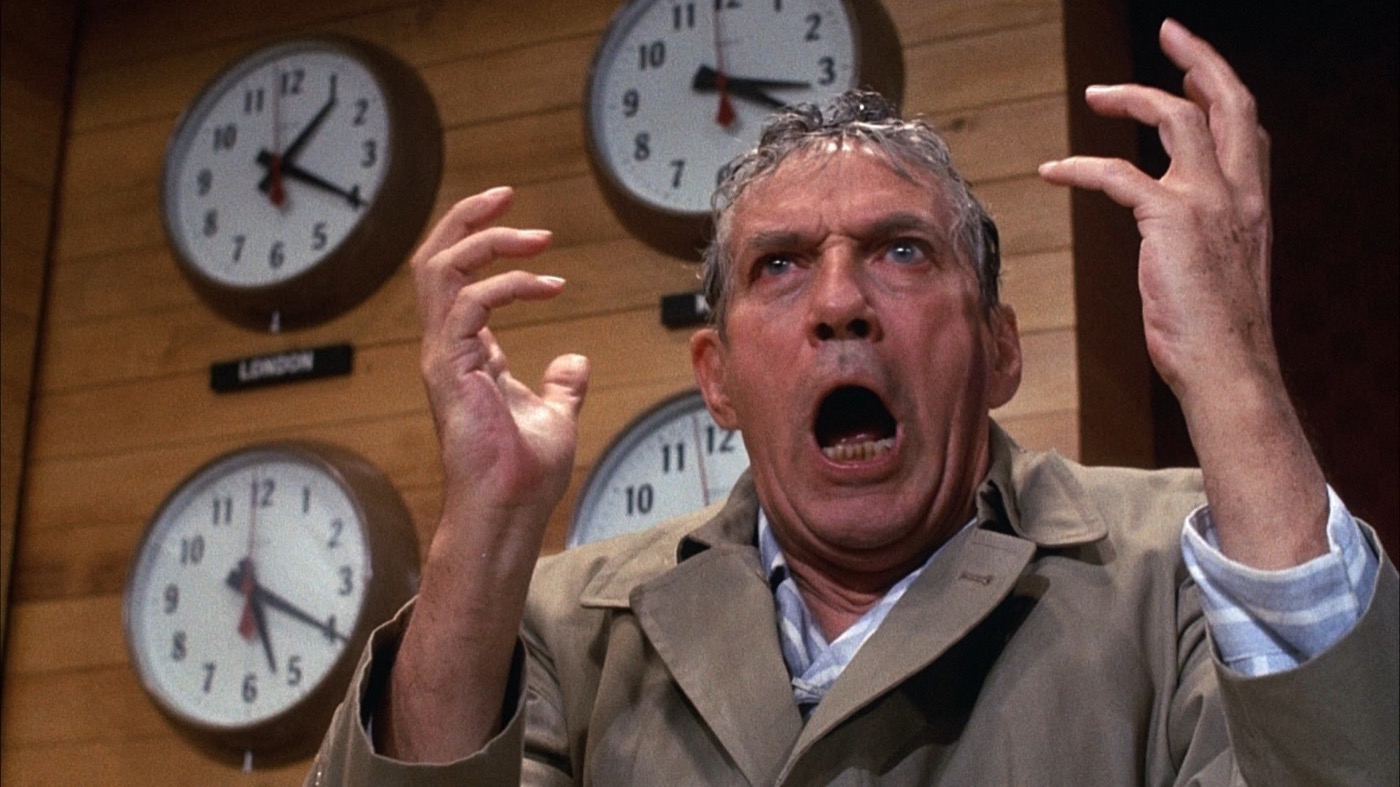
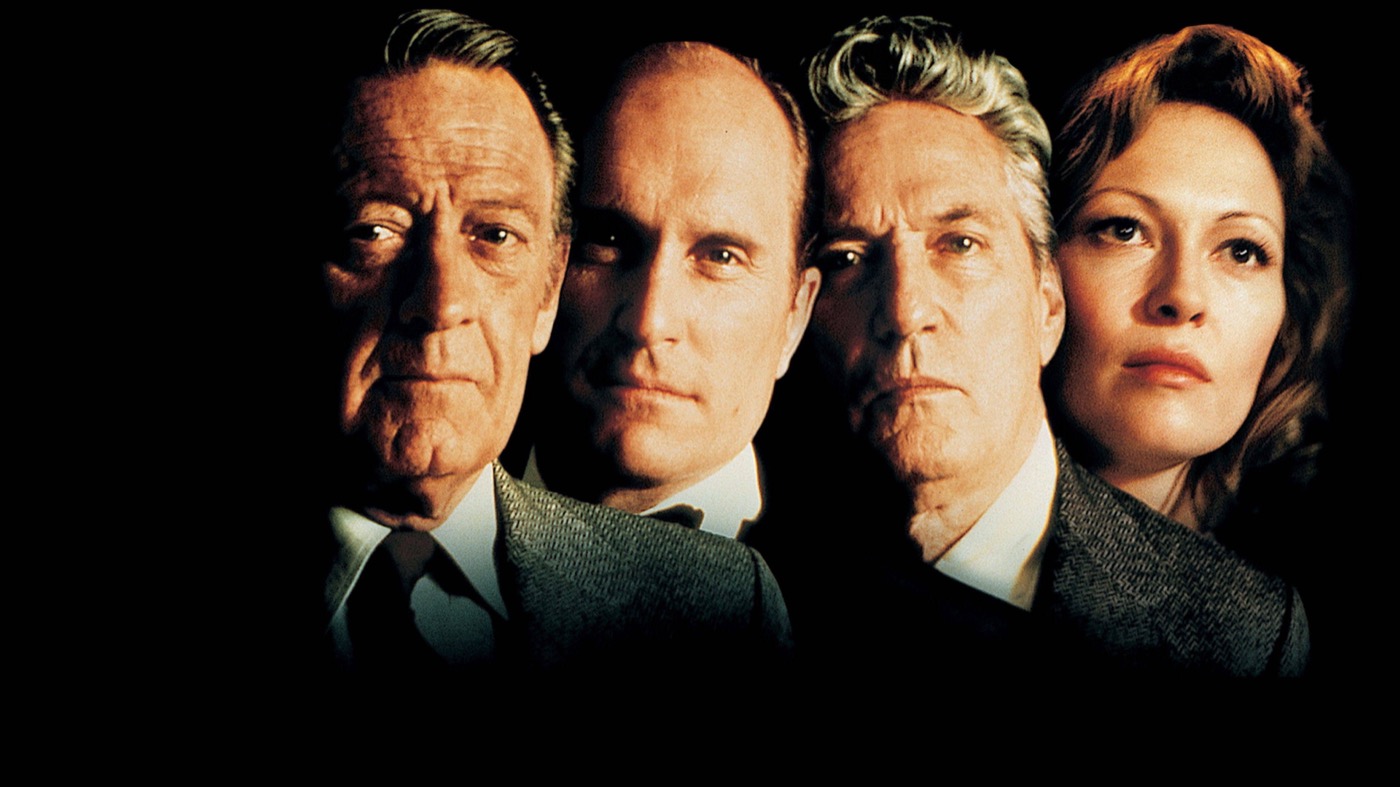
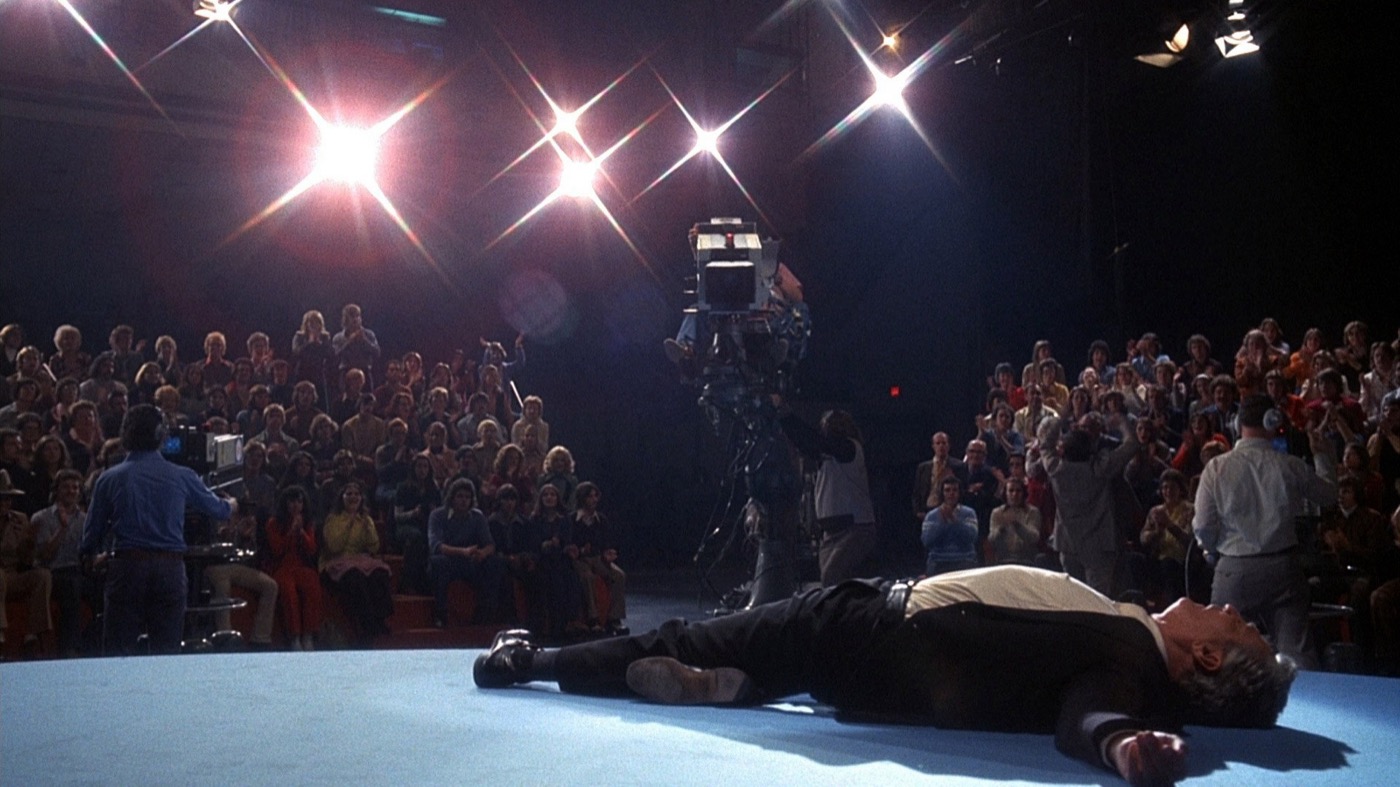
Set in the fiercely competitive world of American television, Network follows Howard Beale (Peter Finch), a distinguished and respected news anchor for the Union Broadcasting System (UBS). Since his wife’s death, he’s grown increasingly withdrawn and melancholy. His career has declined, and his nightly news programme is struggling with disappointing ratings. While commiserating and reminiscing with his longtime friend and network president, Max Schumacher (William Holden), Howard learns that his employment will be terminated within two weeks. He initially seems to accept the news with some resignation, but the following evening his response takes an alarming turn. During a live broadcast, he announces that he intends to kill himself on television.
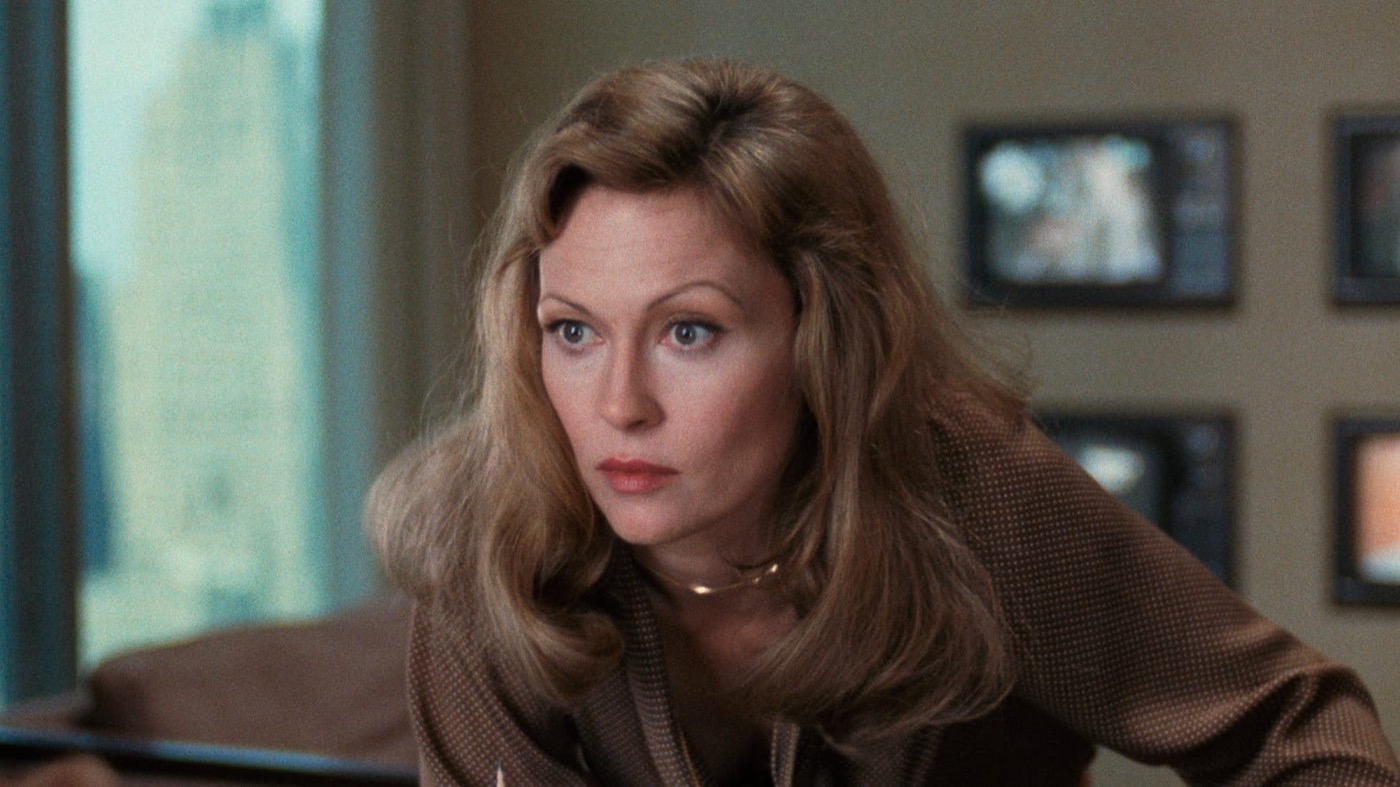
Howard’s extraordinary outburst causes panic among UBS’s producers and executives. But his public breakdown soon becomes an unprecedented ratings sensation. Rather than treating his erratic behaviour as a professional and personal crisis, the network’s management sees a commercial opportunity. Ambitious programming executive Diana Christensen (Faye Dunaway) persuades her superiors to build an entire programme around Howard’s messianic outbursts. With the support of ruthless corporate executive Frank Hackett (Robert Duvall), Diana turns Howard into a celebrated television personality. But as his impassioned denunciations of the media establishment gather momentum, the system that made him a profitable spectacle finds itself confronting a personality whose message can no longer be contained.
Delving further into the story would risk revealing the surprises that make Network such a rewarding experience. It’s best approached with as little prior knowledge as possible, allowing its twists and revelations to unfold naturally. Nevertheless, Chayefsky’s extraordinary screenplay is almost impossible to overlook. His dialogue is as explosive as a hand grenade, shifting effortlessly between blistering satire and operatic tragedy. He scatters his indignation in every direction, criticising virtually every institution and ideology responsible for the state of the modern world. The screenplay is so densely packed with ideas that the television industry, corporate capitalism, religious fervour and the erosion of public discourse all come under fire. Perhaps most significantly, Chayefsky refuses to underestimate his audience. He trusts viewers’ intelligence, daring them to keep up with the screenplay’s verbosity and ideas.
Perhaps the most remarkable aspect of Chayefsky’s screenplay is how its central argument has grown more relevant over time. When Network was released, the idea that a television network might commercialise outrage to create division may have seemed far-fetched. But the evolution of broadcasting has made the film’s observations increasingly difficult to dismiss. In today’s media landscape, outrage has become a valuable commodity, truth an increasingly malleable concept and spectacle a substitute for substance. Broadcasters such as Fox News and CNN have cultivated audiences by reinforcing their respective ideological leanings. More insidious examples can be found on social media platforms such as Twitch and Kick, where digital platforms and online personalities generate considerable engagement by discussing provocative material, regardless of its accuracy. By exploiting existing prejudices, anxieties and frustrations, political and social disagreements have become the lucrative form of entertainment Chayefsky envisioned.
Network was prescient in other ways, too. Beyond the television industry, Chayefsky anticipated the growing dominance of multinational corporations and their political influence. This is most clearly articulated after Howard reveals to the world that a Saudi conglomerate is buying the network. Summoned to the boardroom by UBS chairman Arthur Jensen (Ned Beatty), he receives a blistering lecture on global capitalism. “You are an old man who thinks in terms of nations and peoples,” Jensen fulminates. “There is no democracy. There is only IBM, ITT, AT&T, DuPont, Dow, Union Carbide, and Exxon. Those are the nations of the world today. The world is a college of corporations, inexorably determined by the immutable by-laws of business.” Although Jensen’s monologue refers to specific corporations and telecoms monopolies of the 1970s, it bears an uncomfortable resemblance to today’s political landscape.
Companies such as Meta, Amazon and Tesla have amassed extraordinary cultural and economic power, shaping everything from how people communicate and consume information to how they work and understand the world. Their platforms and technologies have generated such wealth and influence that Mark Zuckerberg, Jeff Bezos and Elon Musk all have access to the highest levels of government. The political establishment may still introduce the laws by which societies operate, but corporations influence what life under those laws looks like. Fifty years ago, Arthur’s declaration may have seemed like speculative fiction. Viewed through a contemporary lens, it feels more like an unsettling diagnosis of modern capitalism.
Chayefsky deserves immense praise, but Sidney Lumet deserves equal credit for stopping the screenplay from spiralling into 120 minutes of unrelenting polemic. The characters often function as mouthpieces for the shallow, sensational direction in which the nation’s media is heading. Yet Lumet ensures the film never loses sight of the humanity beneath its satire. As demonstrated in 12 Angry Men (1957), Fail Safe (1964), and Dog Day Afternoon (1975), he had an extraordinary ability to uncover emotional truths within the absurd worlds he depicted.
This is especially apparent in the confrontation between Max and his wife, Louise (Beatrice Straight). When Max confesses to his affair with Diana, Louise delivers a devastatingly articulate response. Recalling the years they’ve shared and the family they’ve raised, she makes clear that their marriage deserves more consideration than to be treated as a disposable ‘Movie of the Week’. Lumet’s restrained direction provides a necessary counterbalance to a film that reaches absurd heights, grounding viewers in the emotional consequences of life beyond television’s spectacle.
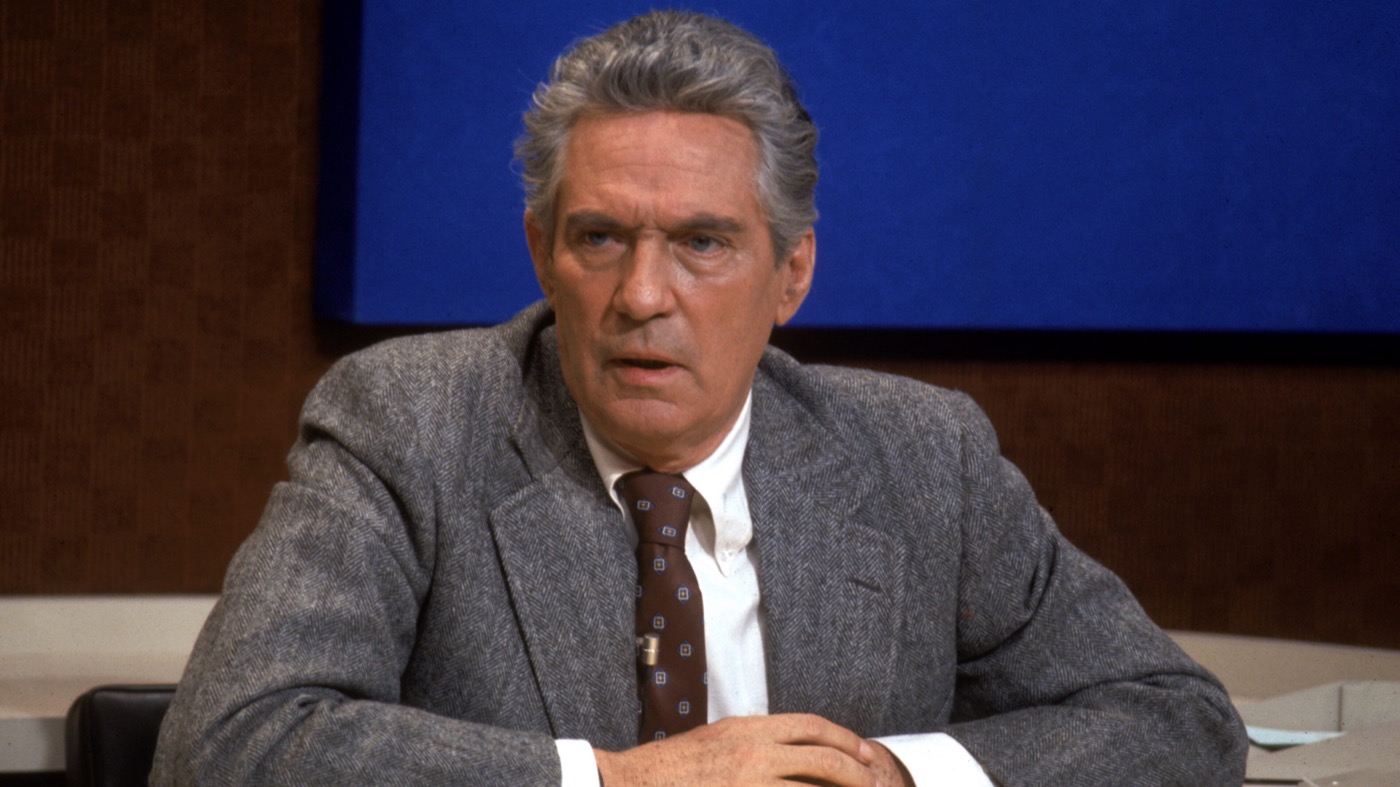
Of course, none of this would have been possible without one of the greatest ensembles ever assembled. Peter Finch (Sunday Bloody Sunday) is magnificent as the embittered news anchor Howard Beale. Initially introduced as a man whose professional and personal life is rapidly unravelling, Finch charts his character’s psychological deterioration with a combination of vulnerability and unrestrained fury. His performance walks a tightrope between apparent madness and prophetic clarity, inviting viewers to recognise the absurdity of Howard’s erratic behaviour while acknowledging the uncomfortable truths buried in his outbursts. His iconic declaration — “I’m as mad as hell, and I’m not going to take this anymore!” — could easily have descended into theatrical caricature in less capable hands. Finch delivers it with such sincerity and desperation that he captures something primal and authentic about human frustration with systems beyond our control.
William Holden (The Wild Bunch) provides a welcome counterbalance as Max Schumacher, the president of the news division. A married man who becomes romantically entangled with a much younger woman, Max initially seems somewhat pathetic and selfish. But Holden gives him a moral complexity that extends beyond his personal indiscretions. The veteran news executive represents an older journalistic sensibility, grounded in professional integrity and an understanding of the medium’s social obligations. Holden brings a weary melancholy to the role that echoes his earlier turn as Joe Gillis in Sunset Boulevard (1950). He portrays a man disillusioned with the industry to which he has devoted his career, only to find it almost unrecognisable.
Faye Dunaway (Chinatown) is equally compelling as Diana Christensen, the ambitious programming executive. In a tour de force performance, she embodies Chayefsky’s most scathing critiques of American society. Diana is cold, ferociously intelligent and seemingly unencumbered by old standards of decency and propriety. She’s so conditioned by television’s demands that she can barely distinguish professional ambition from basic human empathy. Dunaway doesn’t soften the character to win the audience’s approval. Instead, she weaponises Diana’s ruthlessness, imbuing her with the predatory composure of someone who sees power not as responsibility but as leverage. Dunaway is so precise and unflinching that Diana almost feels inhuman, as if she’s already evolved into the algorithmic logic Chayefsky warns us about. It’s a wonderfully controlled performance, and Diana is so fully realised that she became a cultural archetype, echoed by characters shaped by the pursuit of spectacle, such as Chance the Gardener in Being There (1979), Rupert Pupkin in The King of Comedy (1982), and Max Renn in Videodrome (1983).
With such a remarkable trio of lead performances, it would be easy to overlook the supporting cast. But while Finch, Holden and Dunaway provide the film’s dramatic backbone, the supporting players are equally impressive. Despite having considerably less screen time than her co-stars, Beatrice Straight (Poltergeist) is magnificent as Louise Schumacher. As Max’s long-suffering wife, she delivers a devastating portrayal of a woman confronting the emotional wreckage of her marriage. In her sole scene, Straight gives one of the most heartbreakingly believable portrayals of emotional anguish ever committed to celluloid.
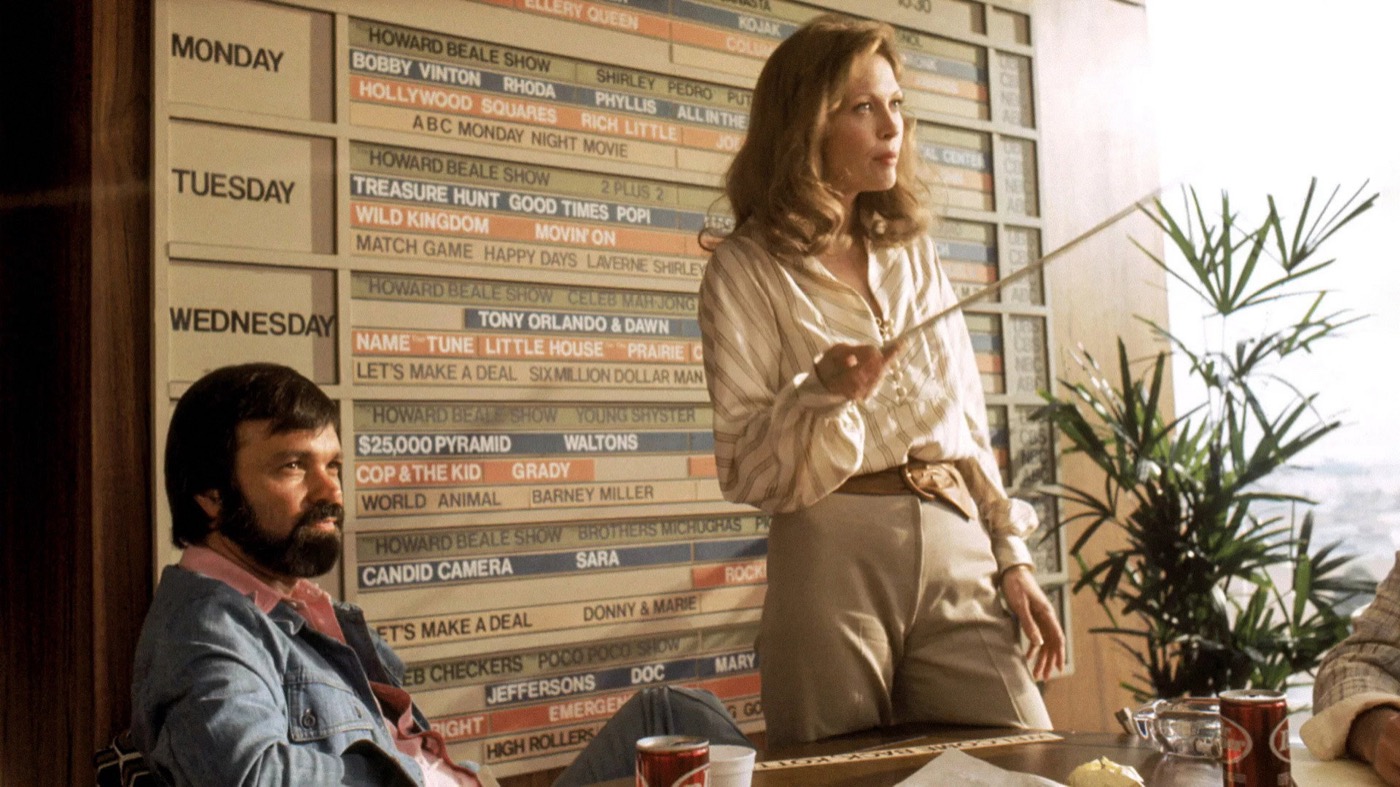
Elsewhere, Robert Duvall (The Godfather) is gloriously detestable as pragmatic network executive Frank Hackett. Duvall gives him a chilling corporate ruthlessness and a quiet menace entirely devoid of sentimentality. Everything is subordinate to profitability, and Hackett would happily destroy his employees’ livelihoods to boost ratings and revenue.
On its release, Network was greeted rapturously by critics and audiences alike. Chayefsky’s scathing indictment of the television industry struck a chord with viewers increasingly aware of television’s growing influence and its questionable relationship with corporate interests. A small minority took issue with his sermonising prose, arguing that the characters often functioned as mouthpieces for his own ideological frustrations. But such reservations did little to diminish the film’s commercial success. It grossed approximately $23.7M in cinemas against a production budget of $3.8M. This success was matched by its unprecedented performance at the Academy Awards. Alongside Chayefsky’s third Oscar for ‘Best Original Screenplay’, Network became the second film in history to win three acting awards. Dunaway and Straight were recognised in the leading and supporting actress categories, while Finch became the first actor to win ‘Best Actor’ posthumously. The second was Heath Ledger, for his role in Christopher Nolan’s The Dark Knight (2008).
USA | 1976 | 121 MINUTES | 1:85:1 | COLOUR | ENGLISH

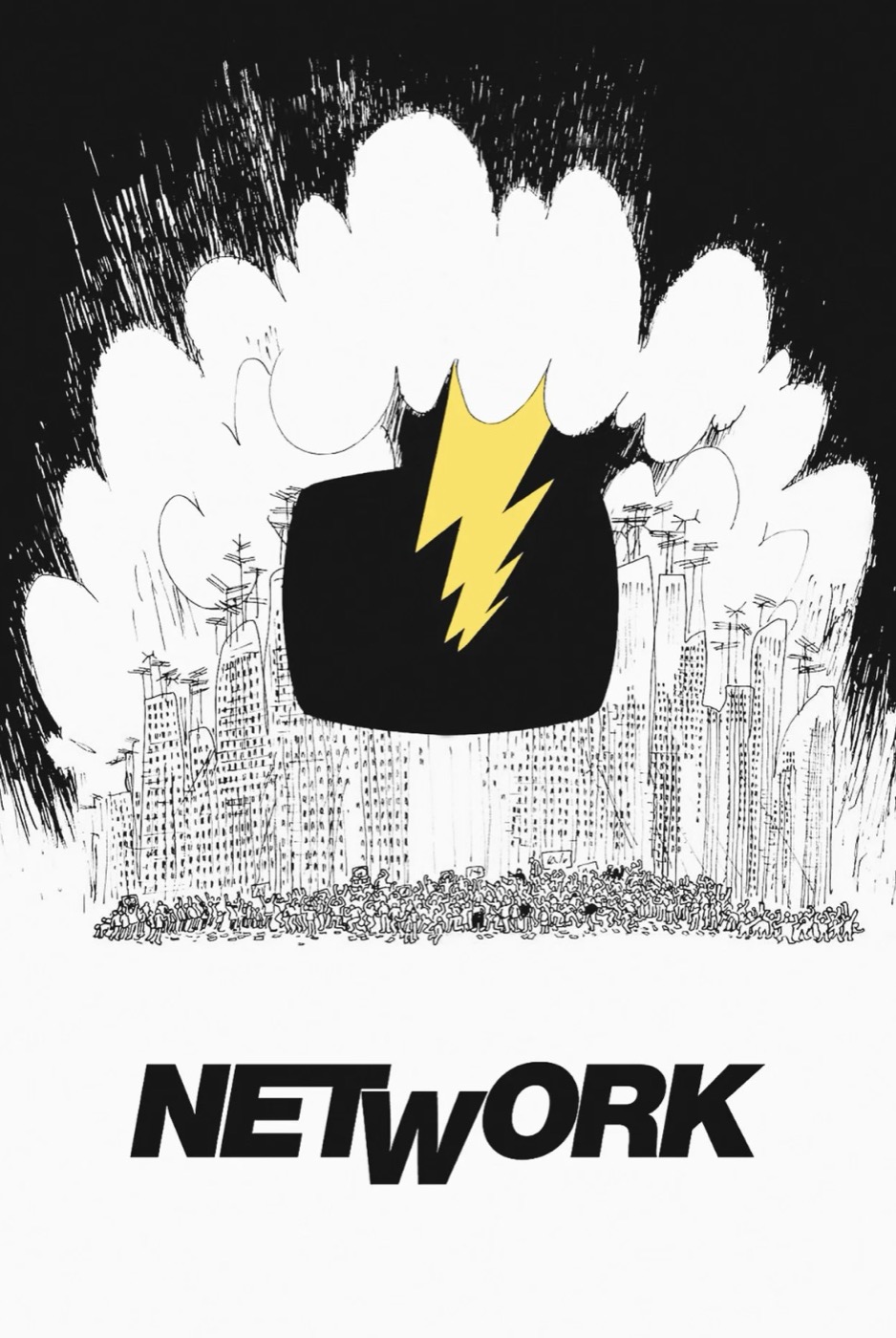
director: Sidney Lumet.
writer: Paddy Chayefsky.
starring: Peter Finch, William Holden, Faye Dunaway, Robert Duvall & Beatrice Straight.