MINOTAUR (2026)
A high-powered executive's meticulously controlled existence unravels when professional crises, global chaos, and marital betrayal converge.


A high-powered executive's meticulously controlled existence unravels when professional crises, global chaos, and marital betrayal converge.
There’s a great frigidity to the films of master Russian filmmaker Andrey Zvyagintsev. For more than two decades, his filmography has delivered searing indictments of corruption and moral failings in his country, almost all of them also deconstructing the pitfalls of domestic life. Nearly half that time — nine years since Loveless (2017) — has passed without a new film from Zvyagintsev. The hiatus was the result of two things: a series of debilitating infections that left him paralysed at the height of the pandemic, and, soon afterwards, his eventual exile to Paris following Russia’s invasion of Ukraine. Minotaur / Минотавр, the latest in Zvyagintsev’s long line of masterpieces, is noteworthy for a deeply specific reason: it’s the first independently produced Russian film to address the “Special Military Operation” directly — the official Russian term for Vladimir Putin’s war.
Even the idea of Zvyagintsev turning his attention to the invasion of Ukraine should fill any reasonable cinephile with a foreboding sense of dread. Leviathan (2014) charts one man’s hopelessly Jobian struggle to protect his family’s home from encroaching corruption, entangled with bureaucratic and Eastern Orthodox interests in the land. Meanwhile, Loveless uses the sudden disappearance of a warring couple’s son to allegorise the callousness of a Russia that has long lost the essence of its soul. Minotaur is even more expansive in its ambition, and more chilling in its ruthlessness.
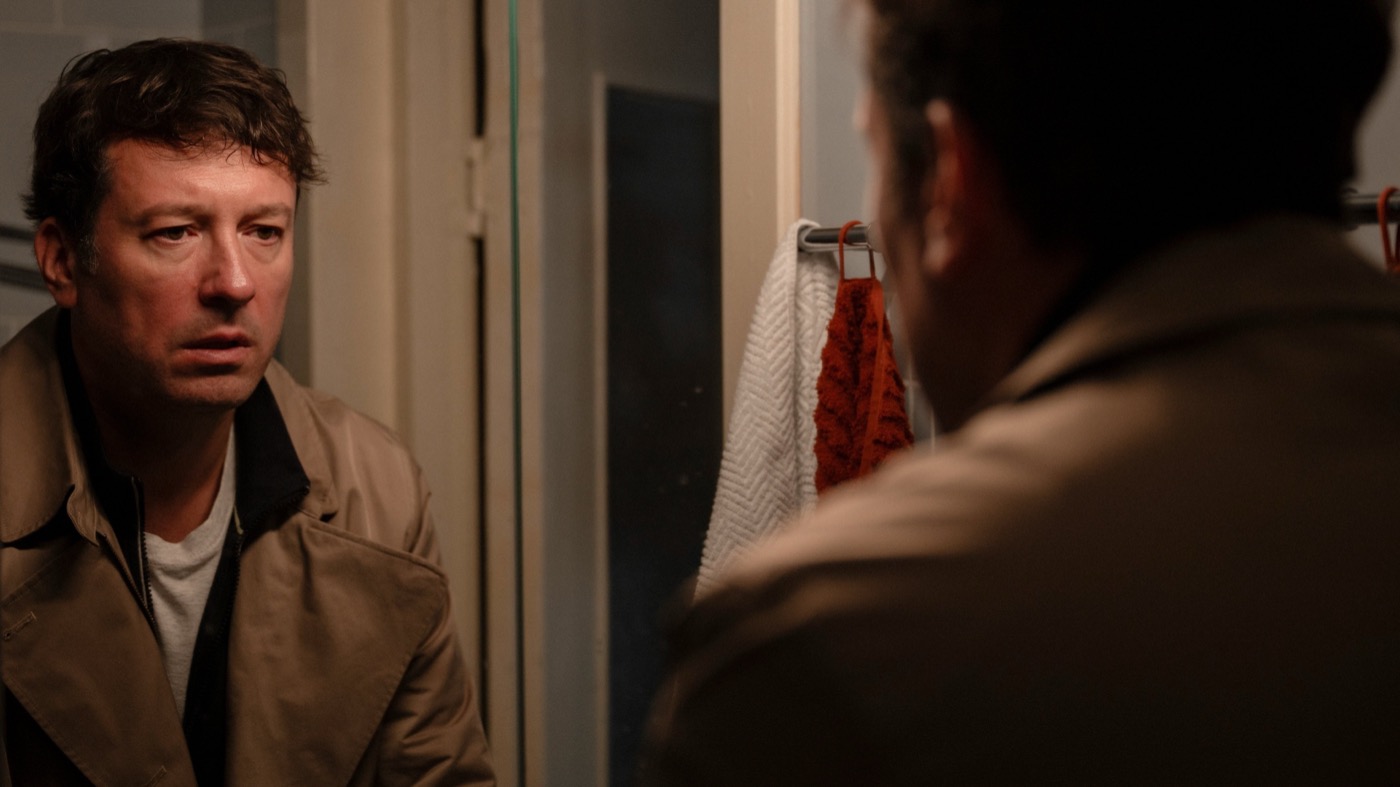
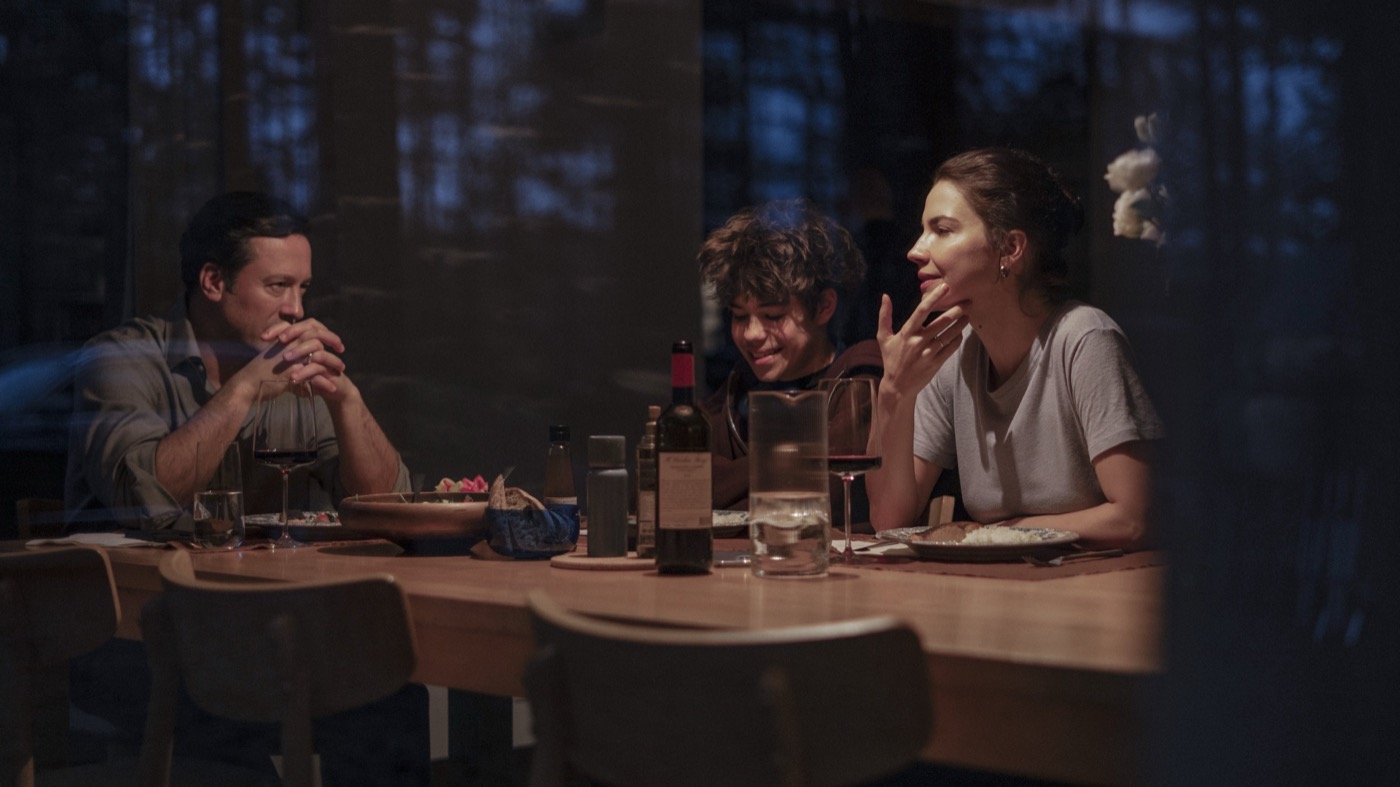
Zvyagintsev has adapted legendary French director Claude Chabrol’s La Femme infidèle / The Unfaithful Wife (1969) into a sprawling tale about the failures of oligarchy, its intersection with bourgeois domesticity, and the silent politics driving Russia’s war. At its centre is Gleb Alexandrovich (Dmitriy Mazurov), the CEO of a powerful logistics company, who faces a convergence of impossible situations. One is his wife, Galina (Iris Lebedeva), whose growing detachment from him as their marriage rapidly dissolves has made him suspicious of her infidelity. The other concerns his company directly. The mayor has summoned the area’s corporate leaders and tasked them with selecting groups of their employees to enlist in Russia’s invasion. Gleb, in particular, must find 14 men.
Gleb is a familiar face: the archetypal, pathetic, self-proclaimed “übermensch” we’ve been forced to see in the headlines over the years. Like many of the powerful figures responsible for the post-capitalist era’s downward spiral, Gleb is a lethal cocktail of fragile masculinity and untouchable power and influence. Mazurov embodies this combination impeccably through Gleb’s unceasing arrogance, laziness at home and repressed fury. It suits him in the workplace, where he delegates responsibilities to unquestioning employees. It’s less suited to his domestic life, where Galina is increasingly disillusioned and resentful as she watches herself become Gleb’s shadow in the eyes of everyone who knows her.
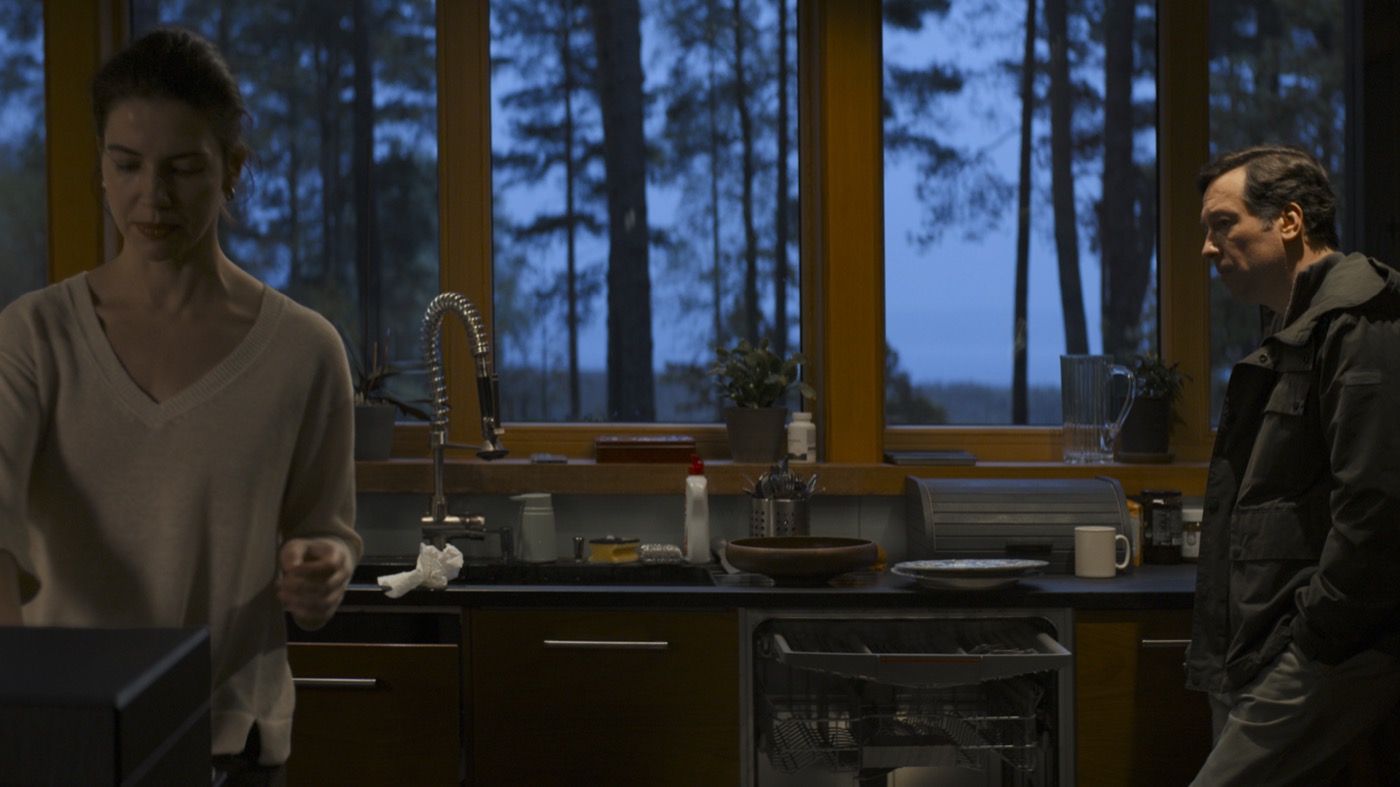
Galina is indeed cheating on Gleb, if her frequent trips into town and late-night text messages are any indication. Gleb hires a private investigator to confirm his suspicions, and the discovery is ruinous. Galina is having an affair with Anton Grigoriev (Yuriy Zavalnyouk), a younger, more outwardly romantic photographer whose lens seems to capture her more charmingly than Gleb’s domineering corporate manner ever could. Gleb is under pressure on all fronts: Putin’s war is increasingly closing in on his workforce, and he now knows for certain of his wife’s infidelity.
The number of employees Gleb is ordered to send to war is no coincidence. Zvyagintsev’s title draws a parallel between the Cretan Minotaur and the Russian state, a creature periodically offered 14 citizens as sacrifices, dwelling in a systematically constructed labyrinth that prevents anyone from killing it. Gleb is both the state’s hand and a cog in its machine: an instrument of power still beholden to Putin’s dictatorship. He’s a man modelled on the Russian state’s authoritarianism, yet still required to obey its will. He is King Minos, demanding sacrifices to assert his own self-imposed dominance.
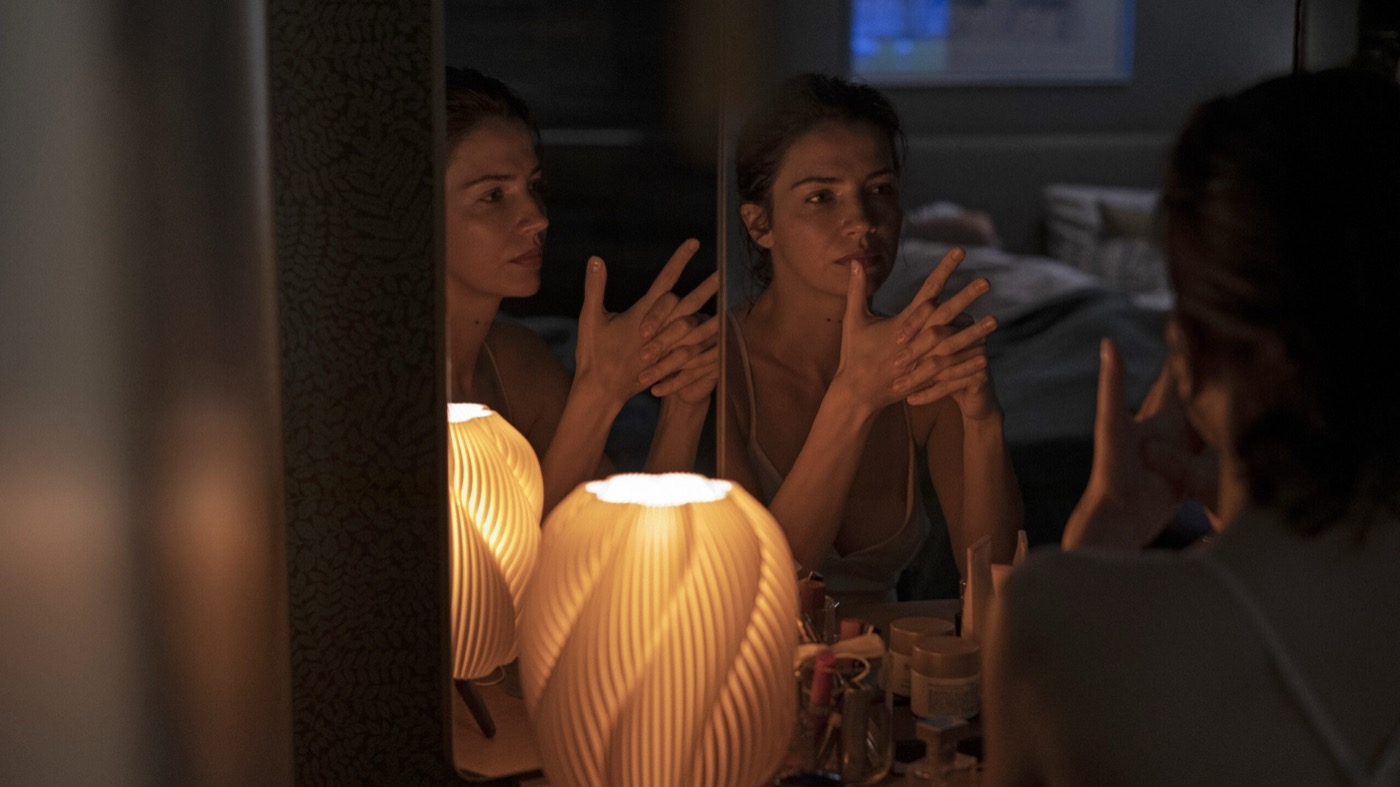
Zvyagintsev’s sharp eye for mise-en-scène frames this chilling tale of Russian oligarchy. Graffiti crudely protesting the war is sprayed on bridge supports; the “Z” insignia supporting Russia’s war effort appears alongside banners and posters spewing propaganda. Working with regular collaborator and cinematographer Mikhail Krichman, Zvyagintsev makes Minotaur’s camera feel more like a leering stalker than a casual observer. Its movements glide slowly and remain locked to the tripod: a tightly calibrated expression of Hitchcockian suspense, charged with patient menace. Slow pans offer expansive views of men as sacrificial lambs and of domestic life underpinned by the rumblings of war. This is a camera that moves at the pace of inevitability.
That inevitability culminates in Minotaur’s bravura 20-minute centrepiece: a brutal act of violence and its crudely methodical aftermath, shown in procedural, real-time detail. It’s also an extraordinary exercise in tonal balance, as vicious and callous as it is grimly hilarious and slapstick — a silent excoriation of masculine impulsiveness and blindness to domestic labour. The scene’s significance extends beyond its intimate, pragmatic portrayal of how violence destroys individuals. It’s drawn out so thoroughly because it can also be read as an analogue for the violence oligarchs, capitalists and demagogues inflict on society: acts that destroy lives on impulse, the consequences of which can be shrugged off simply because the perpetrators can talk to the right people.
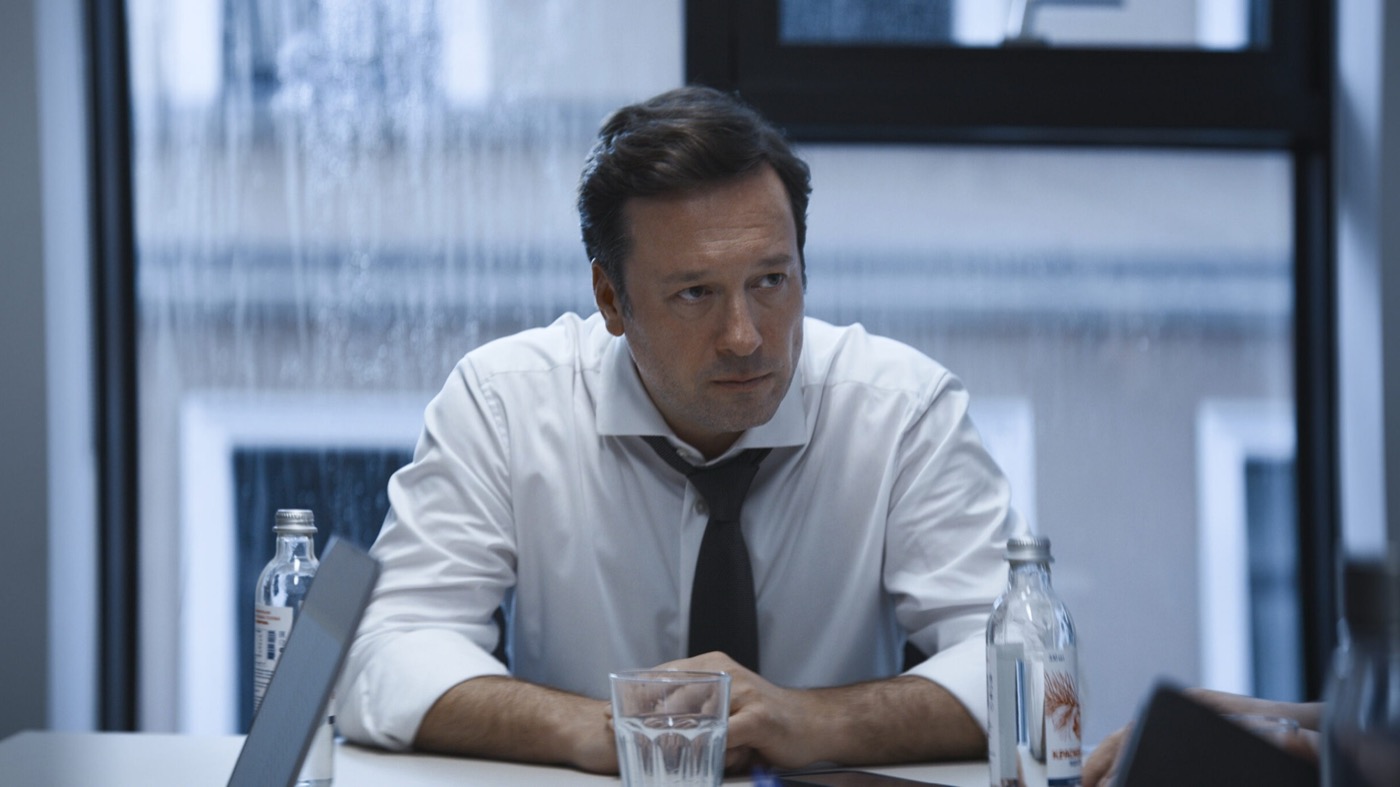
As in Jonathan Glazer’s The Zone of Interest (2023), Minotaur’s most potent source of fury lies in its allusions to the violence raging in the background, beyond the privileged world of its upper-class protagonists. Zvyagintsev’s deliberate choices of urban setting reinforce this. We see a train carrying Russian tanks, some of Gleb’s employees watching a video from TV Rain, a real-life resistance journalism broadcaster — a welcome but fraught sight for viewers of Julia Loktev’s My Undesirable Friends diptych — and a Russian official lecturing a crowd of future soldiers who seem uniformly dispassionate and uninterested. Rather than creating an unbalanced counterpoint to Minotaur’s marital deterioration, this political scaffolding deepens the themes of Gleb’s struggle to regain control as Galina tries to escape him. The film seamlessly links the immaturity of Gleb’s patriarchal domesticity to the cruelty of dictatorship and the absolutism of its ideology.
Zvyagintsev has crafted a film with seemingly endless layers: a richly rewatchable work of social critique that also functions as a primal scream of national anguish. Minotaur may be the director’s finest work, so completely does it capture the ethos of unsparing honesty that runs throughout his filmography. His portrayals of Russia’s shadow aren’t bleak for bleakness’s sake. They leave you gutted and devastated in order to reflect honestly the worst its regimes have to offer. Four years into the invasion of Ukraine, Putin’s Russia has found a perversely tenuous ally in Donald Trump’s United States. The war has killed millions of Ukrainians and sacrificed countless Russians conscripted into a war they never asked for. Amid the country’s miasma of political oppression and cultural self-censorship, Zvyagintsev’s death-defying creation, Minotaur, is a piercing beam of clarity — beyond even its raw achievement as a cinematic narrative.
FRANCE • LATVIA • GERMANY | 2026 | 141 MINUTES | 2.39:1 | COLOUR | RUSSIAN

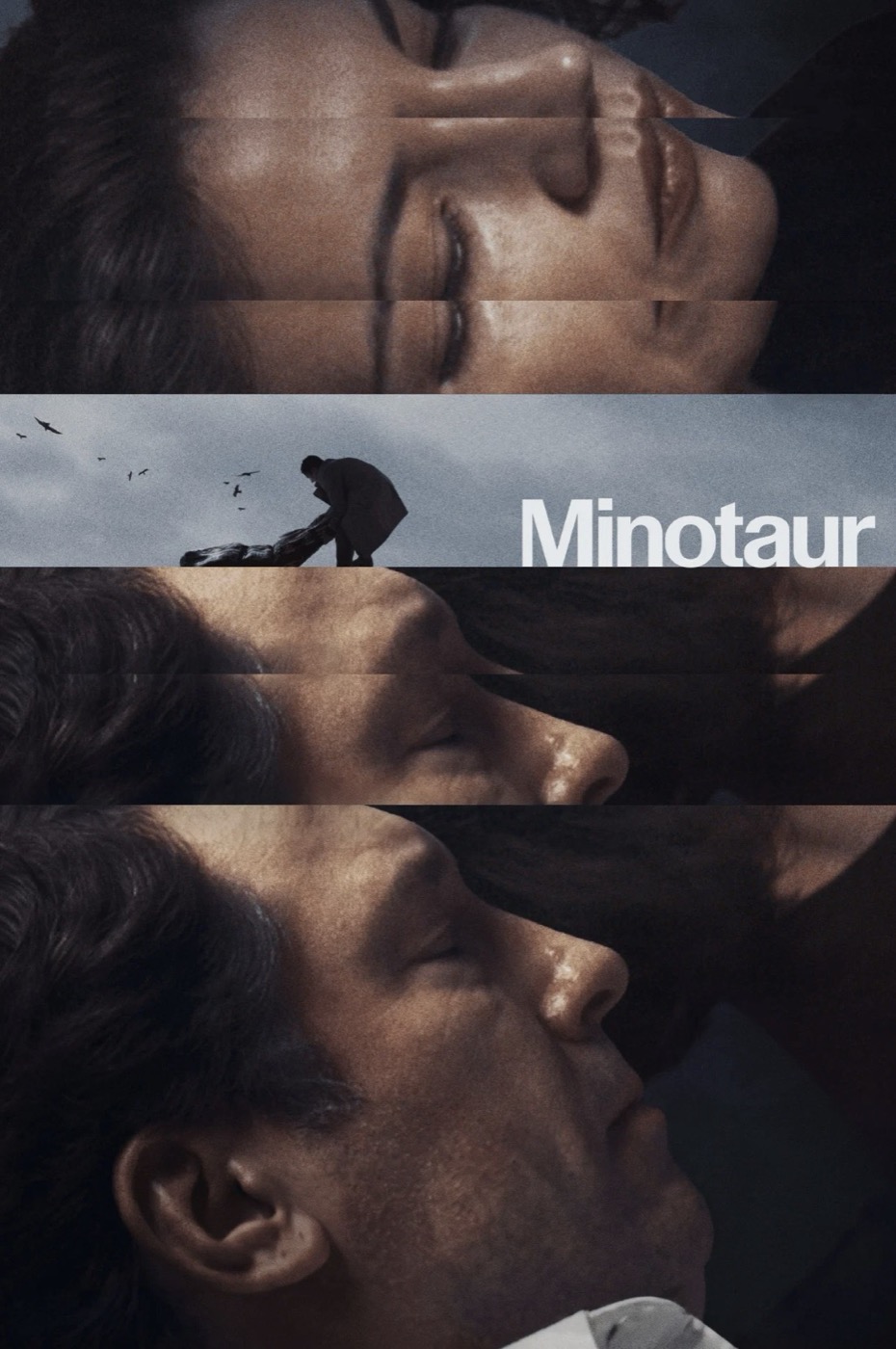
director: Andrey Zvyagintsev.
writers: Simon Lyashenko & Andrey Zvyagintsev (based on the 1969 film ‘The Unfaithful Wife’ by Claude Chabrol & Sauro Scavolini) .
starring: Dmitriy Mazurov, Iris Lebedeva, Boris Kudrin, Yuriy Zavalnyouk, Varvara Shmykova & Vladimir Friedman.