A TALENT FOR MURDER (2026)
A mysterious young man from a New York publisher is sent to Switzerland to persuade the renowned writer Patricia Highsmith to write one final installment of the Ripley anthology.

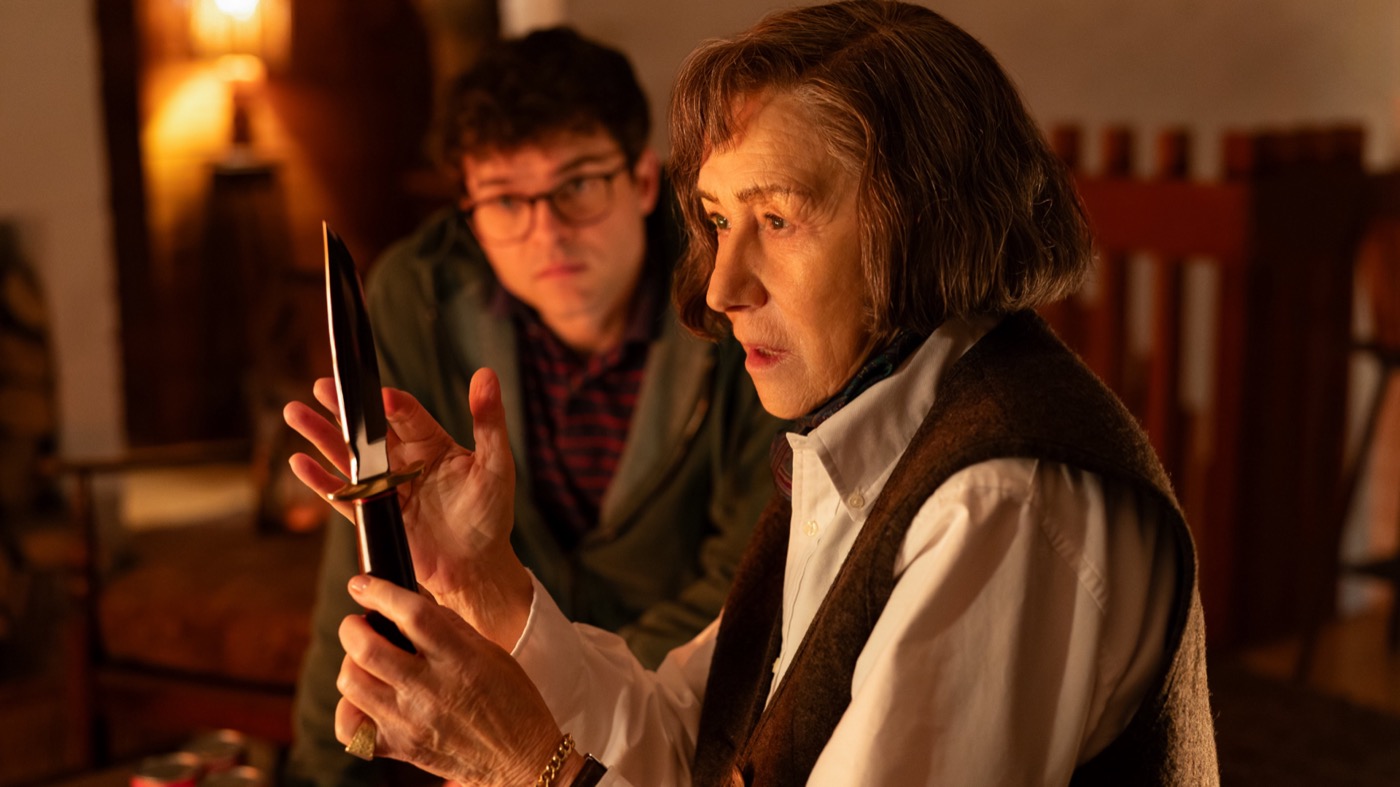

A mysterious young man from a New York publisher is sent to Switzerland to persuade the renowned writer Patricia Highsmith to write one final installment of the Ripley anthology.
Before this review begins, it’s worth setting the record straight: renowned author Patricia Highsmith was — to put it very charitably — a misanthropic cretin. The writer of the Ripley novels, which recount the misadventures of duplicitous con artist Tom Ripley and his devious schemes and murders, proudly voiced virulently racist and antisemitic beliefs, alongside a bitter misogyny she expressed publicly over decades. Her personal life fared no better. She frequently cheated on her female partners and suffered from a depression that left her reclusive and embittered.
The Ripley novels are pessimistic in their own right, thoroughly deconstructing the very idea of trustworthiness and tying it in a bow of class fatalism. They’ve found renewed cinematic relevance in the age of Parasite (2019) and Saltburn (2023), on top of two separate screen adaptations of Ripley.
Anton Corbijn’s latest film, A Talent for Murder, is several things at once: a resurrection of Highsmith, with Helen Mirren embodying her; an attempt to imagine a hypothetical sixth Ripley novel; and a chamber-piece adaptation of screenwriter Joanna Murray-Smith’s own stage play. At first, that last element seems to carry the most weight. Highsmith (Mirren) isn’t the true protagonist of A Talent for Murder; that role belongs to her New York editor, Edward Ridgeway (Alden Ehrenreich), who becomes the next target of Highsmith’s ire when he asks her to write a sixth Ripley novel.
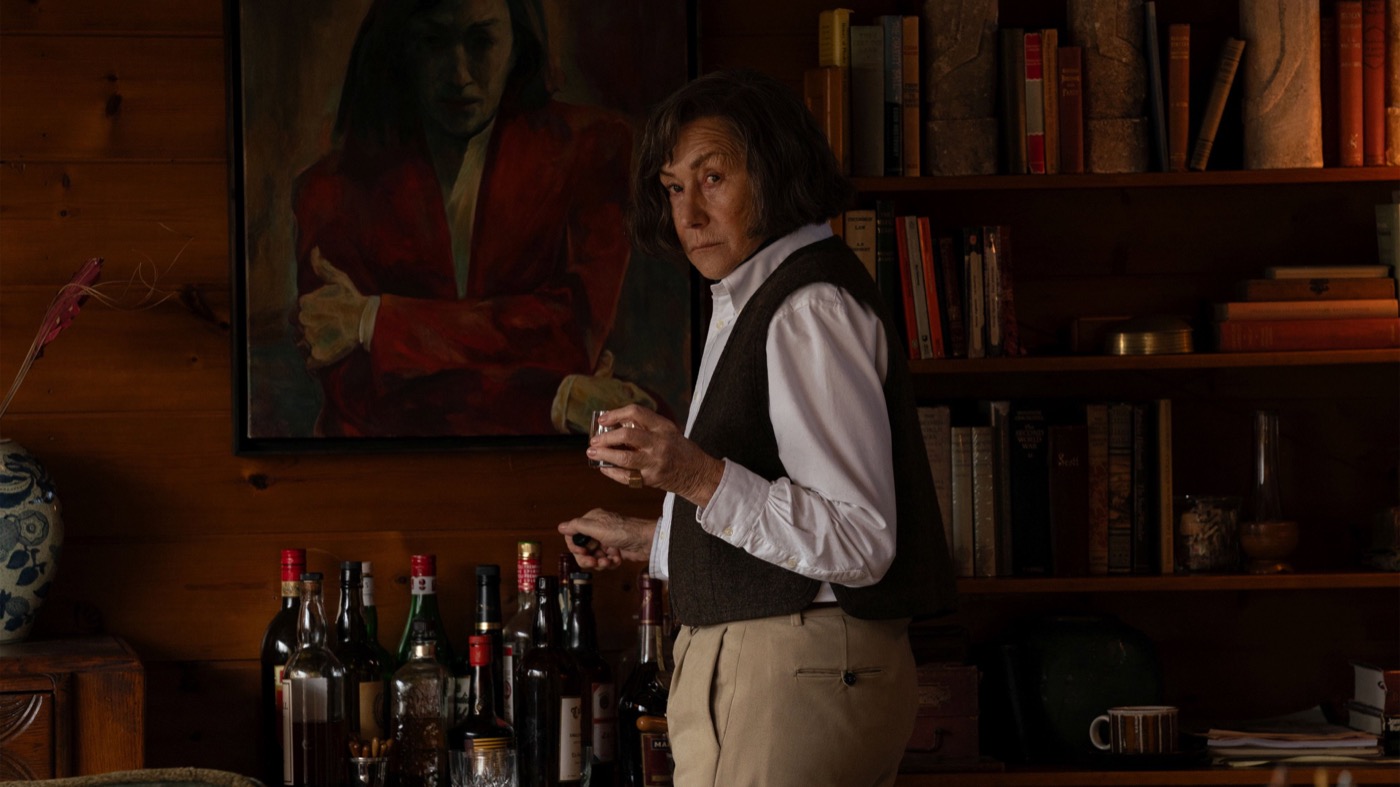
When Edward arrives at Highsmith’s home in Switzerland, a battle of wits begins almost immediately. His underhanded attempts to coax her back into the publishing world meet with her extremely cantankerous, abrasive personality. True to its source material, the early sections of Corbijn’s film are packed with dialogue. They reveal the characters’ natures as they pursue their goals, rather than leaning on visual flair.
Highsmith eventually gives in to Edward’s persuasion, on one condition: he must help her devise the formula for a perfect murder before she begins her new book. It’s worth clarifying that A Talent for Murder is entirely invented: Edward didn’t exist in real life, and Highsmith never wrote a sixth Ripley book. But as Corbijn’s film unfolds, a metafictional reckoning with Highsmith and Edward’s inner desires begins to emerge, especially in what they imagine about the mind behind Ripley’s schemes. This potentially rich psychological focus might have been fascinatingly revealing, had the film not repeatedly sanded down its edges to become a more straightforward thriller.
The structure of A Talent for Murder is intriguingly two-faced. On one level, there’s the “real life” of Highsmith and Edward, as they verbally spar over Ripley’s story and try to move towards the final murder, all the while jabbing at each other’s sore spots. On another, we see their new Ripley take shape: a fictionalised version of the “real people” Edward encounters, including Clementine Balfour (Olivia Cooke), an heiress he meets on the train to Switzerland. As Edward begins a real romance with Clementine, Ripley does the same with a fictionalised version of her, pursuing her family’s inheritance by any means necessary.
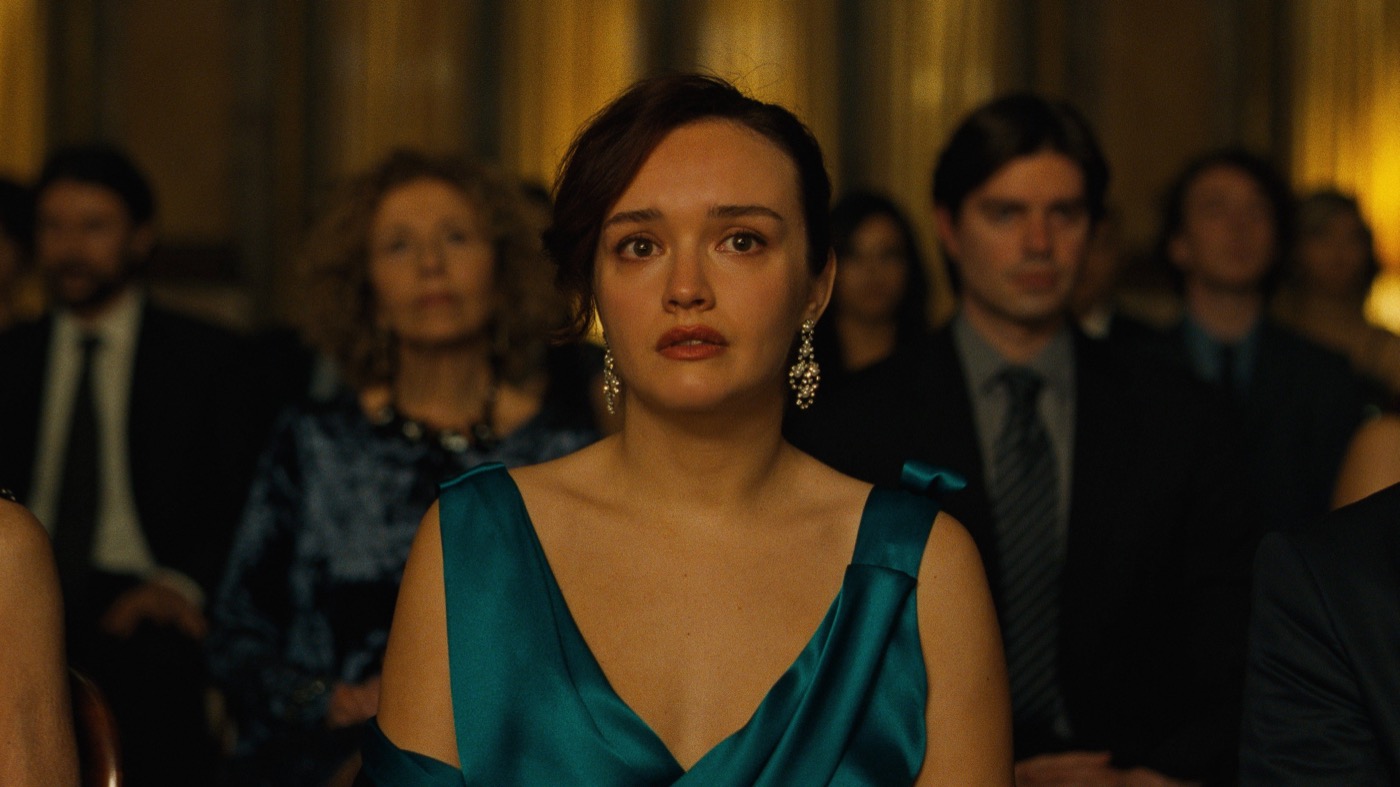
Ehrenreich is given a tall order, playing both the neurotic, out-of-his-depth Edward and the suavely cunning, ruthless Ripley. He never quite seems to meet the challenge, despite his knack for portraying insecure men in various forms. It helps that his co-star is Mirren, with whom he shares decent chemistry as Highsmith’s venom begins to seep into Edward’s editorial instincts. The film is at its best when it focuses claustrophobically on the two writers, as Highsmith gradually draws out the parallels between Edward and Ripley as their stories increasingly overlap.
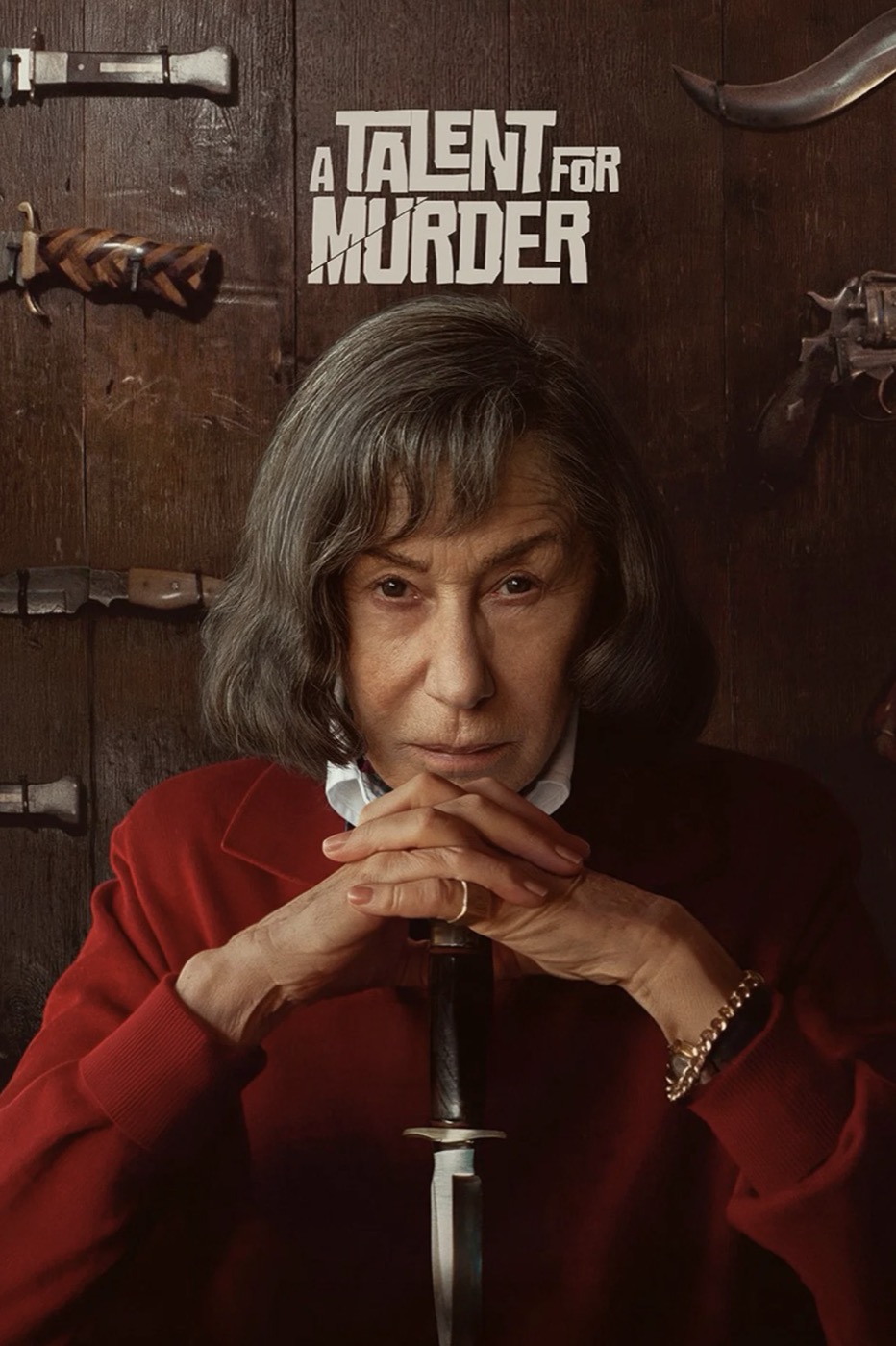
A tenuous balance between beauty and danger pervades much of A Talent for Murder, supported by Dimitri Capuani’s production design and Robbie Ryan’s cinematography. Capuani’s work stands out in Highsmith’s home, where upper-class decor conceals dangerous weapons: razor-sharp blades and ornate guns, some of them possibly loaded, sit beside glass windows overlooking the sweeping Swiss landscape. Edward’s romantic outings with Clementine detract from the momentum of his creative challenge with Highsmith, but Ryan’s camerawork makes the Swiss scenery gorgeous to look at and cleverly frames the film’s key scenes in Highsmith’s home.
Much of A Talent for Murder’s thrill remains superficial. Corbijn’s film does little to probe Highsmith’s real-life bigotry and negativity beyond one scene in which she venomously blames various minority groups for her troubles — even as she serves as a foil to draw out Edward’s more transgressive tendencies. Nor does the overlap between Edward and Ripley feel psychologically revealing about Edward. The murderous Ripley story the writers create together isn’t especially astonishing in its own right, and certainly doesn’t feel analogous to Highsmith’s original work.
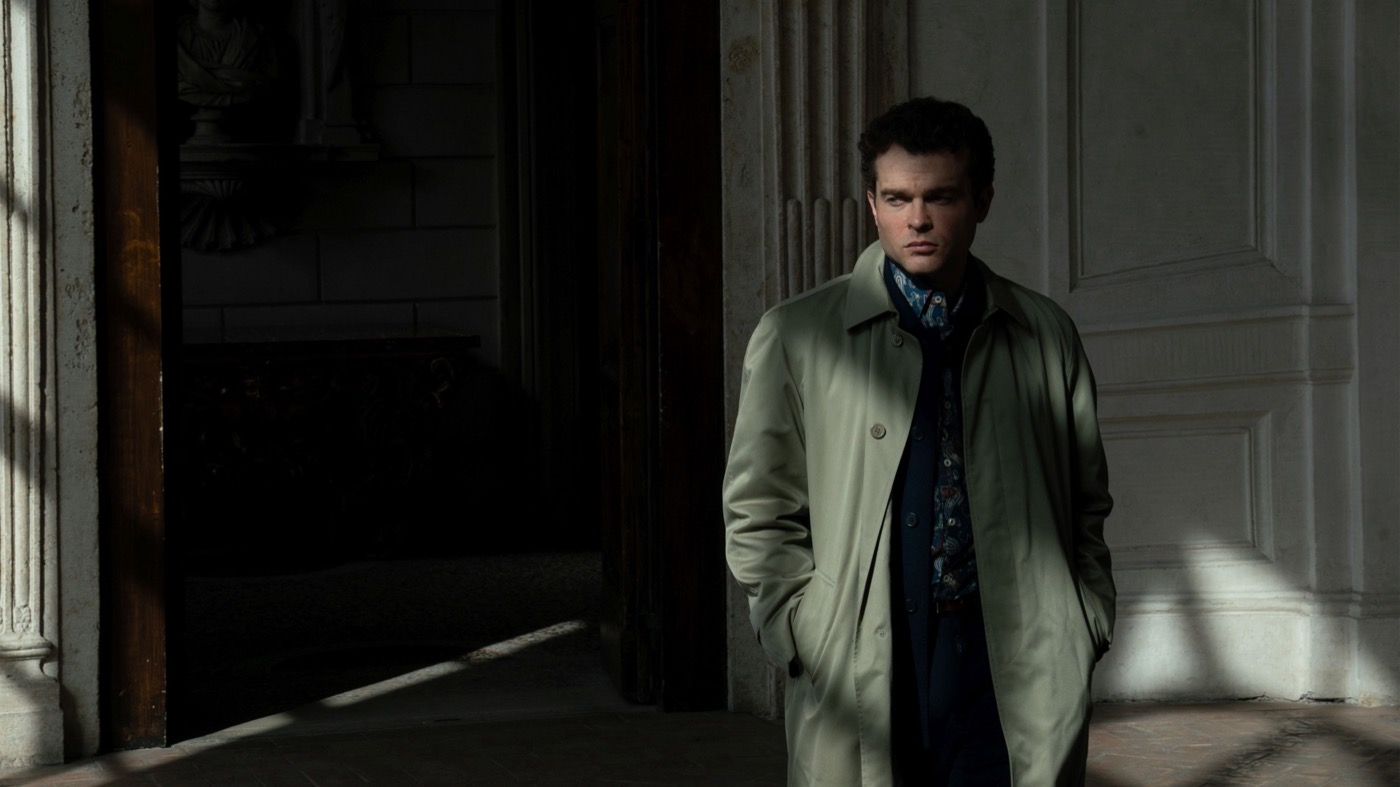
All things considered, though, A Talent for Murder still works as a glibly entertaining ride. It struggles with pacing, balance and predictability, but the central trio of Mirren, Ehrenreich and Cooke are well cast and give the film some emotional momentum. Its steady blurring of the line between fact and fiction is at least entertaining. Corbijn’s film never explicitly fails, but neither does anything about it feel like a resounding success. It’s held back by a relative lack of curiosity about anything beyond surface-level thrills.
How much more could the film have drawn from Highsmith’s catalogue of personal unpleasantness? How much further could it have explored the darkness in Edward’s mind, as the pursuit of the perfect murder leads him to emulate Ripley’s inner life? What does it make of the Ripley novels’ engagement with class in the final murder, beyond the familiar idea that Clementine is destined to inherit substantial wealth that Ripley seems poised to steal?
The great revelation of Ripley, as Highsmith presented him to the world, is that great evil can lurk beneath any benevolent exterior, no matter how well hidden. Yet the great paradox of Ripley’s creation is that such a fully realised character was conceived by a cruel woman who could still summon enough empathy to imagine his perspective and inner life. That revelation, that paradox and that engine of duplicity may drive the thrills of A Talent for Murder, but they’re nowhere to be found when the film’s heart is examined.
SWITZERLAND • AUSTRALIA • ITALY • USA • UK | 2026 | 105 MINUTES | 1.85:1 | COLOUR | ENGLISH

director: Anton Corbijn.
writer: Joanna Murray-Smith (based on the play ‘Switzerland‘ by Smith).
starring: Helen Mirren, Alden Ehrenreich, Olivia Cooke, Eduardo Xavier De Silva & James Faulkner.


