ZIPANG (1990)
A samurai outlaw falls head over heels for the ace gunslinger hunting him, while simultaneously racing to find the mythical City of Gold after pulling a magical golden sword from a stone.

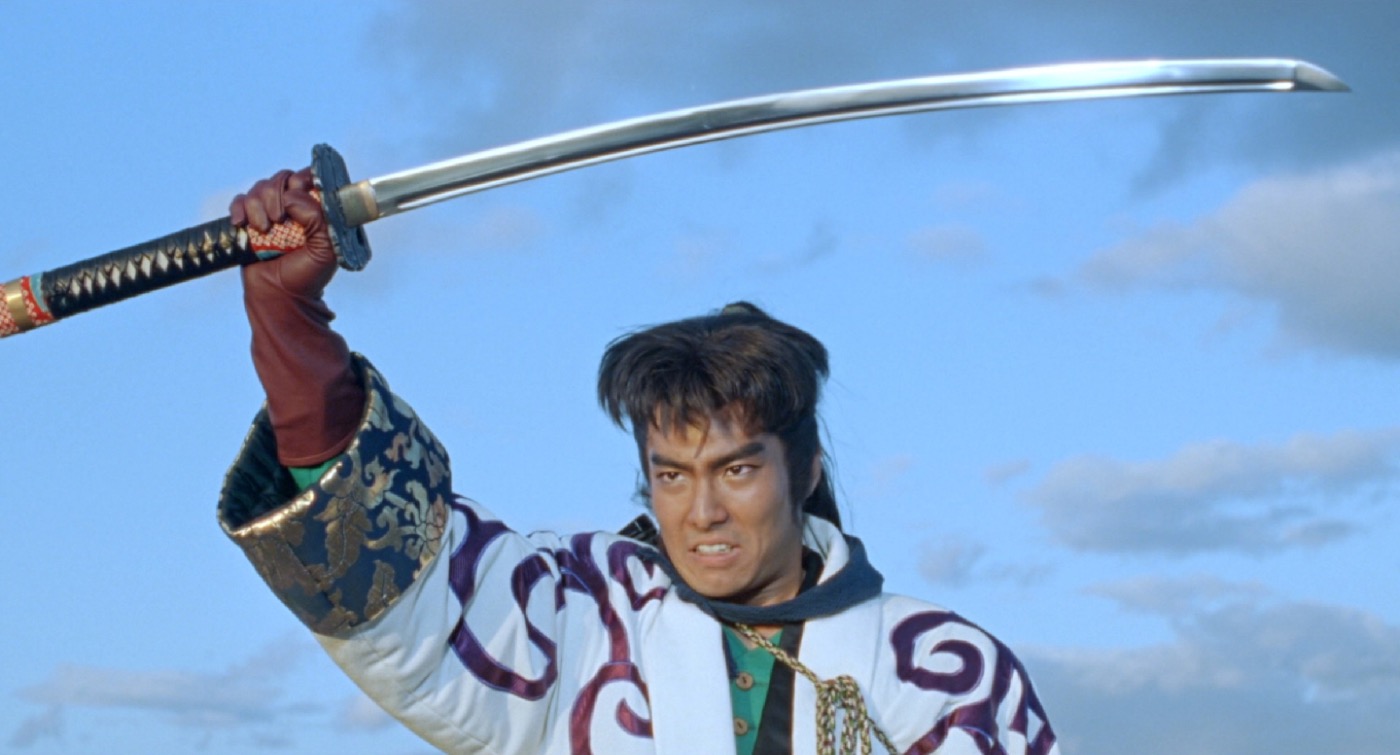

A samurai outlaw falls head over heels for the ace gunslinger hunting him, while simultaneously racing to find the mythical City of Gold after pulling a magical golden sword from a stone.
Kaizō Hayashi’s Zipang is a seriously entertaining fantasy film that stubbornly refuses to take itself seriously, even as it tackles weighty philosophical themes. Toy Robot, Arrow Video’s new offshoot, hopes to capture the nostalgic appeal of early rental video, which brought all sorts of weird and wonderful world cinema into UK homes. Zipang hasn’t been available in the UK since a VHS release in 1990, followed by a DVD in 2001; both versions were missing about 30 minutes. Toy Robot’s new transfer of the original theatrical cut, taken from Golden Media Group’s 1080p HD master, is effectively the UK debut of the complete film in all its golden glory.
In an enigmatic pre-title sequence, a tattooed warrior (Jian Xiu) is relentlessly pursued by masked warriors on horseback before being run through with a strange, branch-bladed sword. A woman (Haruko Wanibuchi) in fine gowns seems to feel the moment of his death, though she’s obscured by snow and walls of ice. Hayashi’s first two features, the beautiful To Sleep So as to Dream (1986) and Circus Boys (1989), were both shot in black and white, so the transition to bold colour comes as a jolt, despite the poetic sense of stylistic continuity. In his first three features, Hayashi established a distinctive visual language and thematic continuity, both of which remain evident in his Maiku Hama Trilogy (1994–96), restored and released last year by Third Window Films.
The film’s sheer exuberance is irresistible. Hayashi keeps things visually varied with untethered “shaky-cam” sequences and experimental techniques, including a primitive precursor to “bullet time” — almost 10 years before The Matrix (1999) — created by taking multiple photographs around a scene to freeze and rotate the action. Credit for the film’s visual identity and stylish design must also go to regular collaborator Takeo Kimura, the art director, better known for his work with Seijun Suzuki, most notably the super-stylish Tokyo Drifter (1966), and cinematographer Masaki Tamura, whose work I know from Lady Snowblood (1973), Tampopo (1985) and many others. Also worth a shout-out is Arata Tendo, the award-winning author who co-wrote a two-volume novelisation alongside Hayashi’s screenplay. It was published in 1989, ahead of the film’s release.
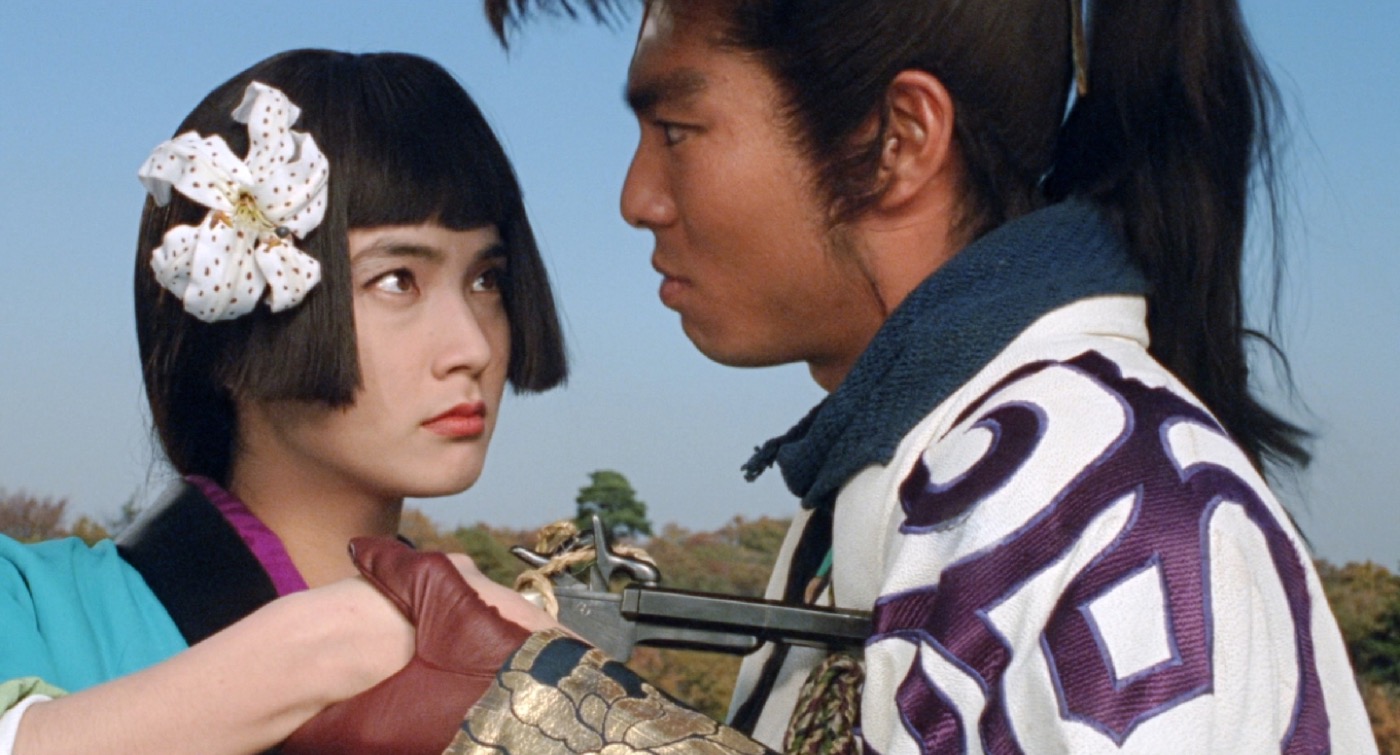
It feels as if we’ve joined the climax of a non-existent prequel as the film drops us into a mythologised version of ancient Japan, where a crowd of bounty hunters clamour for the latest wanted posters. They’re all interested in one man: Jigoku Gokurakumaru (Masahiro Takashima), a notoriously wicked bandit with a suitably substantial bounty on his head. Kikumaru (Masumi Nagasaki) snatches the poster, and a brawl briefly breaks out before his sister (Narumi Yasuda) intervenes with a display of sharpshooting. There’s a reason she’s known as “Yuri the Pistol”: she has extraordinary shooting skills and wears a large white flower in her hair — yuri is Japanese for “lily”.
We then get a taste of what Yuri will face as Jigoku concludes his kagura-inspired solo dance for an audience that looks decidedly dangerous, waiting for him to remove his theatrical mask. Clearly, this “wicked bandit” and his men have already amassed an army of enemies. They may have been travelling incognito as a small theatre troupe, but the real show starts when the swords come out.
The ensuing ten-minute sequence alone pushes the body count into the hundreds. The references to genre-defining chanbara films come thick and fast, while the kinetic fight choreography is slick and inventive, with audacious camerawork to match. Masahiro Takashima rises to the challenge, demonstrating his physical acting, stamina and showy skills with a variety of swords and styles.
The combat swiftly moves from the street to a bamboo grove, then into claustrophobic interiors, where the frame can barely contain the frenetic action. Movement turns to blurs and swirls as blades slice through flimsy walls and screens, recalling many climactic movie battles, particularly Sword of Doom (1966). But this isn’t the film’s finale. We’re only just getting started.
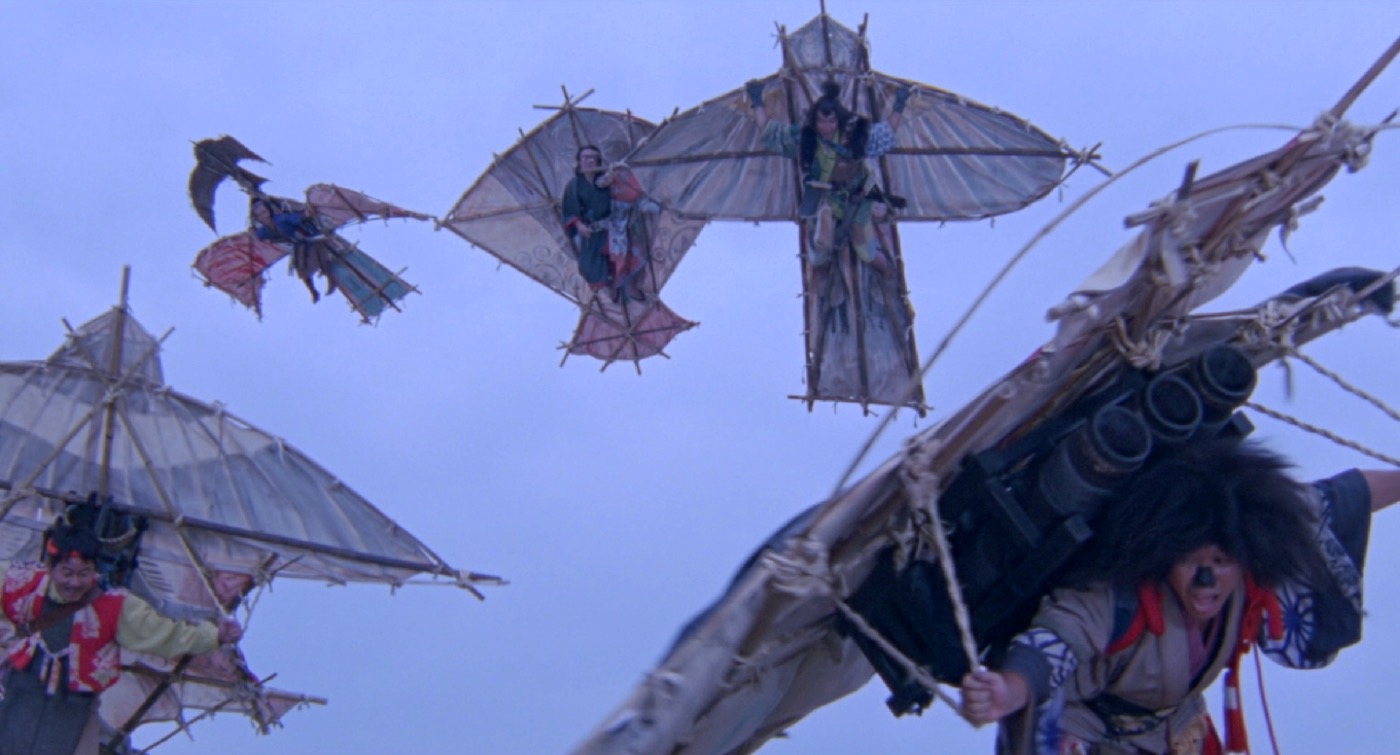
The one-man-army trope is pushed beyond belief, with help from Jigoku’s sword caddy, Togizo (Bangal), who supplies swords by number, just like golf clubs. There’s even a brief one-on-one bout of fencing with a French musketeer. Jigoku is down to his last and favourite sword when he finds his escape route across a long, narrow bridge blocked by an entire ninja clan. In one continuous take, he fights and fells all 50 adversaries.
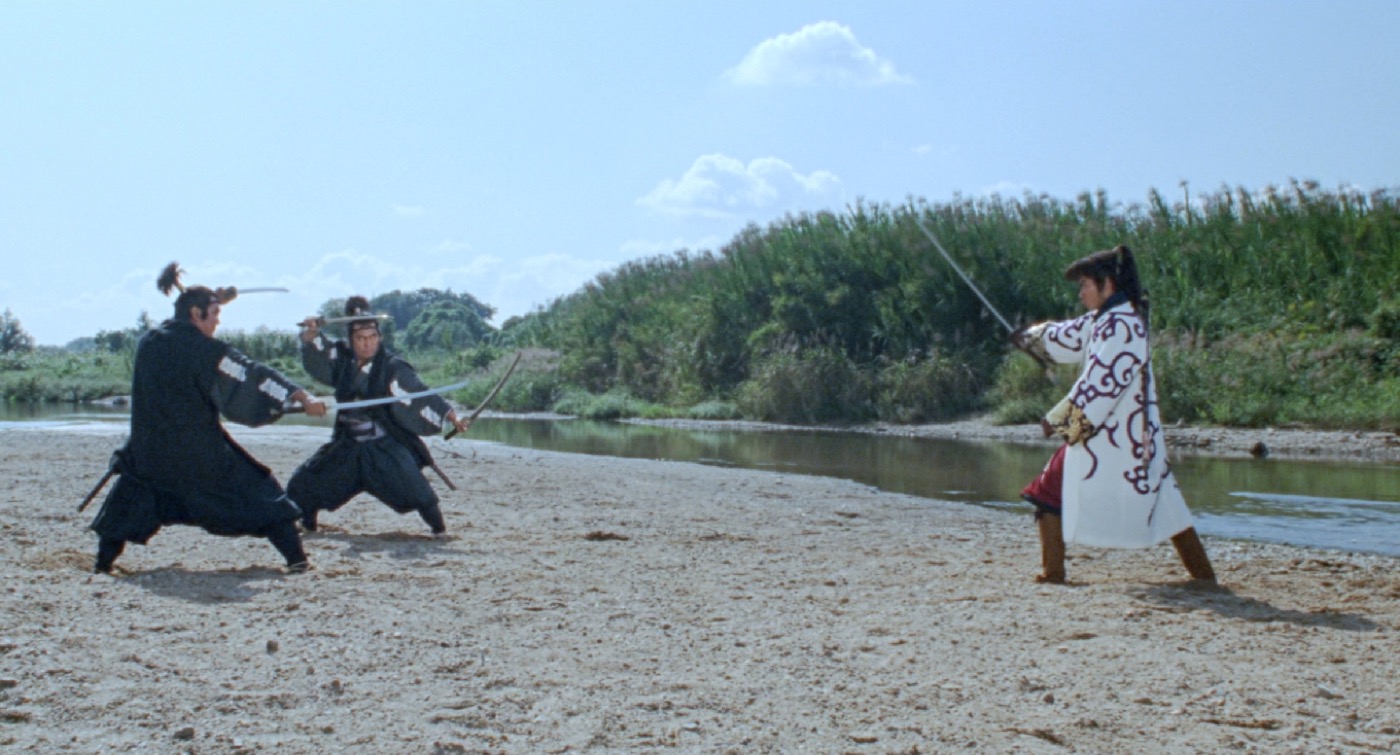
His ordeal continues when he’s confronted by a tag team of two co-ordinated samurai. They’ve bided their time, hoping to take advantage of his fatigue, but unlike Kobuse Takuma (Raizō Ichikawa) in the iconic final battle of The Betrayal (1966), Jigoku never tires. Perhaps he’ll even prove a match for Yuri the Pistol. We don’t have long to wait to find out.
I know many viewers will be coming to this overlooked classic fresh, so I don’t want to spoil things. Suffice to say, the pair are impressed by each other’s prowess and tenacity. Over the course of the story, initial respect turns to mutual admiration, then grudging affection. They make a great couple, and we’re in no doubt about whom we should be rooting for. Jigoku has the cocksure confidence of a master swordsman, tempered by the swagger of a likeable rogue. Yuri is fierce and feisty, yet effortlessly endearing, with a winning smile.
Masahiro Takashima made a big splash with his first two films, Totto Channel / トットチャンネル and BU SU / ブス (both 1987). They earned him several Best Newcomer awards, including the ‘Japan Academy Prize’, and ensured he was — and remains — in demand.
Narumi Yasuda had already won a couple of festival awards for Best Actress and had recently starred in the popular Fuji TV romantic drama series Classmates / 同·級·生 (1989). She was also pursuing a pop career, which she launched with the theme tune to Studio Ghibli’s anime Nausicaä of the Valley of the Wind (1984).
Jigoku and Yuri both begin as anti-heroes, seemingly motivated mainly by money and material gain, though there are early hints that they’re more complex. Yuri’s younger brother is certainly loyal, and she appears to have his best interests at heart, despite regularly slapping him down. Jigoku’s motley entourage clearly love and respect him.
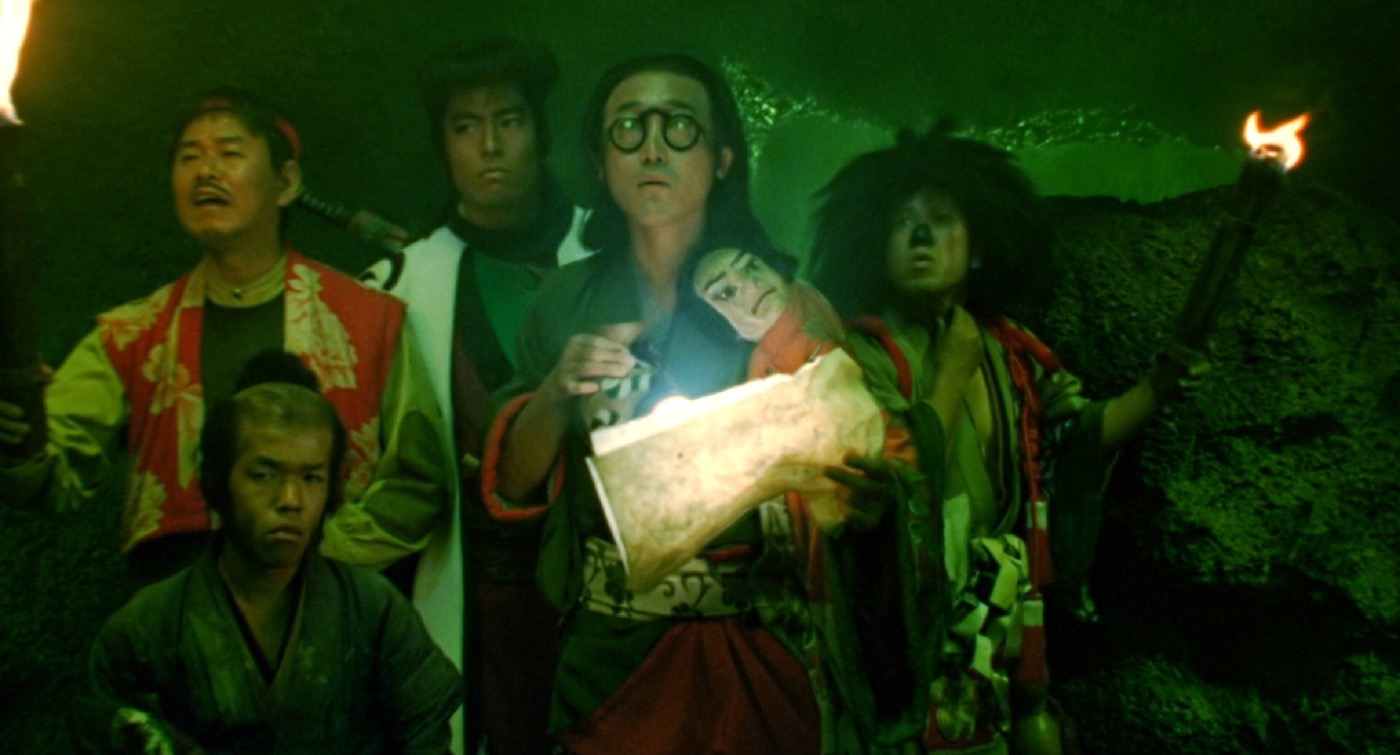
Bunshichi (Shirō Sano) thinks he’s worked out the location of long-lost treasure in a cave complex. What seemed to be a samurai swordplay extravaganza pivots into an Indiana Jones-style fantasy quest as the group negotiates subterranean booby traps. I immediately recognised Shirō Sano from his lead role in To Sleep So as to Dream. Along with several other cast members, he also appeared in Circus Boys, as did an elaborate animatronic elephant that joins Jigoku’s group.
The elephant’s purpose in the story is never made clear, but it’s a welcome quirk that adds to the film’s enigma. You can’t help wondering how it got there. It hints at earlier adventures the troupe may have had with the travelling circus that perhaps brought them together. Yet we’re never sure whether we’re supposed to accept it as a real elephant or see it as a puppet with two of Jigoku’s gang members inside.
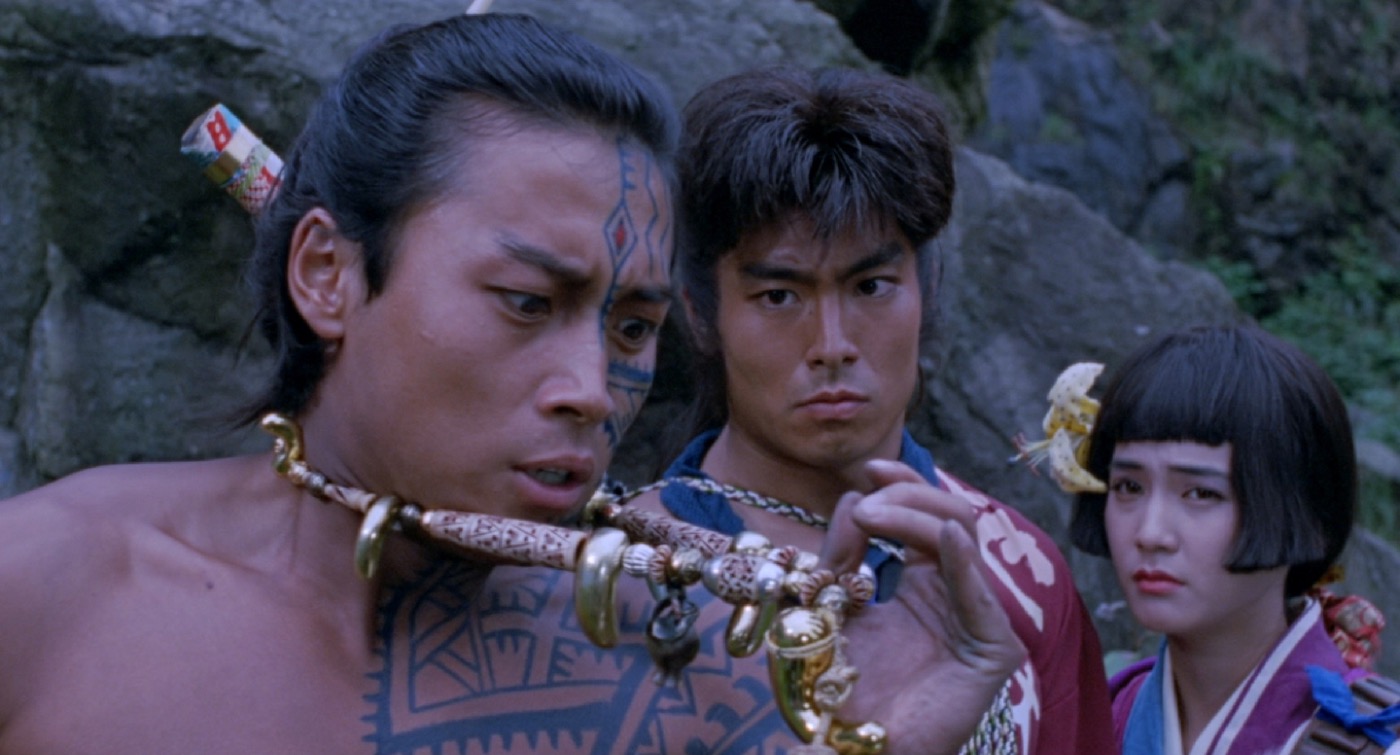
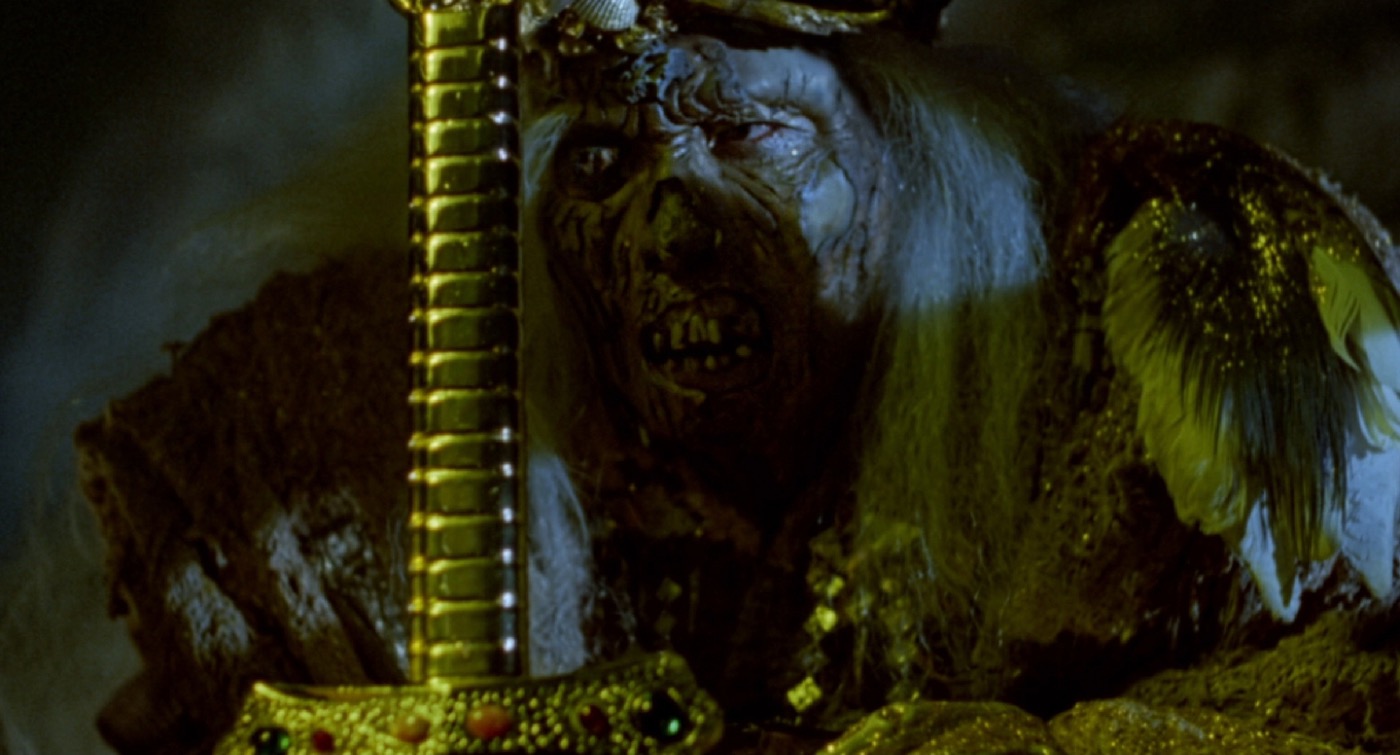
The treasure turns out to be the strange, branch-bladed sword, plunged into a stone like Excalibur. Jigoku manages to free the golden blade and make a swift exit, narrowly escaping more deadly traps. What he doesn’t realise is that the sword had pinned the tattooed warrior’s dead body beneath the stone. The man miraculously comes back to life — and things start to get seriously strange.
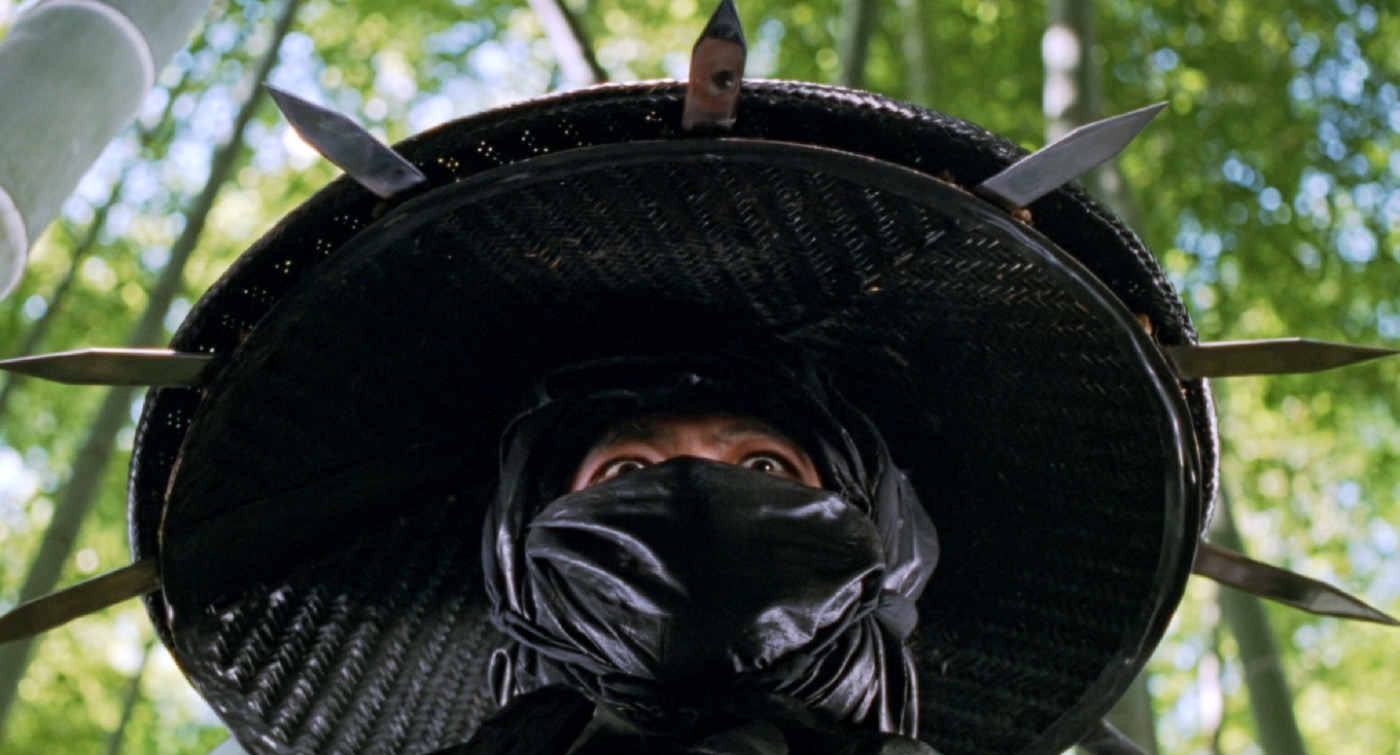
Jigoku is being followed by Hattori Hanzo (Yukio Yamato), a stealthy ninja in the service of Tokugawa Ieyasu (Chiyonosuke Azuma). Armed with a wonderfully anachronistic pair of binoculars, Hanzo photographs the branch-bladed sword, places the images in a magic homing shuriken and throws it all the way back to the Shōgun’s palace. There, they reach Hayashi Razan (Mikio Narita), who is explaining that a portal to the mythical land of Zipang can be opened with a key in the form of — you guessed it — a golden, seven-branched sword. Narita was a prolific, almost ubiquitous character actor from the 1960s onwards, and Zipang was one of his final screen appearances. I recognised him from his memorable role as the evil sorcerer in Ninja Wars (1982), also restored and released by Toy Robot earlier this year.
As the film becomes increasingly dreamlike, Hayashi introduces real historical references, creating a delicious dramatic dissonance between high fantasy and reality. The presence of Tokugawa Ieyasu (Chiyonosuke Azuma) tentatively places the action in the early Edo period: Ieyasu was Shōgun for only two years, beginning in 1603, and died in 1616. Hanzo was also a real person who served Ieyasu and came from Iga, an area associated with a major ninja clan. Razan was an esteemed scholar, teacher and confidant of the shogunate.
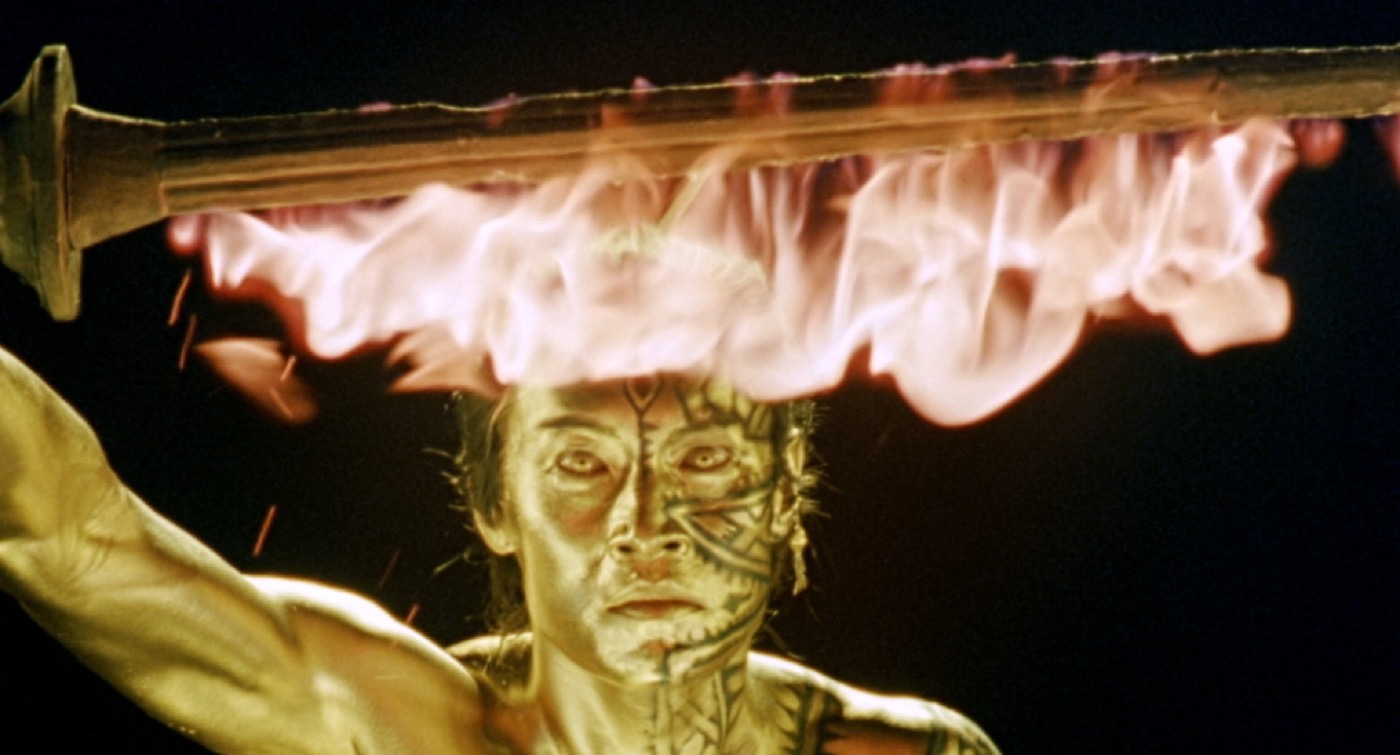
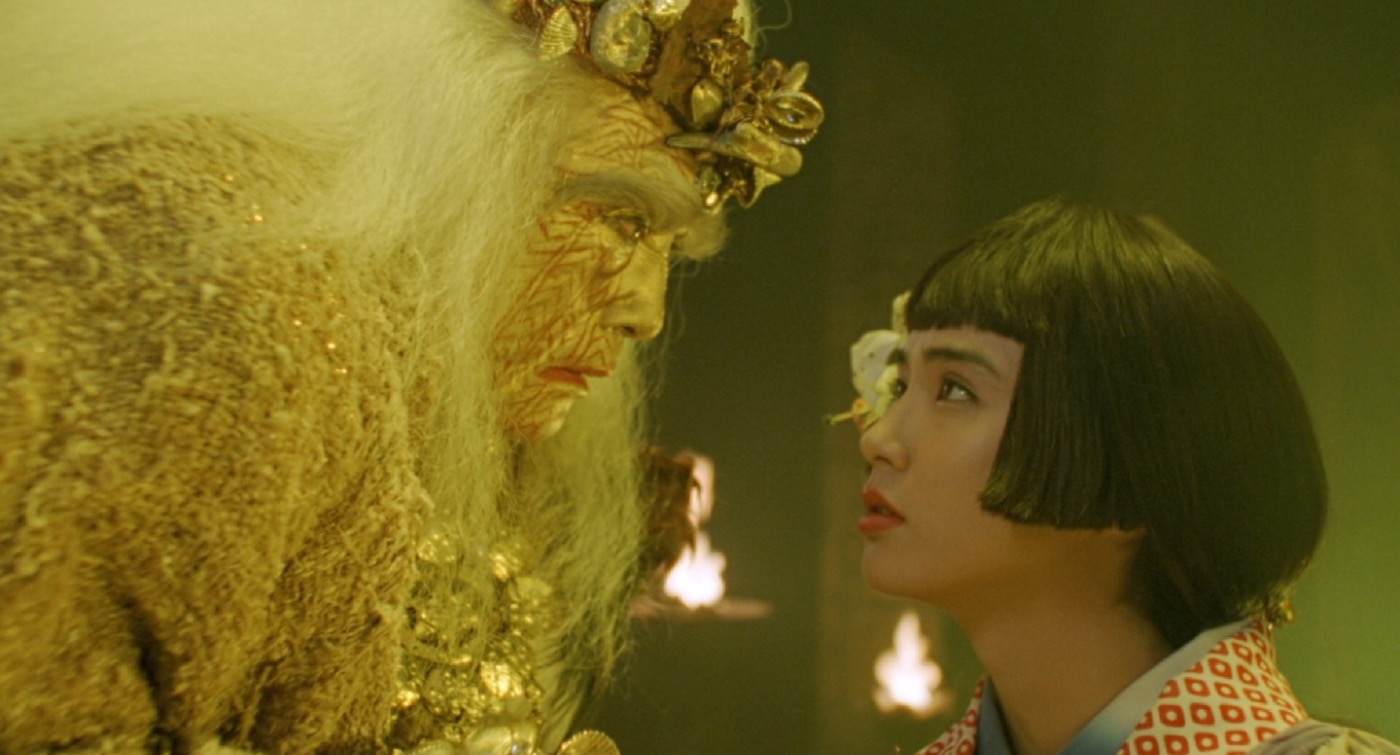
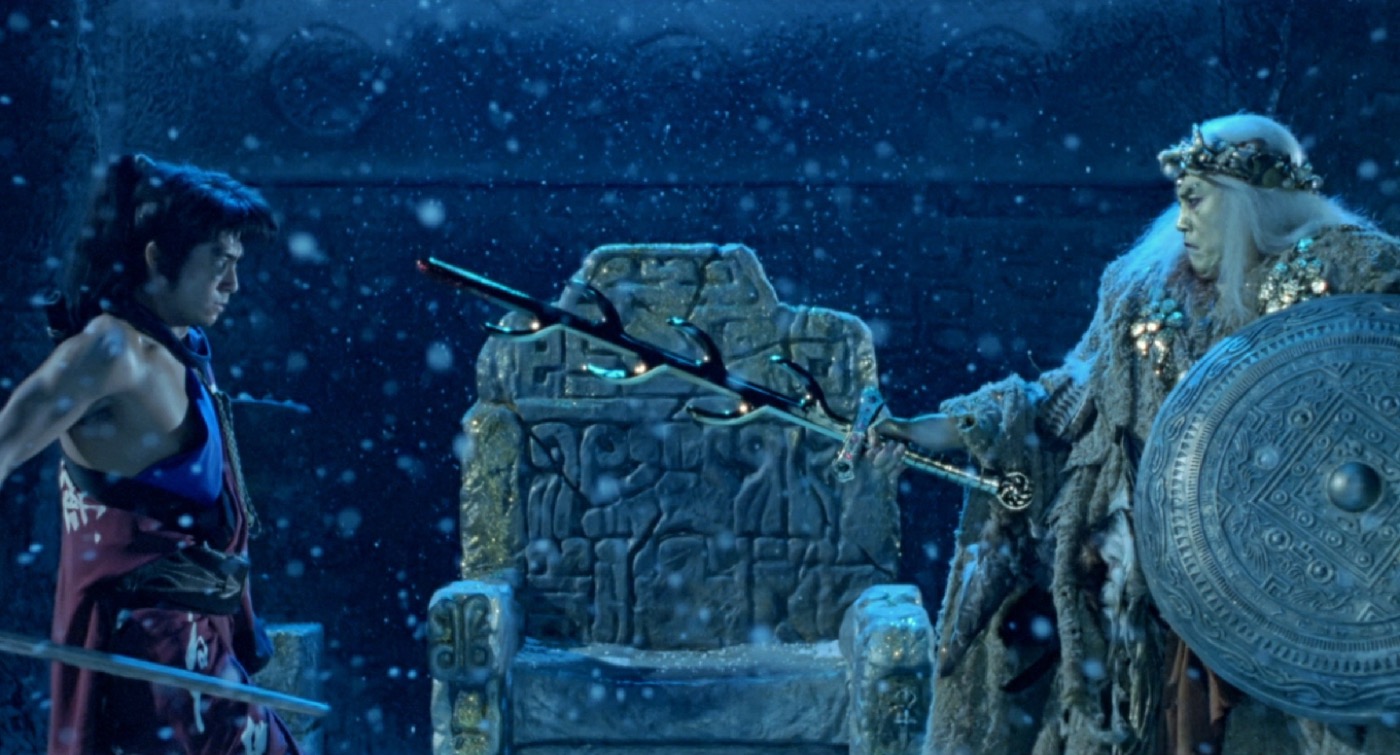
Ieyasu is content with his lot and believes his newly unified country has everything anyone could want. Then he’s presented with a golden amulet of dazzling lustre and told it comes from the fabled land of Zipang, ruled by the personification of gold itself (Mikijirō Hira). It’s not difficult to read the King of Zipang as a bold metaphor for capitalism and the pressures of foreign economic forces.
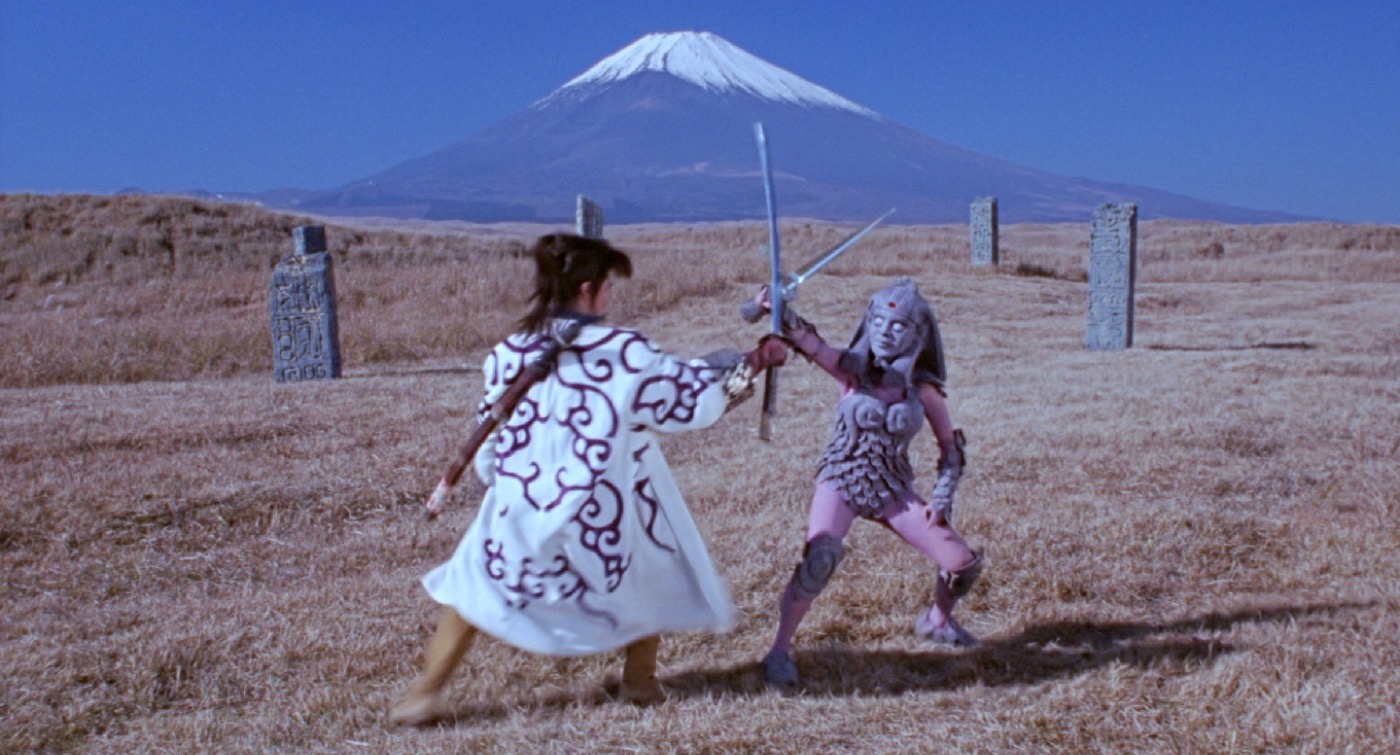
Though presented here as an eastern El Dorado, Zipang appears in the writings of the medieval Venetian explorer Marco Polo. It’s thought to be a distorted version of Japan, as described to him by Chinese scholars. Hayashi therefore presents a parallel Japan inspired by the rich legacy of samurai fantasy films rather than any particular historical period. He overlays this with another version of Japan, constructed by foreigners and documented by a man who never visited the archipelago himself. This resonates with the duality of Japan’s post-war national identity, when the ideology of the dismantled imperial regime was rejected and ancient traditions were compromised by Western influences during the American occupation.
Zipang never gets bogged down in its subtext. It moves along with enough narrative momentum to carry its audience over the plot’s bumps and holes. Just as To Sleep So as to Dream is a poetic treatise on the history of early Japanese cinema and the roots of the jidaigeki and chanbara genres, Zipang is knowing and trope-literate enough to have fun, subvert expectations and take us to unexpected places. It’s not only crazy entertainment, but also as unpredictable and artistically satisfying as the Maiku Hama Trilogy — with a much brighter, more romantic outlook to match its glittering theatrical aesthetic. What begins as a chanbara showcase morphs into a fantasy adventure, skirts historical drama and finally becomes a fairy tale examining the meaning of, and differences between, avarice, desire and love.
JAPAN | 1990 | 124 MINUTES | 1.85:1 | COLOUR | JAPANESE

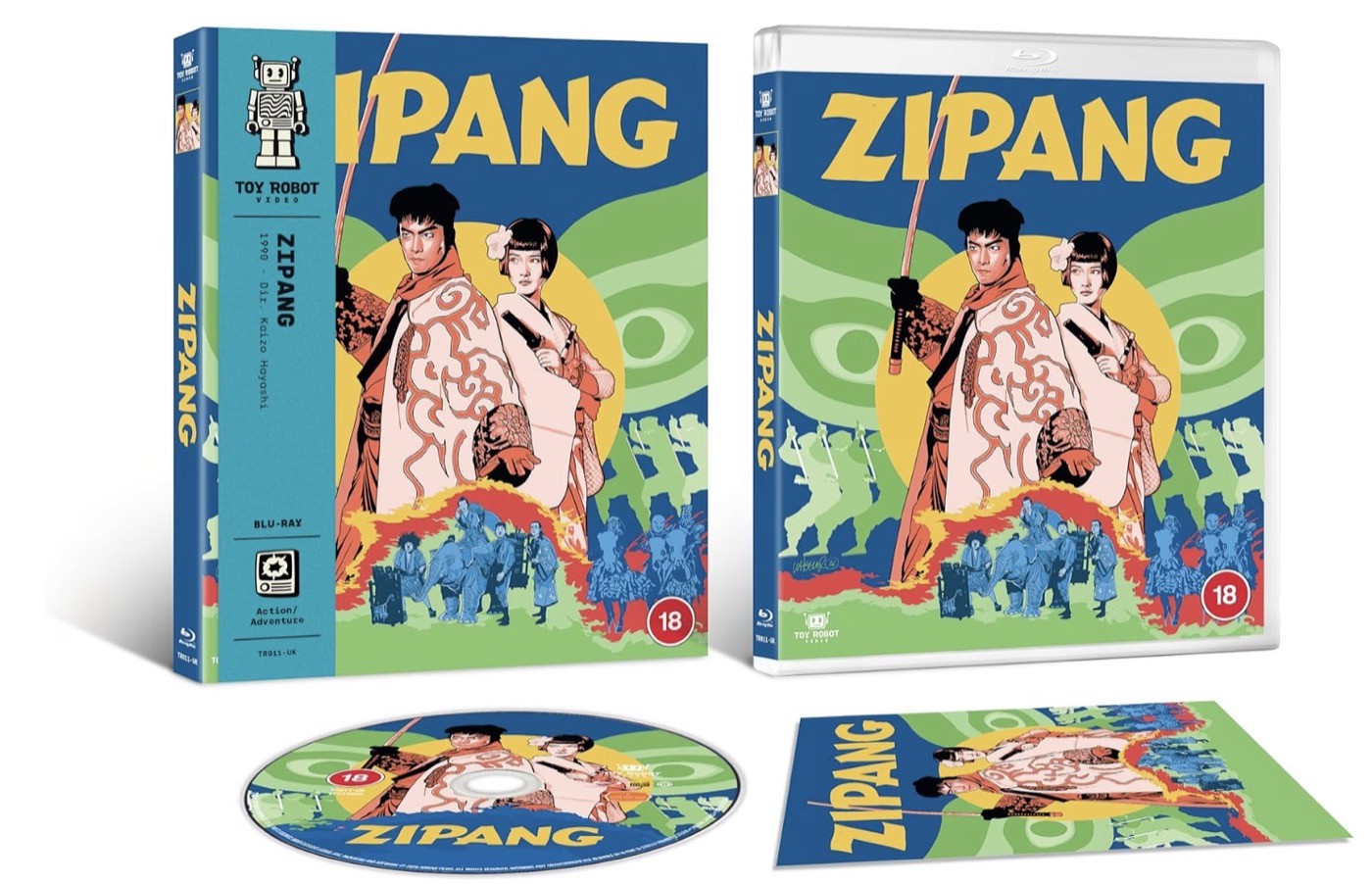
The bonus material is shamefully scant — there isn’t even a booklet. A physical release should offer some tactile or visual reward, and it’s a missed opportunity that the slipcase, keep case and disc all carry the same artwork. The promotional pack shot also seems to show an insert bearing the same image. Gripes aside, Toy Robot deserves applause for presenting a top-quality scan of a neglected classic, with generally good clarity and rich colours. It’s essential viewing for fans of Asian fantasy cinema.

director: Kaizō Hayashi.
writers: Kaizō Hayashi & Arata Tendo.
starring: Masahiro Takashima, Narumi Yasuda, Shirō Sano, Jian Xin, Mikio Narita, Yukio Yamato, Mikijirō Hira, Haruko Wanibuchi, Baiken Jukkanji Bengal & Teru.