LITTLE SHOP OF HORRORS (1986)
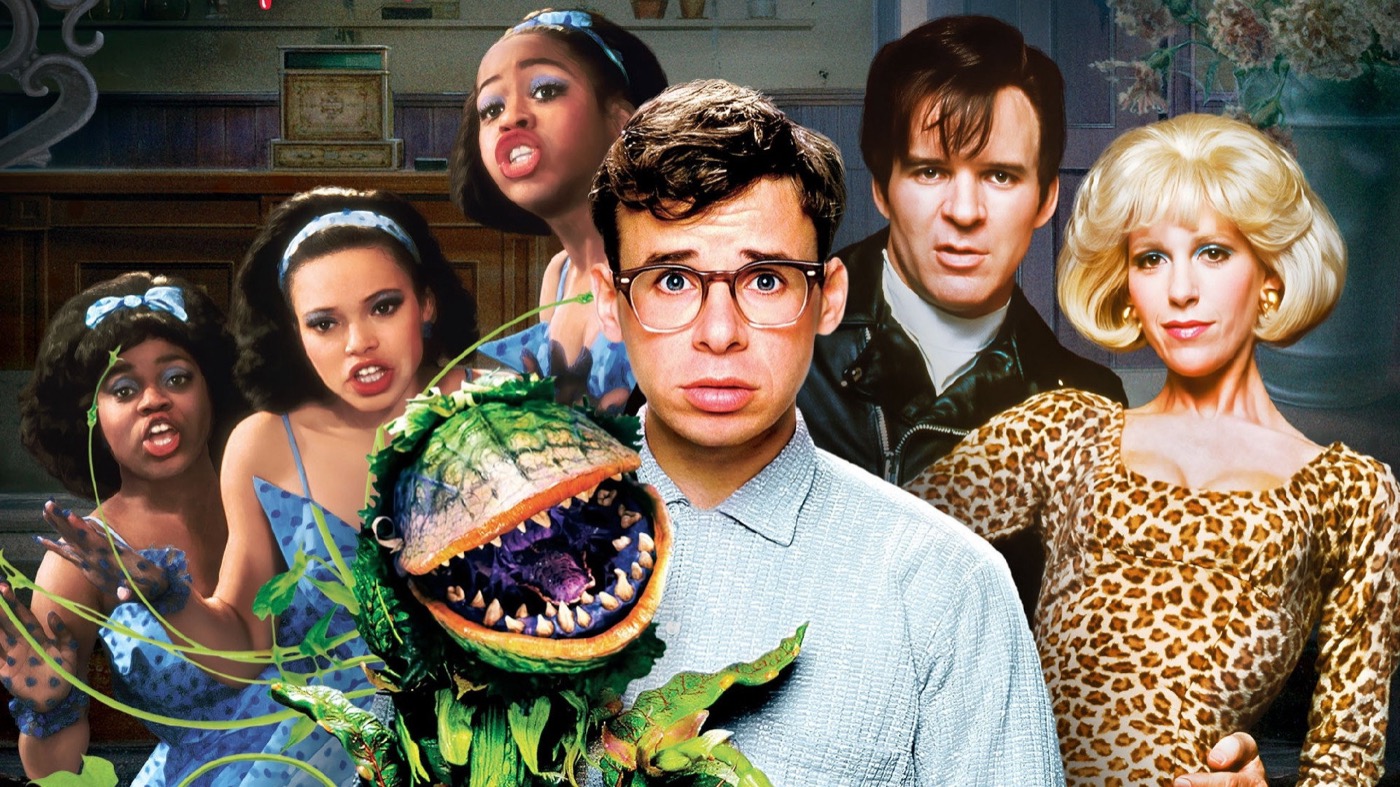
A nerdy florist finds his chance for success and romance with the help of a giant man-eating plant who demands to be fed.


A nerdy florist finds his chance for success and romance with the help of a giant man-eating plant who demands to be fed.
Little Shop of Horrors is enough to make you weep for the current state of the Hollywood musical. Every complaint about the genre’s flat soullessness today finds its remedy in Frank Oz’s 1986 film, a work so full of detail, feeling and purpose that it makes you wonder why we ever settle for less.
The story follows a down-on-his-luck schmo looking for a way out of life on Skid Row. Little Shop takes a simple, universal longing — who isn’t hoping to escape from somewhere? — and grows an endless array of ideas and imagination from it. That recognisable emotional core has made the film an enduring cultural touchstone.
Legendary filmmaker Roger Corman directed The Little Shop of Horrors (1960), which provided the basic premise for later versions. Corman’s film wasn’t a musical. Yet it’s fitting that a director and producer famed for reinterpreting American genre films on a low budget should be responsible for a story retold countless times, from Off-Broadway to school drama departments around the world.
It’s Corman’s omnivorous appetite — his ability to absorb and remix endless strands of cinema, music and taste, both high and low — that Frank Oz’s film taps into. This cultural osmosis, this hunger for more of everything, was already present in the 1982 Off-Broadway musical, from which the 1986 film takes most of its songs and story. At the heart of each version is a sentient plant that demands to be fed human blood. The plant, Corman and Oz are all insatiable.
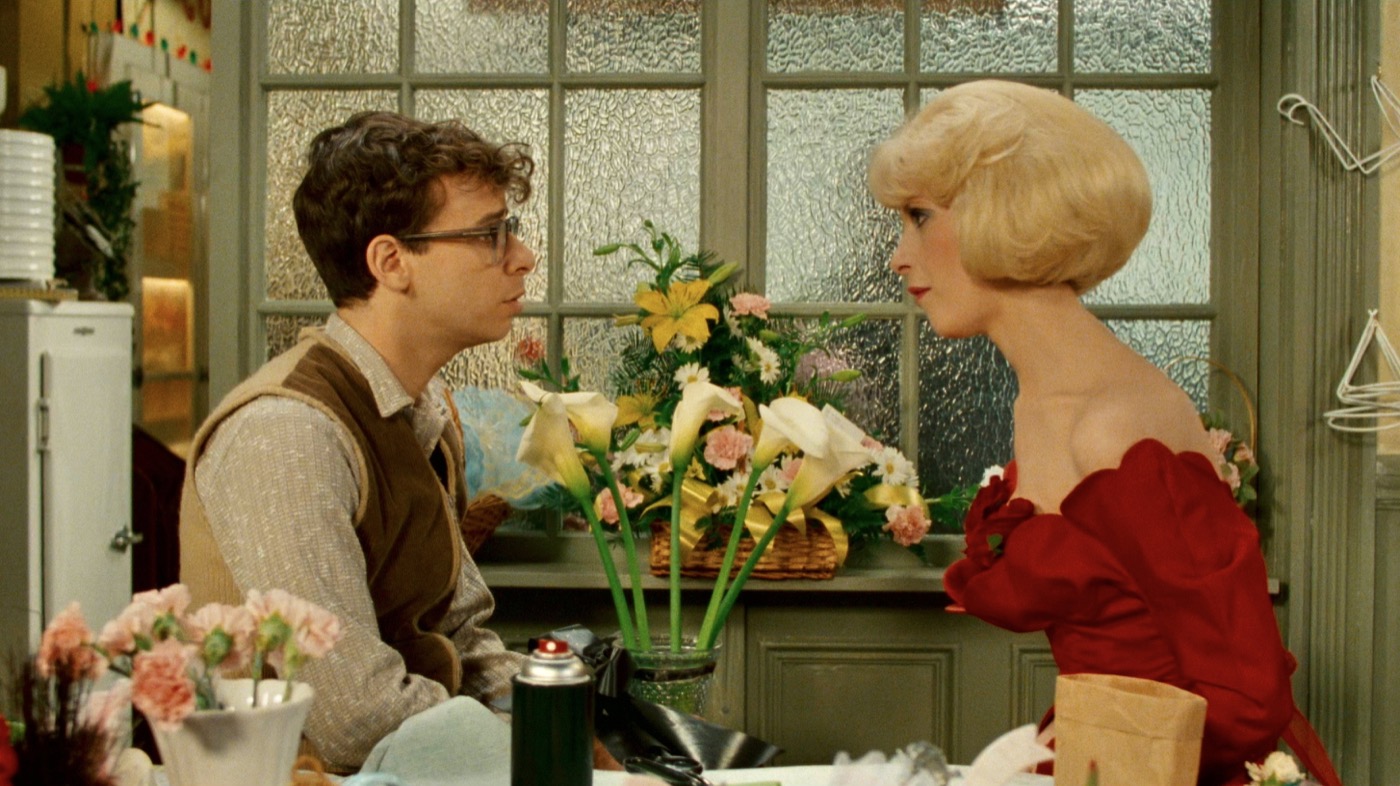
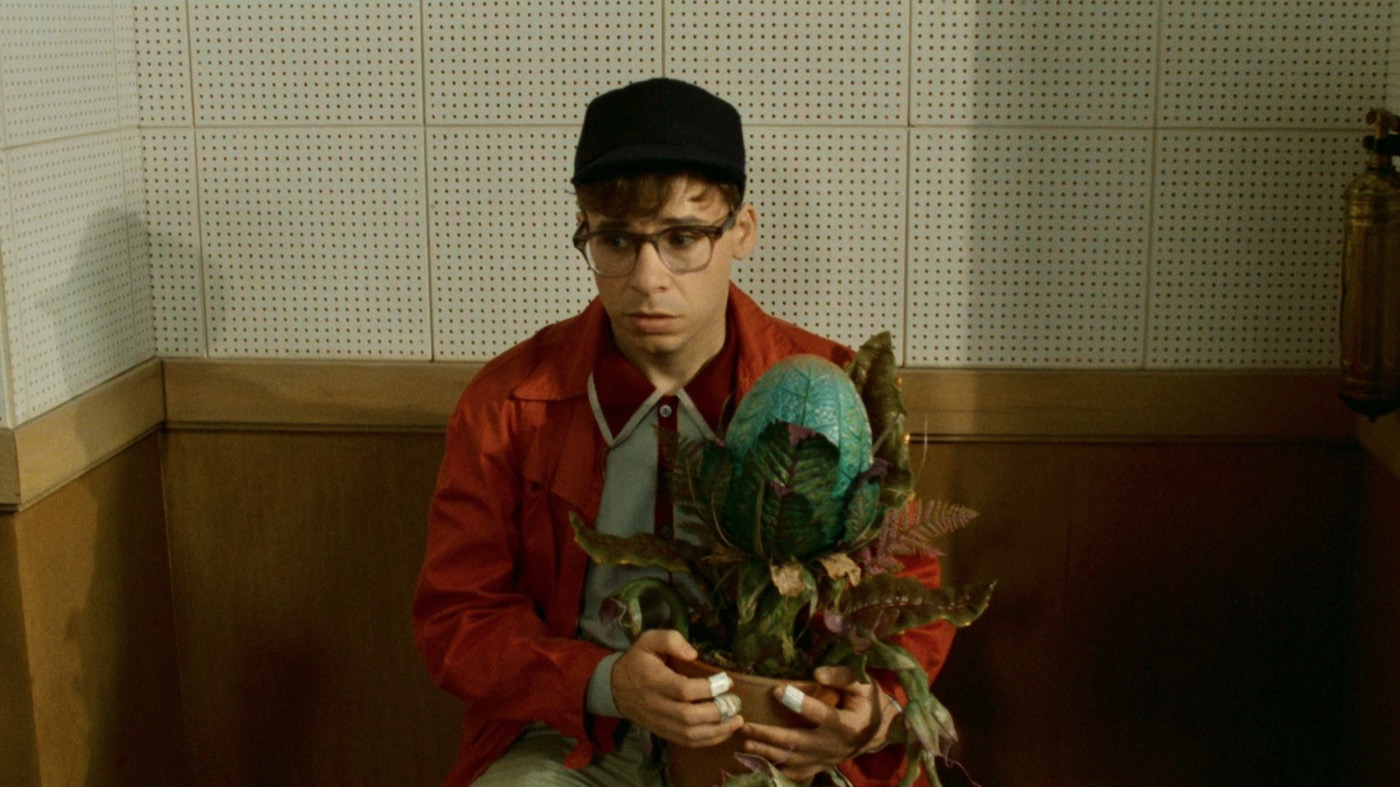
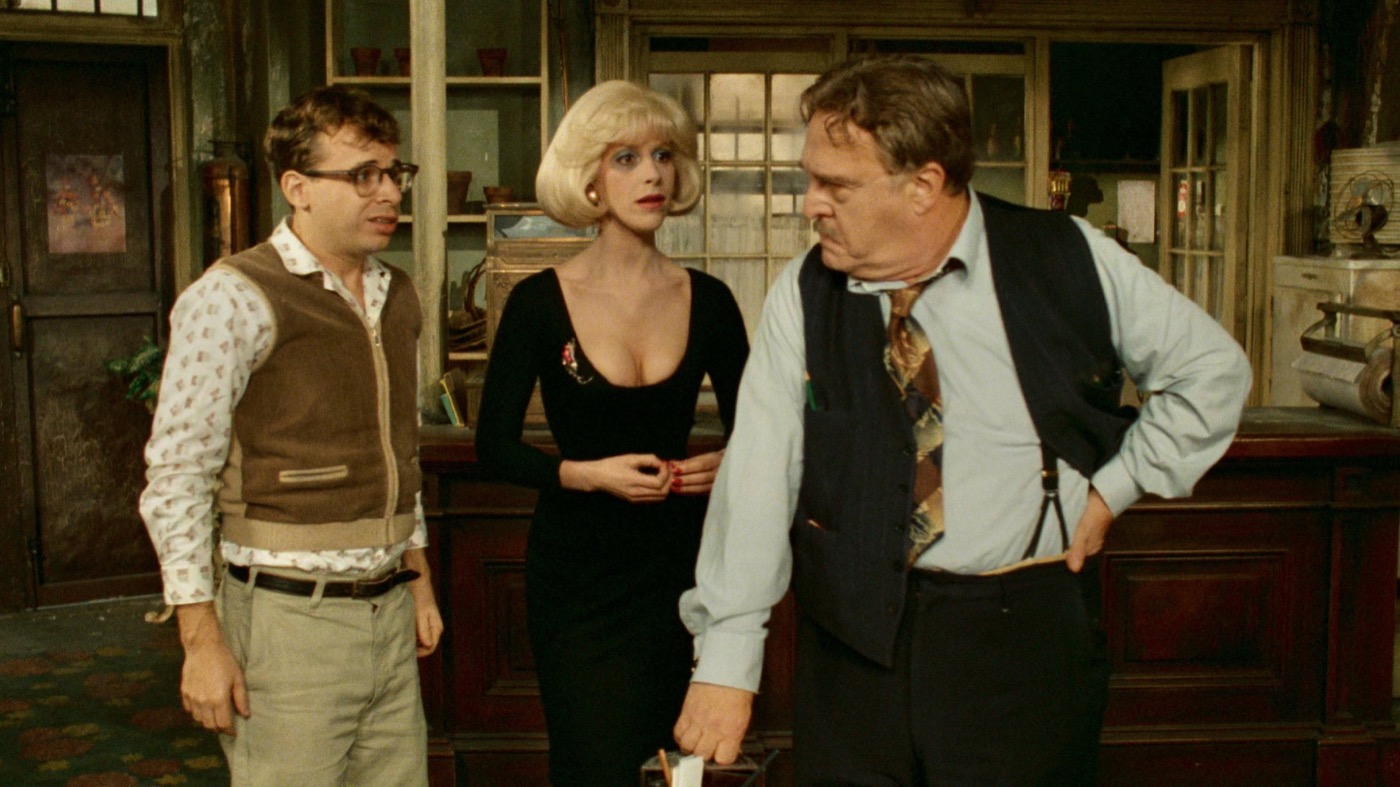
Seymour Krelborn (Rick Moranis) is a lonely florist who pines for his co-worker Audrey (Ellen Greene), a sweet optimist with a sadistic boyfriend. Their boss, Mr Mushnik (Vincent Gardenia), mopes around the musty old shop, threatening to close it for good if they don’t attract customers soon. As luck would have it, an exotic plant has just appeared among the wares of a local vendor. Unfortunately for Seymour, it arrived from outer space during a freak lightning storm. He’ll later learn that it can talk, sing and demands human sacrifices. For now, he pays his $1.95, and the plant — which they name Audrey II — is placed in the shop window.
Before Audrey II even arrives from the far reaches of space, music is everywhere in Little Shop of Horrors — and not just in the show-stopping numbers. Everything in the film has a musicality to it. Moranis’s voice gives Seymour an expressive mope that harmonises even in dialogue with Greene’s sweet-natured squeak as Audrey. His Canadian lilt and her Brooklynite buoyancy are one of the film’s many peanut-butter-and-chocolate combinations that shouldn’t work as well as they do.
The grit and grime of Skid Row are countered by a constant sense of the fantastical. The streets and building façades are unmistakably studio-built. The textures of brick and metal rubbish bins, crumbling stoops and peeling wallpaper are so tactile that Skid Row feels lived-in rather than cartoonish, exaggerated rather than ridiculous.
Amid the squalor and desperation, the down-and-outs sing of “Downtown, where the folks are broke, / Downtown, where your life’s a joke”. For all the film’s daftness, it’s sincere when it needs to be. More impressive still, you don’t realise how deeply moved and invested you’ve become until Audrey sings of her dream life in the sublime “Somewhere That’s Green” and tears start to form.
As with Walter Hill’s gritty, fantastical city-set musical Streets of Fire (1984), the film’s approach works only because, beneath the music, motorbikes and bloodshed, there’s a warm, beating heart. Frank Oz’s work with the Muppets demonstrates his wit, irreverence and humanity; he feels like the only director who could have made Little Shop of Horrors.
Both Steven Spielberg and Martin Scorsese were attached to the film before their deals fell through or failed to materialise, but it was for the best. Frank Oz can make you cry and laugh in equal measure by operating a puppet made of felt and putting on a silly voice — he makes you believe it. He’s as much a performer as a director, and Little Shop of Horrors has such specificity in every character and design that it feels as if they each came from the Jim Henson workshop.
Henson, the mind behind the Muppets, collaborated with his son Brian on the creation and operation of Audrey II, which remains one of the most staggering feats of practical effects in film history. Shortly after Audrey II begins to revitalise the shop’s business, Seymour learns that the small potted plant needs human blood to survive.
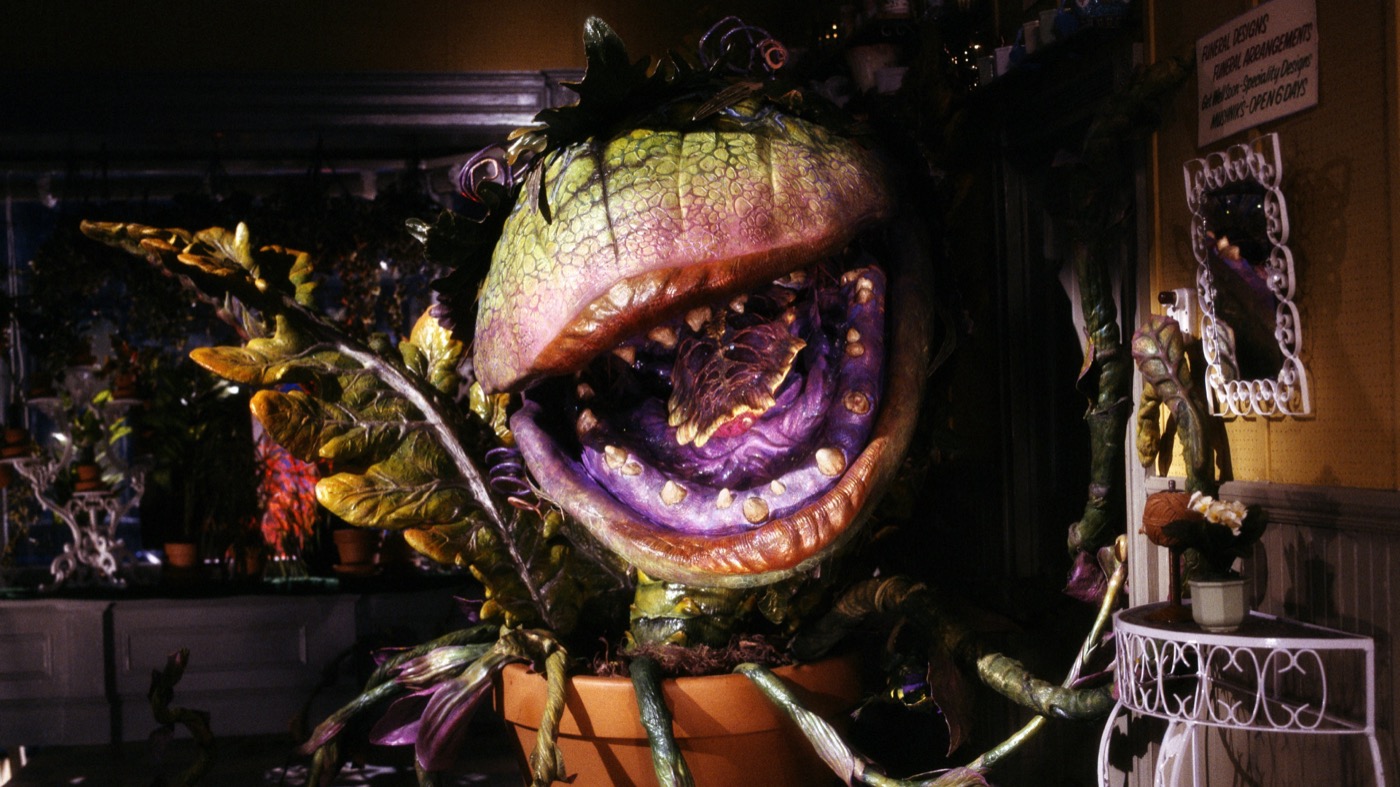
Audrey II, something like a Venus flytrap with razor-sharp teeth, soon begins to grow, demanding ever-larger blood donations. Before long, it’s talking, singing and bossing Seymour around. At least five different Audrey IIs were built to represent the plant at various stages of growth. Brian Henson operated the smaller models, while up to 60 technicians were needed to operate the largest.
Tentacles stretch out from the swaying stalk, as impressive as anything in John Carpenter’s The Thing (1981), though less viscerally disgusting. Audrey II’s mouth is a feat of co-ordination and control: its lips move and curl with the precision of a real mouth, making you believe that actor and singer Levi Stubbs’s voice really is coming from a giant, anthropomorphic plant. It’s a marvel of special effects. As with the Muppets or Gizmo in Gremlins (1984), you buy into it completely. It’s true movie magic.
As Seymour gives in to Audrey II’s demands, Little Shop of Horrors only gets wilder and funnier, almost as a tonic to its dark implications. In the stunning “Suddenly Seymour”, Seymour sings longingly, “Tell me this feeling will last ’til forever, / Tell me the bad times are clean washed away”. He’s making a Faustian bargain for his and Audrey’s freedom. The details may differ, and there may be fewer killer plants in the real world, but the sacrifices — literal here — people make to escape a bad environment are familiar everywhere.
One of the film’s key ingredients, and another American form it gobbles up, is sketch comedy: exaggeration at its most obvious, but sublime when done right. Oz, who rewrote much of the musical with screenwriter Howard Ashman, gives Little Shop of Horrors a knockabout energy that fuels one perfect little sketch after another.
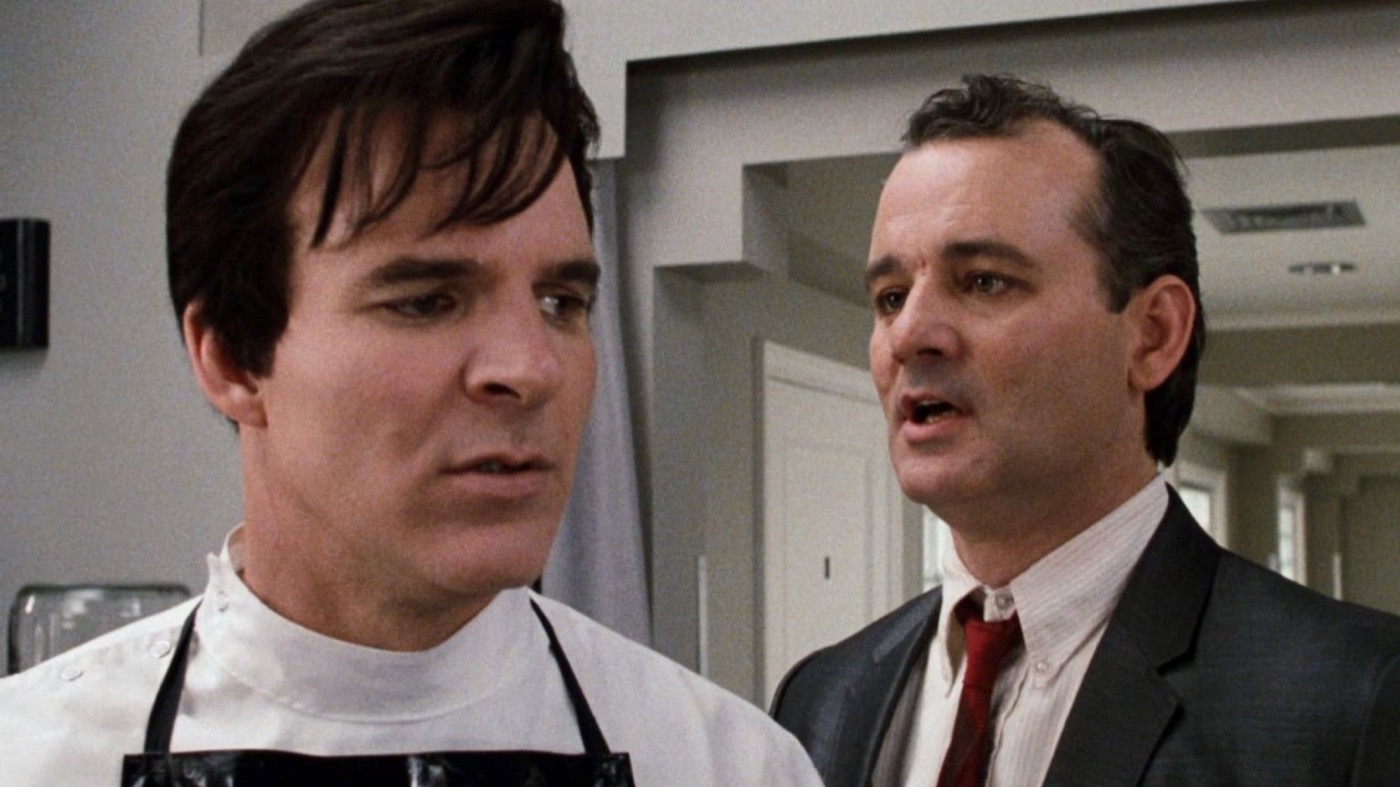
Steve Martin’s leather-clad sadistic dentist, Audrey’s boyfriend, could be a character from Saturday Night Live — particularly in the extended scene where Bill Murray appears as a patient who gets off on being tortured orthodontically. Christopher Guest, meanwhile, appears as a curious customer in a moment of pure parody; his gee-whiz 1950s affect is jarringly hilarious.
Gags crowd every frame. The amount of effort that went into the waiting-room scene, for instance, in which a series of increasingly outlandish radio guests are revealed — and appear on screen for perhaps five seconds — is staggering. This maniacal incongruity, this wholehearted commitment to absurdity, hints at the film’s tension.
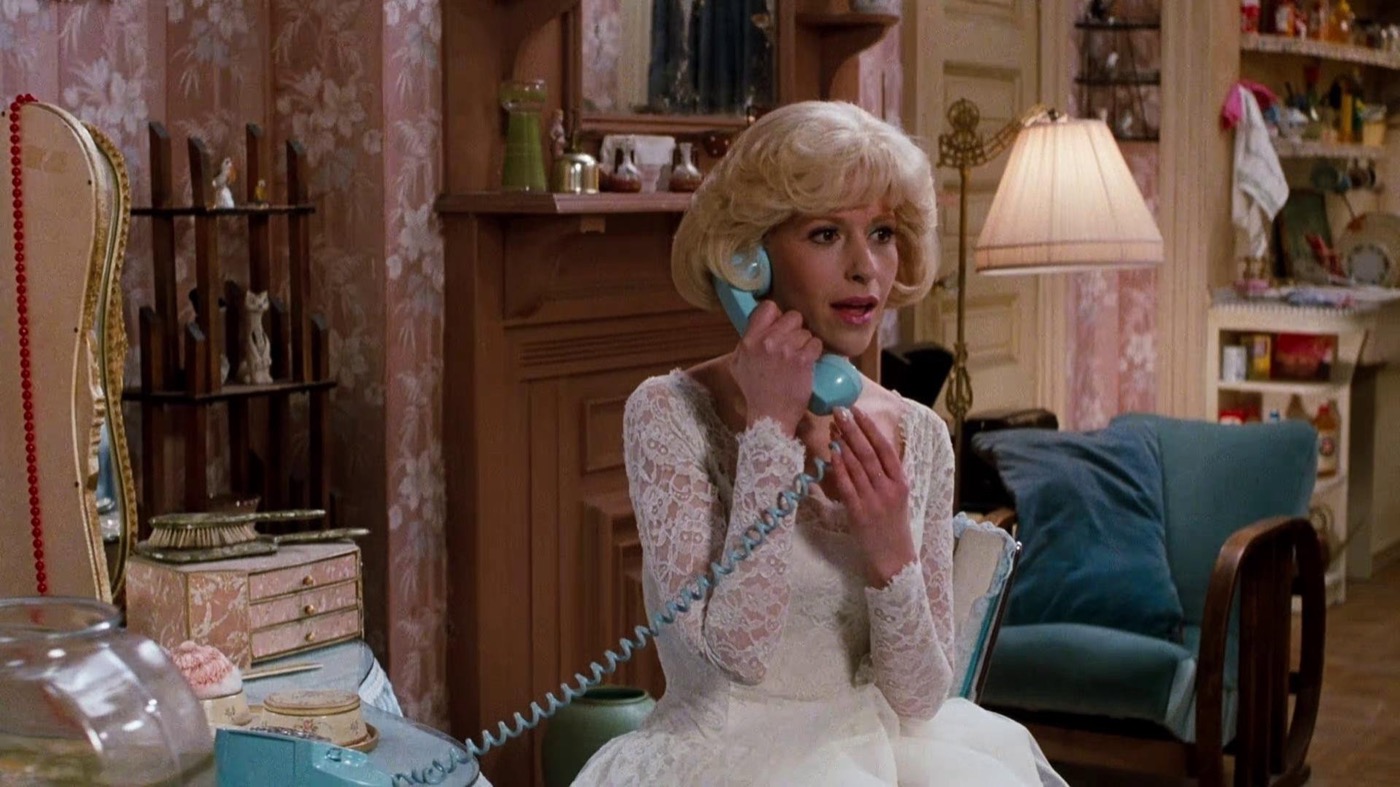
Audrey appears in the shop with a black eye, and later we see her being hit by her boyfriend. It’s surprising, and it isn’t played for laughs; instead, it’s a kind of stock-character melodrama. Nice guy, bad guy, sweet girl. Oz draws on comic serials and American drama archetypes, in which damsels need rescuing and nice guys finish last. It feels dated now, and it was dated then, but Little Shop of Horrors, set in the 1960s, knows this and relishes its old-fashioned pastiche.
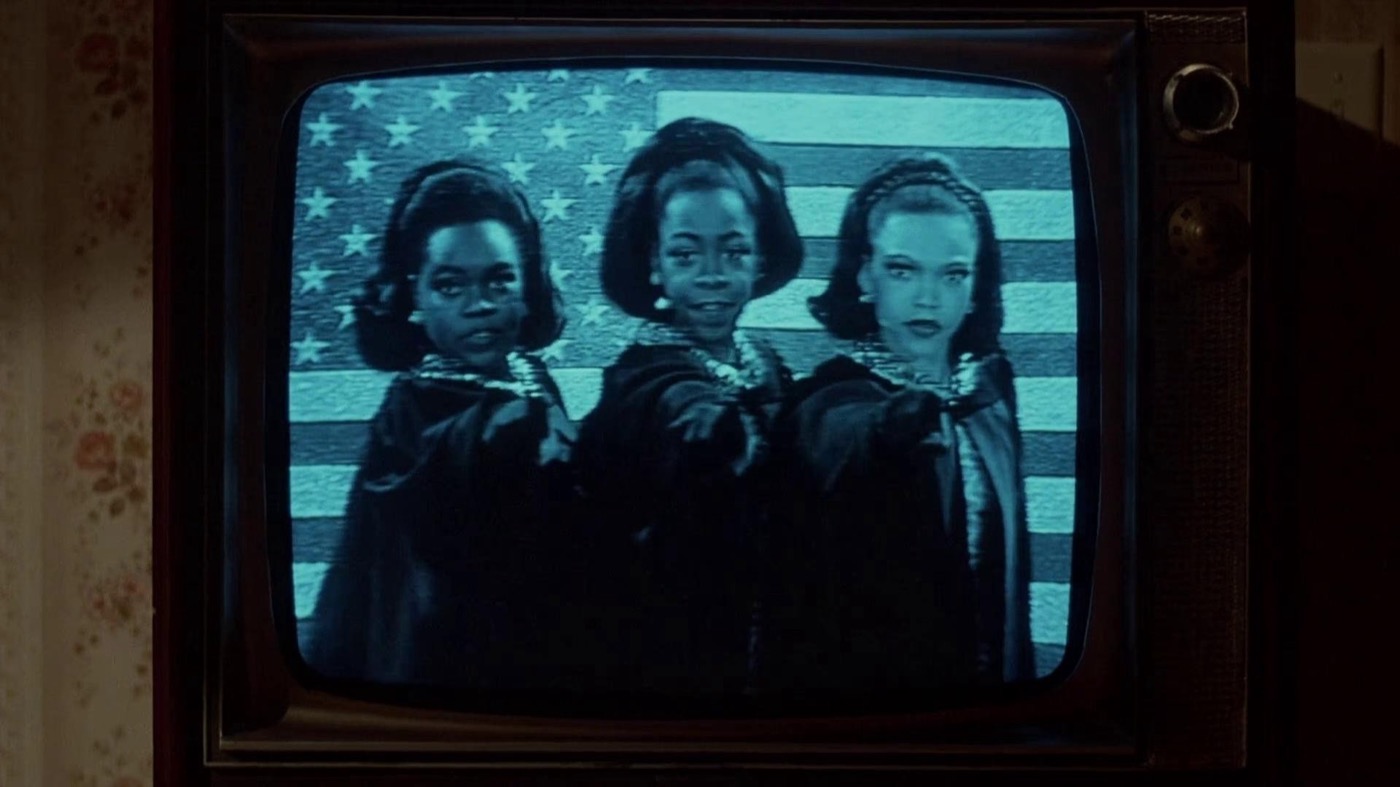
There’s something knowingly nefarious at work in Little Shop of Horrors, perhaps a holdover from Corman, that hints at Oz’s original intentions for the film. Audrey II, voiced by Four Tops singer Levi Stubbs, sings with soul, calls Seymour “boy” and refers disdainfully to “his kind”. Audrey II’s obvious Black American roots are one part of the film’s broader hodgepodge of cultures, styles and genres, suggested from the outset by the Greek chorus of soul singers who narrate the story.
The Off-Broadway musical contained more overt references to Jewish identity, too, but the ghettoisation of Black and Jewish cultures, among others, underpins much of Oz’s film. There’s a suggestion of mutual exploitation: Seymour has captured and is profiting from the plant, and now the plant is profiting from him. This isn’t far removed from discussions about the exploitation of artists by managers and producers, particularly Black artists in the 1960s, when Motown and soul were at their height and performers could be treated as walking meal tickets.
This satirical edge is also present in the theatrical version of the film, but the commentary really sings in Oz’s original ending. Much darker and trading optimism for irony, it was closer to the Off-Broadway musical’s finale. The city-wide mayhem might have been a more natural outcome for a monkey’s-paw story — more EC Comics than fairy tale. Still, it’s hard to begrudge the theatrical ending that’s now widely known.
Like Gremlins, Little Shop of Horrors probably benefits from this softer approach. Despite its brighter ending, Oz still slips in a reminder of what it takes to get out of Skid Row: a new Audrey grows peacefully outside Seymour and Audrey’s home. It’s through the wicked humour of tiny details that Little Shop of Horrors has grown in the public imagination. It’s a genuine phenomenon, born of a thousand unique and contrasting choices, from doo-wop singers to dentists on motorbikes, from Jewish humour to love ballads.
By filtering decades of culture and art through the great American B-movie, Frank Oz created something closer to a celebration than a film. It’s a work of such imagination and passion that it’s impossible not to feel gobbled up like one of Audrey II’s victims — except we’re not screaming; we’re singing along and smiling to the end.
USA | 1986 | 94 MINUTES • 104 MINUTES (DIRECTOR’S CUT) | 1.85:1 | COLOUR | ENGLISH

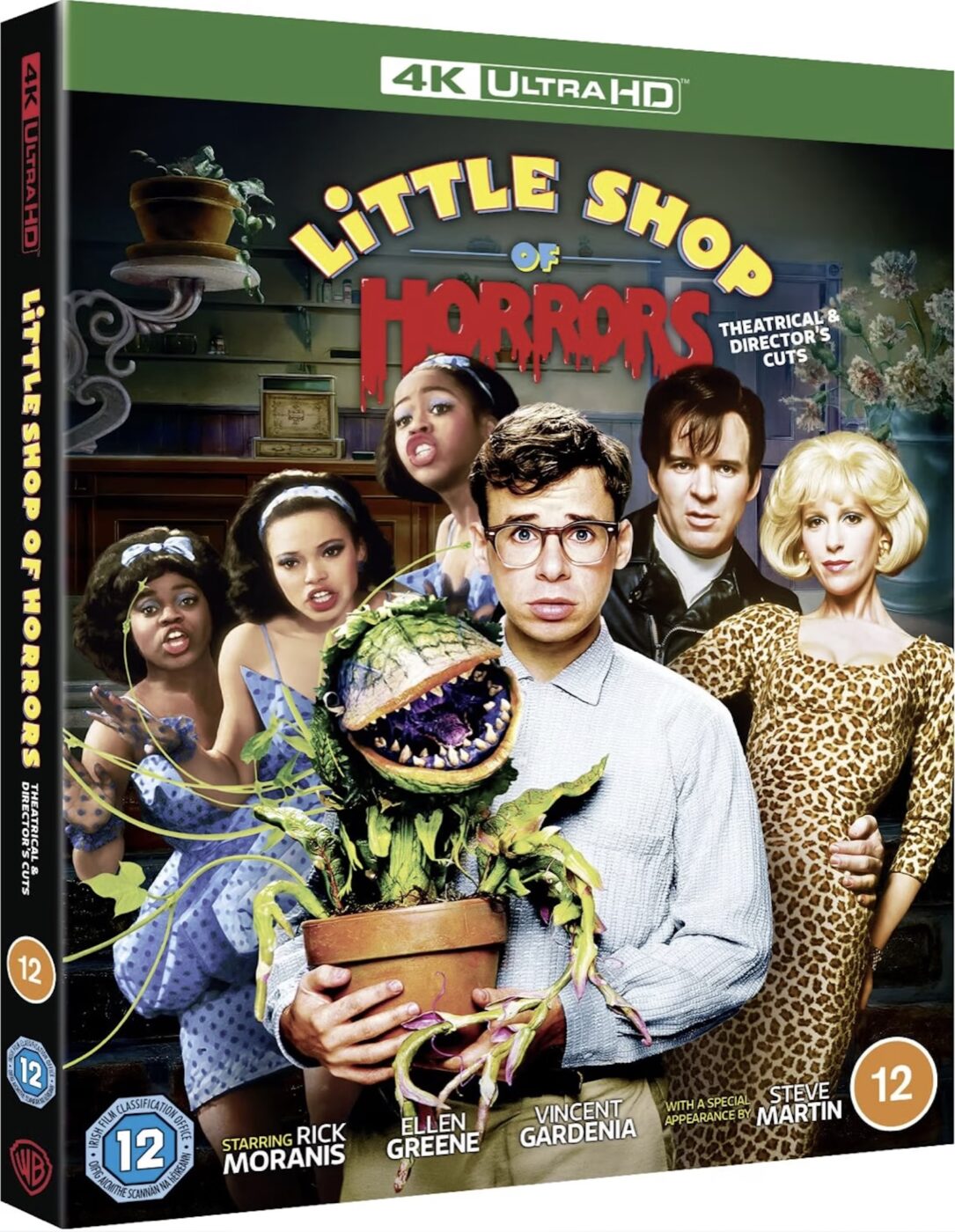
Little Shop of Horrors is presented in 2160p Ultra HD and looks astonishing. The colours are shockingly vibrant throughout, particularly on Audrey II. The puppet’s green exterior and pink mouth look incredible, and every detail — every tentacle — is fully visible. The street sets, especially the red and orange brickwork, look superb.
The disc’s Dolby Atmos soundtrack is exceptional. A musical release needs to sound good, and I noticed instruments and harmonies I’d never heard before. The audio is deep and rich, and one number in particular, “Suddenly Seymour”, sounded so brilliant that I got goosebumps. This is an essential 4K disc, and one of the best-looking and best-sounding I’ve ever encountered.

director: Frank Oz.
writer: Howard Ashman (based on his 1982 musical, itself based on the 1960 film ‘The Little Shop of Horrors’ by Roger Corman & Charles B. Griffith).
starring: Rick Moranis, Ellen Greene, Vincent Gardenia, Steve Martin, James Belushi, John Candy, Christopher Guest & Bill Murray.


