GHOSTS OF MARS (2001)
In 2176, a Martian police unit is sent to pick up a highly dangerous criminal at a remote mining post...

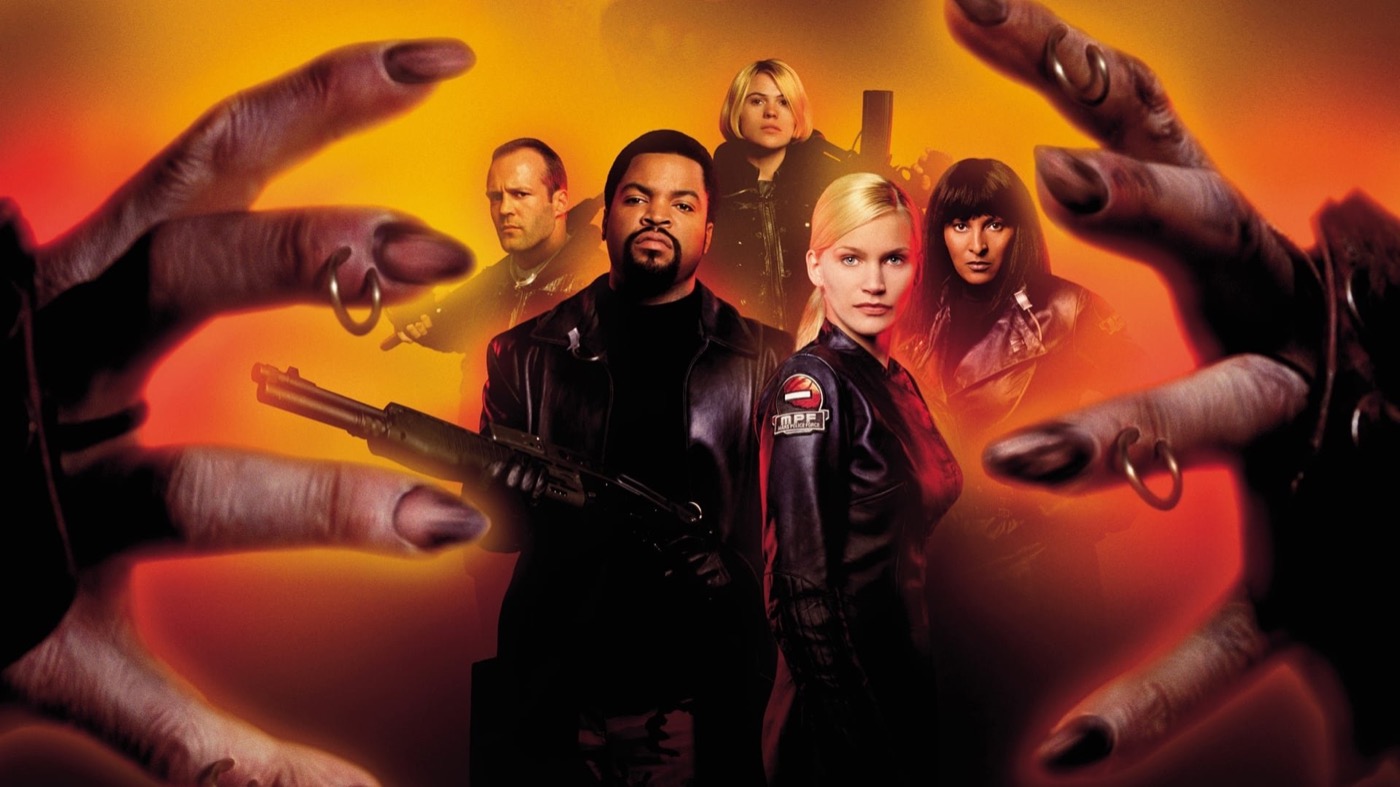

In 2176, a Martian police unit is sent to pick up a highly dangerous criminal at a remote mining post...
“No, but that’s a good story. I like that,” was how director John Carpenter shut down persistent rumours that he had retooled his aborted third Snake Plissken film into this original feature. A wasted effort, given that almost every article before and after that interview continues to regurgitate the same copy-pasted hearsay — perhaps to give audiences more reason to like the project, or to justify him still making it. Yet Ghosts of Mars remains a wasted effort built on copy-pasted familiarity. It could have been a good story, but I didn’t like it.
The writing was on the Martian wall when Carpenter was asked whether the recent box-office flops Mission to Mars (2000) and Red Planet (2000) had deterred him, prompting his characteristically carefree retort: “What are you gonna have… Ghosts of Pluto?” It wasn’t astronomical gravity that weighed down this dreary experience. If that seems harsh, the reflexive criticism is for the many die-hard retrospectives attempting to reclaim the film as some lost masterpiece.
Some reviews espouse values calling it a schlocky, camp, retro throwback. Carpenter himself conceded that “the name of the movie is Ghosts of Mars; I figured the campiness would be self-explanatory.” A few years later, Robert Rodriguez and Quentin Tarantino collaborated on their drive-in double feature Grindhouse (2007). While aesthetically overt, there are two clear attempts to make quality cinema. Rose-tinted critics of Ghosts of Mars insist that naysayers simply aren’t clever enough to appreciate the ill-defined subtlety of Carpenter recycling his greatest hits for a blatant misfire.
There is comfort in familiarity when rewatching a filmography — like ‘Leo pointing’ at the long opening credits roll in that signature Albertus font, accompanied by Carpenter’s self-composed soundtrack. Beyond nostalgia, there is real value in engaging with the sincerity of an auteur indulging his passions. We like it because he does. One could easily imagine Carpenter listening to fans over the years extolling their favourite parts of his commercial flops, assuming that combining those elements would guarantee a box-office home run.
The body-snatching tropes recall The Thing (1982), whilst the possession elements come straight out of Prince of Darkness (1987), complete with a villain resembling Alice Cooper’s cameo. A classic Western siege echoes Assault on Precinct 13 (1976), and the supernatural twist mirrors The Fog (1980). Meanwhile, the matriarchal world-building reflects his pivotal role in the ‘Final Girl’ trope movement with Halloween (1978). Yet, as JoBlo critic Andrew Hatfield noted, Carpenter lacks the musical ear of Alan Howarth, the writing prowess of Debra Hill, and the visual eye of Dean Cundey. It was these collaborators who elevated Carpenter’s iconic visions, not his filmic influences alone.
Despite critical reclamation attempts, Carpenter’s stellar catalogue, and a misquoted Aristotle, the whole of Ghosts of Mars is far from greater than the sum of its disjointed parts. The first five minutes consist of boring setup from characters who aren’t even in the main cast.
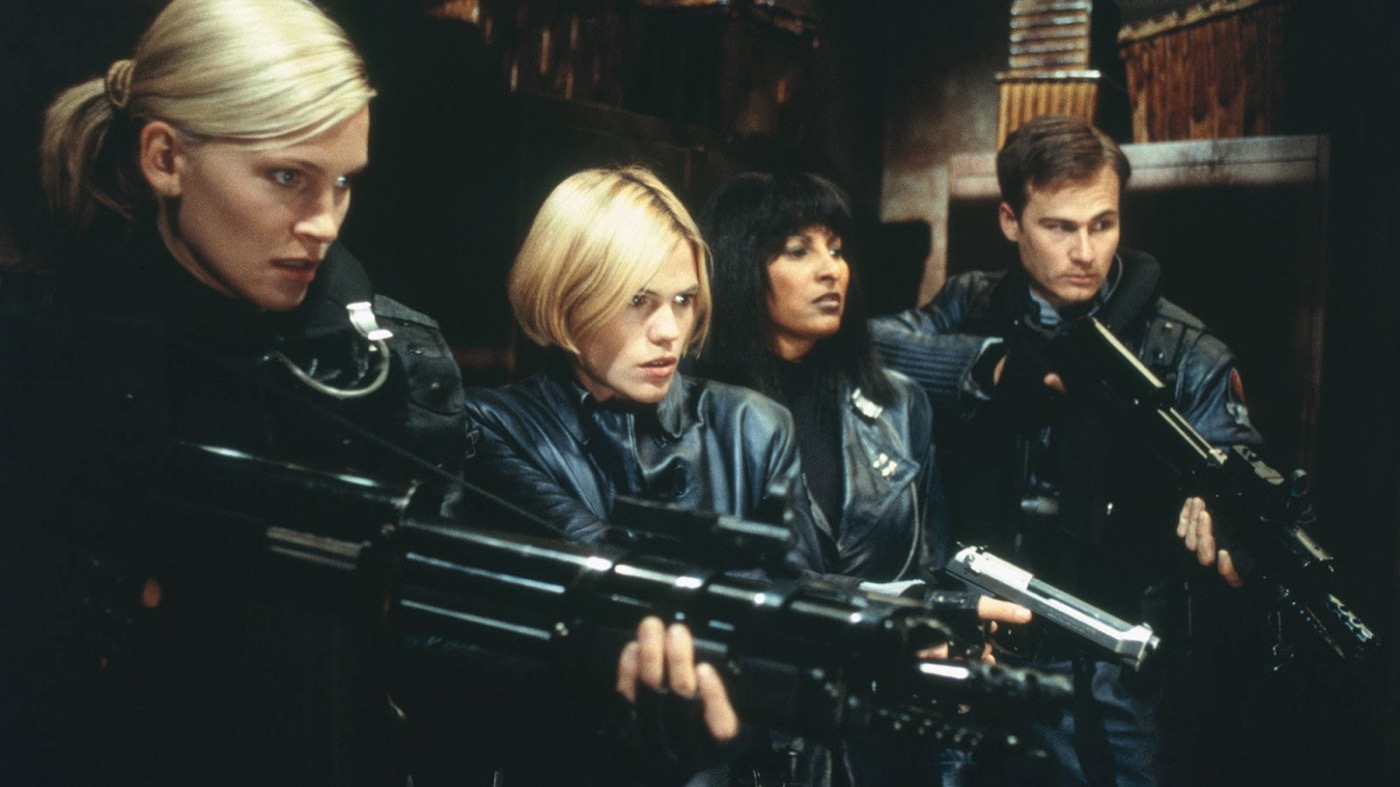
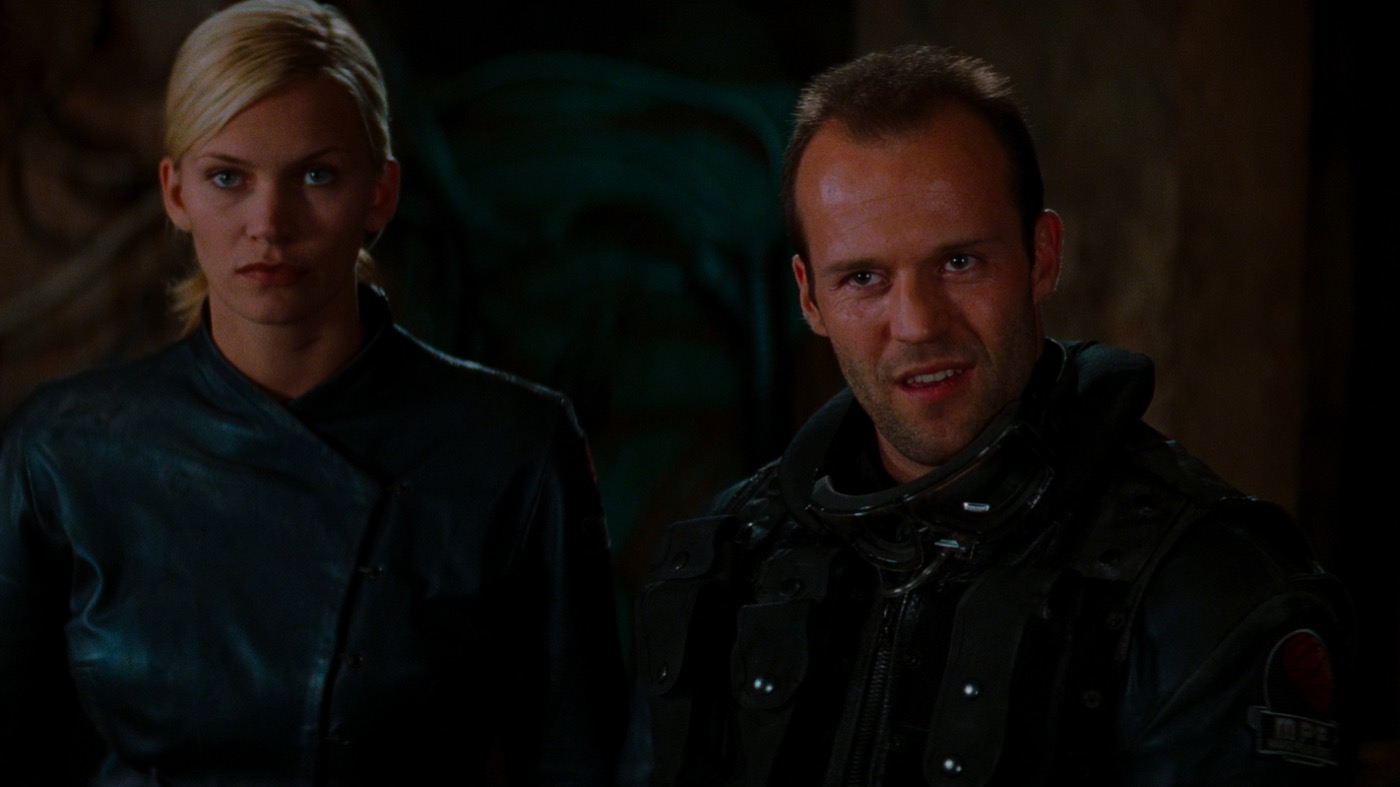
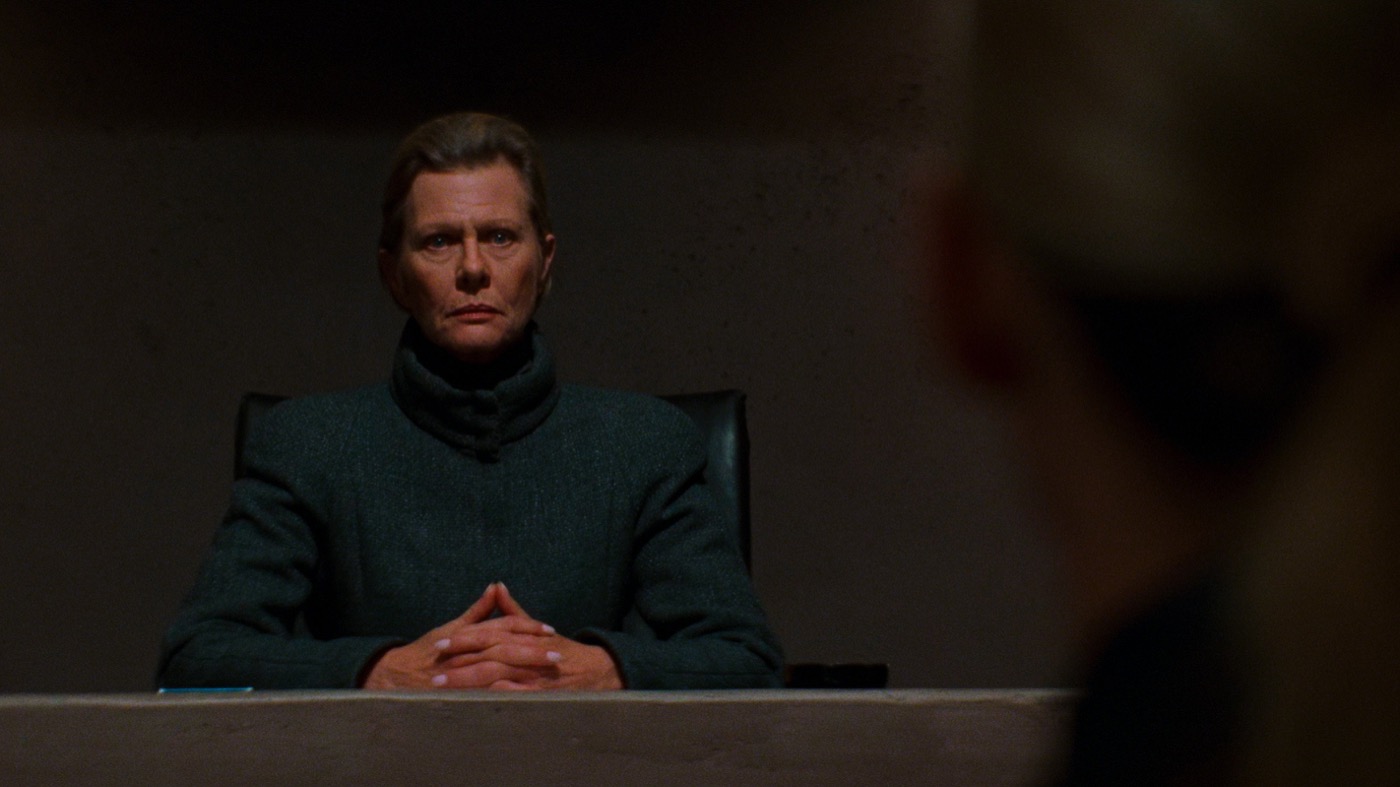
Carpenter is clearly attempting to have fun within a straightforward structure: Statham explains how he found three survivors in a flashback, those survivors then flashback to how they survived, and the entire overarching narrative is framed as one large flashback. Yet that initial framing device — a tribunal hearing — adds nothing. A character says that a place looked like a slaughterhouse, and Carpenter deems it necessary to show the tribunal ask, “Slaughterhouse?”, before cutting right back. Our protagonist, played by Natasha Henstridge, tells the tribunal — and the audience — that they took a suspect somewhere and went outside to have a look around outside. The film then fades to them outside having a look around. There is “show, don’t tell”, and then there is “tell, but also show”. These exhaustive interruptions are no sign of style but a desperate script padding to reach feature length.
Even before the tribunal, establishing text informs us that the year is 2176, Mars is 84% terraformed, and under a matriarchy. Does that last part tie into the ghosts, the planet, or the plot? According to one retrospective, Carpenter didn’t want his female action heroes to have to “prove themselves before people took them seriously”. Respectfully, you control the writing. Star Trek has demonstrated for decades that men can respect women in the future. It comes across as a lazy shortcut by Carpenter and co-writer Larry Sulkis to avoid the actual work of distinguishing their protagonist within an ensemble cast.
“I’m as straight as they come” and just as dull when it comes to Lt. Ballard (Natasha Henstridge). The model-turned-actress made her debut as the divine yet deadly alien in Species (1995), but she is woefully miscast here. Courtney Love was originally set to star until her foot was run over by her boyfriend’s ex-wife, and the filmmakers made no attempt to hide that Henstridge was their second choice. She had one advantage: prior knowledge of the film via her fiancé, Liam Waite, who had already been cast. By all accounts, she genuinely tried. Alleged arguments surfaced between star and director over understated performances, lack of direction, and Carpenter’s candid admission: “There was a basketball game on television and I wanted to get out of there.”
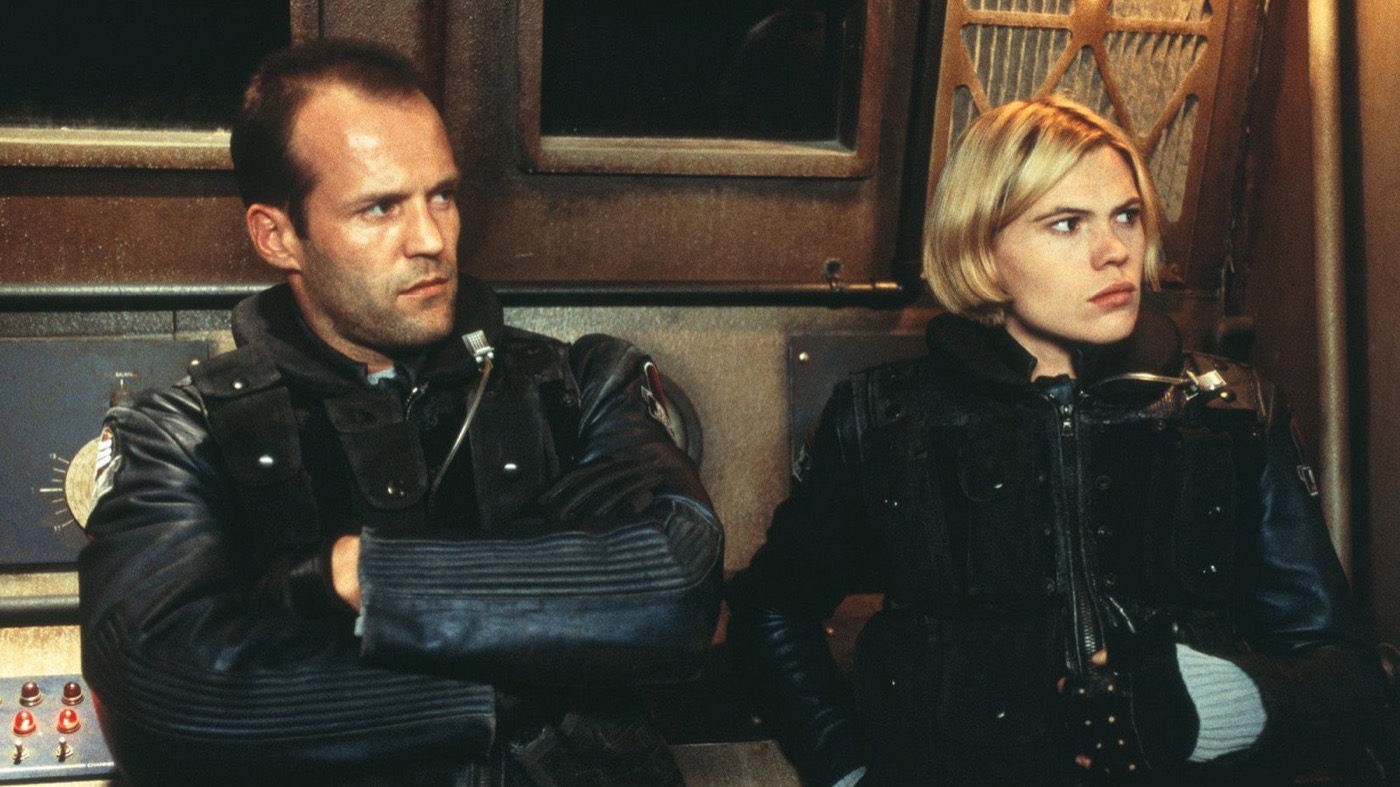
An on-set report revealed that Henstridge suffered for her art as one of several cast and crew members who fell ill. Special effects artist Greg Nicotero described the harsh conditions: “the middle of the desert, freezing wind coming in, rain, and it was really hard.” Carpenter sympathised, noting that they “had to shut down for three or four weeks. It wasn’t just a cold; she had to stay home.” This mirrors the production of The Thing, where FX artist Rob Bottin was hospitalised with double pneumonia, a bleeding ulcer, and exhaustion — though his condition was attributed to a seven-day work ethic, and Henstridge blamed back-to-back filming schedules rather than the gypsum mine location.
Regardless of her popularity in Hollywood at the time, Henstridge was only 27, which explains her total lack of authority as team leader. While she could command a scene in Species, for as many badass moments she’s graced here to literally strongarm people into submission, she often withdraws and takes orders from her inferiors. And this is when she’s conscious — between drug-induced stupors and being knocked out — Henstridge spends an inordinate amount of screen time asleep.
That’s what teamwork is for, which the writing also struggles with. Ghosts of Mars plays it safe as critic John Kenneth Muir observed, “Carpenter’s narratives often feature a heightened sense of ‘male bonding’ or camaraderie among ethnically diverse characters.” None of that chemistry exists here as the principal cast share no rapport. Henstridge is not alone in her struggle, as nobody understands what tone Carpenter is going for. It becomes every actor for themselves in a bid to project their individual charm.
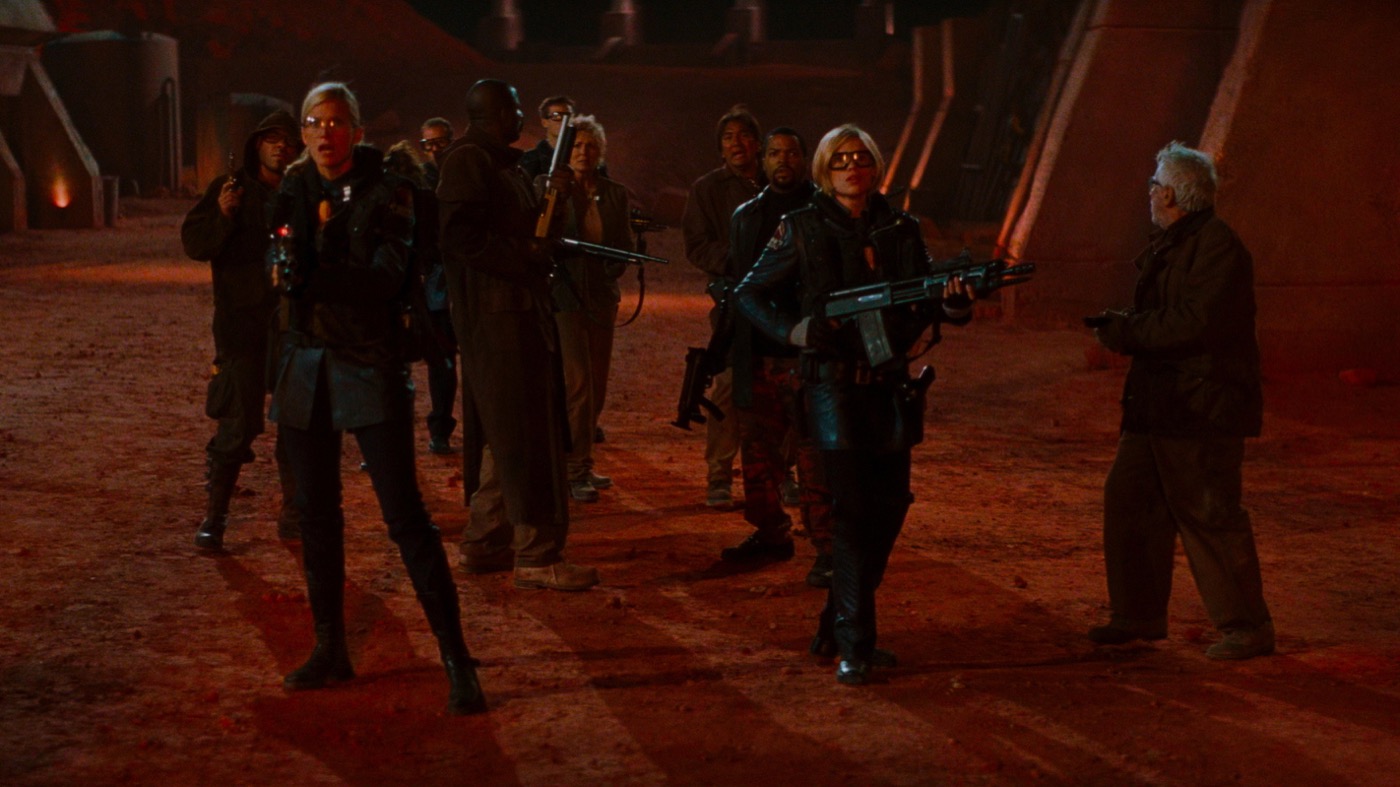
In only his second American acting role, Jason Statham was passed over for the lead but secured a supporting role that gives more commands than Ballard. Clea DuVall appears to subvert the matriarchy as a fresh-faced rookie who freezes at the sight of blood. Ice Cube is sorely underplayed and incapable of the brooding intensity of Kurt Russell. Neither side of the “cops aligning with criminals” dynamic delivers the necessary charisma. Pam Grier is there, and then she gets her head cut off.
Things do not improve once they get their asses to Mars. The first 45 minutes are, frankly, boring as Hell. Transforming a New Mexico gypsum mine into the plains of Mars thanks to gallons of red food colouring is a sign of the relentless efforts and sizeable $28M budget. But even with reliable cinematographer Gary B. Kibbe (In the Mouth of Madness), Ghosts of Mars looks no better than a direct-to-video Tremors (1990) sequel. The few moments of genuine fun Carpenter appears to have involve shooting handheld DV camera footage for the roaming Martian ghosts’ perspective.
Editor Paul C. Warschilka undermines the atmosphere with endless fade transitions and a droning score. While some critics have praised the dreamlike tone, it induces sleep rather than building tension. Almost acknowledging this pacing issue, Warschilka arbitrarily switches editing styles: Ballard and Jericho find Kincaid (DuVall) pointing a gun at a knocking door — spooky — and Henstridge orders her to fetch Commander Braddock (Grier). An abrupt Star Wars-style wipe cuts to the same location as Grier enters. Just have her be there in the first place to presever any chance of suspense.
Some vocal defenders champion these decisions. Imagine the cult longevity of The Thing if it had continually cut to Kurt Russell safely back home retelling what went down in Antartica: as the dog is brought in, it cuts to Russell reminiscing, “but what we didn’t know was that the dog was an alien,” or after spotting the spider-head crawling away, he asks for Keith David, who arrives via a wipe transition. Yeah, that classic film would never have survived the critical drubbing it already received.
Beyond technical shortcomings, a fundamental question remains: what is Ghosts of Mars? As a horror-action-Western pastiche, it fails across every genre. Carpenter gives the audience less than a minute with the strange woman knocking on the door before Ballard narrates, “It was almost like she was possessed.” Trapping Ballard outside, alone and unarmed, provides an ideal setup for slasher horror — even if we already know she survives. Instead, she fights a single guy, scavenges a sword and wire to scale the wall to safety, and the entire sequence is infuriatingly dragged out with fades, turning her survival struggle into a leisurely stroll. The master of horror seems possessed by the spirit of Alan Smithee.
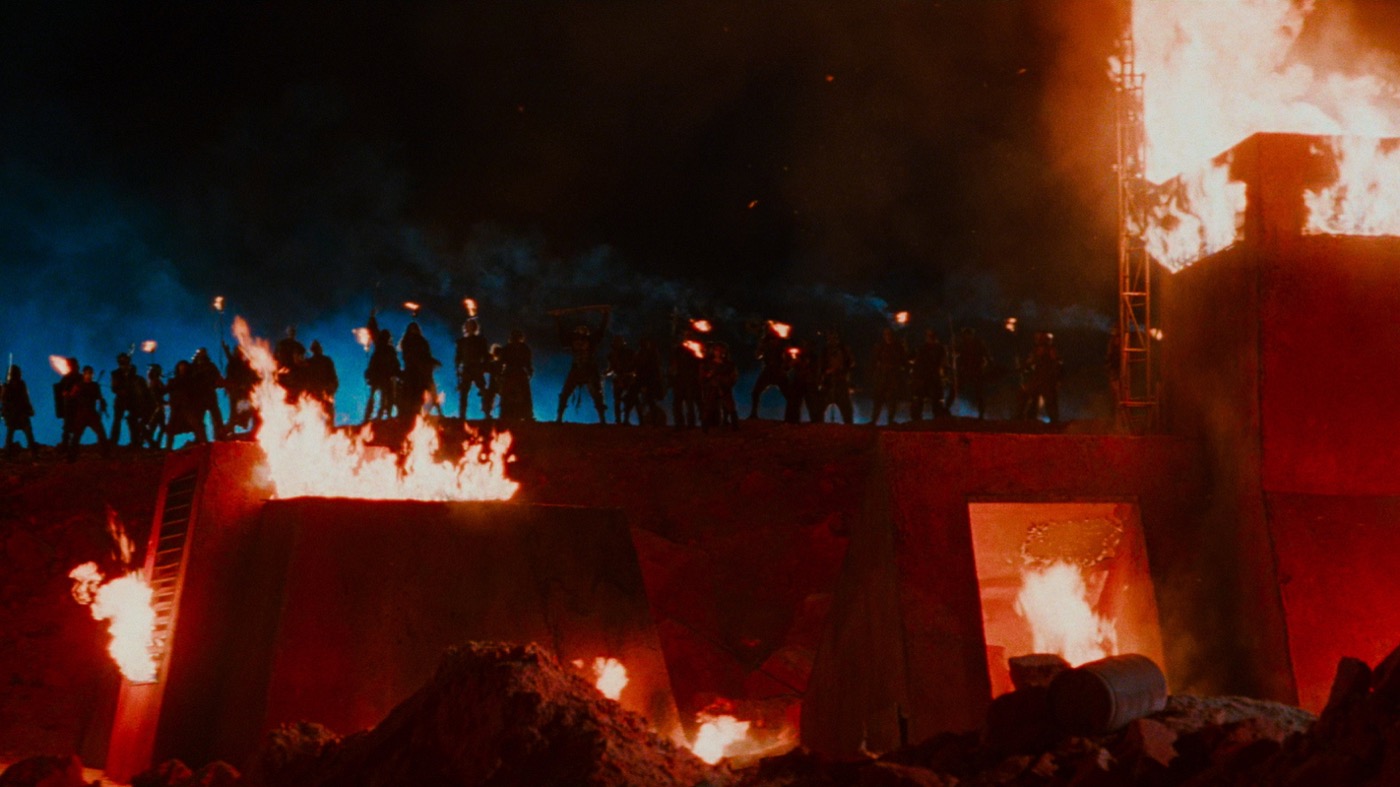
Action eventually arrives, albeit in the form of aimless gunfire. Pam Grier’s head on a pike and the reveal of Big Daddy Mars (Richard Cetrone) and his war cult — set to a thrashing, motif-free soundtrack by Carpenter, Steve Vai, Robin Finck, and Buckethead — offer quality brainless entertainment. KNB EFX Group spent countless hours scarifying and mutilating over a hundred extras in death-metal attire, working from late afternoon to early morning in the freezing mine.
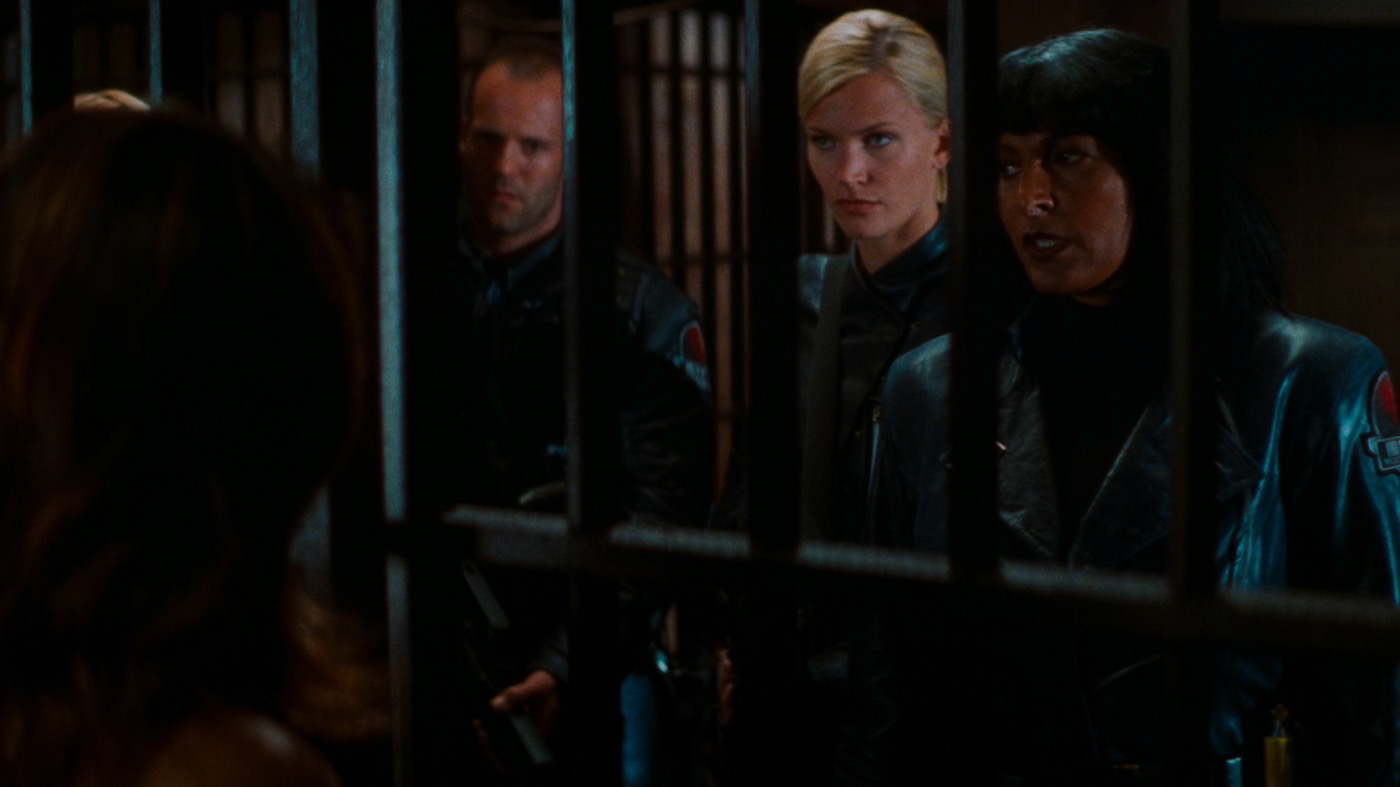
The Martian miners look suitably intimidating as individual freaks, but they lack the overwhelming collective power of an unstoppable horde. CGI buzzsaws still pack a punch — DuVall’s unceremonious decapitation reliably elicits a laugh — but this carnage is intermittent amid the with the sluggish melee. Carpenter, lacking confidence in the choreography or attempting to ride the wake of The Matrix (1999), shoots the fight scenes in slow motion. Again, it’s concerning to see a veteran director rely on such gimmicks to stretch a film to feature length. Any claim to artistic vision is undermined by clumsy cross-cutting between Cube fighting Big Daddy in slow motion while Henstridge fights a goon at normal speed.
Carpenter has always loved Westerns. In the 76 years between the epic travelling gun battles of Stagecoach (1939) and Mad Max: Fury Road (2015), Ghosts of Mars fails to carry the torch. But still, focusing solely on its visual shortcomings ignores Carpenter’s underlying thematic and historical ambitions.
“M: Colonization and imperialism are a component of this film. Are you cognizant of actual events from history? JC: That’s what science fiction is. It becomes pretty dull if you try to create a future that doesn’t resonate with us. We need to recognize something in the film and attach ourselves to it.”—John Carpenter, interviewed for Blackfilm.com
When our fearless hero, Lt. Ballard, declares in her rallying speech, “This isn’t their planet anymore!”, one cannot help but question whether modern mindsets are simply too woke for a film of its time, or whether the director is subverting a taboo that has endured for generations. There is certainly an attempt to evoke the classic “hostile indigenous population” trope by having their ancient spiritual culture possess the colonists and turn them against one another. Carpenter was ‘unfortunate’ enough to be ahead of his time by mere weeks, as the destructive forces of tribalism and savagery were about to re-emerge in America.
Critic John Kenneth Muir posits with self-assured authority that “it appears that a little context is necessary for an understanding of the film’s modus operandi.” An enlightened audience may well appreciate Carpenter’s cinematic influences, but homage is ultimately secondary to core entertainment value; it cannot elevate the intrinsic quality of a film. Many people hate Rob Zombie’s Halloween films — with Carpenter himself leading the vocal opposition — yet the extenuating context of Zombie’s work being a remake of Carpenter’s original classic does not automatically make it superior.
Financially, the trajectory was clear. Carpenter’s preceding film, Vampires (1998), cost $20M and recouped roughly the same amount. His final feature, The Ward (2010), cost $10M and recovered just $5.3M. Yet even those figures eclipse the disastrous performance of Ghosts of Mars, which cost $28M and grossed a paltry $8.7M at the US box office, eventually crawling to a $14M global total. Carpenter has always taken negative receptions to heart, and it could hardly have helped that this film extended a commercial slump dating back to They Live (1988)— his last feature to turn a profit.
Reflecting on the period in 2022, Carpenter recalled his reaction to seeing behind-the-scenes footage: “God, I’d aged. Tired and ancient. I thought, ‘I can’t do this anymore.’ For me, it became not worth it. And I didn’t want to say that about movies. Movies are my first love, my life.” Cinefantastique magazine witnessed that fatigue firsthand during a set visit, leaving bewildered after asking the director: “Why should our readers see this film?”
“I have no idea, Probably your readers shouldn’t go. In fact, I think it’s smart not to go. And probably smart to go to see something else instead! Truly, stay home and watch BUFFY, man. Don’t go to see my films. People watch my movies and at the end they come out and say, ‘My God, they’re letting that guy direct? If he can direct movies, then I can become president.’ That’s what they think. The head of my fan club lives under the Hollywood freeway in a cardboard box. You DO NOT want to see my movie!”—John Carpenter.
Having peacefully retired from the exhausting realities of feature directing, John Carpenter now spends his time playing video games, even co-creating the title John Carpenter’s Toxic Commando. He co-wrote the graphic novel Cathedral with his wife, Sandy King, and regularly tours performing his iconic film scores and original compositions alongside his son, Cody. Perhaps an IGN promo summarised his current outlook best: “Now that Ghosts of Mars is wrapped, Carpenter is looking to take it easy. His main focus now is watching basketball. ‘NBA season is starting up, I can’t wait.'”
USA | 2001 | 98 MINUTES | 2.35:1 | COLOUR | ENGLISH

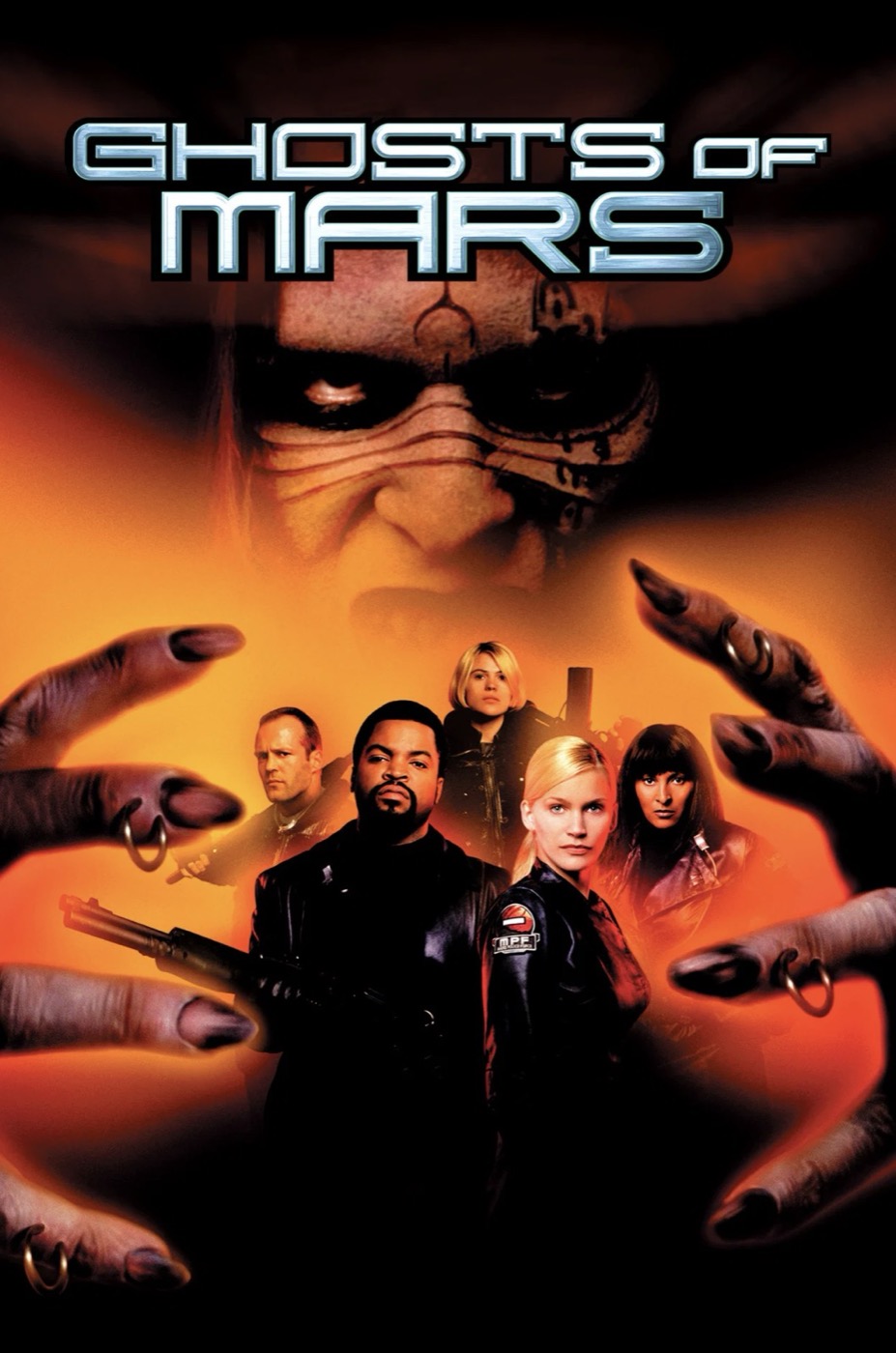
director: John Carpenter.
writers: John Carpenter & Larry Sulkis.
starring: Natasha Henstridge, Ice Cube, Pam Grier, Jason Statham, Clea DuVall, Joanna Cassidy, Richard Cetrone, Rosemary Forsyth, Liam Waite, Duane Davis, Lobo Sebastian, Rodney A. Grant.