UNABOMBER (2026)
Psychological abuse at the hands of a college professor sets Ted Kaczynski on the path to becoming a notorious terrorist


Psychological abuse at the hands of a college professor sets Ted Kaczynski on the path to becoming a notorious terrorist
Netflix’s Unabomber is a bizarre, half-baked attempt to tell the story of Ted Kaczynski by leaving the most interesting bits out. We’re given a cursory account of events immediately before and surrounding his arrest in 1996, and a more detailed look at some of his supposedly formative experiences as a young student at Harvard around 1960 — but virtually nothing about the bombs he dispatched to targets around the United States for more than 15 years, or about the lengthy, frustrating investigation that ran from the late-1970s to the mid-1990s. His personal trajectory, from childhood maths prodigy to professor, cabin-dwelling recluse, and anti-technology terrorist, goes similarly unexplored.
So, while Janus Metz’s film is as competently (and blandly) made as you’d expect from any high-profile Netflix production, and some strong performances do manage to shine through an essentially unexciting script, the overall impression is that we’re seeing selections from something much longer — and not even the highlights.
It’s a pity, because so much could be done with the Kaczynski story. The man himself remains something of an enigma, even if his philosophy was expounded publicly at great length via the essays published in major newspapers which eventually led to his identification. (He believed humanity had become the servant of technology, rather than vice versa, and today would doubtless have been trying to bomb data centres rather than the airlines and universities that gave him his moniker.) And the investigation, although it spent many years going up blind alleys, has great potential as a procedural and profiling narrative.
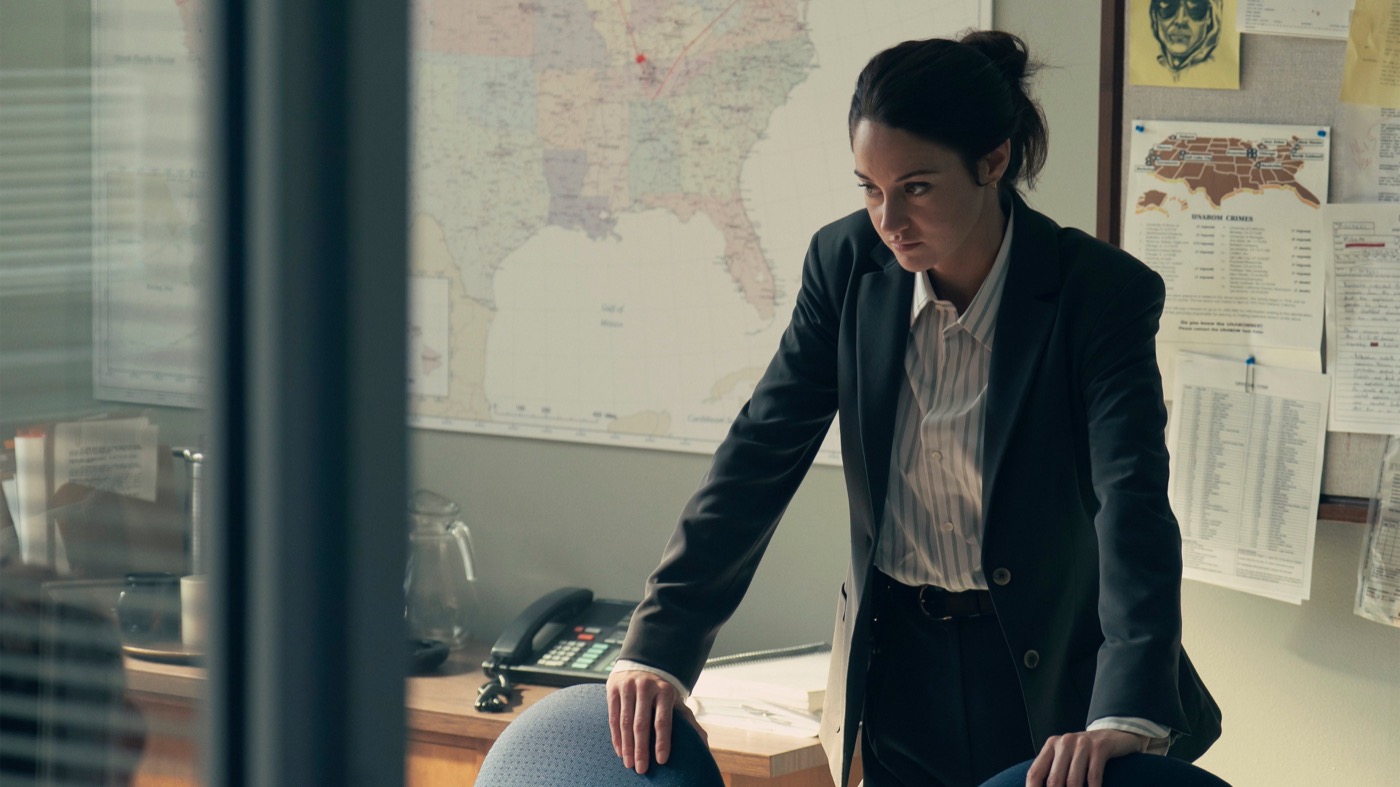
Unabomber begins with a cursory treatment of one bombing from near the end of the Unabomber’s criminal career — the incident that killed Thomas Mosser at his New Jersey home in December 1994 — before turning to the investigators, who briefly arrest the wrong man then almost immediately identify Kaczynski. A little screen time is given to the FBI’s long-running internal debate over whether the perpetrator would be a disgruntled blue-collar worker or a more ideologically motivated individual with an academic background, and fictional agent Joanne Miller (Shailene Woodley) represents those who took the latter view.
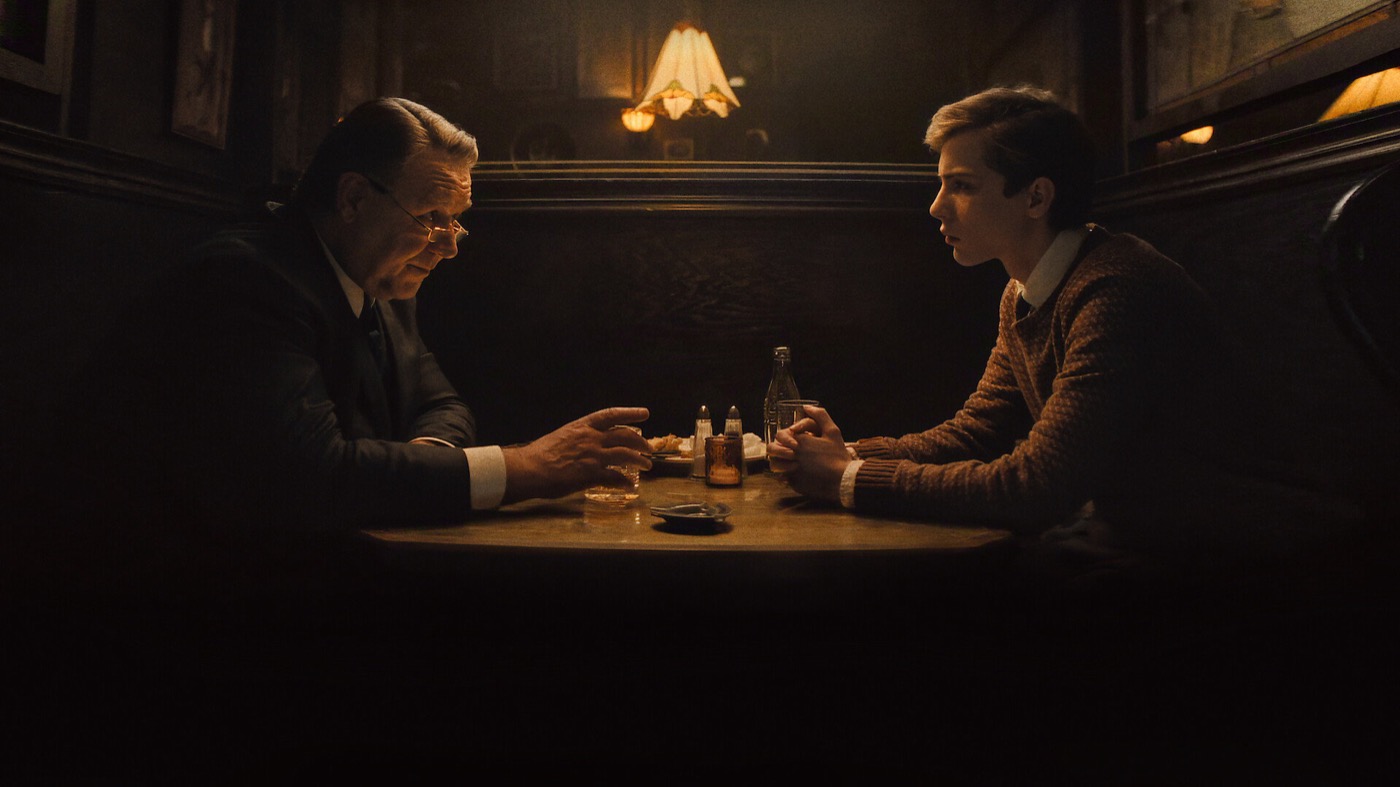
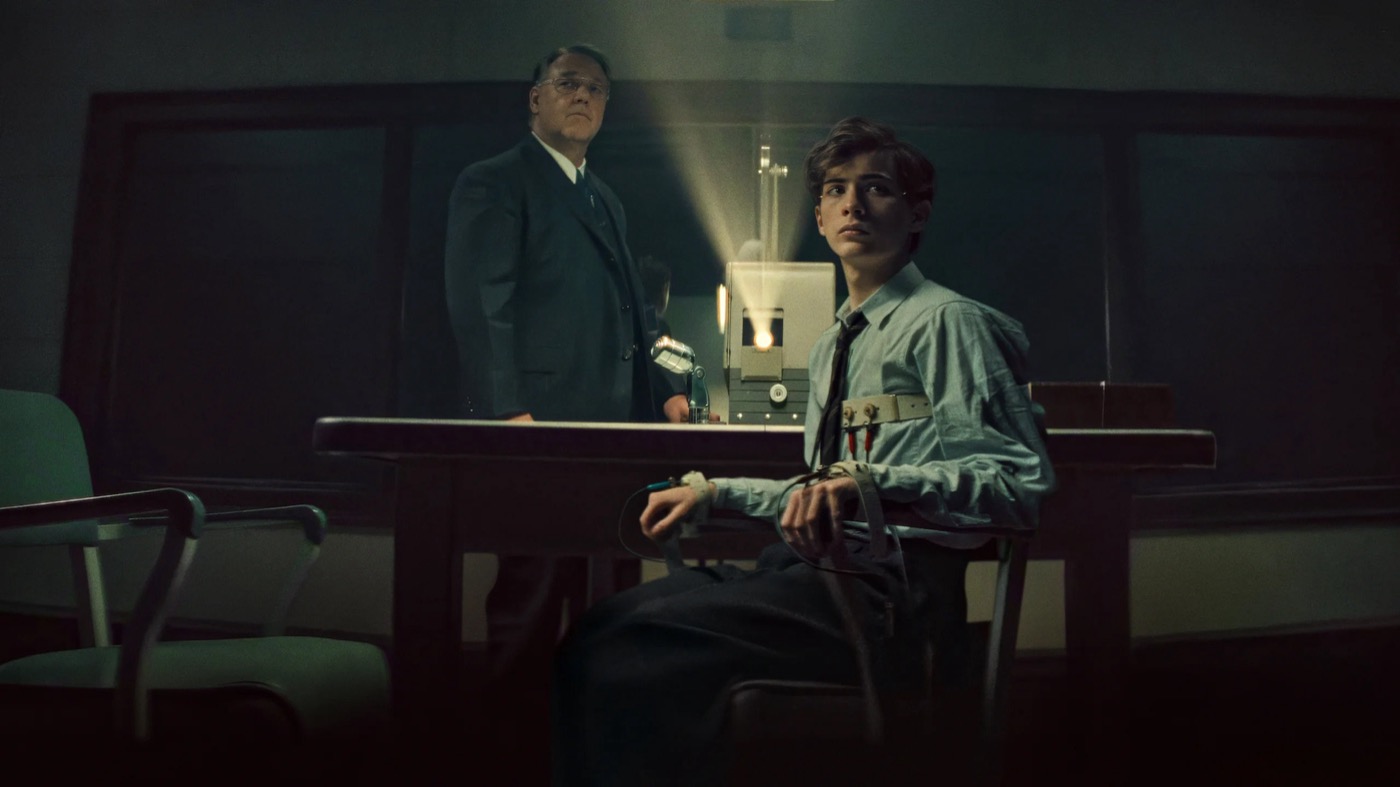
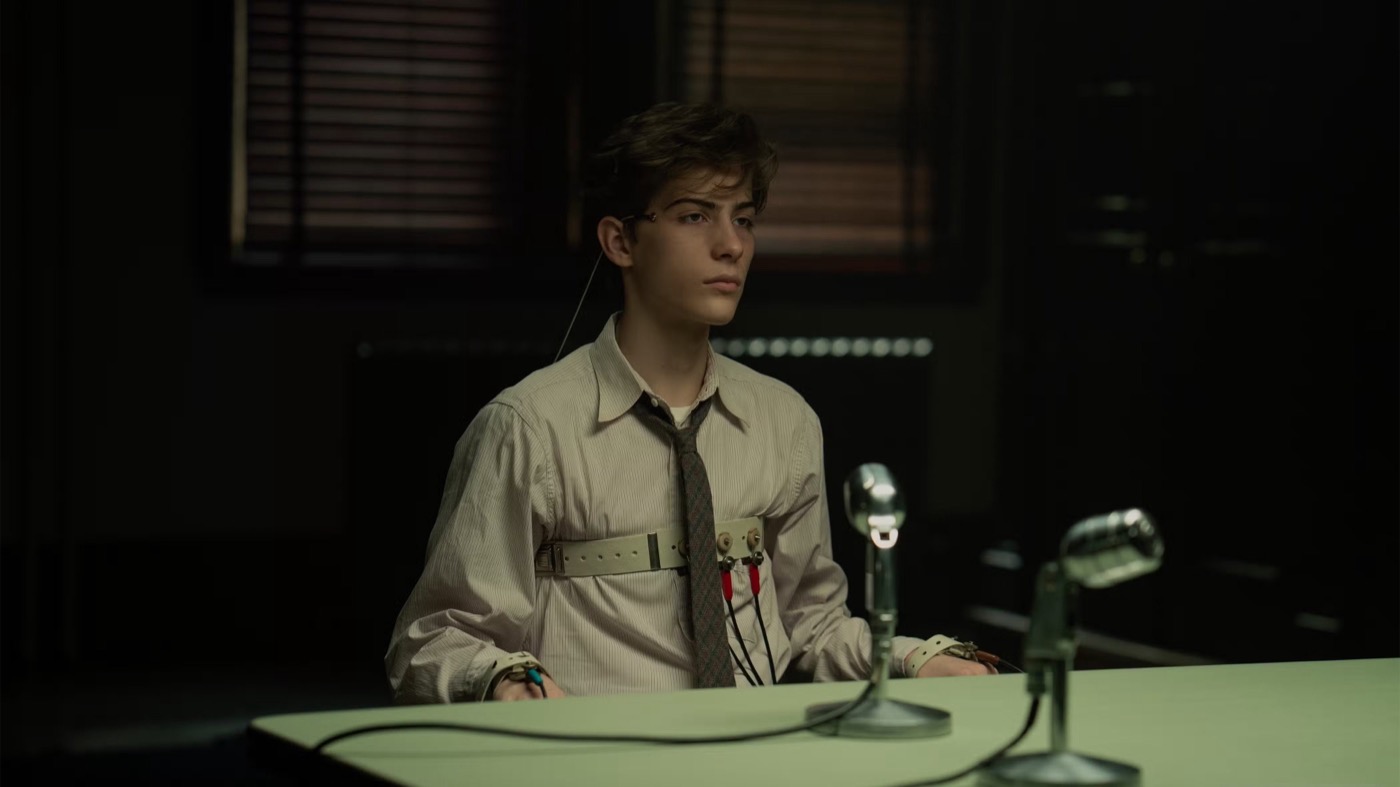
But the film soon moves to where it seems more comfortable: the teenage Kaczynski’s years at Harvard. Here, young Ted (Jacob Tremblay) — socially naive, but intellectually confident and desperate to prove himself — falls under the spell of psychology professor Henry Murray (unlike agent Miller, very much a real figure, and played by Russell Crowe). Murray recruits Ted for a study he’s conducting; it supposedly involves discussing the student participants’ philosophical ideas, but its real purpose is to see how long they can withstand stressful situations where they’re insulted and abused. The film portrays these as being part of a shadowy US government investigation into “brainwashing” prisoners of war, which has never been firmly established, though the persistent allegation seems credible enough given the state of the Cold War at the time.
And… well, that’s kind of it. This strand of Unabomber wraps up in around 1960, while the investigative strand gets going in around 1995. Nearly everything that happened in between is left opaque. There’s no sense at all of the passing of time — one of the things that makes the case stand out — nor is there any tension to resolve, because we only encounter Kaczynski long before he became the Unabomber, and we only really see the very end of the investigation after his identity is known.

A somewhat desultory explanation for it all is offered, maybe, when Murray tells young Ted that he’s schizophrenic,but here the movie raises logical problems that may or may not be intentional. We’ve already seen that Murray is desperately untrustworthy, so are we supposed to take his words at face value? Is he finally coming clean and giving Ted the truth here, or is he just manipulating the boy further? Is Unabomber arguing that actual mental illness, or anger at having been lied to by a trusted professor, drove Kaczynski’s later actions? (The film doesn’t explain that while there’s no evidence of this conversation with Murray having taken place, the real, adult Kaczynski was diagnosed with paranoid schizophrenia after his arrest.)
A generally strong cast does its best to liven up dull proceedings. Crowe is as entertaining as always in the role of Murray, even if he does lay on the avuncular, chuckling evil a bit thick; Annabelle Wallis, as his colleague and lover Christiana Morgan (also a real figure), is very believable. Woodley is convincing and likeable as agent Miller, though the part offers her little to get her teeth into; Alexander Ludwig as a colleague of hers, Mark Camacho as a local sheriff,and Matthew Kevin Anderson as Kaczynski’s brother all command attention in smaller roles.
The adult Kaczynski (Michael Laurence) hardly appears at all in Unabomber. A much larger role — probably the toughest in the film — goes to Tremblay as the young version. He certainly holds his own capably against Crowe and Wallis, but he’s at his best when relatively subdued; once the teenage Ted grows more assertive, we can’t escape the impression of Acting-with-a-capital-A, although in the performer’s defence, it’s true that the young character is, in a way, acting out what he believes to be maturity.
The Unabomber story has been fictionalised for the screen a few times before. Unabomber: The True Story was made for TV as early as 1996, with the case still in the headlines. More recently, Tony Stone’s Ted K (2021), with Sharlto Copley as Kaczynski, was well received but made virtually no impact. Discovery Channel’s eight-part Manhunt: Unabomber (2017), though not wholly faithful to truth, remains one of the best true-crime dramatisations of recent years; it conveys the scale of the investigation with absorbing detail, and benefits from fine performances, including Sam Worthington as an FBI agent (roughly equivalent to the Shailene Woodley character here) and Paul Bettany as the older Kaczynski. (The Harvard angle was granted just part of one episode.)
Manhunt: Unabomber sets the standard so far, but there’s still probably a great movie to be made about Ted Kaczynski — perhaps one that focuses on his evolution from brilliant high-schooler to alienated radical, and less on the investigation. Unabomber, however, is most certainly not it.
USA | 2026 | 97 MINUTES | 2.39:1 | COLOUR | ENGLISH


director: Janus Metz Pedersen.
writers: Sam Chalsen & Nelson Greaves.
starring: Russell Crowe, Shailene Woodley, Jacob Tremblay & Annabelle Wallis.