THE IDES OF MARCH (2011)
A campaign press secretary becomes involved in a scandal that threatens his candidate's election chances.

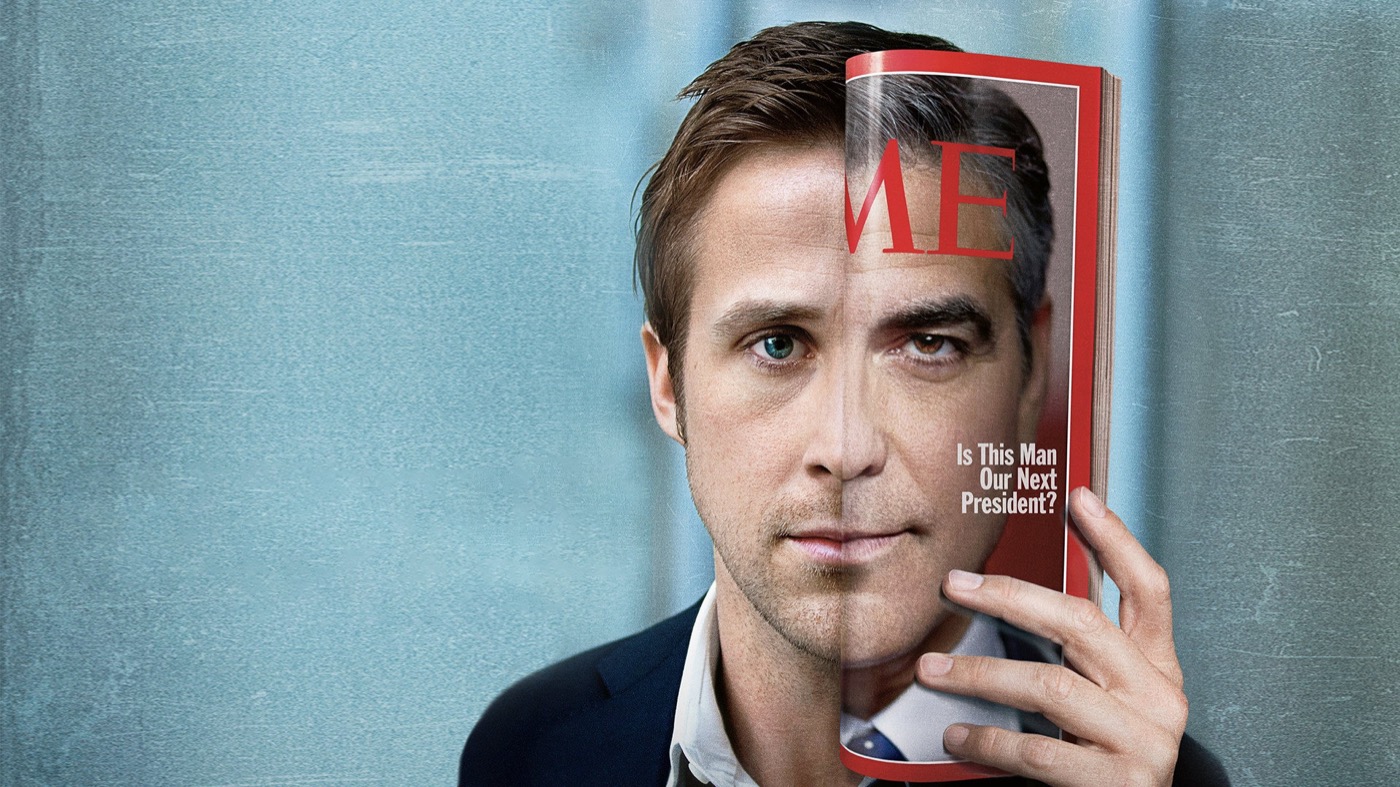

A campaign press secretary becomes involved in a scandal that threatens his candidate's election chances.
Despite—or perhaps because of—his decades-long acclaim as an actor, George Clooney’s (O Brother, Where Art Thou?) directorial credits have been consistently overlooked. It’s true that he’s directed a few duds and forgettable entries, but his work behind the camera remains under-appreciated. Cutting his directorial teeth on Confessions of a Dangerous Mind (2002), he proved an inventive creative force with a stylistic flourish that, much like the film’s protagonist, refused to be pinned down. Confessions of a Dangerous Mind presents a skewed reality without offering enough insight into its lead character’s mindset to distinguish truth from falsehood. It’s clever enough to signal that its narrative shouldn’t be trusted, yet it avoids leaning so far into ambiguity that the experience feels like a meandering, meaningless slog.
This stylistic and tonal tightrope was the first sign that Clooney had more to offer as a filmmaker. Although his directing career has since been mixed, several standouts prove that his creative spark lingers. Good Night, and Good Luck (2005) and The Ides of March remain his finest work behind the camera alongside his debut. This shouldn’t be surprising: both films share an earnest approach to politics, looking past glossy, virtue-signalling surfaces to explore the system’s true lifeblood. The Ides of March is the cynicism-laden counterpart in this pair—a bitter exploration of moral compromise during an election campaign.

On the campaign trail for Pennsylvania governor Mike Morris’s (George Clooney) presidential bid, all bets are off. That’s nothing new in politics, where friends are hard to find and nearly impossible to keep. But Stephen Meyers (Ryan Gosling), Morris’s junior campaign manager and press secretary, opts for a different approach. A seasoned strategist whose youth makes him seem less experienced than he is, Stephen occupies a unique position among the jaded, middle-aged men populating the upper echelons of electioneering. He would be the first to admit he hasn’t shied away from playing dirty in past campaigns.
Yet this haunted landscape, strewn with the ghosts of empty promises, hasn’t corrupted him entirely. He genuinely believes in Morris and his ideals. As the pair navigate the initial results of the Democratic primary, they appear destined for success. Both men are charismatic people-pleasers—which, in this environment, means they lie with fluid ease. Their natural ability to deceive feels almost like an annoying superpower. At their core, however, they still strive to make the world better: hopeless dreamers in a realm that typically attracts con artists and excels at eroding integrity.Throughout The Ides of March, both men face tests of character they couldn’t have anticipated.
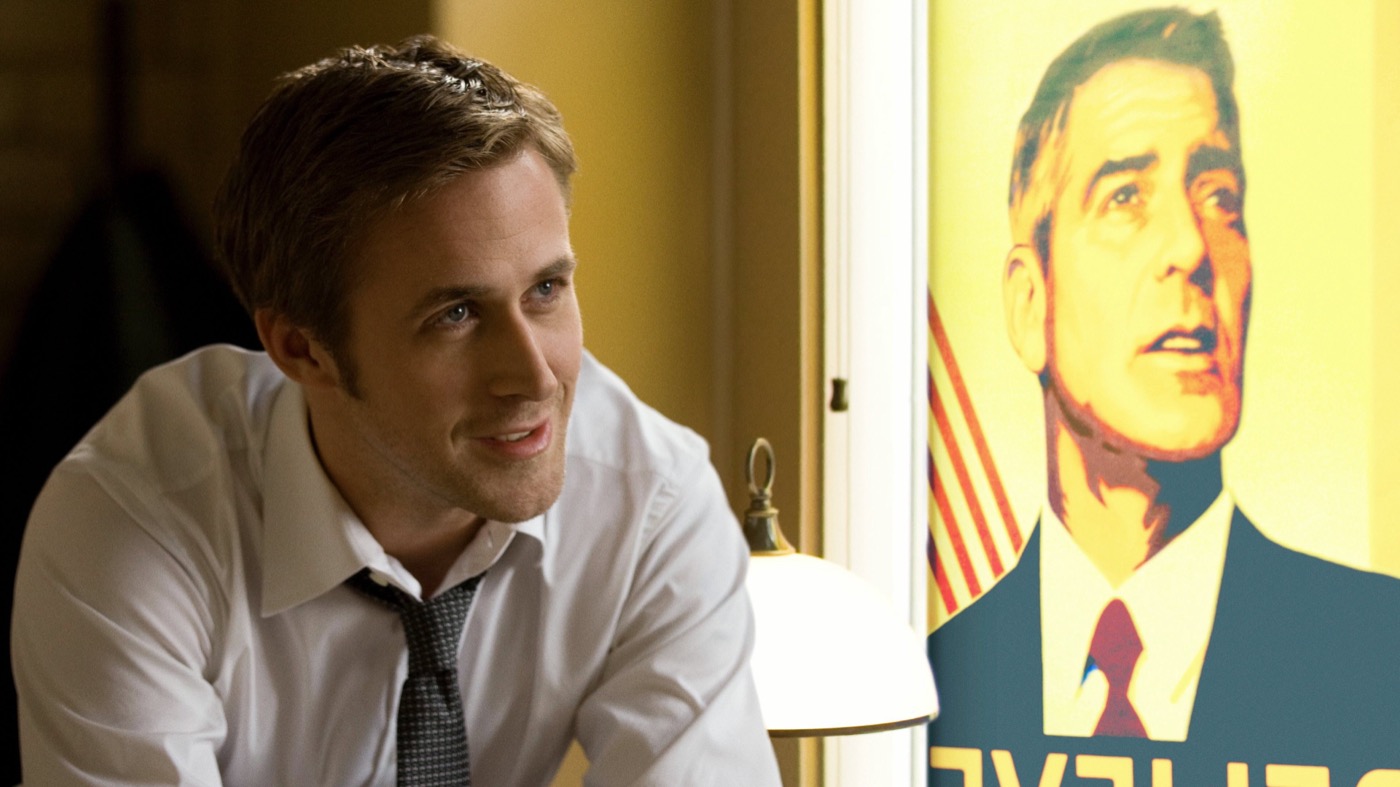
Most of the marketing for The Ides of March framed it as a political thriller—a strategy that seemingly paid off, given its $75M box office return on a $12M budget. However, that label was misleading; the film is far closer to a political melodrama. This distinction isn’t always obvious, particularly when the characters act with realistic subtlety—from Clooney’s effortlessly charming politician to Gosling’s more businesslike charisma. Yet brief moments—albeit some a touch too heavy-handed—reveal an emotional palette executed with stylistic flourish.
Above all, The Ides of March is a moody, discontented film born of contempt for a broken world where no single person can be blamed, given the rotten core of the system itself. Its characters fit familiar tropes: from the Obama-esque, progressive Morris to his rival Ted Pullman (Michael Mantell), a career politician who uses Bible-thumping tactics to frame Morris as an atheist. Every reliable scare tactic is deployed to spook voters away, while behind closed doors a constant power struggle rages among combative, catty middle-aged men.

Politics is clearly not a young person’s game, as amassing the requisite power and acumen takes most of a career.However, another crucial ingredient is required: complacency. Stephen, for all his faults, is anything but complacent.Driven by having nothing left to lose, someone like him becomes a force to be reckoned with. While The Ides of March initially appears to pose as an insider exposé on political machinery, it shifts into a broader depiction of moral erosion.This degradation doesn’t occur because Stephen chooses to abandon his integrity, but because he continues to play a dirty game.
In uncomfortable situations, the main characters face a narrow set of unenviable choices—a bitter pill they must swallow to survive. None of them asked for these dilemmas, yet almost all have accepted them as the reality of political life. Only Stephen, with his self-assuredness and natural charm, is blindsided by the vipers surrounding him; the others are too busy expecting the strike. When surrounded by such company, it’s only a matter of time before you’re transformed too.
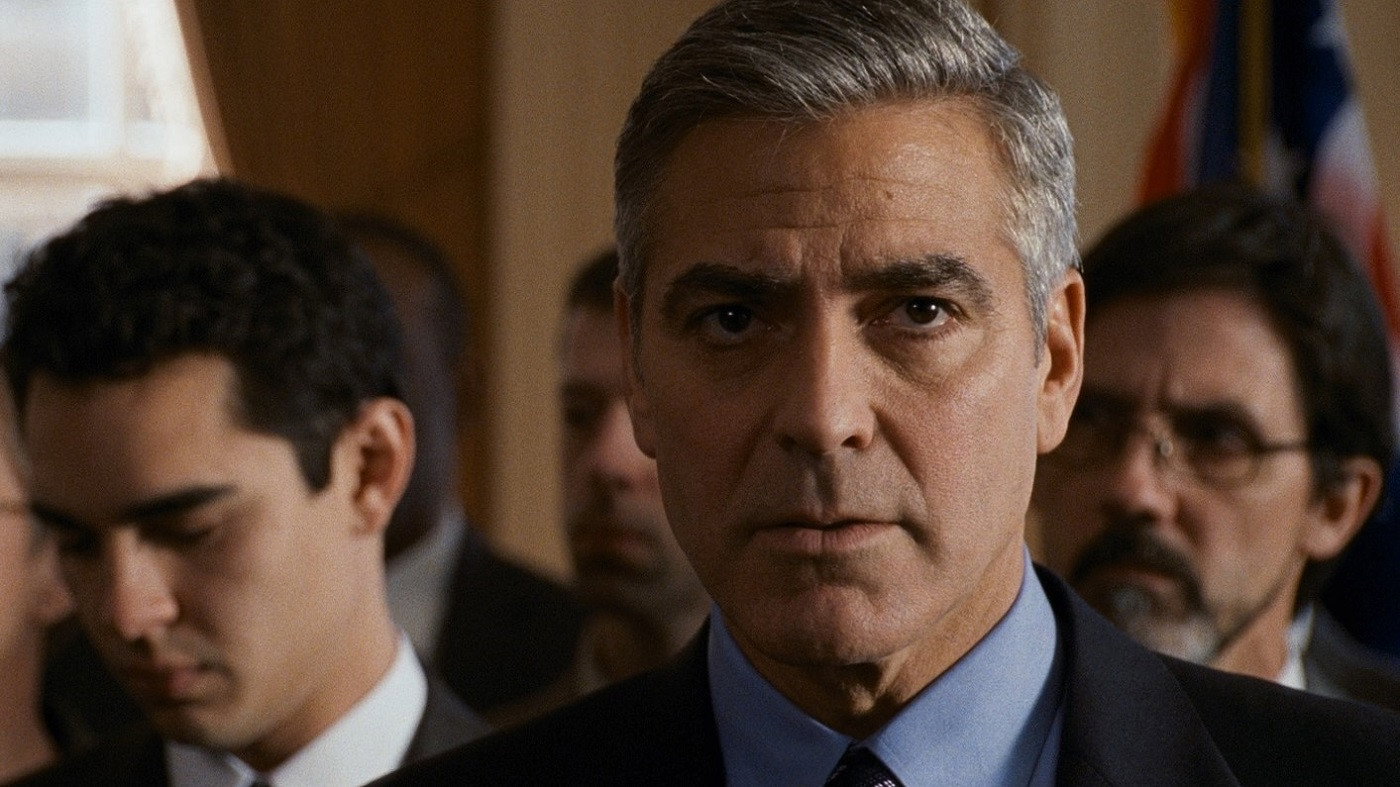
Watching Stephen’s confidence disintegrate is compelling. The plot unfolds at a measured pace, settling into its world before descending into a hopeless free-for-all. The characters rarely drop their professional decorum; even while tearing one another apart, their exchanges remain polished. The Ides of March is striking in its detachment, showing how lives are reduced to grains of sand slipping through greedy, negligent fingers—held by powerful men obsessed with optics and scheming rather than meaningful change.
Clooney could easily have let ego cloud his casting, but choosing to play Morris was a stroke of genius. The character synthesises Clooney’s finest qualities as an actor—his wry smile, effortless charm, and a touch of smarminess—wrapped in a cooler detachment than usual that suits the role perfectly. Ultimately, however, this is Gosling’s film.Watching his boyish confidence fracture under the weight of betrayal is fascinating.

Even when the plot stalls and fails to match the tension of the performances, Gosling remains magnetic. You don’t need to approve of Stephen’s choices to feel the bitterness surrounding him. Although the musical score misses the mark by leaning into thriller conventions rather than highlighting a melodrama of compromised morals, Clooney’s direction rarely overreaches in framing this bleak portrait of political despair.
Rounding out the stellar cast are Paul Giamatti (Sideways) and Philip Seymour Hoffman (Nobody’s Fool)—two of cinema’s finest actors—alongside Evan Rachel Wood (Frozen 2), who delivers an intriguing performance as Molly Stearns. As a campaign intern for Morris, Molly becomes entangled in a covert scandal that threatens to explode. Yet instead of relying on sensational exposés or fiery confrontations, The Ides of March deliberately de-escalates its highest-stakes plot-lines, choosing instead to focus on the quiet sting of defeat and the successive moral blows dealt by a descent into dirty politics.
USA | 2011 | 101 MINUTES | 2.39:1 | COLOUR | ENGLISH

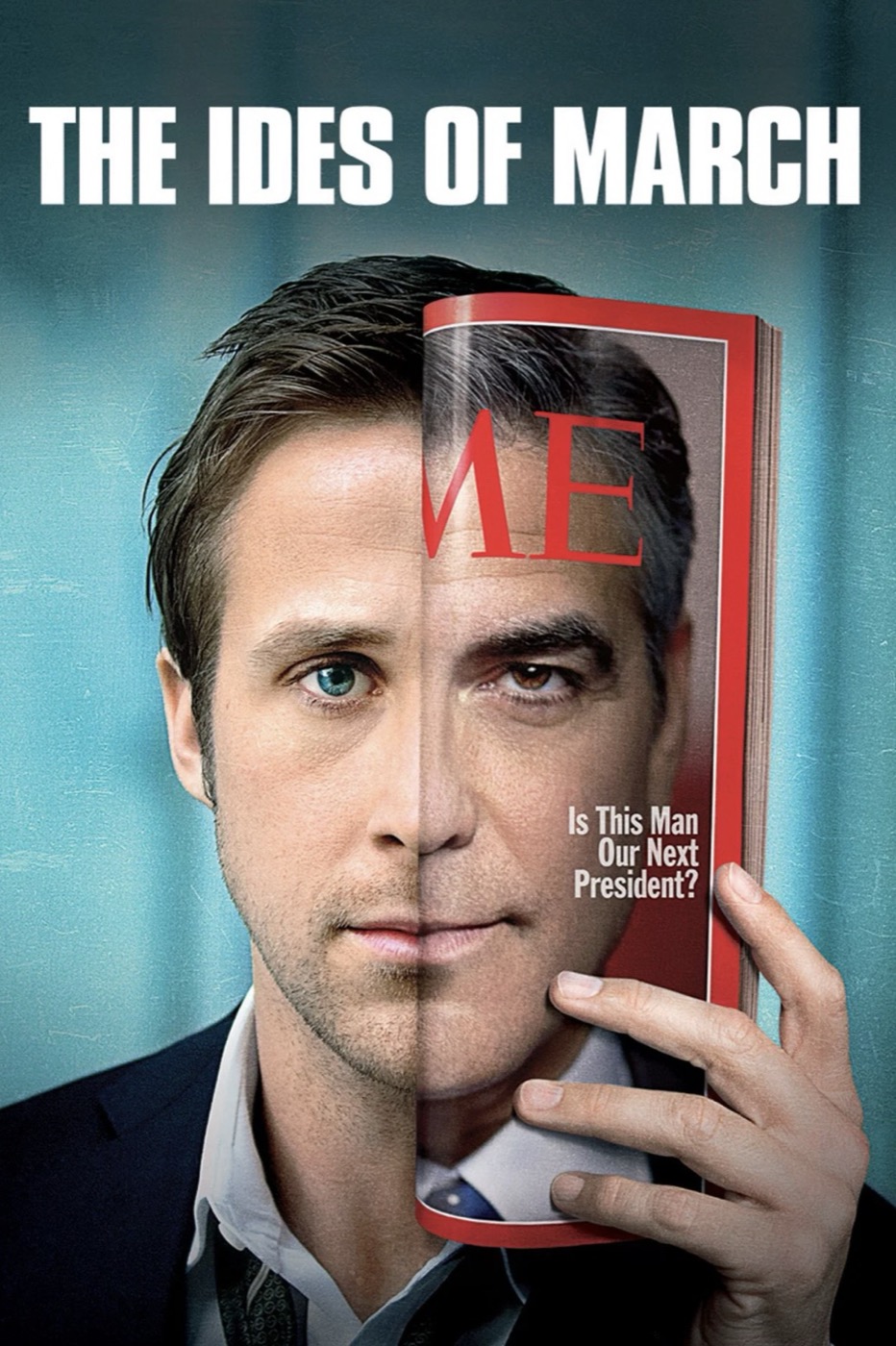
director: George Clooney.
writers: George Clooney, Beau Willimon & Grant Heslov (based on the 2008 play ‘Farragut North’ by Beau Willimon).
starring: Ryan Gosling, George Clooney, Philip Seymour Hoffman, Paul Giamatti, Evan Rachel Wood, Marisa Tomei, Jeffrey Wright & Max Minghella.