THE OMEN (1976)
An American ambassador to Britain and his wife may be raising the Antichrist.

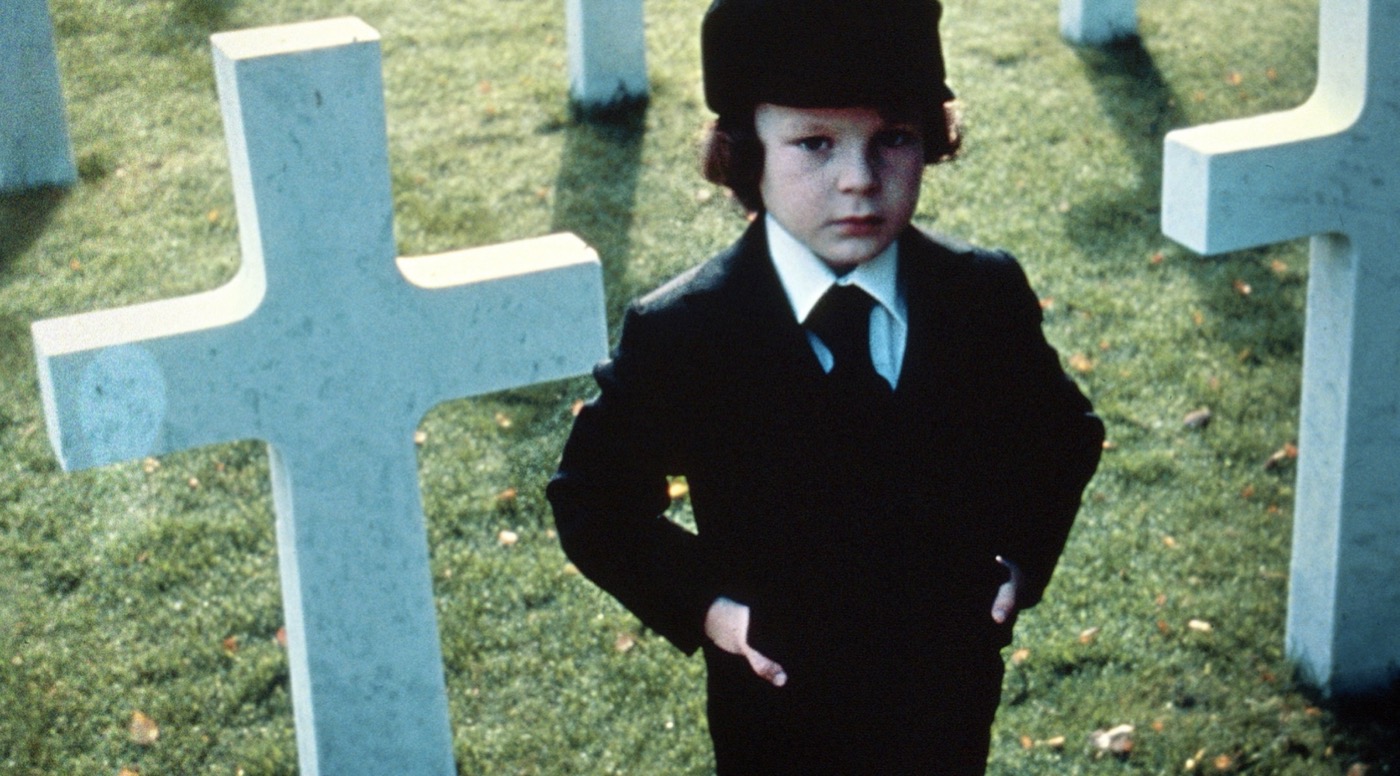

An American ambassador to Britain and his wife may be raising the Antichrist.
A child can be loved, feared, protected, resented, or mourned. In The Omen, Damien is something colder and more useful before he is anything else: he is a solution. He is the child placed where a child is required, the missing piece in a perfect family portrait, the small body that allows grief, scandal, and domestic fracture to be quietly covered over. That is the film’s most interesting horror. The devil does not need to smash his way into power; he only needs to be adopted by it.
Richard Donner’s film begins in Rome, where American diplomat Robert Thorn (Gregory Peck) learns that his newborn son has died. His wife, Katherine (Lee Remick), does not know. A priest offers Thorn another child born the same night, whose mother has also died. With no records, no public disgrace, and no unnecessary pain, Thorn accepts. Katherine believes the child is hers. The boy, Damien (Harvey Spencer Stephens), grows up inside a world of privilege, diplomatic cars, large houses, polished rooms, and political possibility.
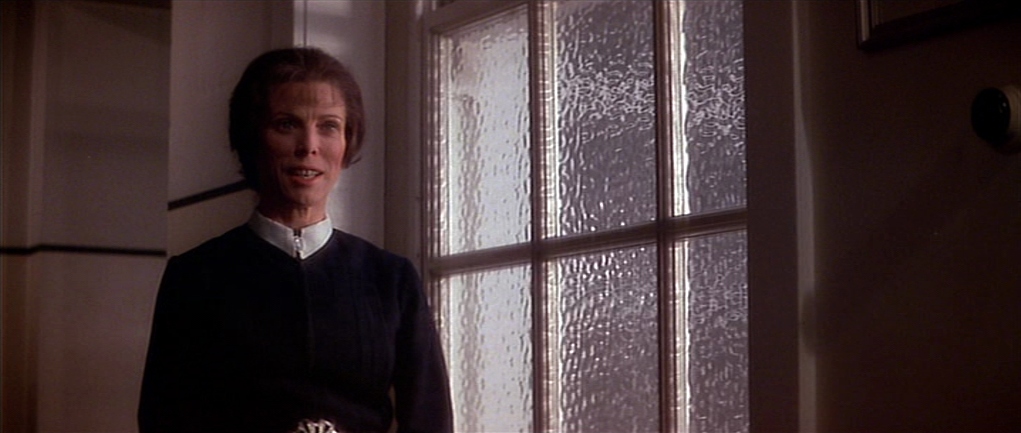
A few years later, Thorn is the American ambassador to Britain. His life appears not merely successful but arranged. Then things begin to break. A nanny’s death at Damien’s birthday party introduces a note of public horror into this carefully managed household. Mrs Baylock (Billie Whitelaw), the new governess, arrives with unnerving confidence. A black dog appears as both protector and warning. Churches, animals, photographs, and priests begin to suggest that Damien isn’t simply a difficult child, nor even a disturbed one. He may be the Antichrist.
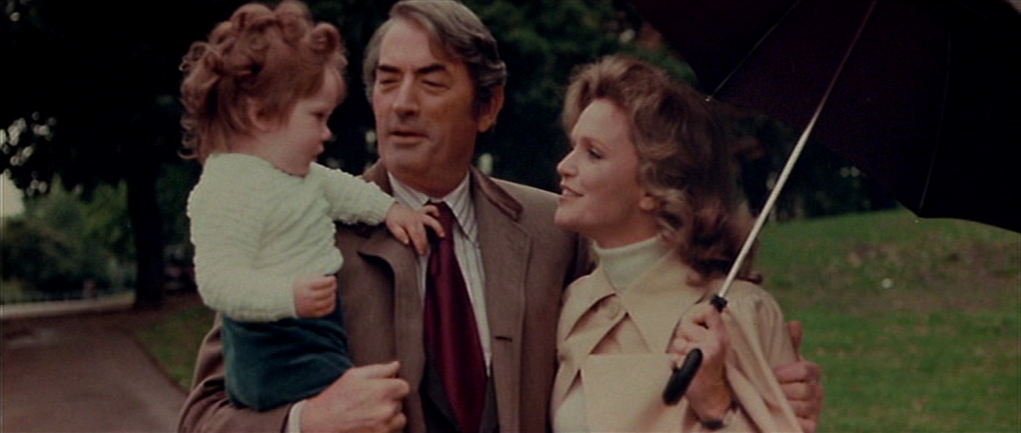
As drama, The Omen isn’t especially subtle. Its plot proceeds by confirmation rather than uncertainty. One sign follows another; one warning becomes another death. The film is more schematic than the best of its 1970s horror peers. The audience is rarely asked to wonder whether something demonic is happening. The real question is how long it will take Thorn to accept what the film has already arranged around him.
That bluntness is a limitation, and it matters. The Omen is a better film to watch than to recount. Its screenplay is linear, sometimes even mechanical, yet Donner’s direction gives the material a stronger visual intelligence than its narrative structure might suggest. The film’s reputation rests less on what it reveals than on how confidently it frames what is already visible.
The best way to read Damien isn’t as a psychologically rich child, because the film does not build him that way. Nor is he given many genuinely affectionate scenes with Thorn. He is present in scenes of family life, but often as part of a composition: the handsome child in the handsome household, the son who completes the picture. The early domestic images have the quality of an album rather than a relationship. Damien isn’t loved dramatically so much as positioned.
That matters because Thorn’s original decision isn’t simply an act of paternal feeling; it’s also an administrative act. A fact has become intolerable, so another fact is substituted. A dead child is replaced by a living one, the wife is kept ignorant, and the family image survives. Thorn isn’t presented as a monster for making this choice, and Peck plays the scene with genuine anguish. But the decision belongs to a man trained by power: a diplomat who instinctively understands concealment, continuity, and the management of appearances.
Peck’s performance is stronger than it’s sometimes given credit for. He does not play Thorn as a horror protagonist waiting to unravel. He plays him as a public man, a controlled man, a man whose body seems accustomed to ceremony, protocol, and restraint. His stiffness works for the film. Thorn’s fear isn’t theatrical; it’s the gradual collapse of a posture. What begins as composure becomes denial, then calculation, then panic. Peck’s gravity also helps keep the film from slipping too easily into exploitation. When the material becomes lurid, he makes it look morally expensive.
The film’s political dimension is simple but effective. Damien does not enter the world through poverty, chaos, or marginality. He enters through diplomacy, wealth, and succession. The threat isn’t that evil lurks outside the gates of civilisation, but that civilisation may have already prepared a room for it. Thorn’s household isn’t invaded in any ordinary sense; it has a vacancy, and Damien fills it.
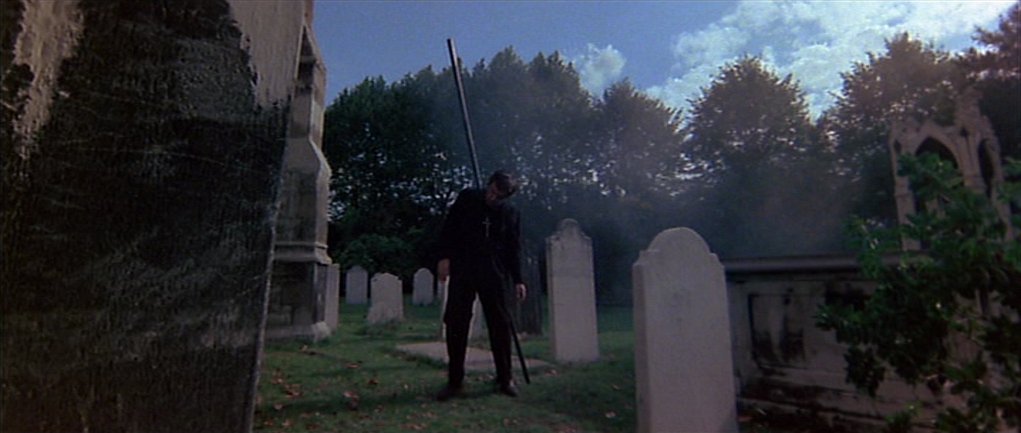
Thorn’s world has explanations ready before it has understanding. A priest can be dismissed as a fanatic, Katherine’s fear can be treated as illness, a photograph can be blamed on damaged film, and a death can be filed under accident. The modern order does not collapse because it’s rational; it collapses because it keeps mistaking the sacred for a disturbance in the system.
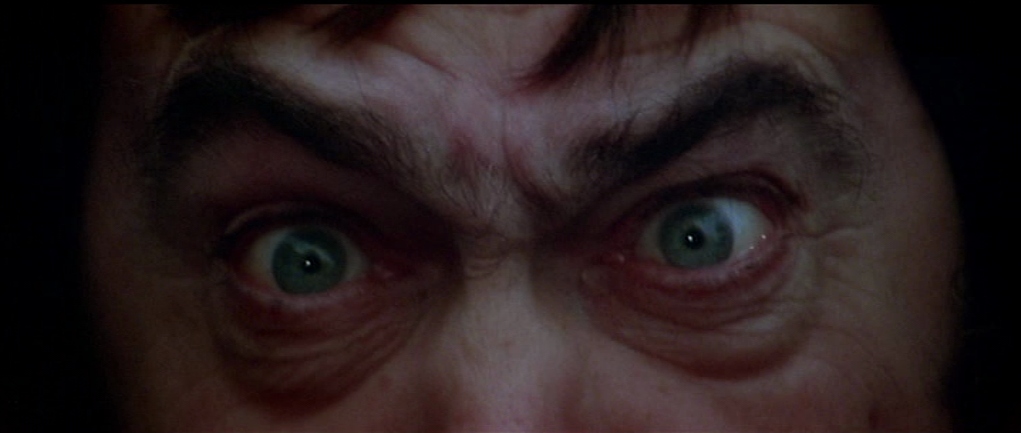
Donner’s direction reinforces this by making ordinary space feel watched, bent, and subtly hostile. Wide-angle lenses give rooms and corridors a warped pressure, as though respectable interiors were no longer reliable containers. The camera often peers through railings, gates, parapets, and architectural divisions, placing Thorn inside a world already divided and observed. Handheld movement, point-of-view shots, and circular camera motions pull the film away from the polished order of diplomatic life and towards a more unstable visual field. The plot tells us Damien is evil; the camera suggests the world has begun to organise itself around that fact.
Jerry Goldsmith’s Academy Award-winning score is even more decisive. Without it, The Omen would be a far easier film to reduce to demonic melodrama. Goldsmith gives the film its black ceremonial force. His choral writing does not simply accompany evil; it officiates it. Yet the score isn’t only imposing in its grander gestures; it also knows when to support a scene rather than overwhelm it, tightening fear, grief, or disbelief without announcing itself too loudly. The music turns pulp material into liturgy, lending the story a scale and inevitability the screenplay cannot always generate on its own. Damien himself does not need to be frightening in every scene, because the score makes him feel preceded by something older, larger, and already enthroned.
The film moves efficiently, but efficiency isn’t depth. Donner keeps events advancing with a clean sense of escalation, yet after the first death The Omen becomes increasingly procedural: one warning, one sign, one death, one further confirmation. Its religious machinery is often more blunt than unsettling, and its supernatural logic is uneven. The forces protecting Damien can arrange grotesquely precise deaths, yet they become oddly inefficient whenever Thorn must move closer to his final moral crisis.
That inconsistency isn’t a small issue, because the film depends on a sense of diabolical design. If the machinery of evil can operate with such spectacular precision, the plot has to work hard to explain why Thorn is permitted to continue investigating. It does not really do that; it simply needs him to reach the end of the story. This does not ruin the film, but it keeps it closer to a well-made piece of horror engineering than to a fully convincing tragedy.
Damien also remains more symbol than character, which weakens the emotional force of Thorn’s later crisis. The film asks us to feel the horror of a father facing the possible destruction of his child, but it has not fully built that child as an object of love. We understand the dilemma; we do not always feel its deepest wound.
Yet that flaw is partly inseparable from the film’s most revealing idea. Damien isn’t a child who gradually becomes monstrous; he is a function that gradually reveals what has occupied it. The Omen isn’t at its best when asking whether the boy is evil. It’s better when showing how easily evil can pass through the forms of respectability: family, inheritance, diplomacy, public image, religious denial, and political ambition.
Its drama is blunt, its theology crude, and its suspense more procedural than mysterious. But its images, music, and central casting give it enough cold authority to explain why it endured. The Omen is a classic of horror iconography more than a great horror film: its strongest fear isn’t that the devil might be born, but that, once born, he may find the modern world ready to give him a family, a title, and an inheritance.
UK • USA | 1976 | 111 MINUTES | 2.39:1 | COLOUR | ENGLISH • LATIN • ITALIAN

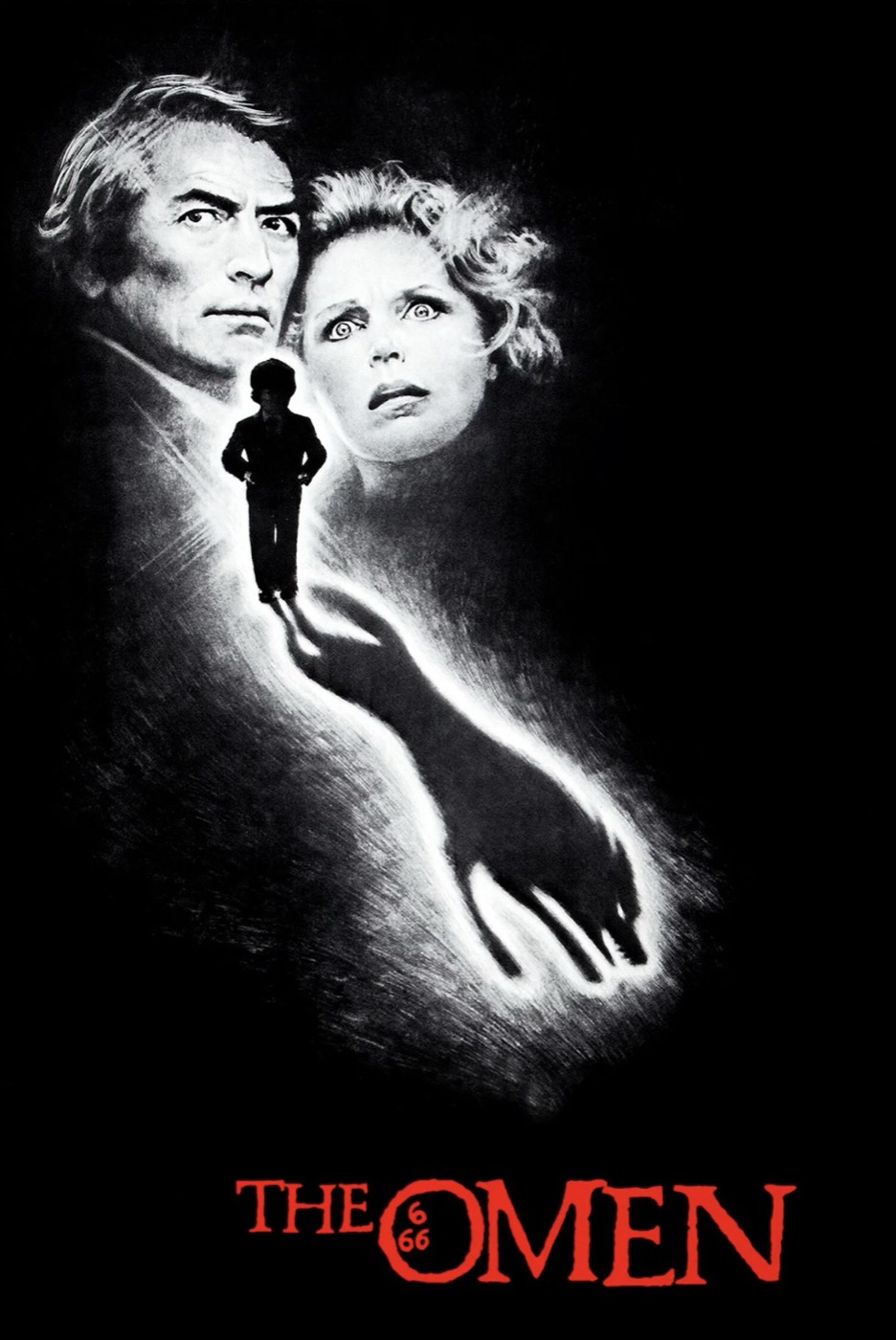
director: Richard Donner.
writer: David Seltzer.
starring: Gregory Peck, Lee Remick, Harvey Stephens, David Warner, Billie Whitelaw, Patrick Troughton & Leo McKern.