MADHOUSE (1974)
A horror movie star returns to his famous role after years in a mental institution. But the character seems to be committing murders independent of his will.


A horror movie star returns to his famous role after years in a mental institution. But the character seems to be committing murders independent of his will.
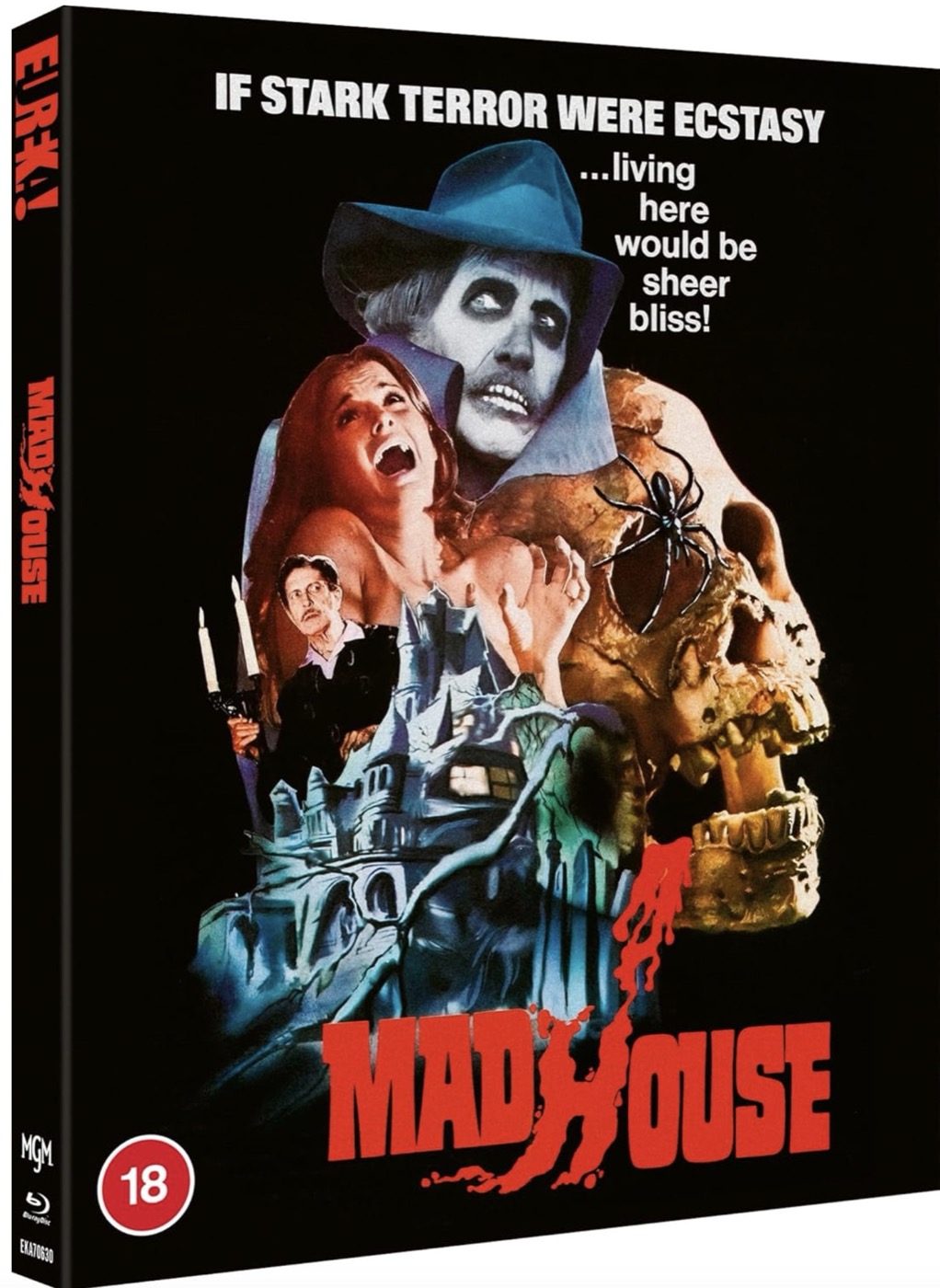
A macabre murder mystery that fuses Gothic horror with stalk-and-slash suspense, Madhouse boasts a stellar cast spearheaded by two genre giants: Vincent Price and Peter Cushing. It should be a classic. Alas, it falls short on several counts. Yet despite its flaws, the film remains hugely enjoyable, and Eureka Entertainment’s cleaned-up HD presentation on Blu-ray will be welcomed by horror fans—especially those who first saw it during their formative years.
The opening scenes make little sense, though this only becomes apparent in retrospect. Even so, the unfolding events are at once satirical, shocking, and intriguing enough to pull the viewer into what promises to be an ingenious mystery.
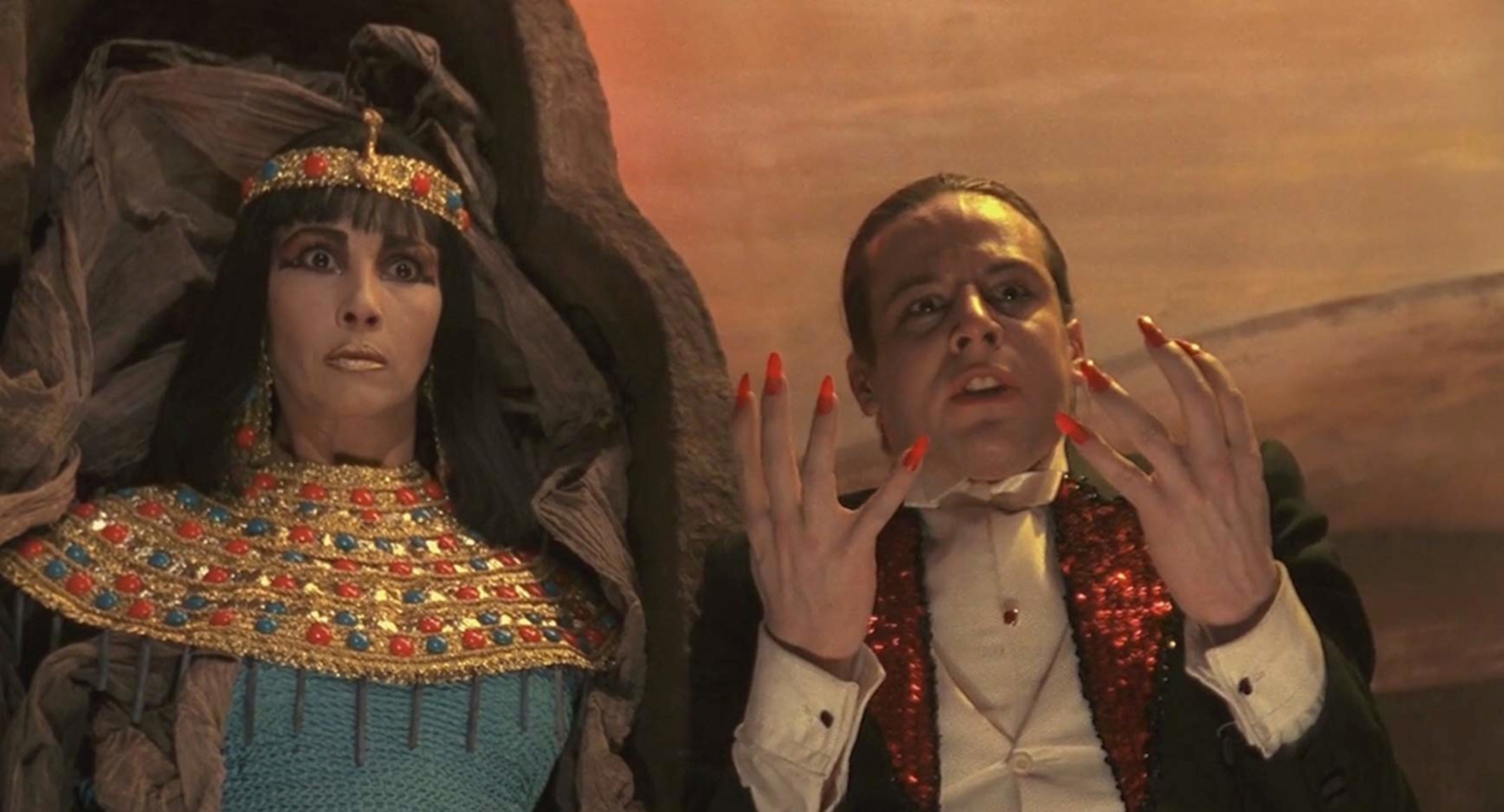
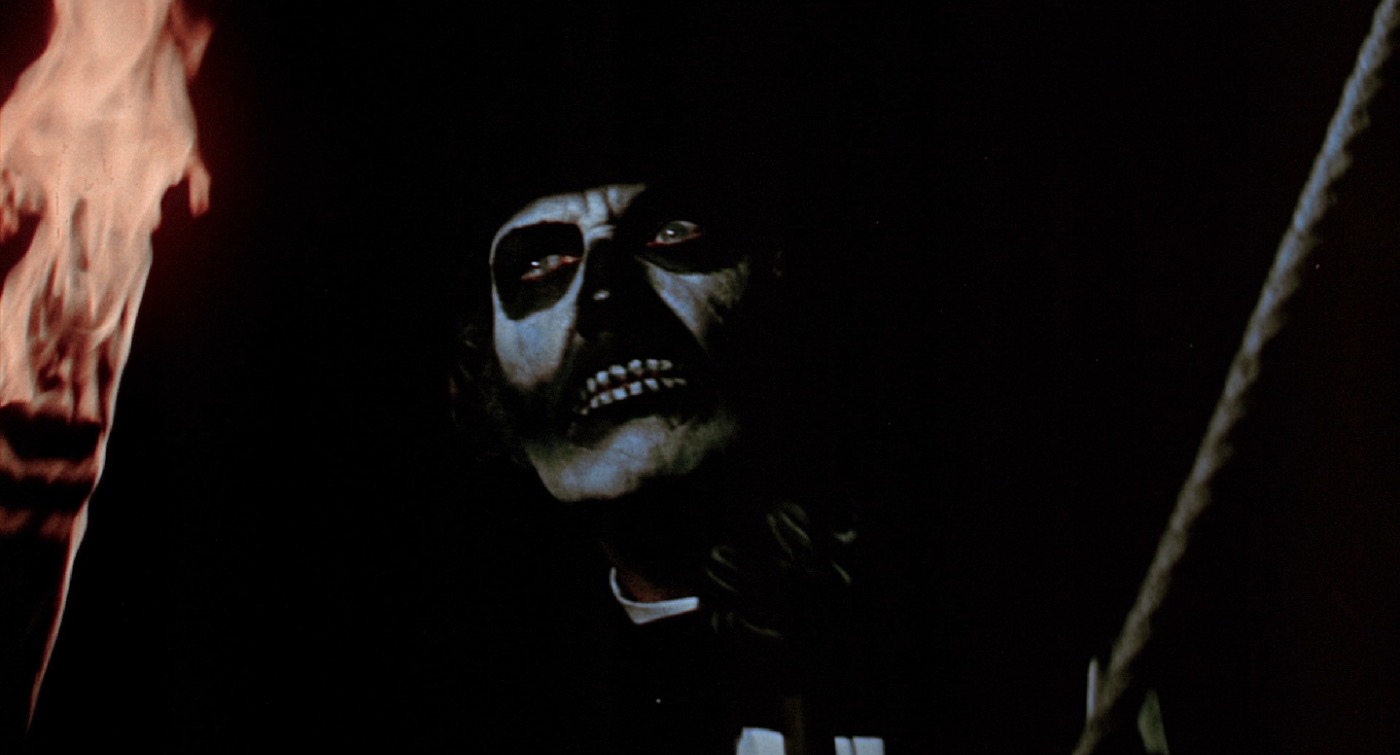
At a New Year’s Eve soiree that is more sordid than chic, ageing movie star Paul Toombes (Vincent Price) screens the fifth instalment of his popular Dr Death franchise. These macabre movies feature a skull-faced villain who murders attractive women in sadistically inventive ways. We are treated to a re-dubbed clip from Roger Corman’s The Haunted Palace (1963), interspersed with shots of Toombes as a torch-bearing Dr Death. It was perhaps a mistake to remind us just how beautiful Corman’s Gothic aesthetic could be, as it sets an impossibly high bar. However, horror aficionados can look forward to further clips from the Corman-Price collaborations scattered throughout. Spotting these highlights—along with cameos from horror-heyday icons like Boris Karloff and Basil Rathbone—is half the fun.
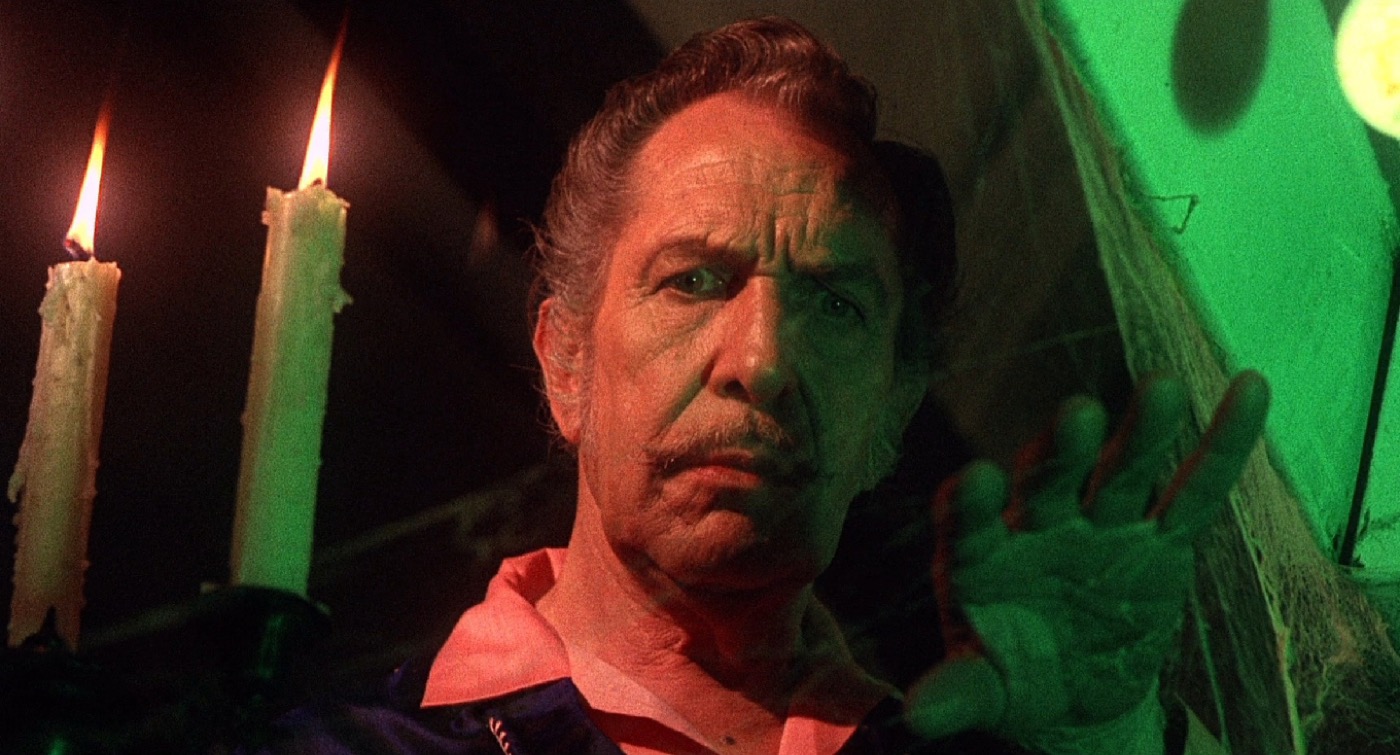
We are introduced to the key players at the screening party as Toombes acknowledges his friend Herbert Flay (Peter Cushing), the writer of the Dr Death scripts to whom he owes his fame and fortune. He also introduces his latest co-star, Ellen Mason (Julie Crosthwait), teasing that she has a worse fate in store than her predecessors… if she accepts his marriage proposal. She seems elated, but an old flame, Faye Carstairs (Adrienne Corri), is less than thrilled—as is pornographer Oliver Quayle (Robert Quarry), who smugly reveals Ellen’s previous starring roles in his films, and his bed. Suspecting Ellen of being a gold-digging, fame-obsessed starlet, a disillusioned Toombes immediately retracts his proposal and leaves in a huff.
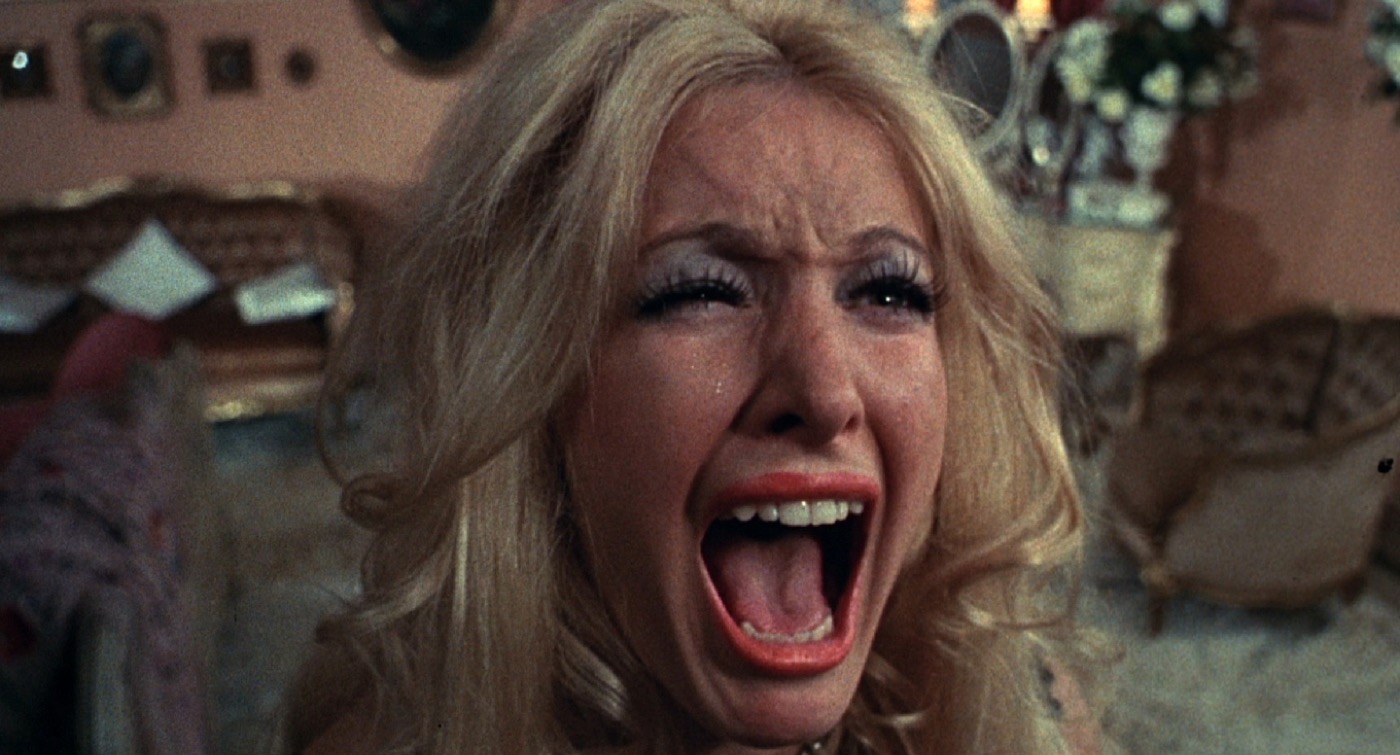
A point-of-view sequence follows as someone dons Dr Death’s trademark black cape and fedora, creeping up behind Ellen in her boudoir with a dagger in a black-gloved hand. It’s a knowing trope straight out of the giallo playbook; the resemblance to the killer in Mario Bava’s Blood and Black Lace (1964) cannot be coincidental. Having dozed off, Toombes awakes with a pang of regret over his hasty judgement and decides to apologise. However, when he speaks to Ellen, he’s disconcerted by her silence. He affectionately touches her hair, only to dislodge her severed head from her torso.
How did the killer decapitate Ellen so neatly without leaving a trace of blood on her long blonde hair, her clothes, or the deep-pile white carpet? How is it possible that, so soon after death, there is not even a trickle of blood from such a surgically precise slice? We must be dealing with a mad genius who somehow dispatched his victim during a party, drained her body entirely of blood, and disposed of it without spillage or witnesses. It’s a technically audacious murder that The Abominable Dr Phibes (1971) would be proud of, promising a gruesome Gothic mystery worthy of C. Auguste Dupin. Unfortunately, Madhouse makes grand promises that it simply cannot keep.
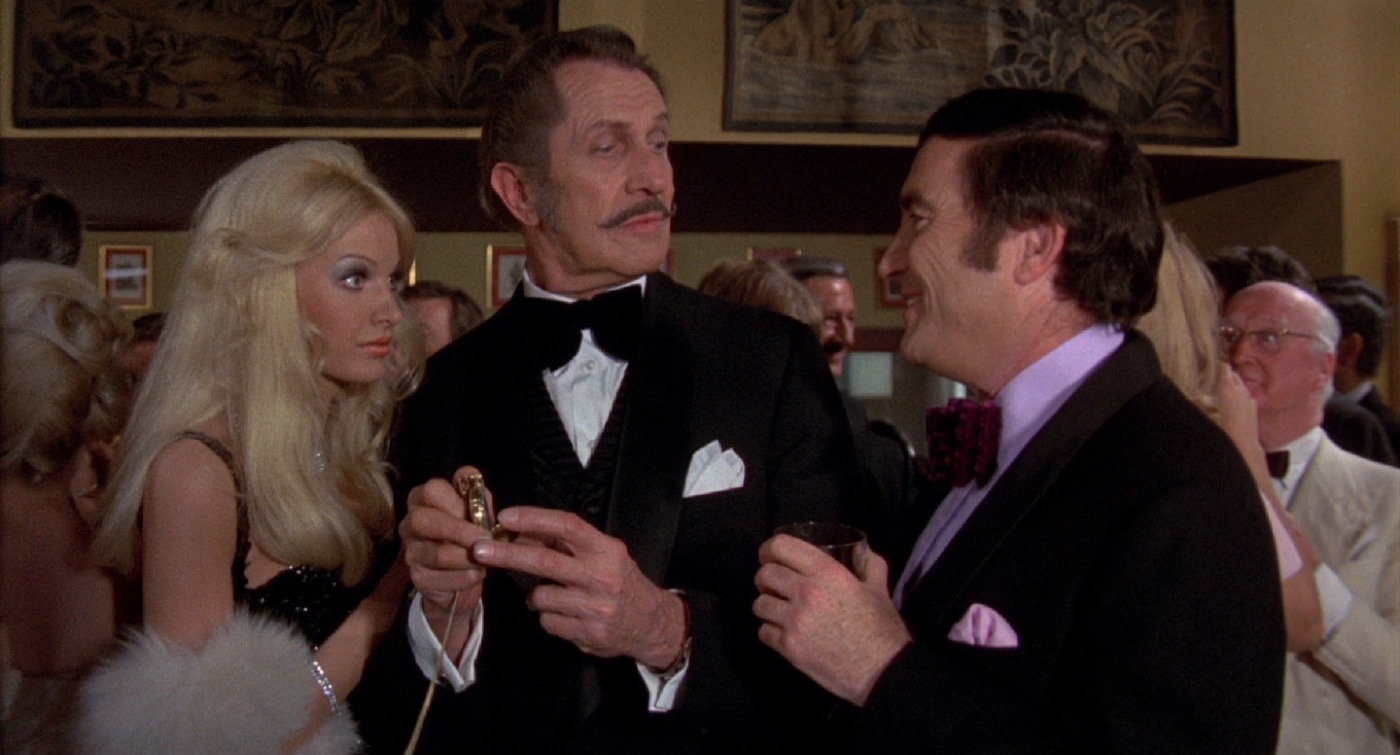
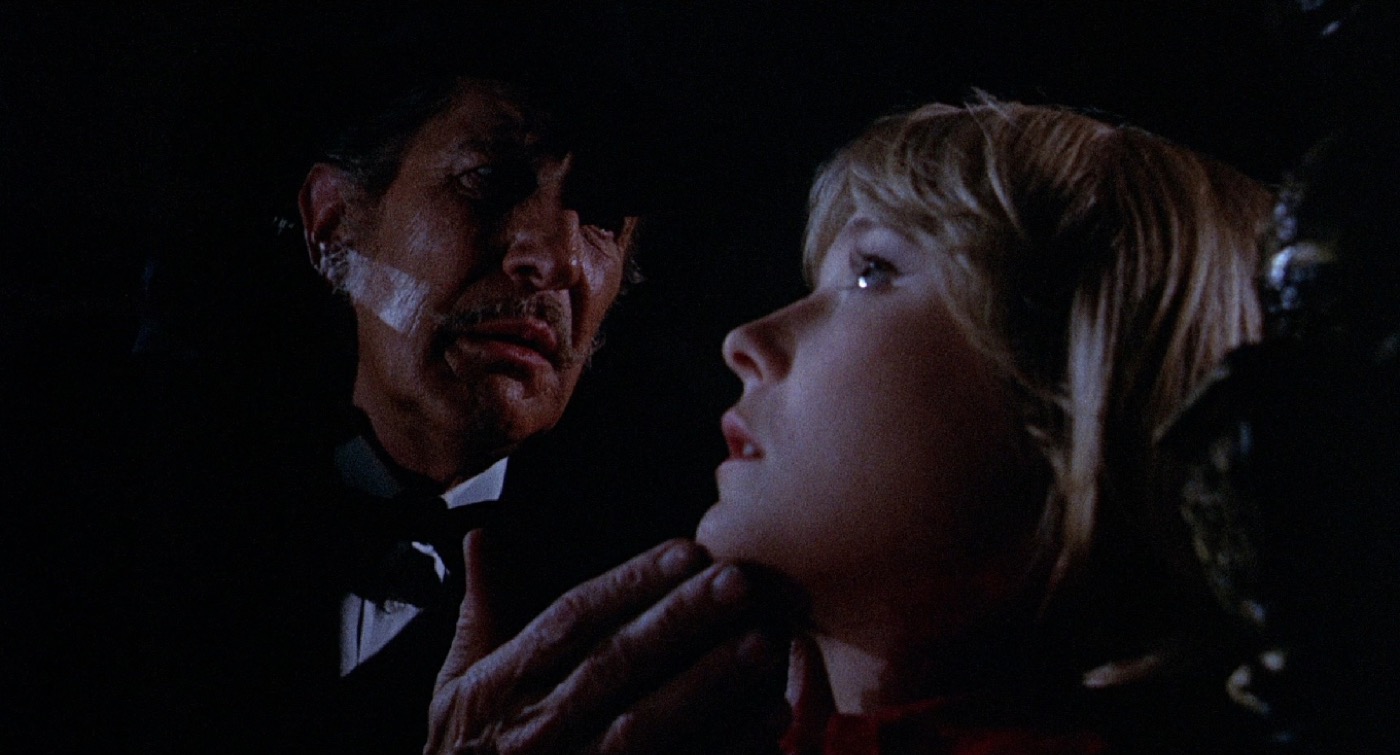
Flash forward several years. Having been acquitted of his fiancée’s unsolved murder and following a stint in a psychiatric hospital, Toombes is coaxed out of retirement by Flay. He is to reprise his role as Dr Death for a British television series produced by Quayle, the now-reformed pornographer. However, as production begins, a series of murders mimicking the on-screen killings gets underway, and Toombes suspects he may be responsible while in a fugue state. It’s a plausible theory shared by Detective Bradshaw (Ian Thompson) and Inspector Harper (John Garrie), who are hot on his heels. From here, the plot veers away from the Gothic, feeling more like Columbo colliding with a second-rate giallo edited for teatime television.
As with many a giallo, any buxom blonde with a speaking part is essentially signing her own death warrant—especially if she is scheming and sharp-tongued. However, Julia (Natasha Pyne), the young blonde assigned as Toombes’s PR assistant, subverts the cliché, making far more headway with her sleuthing than the police.
The murder set-pieces build nicely but end abruptly with grainy freeze-frames. Like Ellen’s decapitation, they are bloodless affairs until the final act, which suddenly turns visceral when a character we actually care about gets it in the neck. Horror fans will find plenty to enjoy along the way, even if they end up equally delighted and disappointed. Personally, I leaned towards delight, thoroughly enjoying the film’s nostalgic, self-aware frisson. It’s a film that draws deliberately from the horror heritage it pastiches while trying to inject fresh ideas into the genre. It’s just a shame it does not execute either with quite enough gusto. While the clips from genuine Vincent Price classics are wonderful to see, they frequently remind us how the film we are watching falls short.
From its inception, Madhouse was pulled in different directions by its co-producers, American International Pictures (AIP) in the US and Amicus in Britain. Both wanted to capitalise on their respective genre legacies while adapting to the increasingly sexualised and gorier horror trends emerging in the early 1970s. There was a general consensus that Gothic horror was waning and that the genre needed modernising.
With Robert Fuest attached to direct, Amicus began pre-production on Revenge of Doctor Death, featuring a script by Greg Morrison based on Angus Hall’s 1970 novel Devilday. Hoping to resurrect the delightfully diabolical dynamic of Fuest’s The Abominable Dr Phibes and Dr Phibes Rises Again (1972), AIP placed Price at the head of the cast. However, Price rejected the original script, suggesting Ken Levison rewrite it—a surprising move given they had no professional history, and this remains the sole overlap in their filmographies.
In Hall’s novel, the plot chronicled the descent into depravity of Paul Toombes: Hollywood actor, television host, drug addict, and Satanist who turns to human sacrifice in a desperate bid to remain forever young. While the protagonist’s name survived the adaptation, the occult themes evaporated, transforming the character into an elder statesman of the horror genre and the plot into a standard whodunnit.
The Doctor Death title—intended to evoke comparisons to Dr Phibes—was dropped to avoid audiences dismissing it as a sequel to Doctor Death: Seeker of Souls (1973). Though I have not seen that film, it was by all accounts a camp disaster, even if its synopsis bears a closer resemblance to Hall’s source novel. By the time Madhouse entered production, Fuest had moved on to direct The Final Programme (1973).
He was replaced by Jim Clark, who was better known as a skilled film editor, having worked on classics such as Jack Clayton’s The Innocents (1961) and Stanley Donen’s Charade (1963). Clark had also directed a couple of cheeky British comedies: Every Home Should Have One (1970) starring Marty Feldman, and Rentadick (1972), co-written by John Cleese and Graham Chapman during their early Monty Python days.
Editor Clive Smith’s credentials felt more appropriate for the genre. He had previously served as dubbing and sound editor on the cult TV show The Prisoner (1967–68) and several notable 1960s B-movies. Immediately prior to Madhouse, he had achieved a hat-trick of British horror films with Asylum (1972), The Vault of Horror (1973), and And Now the Screaming Starts! (1973).
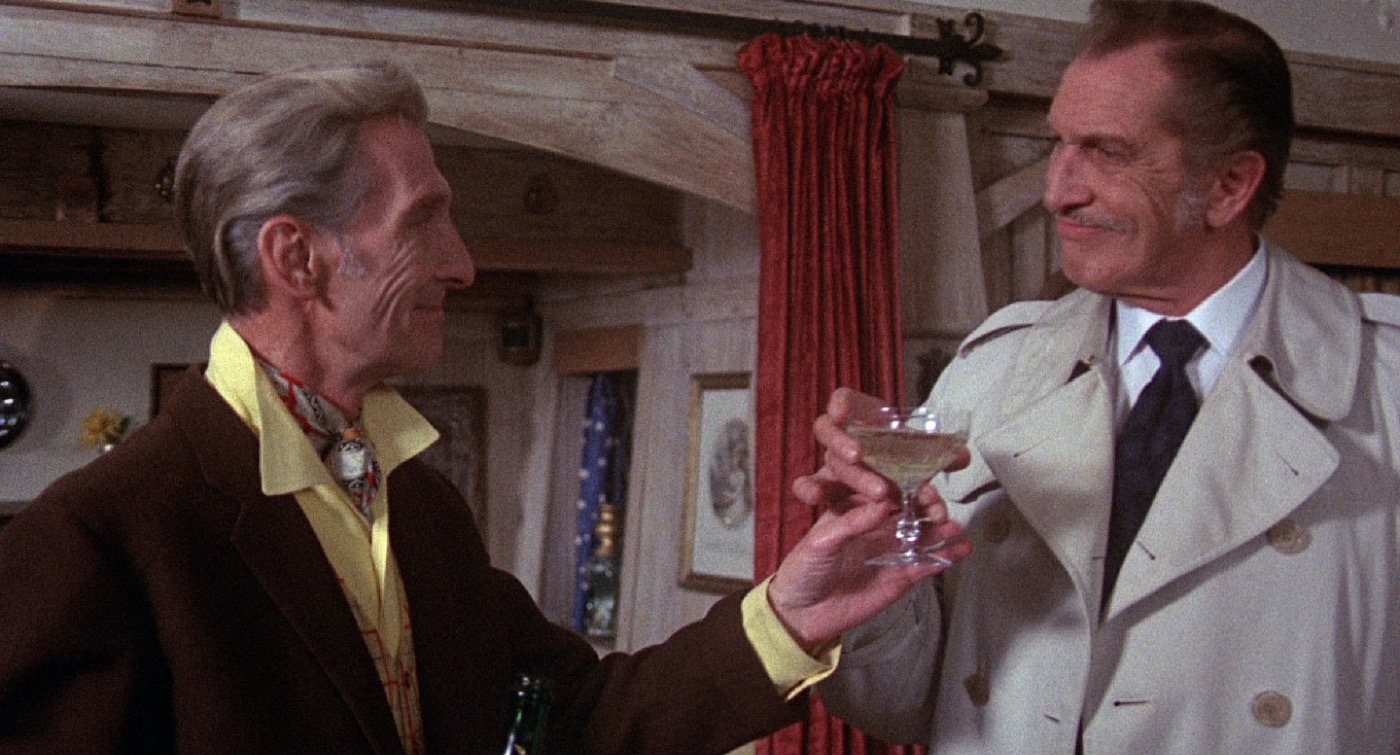
If those titles spark a nostalgic tingle, you are precisely the right demographic for Madhouse, if only to enjoy a stalwart British cast whose faces were ubiquitous during the tumultuous, transitional era of 1970s cinema and television. The supporting actors do their best with a flimsy narrative framework and a smattering of decent dialogue. Linda Hayden started the decade with Taste the Blood of Dracula (1970) before landing her most memorable role in the seminal folk-horror The Blood on Satan’s Claw (1971). Adrienne Corri also deserves credit for bringing genuine nuance to what could have been a cartoonish Miss Havisham pastiche; she had kicked off the decade with key roles in Stanley Kubrick’s A Clockwork Orange (1971) and Vampire Circus (1972). Meanwhile, Barry Dennen—fresh from playing Pontius Pilate in both the stage and screen versions of Jesus Christ Superstar (1973)—adds a welcome touch of class as the beleaguered television director.
In a bid to modernise, Madhouse looked to Italian pulp cinema, particularly the burgeoning giallo sub-genre pioneered by Mario Bava. Bava had successfully transitioned from Gothic fairy tales to contemporary murder mysteries while maintaining a striking, expressive lighting aesthetic shared by Corman. However, Clark was clearly reluctant to lean into these elements. Consequently, Madhouse never achieves that level of stylistic confidence, though it flirts with it just enough to dilute the grittier, realist approach that constantly threatens to take over.
The final act escalates beautifully towards what should have been a macabre and satisfying twist. It’s undeniably great, gruesome fun right up until the confusing, overly clever meta-ending—which makes sense on screen but falls apart the moment you think about it. Even if one forgives the scientifically ludicrous, rubbery spider scene, it leaves the distinct impression that a major narrative thread, hinted at by a single line of dialogue, was completely excised in the editing room. Because Madhouse never pretends to be grounded in reality, it would have benefited from embracing its fleeting moments of nightmarish surrealism with far more enthusiasm. Instead, the producers seemingly gave up halfway through, relying entirely on the simple faith that putting Vincent Price and Peter Cushing on screen together would be enough.
And it very nearly is.
UK • USA | 1974 | 91 MINUTES | 1.85:1 | COLOUR | ENGLISH

director: Jim Clark.
writers: Ken Levison & Greg Morrison (based on the 1969 novel ‘Devilday’ by Angus Hall).
starring: Vincent Price, Peter Cushing, Robert Quarry, Adrienne Corri, Natasha Pyne, Linda Hayden & Barry Dennen.