LONE STAR (1996)
When the skeleton of his murdered predecessor is found, a Sheriff unearths many other long-buried secrets in his Texas border town.


When the skeleton of his murdered predecessor is found, a Sheriff unearths many other long-buried secrets in his Texas border town.
On the surface, it seems impossible to bury secrets, let alone for decades, in the fictional border town of Frontera. Its sunny weather and arid climate leave little room for shadowy corners, and you won’t find any high-rises ’round these parts. The roads are quiet. The locals possess an affable charm. But there is much resentment lurking in this town, constantly in the process of swelling up and dying down again—never quite rising to the surface, but never absent, either.
John Sayles’ Lone Star presents a town with competing boundaries, where its residents’ identities are threatened by their neighbours, whilst each of their versions of reality continually clashes. What so many of these all-too-human characters fail to recognise is that their boundaries are entirely self-made, whether governmental (where the United States lies on one side of the film’s all-important border and Mexico on the other), historical (as Frontera’s residents can’t decide on what Texas’s true history is), or personal (with children struggling to reconcile the fact that they were moulded into who they are by their parents).
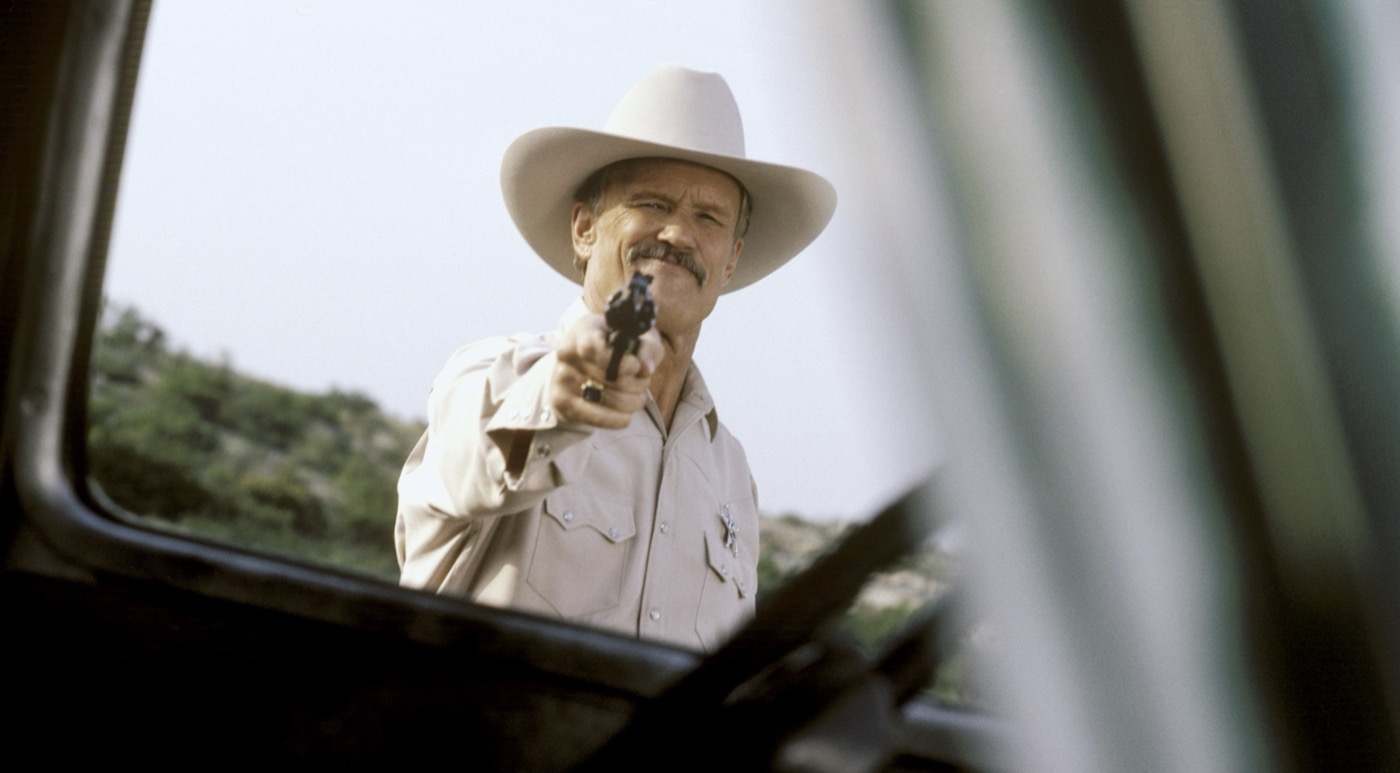
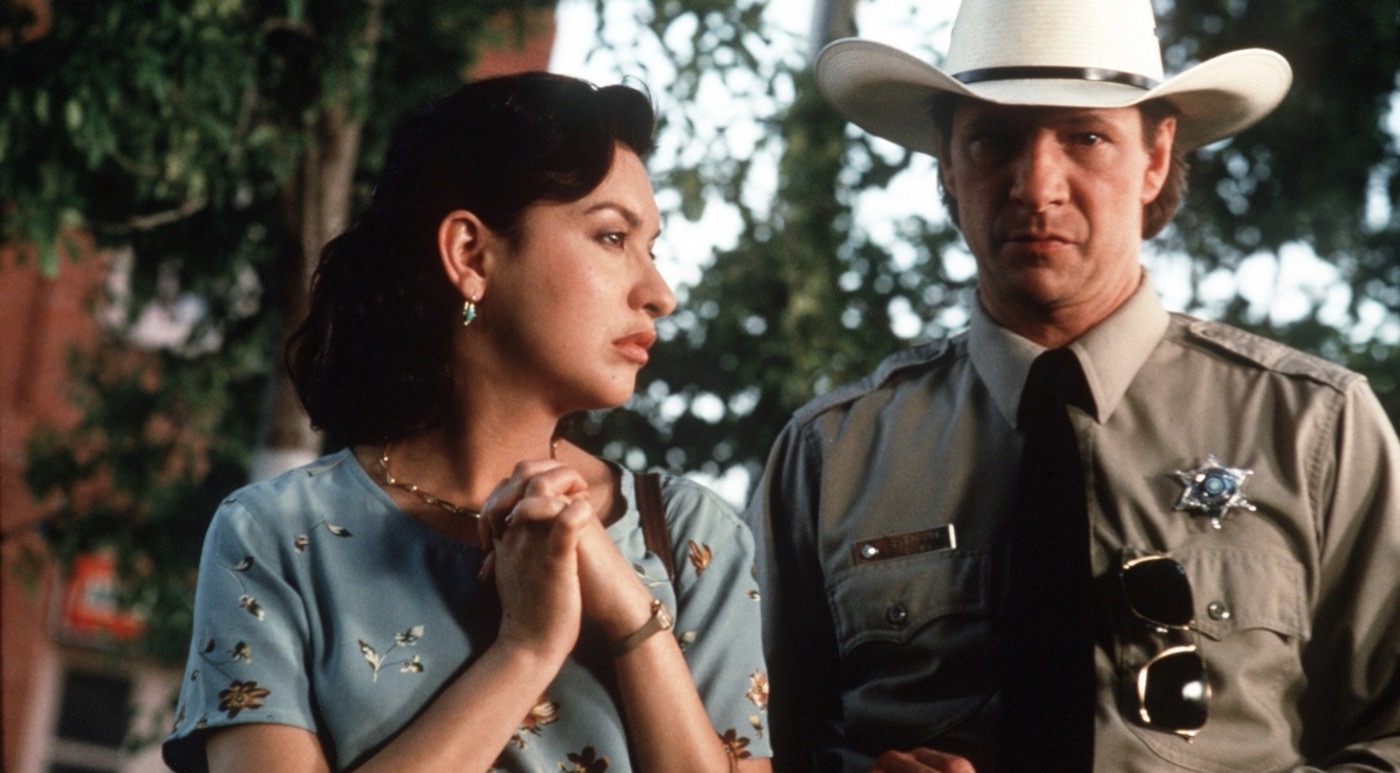
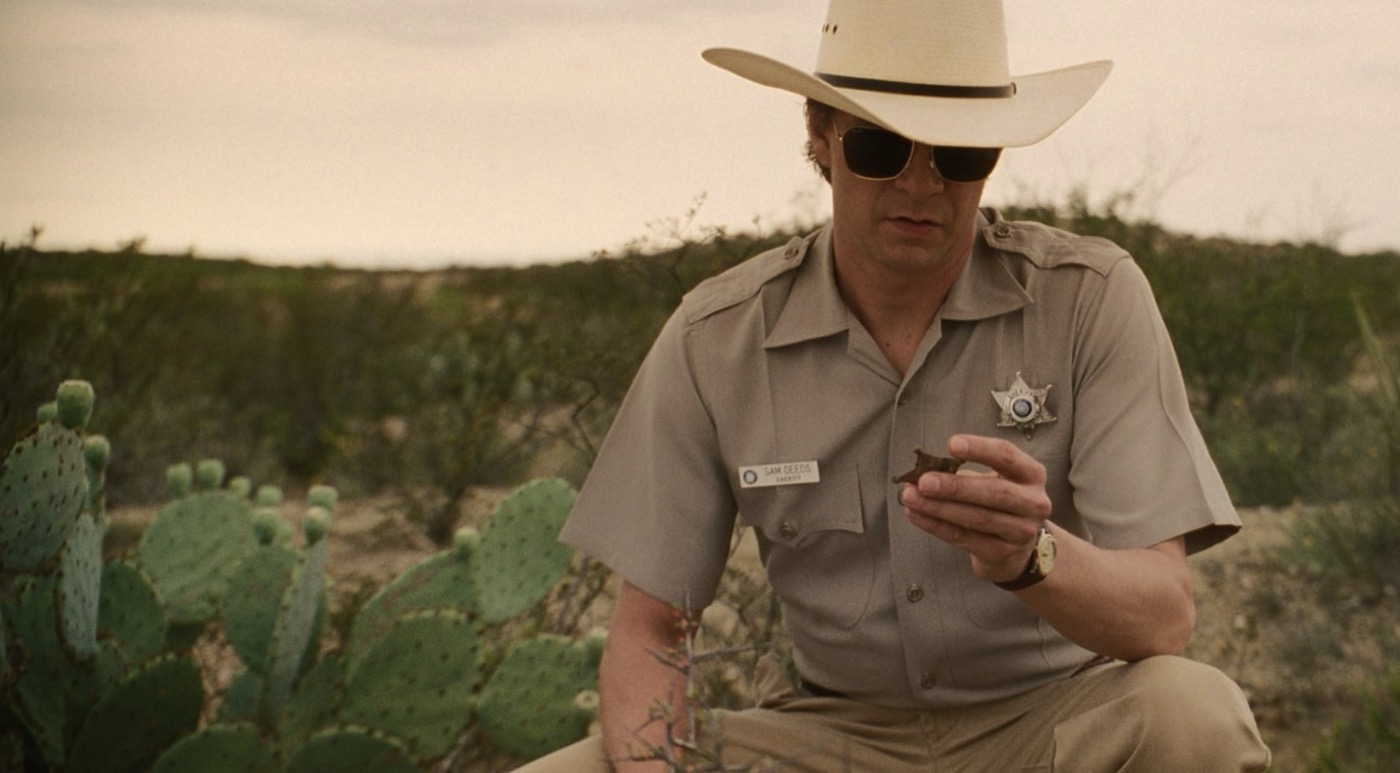
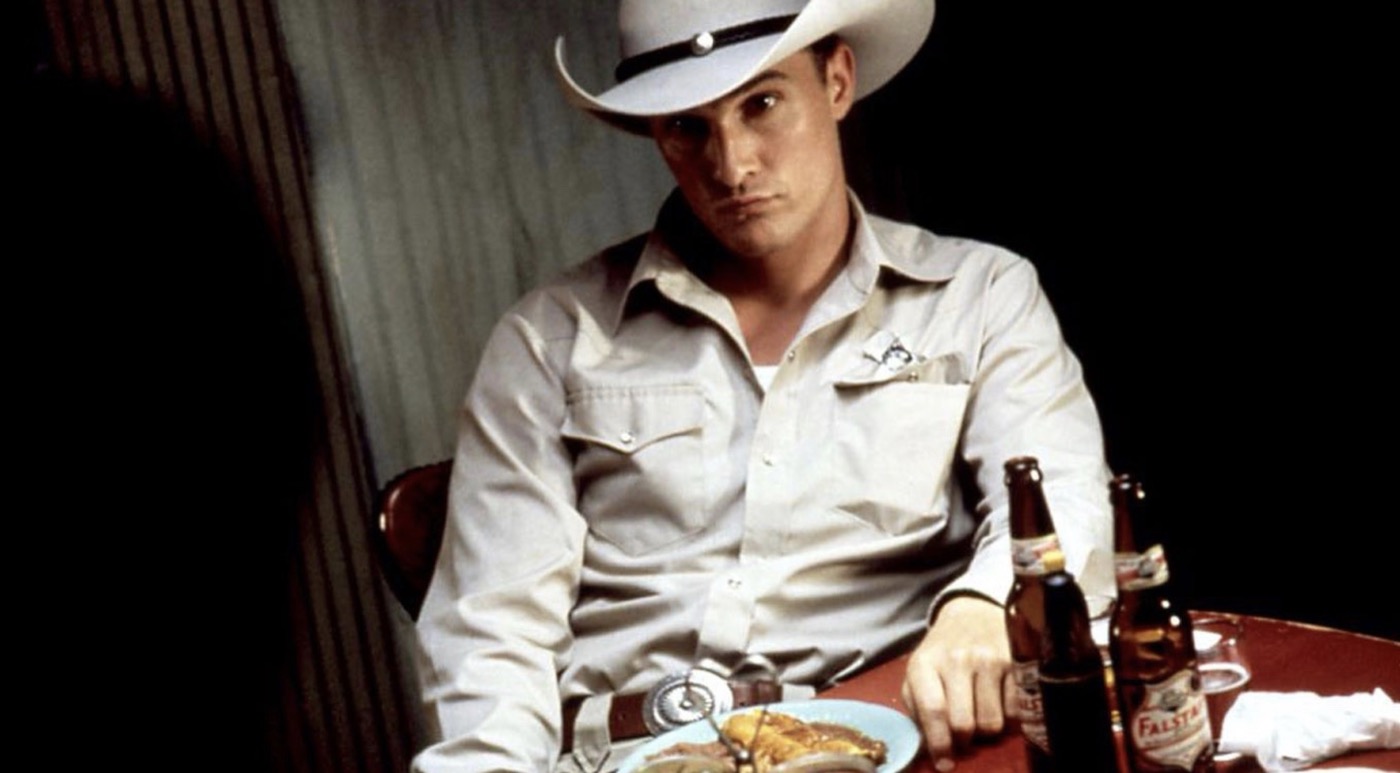
On the surface, the film is a murder mystery, but one of the most languid you’ll ever find, where more time is spent absorbed in the ambience of this quietly fractured community than investigating the skeleton found on an army shooting range. Viewers aren’t given red herrings or criss-crossing motives from a host of equally plausible suspects. Without spoiling anything, the mystery seems obvious long before any conclusions can be drawn. And when we are shown detective work, there are no frills or theatrics as Sheriff Sam Deeds (Chris Cooper) pores over old documents relating to his father, local hero Buddy Deeds (Matthew McConaughey), and the sheriff before his dad, Charlie Wade (Kris Kristofferson).
Back when Buddy was under Wade’s supervision, the rookie cop defied his superior publicly, standing up to his wrath when no one else in the town dared to. Wade was a tyrant, accepting criminal schemes as long as he could make money out of them, and threatening violence towards anyone who defied his orders. It turns out that the buried skeleton was once this foreboding figure. Kristofferson portrays Wade with a small-minded kind of menace—a local sheriff drunk on the power of knowing that his presence strikes fear in the hearts of the unlawful and innocent alike. Buddy’s act of defiance was a storybook tale of the unlikely hero rising against an unimpeachable villain, and, better yet, he won in the end. The popular legend goes that Wade ran from town out of embarrassment, taking $10,000 of county funds with him. Charlie Wade never returned, and Frontera entered a more peaceful era with the heroic Buddy Deeds as its new sheriff.
It’s a brilliant story to tell around a campfire, one that many of its older residents are all too happy to reminisce over with Sam. But Lone Star, as a deeply meditative take on the Western, is more strongly associated with revisionist works in the genre than traditional ones. It’s a film about mythmaking, where we can’t resist transforming our political and personal histories into neat narratives that, like Wade, are unimpeachable. Schoolteacher Pilar Cruz (Elizabeth Peña) confronts this directly amongst aggrieved parents, who bicker over how their children should be taught about Texan history. We all seek out simple, self-contained stories to sum up who we are and where we came from, but how does this relate to a series of battles where both sides put their lives on the line for a cause they believed in? Who was the aggressor? Who was the victim?
Pilar and Sam are not trying to become or endorse myths. Sam knows not to trust urban legend; he has been made aware all his life that there are different ways of viewing a person. The honourable Buddy Deeds might have been a hero to most of the town, but Sam’s view of his father is far more complicated. There are dissenting opinions about Buddy’s role as an enforcer of the law, and it doesn’t take long to see that some of his admirers don’t exactly give much reason to cheer about Sam’s recently deceased father. One of them, a bartender called Cody (Leo Burmester), is a character so minor he would easily be forgotten in any other film. Not so in Lone Star, since Sayles’ love for his characters shines through so clearly that even the bit-part players bask in his warmth.
It’s also true that almost any other movie would be quick to dismiss Cody and his racist theories, writing him off as an ignorant hick before he’s had a chance to lay out his argument. Even though his rationale is rooted in racial superiority, there’s a grain of logic to his theory on how adversity in colder regions requires greater willpower and ingenuity to overcome harsh weather, building stronger communities and nations as a result. What’s most important here is that Sayles trusts his audience not to buy into Cody’s theory. By allowing his characters to speak plainly, with a laid-back atmosphere that gives them the space—and the inclination—to put forth this bigoted theory freely, we’re given multiple perspectives at once.
On the one hand, we can glimpse this argument’s ugliness and the post hoc rationalisation underpinning it, as well as how sickeningly it is expressed, as Cody deplores a mixed-race couple sitting at the other side of the bar. But this belief is integral to the bartender, and not something that a diplomat like Pilar or a conscientious observer like Sam can hope to sway. It is an expression of him, his history, and the invisible ties that bind us all to our unique understanding of the world around us.
Like so many of Lone Star’s scenes, this is a small moment, tucked away between wider plot machinations and character ruminations, but it glimmers with resonance and insight. The film moves to the beat of its own drum, as Sayles puts his faith in viewers as freely as he does with these characters. He takes you on a journey but isn’t concerned with fast pacing or constant gimmicks. The film is always careful with how it drip-feeds information about these characters and their community, but it never feels didactic or too ordered for its own good, as it also drifts in and out of different storylines.
Pilar isn’t just a teacher struggling to convey the complexity of history; she’s also a mother to a well-behaved daughter and a wayward son who’s straying towards criminality. Pilar’s mother, Mercedes Cruz, looks down on her staff—recent Mexican immigrants—even though her own past is reflected in them. She has forgotten her own history, losing something of her identity in the process, whilst her grandson struggles to understand his place in the world.
The same is true of another teen, Chet (Eddie Robinson), who has recently moved back to Frontera with his family. His father, Colonel Delmore Payne (Joe Morton), lived here as a boy, whilst Delmore’s absentee father, Otis (Ron Canada), has never left. Chet’s animosity towards his father is reflected in Delmore’s animosity towards Otis, but for opposite reasons: Otis was never in Delmore’s life, whilst the overbearing Delmore has a habit of treating his teenage son as if he were an underling at his Army base.
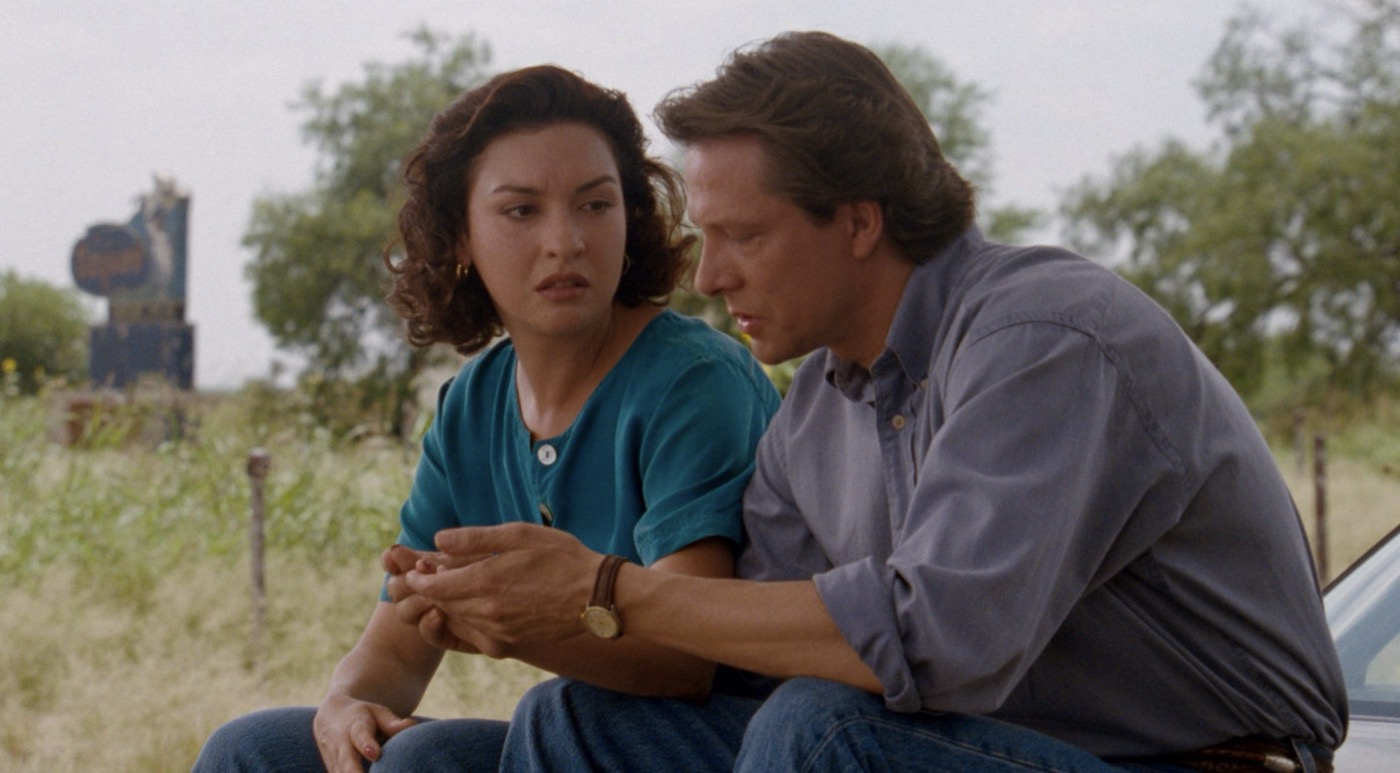
Not even family members are safe from this fractured environment. In fact, a person isn’t even safe from themselves. Their memories undercut their sense of reality, as the film’s slow pans so often illuminate; without switching to a new shot, viewers watch as characters ruminate on their past, then witness their younger selves forming these pivotal memories in the same locales. At no point do these teenagers or young adults know they are building their narrative and mythology of themselves, but they are unable to escape the formation of these patterns. Lone Star is a deeply heartfelt reminder that the past is never far from us because, on some level, it is us.
The film’s languid pacing appears leisurely, but that is just the mask the characters’ conversations—and the film as a whole—bear to conceal heavy contemplation. In Lone Star’s most emotionally potent moments, you can feel the weight of the characters’ shared histories influencing each line of dialogue they utter. There isn’t a single wasted word in Sayles’ tight, note-perfect script. The music cues, from the writer-director’s long-time composer, Mason Daring, embody these troubling undercurrents of discontent well, whilst boasting an eclectic style that encompasses its diverse characters’ backgrounds.
For as much as Lone Star centres itself around lofty themes, handling them with such ease that you hardly feel like you’re being guided towards a particular message or outlook, it is also a deeply human portrayal of father-son strife. It’s a film about making sense of who we are, acknowledging that within our ordered sense of self is a myriad of possibilities waiting to blossom, if we could only bring ourselves to invite them in. But how can we ever afford that kindness to ourselves if we can’t be charitable with our neighbours, whether within our immediate family or the wider one we all belong to?
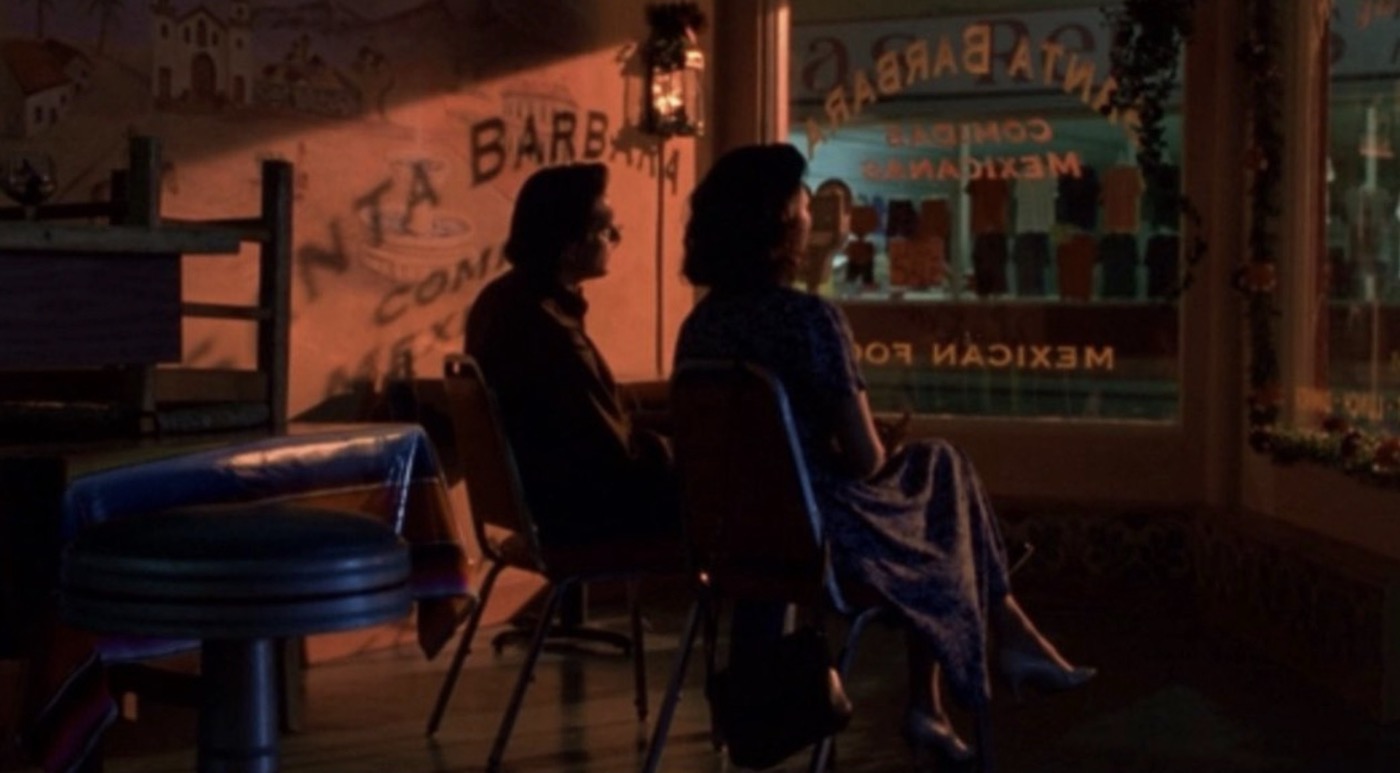
One would think that it would take lengthy discussions, and plenty of them, to illuminate these issues. But in Lone Star, sparse dialogue and the strength of the performers offer more poignancy than long, ruminating conversations ever could. McConaughey and Kristofferson put forth masterclasses in carrying themselves with the confident swagger of men born to lead, living up to the kinds of traditional Western mythmaking that Sayles gently criticises. This is especially impressive of the former, who was far from a household name when he was cast in the film. Sayles had a near-impossible task: casting a relative rookie who could stand toe-to-toe with the natural intimidation Kristofferson bore so well. McConaughey rose to the occasion with seeming effortlessness, and the rest is history for his star-studded career.
Cooper and Peña, meanwhile, are studies in quiet, troubled meditation. Whilst Charlie Wade and Buddy Deeds were domineering adversaries, the latter pair are struggling, everyday figures trying to reconcile their shared history. Hope and connection don’t come easily to this film’s disparate characters, but that’s what makes this delicately layered, stunningly empathetic film so moving.
USA | 1996 | 135 MINUTES | 2.35:1 | ENGLISH • SPANISH

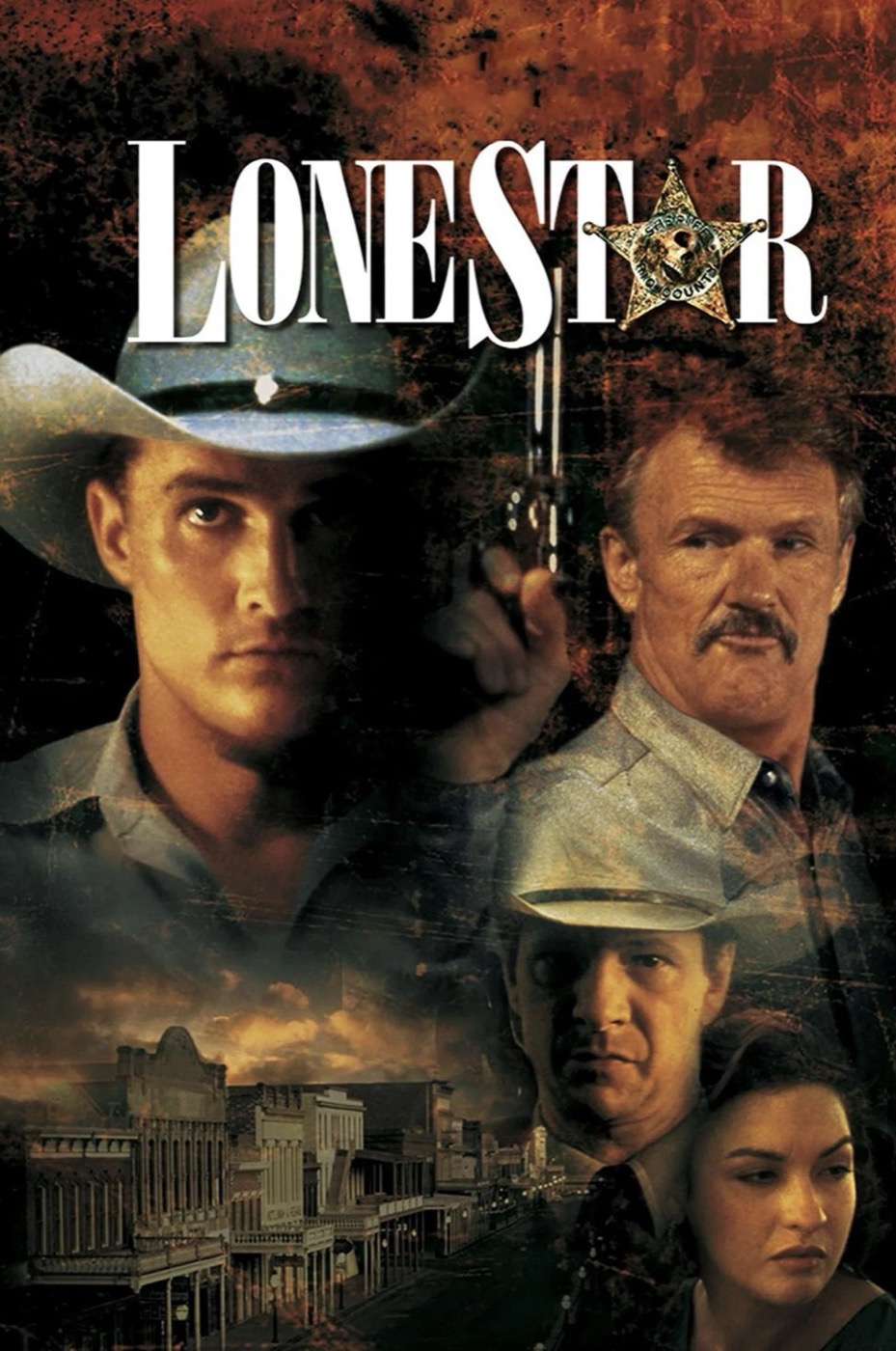
writer & director: John Sayles.
starring: Chris Cooper, Elizabeth Peña, Kris Kristofferson, Matthew McConaughey, Míriam Colón, Clifton James, Joe Morton, Ron Canada & Eddie Robinson.


This is a beautiful review of a beautiful film. “At no point do these teenagers or young adults know they are building their narrative and mythology of themselves, but they are unable to escape the formation of these patterns. Lone Star is a deeply heartfelt reminder that the past is never far from us because, on some level, it is us.” – brilliant stuff.