HUSH (2016)
A deaf woman is stalked by a psychotic killer in her secluded home.

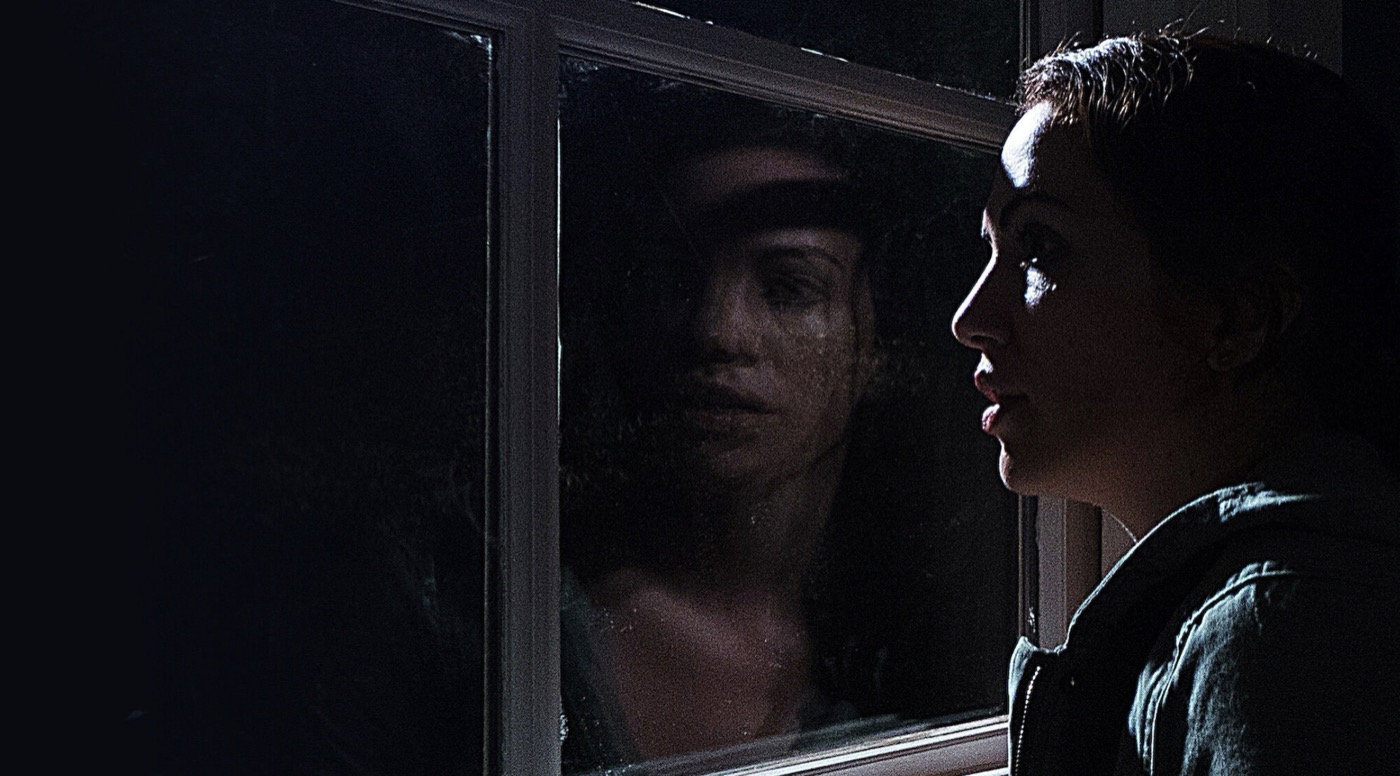

A deaf woman is stalked by a psychotic killer in her secluded home.
It was a remarkable time to be a connoisseur of the grotesque during the 2010s. Following a decade largely defined by gratuitous gore and manufactured frights, the horror genre moved beyond its longstanding association with funhouse thrills as a new wave of filmmakers embraced psychological complexity and artistic ambition. Whether it was the nightmarish psychodramas of Ari Aster (Hereditary) or the haunting folktales of Robert Eggers (The Witch), audiences were introduced to a form of terror that was unsettling on both an emotional and intellectual level. Yet, amid this surge of contemporary horror auteurs, few matched the prolific output and critical acclaim of Mike Flanagan.
Since emerging from independent cinema, the writer-director has steadily established himself as one of the industry’s most engaging storytellers, routinely transcending the boundaries of both film and television. His acclaimed Netflix series The Haunting of Hill House (2018) and The Fall of the House of Usher (2023) proved that episodic horror could be as emotionally devastating as it was terrifying, while his adaptations of Gerald’s Game (2017), Doctor Sleep (2019), and The Life of Chuck (2025) earned him a reputation as one of the most accomplished interpreters of Stephen King’s fiction. Yet long before these high-profile successes, Flanagan had already delivered one of the most understated entries in his oeuvre. Stripped of the supernatural mythology and emotional grandeur that would define his later work, Hush is a lean, economically constructed thriller, and perhaps the filmmaker’s purest exercise in suspense.
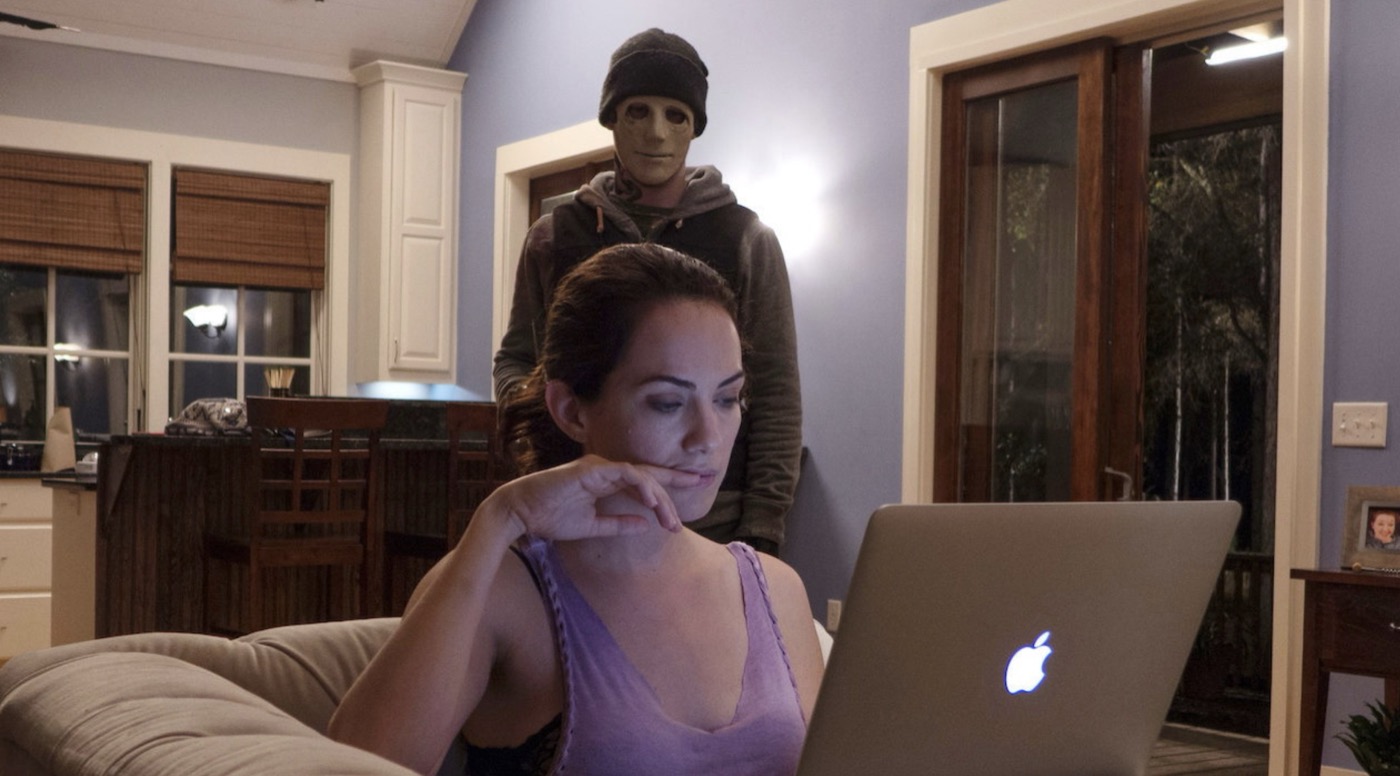
The story centres on Maddie Young (Kate Siegel), a successful horror novelist who lost her hearing and speech after contracting meningitis as a teenager. Following the success of her latest book, she swaps the commotion and distractions of New York City for a secluded home deep in the woods. Maddie enjoys a relatively independent life; her days are filled with writing her next novel and her evenings are spent chatting with her sister (Emilia Graves) via FaceTime. Her only regular companion is Sarah (Samantha Sloyan), a friendly neighbour who frequently visits to practise sign language. However, Maddie’s tranquil existence is abruptly shattered when a masked intruder (John Gallagher Jr.) begins stalking her property. Armed with a crossbow and a knife, the unhinged assailant decides to make her his next victim after quickly deducing that she’s deaf. Isolated from the outside world, Maddie is forced to rely on her wit and resourcefulness to outmanoeuvre the unnamed man tormenting her.
At first glance, it’s almost impossible not to compare Flanagan and Siegel’s screenplay with Don’t Breathe (2016). Released in the same year, both place a character with a sensory impairment at the centre of a home invasion, demonstrating how vulnerabilities can become unexpected strengths. Yet, beyond these superficial similarities, Hush differentiates itself through its approach to suspense. Rather than punctuating the narrative with a succession of explosive shocks, Flanagan allows the tension to ferment before its eventual release. This methodical approach may lack the propulsive intensity of Fede Álvarez’s thriller, but it creates a psychological dread every bit as gripping as its visceral counterpart.
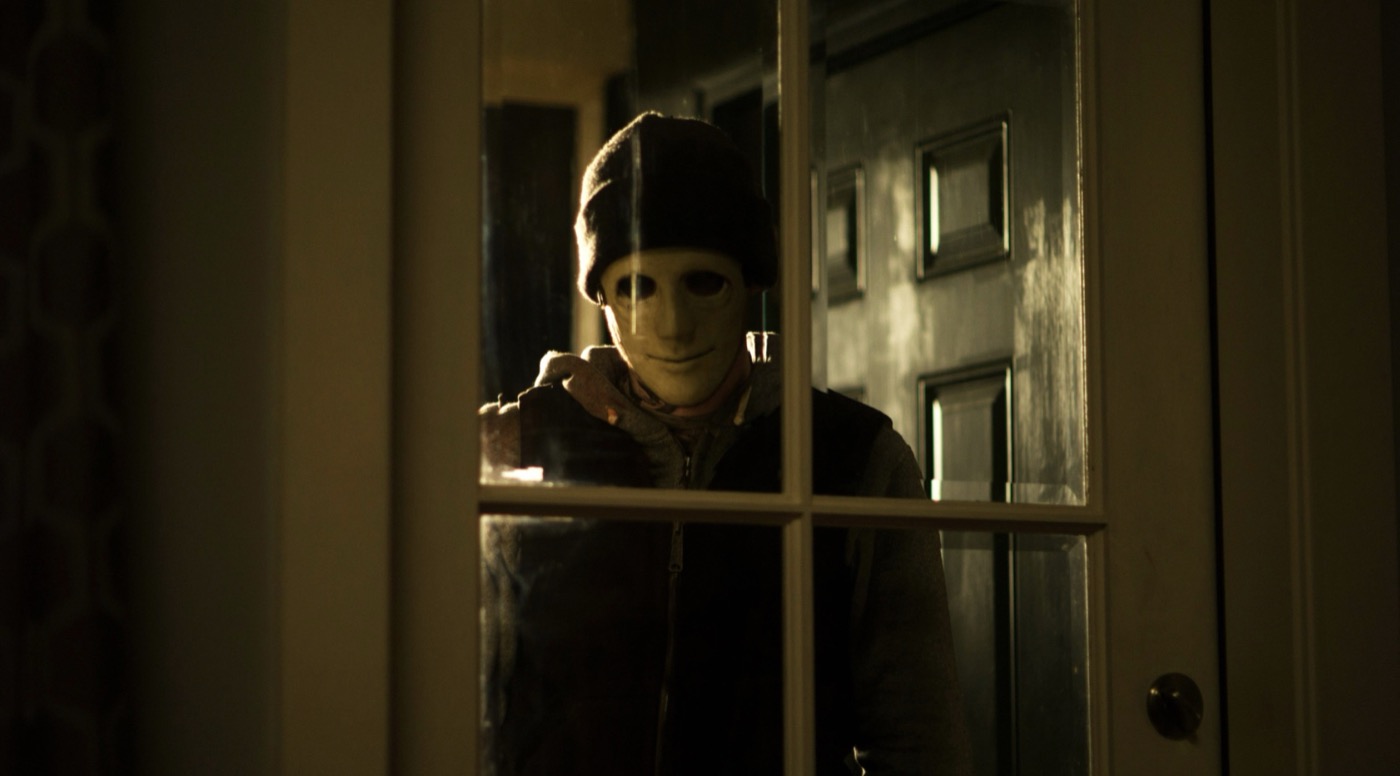
That sustained sense of dread finds an excellent visual accomplice in Michael Fimognari’s understated cinematography. Rather than overwhelming the audience with frenetic camerawork, Fimognari favours measured movements and rigorously controlled compositions to heighten the foreboding atmosphere. As Maddie cautiously navigates her home to evade her masked tormentor, he frames her against a vast amount of negative space. The expansive windows and darkened hallways are weaponised to great effect, forcing the audience to search the shadows alongside Maddie for an unseen presence. Even during moments of complete stillness, there is an unnerving expectation that something might emerge from the dark.
Perhaps the film’s greatest strength lies in its sound design. With the exception of Maddie’s video call and a brief exchange with her neighbour, a large portion of the 80-minute runtime unfolds without dialogue. This provides Flanagan with the perfect opportunity to manipulate the audience’s relationship with audio, using sound to build genuine tension. The opening sequence establishes this approach immediately. As Maddie prepares dinner, the soundscape is deliberately exaggerated: the roaring gas flame beneath a pan of aggressively sizzling asparagus, the sharp chime of a text message, and the piercing shriek of the smoke detector are all heightened to an almost overwhelming degree. Then, the perspective abruptly shifts to Maddie’s experience. The vegetables continue to hiss and the alarm continues to sound, but the viewer is plunged into complete silence.
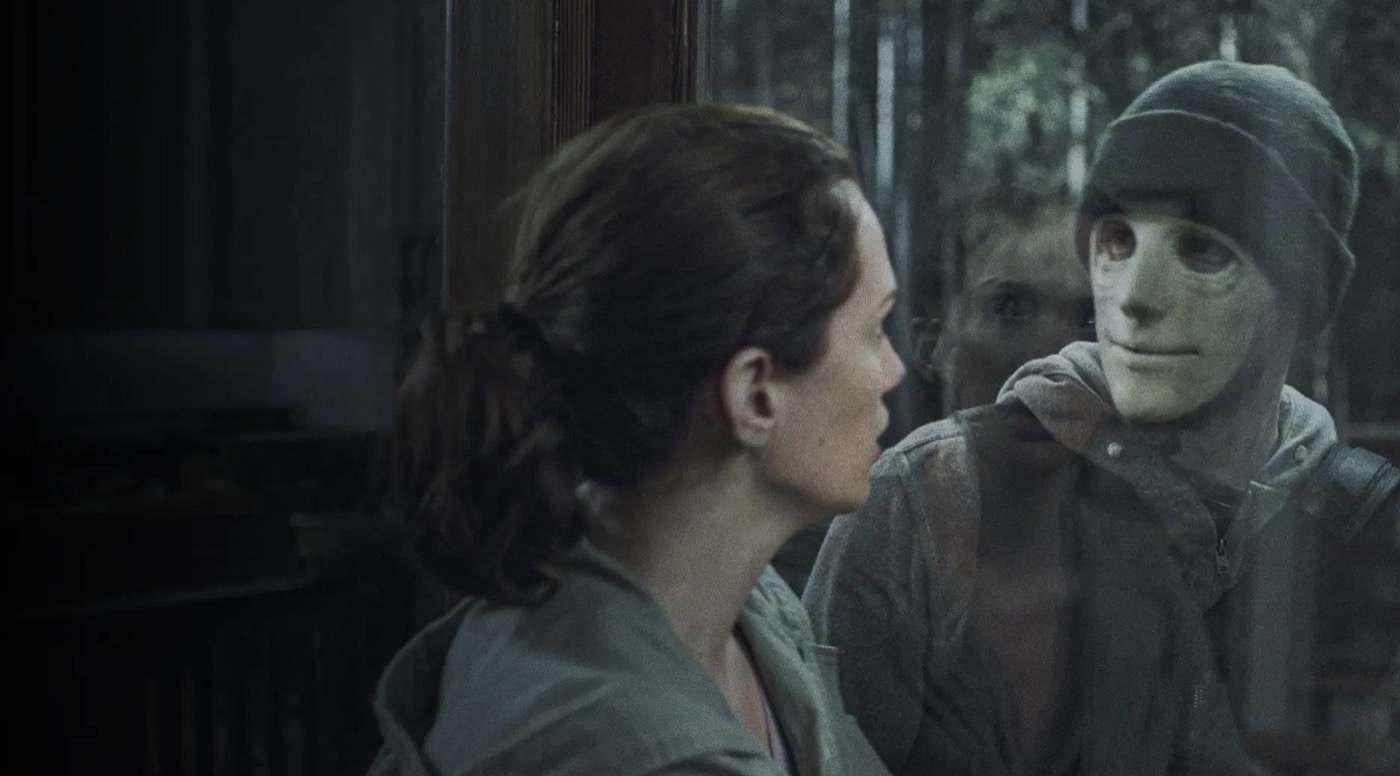
In less capable hands, these repeated auditory transitions could easily have become a cheap gimmick. However, Michael Koff and Steven Iba’s meticulous sound design heightens the viewer’s awareness of Maddie’s reality. Heavy footsteps creaking across wooden floors, a sharp knife scraping against glass, or a sudden knock at the window all become profoundly unsettling because we are acutely aware that Maddie cannot hear them. Even seemingly inconsequential noises like laboured breathing, the rustling of clothing, or the crunch of leaves gain dramatic weight. This contrast creates a tense dynamic where the audience constantly possesses more sensory information than the protagonist, knowing exactly how close the danger is while she remains oblivious.
Flanagan remains surprisingly reserved where other filmmakers would instinctively rely on cheap jump scares to keep the audience engaged. Rather than withholding the intruder’s identity for a climactic reveal, the unidentified man removes his mask within the first act. It’s a decision that initially feels counterintuitive, but it proves incredibly effective. By abandoning the mystery of who the assailant is, the film redirects our attention toward his motives. Flanagan deliberately refuses to offer an explanation or moral justification for the violence; the man simply exists to terrorise Maddie. While some might argue this lack of characterisation reduces him to a one-dimensional bogeyman, it’s this very absence of reason that makes him so disturbing. There’s no logic to bargain with, just the terrifying reality of a man capable of extraordinary cruelty.
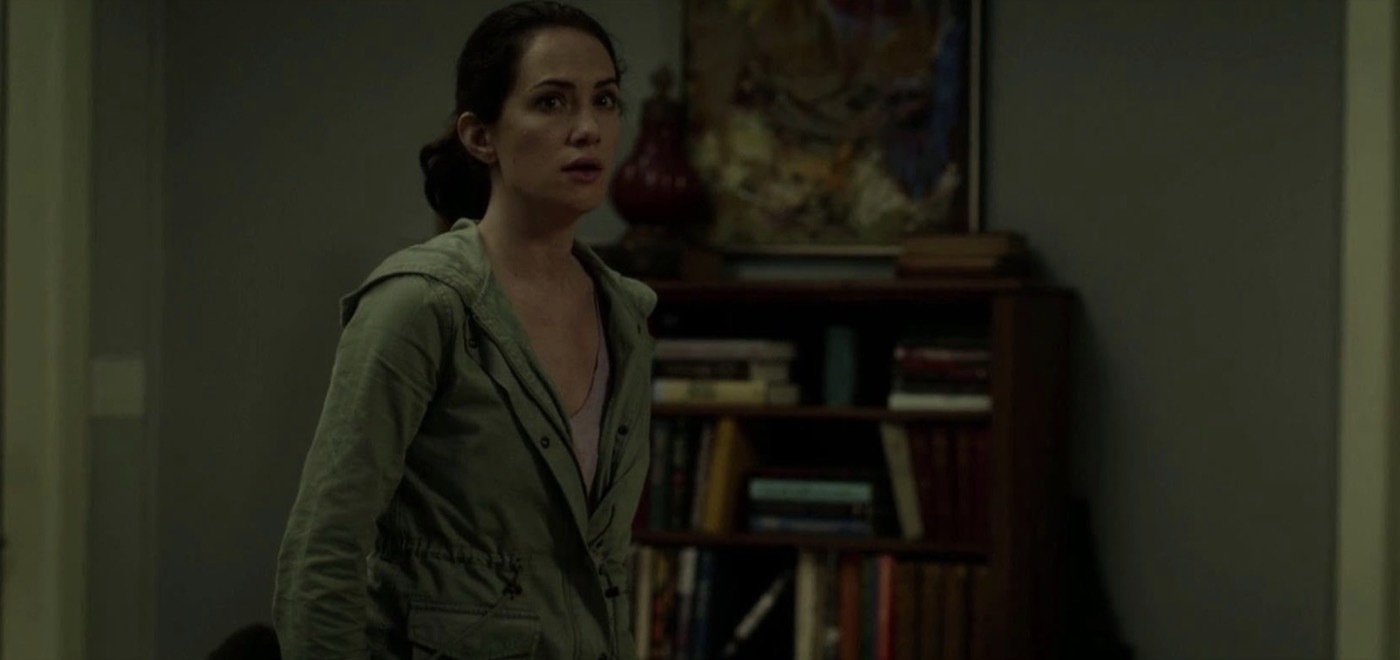
That same refusal to embrace cliché extends to the heroine herself. Horror has long maintained a troubled relationship with disability, often reducing characters with impairments to harmful stereotypes—either portraying them as the source of monstrosity, as seen in Split (2016), or treating them as helpless burdens destined for doom, like Franklin in The Texas Chain Saw Massacre (1974). Admirably, Flanagan avoids both traps, refusing to romanticise or sensationalise Maddie’s condition. Instead, he uses it to reshape the familiar “Final Girl” archetype. Her plight may unfold in silence rather than through the iconic screams of Jamie Lee Curtis in Halloween (1978), yet she proves every bit as resourceful as her predecessors. The filmmaker affords his heroine genuine agency, showing that survival depends entirely on intelligence and adaptability. For a genre that has so often failed to represent disability with nuance, Hush is not just a compelling thriller, but a deeply human one.
Of course, Kate Siegel’s magnetic screen presence is central to this success. As Maddie, she uses little more than sparse American Sign Language (ASL) and vivid facial expressions to communicate her shifting emotional state. Her eyes are profoundly expressive, conveying exhaustion and determination more effectively than words ever could. Reminiscent of Audrey Hepburn’s performance as the blind heroine in Wait Until Dark (1967), Siegel transforms a conventional vulnerability into a source of resilience, continuously demonstrating her ability to outsmart her tormentor in highly demanding situations.
If Hush has a weakness, it lies in the occasional narrative convenience required to maintain its simple premise. Without venturing into spoilers, certain decisions made by the characters occasionally stretch credibility. However, these shortcomings feel minor when weighed against Flanagan’s exceptional command of suspense. Viewed through a contemporary lens, it feels like a defining milestone in his career. The filmmaker demonstrates a masterclass in how tension can be economically constructed, crafting a claustrophobic nightmare through inventive sound design, restrained cinematography, and an unnerving authenticity. He understands that horror does not require bombast or spectacle to disturb its audience. Sometimes, the most terrifying sound imaginable is silence.
USA | 2016 | 82 MINUTES | 2:35:1 | COLOUR | ENGLISH • AMERICAN SIGN LANGUAGE

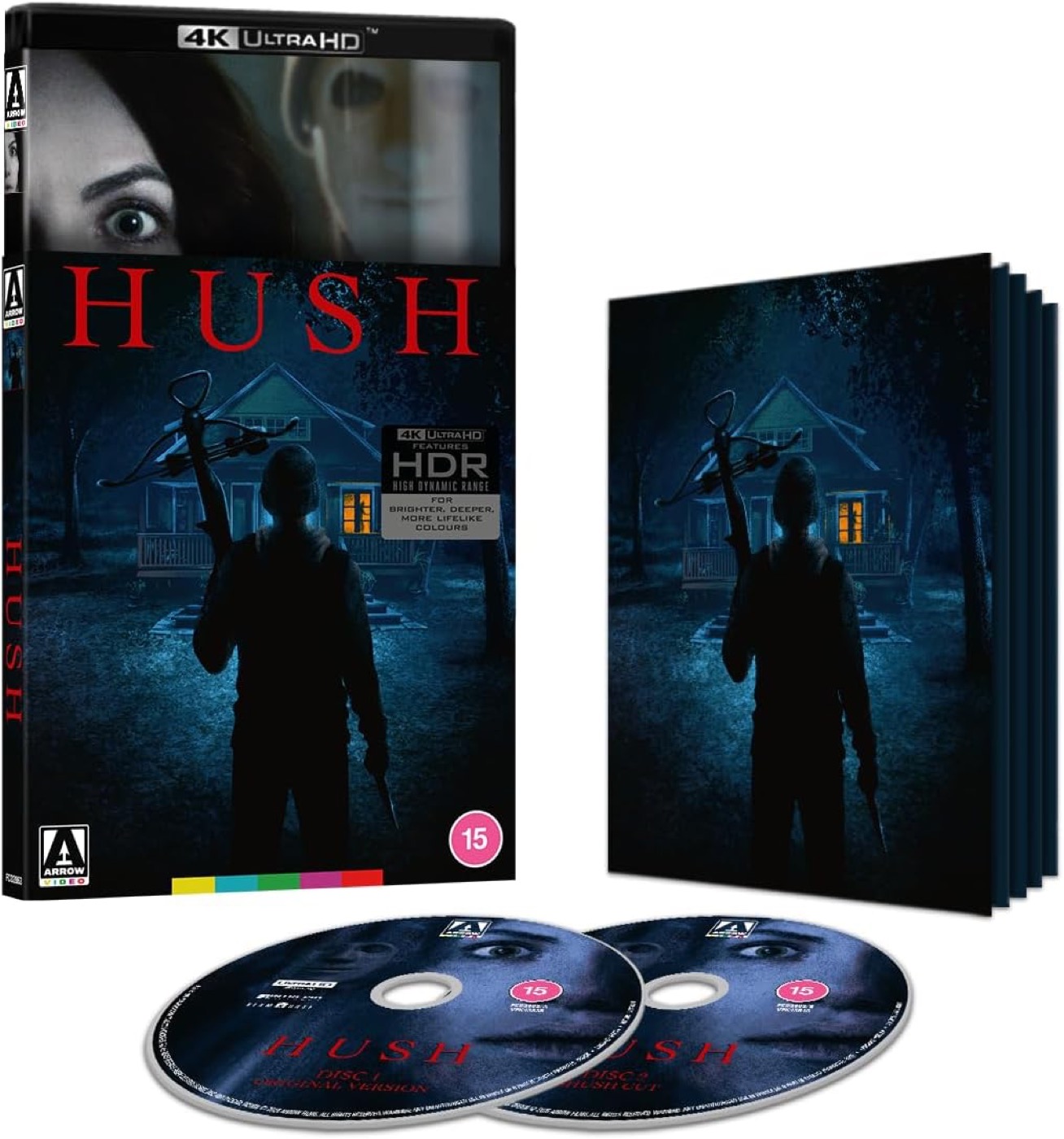
Arriving on physical media for the first time in the UK, Hush has been given a wonderful 4K restoration courtesy of Arrow Video. This release includes both the original colour version and a newly conceived monochrome presentation entitled the Shush Cut. Both versions showcase an immaculate 2160p Ultra HD transfer, presented in the film’s original 2.35:1 aspect ratio.
For too long, Hush languished in streaming limbo, meaning its presentation was constrained by the natural limitations of digital bitrates. Arrow’s 4K restoration finally allows the film to be appreciated as intended, boasting an increased resolution and a refined encode that lets the image breathe. The Dolby Vision HDR grading adds a pleasing visual depth to the presentation, lending a gentle vibrancy to Flanagan’s intentionally restrained palette. Woodland greens remain rich, and the cooler blues of the evening sequences carry a far more convincing sense of atmosphere, while skin tones look natural and consistently accurate.
The most significant improvement, however, comes during the nighttime sequences. Black levels are satisfyingly deep without ever sacrificing shadow detail, and highlights glisten with a pleasing luminosity without blowing out. Despite large portions of the action unfolding in dim environments, Arrow’s presentation delivers a remarkably sharp, richly detailed image. Background elements inside Maddie’s remote home remain crisply defined without ever appearing artificially sharpened or digitally processed, while tight compositions reveal everything from intricate clothing textures to the subtle beads of sweat forming on Maddie’s face as she fights for her life.
Many strengths of the original version carry over to the Shush Cut. This monochrome reimagining of Flanagan’s home invasion thriller is equally breathtaking, meticulously graded to evoke the visual language of classic horror. A healthy layer of film grain lends it the quality of a forgotten classic while retaining the same stunning detail as its counterpart.The contrast ratio across the greyscale is extraordinary, allowing luminous whites to create a haunting counterpoint to the impenetrable blacks. While both versions of Hush are a visual feast, the Shush Cut offers a fascinating new way to experience the story. The removal of colour only enhances the primal tension of the film, pushing its emotional and psychological stakes to new heights.
This 4K release features two audio tracks with optional English subtitles. Both the original version and the Shush Cut enjoy an immersive Dolby Atmos mix alongside a DTS-HD 5.1 Master Audio track.
While both options are wonderfully balanced, it’s the Dolby Atmos presentation that deserves the most attention. It’s a deeply enveloping mix, impressively engaging the listener through carefully heightened sound design. Most effective during the physical confrontations, the track makes full use of the soundstage to create a powerful sense of space and directionality. The bass also lends these suspenseful moments a palpable weight, steadily rising to coincide with the imminent action.
The Atmos mix is equally effective during the film’s quieter passages. Subtle environmental sounds have been amplified for maximum impact and rendered with exceptional clarity. The rear and overhead channels, in particular, are put to excellent use; whether it’s the rustling of leaves or the whisper of wind, each noise pierces the silence to heighten the sense of unease.
The Shush Cut offers an especially brilliant reinterpretation of the film’s soundscape. As revealed in the director’s commentary, this presentation reflects Flanagan’s original vision for the film’s audio. The track completely removes the musical score by The Newton Brothers, opting instead for an intensified emphasis on diegetic sound. By placing environmental effects firmly at the forefront, the mix heightens every ambient noise to an almost assaultive level.Every footstep, breath, and sudden movement lands with a visceral punch, transforming the track into a fantastic alternative that complements the film’s visual isolation perfectly.
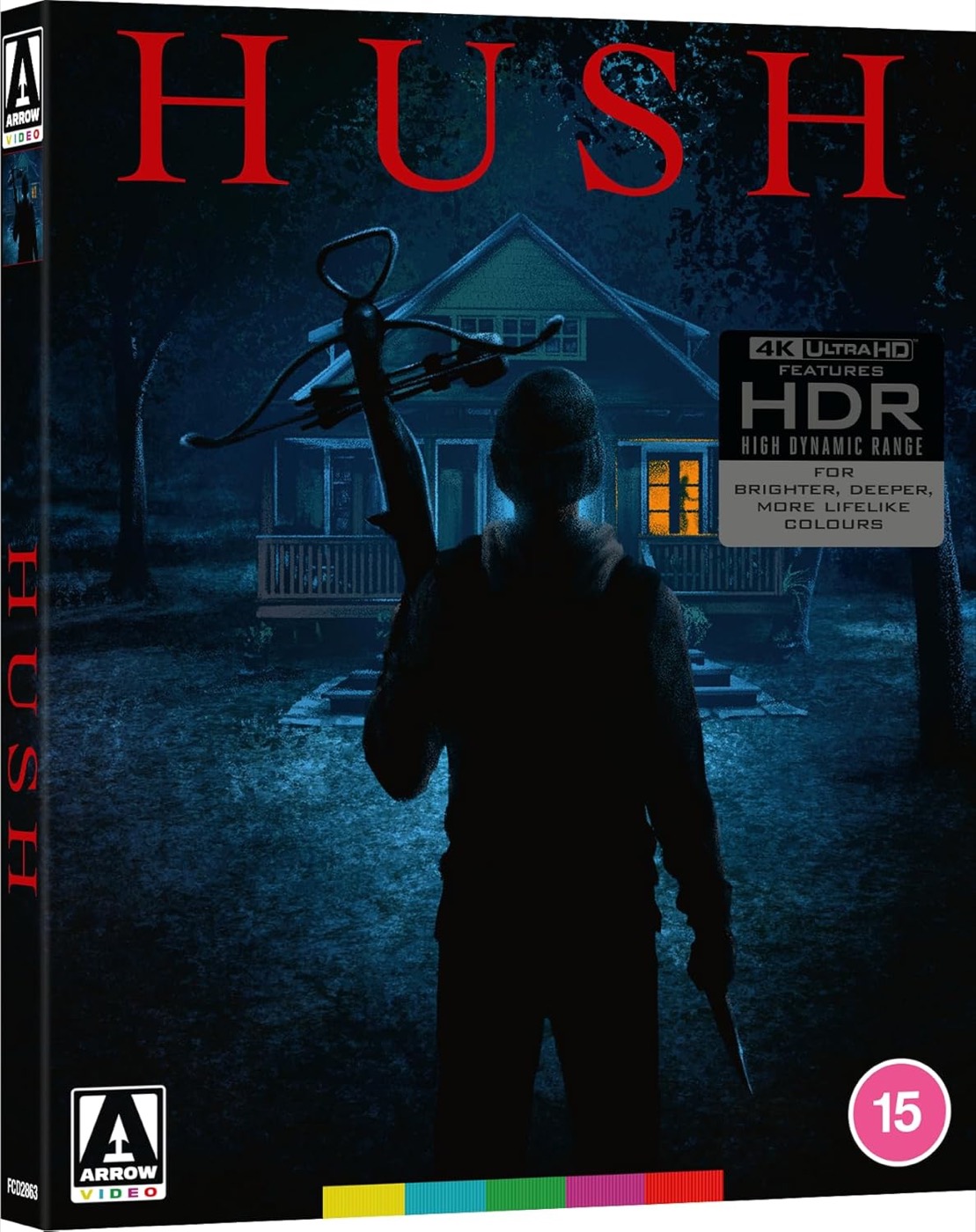
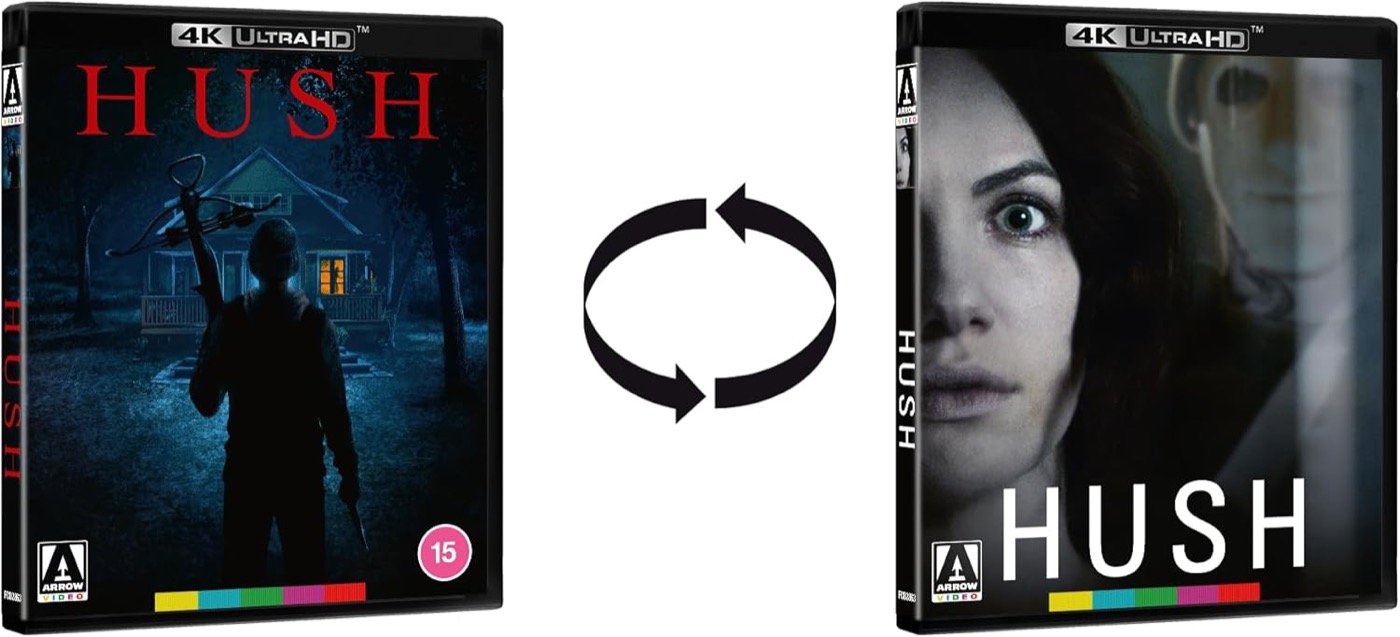

director: Mike Flanagan.
writers: Mike Flanagan & Kate Siegel.
starring: Kate Siegel, John Gallagher Jr. & Michael Trucco.