A SCANNER DARKLY (2006)
An undercover cop in a not-too-distant future becomes involved with a dangerous new drug and begins to lose his own identity as a result.


An undercover cop in a not-too-distant future becomes involved with a dangerous new drug and begins to lose his own identity as a result.
In 1981, the science fiction novel VALIS was published. It was a rambling odyssey portraying and stemming from a fraying mind, featuring a protagonist who existed as two distinct entities. The book’s first-person narrator, who occasionally refers to himself as though he is part of the story’s action, discusses the delusional headspace of Horselover Fat, the novel’s true protagonist. Fat believes he has unlocked the key to the universe through a far-fetched theory involving Watergate, aliens, and the Roman Empire. The catch is that the narrator is Horselover Fat, but, aside from one or two references to this, he is too displaced from reality to reconcile his dual identity.
Fat was a stand-in for the book’s author, Philip K. Dick, one of the most prolific science fiction writers in the genre’s history. What separates Dick from his highly esteemed peers—such as Wells, Asimov, and Bradbury—is how deeply personal his writing was. He didn’t just explore the ways mental illness and drug use took their toll on him; he brought readers into his worldview, where reality is impossible to discern. Reading VALIS, it becomes clear that Dick held contradictory views about deciphering truth from delusion. On some level, he knows his theories about the universe don’t hold up to scrutiny. Yet another part of him, just as earnest, well-meaning, and curious as his other self, is as sure of these convictions as he is of anything else in this earthly realm.
From 1974 onwards, when Dick experienced epiphanies that caused him to believe he was the reincarnation of an apostle of Jesus Christ, the author’s work took on a simultaneously more personal and philosophical bent. He explored the nature of reality by turning his own fractured psyche inside out, letting readers try to pick up the pieces of his jumbled mental state. That he could do this so freely while creating coherent, even masterful works of fiction is nothing less than miraculous. The most famous of these post-epiphany novels, A Scanner Darkly, was published in 1977 and set in 1994, 12 years before Richard Linklater would helm his film adaptation.
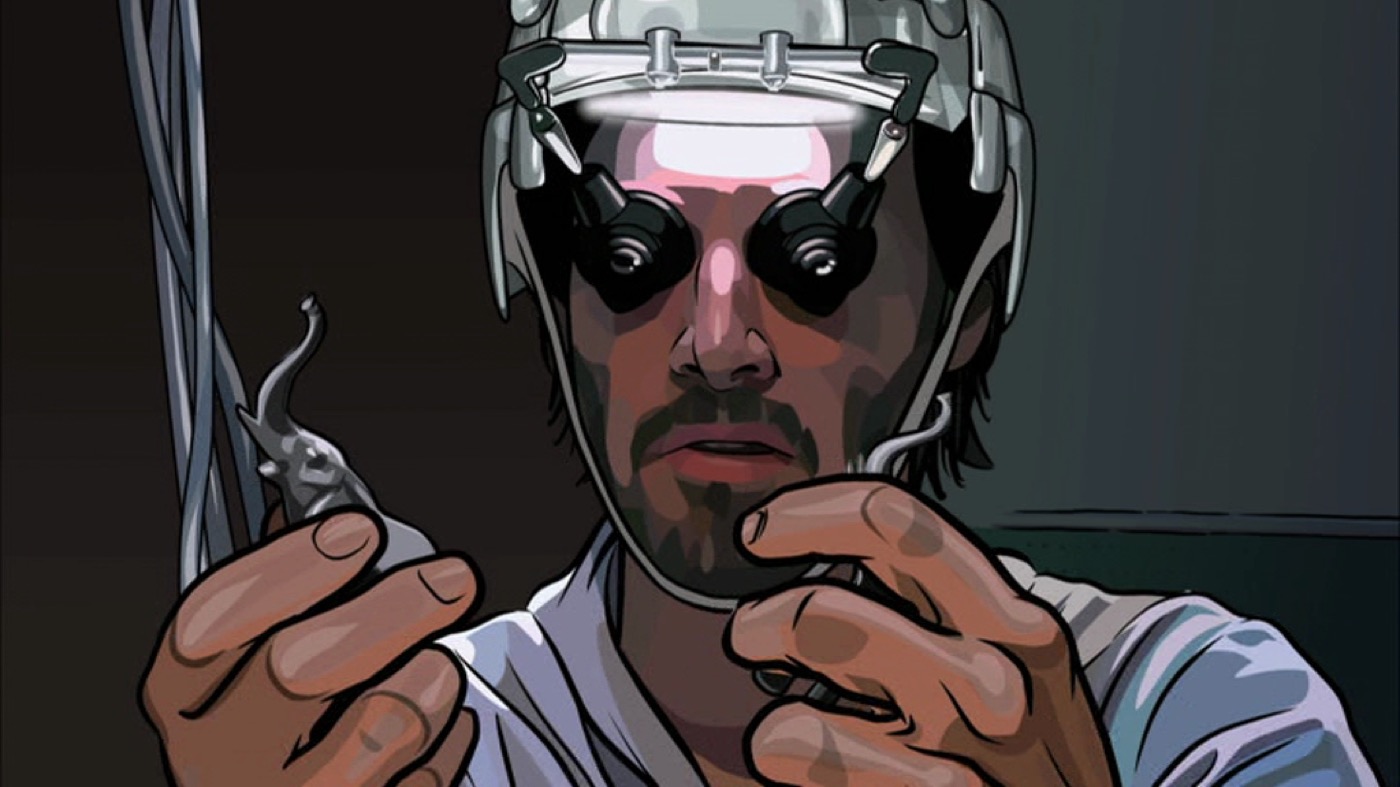
A Scanner Darkly follows Bob Arctor, an undercover police agent spying on himself and his friends. Thanks to the high-tech ‘scrambler suits’ at their disposal, Arctor’s identity is a mystery to his colleagues and employers. In their presence, he wears the suit at all times. Draped over his flesh, it projects images of different people, a new face forming before the old one has fully vanished. The suit is constantly in motion, though Arctor’s real life is depressingly stagnant as he and his burnout friends succumb to the drug addiction he has been assigned to stamp out. Substance D, the main drug of consequence in both the book and film, is what this protagonist must investigate. It is also ruining his life.
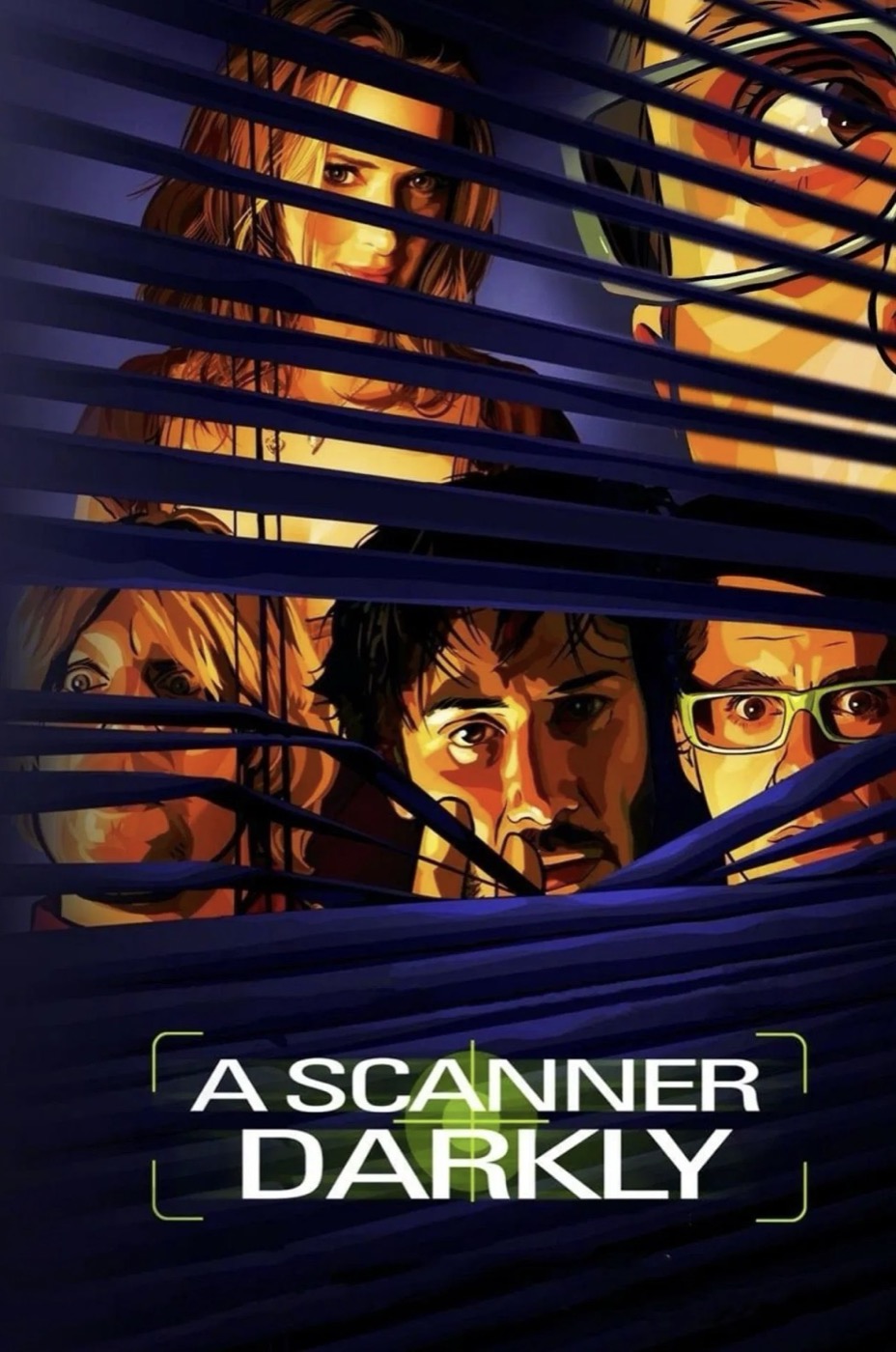
Who is Bob Arctor? If only he knew. To his colleagues, he is Fred—a faceless employee to make office-cooler talk with, but nothing more. To his drug-addicted buddies—James Barris (Robert Downey Jr), Ernie Luckman (Woody Harrelson), and Charles Freck (Rory Cochrane)—he’s a fellow adventurer, ready at a moment’s notice to join their schemes and descents into cosmic unknowns. Another member of the group, Donna Hawthorne (Winona Ryder), is Arctor’s girlfriend, though you’d hardly know it from her aversion to his touch.
Somewhere deep within this fractured protagonist’s mind is a shimmering image of a wife and children whom he abandoned and, presumably, will never see again. Are they even real? They’re real to Arctor, but what does that tell you when the man is knee-deep in drug-induced hallucinations, all whilst engaged in a hunt to track down himself?
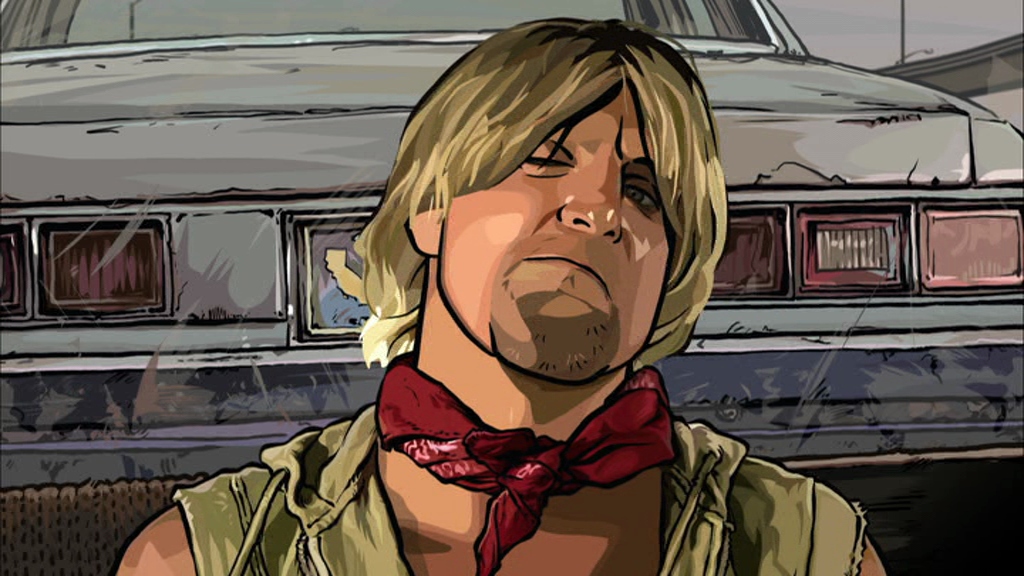
Linklater’s film, like the novel from which it was faithfully adapted, doesn’t hold your hand through its distortions of reality. Dick happily left readers in the lurch as to what separates reality from hallucination. The rambling hijinks of Arctor and his friends are frequently amusing, with their digressions forming shaggy-dog stories in an otherwise tightly plotted film. Are you supposed to be worried about the future of a world where surveillance and government deception reign supreme, or lightly giggling at the stoned ramblings of Arctor’s housemates, Barris and Luckman? These disparate tones don’t undercut one another; they only add to the intended confusion.
One moment you’re watching a stranger yelling into a loudspeaker about a plausible government conspiracy before being thrown into an unmarked black van by nameless government goons. The next minute, you’re basking in the ambience of three stoners trying to sustain a conversation, as their addled brain cells practically bounce off one another to come up with a semi-coherent thought. It’s easy to dismiss A Scanner Darkly’s tonal disparities, especially when the machinations of its plotting are occasionally impossible to discern—it happily pulls you in different directions—but there’s a beautiful formula lurking within this film.
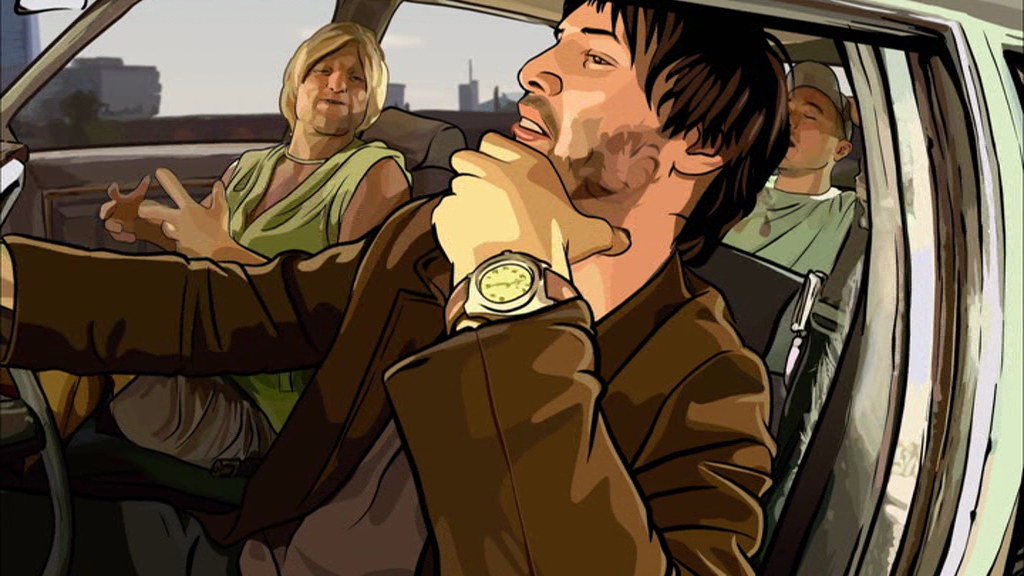
It’s murky by design, leaving you wanting more: a better understanding of how this police force operates, more time spent exploring this protagonist’s dual identity, and more glimpses into how society at large responds to this paranoia-infused world. These elements don’t go unmentioned, but there’s always room to imagine a scope far wider than what Linklater affords.
A Scanner Darkly is haunting precisely because of these limitations. It presents a nightmarish world that you don’t immediately identify as such, even when the clues are there, because much of it is dominated by low-urgency misadventures. The biggest snag of all is that you can never pinpoint the exact moment it becomes a waking nightmare. That’s when you look back and realise it was all it ever was. The good times were the greatest trick of all, fooling you effortlessly.
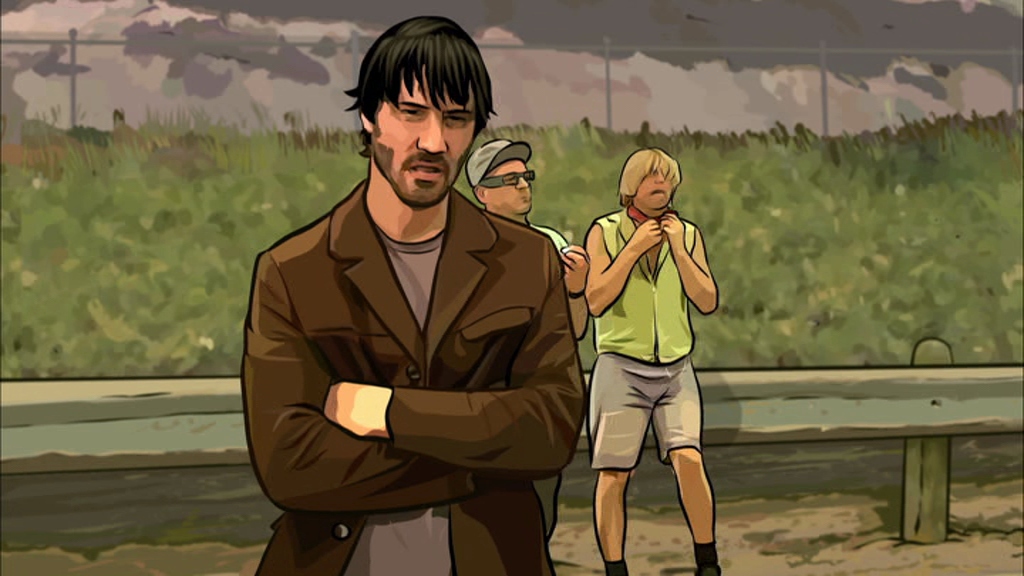
As a coherent feature film, A Scanner Darkly doesn’t always hold up to scrutiny. But its unevenness is a flaw that ultimately works in its favour, hoodwinking viewers before unveiling its grand message on the horrors of drug addiction. As a result, the film never feels didactic or unearned. Besides, what better ploy could Linklater have pulled than deceiving the viewer in a film crowded with deceptions? The central metaphor of drug addiction seems obvious, but the plot is intriguing enough to warrant investment in how it unfolds.
The film is largely a comedy, too, until you reach that inevitable point where you find you’re no longer laughing, and haven’t been for some time. That’s when composer Graham Reynolds works his magic with some of the most haunting compositions you’ll find in cinema. They are as sorrowful as they are bleak, embracing the desolation of long-term drug abuse. Keanu Reeves’ performance is masterful, even if it appears an unlikely choice at first. He is a talented performer, but a limited one, with a naturally vacant expression and a voice that embodies confusion and invites pity so freely that it feels too effortless to be intentional. Whether he’s portraying the spaced-out bliss of drug addiction or the existential dread it begins to impose, it’s clear that no other lead actor could have done this character justice.
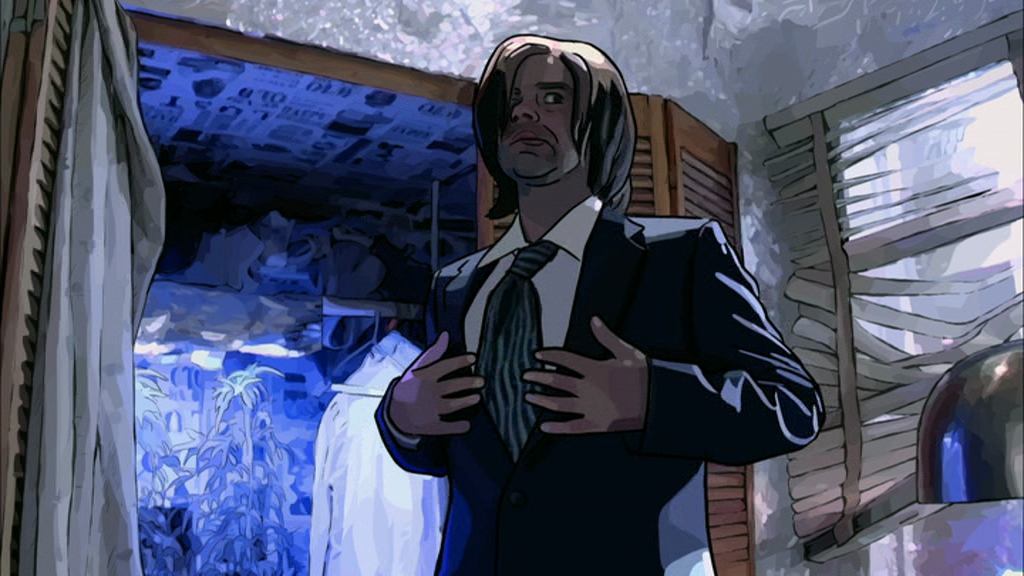
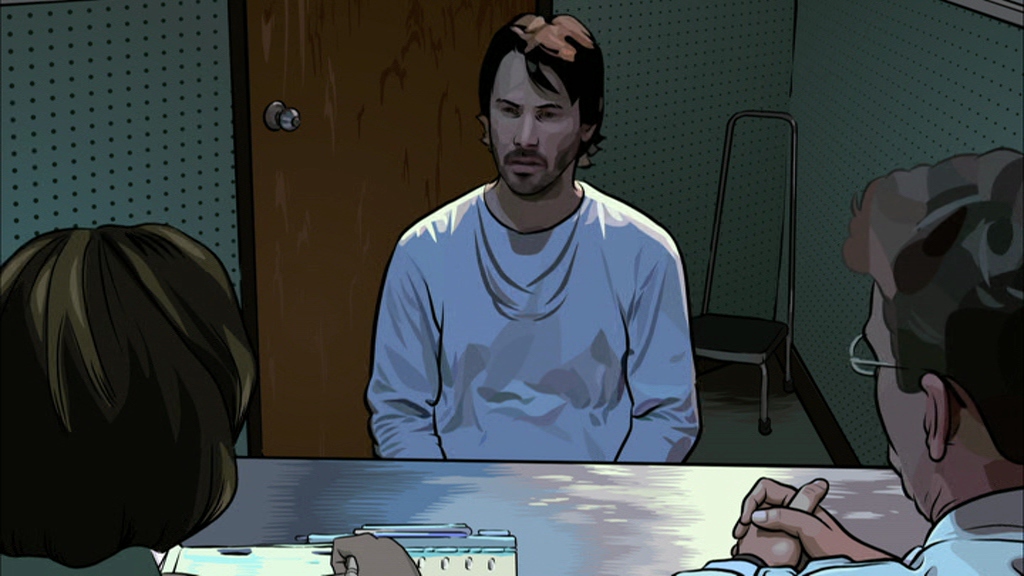
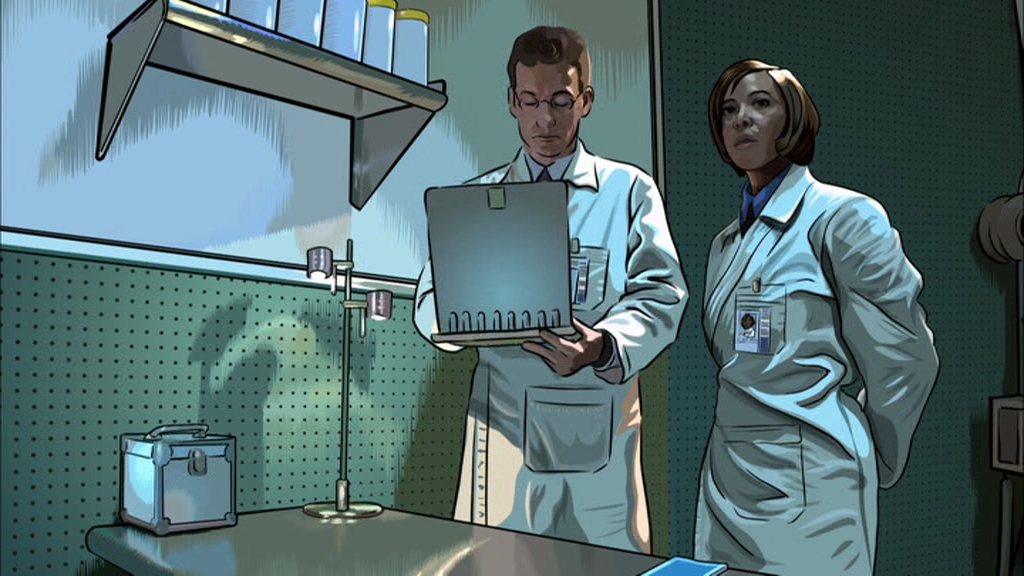
A Scanner Darkly lives and dies on its bold animation choice. Just like Linklater’s Waking Life (2001), the film incorporates rotoscoping animation, where scenes were shot on location as a live-action project and then animated in post-production. This unique blend of styles lends an uncanny quality to these characters and their movements. Each figure is instantly recognisable—especially given this impressive line-up of A-list actors for a low-budget, experimental film—but there’s something not quite right about the experience. They’re a touch removed from clean-cut, straightforward animation, making it feel as though the entire calibration of the film’s visuals is just slightly askew. This is used to great effect during drug-induced hallucinations, while Downey’s knowingly obnoxious ramblings and Harrelson’s depiction of the wacky stoner make these aimless scenes feel lived-in.
But nothing is ever as immersive as A Scanner Darkly’s nightmarish qualities, which effortlessly carry the spirit of the book over to the silver screen. In the novel’s afterword—which is also depicted in this adaptation before the end credits—Dick dedicates the book to the friends he lost along the way to drug abuse, whether through death or debilitation. He cites himself amongst these poor souls. It’s a heart-wrenching piece of writing, as brief as it is moving—a eulogy even for those still alive who have been changed forever by their addictions. Linklater’s adaptation might not always seem crystal-clear in what it’s going for, but it carries over the essence of Dick’s writing beautifully, intentionally miring it in a haze of confusion before unveiling this story’s tragic depths.
USA | 2006 | 100 MINUTES | 1.85:1 | COLOUR | ENGLISH

director: Richard Linklater.
writer: Richard Linklater (based on the 1977 novel by Philip K. Dick).
starring: Keanu Reeves, Robert Downey Jr., Woody Harrelson, Winona Ryder, Rory Cochrane, Angela Rawna, Chamblee Ferguson, Lisa Marie Newmyer & Dameon Clarke.