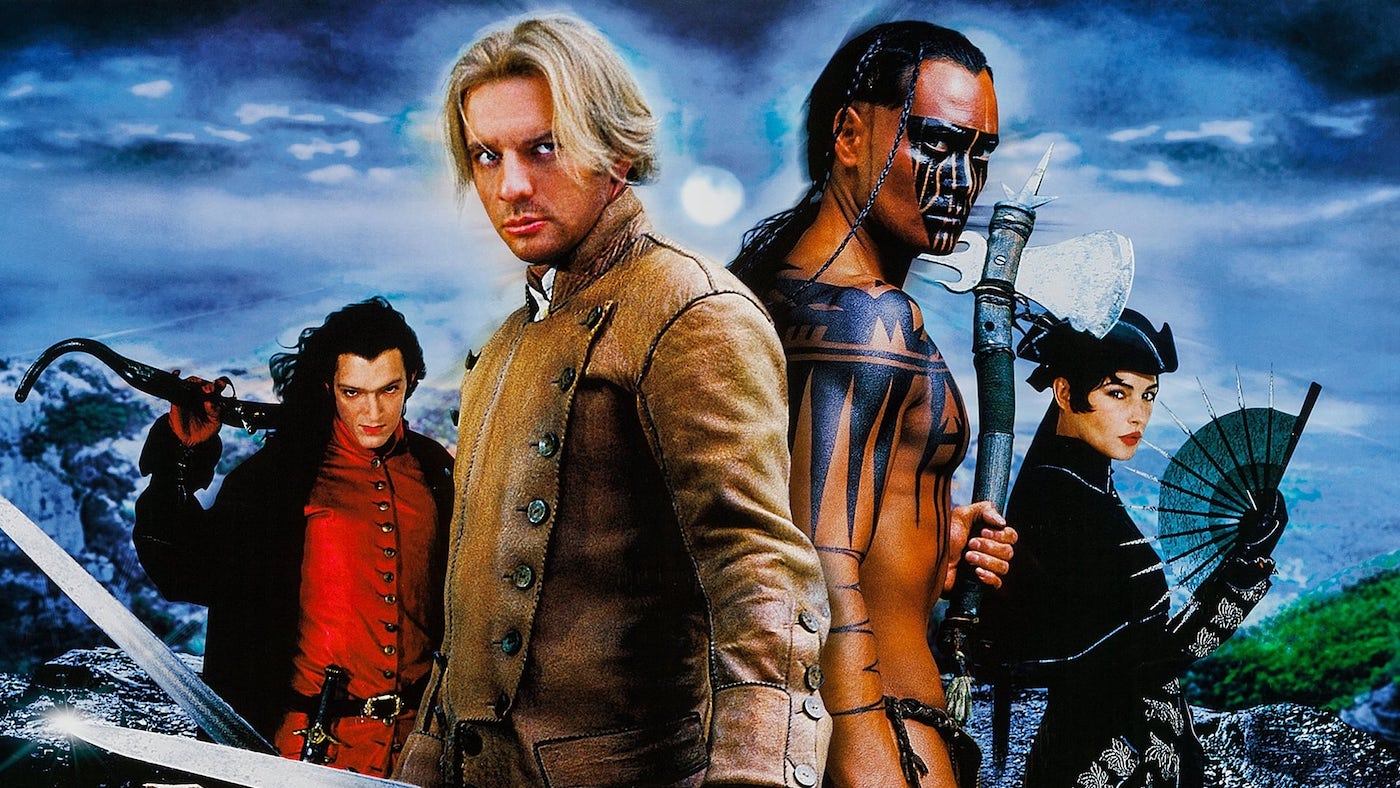
HIGHLANDER (1986)
A 500 year old Scottish swordsman, currently residing in New York City, must confront the last of his immortal opponents, a murderously brutal barbarian who lusts for the fabled "Prize".

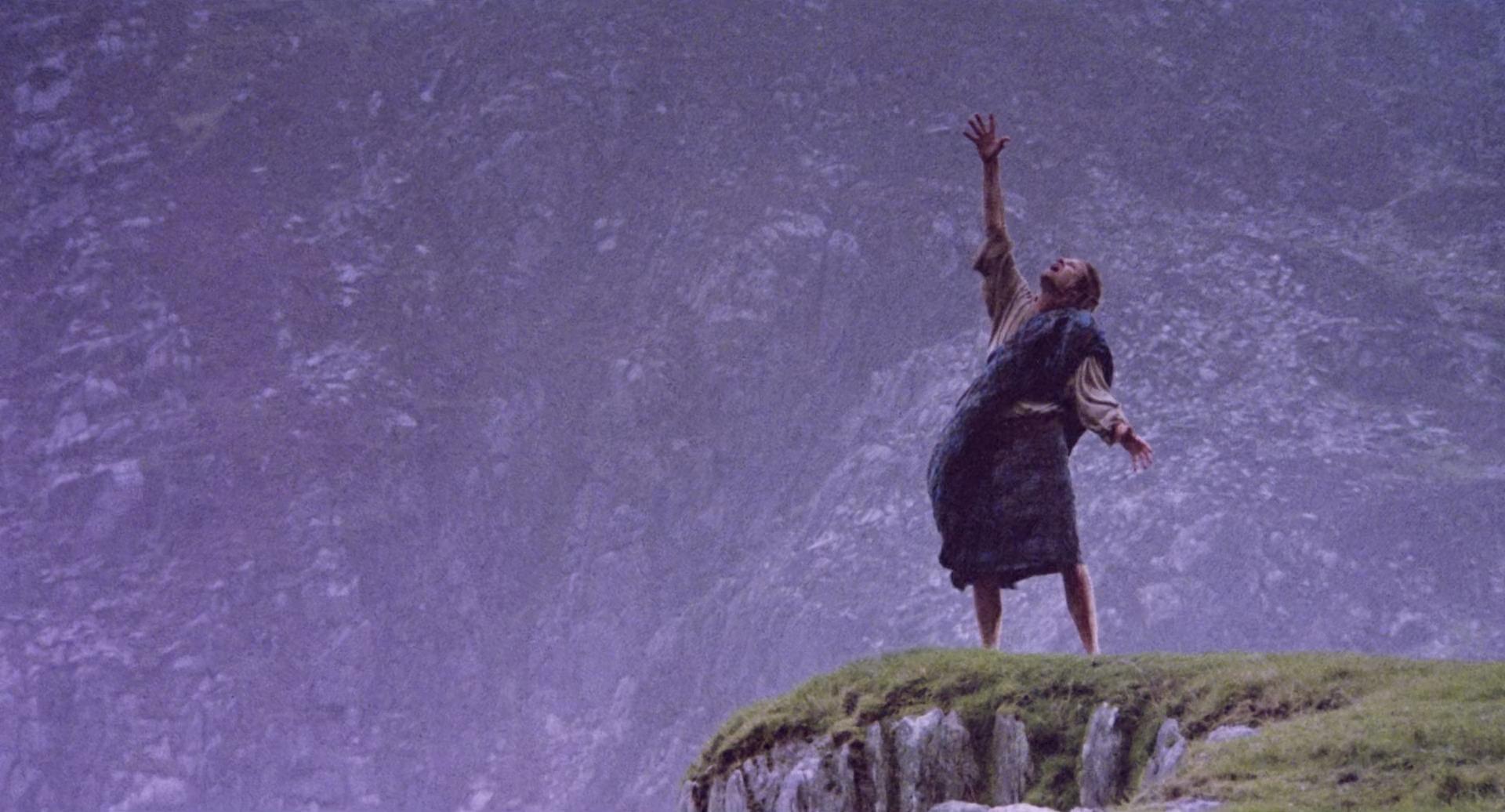

A 500 year old Scottish swordsman, currently residing in New York City, must confront the last of his immortal opponents, a murderously brutal barbarian who lusts for the fabled "Prize".
The sword and sorcery epics of the 1980s are defined as much by their limitations as by their popularity. For every grand, era-spanning concept, there was a real-world constraint. In Conan the Barbarian (1982), director John Milius’s brawn and ambition had to contend with whether Arnold Schwarzenegger—physically perfect for the role—could turn in an even passable performance.
That same year, Albert Pyun’s The Sword and the Sorcerer did decent business but was savaged by critics, who bandied about words like “nonsensical” and “inept”. Tragically, stuntman Jack Tyree was killed during production after falling 80 feet from a cliff edge and missing the airbag. These were ridiculous films, but people cared about them—and, in this case, even died for them.
With contemporary eyes, it is clear that Schwarzenegger imbues Conan with both its otherworldliness and its euro-sleaze charm. The Sword and the Sorcerer, like Conan and Highlander, now maintains a devout cult following, and qualms about quality seem by-the-by. The junkiness of these films is as inextricable from their appeal as any weapon or sword fight.
A year after Ridley Scott’s fantasy dud Legend (1985)—which struggled critically and financially before becoming, yes, a cult favourite—Highlander arrived. Yet it was actually Scott’s earlier swordplay spectacle, The Duellists (1977), that inspired it. American screenwriter Gregory Widen riffed on the concept of two enemies engaging in a series of duels over 16 years, retrofitting it for a high-fantasy audience. In Highlander, the warriors would be immortal, and their battles would span centuries rather than decades.
Fittingly for a story pilfered from a more successful film, Highlander feels charmingly derivative in almost every element—cobbled together from the discarded scraps of the previous decade’s pop filmmaking. It didn’t open at Cannes as Scott’s film did, nor did it have a screenplay by a heavyweight like Oliver Stone (Conan). But it had something—perhaps just the right buzzwords—and its $19M budget made the production more expensive than the year’s biggest blockbusters. Mind-bogglingly, Highlander cost half a million more than James Cameron’s Aliens (1986), several million more than Top Gun (1986), and three times the budget of Platoon (1986). It was a massive gamble, then, to feature a virtual unknown in the lead role under an Australian director known mostly for music videos.
Christopher Lambert plays Connor MacLeod, a Scottish warrior from the 16th-century Highlands whose clan likes to march around pastures, clap each other on the back, and laugh heartily at everything. The French-American Lambert was picked by director Russell Mulcahy while leafing through a magazine, where he spotted the actor in his Tarzan garb for Greystoke: The Legend of Tarzan, Lord of the Apes (1984). As Mulcahy recognised, Lambert certainly had the right look. His heavy brow makes his eyes seem to retreat, and his permanent frown, accompanied by the hint of a smirk, suggests something villainous. Like Schwarzenegger, or Steven Seagal, Lambert is better at posing than talking.
Part of the issue stems from the accent. In the 16th-century scenes, Lambert tries out a dialect more perplexing than any of the film’s lore. It doesn’t sound like a bad Scottish accent; it sounds like a language never before encountered on Earth, made all the more galling by the actual Scottish actors and extras surrounding him. Lambert is stiff, awkward, and seems slightly embarrassed by it all. Rather than legitimising the production, the sheer scale of the endeavour—backed by that sky-high budget—gives it a whiff of absurdity. The Highland locations are astonishing and the costumes convincingly intimidating, yet rather than rising to meet the scale, Highlander shrinks under its own confused ambition.
The mandatory battle scenes are serviceable but creaky. Most of the action, particularly the swordplay, feels lumbering. Almost a decade earlier, films like The 36th Chamber of Shaolin (1978) had shown how sharp editing, choreography, and stunt work could make a sword fight riveting and dangerous. By the time broadswords are clanking slowly together in Highlander, it feels like we are witnessing the final fizzle of a flash-in-the-pan trend.
Mulcahy has more success with atmosphere than with action or emotion. Primarily a music video director (save for his under-appreciated 1984 outback creature feature, Razorback), he fills every frame with mist and gaudy lighting. His wide lenses are almost fish-eyed, moving through sets with a sense of purpose sorely lacking elsewhere. The fact that Highlander often looks like a large-scale music video—an effect intensified by the Queen songs littering the soundtrack—actually works to its benefit. There is something garish about the aesthetic: a hugely expensive yet somehow cheap-feeling activation of the senses through movement, sound, and violence. It’s a film that refuses to rise above its pulp, comic-book conception.
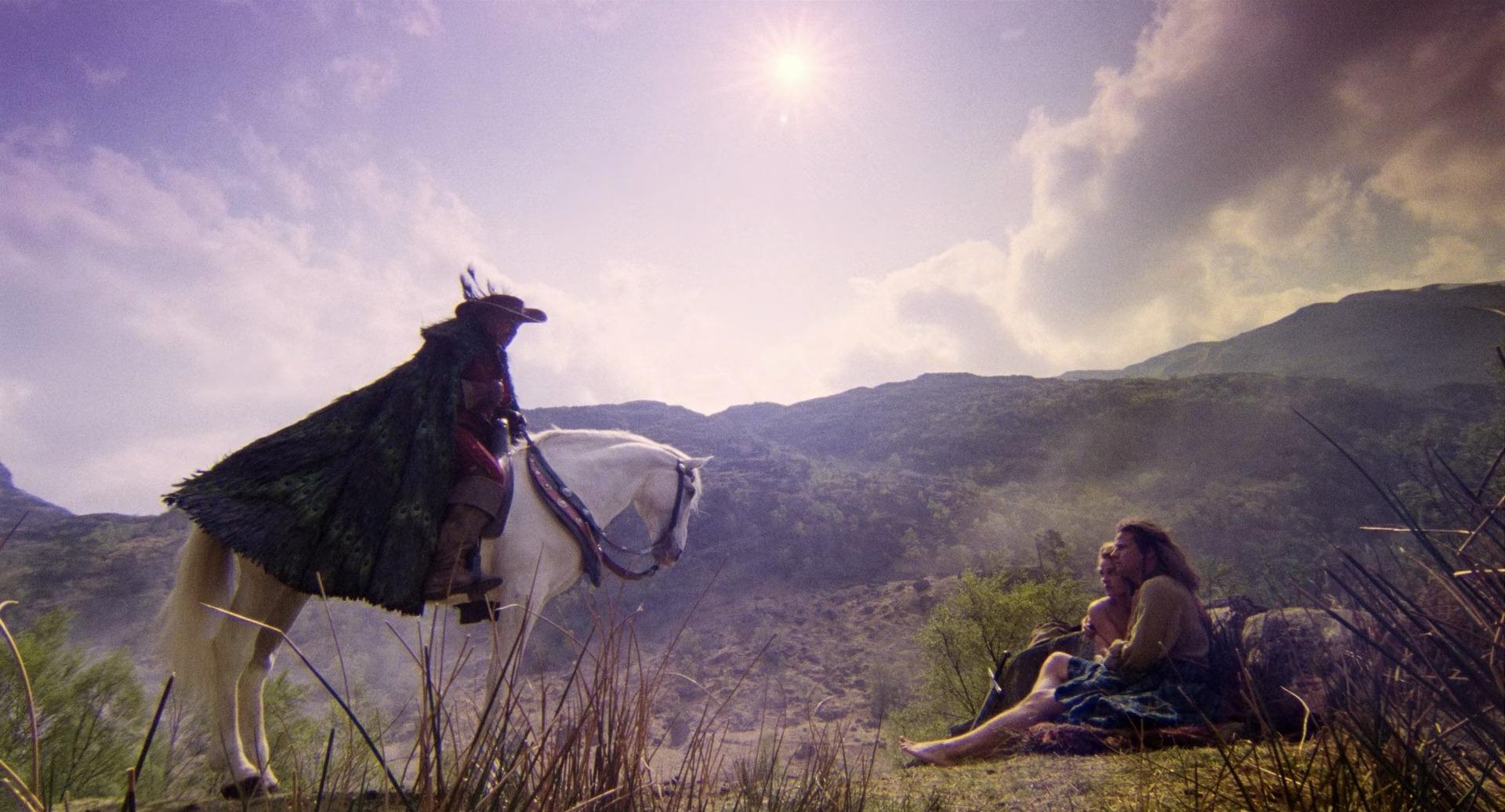
Highlander is at its most cartoonish when it plonks us down in 1980s New York City. For some reason, MacLeod is one of the few remaining immortals in our world. These immortals can only be killed by decapitation. One day, they will converge for “The Gathering” and fight until only one remains—because, as the film repeats, there can be only one.
Now, centuries on, MacLeod goes by the name Russell Nash and leads a quiet life as an antiques dealer, livened up by occasional sword battles with ancient enemies. In the opening scene, MacLeod squares off against one such baddie in the car park of Madison Square Garden. It sets the tone that we’re shown action before we learn anything about the stakes, or even who these men are. They jump across car bonnets, slicing the air with swords that cut through brick pillars and metal pipes. His rival, a middle-aged man in a suit, retreats via a dozen or so backflips. Here, Mulcahy has more success with the action, as he does later in a car chase through lower Manhattan. He comes alive as a director when the film is embedded in the garish, grimy streets of 80s New York.
The film flits between past and present as MacLeod learns of his magical destiny. In one of the more baffling segments, a game Sean Connery appears as an Egyptian swordsman named Juan Sánchez-Villalobos Ramírez, who works for the Spanish king. Connery’s natural sparkle is in full force, even when delivering the film’s most egregious dialogue. He speaks of a power-transference dubbed “The Quickening”, warning MacLeod, “You must learn to conceal your special gift until the time of the gathering.” Why MacLeod “was born different” and what this means for humanity is largely unexplored. Instead, we get odd-couple hijinks as Ramírez demonstrates MacLeod’s immortality. Out on a rowing boat, Lambert shouts, “I don’t like birds! I don’t like water! I’m a man, not a fish!” before turning to Ramírez to bellow, “You look like a woman, you stupid Haggis!” It isn’t the scene you’d show someone to convince them the film is secretly brilliant.
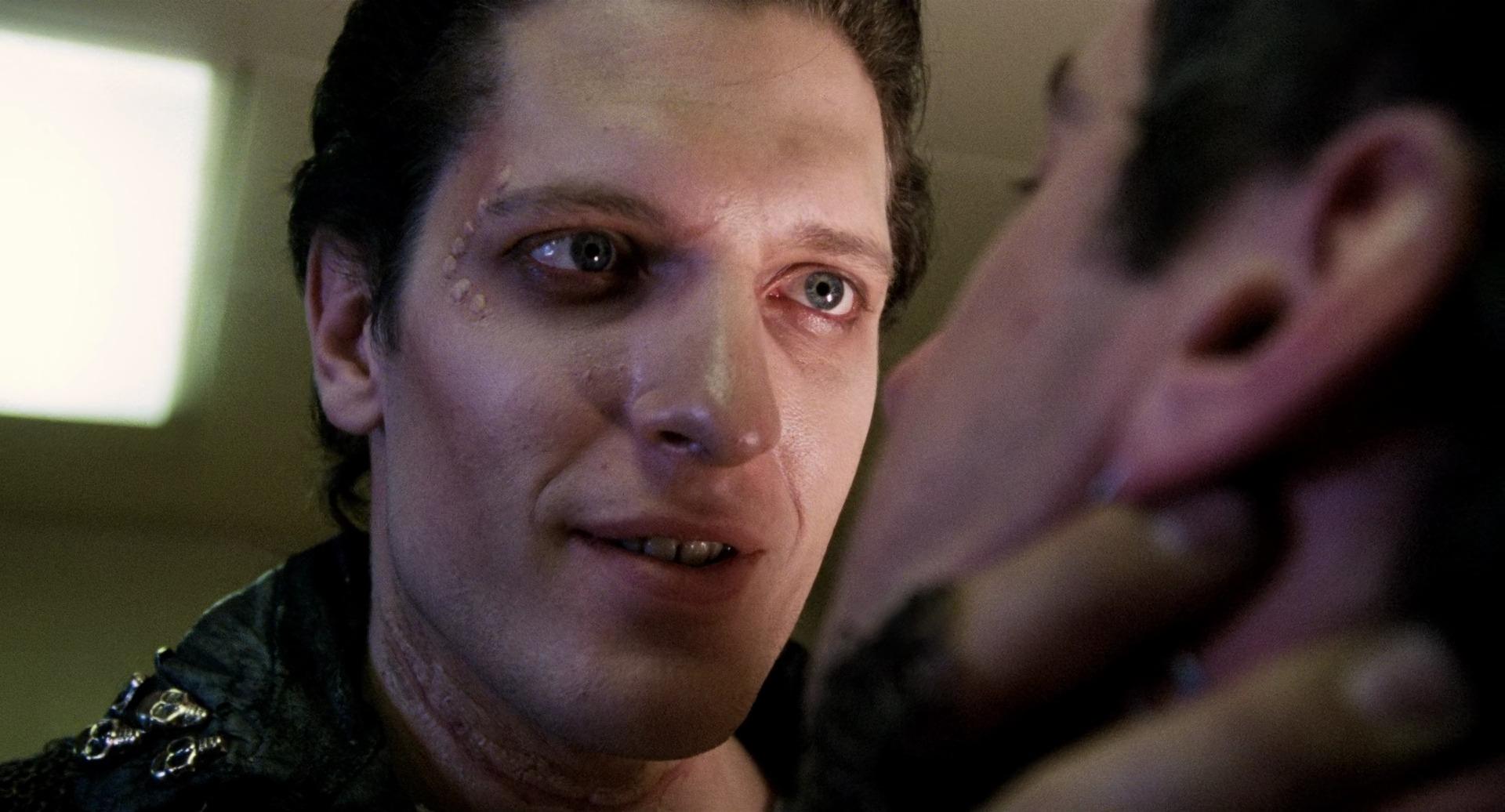
Nor would you show them the scene where Connery and Lambert duel on the jagged rocks of the Highlands. Here, a mind-blowing location and excellent aerial photography cannot make up for how anaemic and laboured the choreography is. It perfectly demonstrates Highlander’s broader failings: all the money and scope in the world aren’t enough to make it feel legitimate.
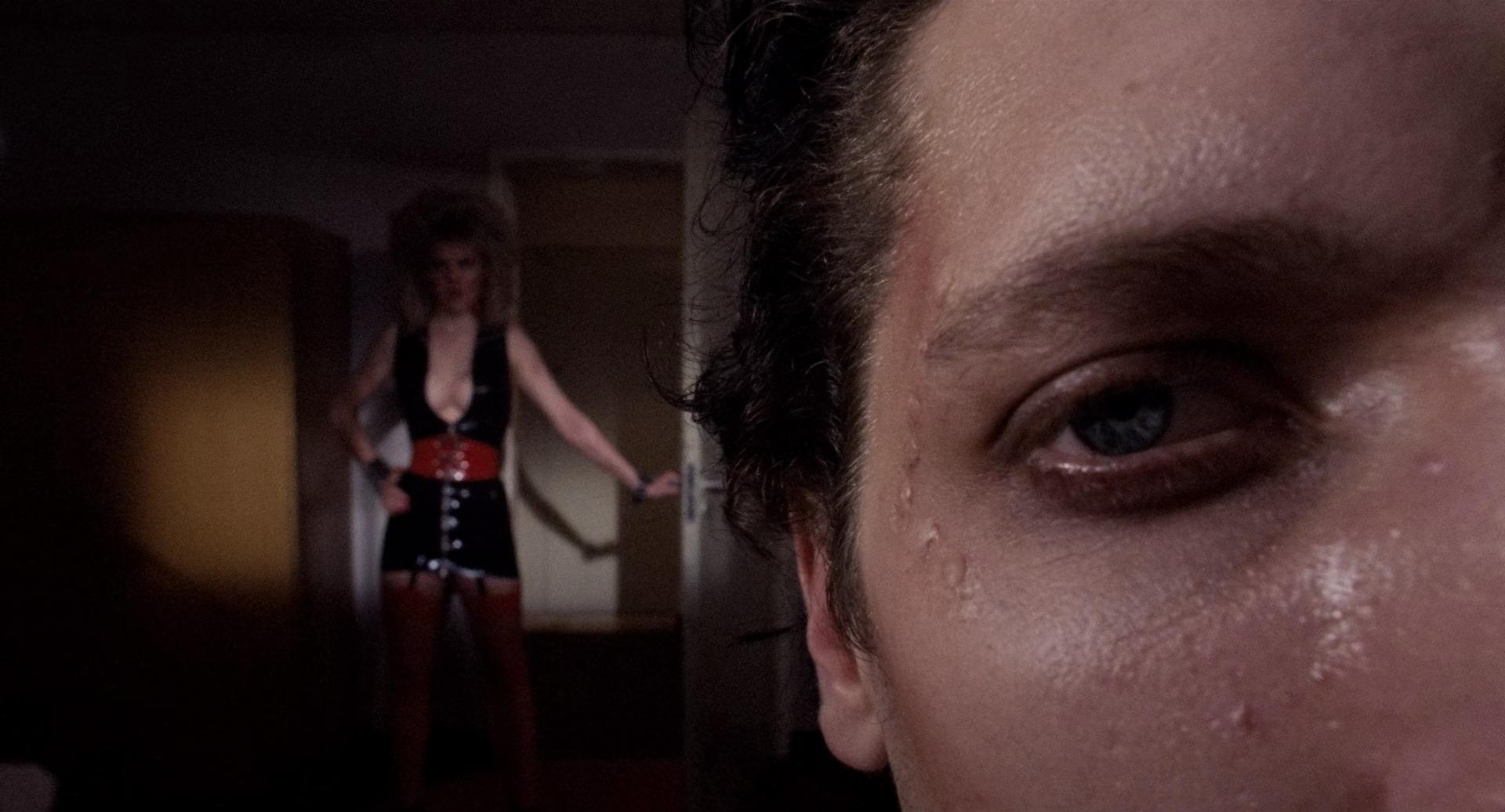
Instead, Highlander is best enjoyed as an imitative oddity. Connery’s fantasy figure feels pulled from a misunderstanding of both Zardoz (1974) and Alec Guinness’s Obi-Wan Kenobi. MacLeod’s 16th-century wife, Heather—whom he must leave because immortals cannot have children and outlive their spouses—is a fair maiden designed entirely to give our hero an emotional obstacle. This goes for her modern-day counterpart, Brenda (Roxanne Hart), an NYPD forensic scientist and metallurgist. Stumbling across the Madison Square Garden crime scene, she finds a rare, ancient shard that leads her to MacLeod, with whom she inevitably falls in love. Then there is Rachel (Sheila Gish), MacLeod’s secretary. Now middle-aged, her bond with him goes back to the Second World War, when he rescued her from the Nazis as a child. Their dynamic is given little attention; there is something unspoken and mildly depressing about a Holocaust survivor devoting 40 years of her life to pining after her uncharismatic rescuer.
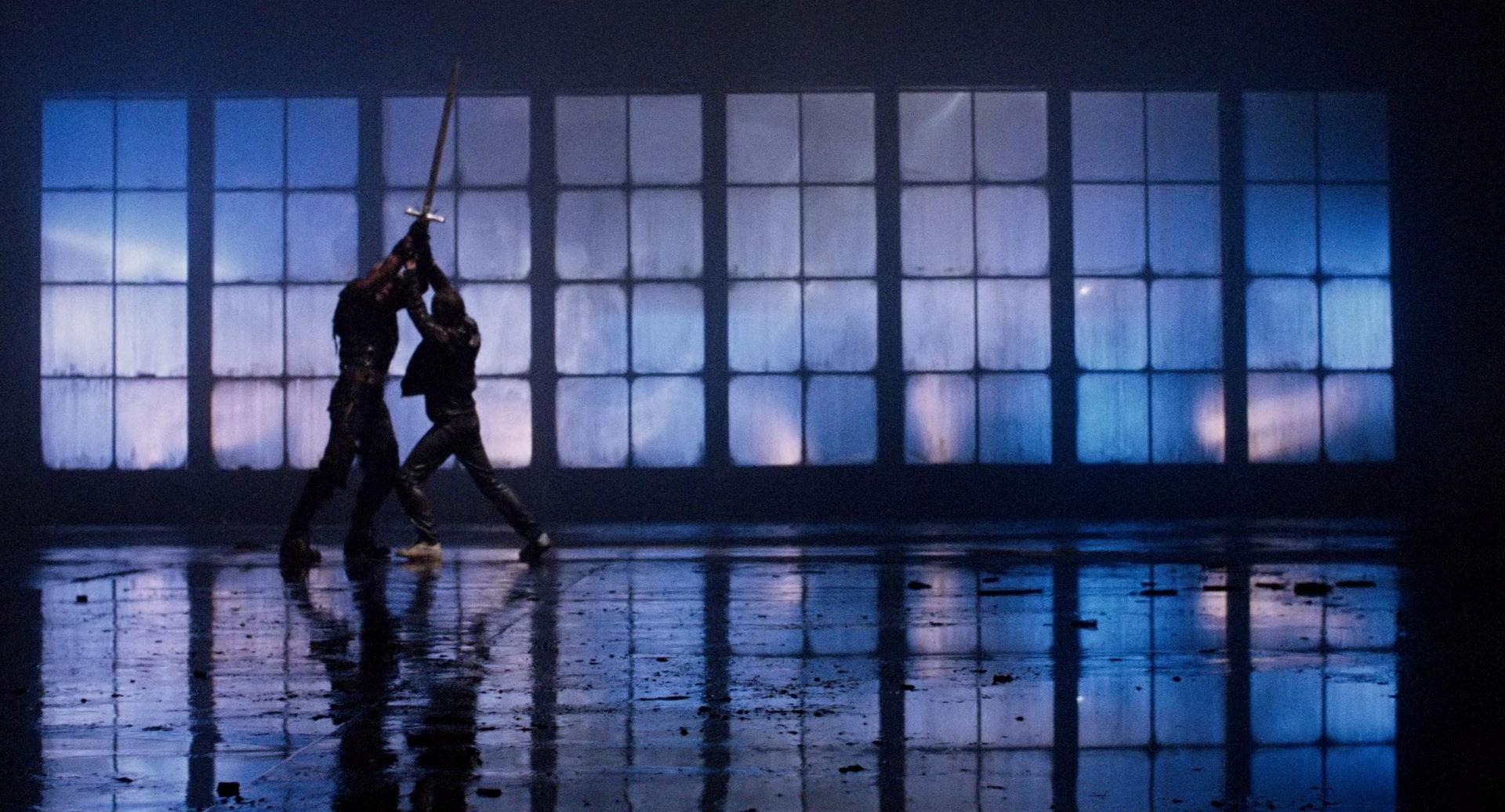
That Highlander fails to tie its disparate threads together only makes it more fascinating. This is especially true of the film’s scene-stealing villain, Clancy Brown’s “The Kurgan”. His appearances are erratic, but Brown makes the most of every second on screen. He growls, bellows, and stalks the New York streets looking like a cross between a Terminator and a member of The Warriors. To hammer home that he’s a true villain, he slaughters rivals, absorbs their powers, and licks the hand of a repulsed priest. “It’s better to burn out,” he proclaims, “than to fade away!” What that means in this context is irrelevant; nothing makes sense, but Brown delivers it with total conviction.
The street-punk film The Kurgan inhabits, the cop procedural led by Brenda, and MacLeod’s fish-out-of-water tale rarely mesh. The fact that Highlander went on to produce numerous sequels, TV shows, and comic spin-offs makes perfect sense. There is a hyperactive inability to focus on any one strand of the story, leaving us with a jumble of ideas told in true, image-first music video fashion.
It’s never boring, but it is curiously empty. The “chosen one” trope is best used by directors interested in applying it to real human fears. Take The Matrix (1999), where the concept of the saviour springs from modern isolation and capitalist anxieties. Or consider Count Dracula (Gary Oldman) in Bram Stoker’s Dracula (1992), a sumptuous film that is as much about the tragedy of time as it is about monsters. These films use their genre foundations to explore our deepest desires.
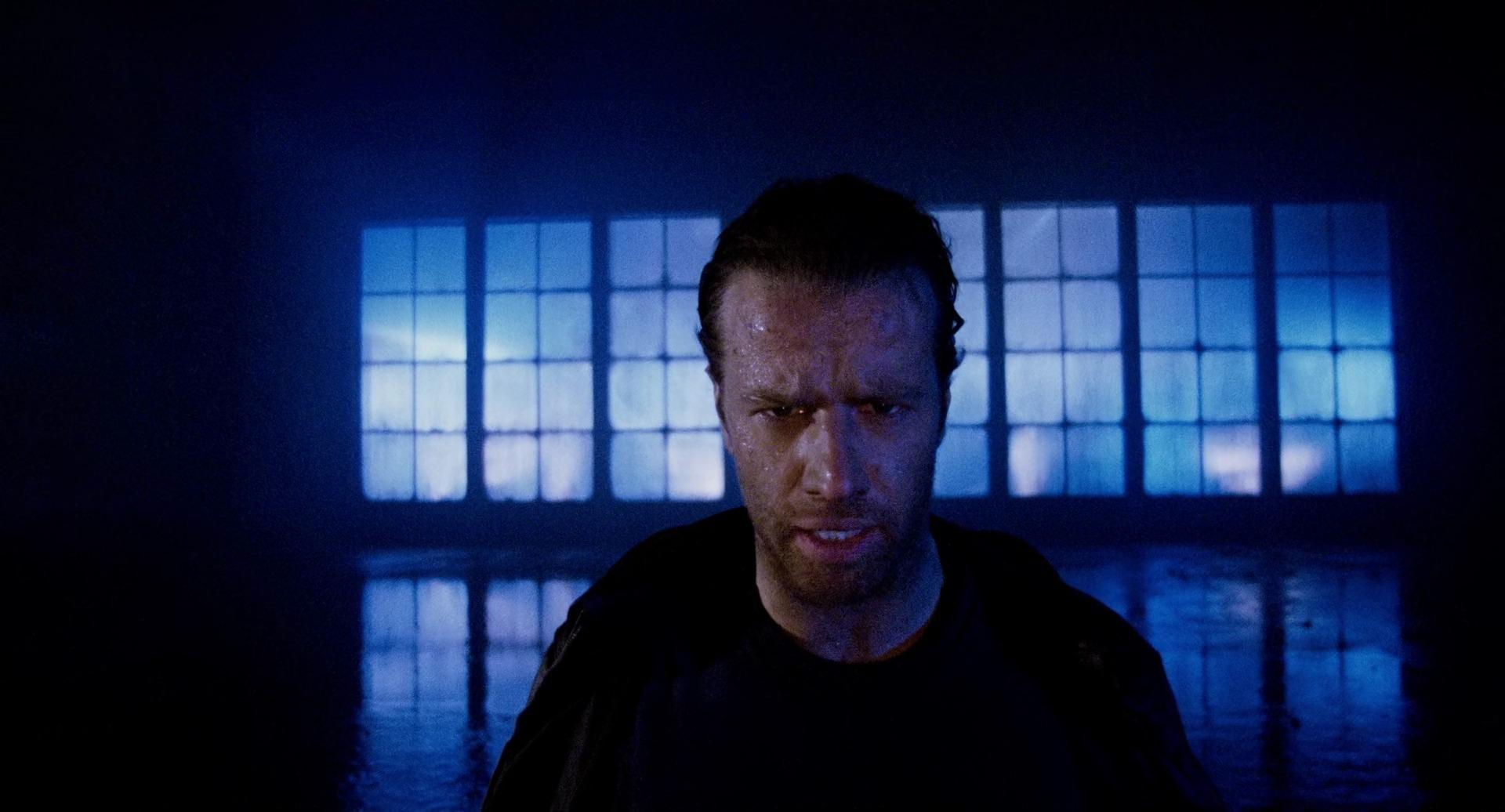
For a film trading in the concept of outliving the world, Highlander is bizarrely short-sighted. Instead, it barrels ahead with showy set-pieces, including an eye-popping battle outside the massive neon Silvercup Studios sign. There is nothing inherently wrong with the stunt-show finale—it has all the pyrotechnics and quick cutting you could ask for—but it is completely unclear why this is the emotional climax to a film that earlier featured MacLeod looking upon the mountains, wife in arm, as Freddie Mercury wails “Who Wants to Live Forever.”
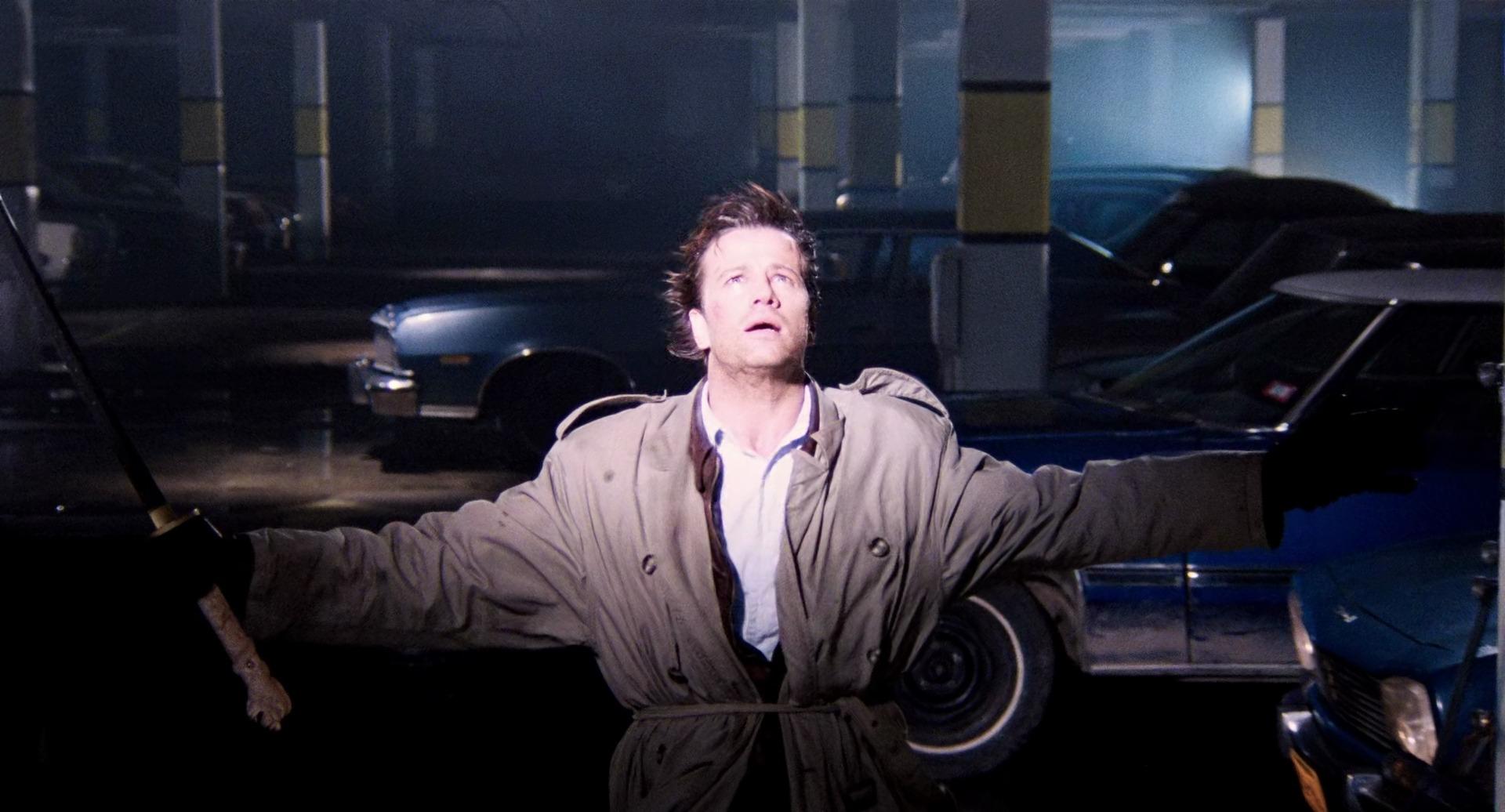
It is a film pulled in a thousand directions, resulting in a feature-length sizzle reel of better movies. When an immortal is slain, they absorb their rival’s power through a storm of blue lightning. Windows blow out. The killer stands, arms outstretched, screaming as the energy fills them. This is what Highlander aims to be: a film that absorbs and outdoes its peers. But like a sponge dipped in someone else’s bathwater, it ends up soggy and stinking of a stagnant pool.
UK • USA • NETHERLANDS | 1986 | 111 MINUTES | 1.85:1 | COLOUR | ENGLISH

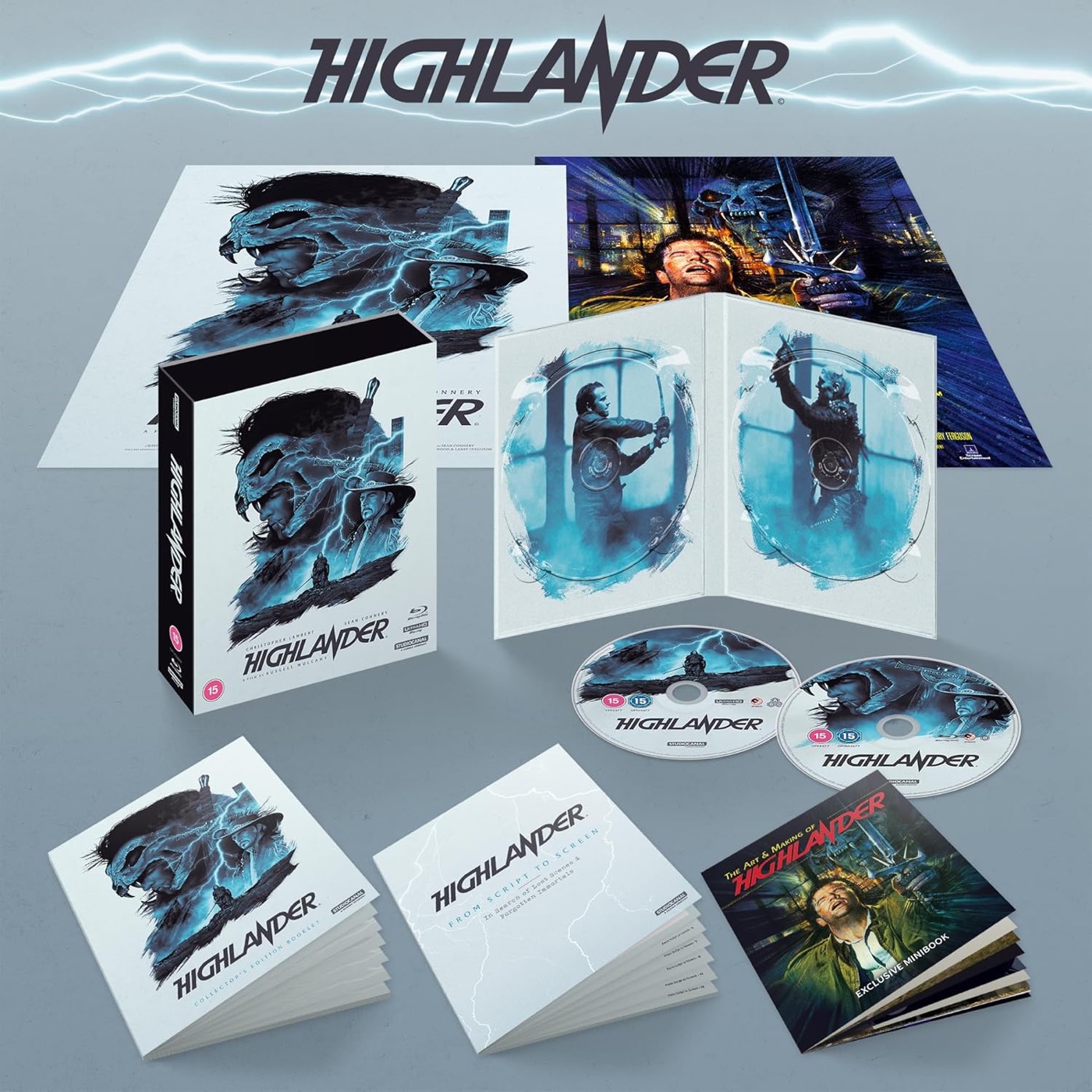
The 4K Ultra HD presentation of Highlander is absolutely superb. Without a doubt, the film’s visuals and distinctive style are its main draw, and the immense clarity and depth of colour on display here make this a mandatory purchase for any fan. The film’s bold palette runs the gamut from the harsh, high-contrast blacks and whites of 1980s New York to the rich blues, greens, and misty greys of the Scottish Highlands—all of which are beautifully rendered. A light, natural layer of grain is preserved, maintaining a wonderfully filmic, cinematic texture throughout without ever looking overly scrubbed.
Sonically, the presentation is equally impressive. The legendary soundtrack by Queen is mixed loudly, but it never smothers the mix, proving rousing rather than overbearing. Dialogue remains crisp and intelligible throughout the film’s chaotic tonal shifts, while the action sequences—particularly the roaring car chases and explosive pyrotechnics—possess a satisfying, tactile heft. All in all, the sheer sensory upgrade of this restoration makes it well worth tracking down.
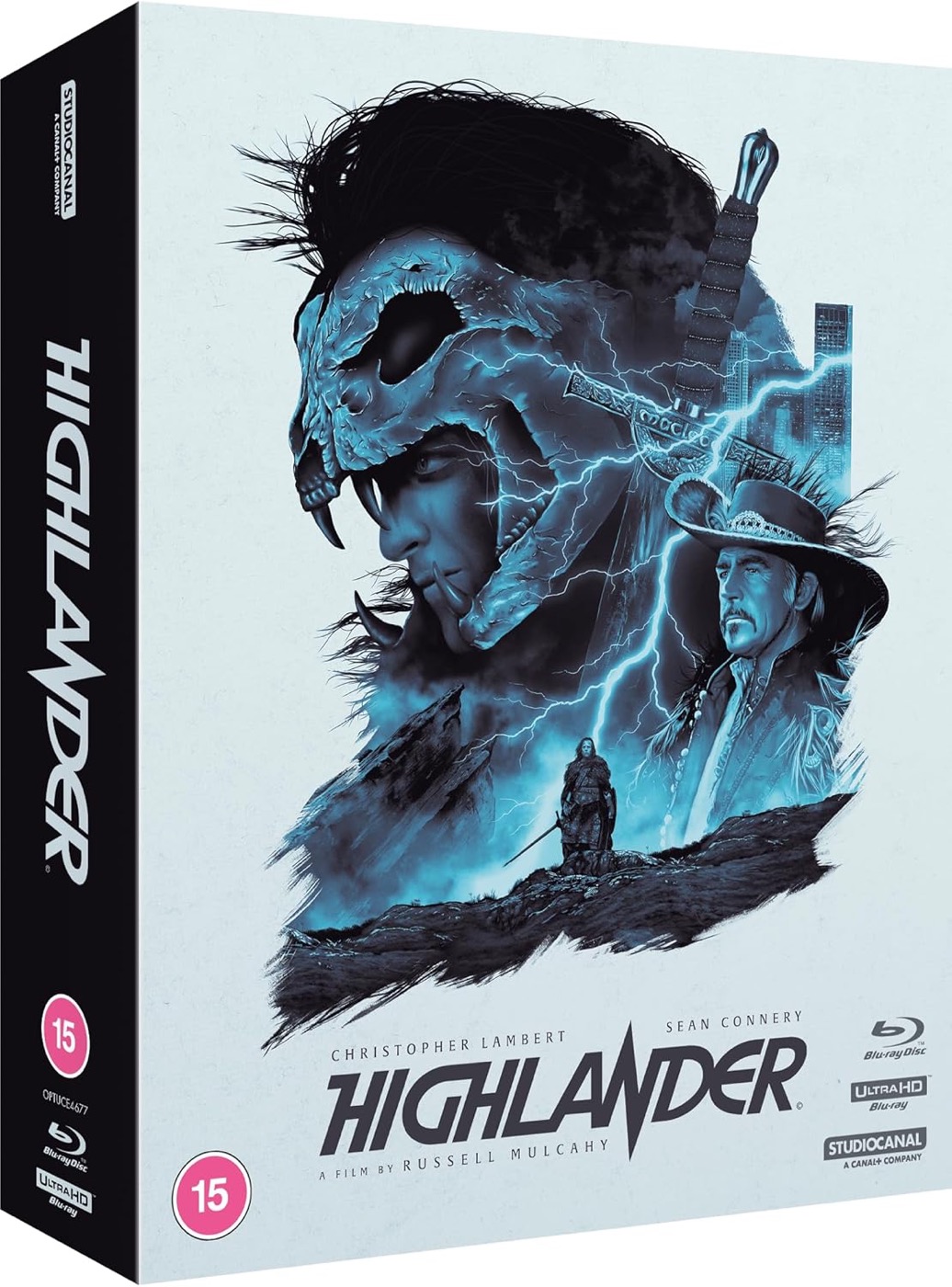

director: Russell Mulcahy.
writers: Gregory Widen, Peter Bellwood & Larry Ferguson (story by Gregory Widen).
starring: Christopher Lambert, Roxanne Hart, Clancy Brown & Sean Connery.