BACKROOMS (2026)
After a therapist's patient disappears into a dimension beyond reality, she must venture into the unknown to save him.


After a therapist's patient disappears into a dimension beyond reality, she must venture into the unknown to save him.
It’s time to face the music: YouTube’s arrival into the mainstream film industry is definitively here. Online content creators and comedians have begun making their mark on the independent film scene, most recently punctuated by the bloody, highly profitable explosion of Curry Barker’s spine-chilling Obsession (2026). The growing recognition of “analog horror” as a legitimate, online-exclusive subgenre has steadily made its way into the wider awareness of mainstream audiences. And one of its most popular progenitors—The Backrooms—has finally transitioned to the silver screen, helmed by Kane Parsons, the 20-year-old director who did the most to popularise it.
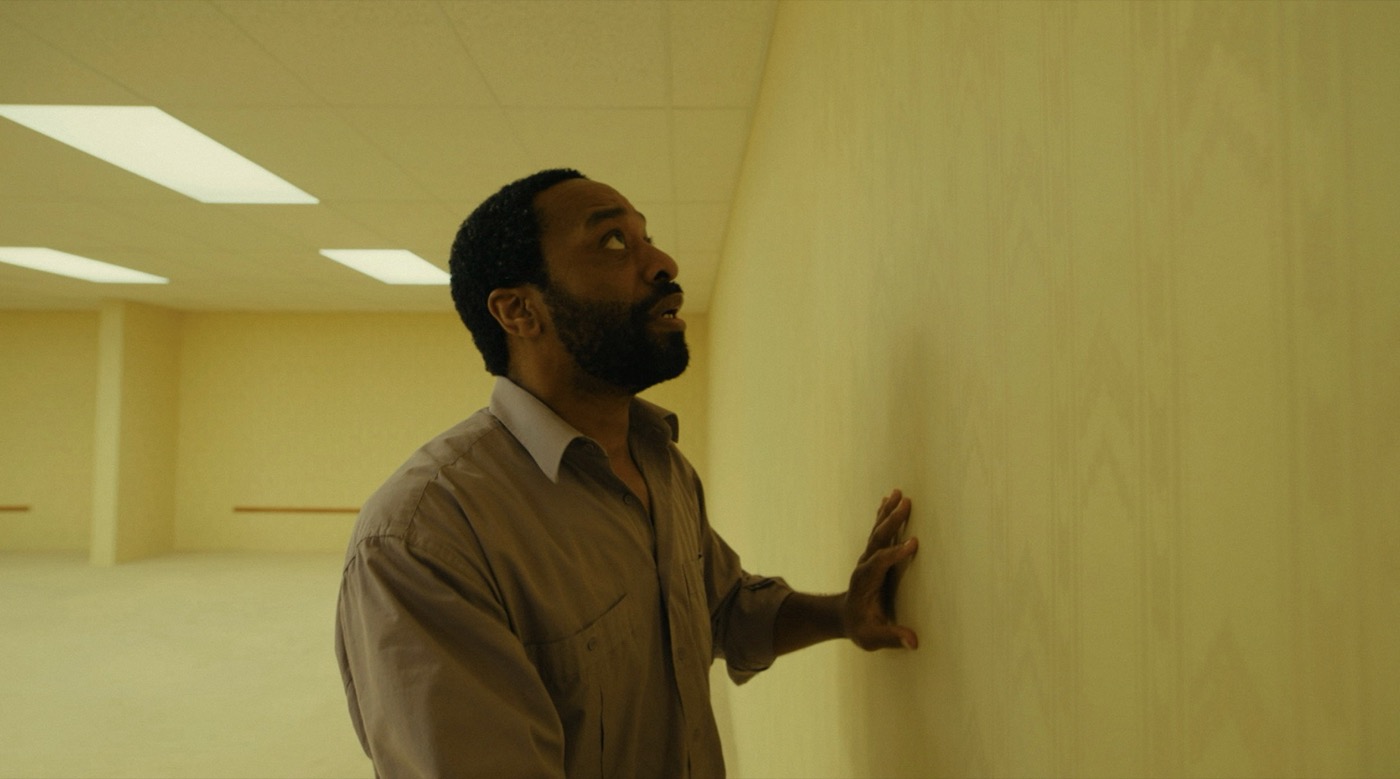
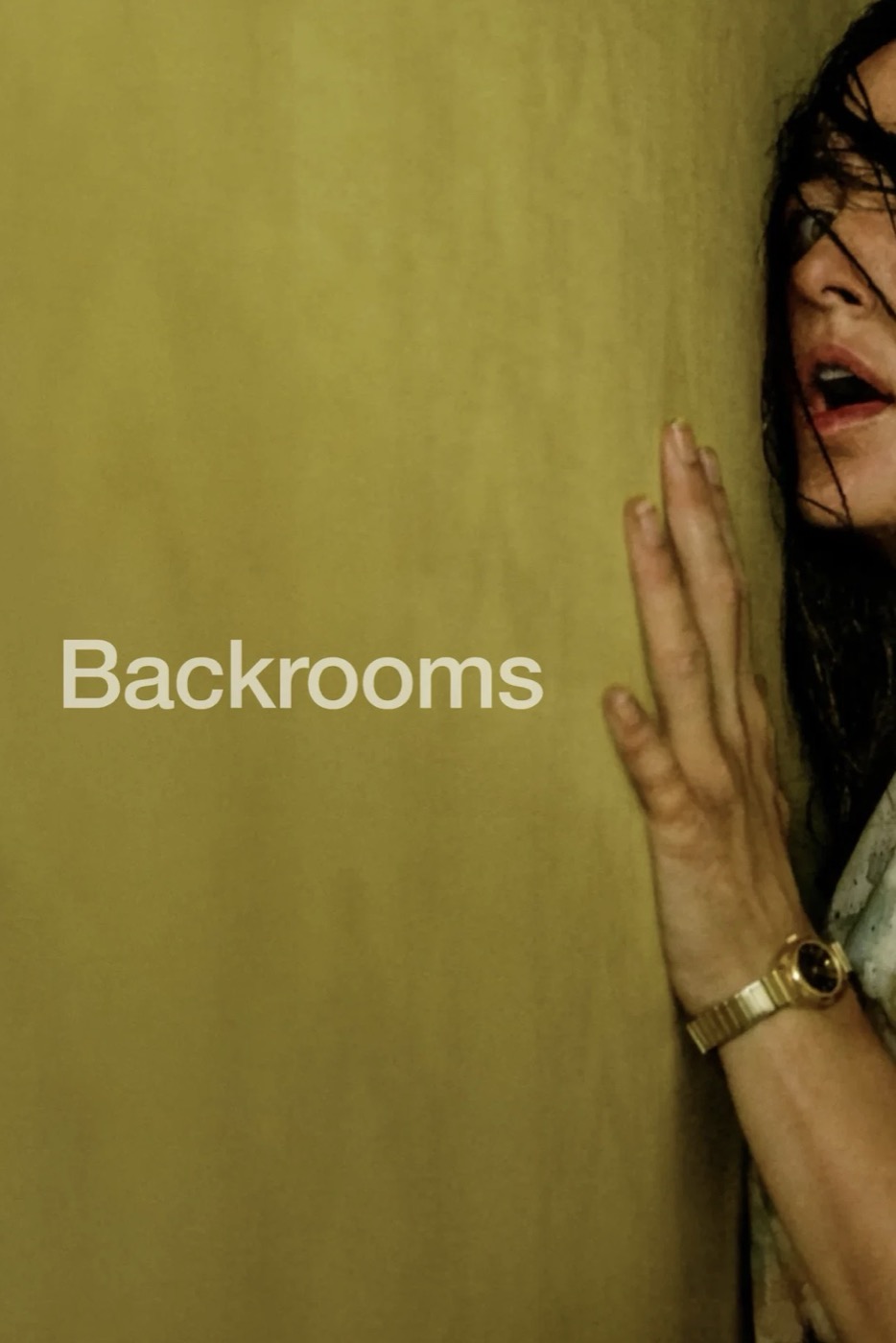
Online audiences are likely to know him first and foremost as ‘Kane Pixels’, the man who took the 4chan-incepted urban legend of the Backrooms and turned it into a viral YouTube series amassing tens of millions of views per episode. The nascent vernacular surrounding the phrase “liminal spaces” owes much to the Backrooms as a recurring motif of horror imagery. It is a sprawling expanse of yellow wallpaper, phased-out objects, miles of empty space, and the buzz of warm fluorescent lights, intermittently showing us the monsters and creatures that populate it. You cannot enter the Backrooms as if you were entering a room with a door. Entry requires your body to “no-clip”—or phase in and out of—the walls that line its infinite bowels from specific points in our actual reality.
Parsons’s YouTube Backrooms series is one of the analog horror genre’s foremost examples, particularly well-renowned for its use of first-person found footage as a means of exploration. Much of the web series’s setting is created in Blender, the 3D animation rendering software—a sign that production was largely a solo expedition. Parsons has been making Backrooms videos since he was in high school; VHS-driven, found-footage homages to the 1990s that wield sterile corporate aesthetics alongside a threatening atmosphere. By the time he entered production on the Backrooms feature film—after being spotted by A24 and Atomic Monster, and entrusted with a massive budget and two Academy Award-nominated lead actors—he was barely 20 years old. To date, he remains A24’s youngest feature filmmaker in the studio’s decade-plus history.
Much discussion, and even controversy, has already been generated by this point. Given the roster of established directors who executive-produced the film, for instance, is there a possibility that Parsons was overshadowed by them? But upon seeing Backrooms, it’s evident that this is clearly the effort of the creative mind behind the web series, and that the film remains in continuity with it. The real question here is how well the film splits the difference between the “lore”-based opacity and intrigue that online web series sustain themselves on, and the narrative and formal rigour expected of film as a self-contained storytelling medium.
The answer to that question is, frustratingly, not very well. The truth about Backrooms is that it still very much feels like an episode of the web series scaled up to a theatrical budget, meaning the web series’s somewhat unsatisfying approach of lore-over-narrative remains dominant here too. The web series’s tricks of ambiguity—in which a subliminal narrative about a research organisation and mysterious figures builds in the periphery of its episodes’ events, rather than within them—are still quite present in the feature film, to deeply mixed results. For a time, Parsons’s solid formal grasp on tension via atmosphere establishes a sense of intrigue—but when the story at hand winds up having nowhere to go, it steadily begins to curdle into frustration.
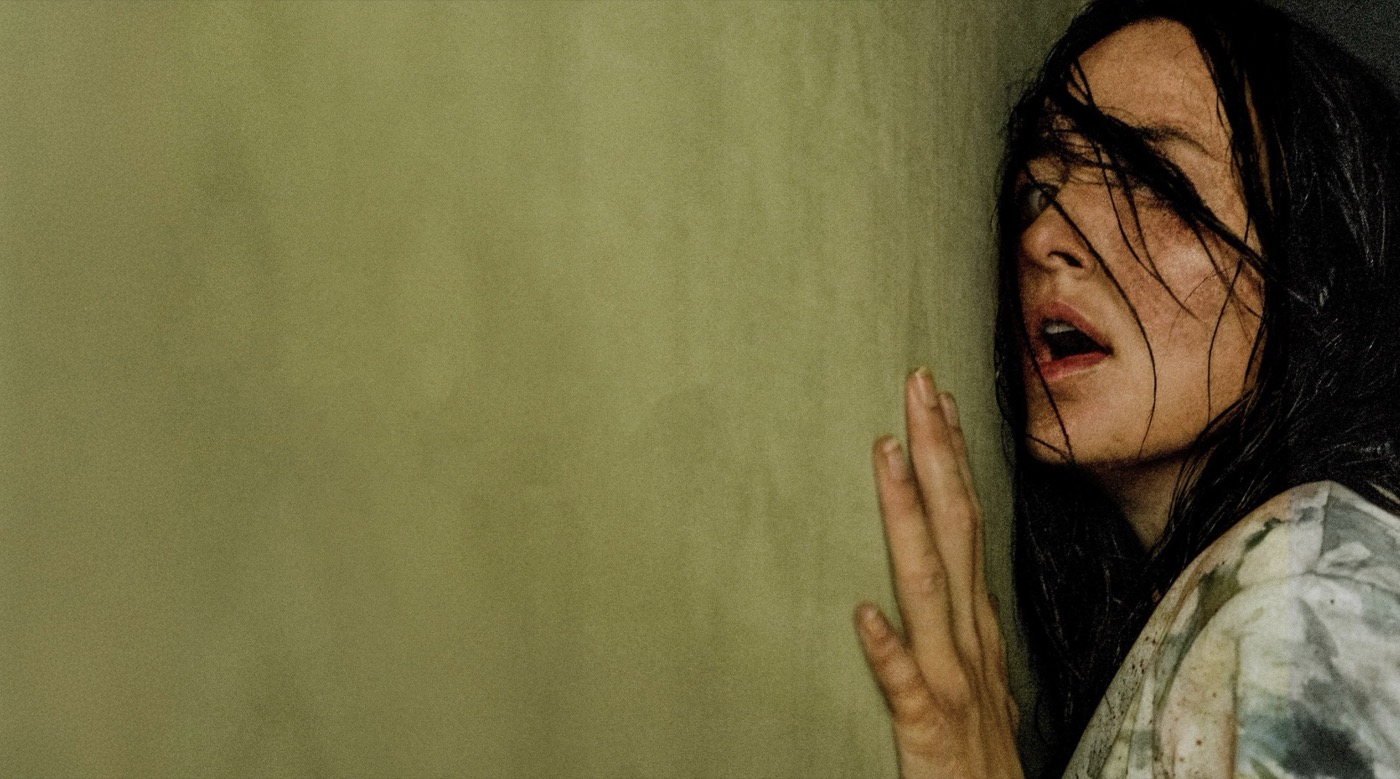
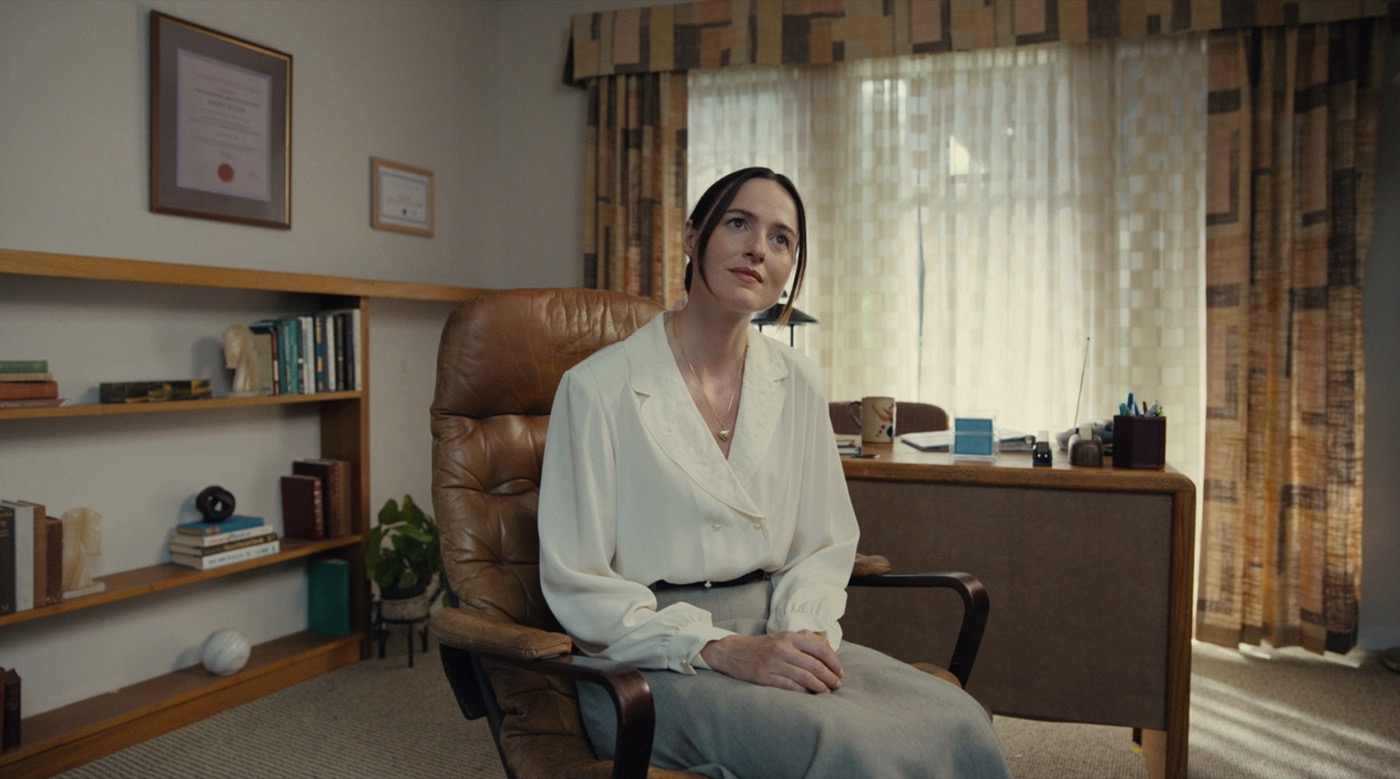
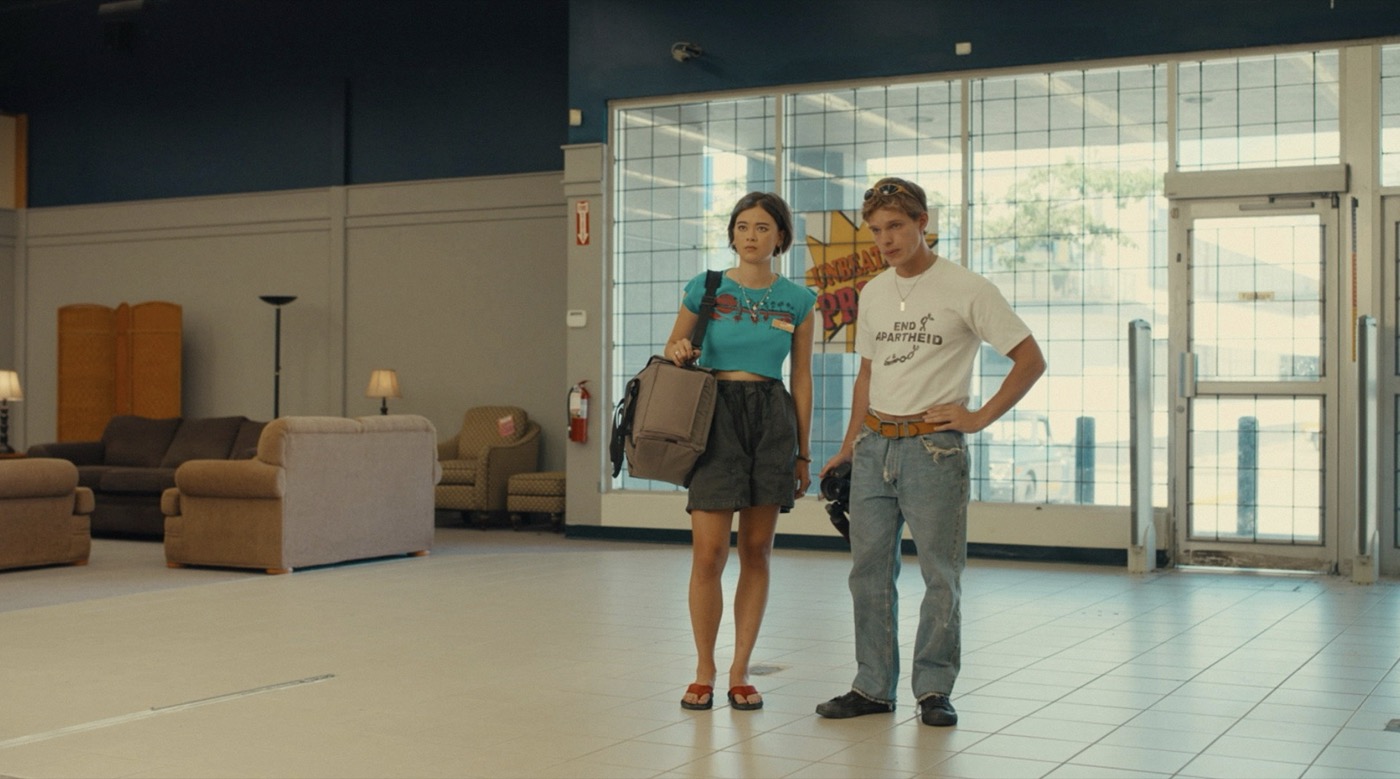
At the very least, the film, written by Will Soodik, seems to want to give the impression that we will be following characters in some form. The two aforementioned Oscar nominees are, in fact, Chiwetel Ejiofor (12 Years a Slave) and Renate Reinsve (Sentimental Value), and the central duet they share is that of a client-therapist relationship. Clark (Ejiofor) is a deeply frustrated man, a long-aspiring architect fresh out of an acrimonious divorce that has left him bitter, resentful, and incessantly blaming the world around him. His dreams have stagnated, trapped in the confines of “Cap’n Clark’s Ottoman Empire,” the furniture store he runs with two young employees, Bobby (Finn Bennett) and Kat (Lukita Maxwell). Mary (Reinsve) faces the brunt of the rage that has gestated in Clark as a result, especially in her therapy sessions—she herself is processing the consequences of a childhood plagued by a family history of mental instability.
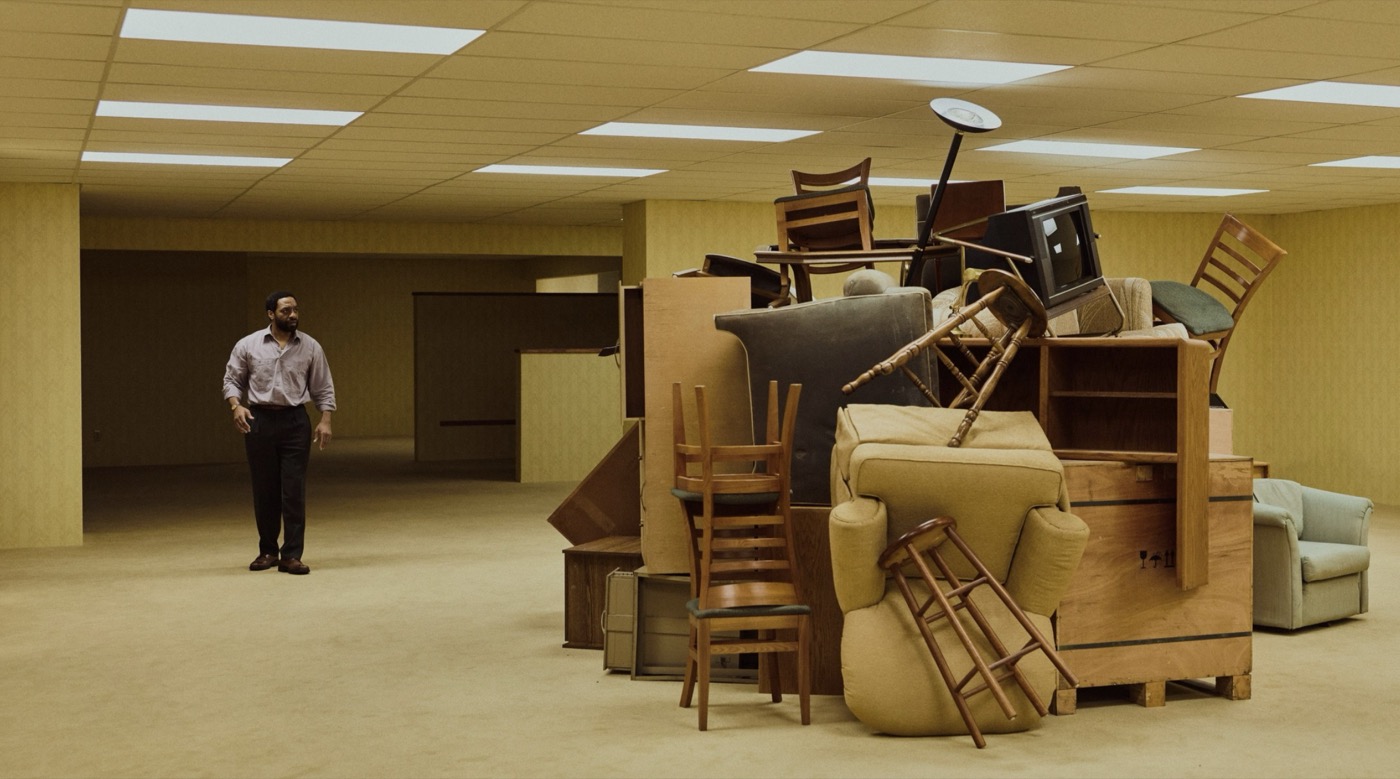
Deep within the basement of Clark’s furniture store, an anomaly emerges: the electricity breaker for the establishment has three red switches that are functionally flippable but completely out of alignment with all the others. And something else extends from there—a slit in the wall that Clark approaches before he phases out of reality and into the Backrooms themselves. The meat of Backrooms’ course of events is the demented spirit of exploration that emerges—first with Clark and his employees, and then eventually with Mary, as a series of events leads Clark down a literal labyrinth he becomes unwilling to escape.
That spirit of exploration makes for some very tense set pieces that Parsons wields deftly. Many of them are filmed on VHS for the found-footage aesthetic that he became so familiar with on the web series, and which he deploys with both clever trickery and plausibility. In scenes where the film uses non-diegetic cameras, following the characters while we directly observe them, Parsons blocks the Backrooms’ empty spaces and corners to maximal effect, steadily gripping audiences with the space’s sheer uncanniness. For another instalment in a universe that has largely been rendered in 3D animation, it is a major surprise to hear that 35,000 square feet of actual Backrooms were constructed on soundstages for this film. It’s a testament to Danny Vermette’s production design, which captures the variety of twisted locations in the Backrooms and vividly brings the scope of the space to life.
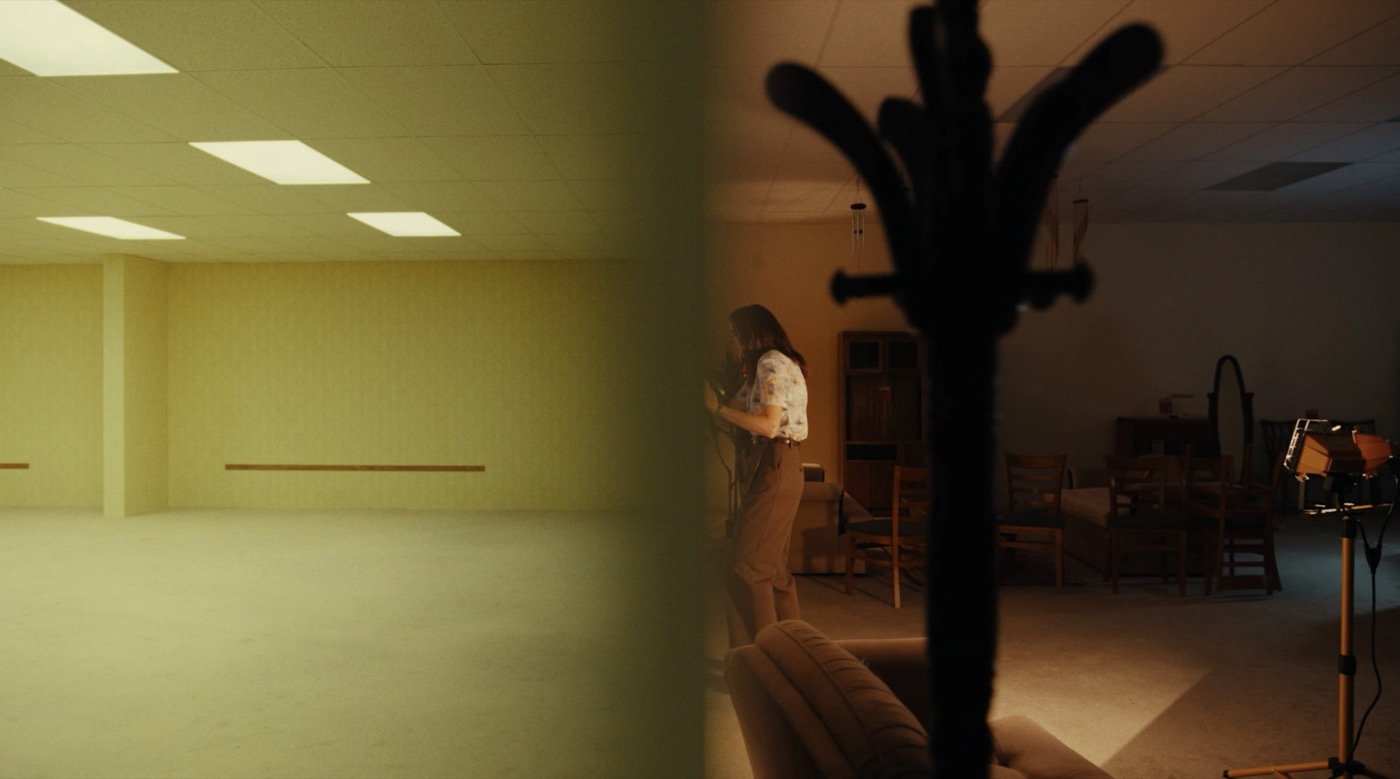
If nothing else, Backrooms is a great showcase for these kinds of moments—where the characters venture into the Backrooms and find themselves in increasingly tense situations that they urgently need to escape. Aesthetically, the feature delves into a perversion of memory, where the Backrooms seem to be constructing themselves as a kind of demented recreation of existing people and places. (That detail, in particular, may resonate with fans of Jordan Peele’s Us (2019) and its conceit of underground-aboveground mirroring.) The result of said perversion is a series of creatively rendered monsters who become the film’s central fixtures of dread, each of which becomes the reason for our protagonists to frantically flail their way out of the Backrooms near the end of their explorations.
If only these characters existed to do more than either run out of the Backrooms or go insane as a result of lingering within them. For actors of Ejiofor and Reinsve’s pedigree, the roles they have been offered are perhaps a tad too simplistic for them to mine truly astonishing material. Ejiofor’s Clark is perhaps the most interesting of the bunch, already profoundly troubled from the start, and galvanised by a place of bizarre architecture that he feels personally invested in studying and inhabiting. But the arc of insanity he undergoes requires a leap in psychology so severe that it demands more narrative detail to bridge one end of his resentment to the other end of his lunacy—a bridge that the film winds up neglecting to build.
Meanwhile, Reinsve is somewhat stuck with Mary, whose role largely boils down to reactive exasperation—first at Clark’s description of the Backrooms that he brings into therapy, and then at the actual nature of the Backrooms themselves. Clark’s inability to own up to his errors is an evident point of frustration for her, but there is not nearly enough inquiry into her methods as a therapist or her troubled past to actually allow her character to stand out. The end result is a rather simplistic dynamic between two people who, when faced with the literally incomprehensible, aren’t necessarily forever changed by it so much as they gawk at it, or commit to a more glibly predictable shift in character.
And what is with Mark Duplass’s near non-presence as a mysterious scientist, who briefly shows up in interludes with only scant expositional detail, before delivering a strange information dump at the tail-end of the film’s course of events? These kinds of lapses in Soodik’s script, and at points, Parsons’s direction, make for a film that doesn’t necessarily deliver on the promises of its first act, but rather promises even more promises to come. That is not necessarily a bad thing, especially when it comes to something that is clearly meant to be part of a larger, growing IP. But as someone who has closely observed the Backrooms series, some confusion arises here. Is this film designed to be a theatrical special episode of sorts for the series, or a standalone story that also exists in Parsons’s established series continuity?
It doesn’t seem like this film has a clear answer for what exactly it intends to be. If it is designed closer to the former, it is not exactly revelatory enough on a worldbuilding or lore level to truly warrant a theatrical scope, even if it certainly expands its ambitions on a logistical level. And if it is intended to be the latter, the film still too deeply indulges the ambiguity and the piece-it-together lore of the web series’ indirect storytelling to actually tell a full narrative with developed characters and moments of material change.
The Backrooms’ main source of intrigue has always derived from the monsters that lurk in its crevices, and the shrouded, mysterious organisations that want to expand our understanding of the natural world. But there’s also a Lovecraftian conceit here that Parsons’s feature is tapping—how memories can be a perverse sustenance for a world beyond our own, and how exposing ourselves to it can shatter our relationships to ourselves and the reality we inhabit. To fully break into that conceit in a resonant way, however, we need to be able to tangibly follow people and characters, not distantly hidden circumstances, or unknowable creatures, or organisations with strings tied to their fingers. For a long time now, analog horror has lacked a prioritisation on characters, and for the time being, Backrooms feels like a budget-amplified extension of that philosophy.
USA • CANADA | 2026 | 110 MINUTES | 1.85:1 | COLOUR | ENGLISH

director: Kane Parsons.
writer: Will Soodik (based on the web series by Kane Parsons).
starring: Chiwetel Ejiofor, Renate Reinsve, Mark Duplass, Finn Bennett & Lukita Maxwell.