A.I. ARTIFICIAL INTELLIGENCE (2001)
A highly advanced robotic boy longs to become "real" so that he can regain the love of his human mother.

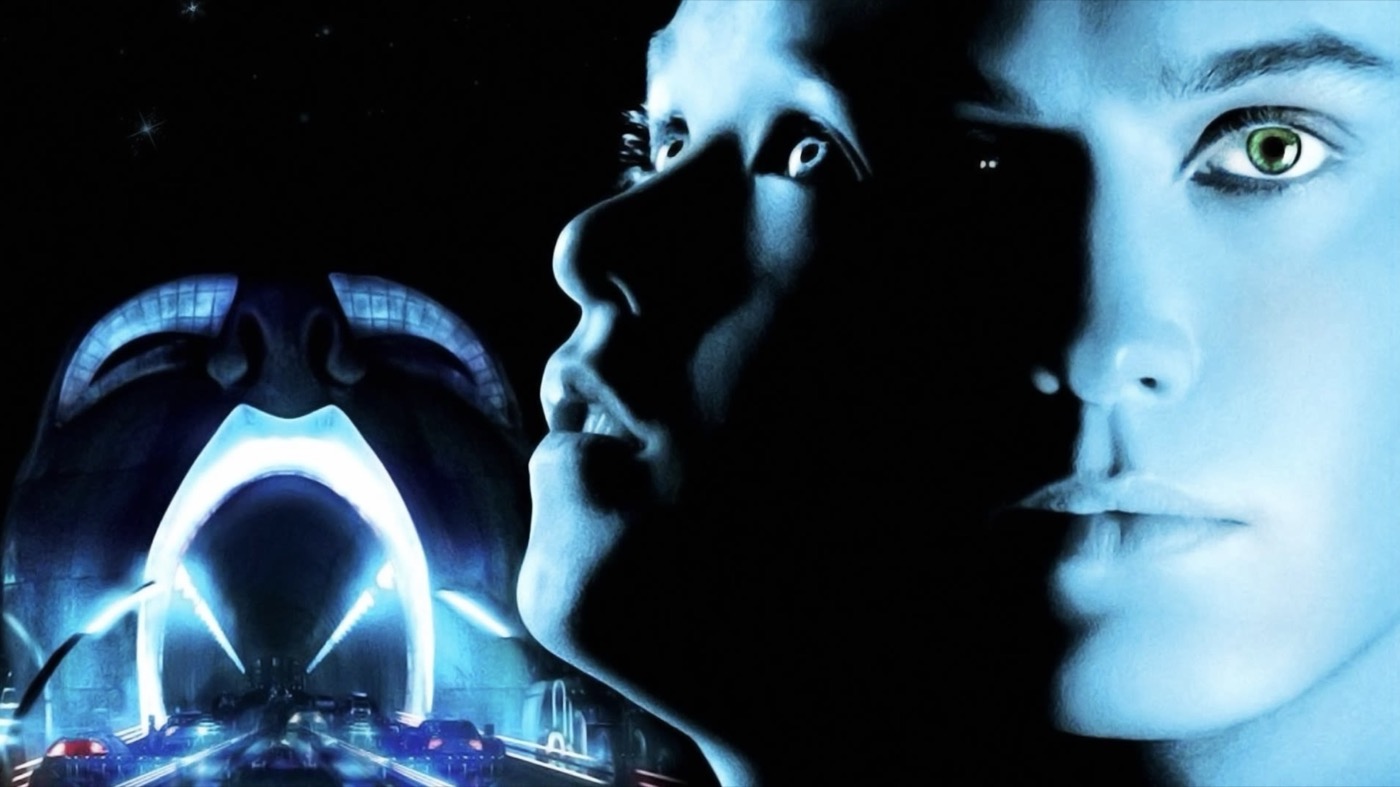

A highly advanced robotic boy longs to become "real" so that he can regain the love of his human mother.
Back in the 1990s, Steven Spielberg was riding high after his one-two punch of Jurassic Park (1993) and Schindler’s List (1993), followed by his other World War II masterpiece, Saving Private Ryan (1998). Any director would be happy to have made just one of these, but to deliver three films of such commercial and critical success in only five years—alongside the solid, if not as good The Lost World: Jurassic Park (1997), and Amistad (1997)—is an astounding feat by any standard.
Following this prolific period, you might’ve thought the world’s most commercially successful filmmaker would take some well-earned time off. Instead, he pressed on and returned to science fiction—familiar territory for him. Apart from his latest feature, Disclosure Day (2026), the director has made six other science fiction films, most notably Close Encounters of the Third Kind (1977) and E.T. the Extra-Terrestrial (1982). The latter ended up being one of his biggest earners; by 1983, it had surpassed Star Wars (1977) in global box-office sales. For his next project, however, he tried something different: a dark, futuristic take on the Pinocchio tale about a robotic boy named David and his quest to become human.
Set in the 22nd century, the film opens on a close-up of the ocean while Ben Kingsley’s voiceover explains how rising sea levels caused by global warming have destroyed coastal cities and transformed the climate. The human population has declined to the point where humanoid robots, called “mechas”, have been developed to fill various roles in society.
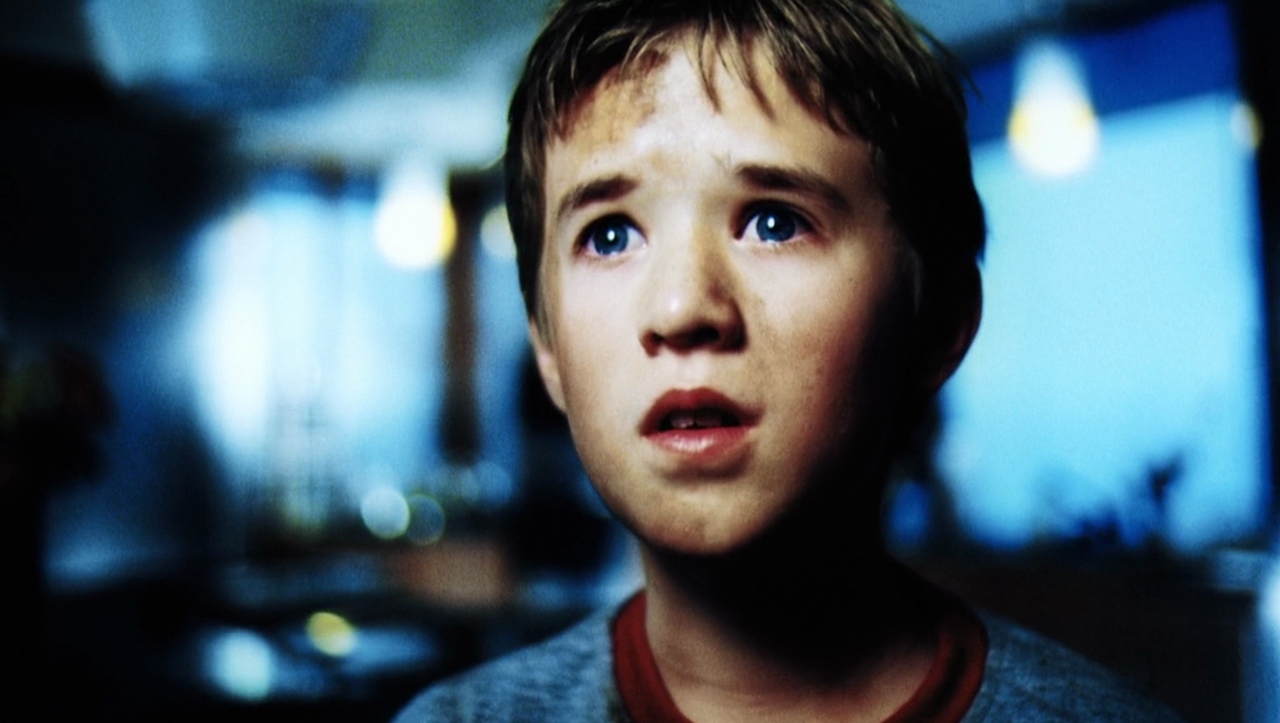
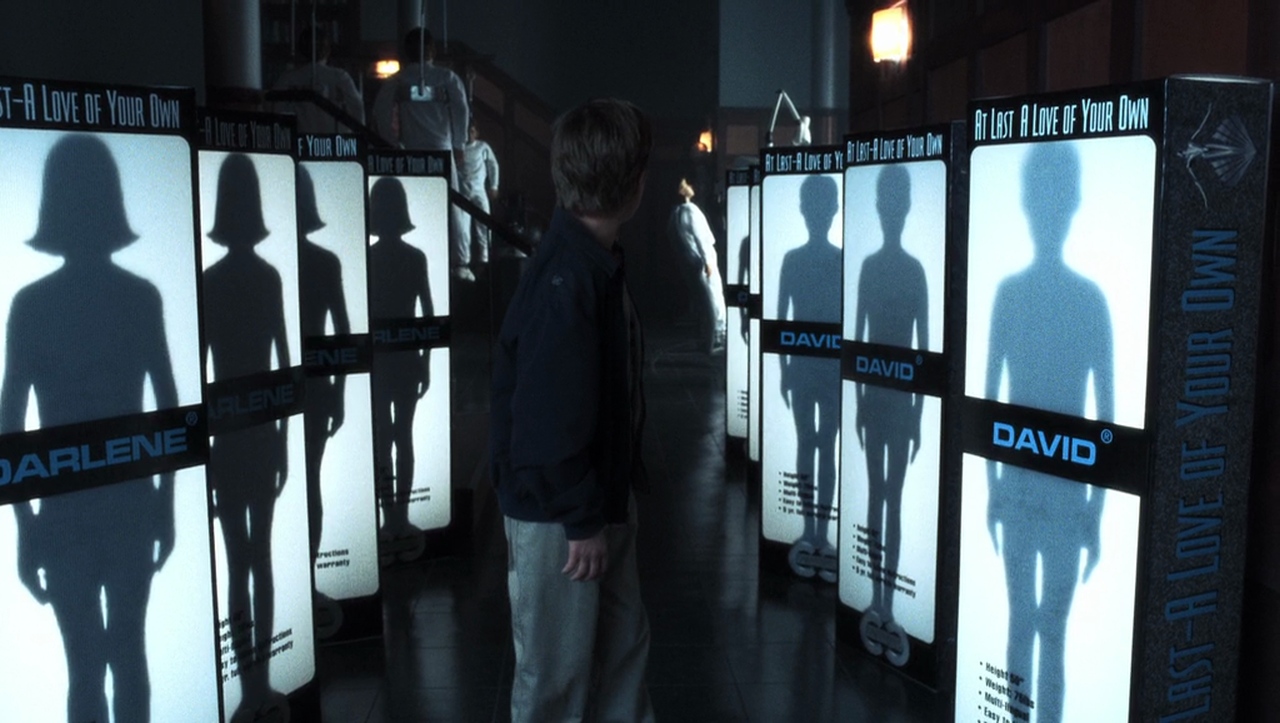
We meet Henry and Monica, a young married couple distraught after their son, Martin, falls critically ill. They place him in suspended animation, hoping doctors will eventually find a cure. Henry works for a leading mecha manufacturer and is given a prototype robot child called David. This state-of-the-art creation is designed to experience love, and Henry believes David could help them cope with losing their son. Monica resists at first but soon warms to David and activates his imprinting protocol, permanently bonding him to her.
A few weeks later, Martin recovers and returns home. The family tries to live normally, but Martin grows jealous and repeatedly lands David in trouble. At Martin’s birthday pool party, David accidentally pulls him into the water, nearly drowning him. Henry and Monica decide to return David to the company. On the way, knowing he’ll be destroyed, Monica abandons him in a nearby forest instead. Believing she rejected him because he isn’t human, David remembers the story of Pinocchio and sets out to find the Blue Fairy so he can become a real boy.
On paper, this may sound a little ridiculous and corny. Yet, thanks to a strong script, superb acting, and cutting-edge visual effects that still hold up, A.I. Artificial Intelligence stands out as one of Spielberg’s most compelling genre films. Beyond its thought-provoking themes regarding the ethics of creating life, the film has a fascinating origin story involving none other than Stanley Kubrick.
Kubrick discovered the project in the 1970s after reading Brian Aldiss’s short story, “Super-Toys Last All Summer Long”, originally published in the UK edition of Harper’s Bazaar magazine in December 1969. The story depicts an overpopulated future where childbirth is controlled and intelligent machines are created to combat loneliness. Kubrick hired Aldiss to write a treatment but later fired him over creative differences.
Around 1984, Kubrick first pitched the idea to Spielberg, suggesting he direct. Spielberg called it “the best story you’ve ever had to tell” but felt he was wrong for the project and declined. Development stalled for the next decade, cycling through several writers, until Kubrick asked again. He and producer Jan Harlan believed Spielberg’s sensibilities suited the material better, but Spielberg refused once more.
When Eyes Wide Shut entered production in late 1996, A.I. was put on hold until that film’s 1999 release, but Kubrick died in March of that year. It was at this point that Harlan and Kubrick’s widow approached Spielberg again, and he finally agreed. By November 1999, he was writing the screenplay based on Kubrick’s existing 90-page treatment.
That treatment already contained many ideas that reached the finished film: David’s search for the Blue Fairy, his talking toy Teddy, his abandonment in the woods, Rouge City, and even the far-future ending. Much of the darker tone and the sweeping philosophical questions also came from Kubrick. At the time of its release, many assumed Spielberg had heavily altered the material; in reality, he stayed surprisingly faithful to what Kubrick had developed.
One element Spielberg did originate was the Flesh Fair sequence. In this scene, we see unwanted robots being rounded up and destroyed for the entertainment of cheering crowds in what resembles a bizarre medieval circus, complete with explosions, fire, and huge, propeller-like fans.
Brendan Gleeson (The Banshees of Inisherin) plays a pivotal role here: first rounding up mechas in a moon-shaped hot-air balloon, then serving as MC and whipping the crowd into a frenzy with anti-robot rhetoric. The audience is already angry because these machines have taken their jobs. Despite its science fiction trappings, this sequence ranks amongst some of Spielberg’s darkest work.
While Kubrick’s vision combined with Spielberg’s filmmaking talents proved a creative match made in heaven, it’s the acting that does the heaviest lifting. Haley Joel Osment, fresh from The Sixth Sense (1999), delivers a performance any seasoned actor would envy. Only 12 at the time of filming, he plays a character that is technically a machine yet unmistakably an innocent boy alone in the world—an astonishing achievement.
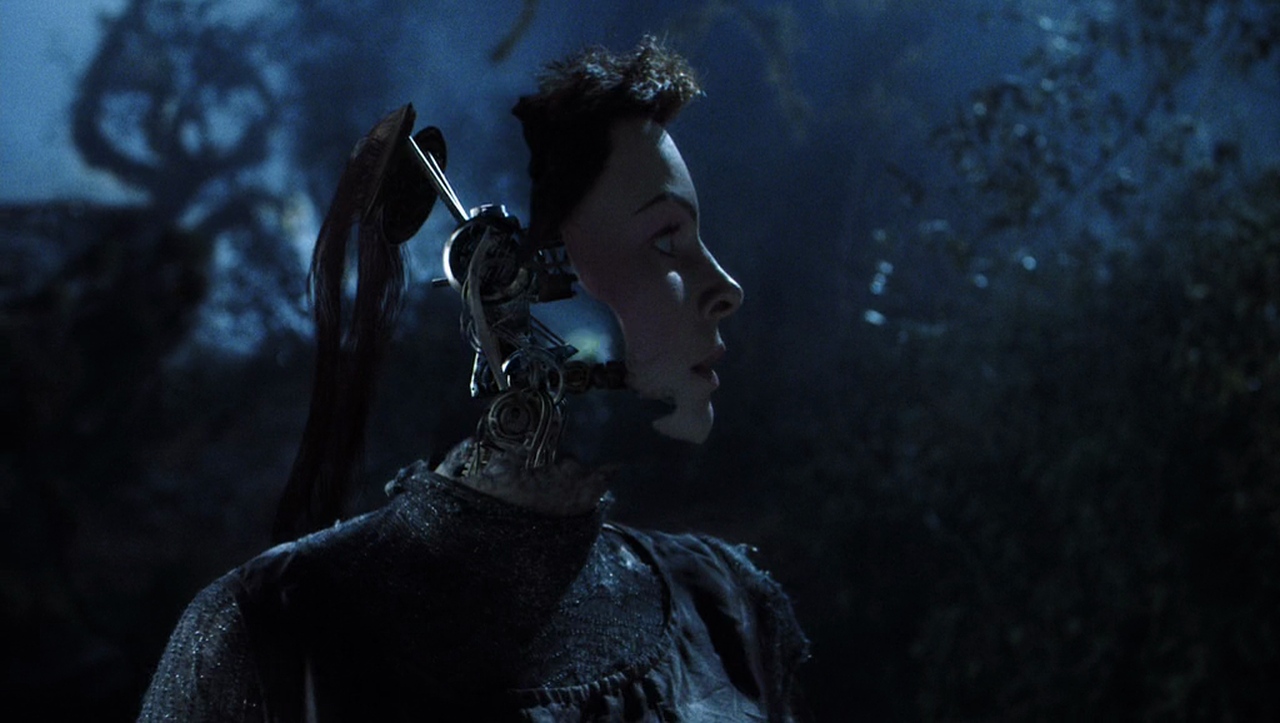
Frances O’Connor is equally good as Monica. Her relationship with David evolves drastically: initially unsure, even fearful, she comes to love him genuinely, which makes later events all the more tragic. The scene where she abandons David in the forest remains one of Spielberg’s most emotionally powerful sequences. Watching her wrestle with whether to return him to the factory—and his certain destruction—or leave him is gut-wrenching.
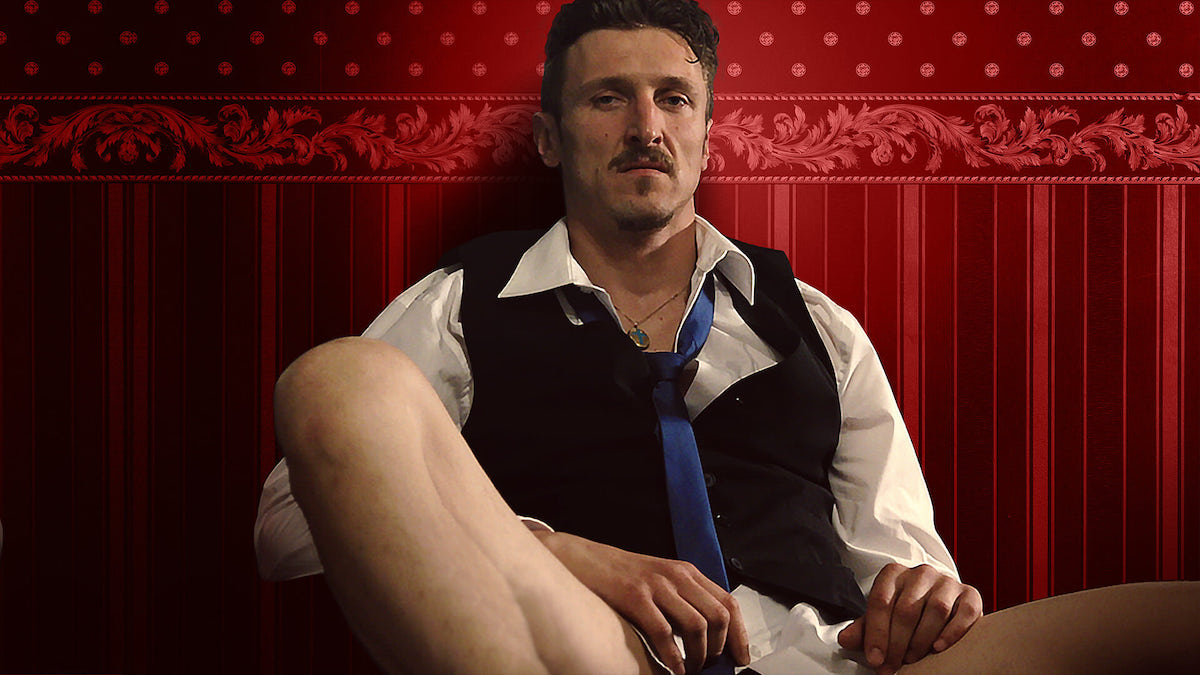
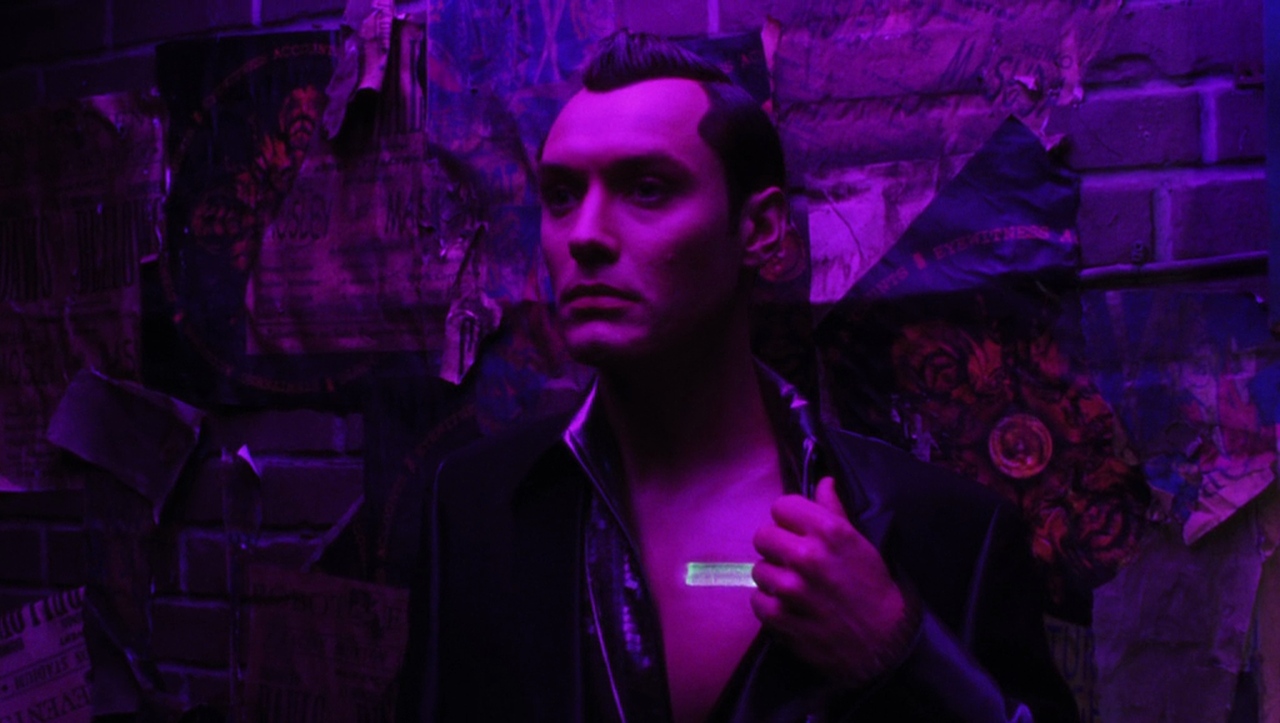
Jude Law brings charm and humour to Gigolo Joe, a pleasure mecha who joins David’s journey. Law looked to Fred Astaire and Gene Kelly, training for several months with choreographer Francesca Jaynes so his physicality evoked their style of movement.
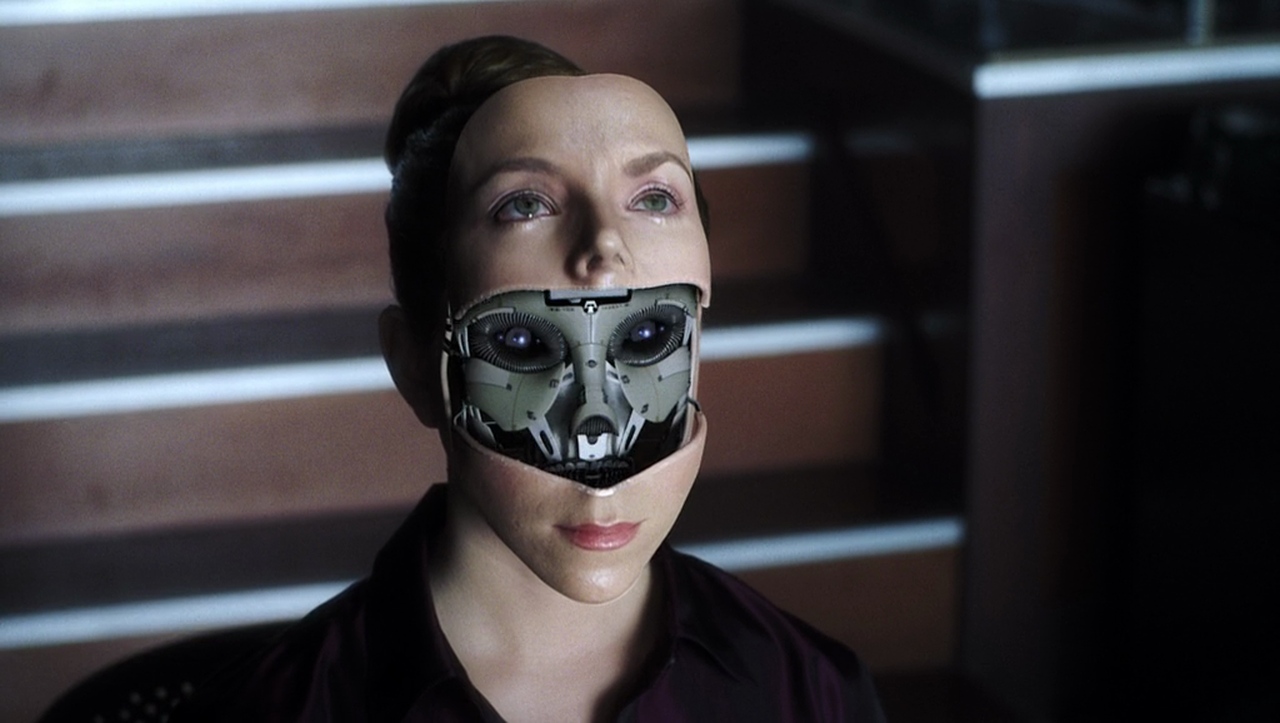
Beyond the Flesh Fair and the abandonment sequence, the film contains several other unforgettable moments. The opening scene, featuring William Hurt as Professor Allen Hobby, sets the tone perfectly. To illustrate how current mechas understand love only in theory, Hobby removes the primary CPU from a robot named Sheila (Sabrina Grdevich). Through seamless editing, CGI, and practical animatronics, her face splits open to reveal her inner electronics—a genuinely spectacular effect.
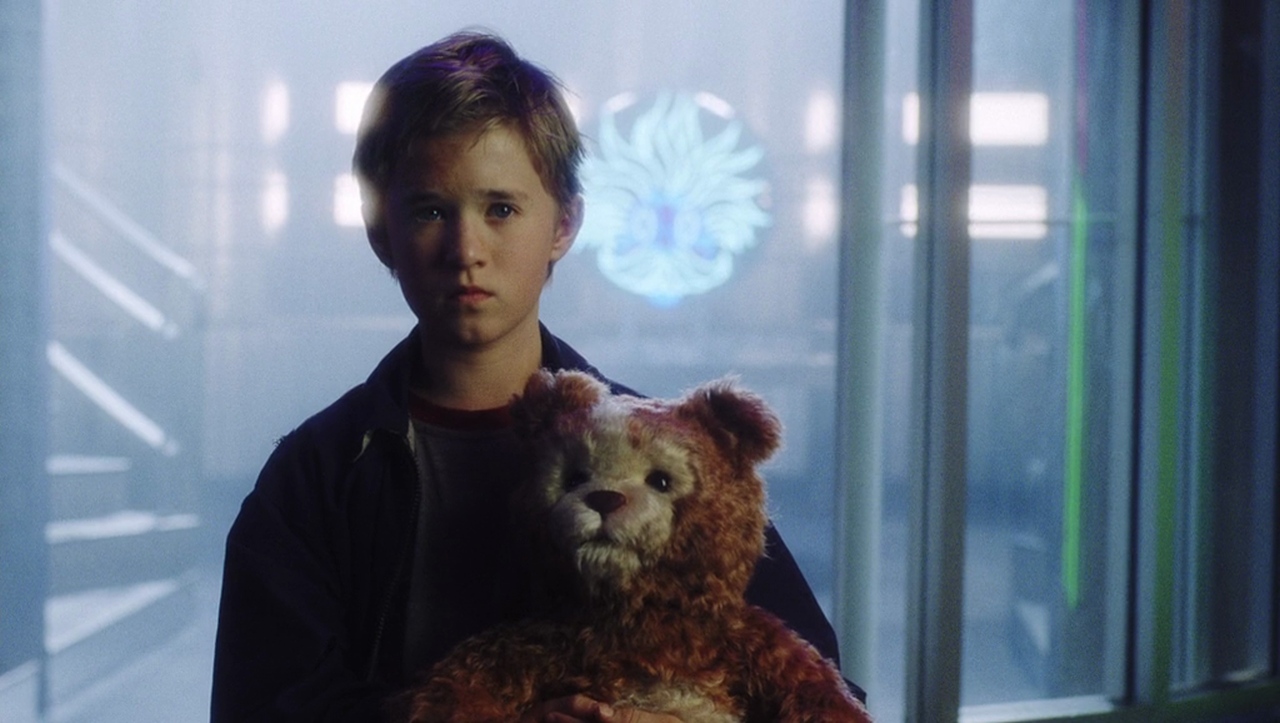
The pool party sequence is brilliantly directed, quickly turning from a happy gathering into a tragedy. David clings to Martin underwater, believing he’s protecting him, while everyone else sees a machine trying to drown a child. This accident seals David’s fate.
Teddy, David’s toy, is also a wonderful creation. Largely brought to life by Stan Winston’s studio using animatronic puppets, the team developed a telemetry system allowing puppeteers to transfer their arm movements to Teddy in real time, with Jack Angel providing the voice.
Another standout scene is the Rouge City sequence, where Gigolo Joe takes David to consult the holographic Dr Know. Inspired by Las Vegas, this environment would fit comfortably in the Blade Runner (1982) universe, filled with giant holograms, flashing lights, skyscrapers, and flying cars. To help achieve this futuristic city, Industrial Light & Magic engineered a camera tracking system that let Spielberg film the sequence against a combination of bluescreen stages and practical sets.
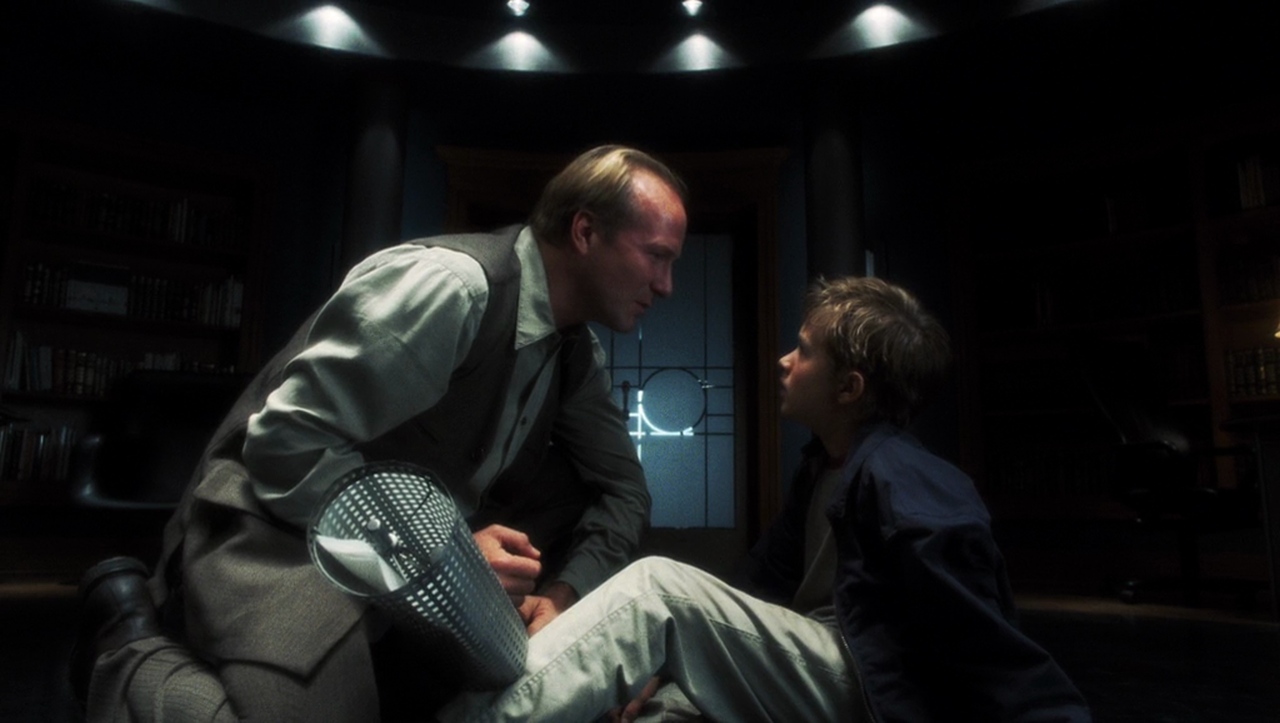
Longtime collaborator Janusz Kamiński’s cinematography gives the film his trademark high-contrast lighting, which in some shots has an ethereal, dreamlike glow, while John Williams’s score perfectly complements the visuals. The soundtrack contains powerful choral elements reminiscent of Ligeti’s work in 2001: A Space Odyssey (1968), alongside music that has a childlike, lullaby quality.
Coming from a director of Spielberg’s stature, first-rate technical execution is expected, but what makes this film so interesting are the ideas it explores. At its core, it asks whether humans have the right to create intelligent life simply to satisfy their own emotional needs. David is programmed to love Monica forever, yet she has no obligation to love him in return. Once she activates his imprinting sequence, he can never stop loving her, regardless of how he’s treated. If we create machines capable of thinking, feeling, and suffering, do we have a duty to care for them?
The film also examines what it means to be “real”. David believes becoming human will earn Monica’s love, yet he already experiences love, fear, loneliness, hope, and heartbreak. If those emotions are real to him, does it matter that they come from programming rather than biology? Rather than offering easy answers, Spielberg leaves these questions to the audience. David often seems more compassionate than the humans around him, remaining devoted to Monica while society treats mechas as disposable. The film asks who is truly more human: the people or the robots?
When I first saw the film at the cinema, I thought the ending—much like Minority Report (2002)—went on too long, and I could see why it divided audiences and critics alike. Revisiting it now, I feel it actually serves the story well, providing an emotional anchor for David’s journey.
Many think it’s overly sentimental and wrongly blame Spielberg. However, on a second viewing, seeing the advanced robots recreate Monica from her hair’s DNA—just so David can have the one last day with her he always longed for—allows him to finally find peace. It’s a bittersweet conclusion taken straight from Kubrick’s original treatment.
Released in the summer of 2001, A.I. Artificial Intelligence was another commercial success for its director. Made for around $100M, it earned approximately $236M worldwide. While it never matched the box-office heights of Jurassic Park or E.T., it was a highly respectable return for a film that is so dark and, by comparison, complex and challenging.
Reviews were generally positive, though more divided than for Spielberg’s earlier blockbusters. Richard Corliss of Time magazine heavily praised Spielberg’s direction, as well as the cast and visual effects. Roger Ebert of the Chicago Sun-Times originally gave the film three stars out of a possible four, calling it “wonderful and maddening”. Ebert later upgraded the film to a full four stars, adding it to his “Great Movies” canon in 2011.
Ultimately, A.I. Artificial Intelligence is perhaps the most misunderstood and underrated film in the director’s filmography. If you weren’t sure the first time around, please give it another go. Sure, it’s not your typical roller-coaster popcorn entertainment, but what it does do is dare to present thought-provoking ideas to its audience, something which is sorely missing from most of today’s mainstream movies. In what could have been a huge misfire, the finished film ended up being a remarkable collaboration between two titans of cinema, which now remains as one of Spielberg’s greatest achievements.
USA | 2001 | 145 MINUTES | 1.85:1 | COLOUR | ENGLISH

director: Steven Spielberg.
writer: Steven Spielberg (based on the screen story by Ian Watson, itself based on the novel ‘Supertoys Last All Summer Long’ by Brian Aldiss).
starring: Haley Joel Osment, Jude Law, Frances O’Connor, Brendan Gleeson & William Hurt.