NINJA WARS (1982)
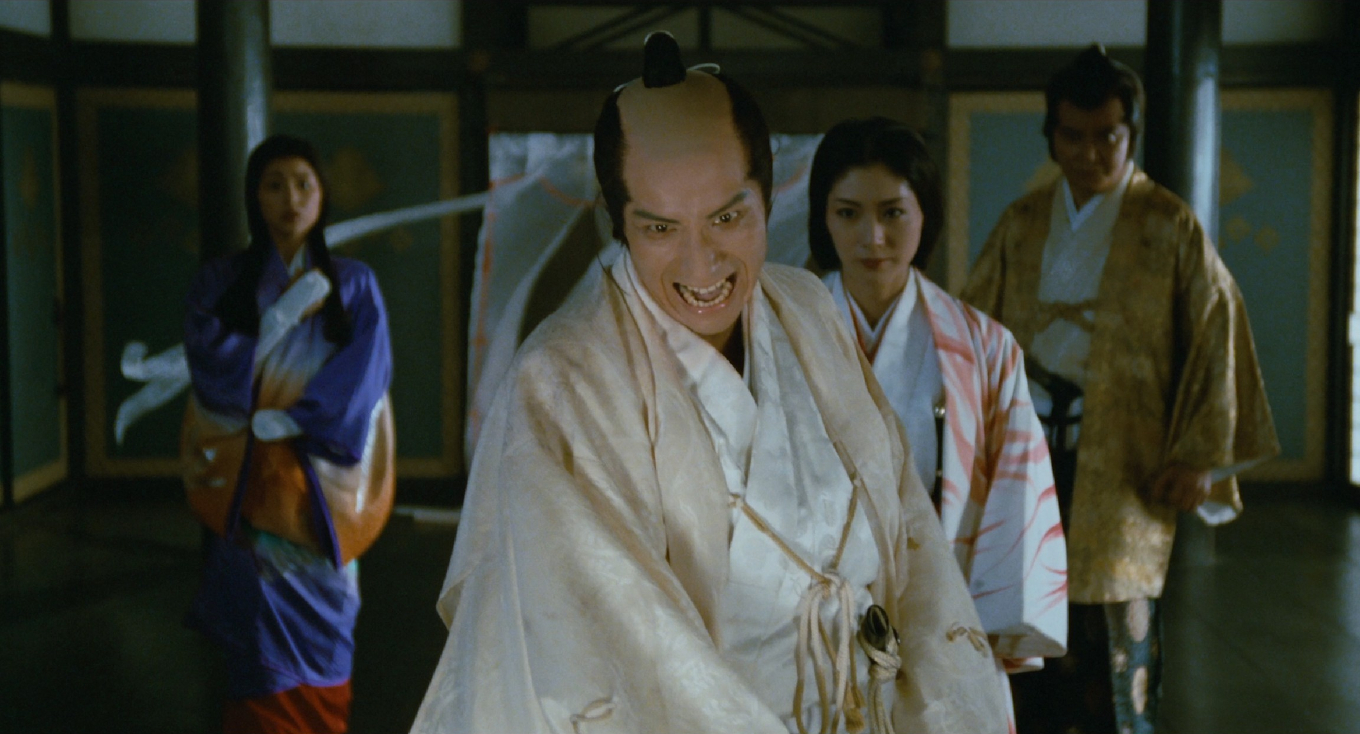
A ninja outcast seeks to defeat a power-hungry samurai who is in the thrall of an evil sorcerer and his five magic monks.


A ninja outcast seeks to defeat a power-hungry samurai who is in the thrall of an evil sorcerer and his five magic monks.
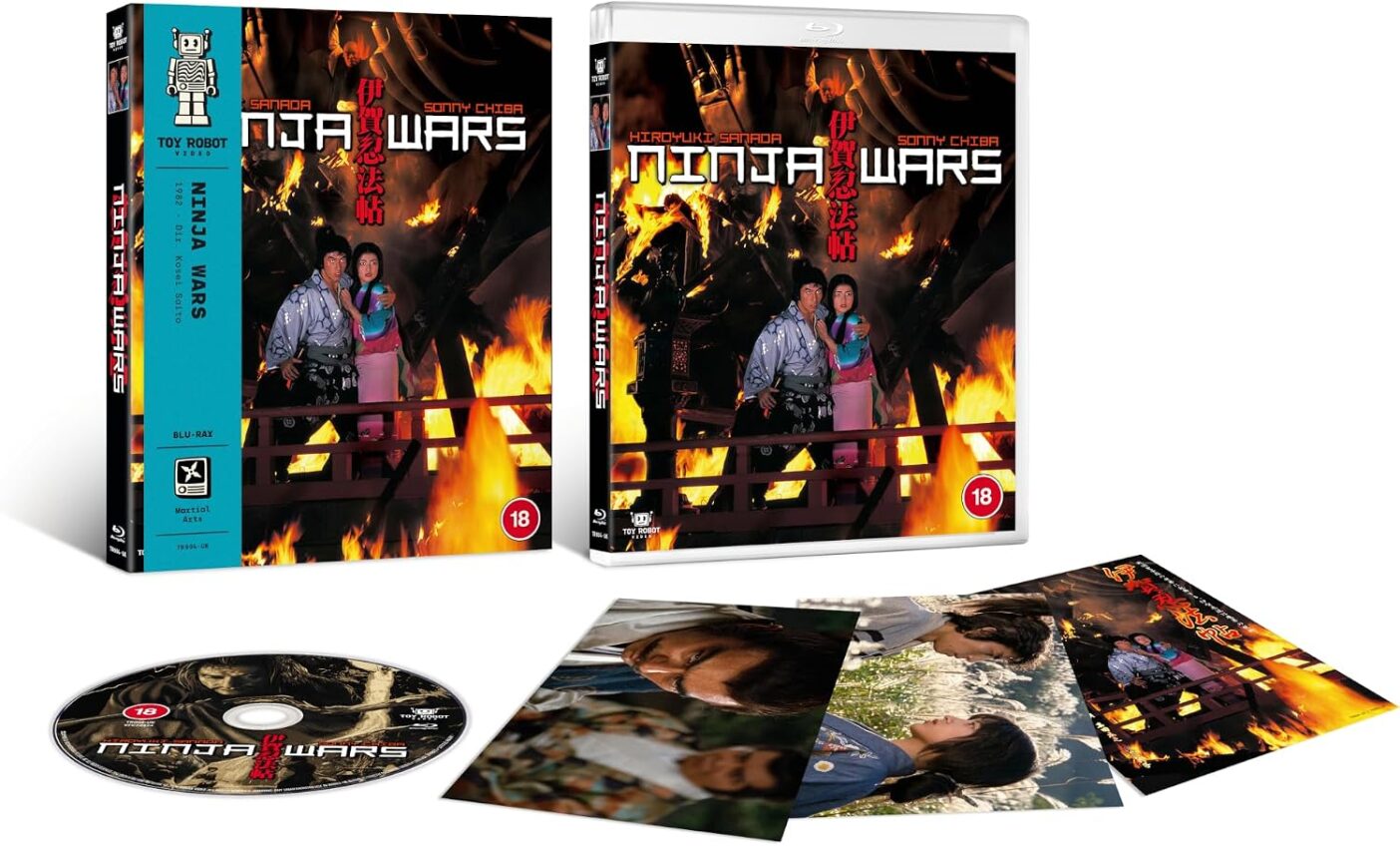
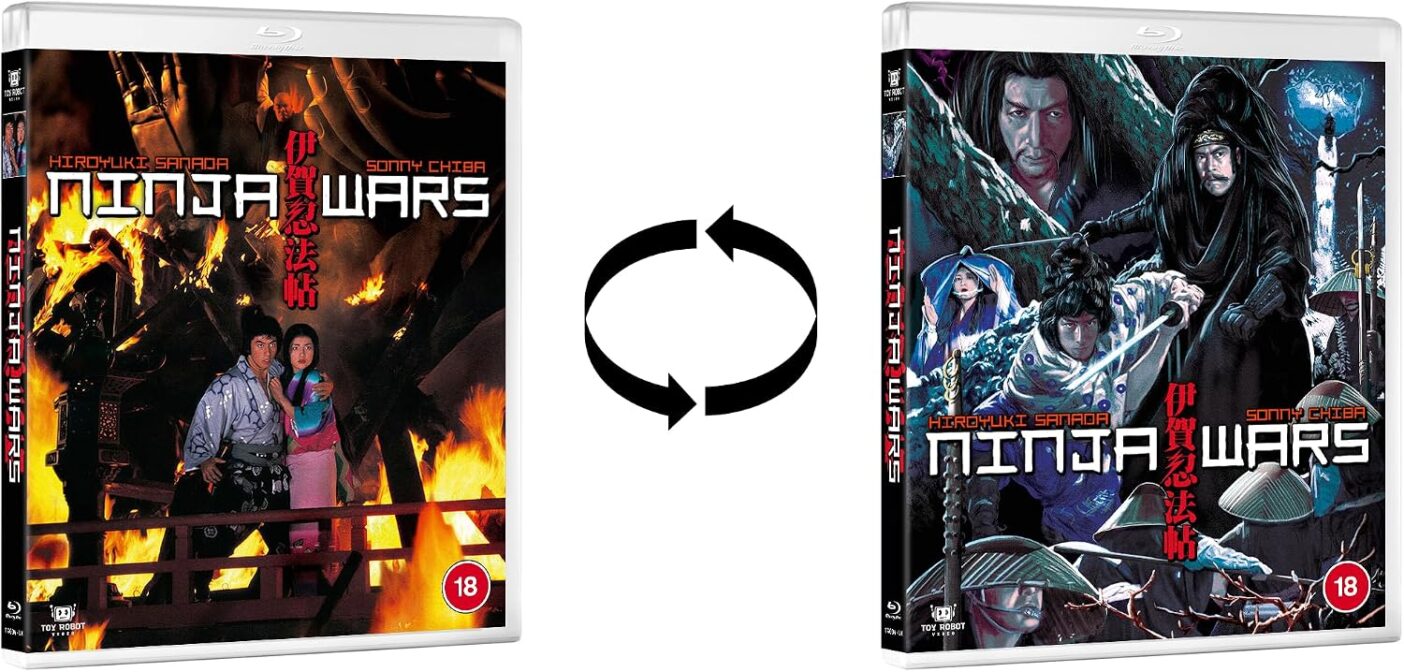
This month saw the launch of the new home entertainment label Toy Robot, an offshoot of Arrow Video, with a remit to release a selection of cult movies and mainstream favourites appealing to a broad demographic beyond collectors and cineastes. Among their first few Blu-ray titles, Kôsei Saitô’s Ninja Wars caught my attention, presenting the Kadokawa Corporation’s 4K digital restoration of this underseen genre classic from the 1980s alongside exclusive extras. It will certainly please connoisseurs of cult cinema, particularly fans of samurai swordplay with a supernatural twist.
It reminded me very much of Kenji Fukasaku’s Samurai Reincarnation (1981), for which it functions as a spiritual sequel. Both movies are adapted from novels by Futaro Yamada and successfully blend chanbara, fantasy, and gothic horror. Sonny Chiba appears in both as different members of the legendary Yagyū clan — in Samurai Reincarnation he’s the rebel rōnin Jubei, and here he’s the equally skilled samurai Shinzaemon, a retainer to the lecherous Danjo Hisahide (Akira Nakao), though his lord’s behaviour tests his loyalty to breaking point.
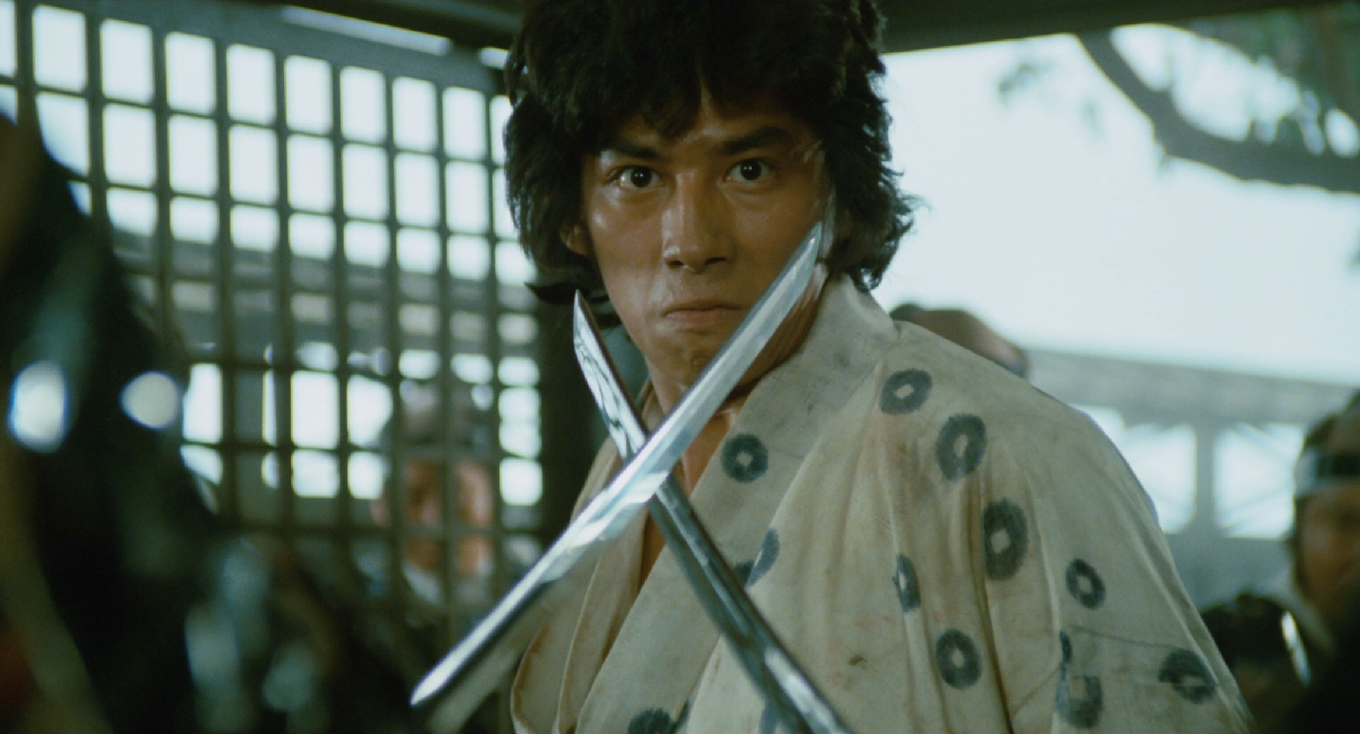
During the opening battle scenes, a voiceover poses the same question that society continues to grapple with: “Why do men fight while calling for peace?” Amidst the chaos of mud and blood, there’s a prominent image of a samurai pierced with several long-shanked arrows that evokes the woodblock prints of artist Tsukioka Yoshitoshi, who famously noted that blood spilled on the battlefield was indistinguishable regardless of which side the dead or wounded had fought on.The structure and composition of similar ukiyo-e prints are a clear influence on many aspects of the production and costume design throughout.
The narrator then establishes that we’re in the Eiroku Era — a relatively short section of Japan’s Warring States Period spanning just a couple of decades in the mid- to late-16th century when Oda Nobunaga rose to power as the so-called Demon Daimyō. His name will be more than familiar to anyone who enjoys jidaigeki (Japanese period drama). He is an important historical figure remembered as one of the “Great Unifiers” triumvirate, alongside Toyotomi Hideyoshi and Tokugawa Ieyasu. This is the same period that provides the historical backdrop for the hugely influential series of Shinobi films (1962–1970) — shinobi being the Japanese term for ninja — and more recently for the lavish series Shōgun (2024).
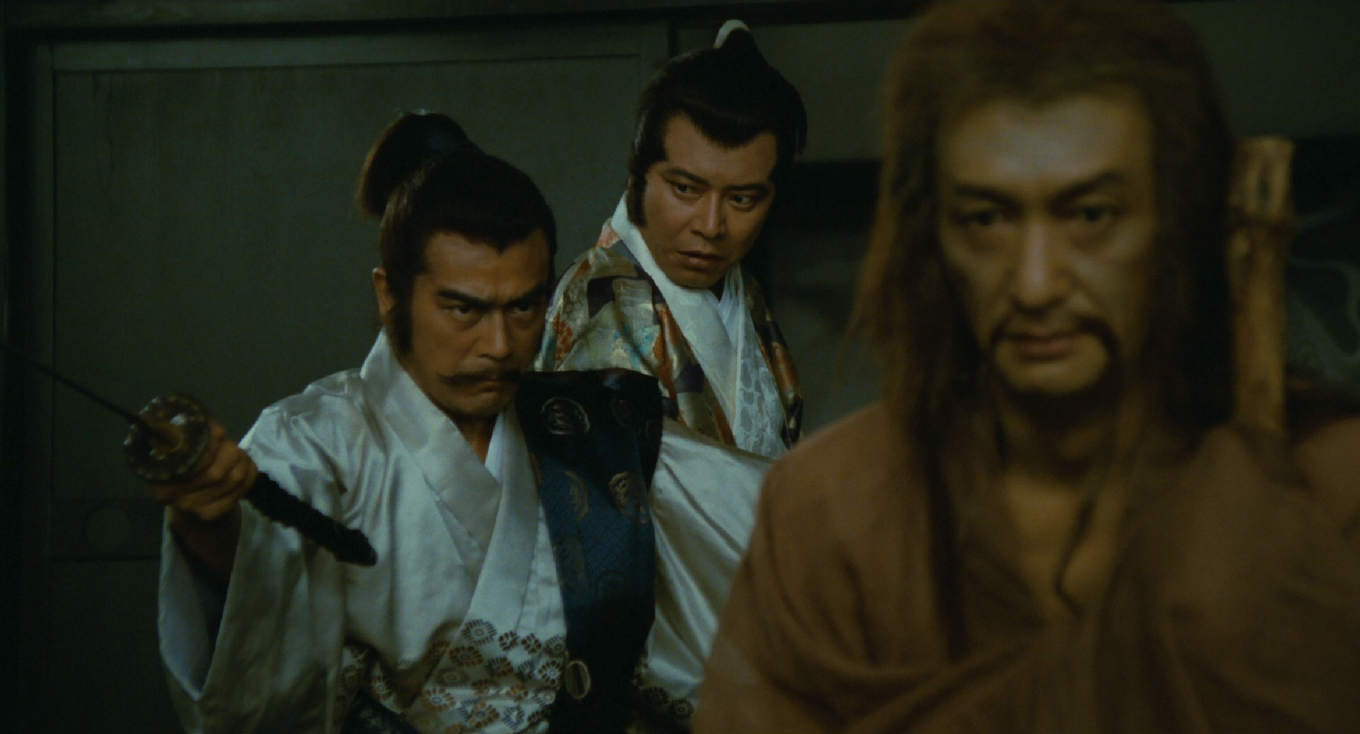
After the battle, things settle down for a while as Lord Danjo Hisahide entertains the visiting Lord Miyoshi (Noboru Matsuhashi) from a powerful neighbouring clan. Much is made of the preparation of tea in the ‘legendary’ Hiragumo kettle and, indeed, this magical artefact proves central to the narrative. However, it isn’t the exquisite tea but the young Lady Ukyo (Noriko Watanabe) that absorbs Danjo’s full attention.
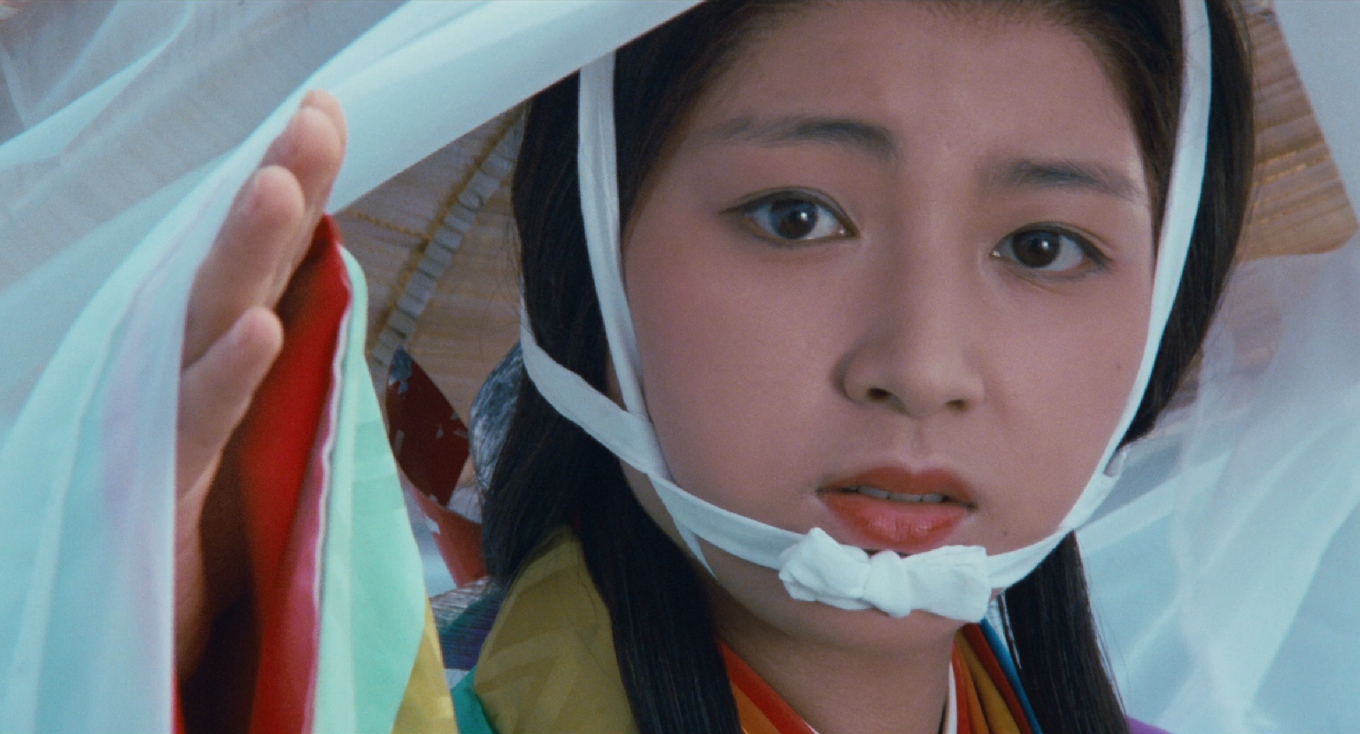
Coincidentally, Lady Ukyo bears a striking resemblance to Kagaribi (also Noriko Watanabe), a young ninja in training betrothed to Jotaro (Hiroyuki Sanada). Jotaro is impressed that she’s already mastered the Crescent Moon Sword — a mystical technique where chi energy can be focused into an unseen blade, which she uses to cut a swath through a bamboo grove. However, the sorcerer Kashin Koji (Mikio Narita) knows something about the lineage of both Ukyo and Kagaribi that they themselves don’t. Hoping to manipulate political power by puppeteering Lord Danjo, he makes a prophecy that whoever marries Lady Ukyo will rise to rule the nation. He promises Danjo a foolproof love potion,which must be brewed in the magic Hiragumo kettle. The downside, for Kagaribi, is that the potion requires the tears of someone identical to Ukyo, collected the moment she loses her virginity.
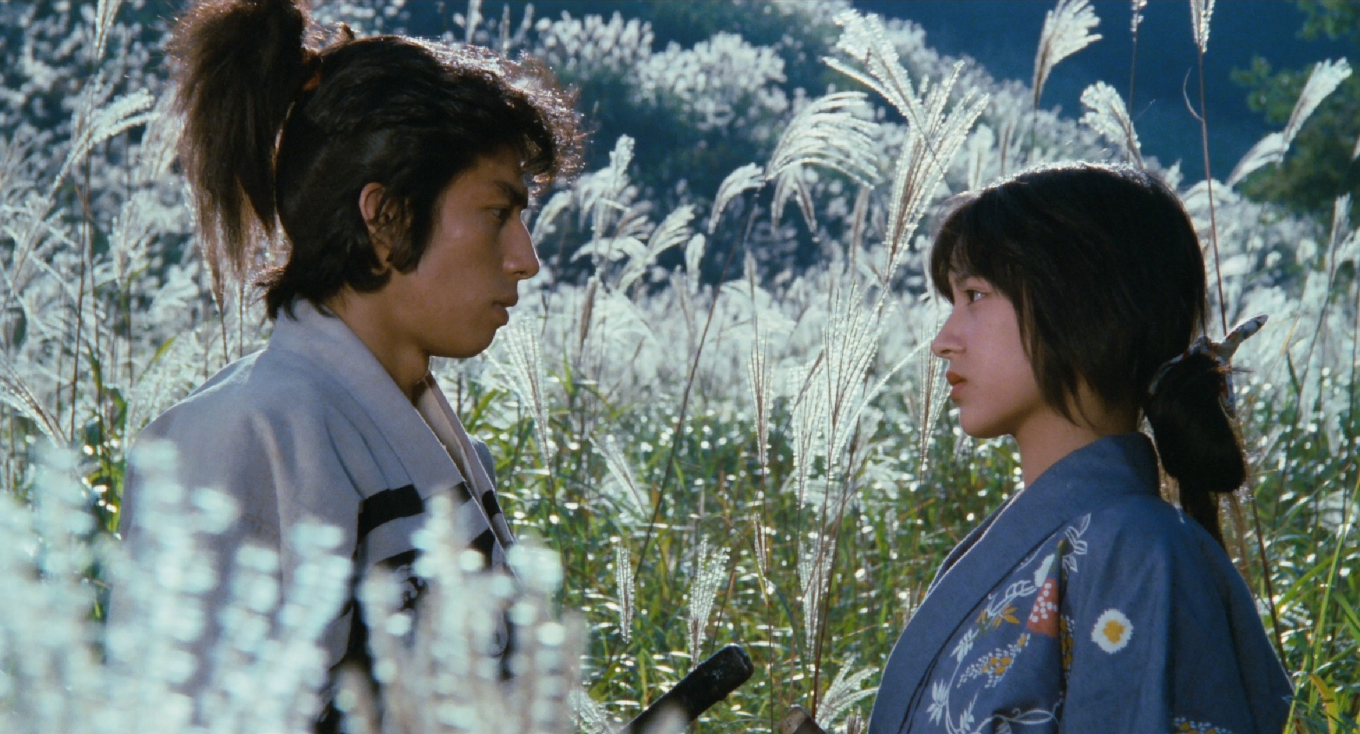
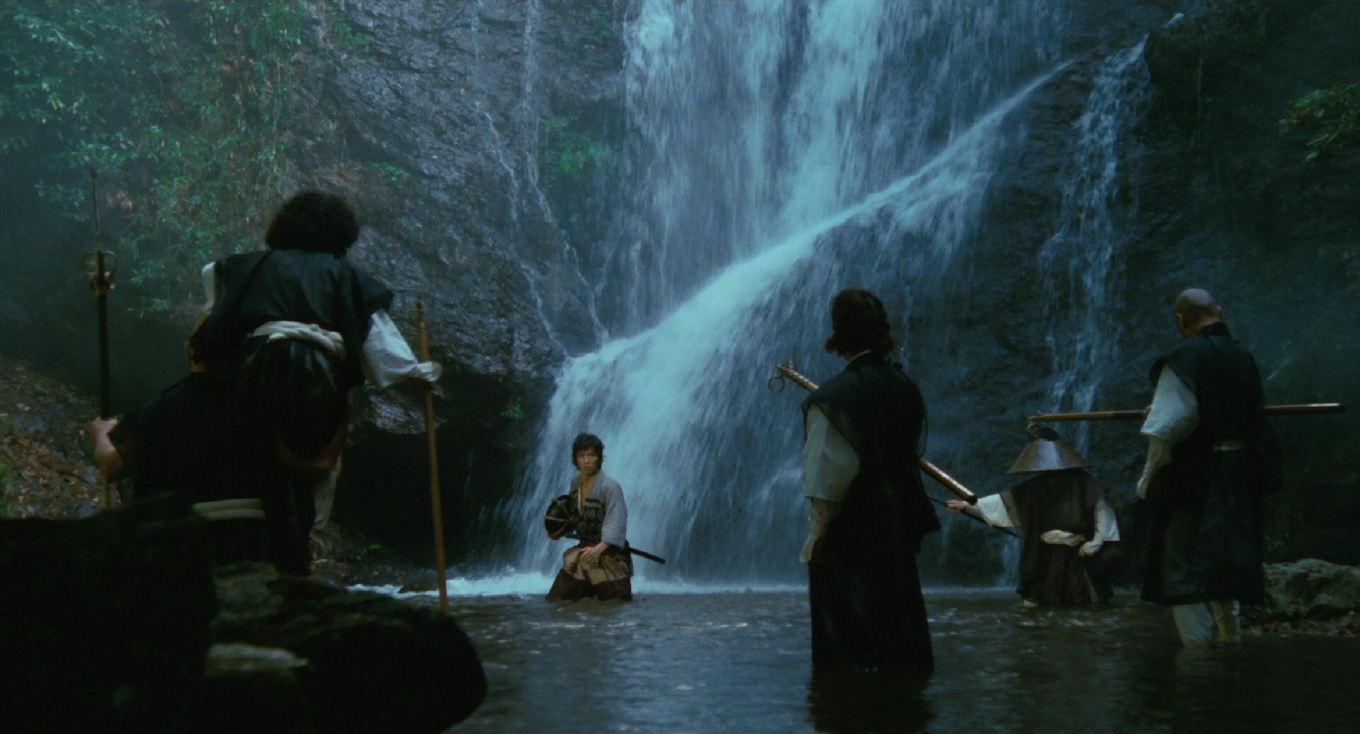
Kashin Koji despatches his five immortal monks to abduct the young woman, not knowing that she is already an accomplished ninja. Although this complicates matters, the monks — who closely resemble the ‘Masters of Death’ in Shogun Assassin (1980) — manage to capture their quarry and defeat Jotaro with the unexpected move of puking a quick-setting yellow substance all over him. However, he feigns death and is later rescued by Shinzaemon. Alas, it’s a little too late for Kagaribi — or is it? If all that sounds like a complex premise, be prepared: the plot is only just underway and, from here on, it gets weirder and challengingly convoluted!
The film was also released as Death of a Ninja, though the original Japanese title 伊賀忍法帖 translates as “Iga Ninja Scrolls”, matching the epic novel by Futaro Yamada on which it’s based. The source material was first serialised in the journal Sunday Manga in 1964 and was already the 11th volume in the popular Ninja Scroll sequence. These long-form novels, along with the Shinobi no Mono / 忍びの者 novels by Tomoyoshi Murayama, spawned the first ninja boom of the 1960s, establishing all the enduring tropes expected of the modern ninja story.
While not one of Japan’s most prolific directors, Kôsei Saitô nevertheless navigates a dense mix of wirework,prosthetics, and optical effects, culminating in a climax involving the conflagration of a Buddhist temple. For this spectacular sequence, a life-sized set of the temple’s giant Buddha statue was built because actors were required to climb it. The rest of the temple was constructed as a 1/6-scale set on the shores of Lake Biwa. The large model enabled clever live-action shooting within it, much like a backlot standing set. This swallowed a large portion of the budget, so the destruction by fire must’ve been a tense moment during production, as there was no going back. The pyrotechnic crew do a marvellous job of controlling the collapse of sections on cue and, due to the size of the set, the fierce flames are utterly convincing.
These impressive production values never overshadow the narrative or any of the generally good performances, and none of the sex and violence — of which there’s plenty — feels gratuitous within context. This is largely thanks to a well-structured script honed by Ei Ogawa, who established himself as a top writer for Nikkatsu in the 1960s and was cited as a major contributor to their reputation for action movies. He then worked mainly in television during the 1970s, acting as showrunner for the hit detective series Roar at the Sun! / 太陽にほえろ! (1972–1986) throughout its entire 14-year run. Beyond crime and action, he scripted horror and sci-fi films, notably including Toho’s groundbreaking Bloodthirsty Trilogy (1970–74).
Ostensibly, Sonny Chiba is the big-name star, and although his screen time is limited, he works hard throughout as the action director and fight choreographer for his very capable stunt team. Instead, the male lead is carried with great assurance by Hiroyuki Sanada. They had already appeared together in Kinji Fukasaku’s space opera Message from Space (1978) and Samurai Reincarnation, and would do so several times more, notably in Legend of the Eight Samurai (1983). Sanada is best known to modern audiences for his excellent portrayal of Lord Yoshii Toranaga in Shōgun.
Arguably, the real star of Ninja Wars is Noriko Watanabe, who consummately carries her triple role as three women,each with different motivations — a doubly impressive feat considering this was her feature debut. Talk about throwing someone in at the deep end! It’s a big ask for any actress, yet it’s a challenge she rises to with a grace that belies her 17 years. She deservedly won the role by coming first out of 57,480 applicants for the Kadokawa Grand New Actress Contest, and her acting prowess was recognised with the Japan Academy Prize for Newcomer of the Year. For similar reasons, Jun Miho also deserves a shoutout for her challenging role as Isaribi — a character created partway into the story by the fusion of two women: the head and conscious memories of one, and the heart and emotions of another. In Ninja Wars, things are rarely how they first appear…
For those willing to embrace its operatic strangeness and narrative audacity, Toy Robot’s edition of Ninja Wars proves how rewarding a careful restoration can be. Freed from decades of murky transfers, it will be a revelation to those discovering its inventive blend of chanbara and supernatural horror. For long-time fans, it’s a welcome chance to revisit this delirious slice of 1980s genre cinema and perhaps see it for the first time again, in all its pristine 4K clarity.
JAPAN | 1982 | 100 MINUTES | 1.85:1 | COLOUR | JAPANESE


director: Kōsei Saitō.
writer: Ei Ogawa (based on the novel ‘Iga Ninja Scrolls’ by Futaro Yamada).
starring: Hiroyuki Sanada, Noriko Watanabe, Shin’ichi ‘Sonny’ Chiba, Akira Nakao, Mikio Narita, Jun Miho, Yuki Kazamatsuri & Gajiro Sato.