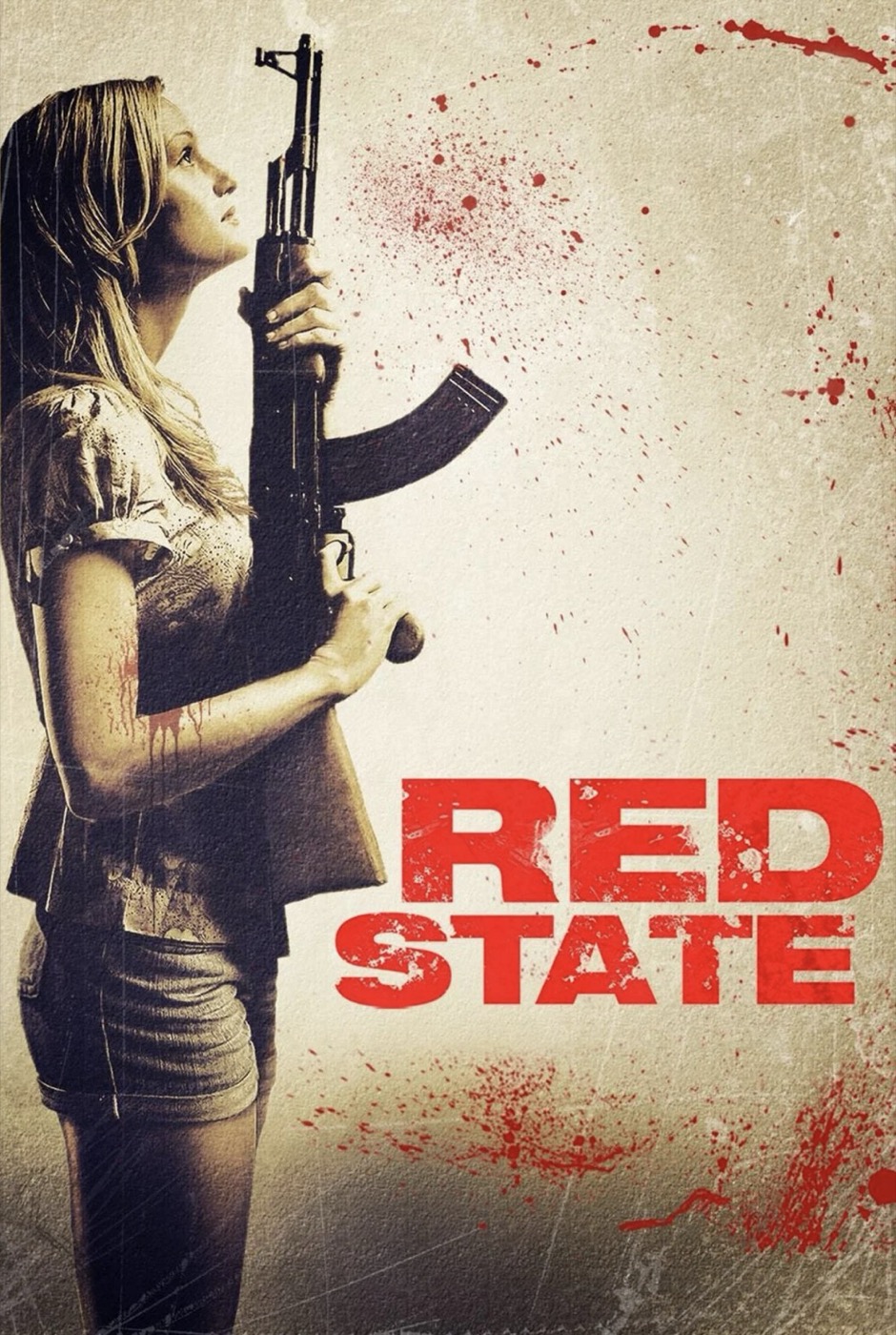
RED STATE (2011)
A group of teens receive an online invitation for sex, though they soon encounter fundamentalists with a much more sinister agenda.


A group of teens receive an online invitation for sex, though they soon encounter fundamentalists with a much more sinister agenda.
Following the unexpected success of Clerks (1994), Kevin Smith established himself as a prominent figure in independent cinema. From Mallrats (1995) to Clerks II (2006), his work became synonymous with vulgar humour, conversational dialogue, pop-culture references, and relatable characters. Yet the qualities that initially distinguished his work eventually became his limitations. For almost two decades, the writer-director rarely departed from his established idiosyncrasies, repeatedly returning to familiar rhythms and comic sensibilities. Though he had demonstrated a willingness to explore more ambitious material with Chasing Amy (1997) and Dogma (1999), he seemed to lack the confidence to challenge himself artistically. Therefore, when Smith arrived at the 2011 Sundance Film Festival with Red State, it was greeted with considerable excitement. It saw him venture away from dialogue-driven comedy and into the considerably less familiar territory of horror.
Smith first hinted at exploring horror in 2006, suggesting his next project would be influenced by the infamous pastor Fred Phelps and the tragic standoff between a religious group and federal agents in Waco, Texas. Having written the screenplay alongside his comedy Zack and Miri Make a Porno (2008), he initially intended to release both simultaneously. However, bringing Red State to fruition proved far more difficult. With the exception of Mallrats, Miramax had produced Smith’s entire body of work up to that point. Yet neither of the Weinstein brothers had any interest in financing the project. Although they reportedly found the material disturbing and challenging in a positive sense, it was ultimately considered too commercially unviable to warrant the investment. The filmmaker considered funding the project through investments from his fans, but he eventually dropped the idea.
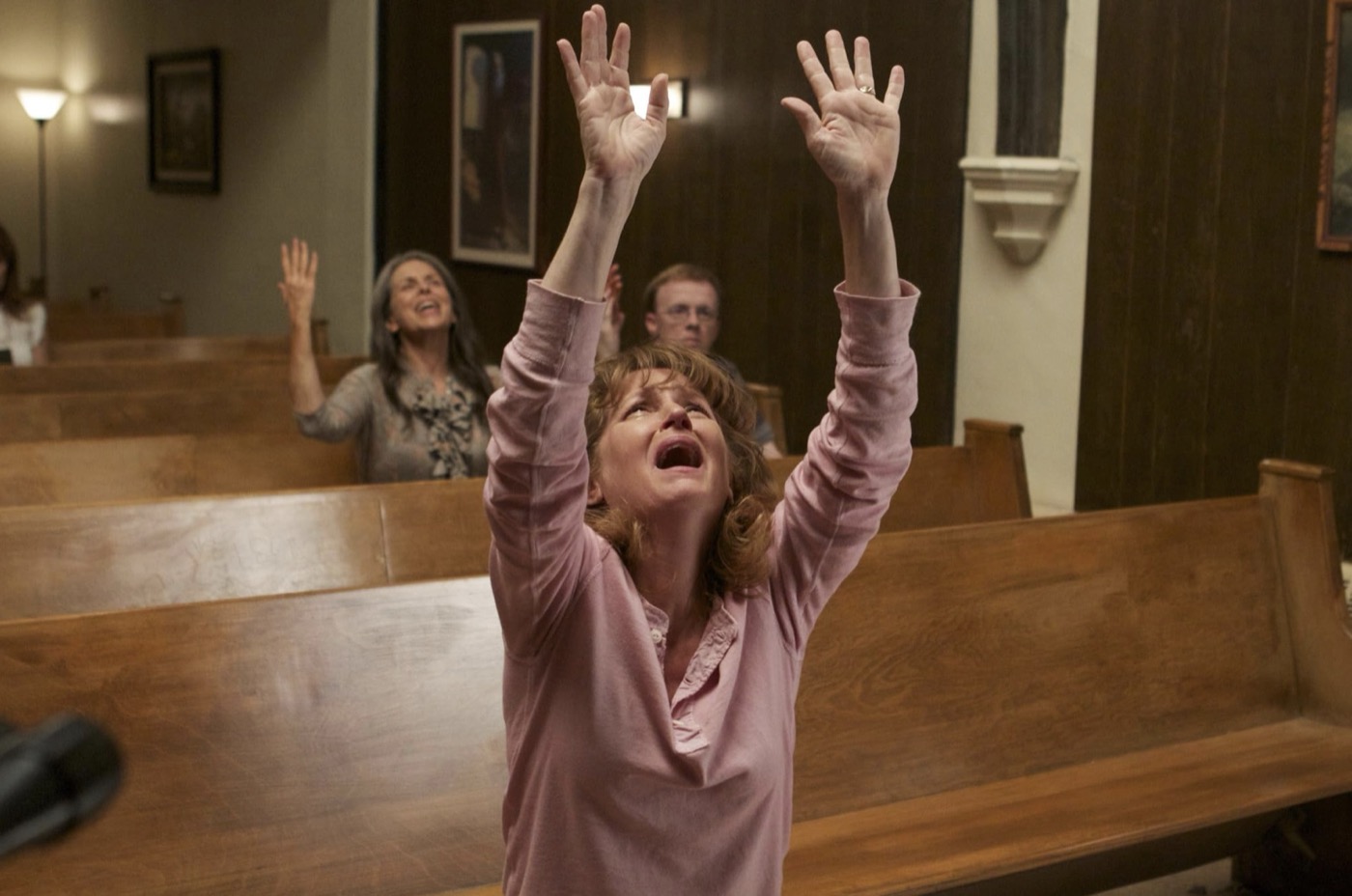
Consequently, Red State languished in development for several years. Smith then entered a prolonged period of depression following the catastrophic reception of Cop Out (2010). After questioning whether his filmmaking career had run its course, he turned his attention to podcasting and independent distribution. Yet Red State continued to linger in the background. After eventually securing financing from private investors, Smith finally brought the long-gestating project to fruition. Representing a striking departure from the irreverent comedies and romantic misadventures that had defined his career, he emerged with a deliberately provocative screed against government-sanctioned violence and religious fundamentalists such as the Westboro Baptist Church.
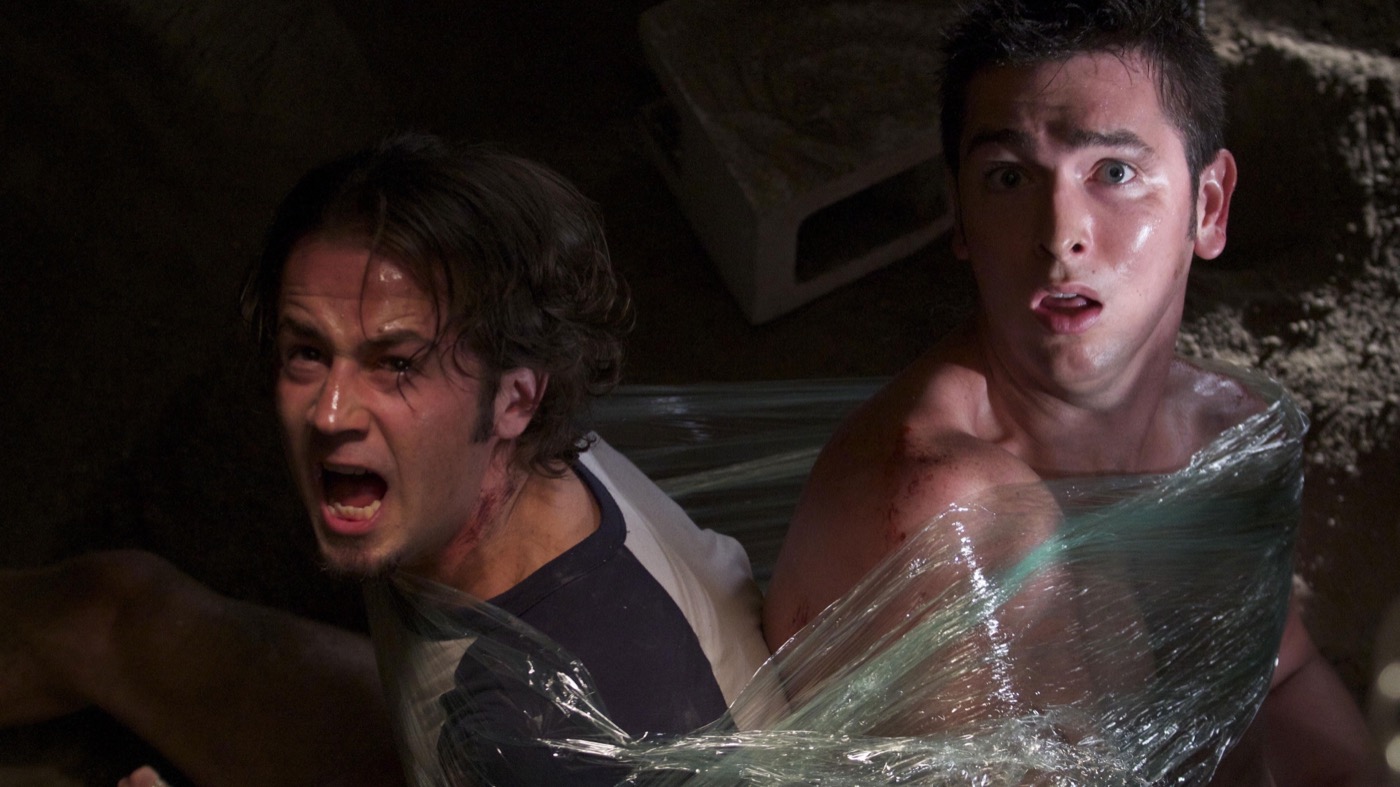
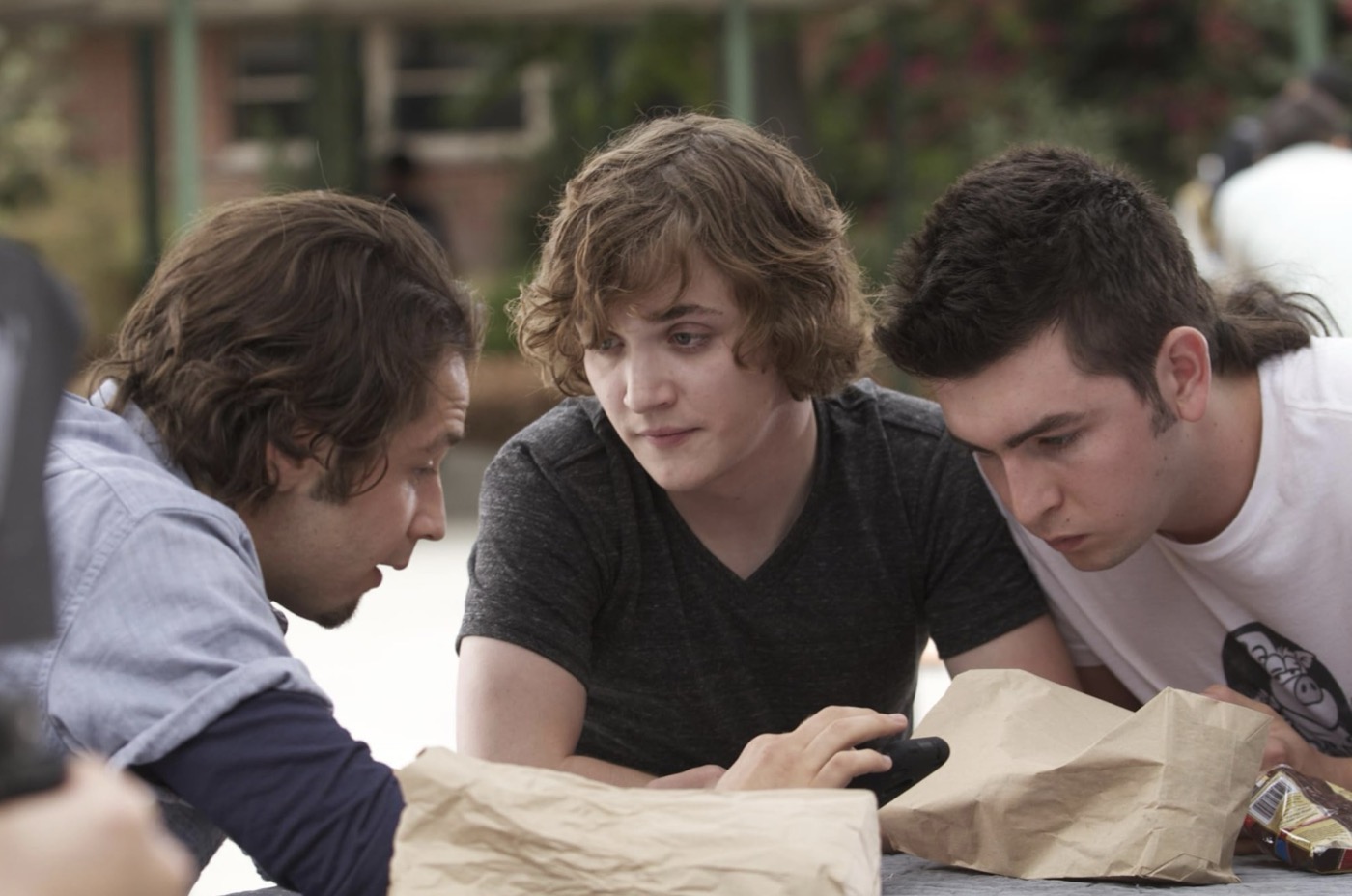
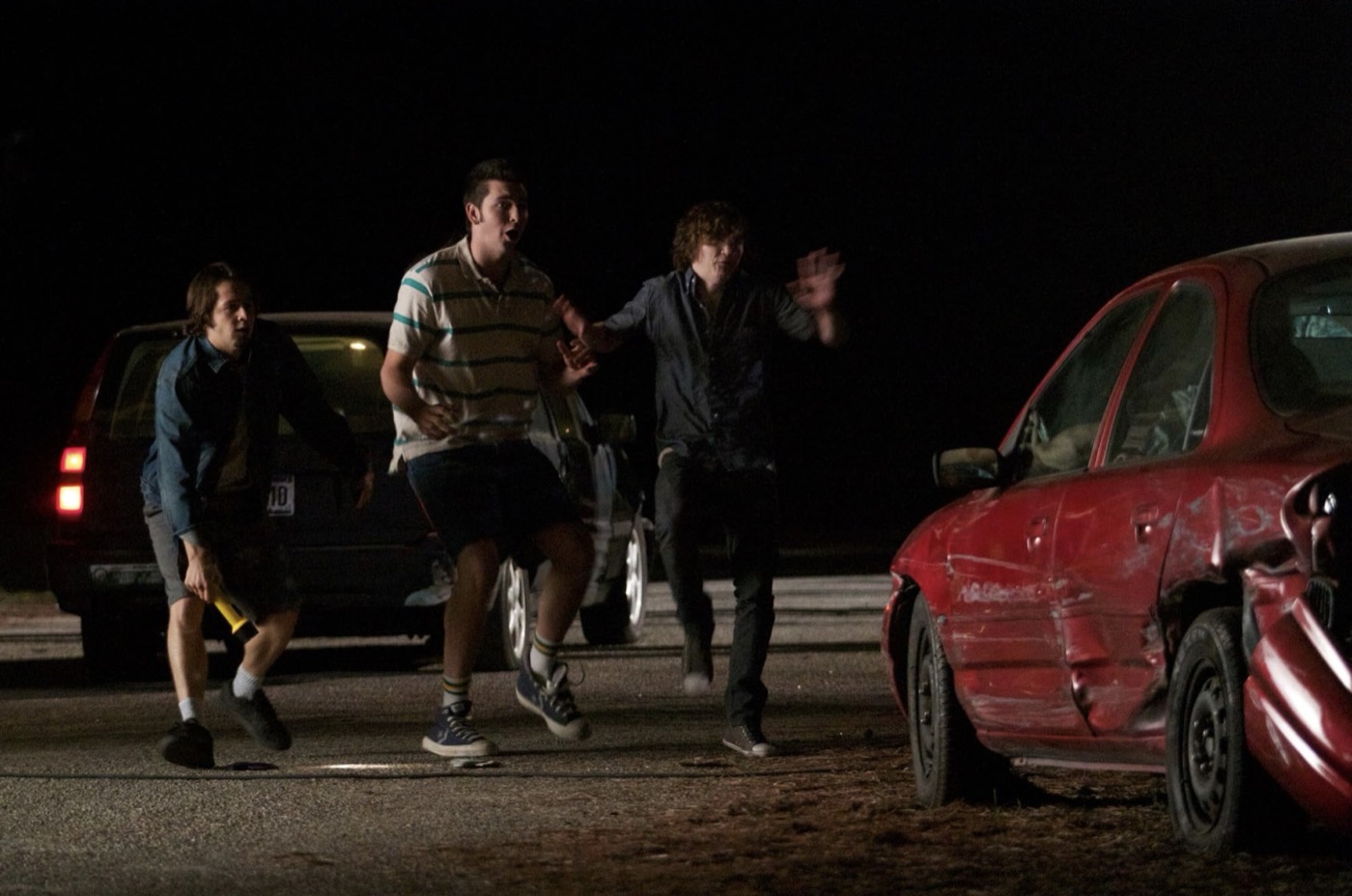
Against the backdrop of radical religious protests at the funeral of a murdered homosexual teenager, Jared (Kyle Gallner) looks for a casual sexual encounter online. After responding to an anonymous solicitation on a suspicious website, he begins corresponding with a mysterious woman. When she extends an invitation for a group sexual encounter, Jared agrees to meet her with his two friends, Travis (Michael Angarano) and Billy (Nicholas Braun). While driving to the woman’s remote rural property, the boys accidentally sideswipe the parked vehicle of Sheriff Wynan (Stephen Root). Nervous about the consequences, they flee the scene and continue with their mission. When Jared and his friends arrive at the secluded trailer, they’re greeted by the woman who sent the invitation, Sarah (Melissa Leo). Initially, she appears welcoming and offers them alcohol as they settle into the unfamiliar surroundings. However, their expectations are soon overturned when they lose consciousness.
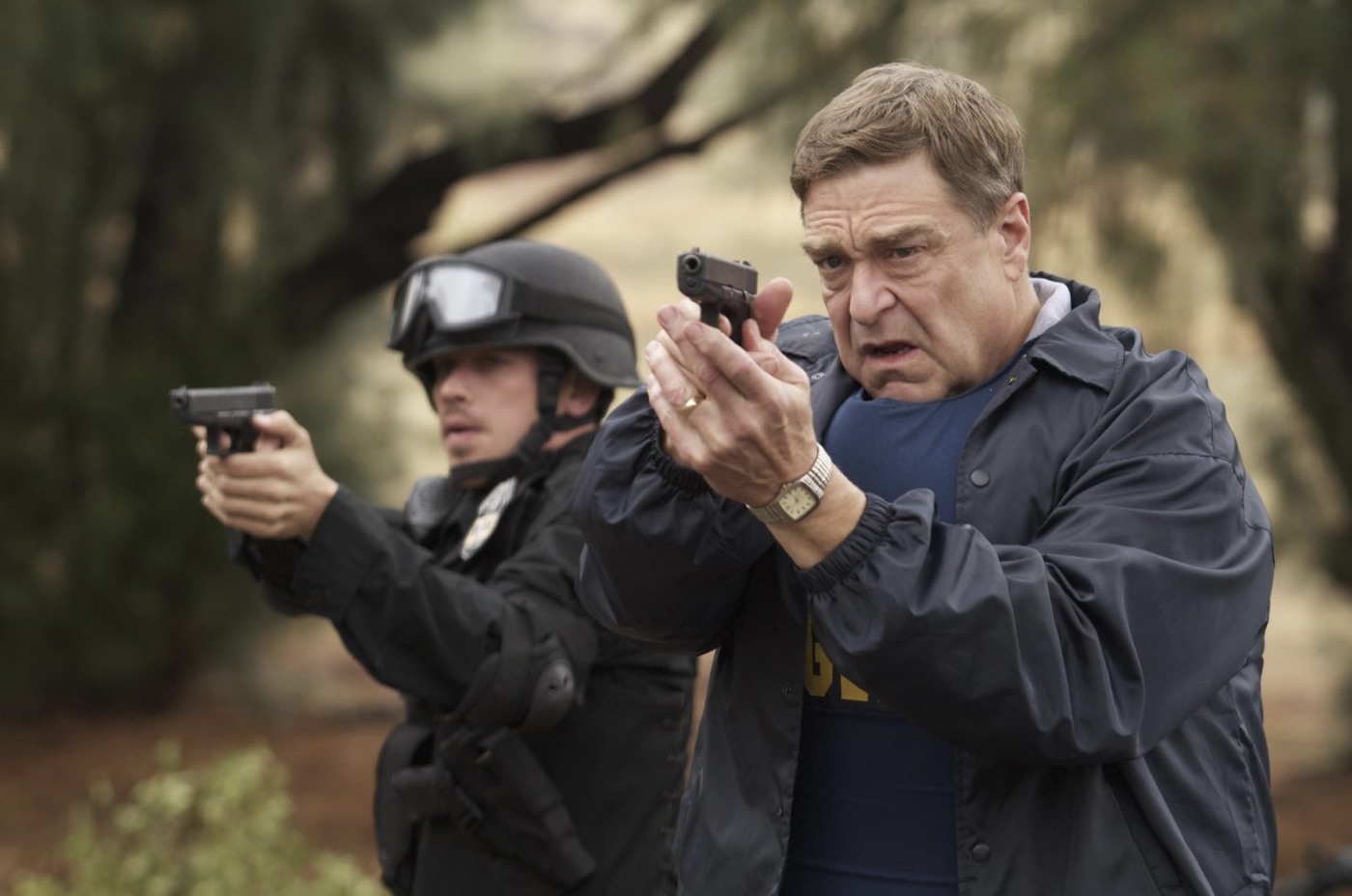
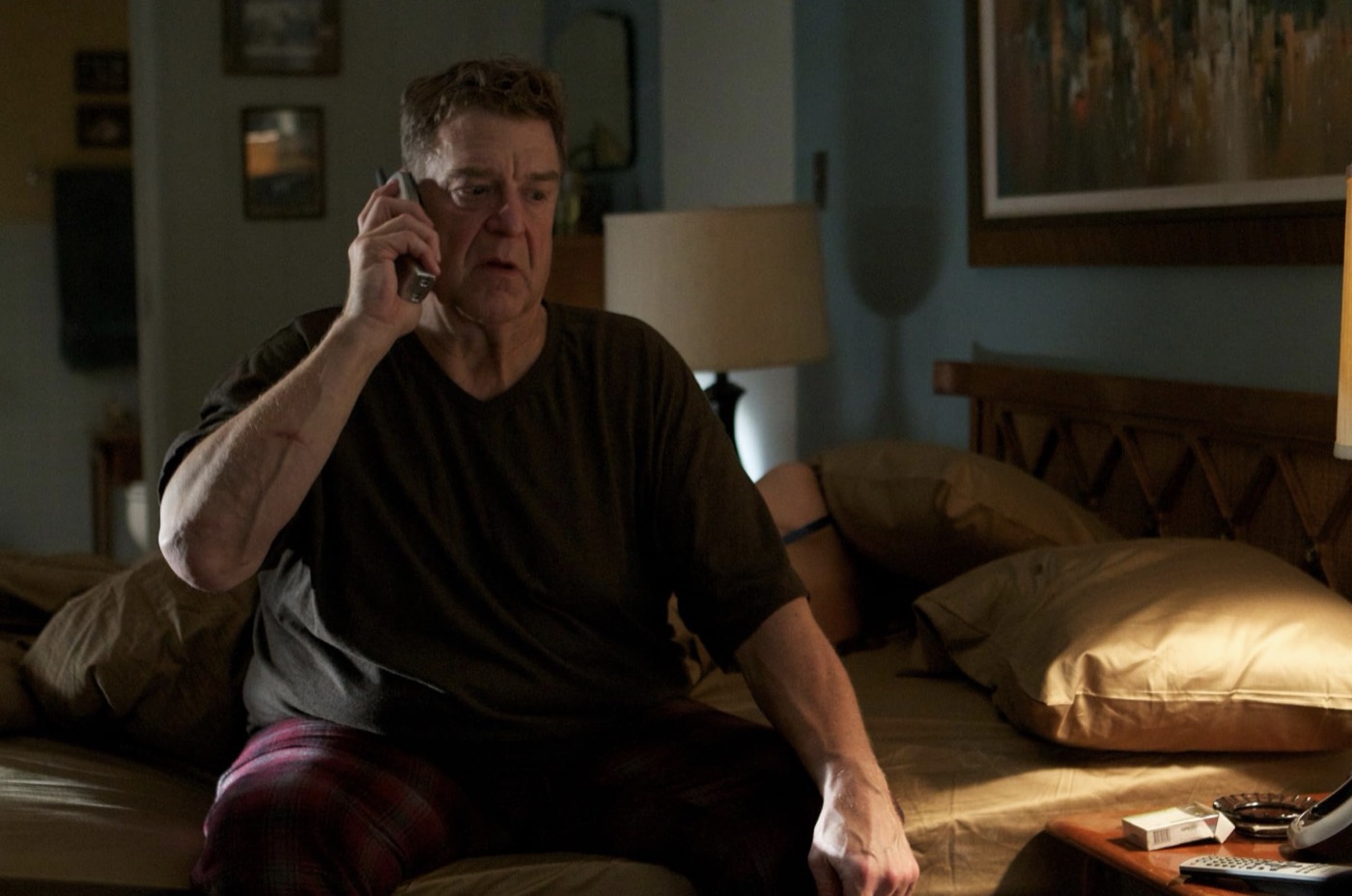
When Jared wakes up, he discovers he’s been taken captive by the fanatical preacher of the Five Points Trinity Church, Abin Cooper (Michael Parks). As Cooper delivers a chilling sermon on the eradication of evil before the impending apocalypse, the teenager realises he’s going to be executed before an assembled congregation. Elsewhere, Deputy Pete (Matt Jones) discovers the vehicle responsible for damaging Wynan’s police cruiser outside the church compound.While investigating, Pete notices suspicious activity on the property. Alarmed by what he uncovers, he contacts his superior, who demands that Agent Joseph Keenan (John Goodman) execute an armed assault on the church. As Jared and his fellow captives attempt to escape, they find themselves caught between Cooper’s campaign of religious violence and the overwhelming force of law enforcement.
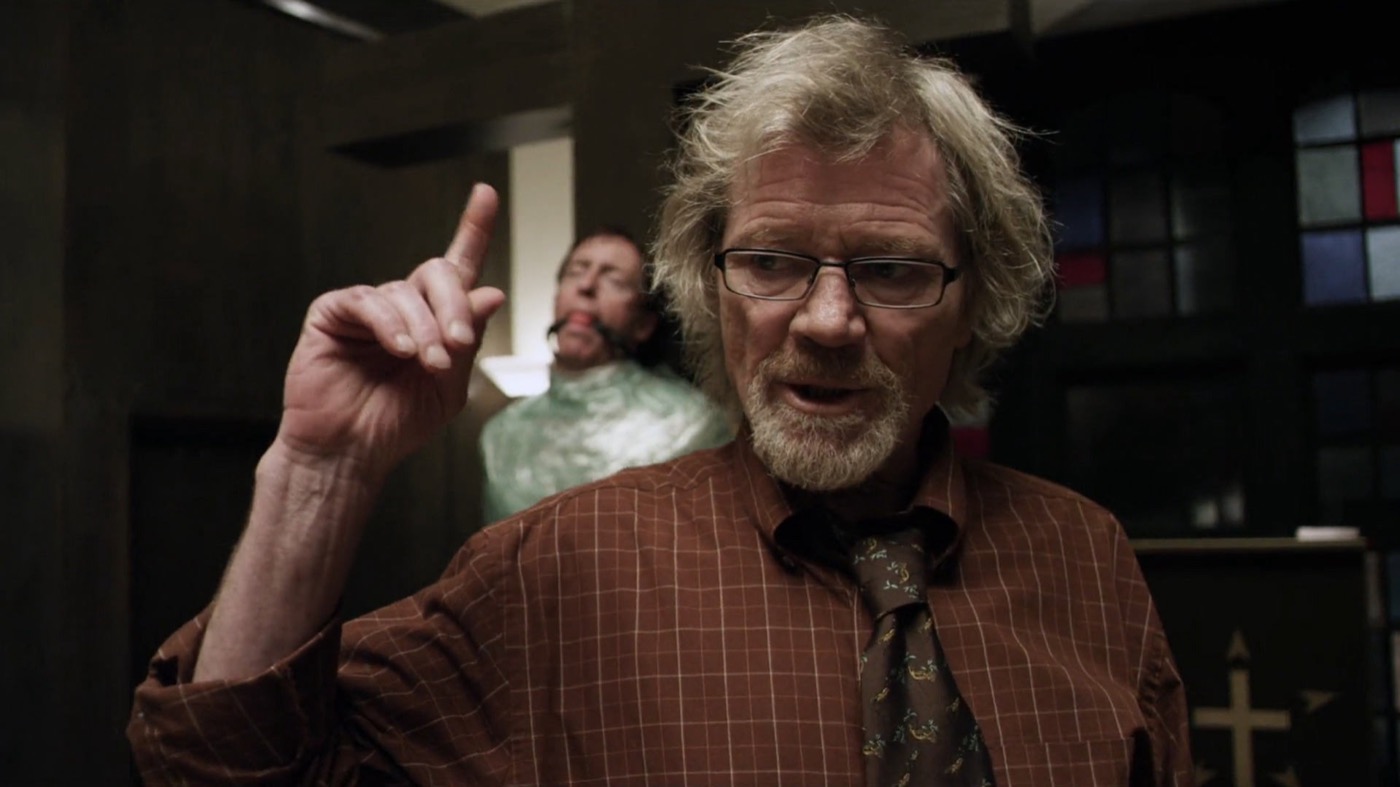
Much like many of Smith’s other films, Red State is headlined by a talented cast who deliver an enjoyable set of performances. Michael Parks is the obvious standout as the deeply unsettling Pastor Abin Cooper. Smith had been impressed by Parks’s performance in the opening sequence of From Dusk Till Dawn (1996) and wrote the role specifically with him in mind. Parks constructs a character that offers a disturbing portrait of evil hidden behind a largely innocuous exterior. Much of its effectiveness lies in his extraordinary command of voice and cadence. His Southern drawl is warm and conversational, while his measured delivery allows each remark to land with maximum effect. His sermons don’t involve bulging eyes or feverish theatrics; instead, they’re delivered with the confidence and charisma of a man entirely convinced of his own righteousness, peppering his rhetoric with dehumanising homophobia and a vision of a vengeful God. His eccentric vocal rhythms and understated physicality complement Smith’s writing wonderfully, resulting in one of the filmmaker’s most memorable creations.
As a former Catholic, Smith is no stranger to confronting the role of religion in contemporary society. Through Dogma, he approached the subject as a theological fantasy filtered through his trademark scatological humour, but beneath its crude jokes was a surprisingly thoughtful examination of the human desire to believe in a higher power. However, Red State is a different beast entirely. Though much of Smith’s humour remains, his crude comedy becomes a vehicle for something considerably darker. His screenplay functions primarily as a scabrous piece of socio-religious satire aimed directly at how religious doctrine has been distorted by extremist fringe organisations and afforded legitimacy within parts of conservative America. From the moment the audience is introduced to Cooper, it’s clear he’s modelled on the real-life fanatical pastor Fred Phelps and his Westboro Baptist Church. His sermon is both hateful and theatrical: a rambling but unnervingly articulate monologue that exhibits contempt for his enemies and uses an interpretation of the Bible to justify his actions. It’s horrifying yet riveting viewing that showcases some of Smith’s best writing.
While Smith is rightly celebrated for his sharply crafted dialogue, it’s generally accepted that he isn’t a particularly interesting visual storyteller. However, Red State is an ambitious and radical departure from his previous work.Drawing inspiration from the opening sequence of Saving Private Ryan (1998), the elegant handheld camerawork by long-time cinematographer David Klein (Chasing Amy) works wonders with the material. His raw aesthetic and cinéma vérité approach establish an immediate sense of foreboding, while the jittery camerawork and claustrophobic compositions create a sense of disorientation that reflects the characters’ unsettled state of mind. When the momentum shifts and the final act descends into chaos, this jittery technique proves particularly effective. The rapid gunfire and explosive eruptions aren’t sensationalised for spectacle; instead, they retain a genuine sense of reality, unfolding like a documentary of atrocious events. While this visual language isn’t new, it demonstrates how Smith improved his craft over the years.
Because it frequently transitions between horror, comedy, action, and satire, it might be tempting to argue that Red State exists outside the conventions of traditional horror. Yet this sentiment couldn’t be further from the truth. When viewed through a contemporary lens, the film is horror in perhaps the truest sense. It’s an examination of a very particular kind of evil. There are no theatrical monsters or supernatural forces; instead, Smith locates horror in the human capacity to commit violence. This is an evil that wears a sincere smile, speaks the language of righteousness, and genuinely believes itself to be doing good. It wields a dangerous ideology like a chainsaw, deploying violent rhetoric against homosexuals under the guise of protecting the next generation. This depiction of religious fundamentalism and ideological violence may have seemed implausible in 2011. However, more than a decade since its release, Red State has acquired a different resonance. As extremist movements continue to find new audiences and ideological violence becomes increasingly visible, Smith’s worldview doesn’t feel hyperbolic. Instead, it feels uncomfortably close to reality.
Despite its strong performances and engaging visual style, Red State isn’t without its shortcomings. Its deliberately unpredictable narrative and constantly shifting sympathies make it difficult to identify with any single protagonist,while several strands of the screenplay feel underdeveloped and seem as though they might have benefited from another draft. This is most notable when the film reaches its conclusion, where the escalating promise of something apocalyptic gives way to a conventional resolution. As the remaining members of the cult emerge from the compound to denounce the sins of government officials, a distorted horn reverberates through the air. The moment the congregation has been anticipating is upon them: the Biblical Rapture has arrived.
Yet rather than pursuing the apocalypse, Smith cuts to an extended coda in which Keenan is debriefed by his superiors and the preceding carnage is subjected to a bureaucratic explanation. It’s satisfying in the context of the rules established on screen, but it feels like a missed opportunity for Smith to indulge in the kind of irreverent theological provocation he explored in Dogma. The irony is that Smith’s original ending was far more audacious. He revealed that rather than Keenan sitting through a bureaucratic debriefing, Cooper and law enforcement were supposed to be violently obliterated as the biblical trumpet continued to sound. Keenan would survive the ordeal and then witness the Four Horsemen of the Apocalypse riding across the sky before the credits rolled. Unfortunately, being a provocateur depends on having sufficient funds to do suitable provoking.
Red State wasn’t immediately embraced upon its release. It arrived at a moment when political extremism and religious fundamentalism were provoking national unease. The aftershocks of the George W. Bush presidency and the war in Afghanistan still reverberated across the country, while increasingly acrimonious debates surrounding religion and sexuality deepened cultural divisions.
Furthermore, Smith’s confrontation with the industry only intensified the controversy surrounding the release. Following its premiere at the Sundance Film Festival, he announced that he intended to auction Red State to distributors attending the screening. However, he abruptly abandoned the idea and purchased the film himself. His decision to self-distribute provoked a backlash from journalists, some of whom labelled the decision a publicity stunt. Yet beneath the theatrics was a challenge to Hollywood’s conventional distribution model. As Smith explained at the time: “True independence isn’t making a film and selling it to some jackass. True independence is schlepping that shit to the people yourself.” He continued: “Independent cinema isn’t dead, people—it’s just indie film 2.0 now. In indie film 2.0, we don’t let them sell our movie, we sell our movie ourselves.”
Smith consequently transformed the film’s release into a somewhat successful experiment in direct-to-audience filmmaking. Rather than allowing a distributor to acquire the picture and determine its theatrical campaign, he took Red State on a national tour. Using his substantial social media presence to generate publicity, the filmmaker screened the film at major venues instead of traditional multiplexes and included interactive post-screening experiences. By selling tickets at a premium and removing distribution costs, Smith was able to recoup his modest $4M production budget. After its domestic theatrical run, international release, and subsequent digital distribution, Red State ultimately grossed approximately $5.5M. Although those figures hardly constitute a conventional Hollywood success story, Smith’s experiment was noteworthy. He demonstrated that creatives could turn an existing fan base into an alternative distribution network, laying the groundwork for future filmmakers such as Kane Parsons (Backrooms), Mark Fischbach (Iron Lung), and Chris Stuckmann (Shelby Oaks).
USA | 2011 | 88 MINUTES | 1:85:1 | COLOUR | ENGLISH

writer & director: Kevin Smith.
starring: Michael Parks, Melissa Leo, John Goodman, Kyle Gallner, Michael Angarano, Nicholas Braun, Stephen Root & Matt Jones.