GHOST WORLD (2001)
Two eccentric best friends graduate high school and respond to a man's romance-seeking newspaper ad as a gag, only to find their lives becoming increasingly complicated.


Two eccentric best friends graduate high school and respond to a man's romance-seeking newspaper ad as a gag, only to find their lives becoming increasingly complicated.
At the turn of the millennium, teen comedies had settled into a predictable formula. The enormous success of American Pie (1999) had ushered in a wave of imitators where adolescence was defined by drunken parties, the pursuit of popularity, and raunchy shenanigans. Even sharper entries in the genre, such as Clueless (1995) and 10 Things I Hate About You (1999), rarely strayed far from established conventions. Teenagers were reduced to broad archetypes, and emotional complexity was treated as a brief inconvenience. Ghost World arrived as a defiant antithesis to mainstream coming-of-age cinema. Rather than charting a journey towards popularity or romantic fulfilment, it lingers in the emotional limbo between teenage rebellion and adult disillusionment.
Long before it reached cinemas, Ghost World existed as a series of episodic stories in Daniel Clowes’ alternative comic Eightball. While chronicling the aimless lives of two disillusioned teenagers drifting through the sterile landscapes of suburban America, it distilled Clowes’ sharp observations on social alienation and his caustic critique of consumer culture. His portrait of youthful disaffection resonated with members of Generation X, who viewed the world with weary detachment rather than youthful optimism. The offbeat comic quickly became a cult phenomenon and a fixture in independent bookshops and coffeehouses. Among its earliest admirers was director Terry Zwigoff, who was immediately drawn to its sardonic humour and misanthropic sensibilities.
Following the success of his acclaimed documentary Crumb (1995), Zwigoff was eager to direct his first feature-length narrative. After approaching Clowes about adapting Ghost World for the screen, the pair spent several years co-writing the screenplay. Unfortunately, studios repeatedly declined to finance the project, failing to see the commercial potential in Clowes’ acerbic portrait of suburban ennui and adolescent aimlessness. By the late 1990s, however, the cultural landscape was shifting as alternative culture seeped into the mainstream. The popularity of MTV’s Daria (1997–2002) demonstrated a growing audience for acerbic young women who viewed the world with detached contempt rather than naive optimism. Sensing the changing climate, MGM eventually agreed to fund the production, allowing Ghost World to emerge precisely as audiences were becoming receptive to its caustic sensibilities.
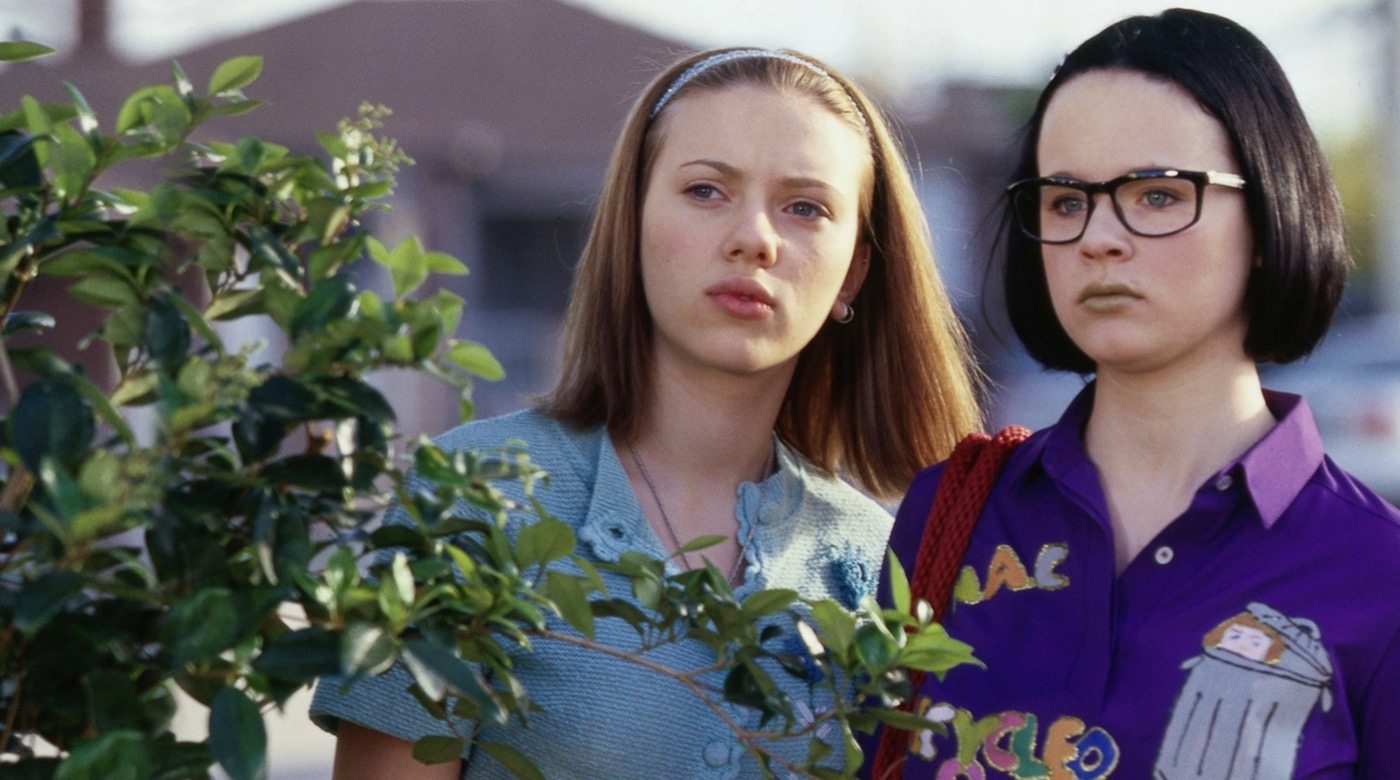
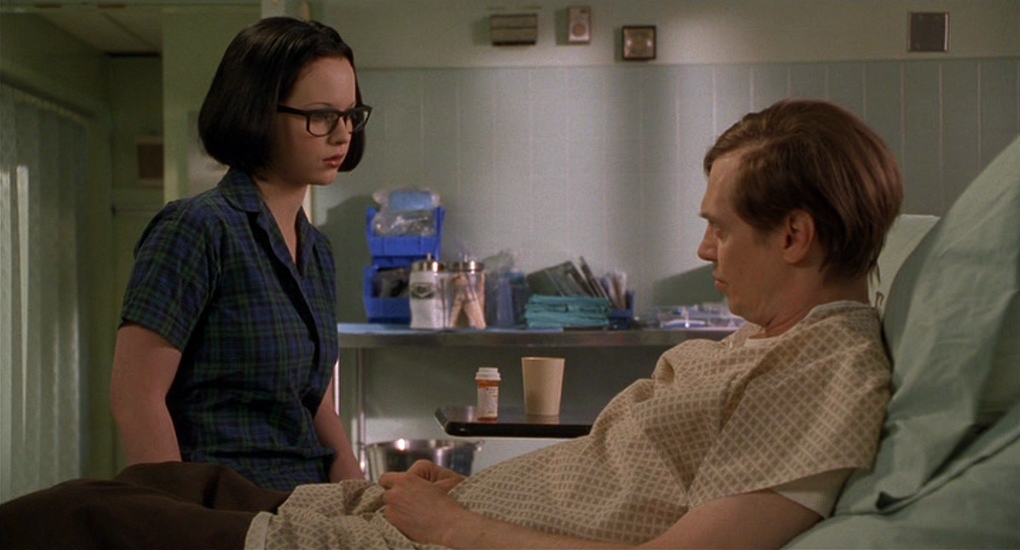
Set against the backdrop of a nondescript American town, Enid Coleslaw (Thora Birch) and Rebecca Doppelmeyer (Scarlett Johansson) are best friends bound together by a shared disdain for conformity. The pair spend their days aimlessly wandering through convenience stores and diners, mocking the people around them while postponing any meaningful decisions about their futures. Their carefree summer is disrupted when they play a practical joke on Seymour (Steve Buscemi), a middle-aged collector of vintage records and kitsch artefacts. Responding to his personal advertisement under the guise of a prospective date, they lure him to a restaurant only to humiliate him from afar. While Rebecca dismisses the prank as harmless fun, Enid is unexpectedly overcome with guilt and becomes increasingly fascinated by Seymour’s life.
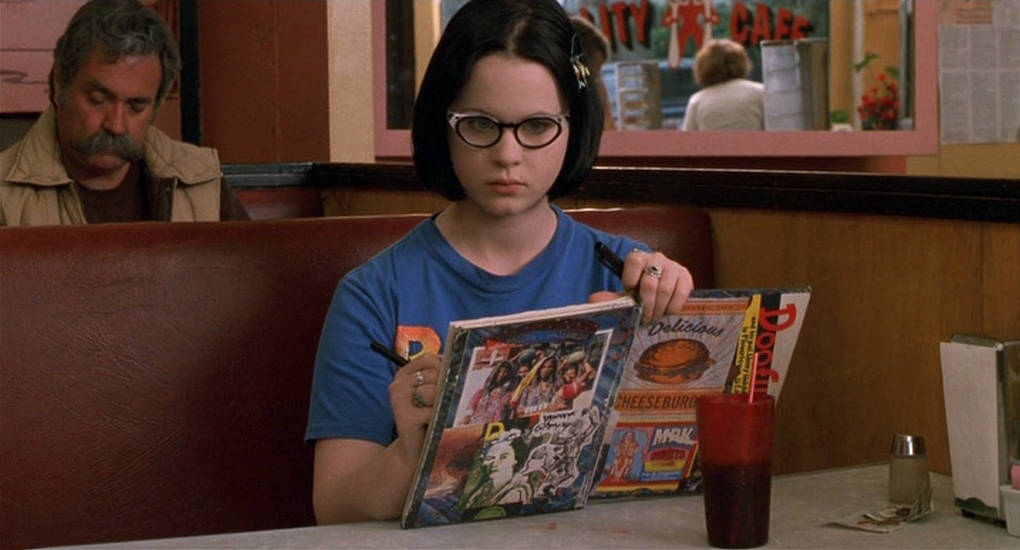
What begins as an act of cruelty gradually develops into an unexpected friendship. Enid recognises that Seymour is equally alienated by contemporary culture and comforted by the forgotten relics of the past. As her attachment to this newfound kindred spirit deepens, her friendship with Rebecca begins to deteriorate. Rebecca embraces the routines of working life and the inevitability of adulthood, but Enid remains content to drift emotionally, making impulsive decisions without any sense of direction. Caught between Seymour’s nostalgic retreat into the past and Rebecca’s acceptance of responsibility, Enid finds herself increasingly isolated from both. As the certainties of youth dissolve and her relationships unravel, she must decide whether to conform to a commercialised suburban world or remain rigidly attached to her rebellious individuality.
Much of what makes Ghost World so enduring is the characters inhabiting Zwigoff and Clowes’ world. Following her mainstream debut in Hocus Pocus (1993) and her acclaimed turn in American Beauty (1999), Thora Birch is a revelation as the hilariously misanthropic misfit, Enid. Anyone who has ever masked their adolescent insecurities with obscure musical tastes and eccentric outfits will immediately identify with her. She plays Clowes’ creation with effortless precision, casually dispensing acerbic asides with the same unfiltered cynicism she applies to popular culture. Yet her habitual irony functions as both a weapon and a defence mechanism. Beneath her hardened exterior, Birch imbues the character with a sympathetic dimension, revealing a teenager caught between internal insecurities and societal expectations.
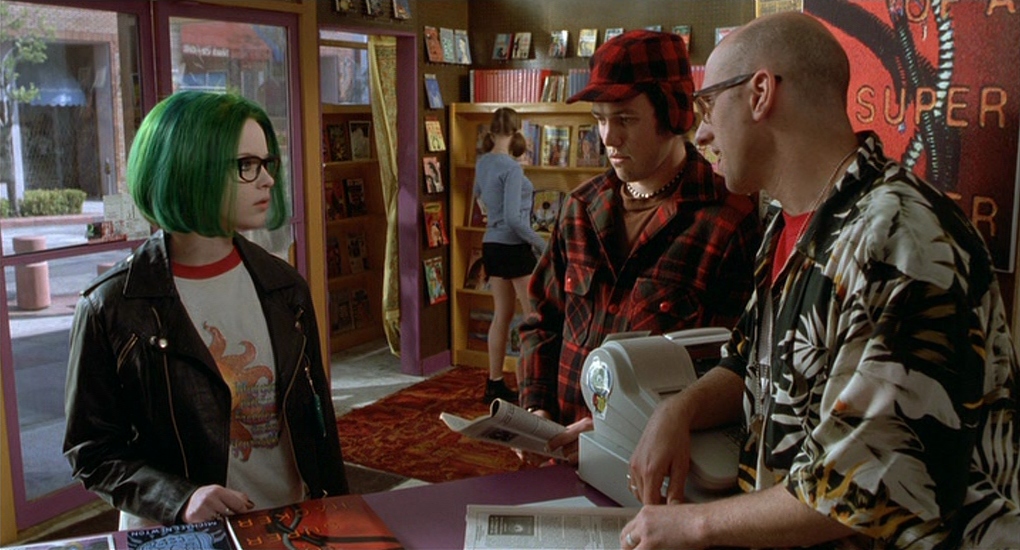
A young Scarlett Johansson is equally compelling in the understated role of Enid’s counterpart, Rebecca. Arriving two years before her celebrated turn in Lost in Translation (2003), her performance offers an early glimpse of the unusually assured, restrained screen presence that would become one of her defining qualities. Although Rebecca is deliberately less flamboyant than her friend, much of Johansson’s mordant humour derives from how little effort she puts into delivering it. Every muttered response and casual insult springs from a toxic combination of indifference and quiet contempt. Her misanthropy remains undiminished even after taking a job, as she directs scathing remarks towards regular customers (“Some people are okay, but mostly I just feel like poisoning everybody”). Finally, more self-effacing viewers will instantly connect with Steve Buscemi’s endearing turn as Seymour. Beneath his cynicism and defensive sarcasm, Buscemi endows the character with subdued melancholy and genuine vulnerability. If Birch captures the uncertainty of a teenager struggling to fit in, Buscemi provides the adult equivalent of that same loneliness.
Clowes resisted labelling Ghost World a comic book adaptation, dismissing the term as a “vulgar marketing sobriquet”. Yet, despite the film’s distance from the sentimental tendencies of American Splendor (2003) and Josie and the Pussycats (2001), it is impossible to ignore the parallels to its source material. The opening montage is particularly evocative of Clowes’ visual sensibility, unfolding like a succession of meticulously detailed panels. As the camera drifts through the nocturnal streets of an unnamed suburb, it peers into the windows of Enid’s apartment complex. The deliriously infectious performance of “Jaan Pehechaan Ho” from the Bollywood production Gumnaam (1965) floods these images with unusually saturated colour, while Affonso Beato’s carefully arranged compositions of residents watching television in their underwear possess a deliberate, storyboard-like quality.
The author’s scepticism towards coolness and conformity finds a natural counterpart in Zwigoff’s characteristically sardonic worldview. The director has a knack for highlighting the incongruity of consumer culture, finding comedy in the peculiarities of suburban ennui without reducing his characters to caricature. His and Clowes’ co-written screenplay is littered with provocatively funny asides and sharply observed exchanges on social homogenisation. A remedial art class becomes a vicious indictment of institutionalised taste when a teacher (Ileana Douglas) favours a display featuring a tampon in a teacup over Enid’s decision to draw Don Knotts. Elsewhere, arthouse pomposity is brilliantly skewered when customers at Masterpiece Video treat every film as a masterpiece yet cannot differentiate Federico Fellini’s 8½ (1963) from Adrian Lyne’s 9½ Weeks (1986).
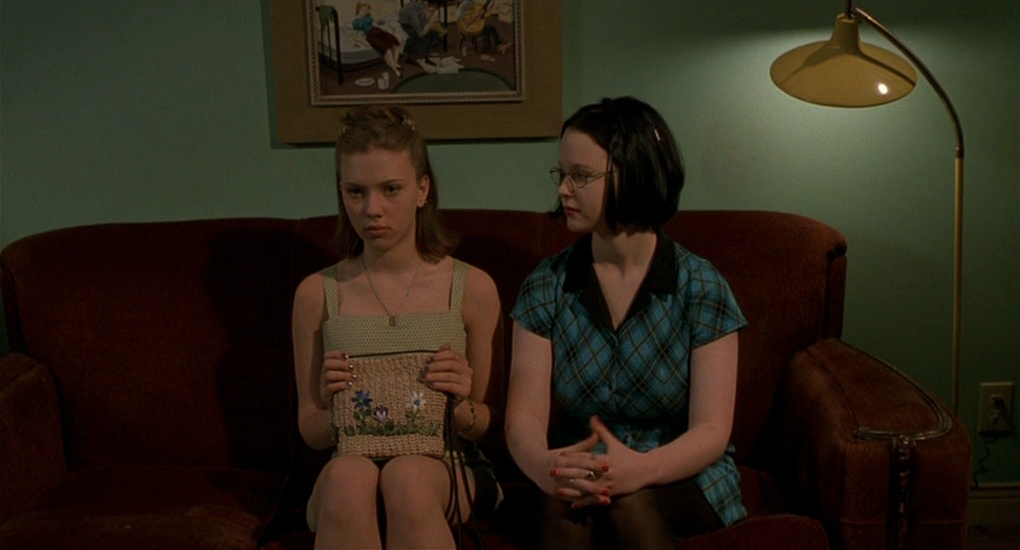
For all the pleasure Zwigoff extracts from the mundane and bizarre corners of Clowes’ world, a persistent melancholy sits at the heart of Ghost World—one that has only deepened over time. Much of the film’s enduring poignancy lies in its earnest, painful depiction of a friendship gradually deteriorating as two young women realise they are becoming fundamentally different people. Initially, Enid and Rebecca are united by alienation, clinging to the comfort of adolescent aimlessness while trading incendiary remarks about their conventional classmates. “I liked her so much better when she was an alcoholic crack addict,” scoffs Enid during their graduation ceremony, as a sanctimonious student delivers a painfully cliché valedictorian speech on the perils of drink-driving. Yet once the relationship between Enid and Seymour grows, it becomes apparent that the girls’ bond was sustained merely by shared irreverence, not by aligned attitudes towards adulthood.
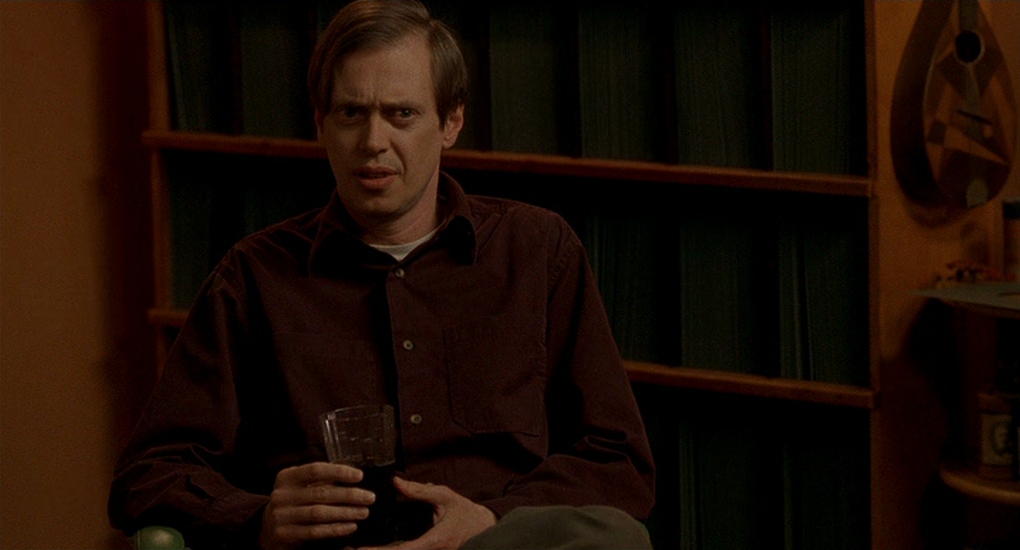
Rebecca is eager to become financially independent and progressively develops an interest in the very normality she and Enid once mocked. She considers the attractiveness of local boys, takes an interest in kitchenware, and gradually accepts that an ordinary adult life requires compromise. Meanwhile, Enid maintains her impenetrable façade to resist anything that might compromise her eccentric identity. Yet the cracks reveal themselves like a vintage 78 record when she realises her friend is maturing beyond their shared, directionless existence. She instinctively recoils from Rebecca because this transformation confronts her with the reality that she, too, will have to grow up. That fear drives Enid closer to Seymour. Like Enid, Seymour collects obscure records and fills his home with movie memorabilia and kitsch artefacts. His state of arrested development reassures Enid that she can maintain a life anchored by idiosyncratic hobbies.
Naturally, Enid seeks out every opportunity to spend time with Seymour, even convincing a reluctant Rebecca to attend a gathering of obsessive record collectors. During this sequence, the foundations of their friendship truly collapse: Enid abandons Rebecca beside a man who clearly makes her uncomfortable just so she can spend time alone with Seymour. Enid isn’t a particularly good friend to Rebecca, but Ghost World is less interested in condemning its characters for their complex behaviour than in illustrating a painful reality: the moment two inseparable friends discover the qualities that once bound them together no longer hold the same pull.
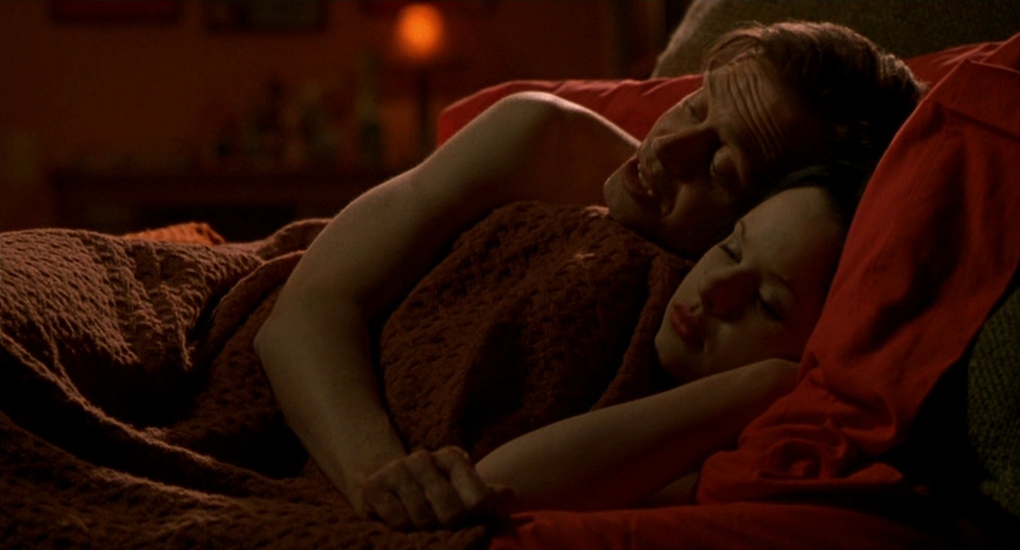
That divergence is most strikingly expressed during their final conversation. Reflecting their development over the 100-minute runtime, Enid wears a colourful dress and combat boots, while Rebecca has adopted a smart white shirt and loafers. As they sit together on a bench, Enid takes Rebecca’s hand and the two exchange a knowing glance. Acknowledging that their friendship is no longer what it was in high school, Rebecca asks, “What are you going to do now?” With a half-formed smile, Enid responds, “I’m not sure.” As Rebecca leaves for work, she drops Enid’s hand and they part ways. The moment is small, almost embarrassingly mundane, but it resonates through its ordinariness. Friendships do not always collapse through grand betrayals or dramatic arguments; often, they simply erode until former confidantes become strangers.
Ghost World has little interest in imposing a definitive moral message. Instead, Zwigoff and Clowes leave the film’s conclusion ambiguous, leaving Enid’s enigmatic departure open to interpretation. Many viewers view her boarding a seemingly out-of-service bus as a bleak allusion to suicide—disappearance becoming her only escape from alienation. Others interpret her departure less nihilistically, regarding the bus as a vehicle for rebirth, allowing Enid to fulfil the fantasy she once confided to Seymour. Whether her departure is a metaphor for death or a literal untethering from her old life in search of another remains unresolved.
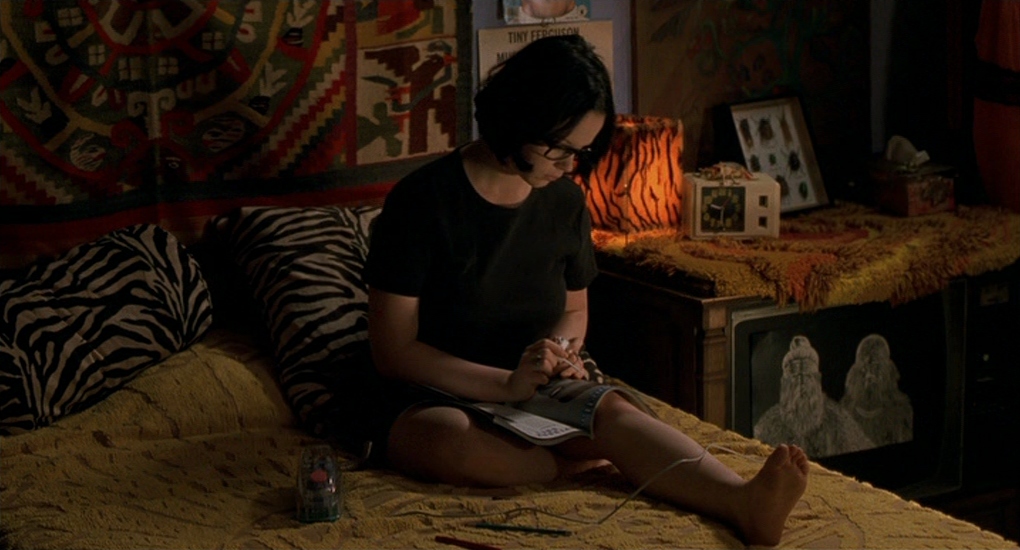
Clowes explored several hypothetical outcomes for the 2018 hardcover special edition of the graphic novel. In one imagined reality, Enid is married and happy, while Rebecca’s gloomy disposition has culminated in chronic depression that compels her to send the occasional unwelcome email to her former friend. In another timeline, Rebecca has become an accomplished writer, and the pair briefly reconnect when Enid approaches her at a book signing. If anything, the ambiguity surrounding Enid’s fate should be read as the film’s most quietly optimistic gesture. Ghost World recognises that alienation and otherness are not merely conditions to be endured—they are the impetus that can propel an individual towards self-discovery.
After premiering at the Seattle International Film Festival and Montreal’s Fantasia Festival, Ghost World generated considerable critical momentum ahead of its wider release. Yet limited distribution and a misguided marketing campaign meant critical acclaim failed to translate into commercial success, with the film earning approximately $8.7M against a $7M production budget. Nevertheless, it found its audience through home video and has since built a dedicated cult following. Viewed today, Ghost World feels like a time capsule. It captured a specific form of adolescent alienation that can feel distant to a generation accustomed to constant digital connectivity. However, its refusal to offer easy answers to the anxieties of growing up has allowed it to transcend its era. It continues to connect with new generations of Enids who recognise themselves in her peculiar mixture of cynicism, loneliness, and restless uncertainty.
UK • GERMANY • USA | 2001 | 111 MINUTES | 1:85:1 | COLOUR | ENGLISH

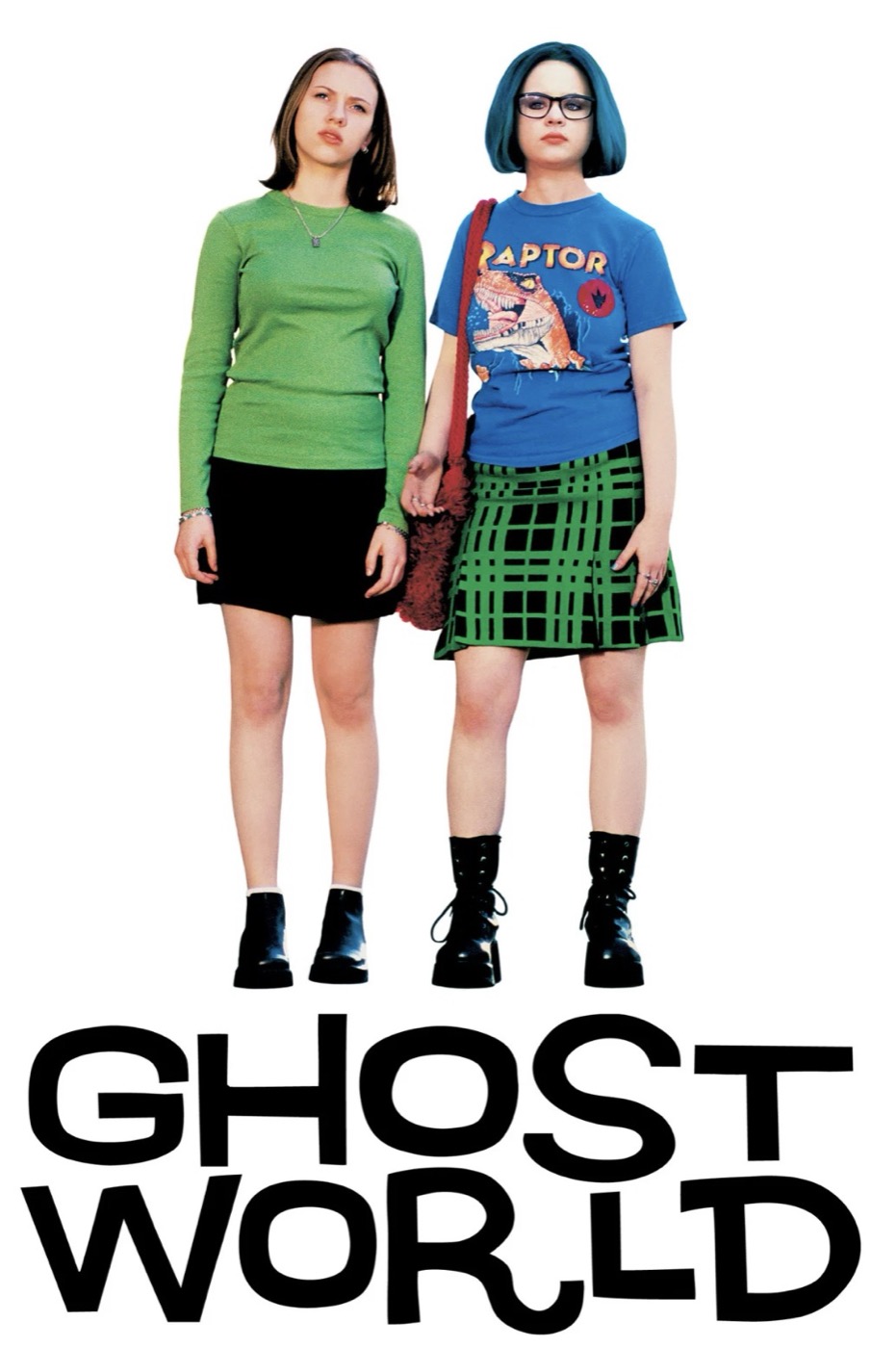
director: Terry Zwigoff.
writer: Terry Zwigoff & Daniel Clowes (based on the graphic novel by Daniel Clowes).
starring: Thora Birch, Scarlett Johansson, Steve Buscemi, Brad Renfro & Ileana Douglas.