30 DAYS OF NIGHT (2007)
After an Alaskan town is plunged into darkness for a month, it is attacked by a bloodthirsty gang of vampires.

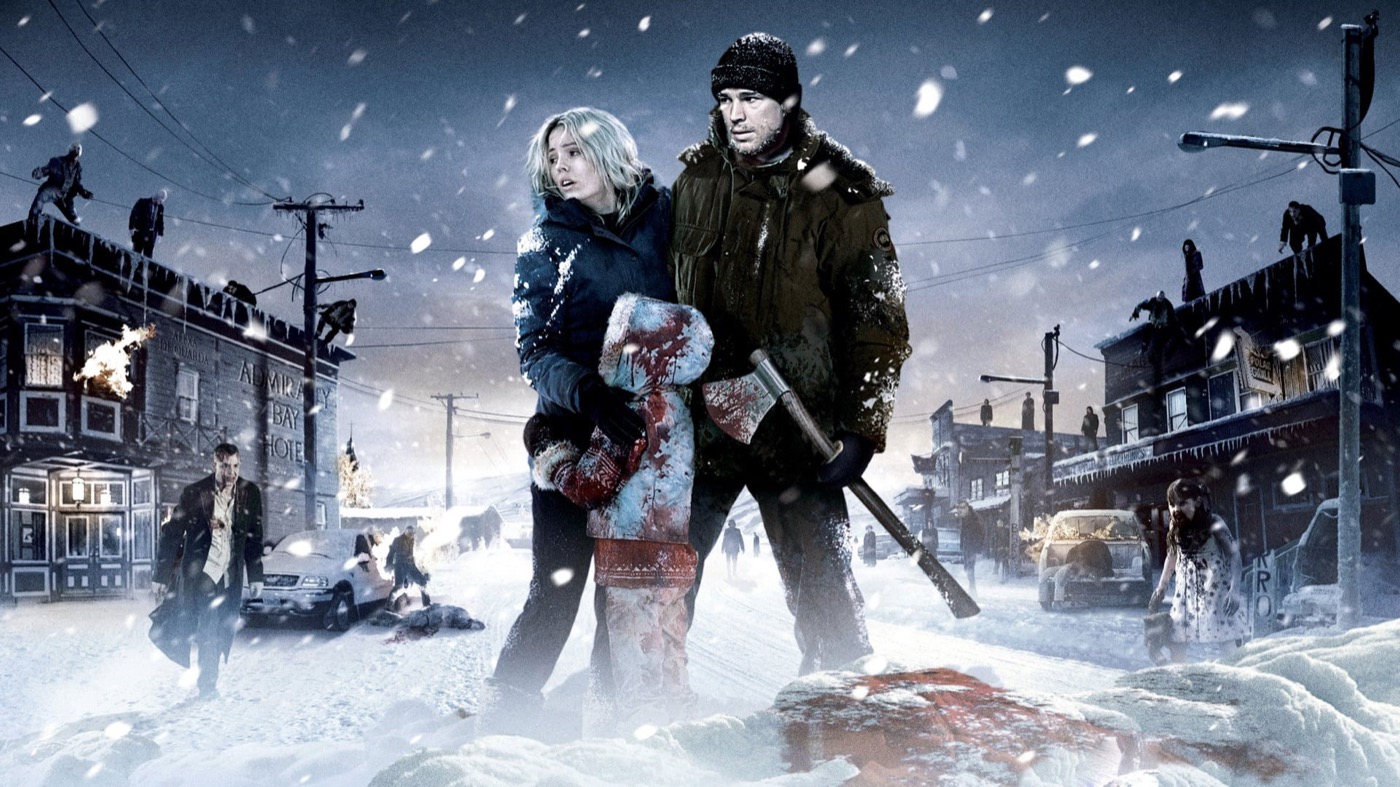

After an Alaskan town is plunged into darkness for a month, it is attacked by a bloodthirsty gang of vampires.
As I’ve stated before, I’m a huge fan of the horror genre—and have been since I was a teenager. When it comes to sub-genres, I don’t really have a preference: slasher, supernatural, zombie, science-gone-mad; you name it, it’s all in my wheelhouse of cinematic heaven. Naturally, vampires belong in that macabre collective.
Thinking back, my first exposure to creatures of the night was probably Hammer’s Dracula: Prince of Darkness (1966). Long before streaming became the default way to watch movies, your only options were the cinema, renting a VHS tape, or catching a broadcast on one of the three terrestrial TV channels—or on cable, if you could afford it. And so it was on BBC2, circa 1987 when I was just 14, that I caught Christopher Lee’s second turn as the bloodsucking Count.
While that film is far from a masterpiece, I remember being impressed by its cinematography, Lee’s commanding presence, and the sheer volume of bright red blood on display. I was instantly hooked, and soon sought out anything featuring an undead creature baring fangs. The Lost Boys (1987) and Near Dark (1987) were early favourites, and in more recent years, the first two Blade movies (1998-2002) have been regular fixtures on my watchlist. So, when I first watched the trailer for 30 Days of Night, my interest was immediately piqued.
Everything about it looked fresh and exciting: from the clever concept of setting the story in an Alaskan town whose small population must endure a whole month of darkness, to the brutal, animalistic vampires with their own language. By the end of the promo, I was sold. Upon watching the film on DVD (having missed it at the cinema), my initial thought was that it was a solid effort, albeit with a few flaws I’ll address later. However, after rewatching it on Icon’s newly released 4K Ultra HD Blu-ray, I feel the film has aged remarkably well. I can whole-heartedly recommend it to anyone who enjoys vampire cinema—particularly those who prefer the more extreme end of the horror spectrum.
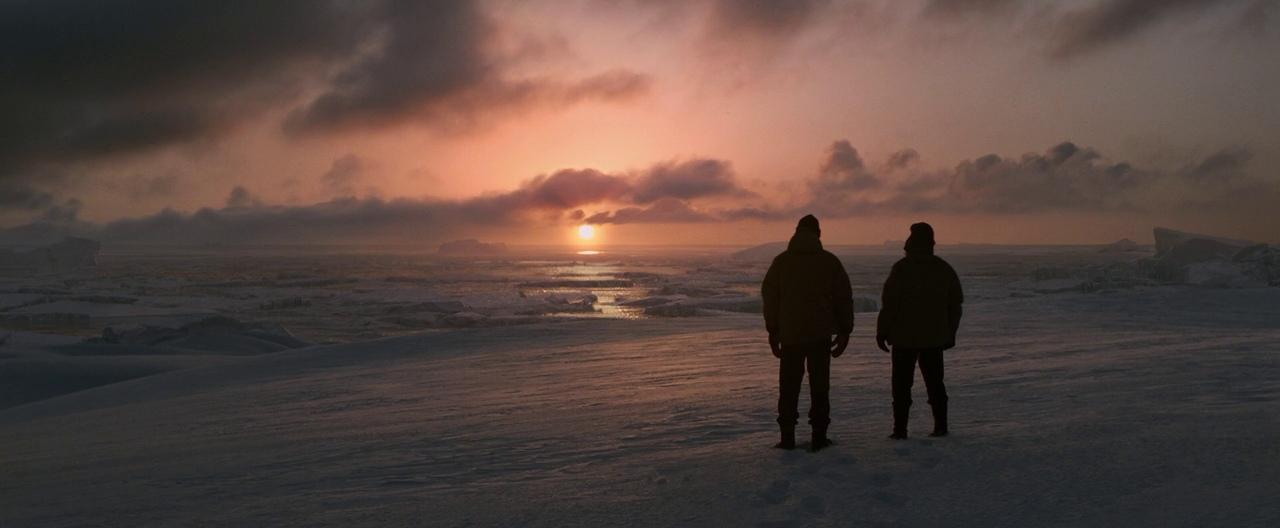
Right from the off, the opening sequence wastes no time establishing the kind of film you’re about to watch. It may still be daytime, but the light is fading fast. Across a bleak, snow-bound landscape accompanied by an eerie score, we catch an aerial shot of a few scattered buildings and a road. Text appears on screen: ‘Barrow, Alaska – northernmost town in the US, isolated by 80 miles of roadless wilderness, cut off every winter for 30 Days of Night’.
Cut to a close-up of a gaunt, haunted face framed by a thick hooded coat, staring blankly into the distance. We then see what he’s looking at: an ominous ship anchored offshore. Directly in front of him, a small rowing boat lies on the beach. The man slowly trudges through the snow until he reaches the edge of a high ridge overlooking the town of Barrow. As horror film openings go, this easily ranks among the most atmospheric and dread-filled I’ve ever seen. There’s no violence or gore, but what you do see instantly establishes the tone of the movie with perfect efficiency.
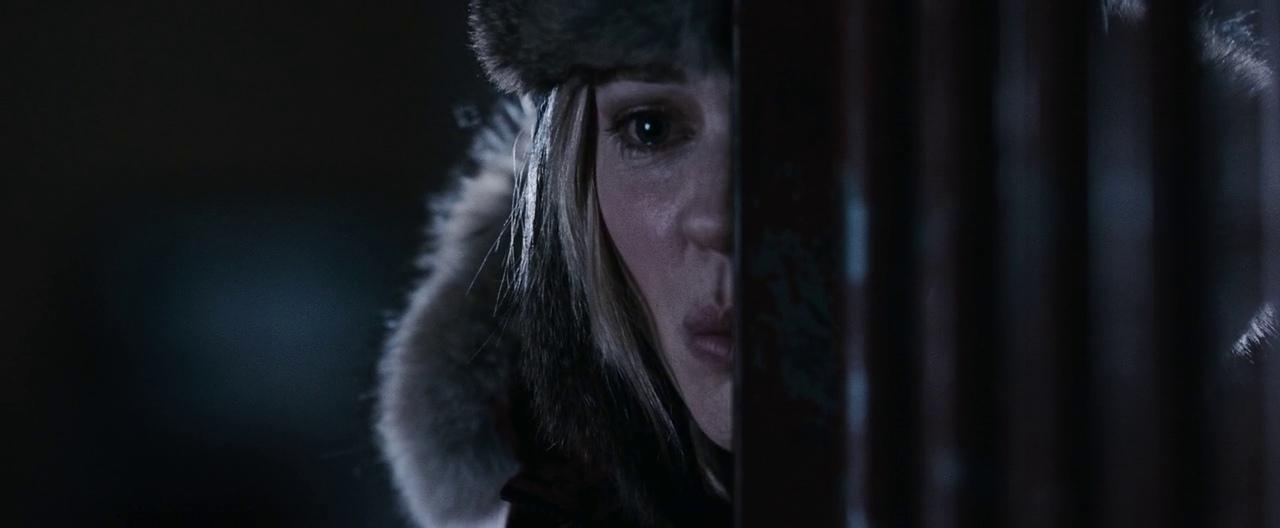
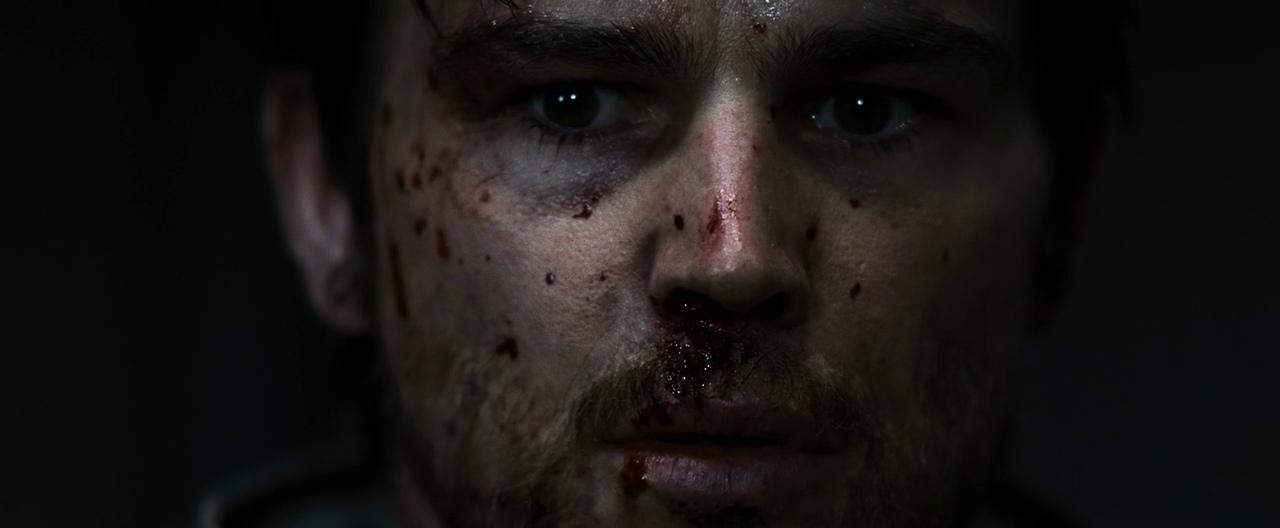
Based on the three-issue comic book miniseries published in 2002, the film is set in the real-life town of Barrow, Alaska, where most residents fly south every winter to escape the 30 days of darkness. The remaining townsfolk, including the local police force led by husband-and-wife team Sheriff Eben (Josh Hartnett) and Stella Oleson (Melissa George), find themselves under attack from a vicious horde of vampires. These undead creatures are interested only in feeding on humans, not turning them. Following the initial horrific onslaught, the handful of survivors must figure out how to stay alive until the sun finally returns.
It’s perhaps fitting that, for a film brimming with gore and viscera, the studio entrusted the project to some ‘fresh blood’. For starters, 30 Days of Night comic writer Steve Niles was brought on to write a draft of the screenplay and remained involved throughout production. Furthermore, director David Slade had only one feature to his name at the time: the indie psychological thriller Hard Candy (2005).
Made for just $950,000, Hard Candy proved a hit with critics and cinema-goers alike, going on to earn a respectable $8.3M at the box office. Its unsettling story—following a 32-year-old photographer who invites a 14-year-old girl home after chatting online, only to be terrorised by her when she suspects he’s a paedophile—struck a chord with audiences who were impressed with its sharp script, strong performances, and taut direction. The movie’s success clearly caught Hollywood’s attention, earning Slade the helm of this much larger production.
Aside from its effective prologue, the film is at its best during its first 40 minutes, relying on a ‘show, don’t tell’ style of storytelling. In a calculated series of events designed to render the town helpless, we watch power and communication stations being destroyed. Short sequences hint at the chaos, but it’s the bloody aftermath that truly reveals something far more sinister at play. To make matters worse, the town’s remaining helicopter is wrecked, and a pack of huskies meets a cruel, violent end.
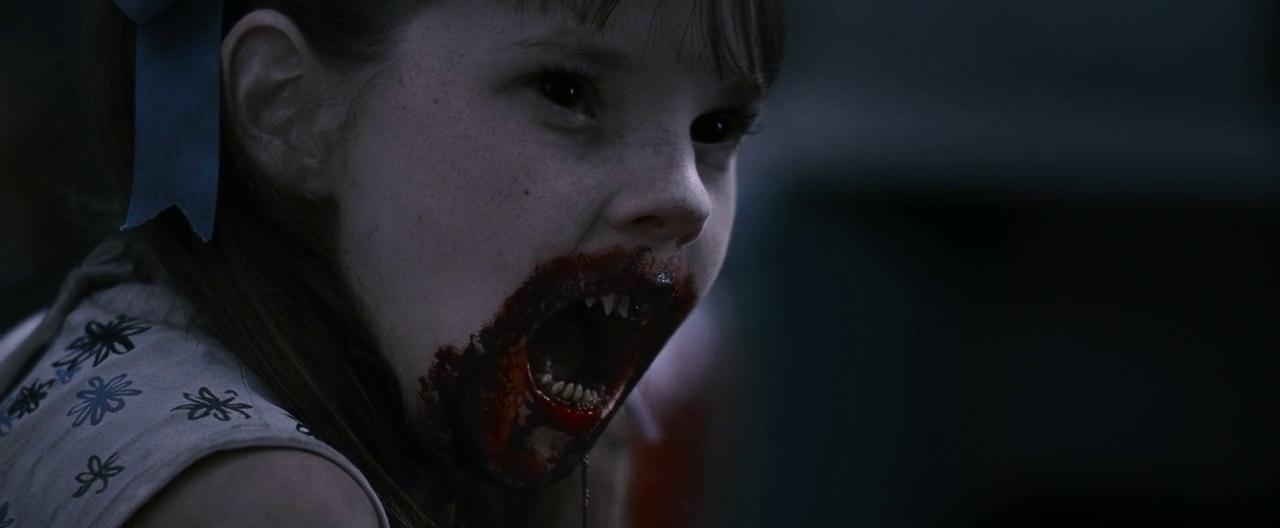
At this point, the film shifts into high gear with the initial assault—and what follows is far from your run-of-the-mill vampire carnage. The sequence focusing on a couple in their home, about to eat dinner, plays out like a nightmare home-invasion scenario. One moment all is calm; the next, before you can even think ‘don’t vampires need an invitation?’, a fanged intruder smashes through the window and drags the wife into the dark. It’s just the beginning of a night from hell.
This sequence culminates in a striking high-angle shot of the town as helpless residents run in a futile attempt to escape, the surrounding snow turning crimson. Regrettably, after this strong first act, the rest of the movie struggles to maintain its momentum and terror—a fault of the screenplay’s structure rather than the direction.
While the ingenious concept of vampires taking advantage of a month-long night works well on the comic book page, the plotline doesn’t translate seamlessly to screen. After those superb opening 40 minutes, the narrative essentially runs out of steam. A month is a long time to sustain tension and vampire-driven mayhem, and the screenwriters effectively wrote themselves into a creative corner.
Compounding the problem is the issue of temporal tracking: when everything takes place in continuous darkness, it’s hard for the audience to gauge how much time has passed. To fix this, the film relies on sudden time-jumps heralded by captions like ‘Day 18’ or ‘Day 26’. While informative, these jumps feel jarring and pull you out of the experience. Simple visual cues—such as showing Hartnett’s character growing a beard over the course of the film—might have been far more effective.
This might sound nitpicky, but these structural flaws do hamper the rest of the film—which is a shame, given the immense passion and craft behind it.
To begin with, the performances are solid across the board. Josh Hartnett and Melissa George are convincing as the married police officers going through a rough patch—so much so that they appear on the brink of divorce. The root of their conflict remains unclear for most of the film, until a single line near the end poignantly lays it bare. As things look particularly bleak, Stella turns to Eben and says: “It’s a good thing you didn’t want kids.” Both actors share a believable chemistry, giving the film an emotional anchor it otherwise would have lacked.
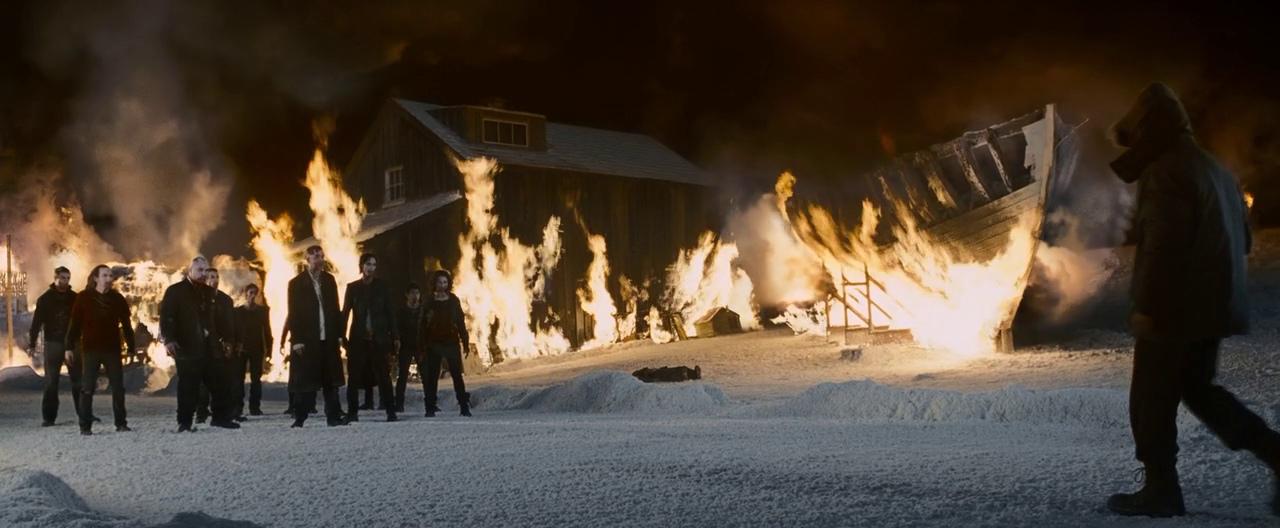
Beyond the leads, there’s great work from the ever-dependable character actor Mark Boone Junior (Batman Begins, Sons of Anarchy) as Beau Brower. Initially appearing as the town’s gruff, anti-establishment outsider who just wants to be left alone, he shows his true colours once the slaughter begins, emerging as a surprisingly heroic figure. Ben Foster (Hell or High Water) is undoubtedly one of the film’s highlights; his turn as a Renfield-style, wannabe-vampire stranger commands attention from his very first frame, injecting a genuine sense of menace and unpredictability. And then, of course, there’s Danny Huston’s head vampire, Marlow…
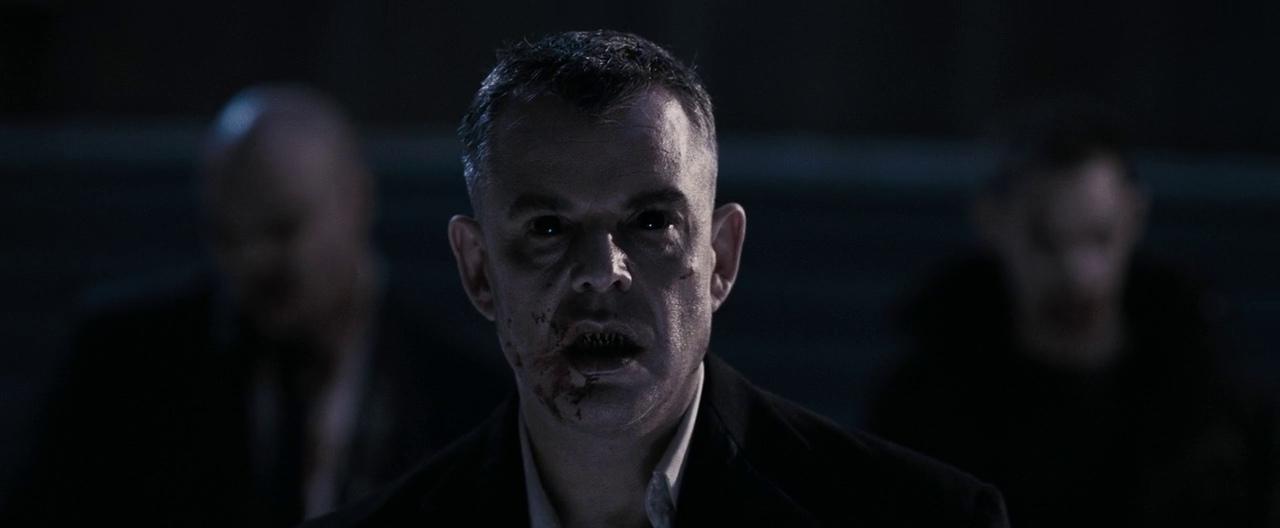
It cannot be overstated: Huston’s Marlow is the standout star of the film. While he’s adapting an established comic book character, the fact that he speaks entirely in a constructed language means almost his entire performance relies on physical acting—and he conveys the creature’s predatory evil brilliantly.
Supported by sharp costuming and striking makeup, Huston commits fully, delivering a vampire unlike anything seen on screen before. With black eyes and shark-like teeth, his sole motivation is satisfying an insatiable bloodlust. Among a dozen stand-out moments, his most chilling sequence comes as he prepares to execute a woman who whispers,“Please God.” Huston pauses, glances briefly at the sky, nods, and replies: “God… no God.” It’s a chilling,unforgettable moment.
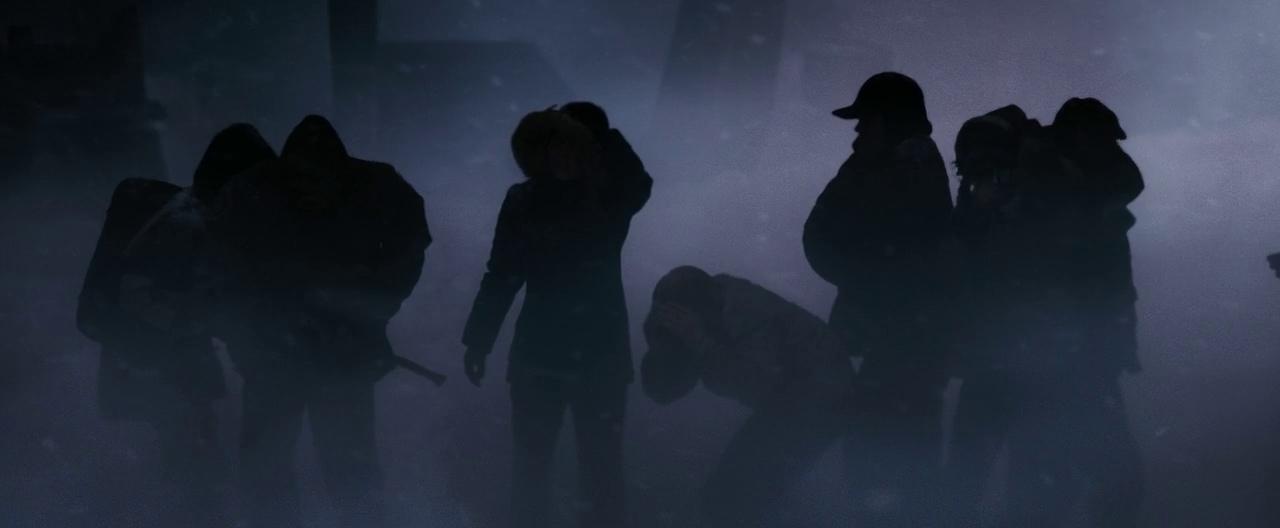
Behind the lens, there’s also plenty to admire. Standing in for Alaska, the production shot in and around Auckland, New Zealand, blending rugged wilderness for exterior shots with a custom-built town set inside a local studio and a nearby aerodrome. The setting necessitated extensive night shoots, though there’s also some clever day-for-night filming that seamlessly blends into the background.
The cinematography and score also deserve special mention. Director of Photography Jo Willems (Hard Candy) gives the film a stunning, bleak visual aesthetic, contrasting muted tones against stark white snow to brilliant effect. Meanwhile, composer Brian Reitzell avoids traditional orchestral instruments in favour of an unsettling electronic soundscape, incorporating unconventional instruments like waterphones and spring drums to heighten the tension.
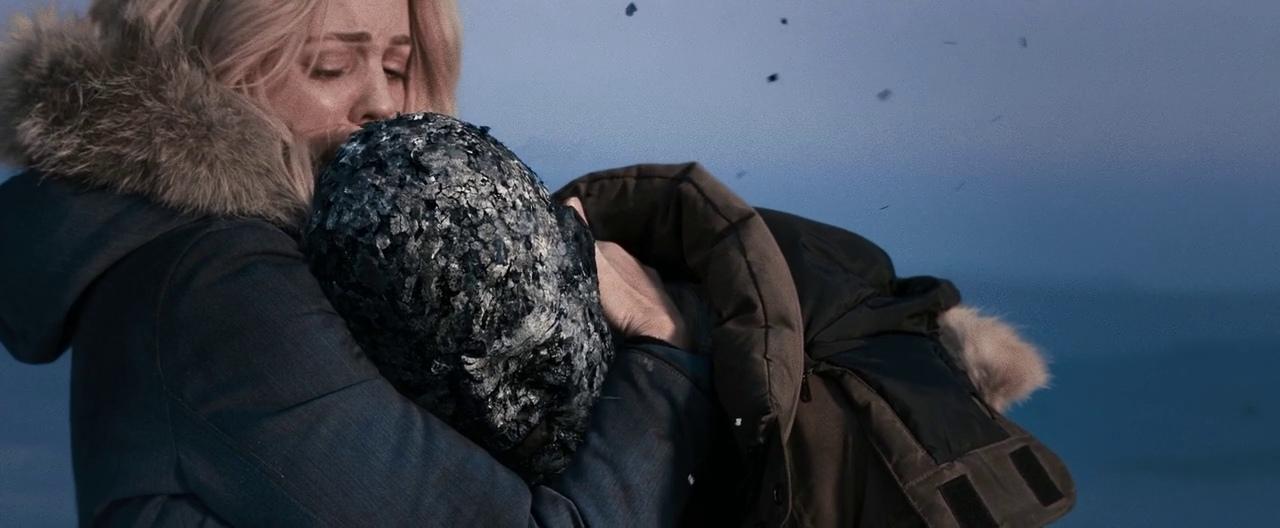
Financially, 30 Days of Night was a modest success, grossing just over $75M globally against a $30M budget—not a blockbuster, but far from a flop. Its commercial ceiling was likely capped by its unrelenting grimness and graphic violence. Critical reaction was similarly lukewarm: Roger Ebert awarded it 2.5 stars out of 4, criticising logic gaps (such as vampires moving with supernatural speed in one scene, but plodding slowly in the next), while nevertheless praising Huston’s performance and the film’s technical execution. Ultimately, it settled at a 50% rating on Rotten Tomatoes.
While those mixed reviews are understandable, I’ve always felt the film deserved a warmer reception. Alongside the filmmakers’ commendable fidelity to the comic series’ blood-splattered pages, it’s quite a rare thing to see a Hollywood-produced vampire movie with such a bleak and genuinely nihilistic ending. Nearly two decades on, 30 Days of Night remains one of the boldest studio horror films of its era—and one that fully deserves to be revisited in 4K.
USA | 2007 | 114 MINUTES | 2.35:1 | COLOUR | ENGLISH

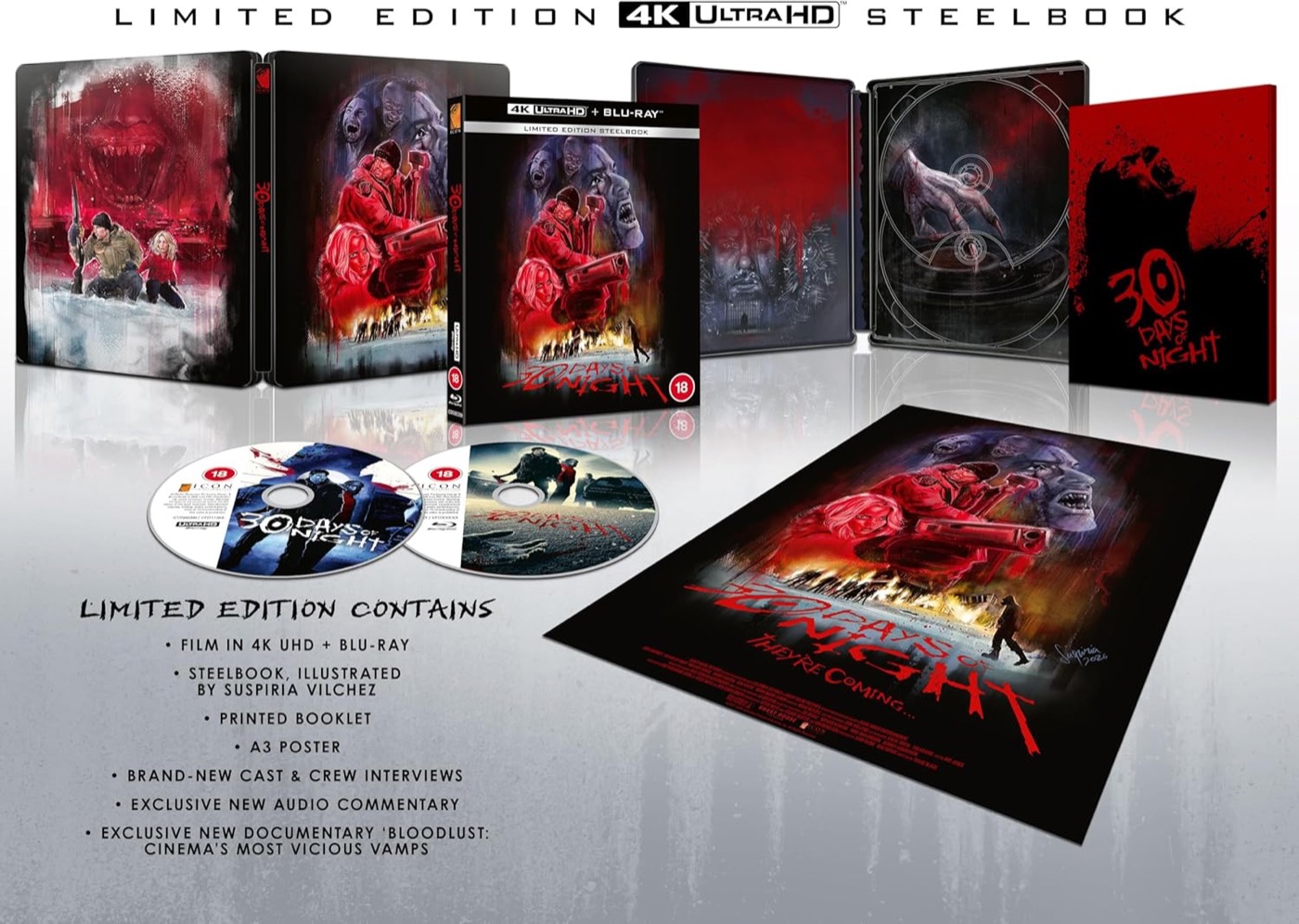
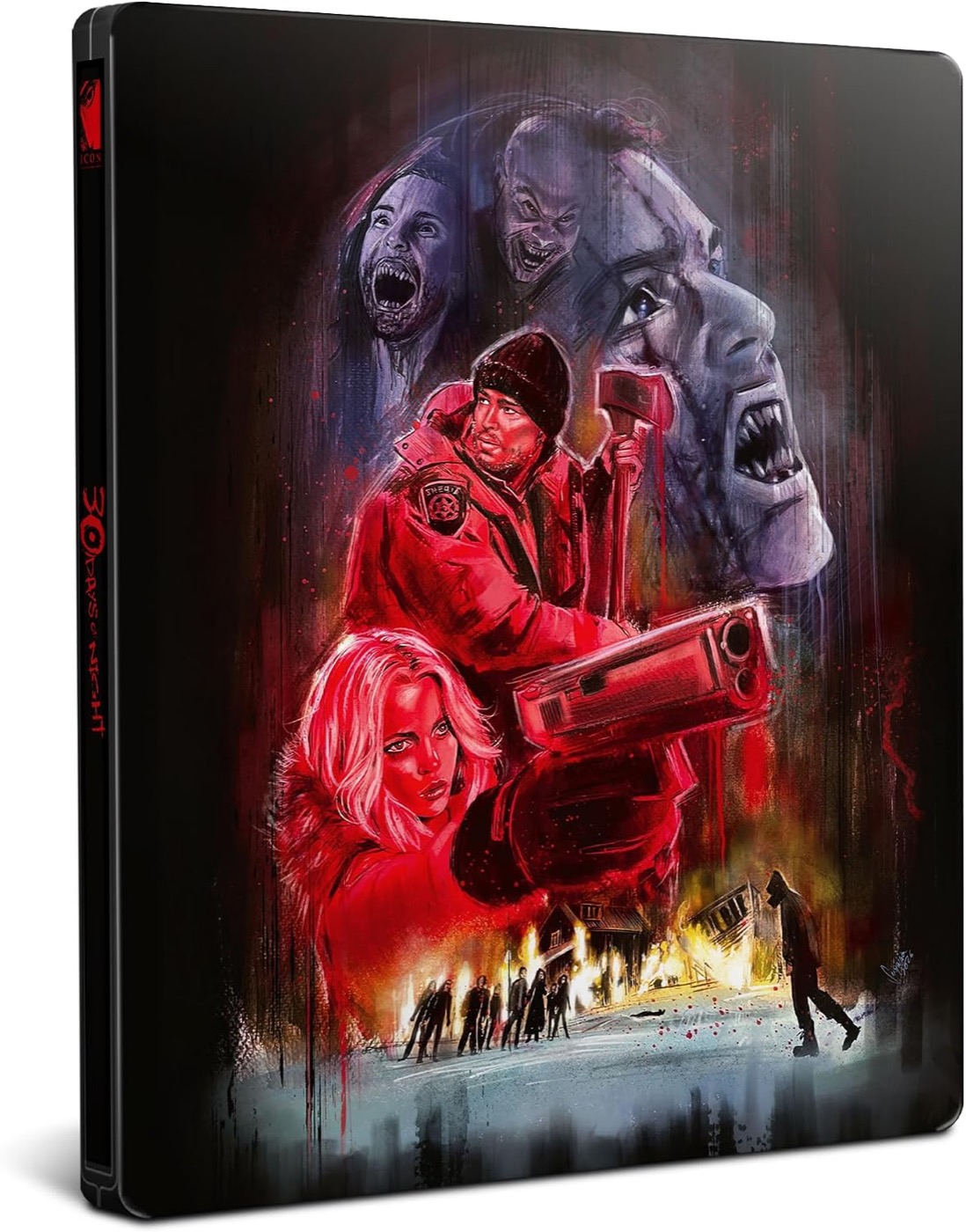
If you’re a fan of the film, you’re in for a real treat with this superb 4K Ultra HD Blu-ray release from Icon Film Distribution. For starters, the newly designed artwork on the cover (and included poster) by artist Suspiria Vilchez is striking—boasting a cool, almost retro 1980s vibe.
Technically, this new 4K presentation is a fantastic upgrade; the movie has simply never looked better. Sourced from a fresh scan using a Lasergraphics Director scanner, the transfer features 16-bit colour depth and Dolby Vision grading. The resulting image is exceptionally detailed, boasting deep, ink-black tones, crisp textures, and a richer palette that brings the frozen, blood-soaked streets of Barrow vividly to life. The DTS-HD Master Audio 5.1 track is equally impressive, delivering an immersive surround-sound experience that comes remarkably close to matching the impact of its original theatrical run.

director: David Slade.
writers: Steve Niles, Stuart Beattie & Brian Nelson (based on the comic-book by Steve Niles & Ben Templesmith).
starring: Josh Hartnett, Melissa George, Danny Huston, Ben Foster & Mark Boone Junior.