THE MONSTER (1977)
A low rank journalist receives a serial killer's letters, which he exploits.


A low rank journalist receives a serial killer's letters, which he exploits.
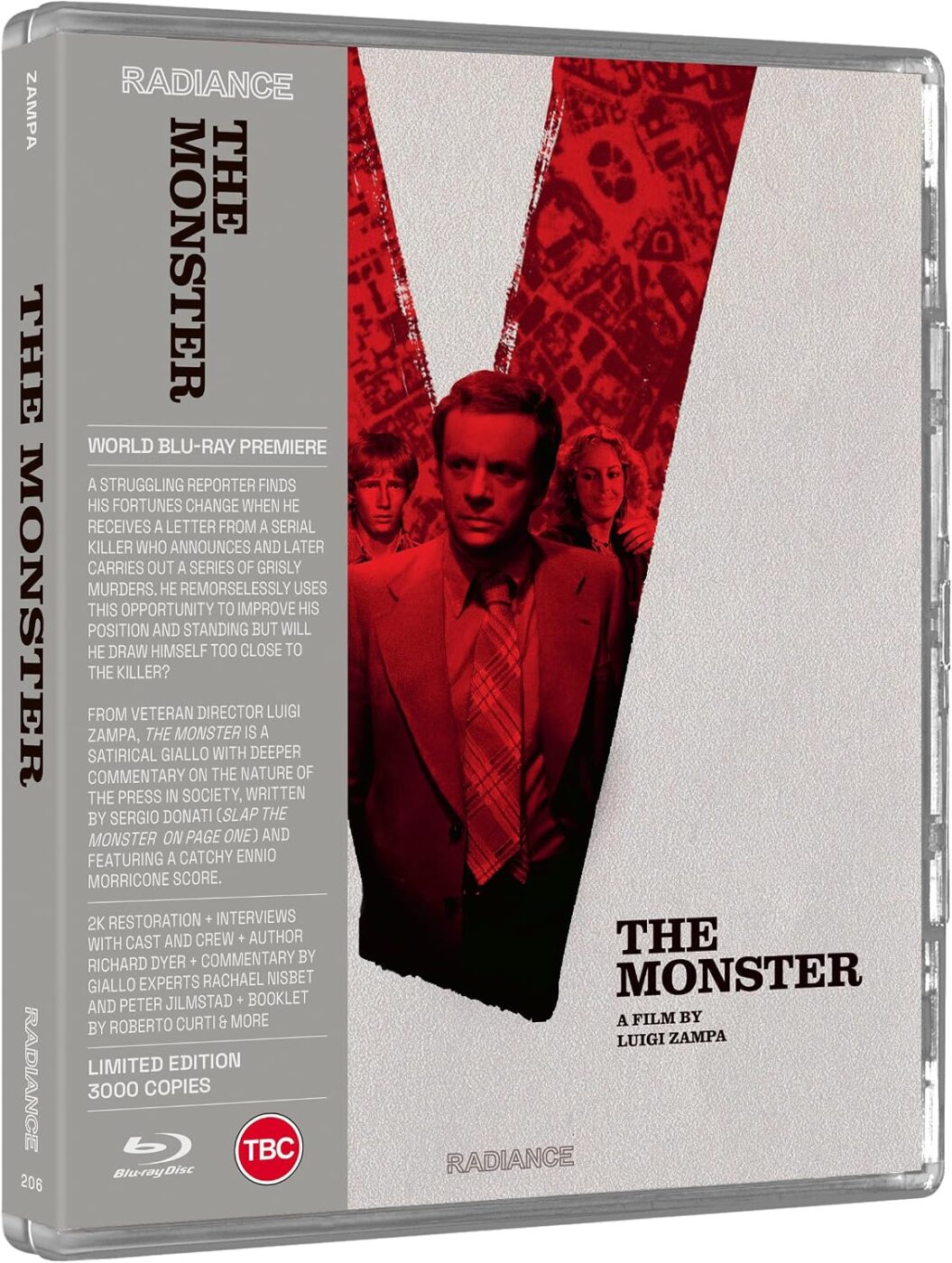
Over the past few years, several boutique labels have brought underseen Italian gialli back to our screens, many lovingly restored to look as good as they ever will. But the well seemed to be running dry. Although nearly 300 films were made during the genre’s heyday, many were cheap cash-ins that lacked originality. It’s generally accepted that classic examples became increasingly rare after 1973. This makes Radiance’s new 2K restoration of The Monster / Il mostro, scanned from the original negative, all the more welcome as an innovative late entry.
This was director Luigi Zampa’s penultimate film, made towards the end of a long career that began with his debut, Awakening of a City (1933). In the post-war reconstruction period, he was associated with Italian neorealism and moved towards its vérité style, often using non-professional actors. Most of his films were politically charged social critiques, though some were marketed as mainstream comedies. The Monster retains those signature elements, but stands out in his career as a genre film. Giallo purists will find themselves pleasantly challenged by this postmodern—perhaps post-giallo—fusion of familiar tropes and acerbic satire. The result is an effective thriller that remains surprisingly relevant half a century later.
From the opening gambit, Zampa knowingly wrong-foots the audience with an almost definitive giallo sequence. An extreme close-up of blue eyes peering through a black ski mask is followed by a glinting knife gripped in a black-gloved hand. A woman screams and backs away from the generic assailant across the shag-pile carpet until she’s pinned to the bed and stabbed to death.
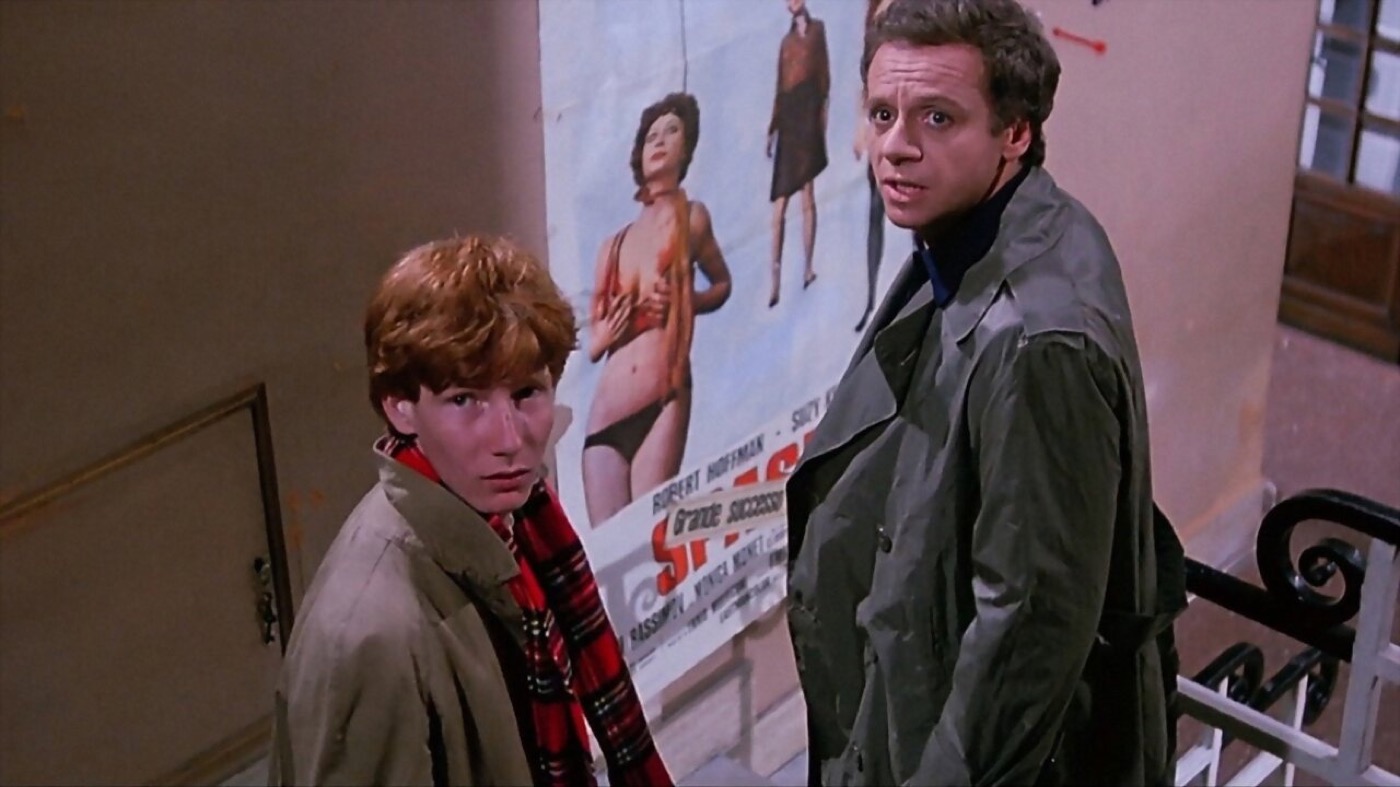
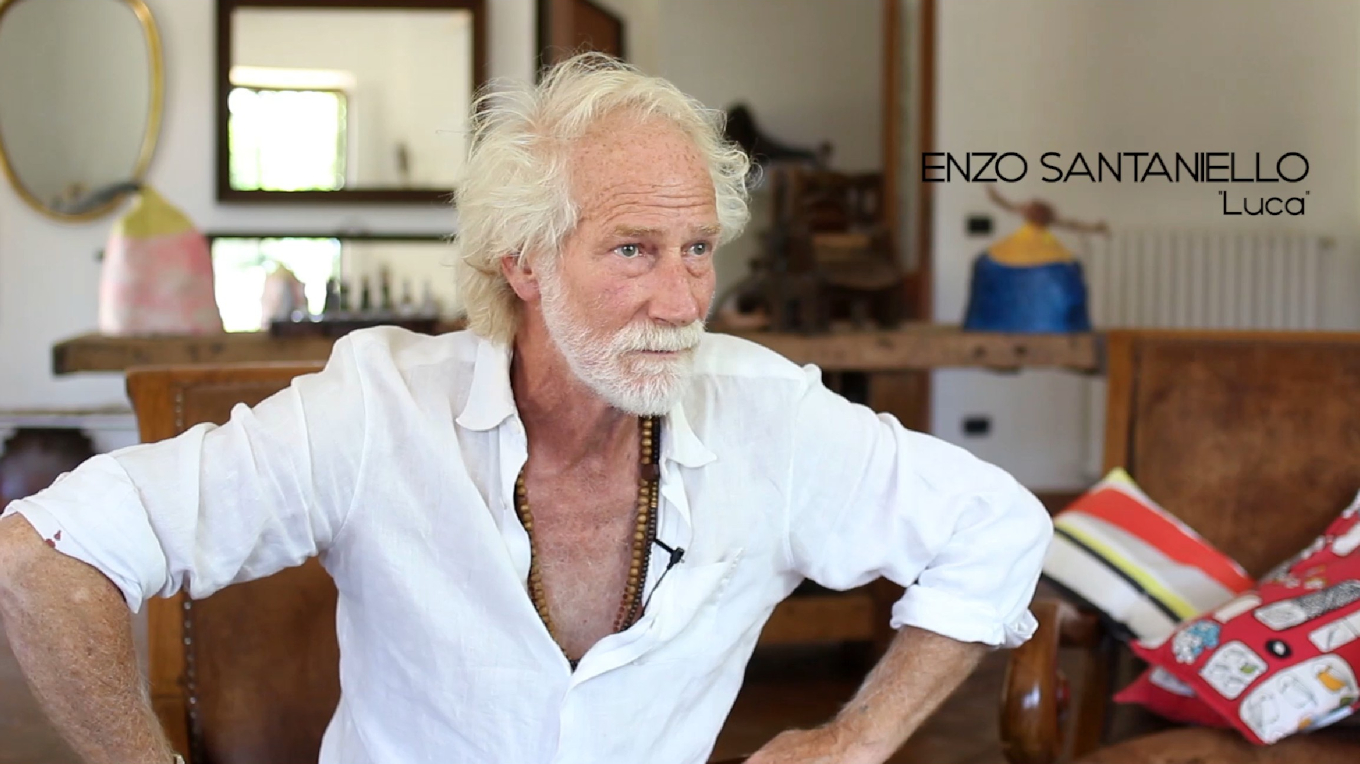
This is the climactic murder from Luciano Ercoli’s Death Walks on High Heels (1971), a giallo many Italian cinema-goers would have recognised. As the house lights come on for the interval, we realise that we’ve been watching a film within the film. Valerio Barigozzi (Johnny Dorelli) and his teenage son, Luca (Enzo Santaniello), decide to leave the cinema, pausing in the stairwell beside a poster for Umberto Lenzi’s Spasmo (1974). Valerio loudly denigrates the plots of such films for making no sense, claiming they’re sold on voyeuristic carnage alone. With this scene, Zampa seems to be telling us: ‘that was fiction and this is now reality’. He draws us into his self-aware meta-giallo while efficiently establishing the characters and their relationship.
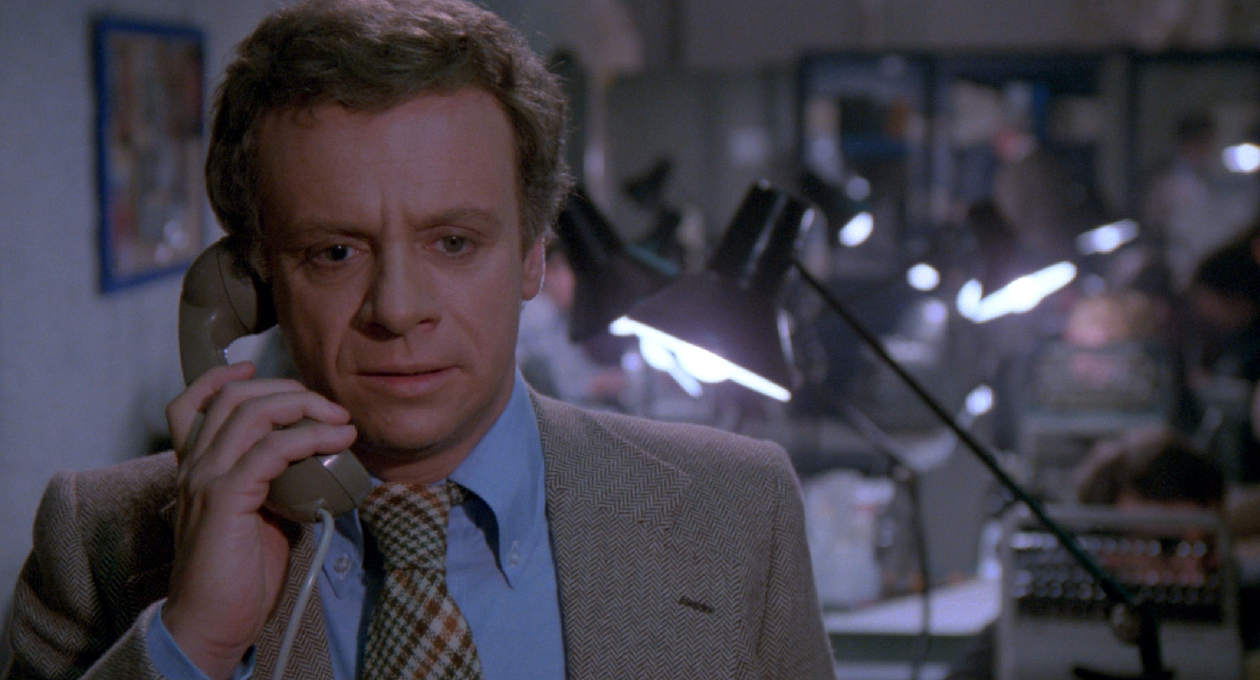
Valerio has recently separated from Anna (Angelica Ippolito), who seizes every opportunity to belittle him, clearly disapproving of his influence on their son. His marriage has failed, and he’s also been demoted at work, at a publishing house for periodicals. Moved from the news desk, he now writes under a female pseudonym as the agony aunt for the women’s magazine Tenderness. Among the letters he finds an anonymous note threatening to kill Grandpa Gustavo, a popular children’s television storyteller. It’s signed simply ‘il Mostro’—the Monster.
Valerio reports the threat to the police but isn’t taken seriously. He rushes to the studios and reaches Grandpa Gustavo (Gianrico Tedeschi) just as he dies from a fatal blow to the head. Valerio is detained as a suspect, and the police immediately cover up their inaction. Commissario Pisani (Orazio Orlando) confiscates the letter and denies knowing about Valerio’s earlier phone call. The authoritarian establishment is already manipulating the story to construct what we’d now call ‘fake news’. Valerio Barigozzi isn’t a relic of the past, either. Today, there are many more platforms for similarly unscrupulous, egotistical ‘influencers’.
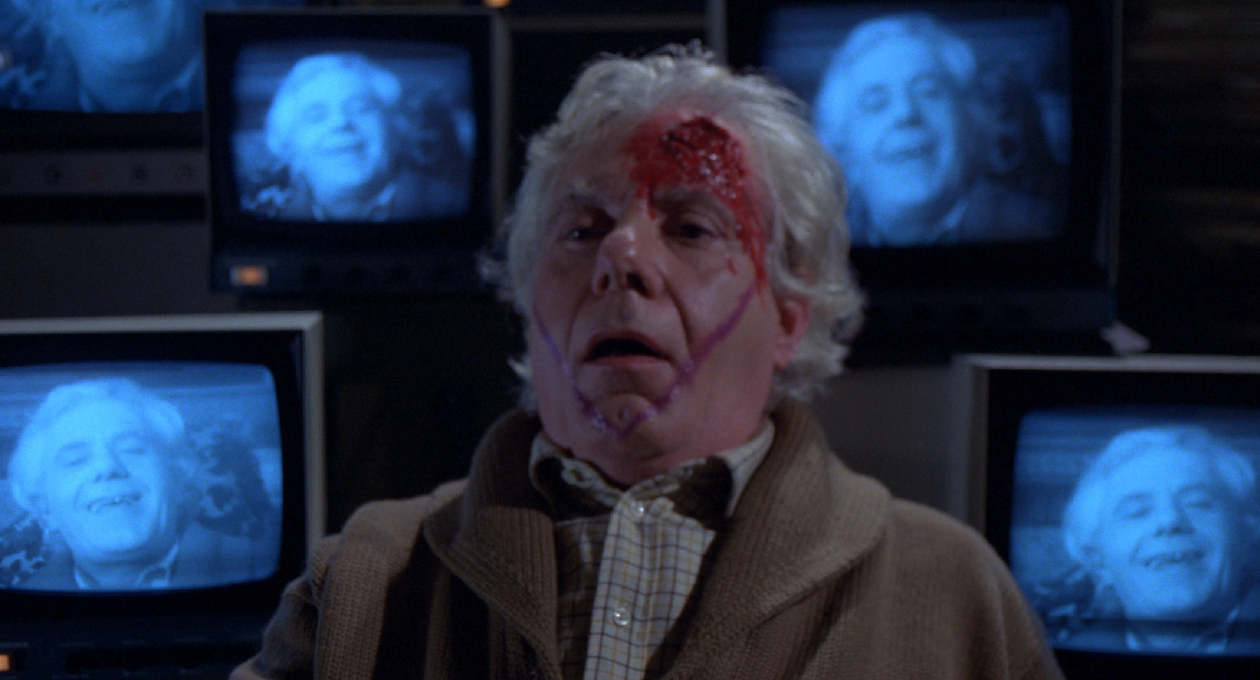
When Valerio receives a second letter from the Monster, threatening the life of a famous footballer, he keeps it to himself and turns up at the training pitch with his camera. He callously documents the footballer’s final moments and the bloody aftermath of his murder. Questioned by the police again, Valerio claims that, on receiving the warning, he rushed to the scene in the hope of preventing a crime. When Pisani admonishes him for not reporting the letter, Valerio cleverly turns the tables: doing so would imply that there had been a previous letter, wouldn’t it? A three-way battle of wits begins between the police, the serial killer and Valerio, who soon becomes the newspaper’s star reporter again, capitalising on his exclusive knowledge of where the killer will strike next.
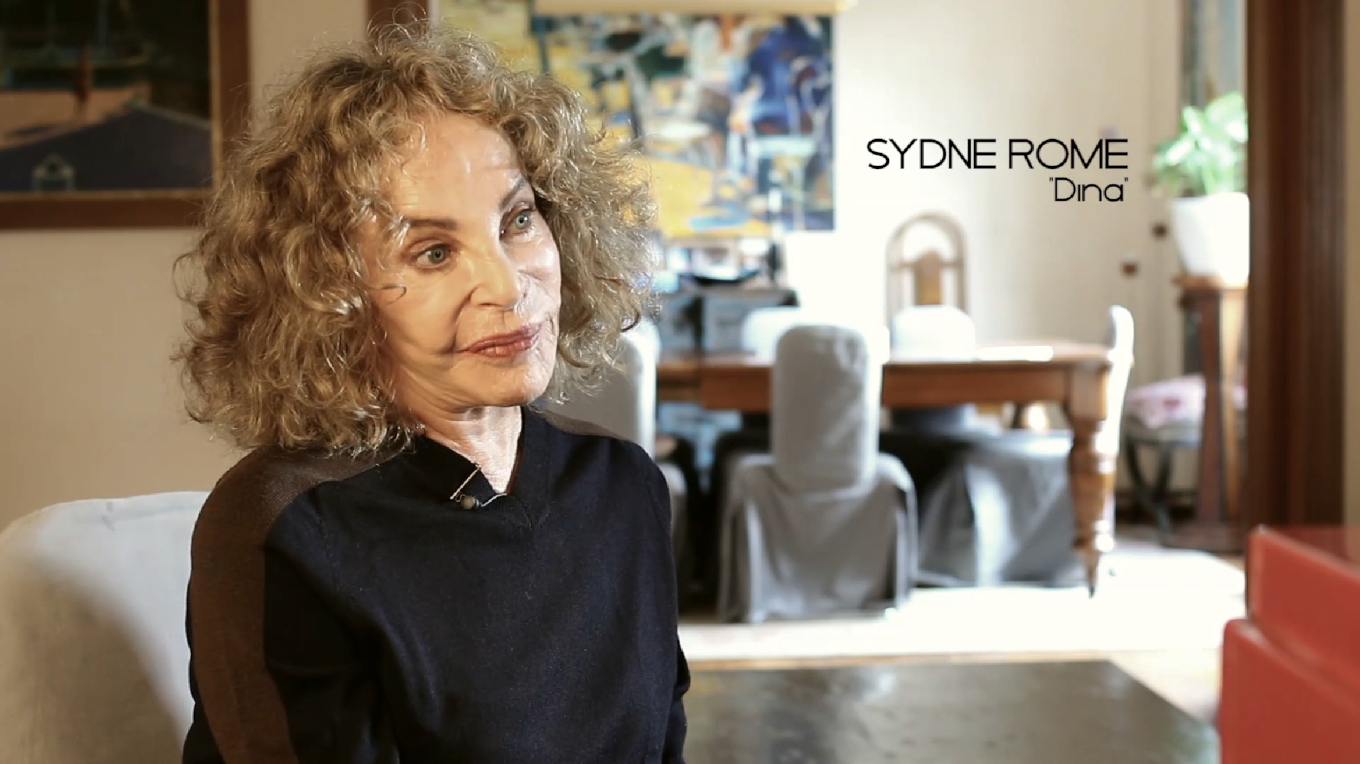
Valerio is calculating enough to let someone else kill, but he’s also shown to be a coward when a stranger intimidates him in a lift. The stranger turns out to be Baruffi (Renzo Palmer), owner of the cosmetics company that makes the lipstick the Monster uses to mark his victims. Baruffi proposes a sponsorship deal: he’ll pay Valerio for every mention of the brand in his coverage of the murders. He also introduces Valerio to Dina (Sydne Rome), a famous pop star seeking his endorsement for a concept album inspired by the serial killer. It features songs from the perspectives of the Monster and his victims, with lyrics that eroticise murder.
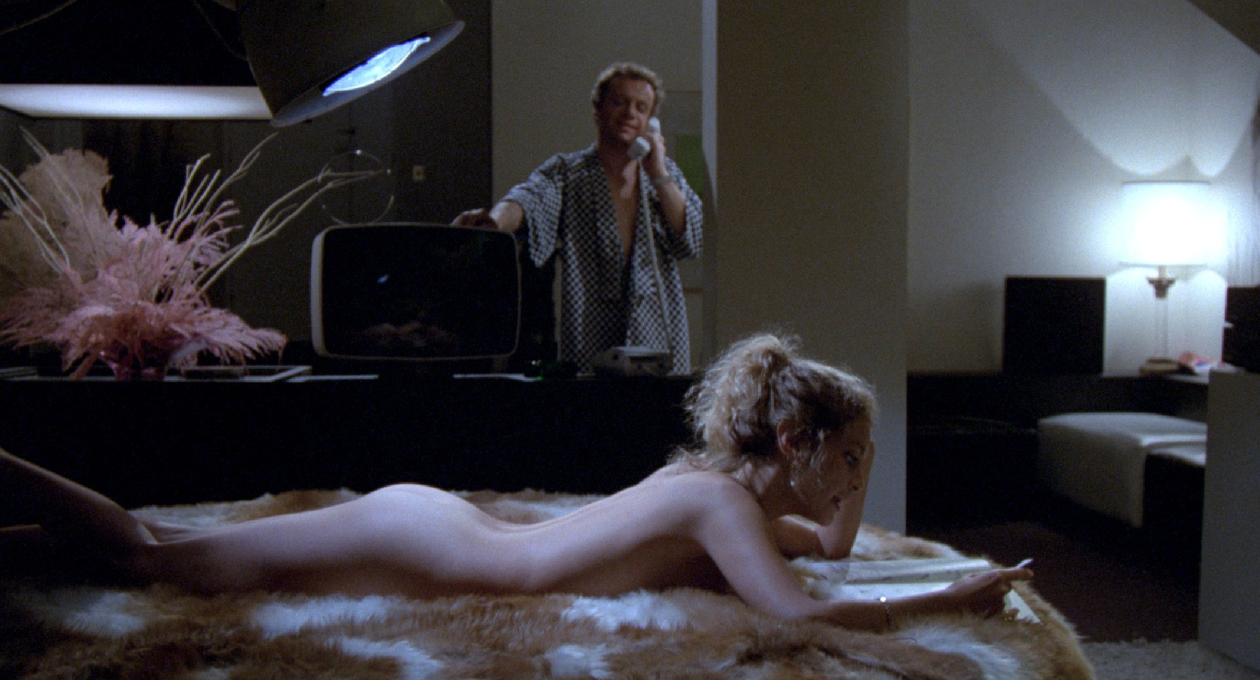
Among a strong cast, Johnny Dorelli’s central performance drives the narrative. He’s angry, bitter and conniving for the most part, but also brings pathos and moments of devastating emotional honesty. That’s all the more impressive given that he was known at the time as a cosy crooner and light-comedy actor.
Screenwriter Sergio Donati, probably better known for writing Sergio Leone’s Once Upon a Time in the West (1968), revisits the world of exploitative media that he explored in Slap the Monster on Page One (1972). That film also revolves around a embittered egotist abusing his editorial position at a major newspaper. Some scenes could easily belong to either film. But although both are cynical, The Monster has a lighter tone, veering towards comedy at times, and follows the whodunnit template more closely, from its opening act to its final frame.
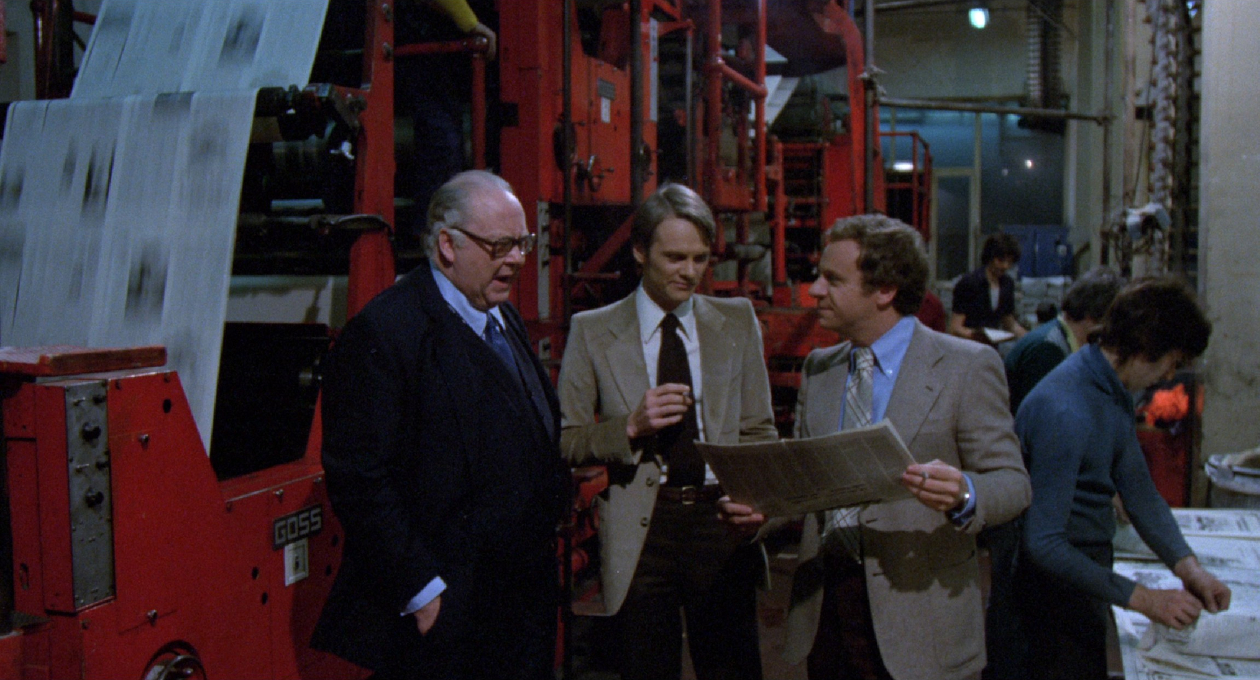
In both films, Donati puts journalism and old-school newspapers at the heart of the drama. Although the technology is now dated, his examination of tangled ethics is even more relevant today. He dissects the relationships between journalism, crime, public opinion, fear and the creation of monsters. Both films feature a murder mystery, elements of police procedural and an amateur sleuth, but their central concern is the commodification of murder. Crime generates headlines; headlines shape public opinion; and public opinion becomes a tool—of political power in Slap the Monster on Page One, and commercial profit in The Monster. Both stories are also driven by a man’s need for power and personal validation. Each film invites more than one interpretation of who, or what, the monster is.
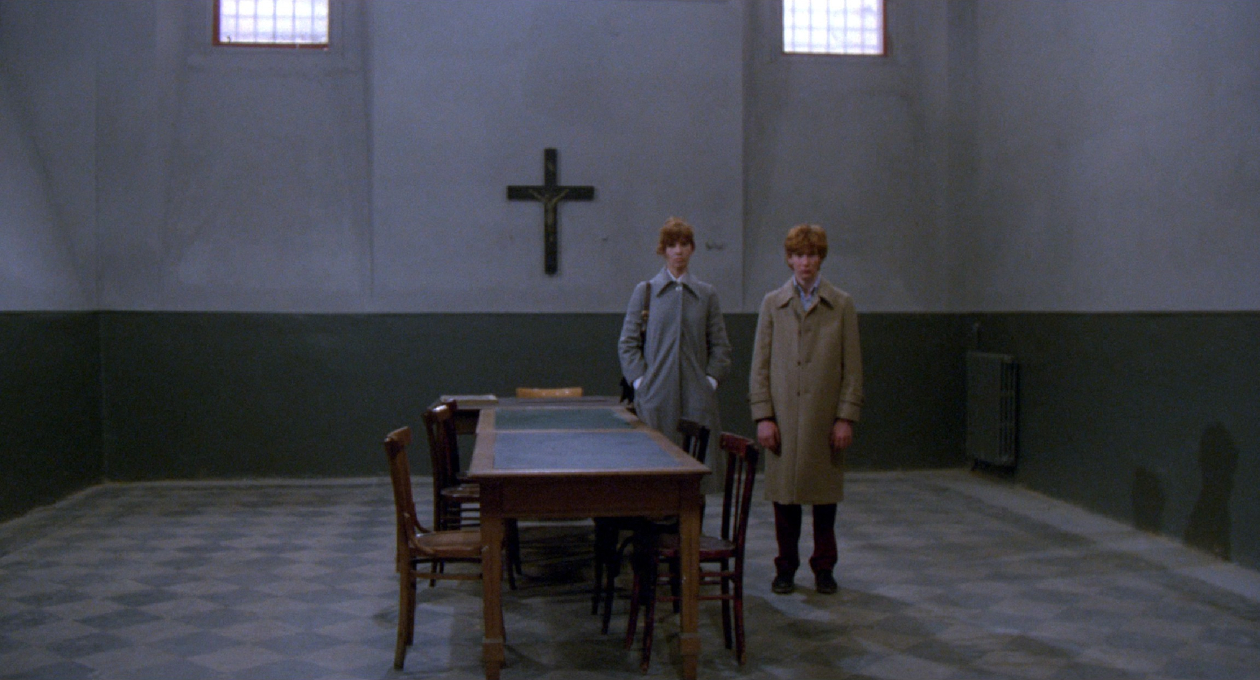
Donati’s scripts are sceptical of institutions and acutely aware of how narratives are manufactured. Despite their many similarities, the films are markedly different in the hands of their directors.
In Slap the Monster on Page One, Marco Bellocchio turns Donati’s original concept into an overtly political work. The newspaper isn’t merely sensationalist; it’s an ideological machine. The editor selects and manipulates facts, invents connections and directs public anger towards a convenient scapegoat to advance conservative political interests before an election. The whodunnit subplot is almost incidental. Bellocchio is interested in propaganda, power gradients and collusion between the press, the police and political leaders.
Zampa approaches very similar material with irony and a more human-scale story. Valerio isn’t a powerful editor, but a frustrated nobody prepared to risk other people’s lives and exploit murder to advance his career. He’s a loser in a world where a man’s worth is measured by professional standing and material wealth. He isn’t driven by ideology; he’s simply ambitious, resentful, unscrupulous, morally pliable and hungry for success. Nor is he alone: he faces stiff competition from Giorgio Mesca (Yves Beneyton), the purely profit-driven son of the domineering newspaper magnate Nicola Mesca (Henning Schlüter), who still upholds some unfashionable ethics.
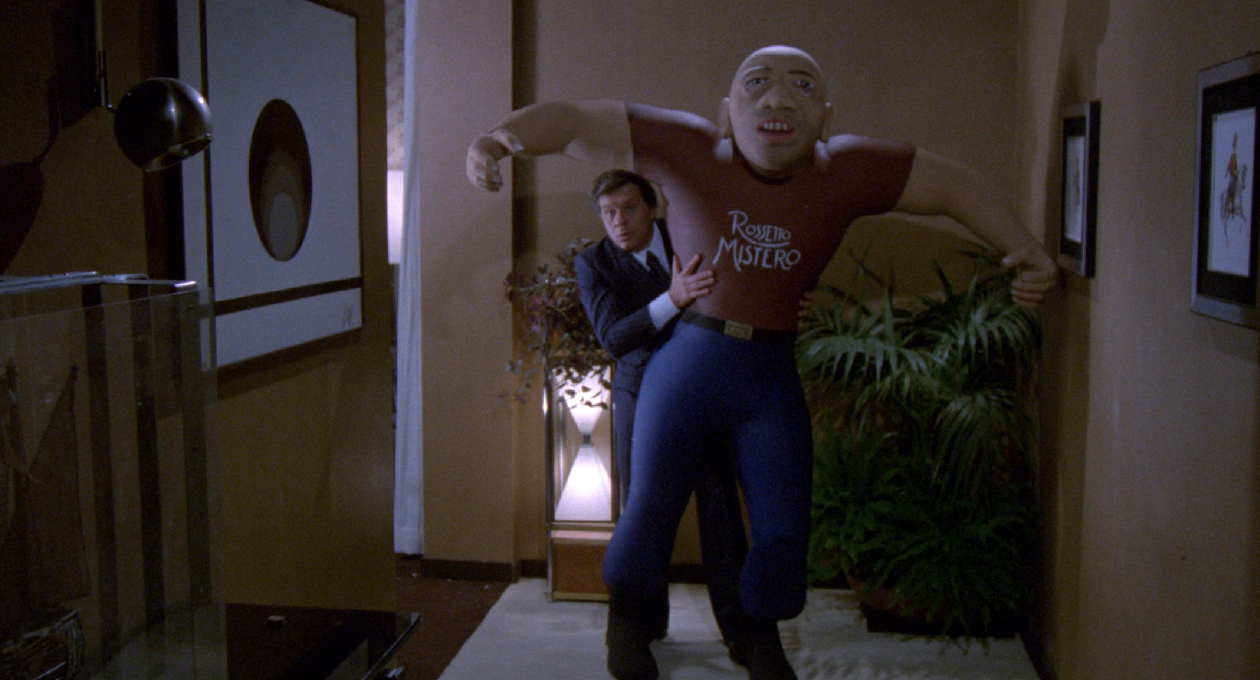
As Valerio begins to predict the killer’s next moves, he proves uncannily accurate. He deduces that the victims are selected because of their names and the significance of their locations. He believes the ‘V’ drawn on each victim’s face in lipstick is meaningful. When the first three victims’ names begin with V, E and N, he concludes that the motif stands for ‘V for vendetta’ and that the killer intends to spell out the phrase across the city by drawing a line between each murder scene. One wonders whether Alan Moore, author of the 1980s comic series V for Vendetta, might have seen the film.
Ultimately, The Monster is difficult to pigeonhole. It hovers between intelligent sociopolitical satire and a cleverly constructed murder mystery. There’s also an element of soap-opera drama, with the fractured family unit serving as a microcosm of the state. Unlike most gialli, the film has no overly indulgent stylistic set pieces around the murders. We see what leads up to each killing through a prowling, unclaimed point of view, but never the act itself—only what happens immediately before and after. As a post-giallo, it works perfectly well. And even if you work out the serial killer’s identity in the first act, there are still one or two surprises in store.
ITALY | 1977 | 94 MINUTES | 1.85:1 | COLOUR | ITALIAN


director: Luigi Zampa.
writer: Sergio Donati.
starring: Johnny Dorelli, Sydne Rome, Renzo Palmer, Yves Beneyton, Enzo Santaniello & Henning Schlüter.