THE DEVILS (1971)
In 17th-century France, Father Urbain Grandier's protection of the city of Loudun from the corrupt Cardinal Richelieu is undermined by a sexually repressed nun's accusation of witchcraft.


In 17th-century France, Father Urbain Grandier's protection of the city of Loudun from the corrupt Cardinal Richelieu is undermined by a sexually repressed nun's accusation of witchcraft.
Opening night. I’m sitting in a capacity crowd of 96, crammed into one of the smaller theatres at my local arthouse cinema. I watch the lovely juxtaposition of balding professors and eager goth kids in the row in front of me. Gregorian chants play through the speakers above, serenading us before the supposedly most blasphemous film on Earth hits the screen.
There’s something electric in the air, something one perverted and shameless reviewer might even describe as cinematically holy: a joyous occasion for horror fiends, anti-censorship activists, midnight-movie lovers and highbrow cineastes alike. In the front row, a couple dressed as a nun and a priest trade their favourite lines, Rocky Horror-style. Somewhere—heaven, hell or oblivion—Ken Russell is smiling.
On its 55th anniversary, Russell’s The Devils is finally being shown in cinemas as he intended: fully intact, revitalised and embraced for both its outrageousness and its power. The new 4K restoration and the inclusion of two long-censored sequences—‘The Rape of Christ’ and ‘The Bone’—are enough to mesmerise.
What once enraged critics, terrified the British Board of Film Classification (BBFC) and made the film horror’s greatest forbidden fruit arguably isn’t its shock value. It’s the film’s playful, artful and incendiary contempt for authority—specifically, authoritarianism. A study of religion, politics, repression, madness and human evil, it remains brilliantly timeless despite being firmly rooted in history. Tellingly, it feels more relevant today than it did on its scandalous initial release.
The Devils follows the 17th-century Loudun possessions, in which Urbain Grandier, a charismatic, politically outspoken local priest, was accused of witchcraft and burned at the stake on the testimony of a supposedly possessed Ursuline convent. Russell drew some inspiration from John Whiting’s play of the same name, written in 1961, cherry-picking dialogue while rejecting its more brooding, melodramatic, Crucible-wannabe elements.
The heart of the film, though, belongs to Aldous Huxley’s 1952 account,The Devils of Loudun. Russell cites Huxley’s description of exorcists at work on the bewitched nuns—like ‘rape in a public lavatory’—as a kind of epiphany that showed him how to make the film. That’s exactly the vibe: mixed, of course, with the auteur’s signature blend of Stanley Kubrick and Monty Python.
If any director and actor were made for each other—beyond Kurosawa and Mifune, or Scorsese and De Niro—it’s Ken Russell and Oliver Reed. Reed brings all his Shakespearean magnetism and hell-raiser humour to Grandier, giving us a figure who’s rascally yet reverent, and who commands every frame of celluloid he’s given. Pompous, vain and philandering, yet compassionate, rebellious and steeped in humanism, his Grandier—like the historical one—is far from an easy saint, and all the more compelling for it.
Like the nuns who itch to sleep with him, we’re drawn in by that curled Van Dyke moustache and those haunting blue eyes. He’s a rock-star priest who speaks freely and eloquently, even when he’s being a bit of an arsehole. When Grandier isn’t running from his pregnant mistress, Philippe (Georgina Hale), battling her father (John Woodvine) with a dead crocodile as a shield, or scoffing at the superstition inherent in the science of his day and in his own religion, there’s something deeper at work.
Reed brings out his character’s storminess, portraying a flawed man of conscience who stands against the nationalist takeover of Loudun by the Catholic Church and the French state. At the same time, Grandier tries to live more altruistically: as a disciple of his God, as a husband to the more traditionally saintly Madeleine (Gemma Jones) and as a caretaker of his community.
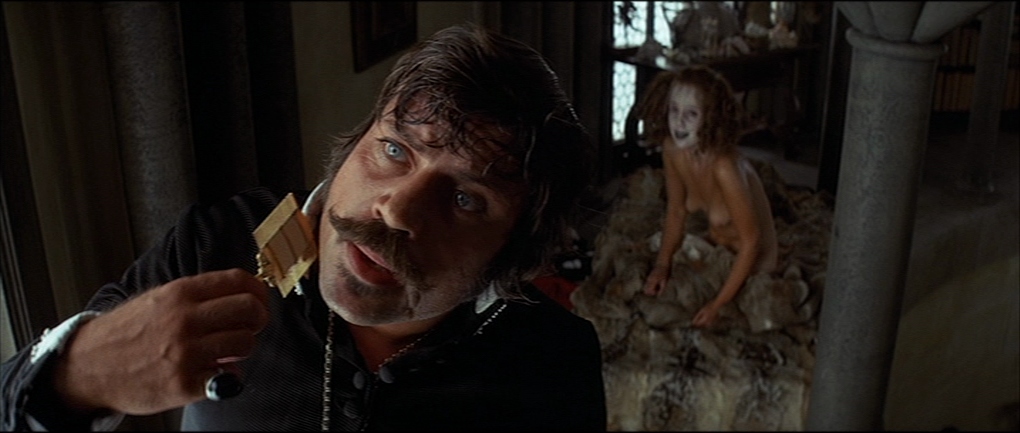
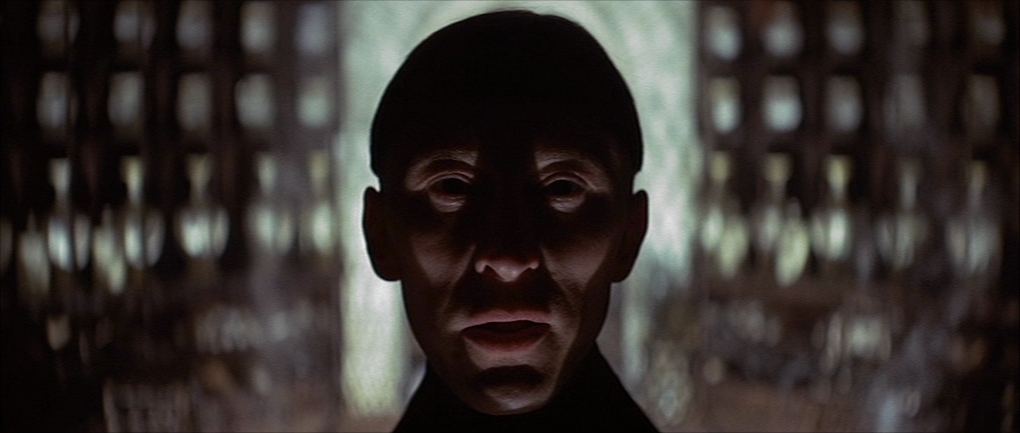
Russell leaves little ambiguity about who the titular devils are. There’s no mythical Satan here, no otherworldly demons corrupting the innocent. The film’s gargantuan, blood-red title card appears over King Louis XIII (Graham Armitage) kissing Cardinal Richelieu’s ring (Christopher Logue), sealing an agreement to consolidate their power and become an unstoppable autocratic force.
When this abominable pair of hypocrites aren’t limply shooting Protestant prisoners dressed as crows or being wheeled around by their nun servants, they’re plotting how best to undermine their political opponents and crush any resistance, with Grandier chief among their targets. Their view of society is cynical but, as it turns out, tragically accurate.
Russell himself described The Devils s a tale of brainwashing. The film reaches something more visceral and unsettling, however. Russell agrees with Huxley about the parallels between Loudun and the totalitarian regimes of the 20th century, but offers a harsher, more human assessment of motivation and behaviour.
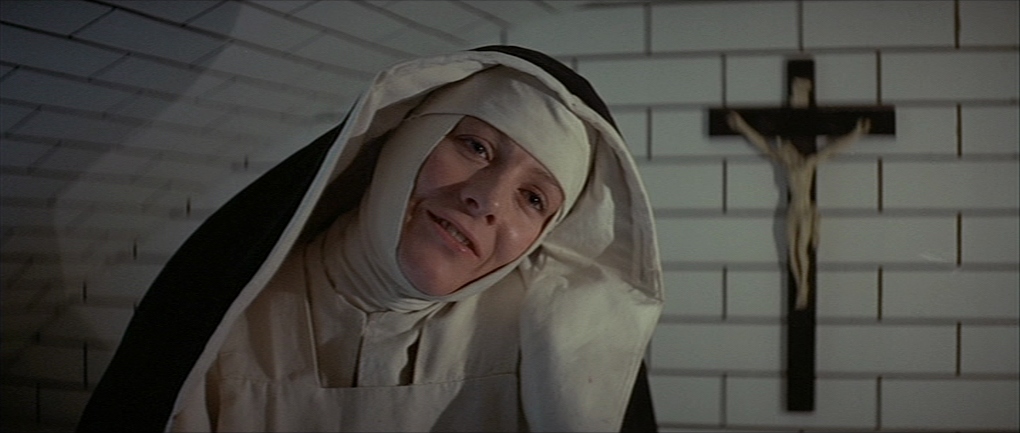
Absolute control, then or now, begins at the top, serving the interests and greed of a ruthless few. But it must filter down to the people through bureaucratic cooperation and various methods of manipulation. Loudun’s massive walls are a literal fortification, but Russell also uses them as a central psychological motif. Sexual repression, personal animosities, base impulses, an outbreak of plague and lifelong social conditioning by the Church have already left the city’s population clawing at the walls from within when corrupt authority arrives with a wrecking ball. Some capitulate through propaganda and groupthink; others do so under threat of ostracism, torture or murder. But most embrace the new system willingly, revelling in its sadism and self-destruction.
As remarkable as Reed is as Grandier, the film’s most intriguing character and performance belong to his accuser, Sister Jeanne des Anges (Vanessa Redgrave). With the crooked physique of a living Catholic icon and a jeering cackle that’s infectious—and historically accurate—Sister Jeanne is the film’s thematic linchpin: both aggressor and victim in the machinations of Church and state.
Redgrave pours every ounce of herself into the bent-neck nun, capturing how the denial of her humanity festers into obsession, spite and violence. As Sister Jeanne fantasises about Grandier from behind the convent bars that forever frame her, melding him with Christ in vivid hallucinations, we feel tremendous empathy for her.
The dream world she masturbates to—licking Christ-like Grandier’s abdominal wound like a vagina while imagining herself statuesque—always ends in a rude awakening: the return of her hunched back, a rosary’s crucifix digging into her palm, and self-flagellation for her desires. The monotony and cruelty of the real world leave her jaded, bored and resentful. Redgrave gives that gnarled perspective, and Sister Jeanne’s explosive giggle at the innocence or sincerity of others, a vileness that’s relatable and initially hilarious.
When Sister Jeanne hears of Grandier’s marriage to goody-two-shoes Madeleine and his refusal to serve as the convent’s confessor, she makes the fatal decision to cry ‘Devil’ and accuse him as an act of vengeance, unwittingly opening Pandora’s box for them both.
Russell’s script builds tension superbly, following Grandier, Sister Jeanne and the Church-state conspiracy separately before bringing all three threads together in the Boschian final acts. The scenes seem to speak to one another throughout: smash cuts link political celebration to a maggot-ridden corpse strapped to a wheel; Louis XIII’s laughter echoes Sister Jeanne’s; and sacred and profane moments are layered together.
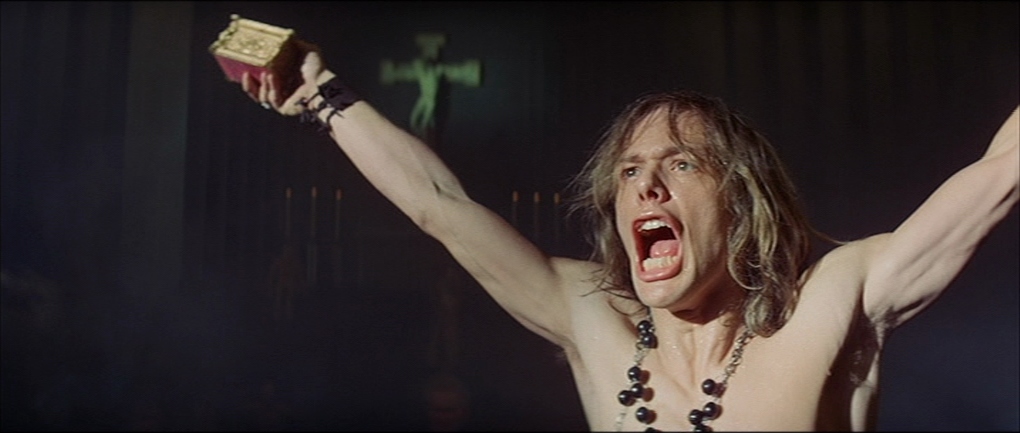
This reaches its zenith in the film’s most notorious and memorable sequence. Finally presented uncut, in all its demented glory, ‘The Rape of Christ’ is a fever dream only Ken Russell could have devised.
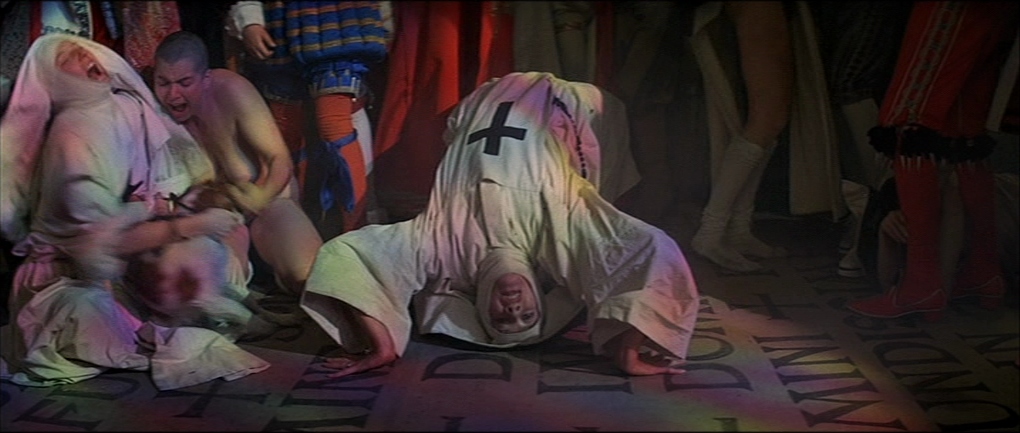
Cardinal Richelieu’s hatchet men have already subjected Sister Jeanne to rigorous questioning, torment and ‘exorcisms’ in the form of sexual assault, gratifying their own lust for barbarity even as she accuses Grandier without resistance. When her fellow nuns loyally defend her, attacking the priests and inviting accusations of possession—and almost certain execution—the tribunal’s most fanatical (and kinky) member, the deliciously unhinged Father Barre (Michael Gothard), wearing John Lennon-style glasses, seizes the opportunity to stage a mass-exorcism orgy. The nuns must either join Jeanne in the ruse or be killed. They choose the former.
What follows is a frenzy of flesh, satire and phantasmagoria: liberating or sacrilegious, hysterical or punk, depending on your point of view. Nuns dance naked through the church, wearing S&M dog collars, painting crosses on their faces, masturbating with candles, getting the better of Father Barre and taking down an enormous crucifix, which they proceed to mount and ride rodeo-style.
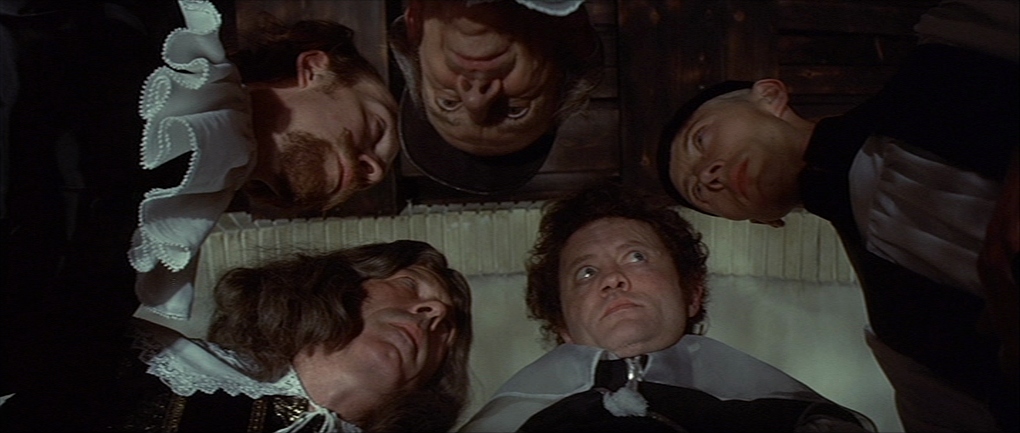
Meanwhile, the weak and weaselly Father Mignon (Murray Melvin) climbs a surreal ladder to escape the chaos, only to gaze down at it and reach beneath his holy robe. The camera crash-zooms in and out like a bad acid trip, amid a choir of sounds like hyenas laughing and pigs being slaughtered. A masked nobleman, who may or may not be Louis XIII, crashes the party to mock the nuns’ superstition. Sister Jeanne is force-fed a liquid resembling semen—Heinz soup, according to Vanessa Redgrave. At the left of the frame, a cocker spaniel, for whom I feel the most distress, is caught in the middle of the fuck-and-frolic bacchanalia. It’s all pure cinematic insanity.
Russell cuts between this and Grandier taking the sacrament in peace, far away on a beach. Critic and The Devilschampion and re-releaser Mark Kermode considers the contrast essential to the film’s message, and it’s what makes the scene unforgettable. Unaware of the mayhem he’s about to return to in Loudun, Grandier reaches a moment of transcendence and bliss just as the city prepares to annihilate him and itself. In this scene, Russell brings together humanity’s capacity for love and nihilism.
The pent-up sexual lust quickly gives way to bloodlust when Grandier is arrested. Just as Oliver Reed proclaims, in a very proto-Matt Berry way, that “Satan’s boy I….could never be”, Russell strips away the film’s humour. Grandier is tortured, tried in a kangaroo court by stiff judges dressed in Ku Klux Klan-like robes, and sentenced to death. Reed is breathtaking in the finale, conveying Grandier’s suffering and resolve in a moving, but far from saintly, way. Grandier is besieged by pain, doubt and fear, yet still refuses to put his name to a political execution built on a sectarian lie.
During the burning, Russell puts us in Grandier’s perspective, framing the callous, laughing faces of the crowd—and the frustrated to mortified expressions of his accusers—against deep, hellish flames. It’s chilling, and creates such disgust that you’ll want to wash away every trace of our species as soon as you leave the cinema.
But the final note is even more eviscerating. In the second of the two restored sequences, ‘The Bone’, the obscenely pragmatic Baron de Laubardemont (Dudley Sutton) gives Sister Jeanne—now an enthusiastic charlatan performing exorcisms of her own—Grandier’s suggestively shaped femur, which she uses to pleasure herself. A one-shot coda follows: Madeleine, our only source of unalloyed kindness, steps out of a dungeon, walks through Loudun’s devastated streets and shattered walls, and follows a jagged path into uncertainty, surrounded by giant, daisy-like wheels of torture and conformity. It’s an eerie climax, almost unbearable to watch in the political climate of 2026.
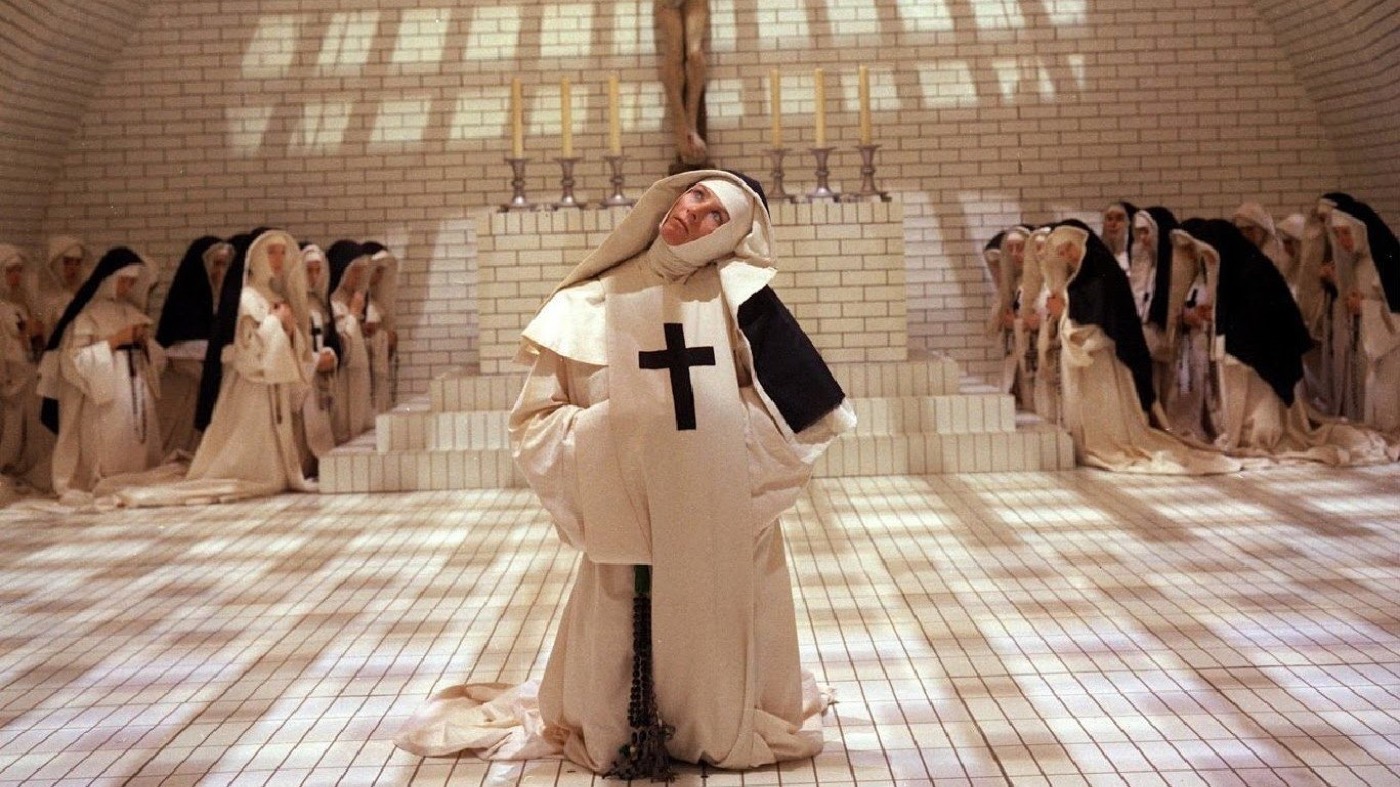
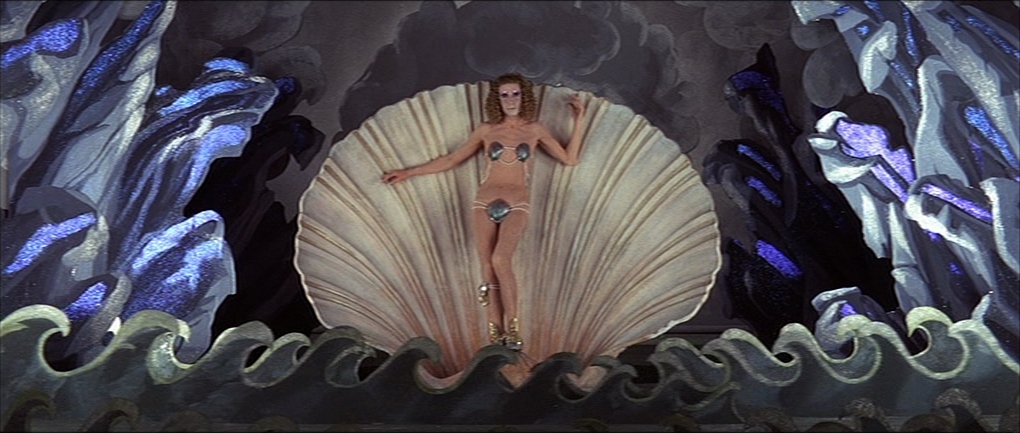
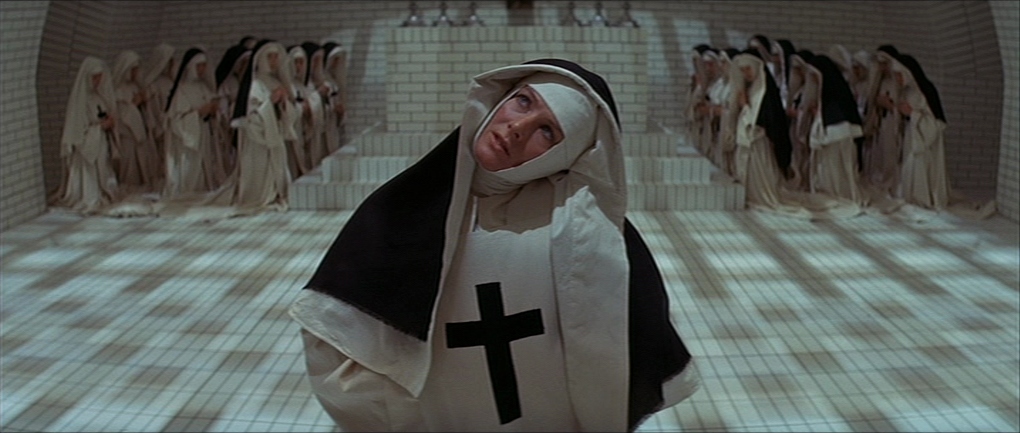
Alongside its stellar performances and writing, The Devils showcases extraordinary production design and visual storytelling. Loudun’s provocative sets, conceived and built by a young Derek Jarman on the Pinewood Studios lot, play immensity against confinement. The pristine walls of Loudun contrast with the convent’s oppressively sanitised, claustrophobic spaces. White and black are used to suggest purification, smothering and negation. Meanwhile, Russell, cinematographer David Watkin and editor Michael Bradsell create a rhythm balanced between absurdity and dread: the camera moves through a dazed world of sex, death and pestilence, then rests on the naked expressiveness of the human face.
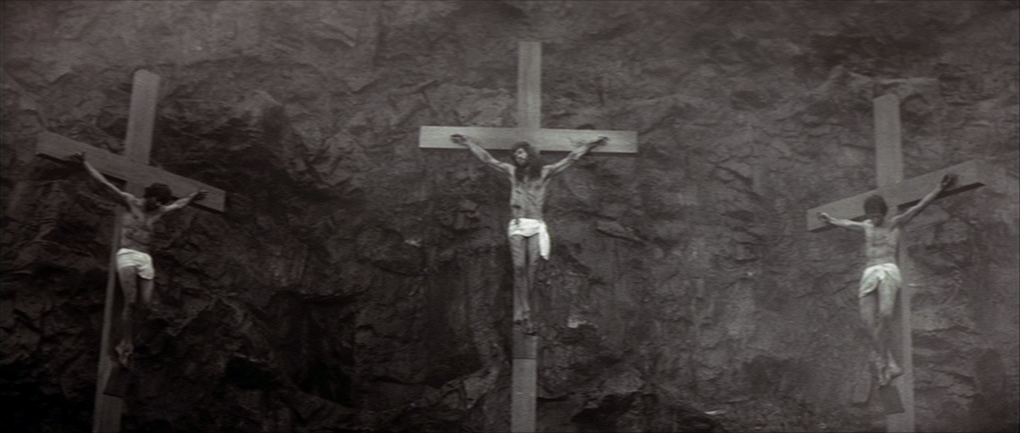
A masterful blend of comedy and horror, The Devils is finding a wider audience at the perfect time. Now, even more than in 1971, we need to laugh with a film and be broken by it at once. Few filmmakers can make such a personal statement about politics and religion, then have audiences joyfully reciting lines along with it before falling into stunned silence. This is one such event.
Cosplay is strongly encouraged.
Bonus points for Georgina Hale’s comic chemistry with Reed as a bratty version of Philippe, her face inexplicably painted in glam-rock make-up throughout the film to match Huxley’s figurative description of her in his book; for the Grim Reaper-adorned tomb designed by Jarman, which is exactly how I want to be buried; and for discovering Ken Russell’s very Hobbit-like cottage. The latter appears in the documentary Hell on Earth: The Desecration & Resurrection of The Devils (2002), which I highly recommend—as questionable green-screen effects and all—as a supplementary watch.
UK | 1971 | 115 MINUTES | 2.35:1 | COLOUR | ENGLISH • LATIN

director: Ken Russell.
writer: Ken Russell (based on the play by John Whiting, itself based on the 1952 book ‘The Devils of Loudon’ by Aldous Huxley).
starring: Oliver Reed, Vanessa Redgrave, Gemma Jones, Dudley Sutton, Murray Melvin, Michael Gothard, Georgina Hale, Graham Armitage & Christopher Logue.