Mortal Kombat Kollection (1995-97)
A fusion of martial arts mayhem, fantasy spectacle and video game mythology, the 1990s Mortal Kombat films brought arcade combat to the big screen...


A fusion of martial arts mayhem, fantasy spectacle and video game mythology, the 1990s Mortal Kombat films brought arcade combat to the big screen...
“Mortal Kombat!” Remember that kid? The legend in the iconic 1993 commercial for the home release of the original game, screaming that battle cry and drawing in crowds from the street? That’s what owning this boxset feels like. Alright, that’s a bit much, but Mortal Kombat is an enduring pop-culture phenomenon that—whether fuelled by old-school nostalgia or cutting-edge releases—never fails to get people hyped.
The last mainline entry for the video games was 2023’s Mortal Kombat 1, followed more recently by the impressively extensive Mortal Kombat: Legacy Kollection in 2025, which boasted 23 older games in all their various builds alongside a feature-length documentary. A boxset with just two films might not measure up in quantity, but Arrow Video brings us a beautiful restoration of two very significant entries in the video-game-to-feature-film adaptation venture.
Some people may be more familiar with the recent 2020s versions, but these original films should be appreciated for their historical impact. It isn’t simply because they belong to the same franchise; Mortal Kombat (1995) was the first genuine proof for mainstream audiences that a video game could be adapted for the big screen… and actually be good.
Generations of gamers have lamented the ‘curse’ of their favourite titles being mistranslated and butchered, leaving general audiences with the impression that the source material is just as awful. Even Paul W.S Anderson, the director of Mortal Kombat, is no stranger to this phenomenon. His exponentially cursed Resident Evil (2002–2016) series and Monster Hunter (2020) possess the barest qualifications to be considered films. And yet, here is one of his earliest works, and it remains one of his best.
It’s all too easy to say Mortal Kombat is a slam dunk. Knowing the answer is in this kollection, I ask rhetorically: how could you screw this up? It’s a fighting game; people fight. In a modern era where it’s easier to name franchises that don’t explore the multiverse, these combatants were already competing for the survival of their entire worlds. Their eclectic backgrounds were cherry-picked from everything a teenage boy might doodle in his notebook during class: ninjas, cyborgs, vampires, soldiers, wizards, and monsters. Over time, those elements would cross over and combine to build an ever-convoluted mythology.
Both movies in this kollection have their own lore, largely shaped by producer Lawrence Kasanoff, who deserves equal praise and blame for the highs and lows of Mortal Kombat cinema. On the positive side, his impact led to romantic entanglements between characters like Liu Kang and Kitana, Cary-Hiroyuki Tagawa reprising his performance as Shang Tsung in the later video games, and a truly ridiculous Australian impression that forever changed Kano’s nationality. Conversely, Annihilation (1997) became the poster child for what not to do when making a video game film, giving it an equal, if infamous, significance.
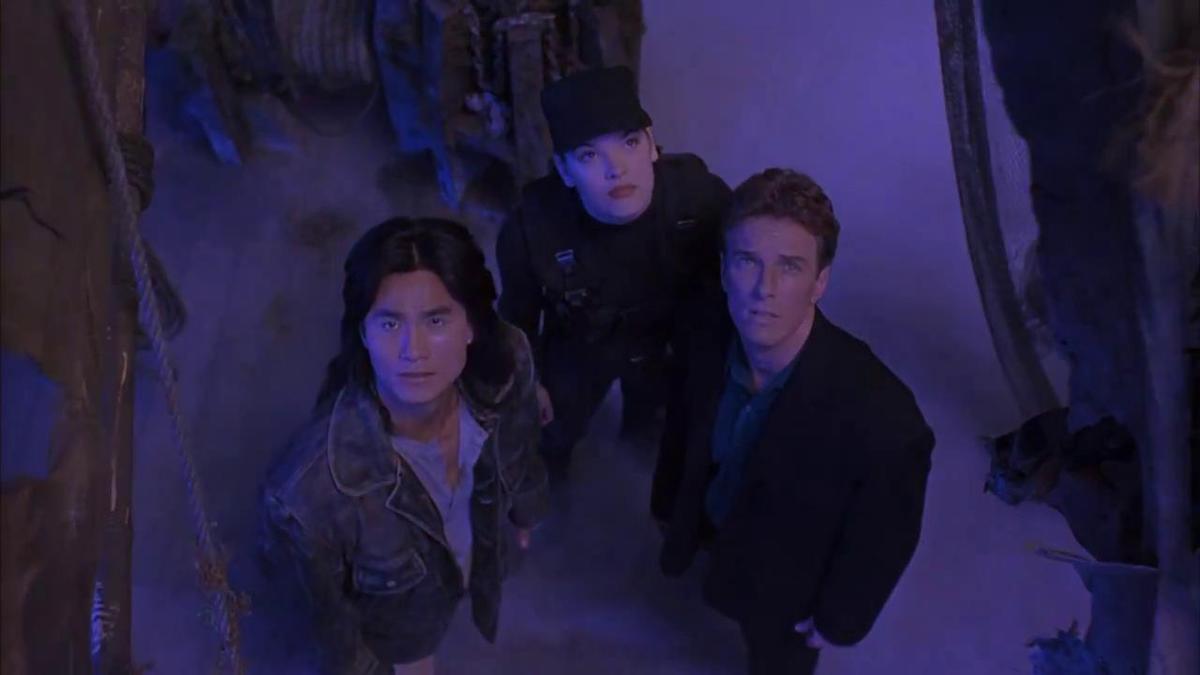
Three unknowing martial artists are summoned to a mysterious island to compete in the eponymous tournament whose outcome will decide the fate of their world.
Dawn of Time: The One Being is felled by the Elder Gods, carved with the Kamidogu into the realms of our multiverse. Antiquity: War threatening to restore the realms establishes the tournament of Mortal Kombat. Nine Generations Ago: The Great Kung Lao fails as Earth is primed to be conquered. 1993: Super Mario Bros. 1994: Double Dragon. 1995: Street Fighter. They all sucked. But Mortal Kombat promised to be different…
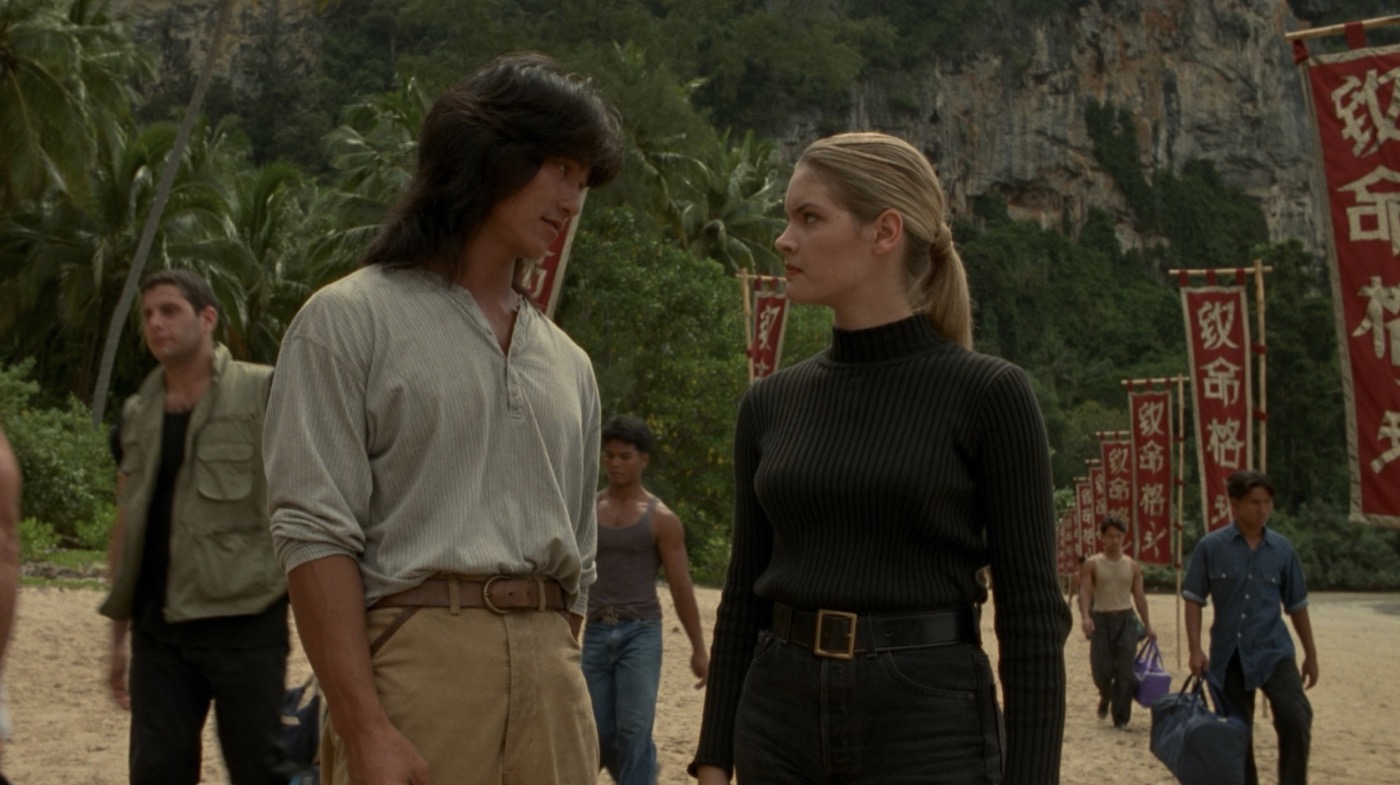
It may sound like an epic opening to rival The Lord of the Rings (2001-03), yet the production history of this unassuming adaptation is as wild as the video game’s mythology. Mortal Kombat—both the 1992 arcade fighter and the 1995 film—follows a simple, high-concept pitch: what if the ninjas in Enter the Dragon (1973) were really into Dungeons & Dragons? Three protagonists—vengeful monk Liu Kang (Robin Shou), tough special forces operative Sonya Blade (Bridgette Wilson), and Hollywood actor Johnny Cage (Linden Ashby)—arrive on a mysterious island to compete for the fate of their world against the villainous sorcerer Shang Tsung (Cary-Hiroyuki Tagawa).
Modern video games emulate cinematic aesthetics with expansive cutscenes and expensive voice actors. In contrast, Mortal Kombat had brief character biographies scrolling past when nobody was playing. A rare sight when the eye-catching visuals of colourful ninjas, four-armed monsters, and heads being ripped off drew a constant crowd of players. The appeal was clear, but retooling an arcade fighter into a compelling big-screen narrative was always going to be a challenge. Screenwriter Kevin Droney had only a few television credits to his name before Mortal Kombat promised to kick-start his movie career. Unfortunately, his subsequent video game adaptation, Wing Commander (1999), swiftly ended it.
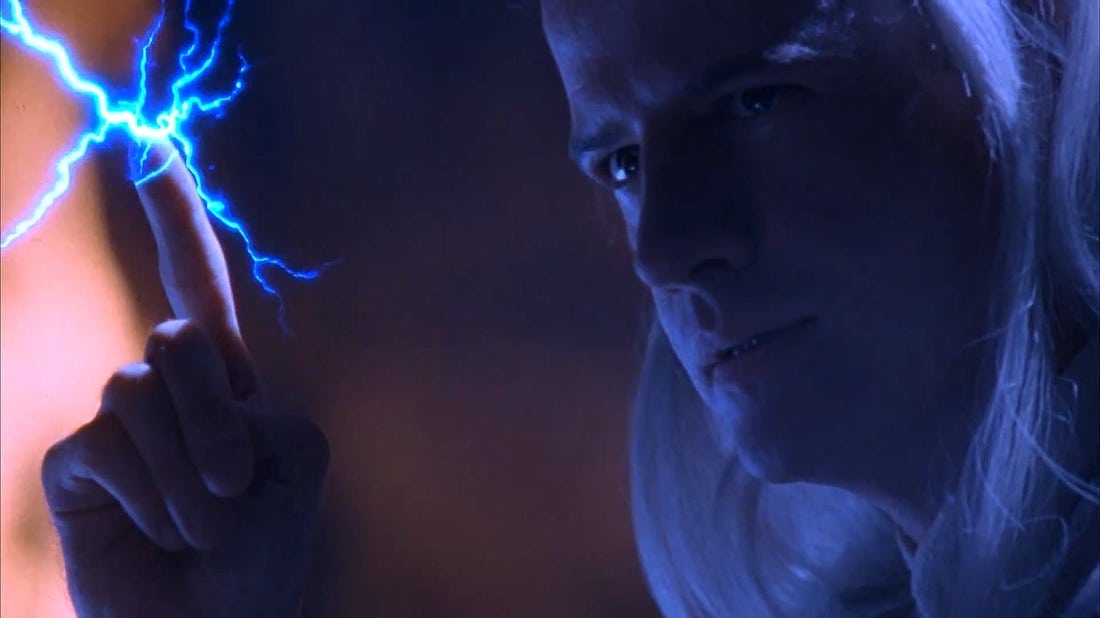
Mimicking the influences of Hong Kong action cinema gives rise to an obviously formulaic structure. Characters often use their full names and state their motivations aloud, as if the audience were similarly just walking past. As the god and mentor Rayden, Christopher Lambert delivers cryptic exposition in a wry tone that keeps you guessing just how seriously he is taking the material. The fantastical nonsense is frequently lampshaded by the clueless movie star Cage, who routinely reacts with, “I give up, what’s going on?” While action is peppered throughout the script, a meandering first act leaves our heroes lollygagging with side-quests—such as attempting to ask Princess Kitana (Talisa Soto) questions they never actually manage to pose. This information should have been distributed during the second act’s fight sequences, rather than being so heavily front-loaded.
Paul W.S Anderson had only directed one film, Shopping (1994), budgeted at around £100,000, and spent his earnings playing Mortal Kombat in arcades between industry meetings. Anderson is now better known for his billion-dollar Resident Evil adaptations, but he honed his directorial skills right here. Some might even argue he has regressed since.
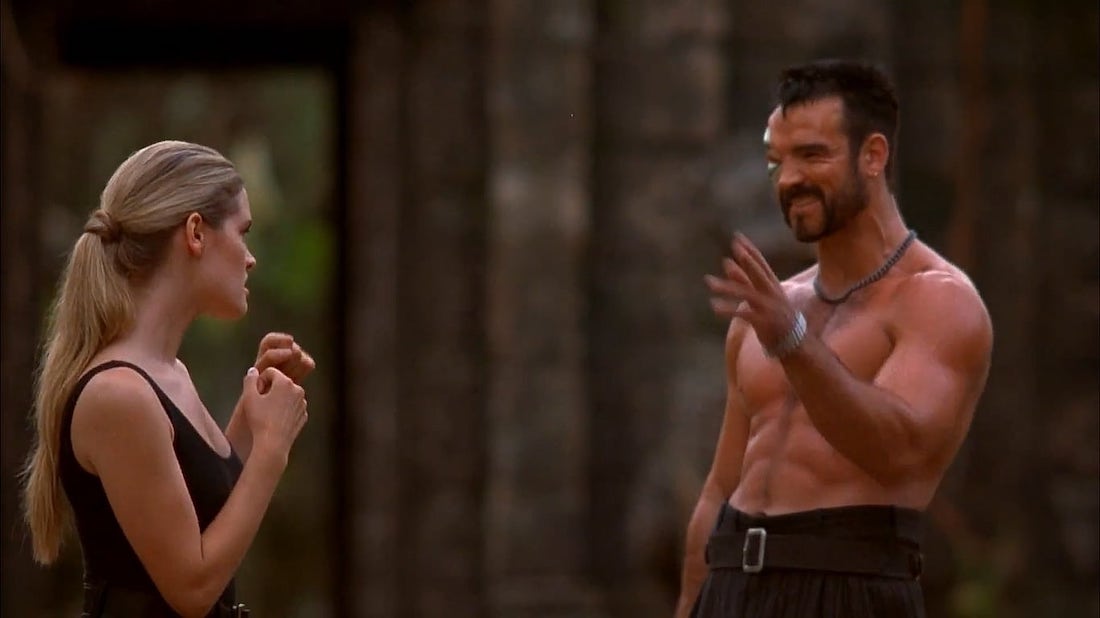
The film features impressive practical effects and luscious set-dressing, with every scene bookended by stage-like entrances and exits. The island itself is impossible to map, blending gorgeous location scenery with otherworldly sets that share zero logical geographical connection. Anderson at least delivers on the titular kombat, with each contestant bringing a distinct, believably exhausting style of action. Shou revealed that they were originally directed to shoot fights entirely in master shots, until the actors finally cracked and asked the director if he was familiar with the concept of a close-up. Following a complaint from a bloodthirsty fan during a test screening that there wasn’t enough fighting, two entire set-pieces—’Cage vs. Scorpion’ and ‘Kang vs. Reptile’—were added late in the day. These bouts showcase a newly learned expertise, featuring superior coverage, slicker choreography, and better fatalities. It helps immensely that the tournament-bracket framework smoothly patches over the assemblage of new and old bouts.
Anderson’s best decision was allowing ad-libs to lighten the performances in an otherwise wooden script. Without them, we’d never have heard lines like, “Those were $500 sunglasses, asshole”—a moment so iconic it has been immortalised in the sequel, later video games, and the rebooted Mortal Kombat II (2026). It was a brilliant move to make the cast feel comfortable, given that the ensemble was almost entirely recast early on.
Cameron Diaz had just finished The Mask (1994) and New Line Cinema had started her martial arts training before a broken wrist took her out of the running. Steve James tragically died of pancreatic cancer before production began,Brandon Lee was infamously killed while making The Crow (1994), and Jean-Claude Van Damme turned the film down to star in the rival adaptation of Street Fighter. The absence of JCVD is highly ironic: game developer Midway Games originally intended to release a Universal Soldier (1992) video game, but when the licence fell through, they repackaged those ideas into what became Mortal Kombat. His spiritual replacement, Johnny Cage, would eventually receive a Van Damme skin with unique dialogue in Mortal Kombat 1.
Star power may have been lacking from the actors who ultimately took on these roles, but each does a commendable job of injecting personality into ridiculous stereotypes. Bridgette Wilson tries her best to fulfil Sonya’s brief revenge arc an hour in, whilst dutifully handling damsel-in-distress duties in the finale. Robin Shou’s martial arts prowess is backed up by genuine charm. Mortal Kombat is hard to take seriously, so his earnest quest comes off as less memorable than Linden Ashby’s sarcastic, fish-out-of-water routine, but Shou fits the heroic lead well. He had appeared in around 40 Hong Kong films and was even trained by Jackie Chan before moving to the US, only to be underutilised by Hollywood.
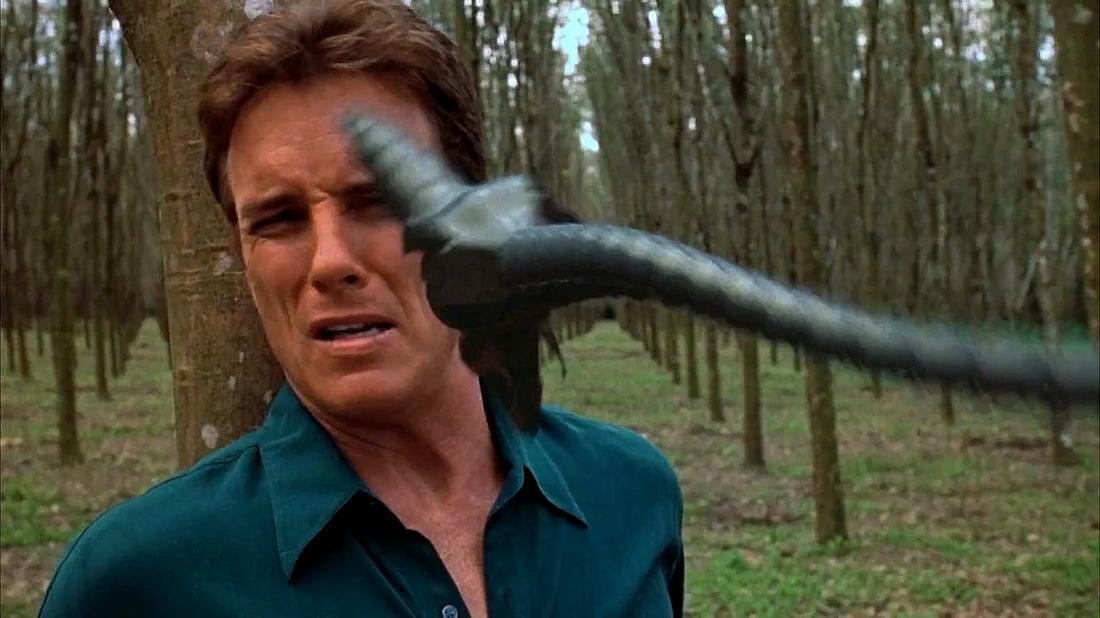
Christopher Lambert is a strange sight in general, let alone playing a French-American white guy revered by Asian monks. He doesn’t get any action, unless you count occasionally zapping electricity at people, but he imbues the stilted,wise-leader role with an alien eccentricity. Lambert’s five-week contract prohibited him from participating in the extensive Thailand shoot, but the veteran talent decided to go anyway for free—and he even paid for the wrap party.
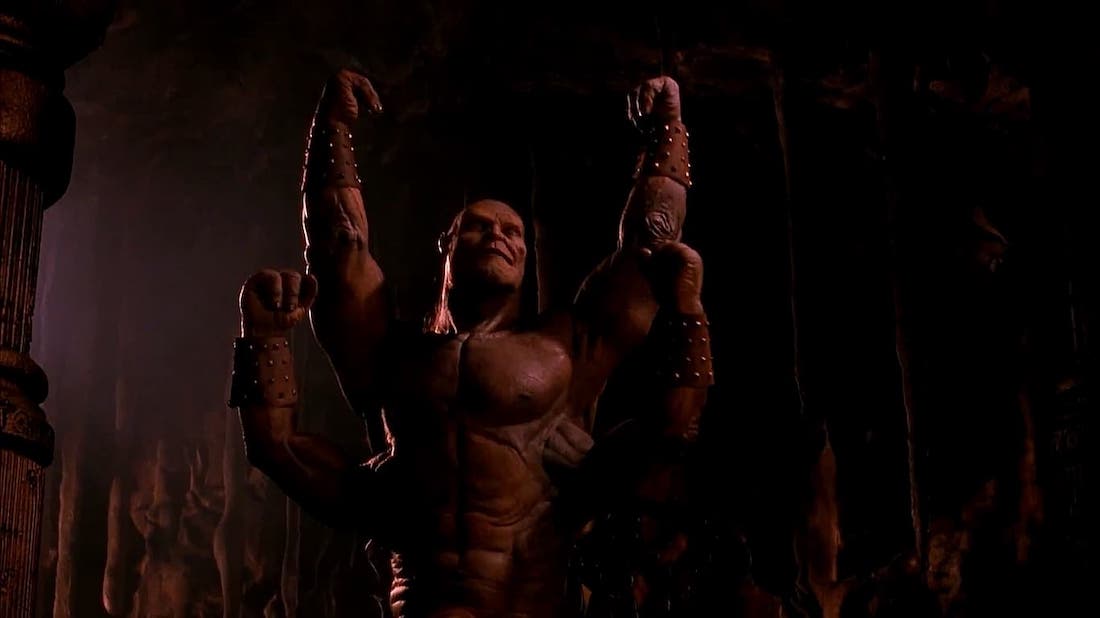
Two members of the cast Anderson had real trouble wrestling with were Reptile and Goro. The former’s CGI inclusion was pushed for the sake of innovation, but frankly, it feels more like a tech demo than an actual character. Goro was very real. It cost $1M to produce a practical costume, which required 13 to 15 puppeteers to operate the colossal animatronic arms and face created by Amalgamated Dynamics. Fighting the giant is one thing, but he still impresses today in extensive dialogue scenes opposite ordinary actors.
It would be criminal not to mention the iconic soundtrack. Even if the film’s visuals didn’t stick with every teenager of the 1990s, everyone has had this particular earworm at some point. It is impossible to imagine Mortal Kombat without the monumental “Techno Syndrome” wailing of the title. The Immortals released the track as a single, which was then packaged into Mortal Kombat: The Album (1994) to coincide with the game’s home console release. Soon, every cool kid was executing fatalities in their bedroom whilst jamming to KMFDM, Orbital, Juno Reactor, Fear Factory, and three Stabbing Westward tracks.
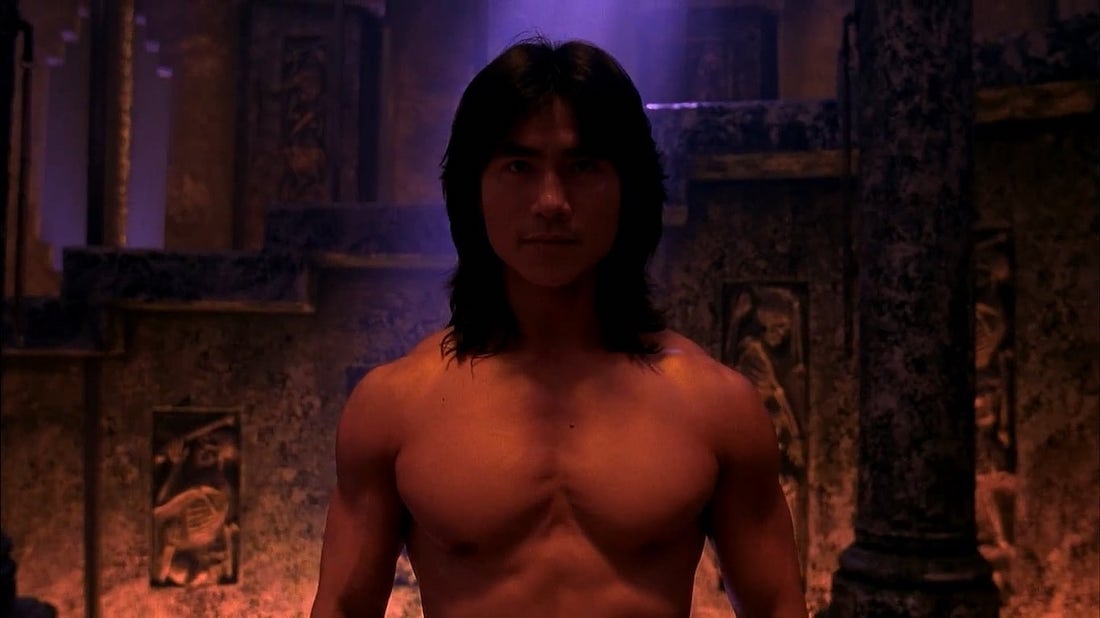
Producer Lawrence Kasanoff was previously behind the likes of C.H.U.D. II: Bud the Chud (1989) and Ghoulies Go to College (1990), but his true talent lay in marketing, having made a fortune from merchandising Terminator 2: Judgment Day (1991). One of Kasanoff’s golden geese was the impeccable T2 light-gun arcade shooter produced by Midway, who happened to show him another title they were excited about. He instantly described Mortal Kombat as “a whole phenomenon” to be explored “in every medium in the world”.
On a modest budget of $18M, Mortal Kombat shattered all expectations by grossing $122M, proving Kasanoff right: Midway had crafted a saga too big for the arcades alone. He insisted that “the video game is the first incarnation”, chasing that belief with an animated prequel, Mortal Kombat: The Journey Begins (1995), and an animated series, Mortal Kombat: Defenders of the Realm (1996). The actual cinematic sequel, Mortal Kombat: Annihilation (1997), was far from a flawless victory…
Yet, the grand tournament couldn’t be stopped. A live-action series, Mortal Kombat: Conquest (1998), followed, but its cancellation left a gulf that Midway filled by continuing their original success with video game sequels. A well-received web series, Mortal Kombat: Legacy (2011), suggested the audience was still there, and the animated feature Mortal Kombat Legends: Scorpion’s Revenge (2020) further tested the waters. As inevitable as the interdimensional contest itself, Mortal Kombat returned in a live-action reboot in 2021. The rematch failed to repeat the same explosive box-office numbers, but it persevered with a 2026 sequel that cost more and made more, proving it’s entirely possible for the saga to continue. Kasanoff may not be shepherding the franchise as closely as Rayden, but he has endured for 30 years to remain an executive producer on Mortal Kombat.
USA | 1995 | 101 MINUTES | 1.85:1 | COLOUR | ENGLISH
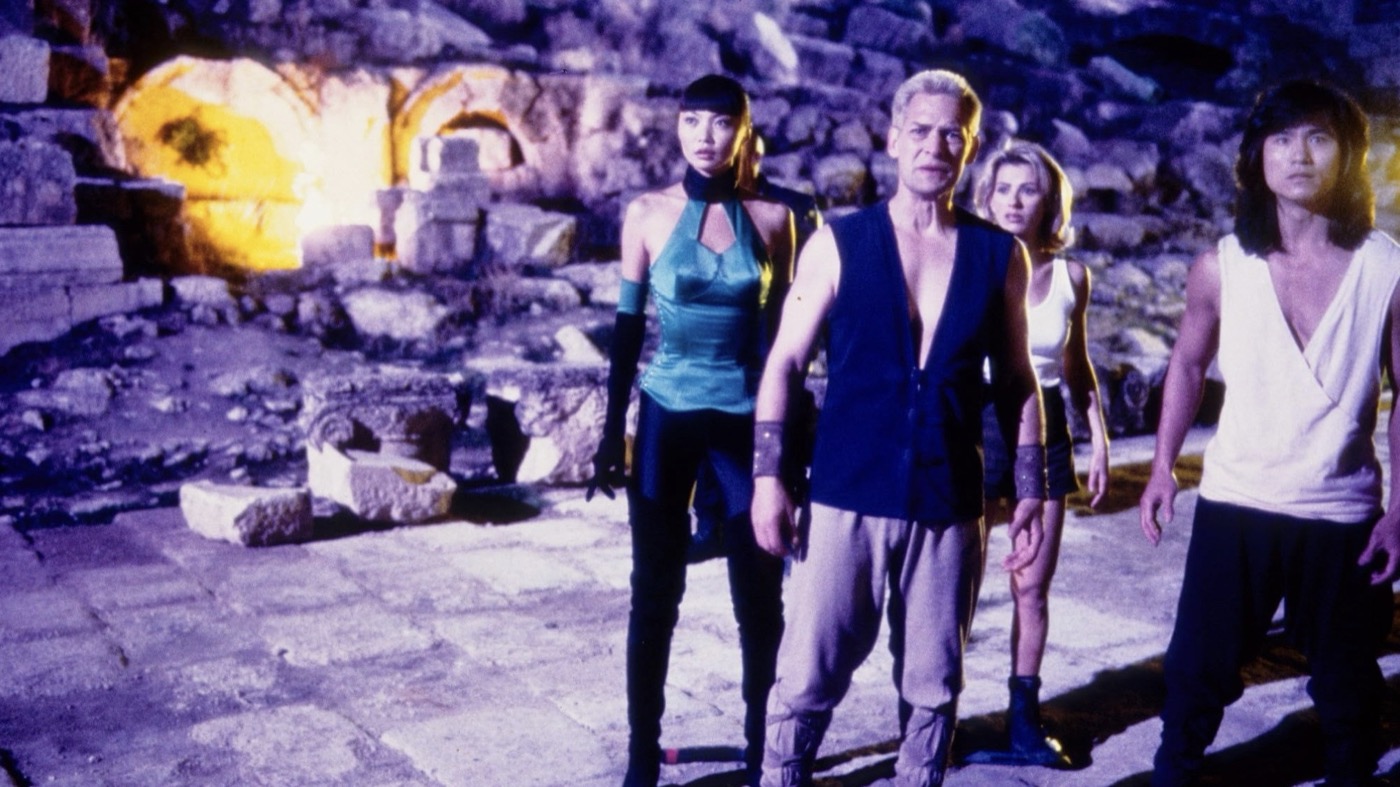
Rayden and his martial arts warriors have no time to celebrate their tournament win as otherworldly emperor Shao Kahn ignores the rules to take over Earth.
The production schedule for Mortal Kombat: Annihilation was described as “like being on a train going 120mph down an icy slope, but somehow we’re making the corner.” The quote belongs to Lawrence Kasanoff—screenwriter,producer, and CEO of Threshold Entertainment—who successfully steered the Mortal Kombat video games into a multimedia phenomenon, whilst simultaneously setting up easy punchlines about Annihilation being a monumental trainwreck.
The tracks were originally laid out perfectly for them: the 1995 original cost $20M and grossed $122M. Two years later, the sequel was granted an increased budget of $30M. Yet, when you watch the film, the numbers simply do not add up. It cost significantly more, so how did it end up looking so terrible? The missing, yet glaringly obvious, factor was time. Kasanoff was given a brutally tight deadline by the game’s publisher, Midway, who were developing a fourth entry. As Kasanoff recalled, they told him: “You promised us a movie and you’ve got to deliver, because we’ve got a game to promote.” In a 1997 article for Sci-Fi Entertainment, author Cory Doctorow revealed: “One of the people I interviewed for this said that he couldn’t give me a plot summary because ‘we won’t know what it’s about until we finish the post and figure out what effects worked.'” Given that none of the special effects actually worked, it is safe to assume they never found out what the film was about.
The first Mortal Kombat was beautifully simple, and the sequel wastes no time giving the people what they want by blasting that kick-ass theme tune, “Techno Syndrome”. This is immediately contrasted by a deafening lack of score as ninjas limply tumble from the sky, miniature ruins are lightly toppled, and elderly monks look utterly befuddled by the badly composited storm effects. The ensemble cast look just as confused, a feeling entirely shared by the audience, who barely recognise most of the people on screen.
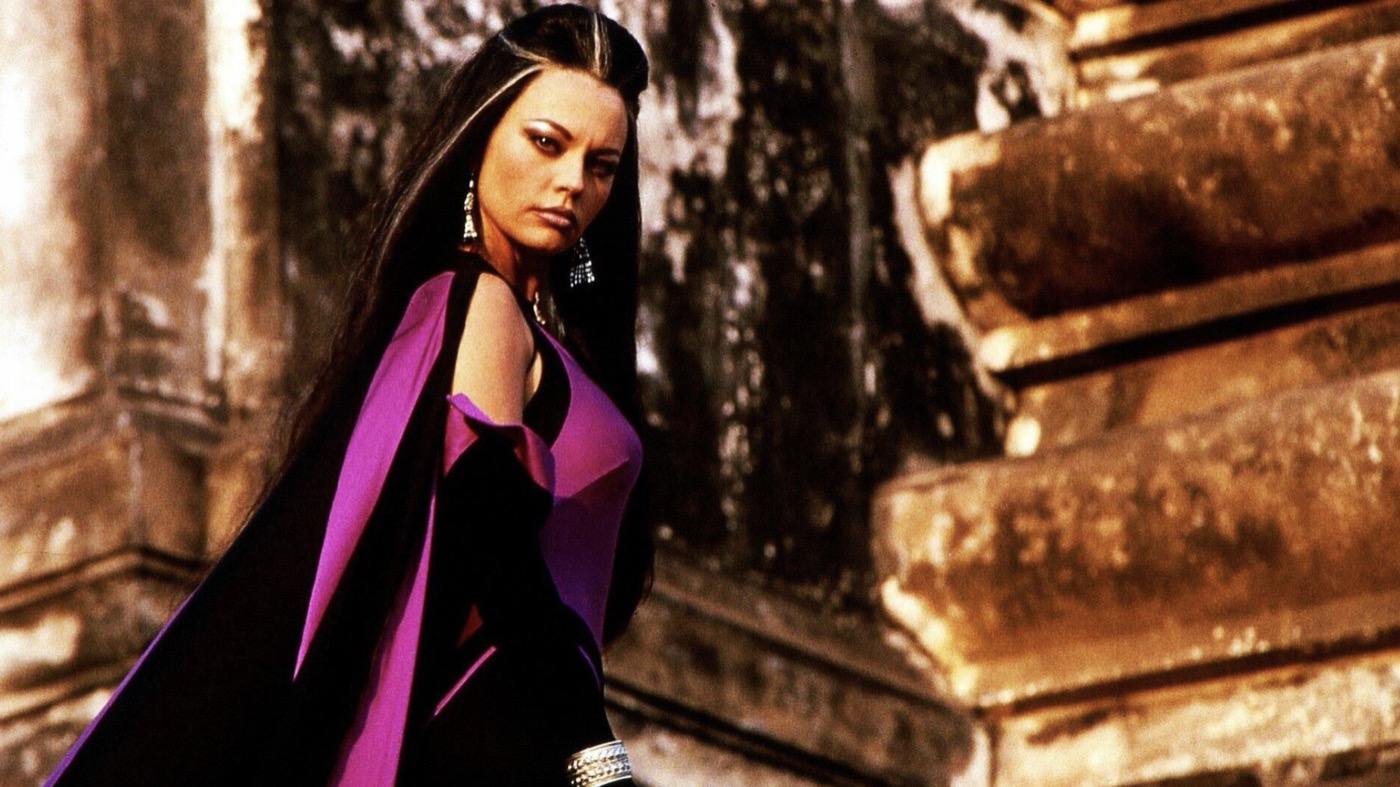
The production budget clearly went elsewhere, as the studio could only afford to bring back Robin Shou and Talisa Soto to reprise their roles. Kasanoff regularised the issue by noting: “Now everyone wants twice the money, ten times the money. In some cases they deserve it and in other cases they don’t.”
Of the original cast, only Gregory McKinney was unable to return as Jax due to ailing health; he tragically passed away in 1998. It says a great deal about the project that almost every other original actor preferred to star in alternative critically panned ventures rather than return for a supposedly safe sequel. Bridgette Wilson turned down the role of Sonya to film I Know What You Did Last Summer (1997). Chris Casamassa could not return as Scorpion due to stunt commitments on Batman & Robin (1997). Christopher Lambert expressed an interest in returning as Rayden but committed to Beowulf (1999) instead, later admitting he simply disliked the script.
Linden Ashby has the most colourful story of all: his request for a pay rise resulted in Johnny Cage being abruptly killed off in the opening minutes. As Ashby later recalled: “The second movie sucked ass. What fucking morons. How would you like to see The Empire Strikes Back, but Han Solo is played by someone else?”
Do not expect anything resembling Empire with this sequel. The plot dictates that Outworld will consume Earthrealm as long as the magical interdimensional portals remain jammed open by a resurrected queen. To be fair, that particular nonsense is lifted directly from the games. Audiences, however, still expect more satisfying narrative explanations than fantasy warlord Shao Kahn (Brian Thompson) merely “cheating”. The heroes’ journey is weighed down by vague mysticism, with Rayden (now played by James Remar) spelling out that each fighter must become stronger through fortune-cookie lessons like: “Alone you are vulnerable, but if you work together as a team, you can do much.”
Some of the best entertainment value in Annihilation comes from watching the actors try their absolute best with clunky dialogue like, “Pretty cool, huh? It’s my animality,” alongside the classic cliché, “You should’ve killed me… when you had the chance.” In one bizarre scene, Liu Kang (Shou) looks for Rayden by casting a single glance at a massive historical ruin a mile away, declaring, “He’s not here”—only for Rayden to immediately appear from that exact direction. Scorpion (played by J.J Perry and voiced by game co-creator Ed Boon) plunges into a portal whilst yelling, “Suckers!”—which is not only a nod to the games but the most personality any character displays in the entire film. The arbitrary words spoken between fight scenes were written by Brent V. Friedman and Bryce Zabel, and are delivered across vacuous sets whilst characters flip and roll through the air just to be heard. Not a single dialogue scene goes by without acrobatics.
Promoted from cinematographer of the first film, director John R. Leonetti makes an ambitious feature debut here. Unfortunately, his efforts—alongside those of his brother and cinematographer, Matthew F. Leonetti—suffered heavily under severe production woes. Establishing shots adventurously pan through vistas of digital lava and lightning before settling on the actors, but the individual pieces of footage are so clearly mismatched in visual quality and clumsily strung together that they strip bare the patchwork nature of the post-production.
Matters were hardly helped by the James Bond-style array of international locations, with the production charting the globe across Wales, London, Jordan, Israel, and Thailand. While the carved city of Petra and the Ayutthaya Historical Park are easily recognisable, much of the washed-out cinematography squanders that time and money. Ultimately, the exotic locales end up looking exactly like one of the many English quarries used to shoot classic episodes of Doctor Who.
“I’m telling you the effects in that movie are not the final effects. I never anticipated that someone would take the movie and go, ‘it’s good enough’. We weren’t done. We never finished that movie. But the studio said, ‘we don’t care’. We sacrificed quality for business. There was supposed to be another entire second pass of visual effects and editing but New Line said ‘it’s testing so well, it doesn’t fucking matter.'” —Lawrence Kasanoff, producer.
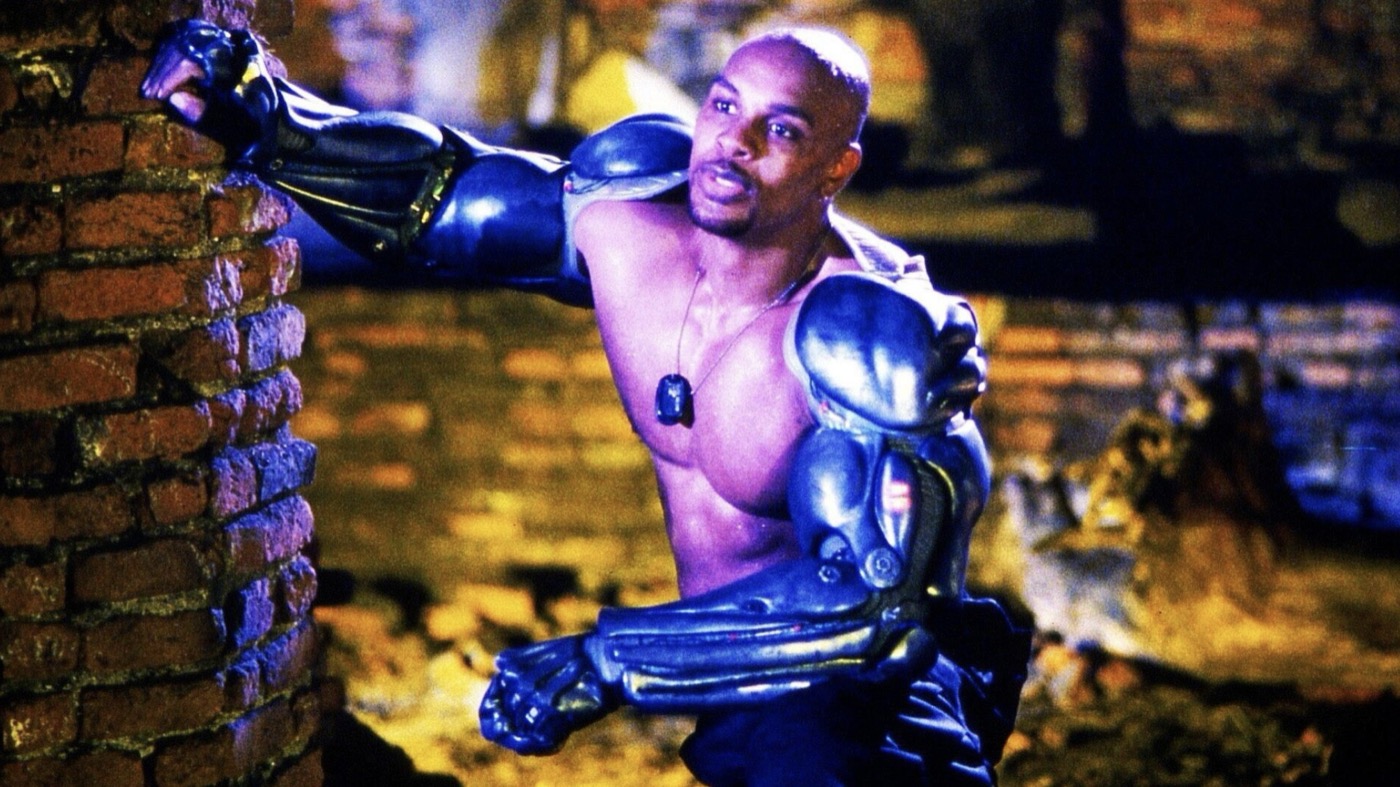
Roughly 90% of this film feels like a series of martial arts music videos set to another banger-heavy 1990s catalogue featuring Scooter, Lunatic Calm, Juno Reactor, Pitchshifter, Alien Factory, Psykosonik, KMFDM, Megadeth, and more. Yet, even with this heavily streamlined approach, what little narrative remains still feels entirely incoherent. Take Jax (Lynn “Red” Williams), who receives his signature cybernetic arms. Instead of this serving the plot, he reacts as though he were caught mid-haircut. He was left completely alone in a lab with a sheet draped over him—a lazy attempt at verisimilitude, but also clear evidence of post-production struggles.
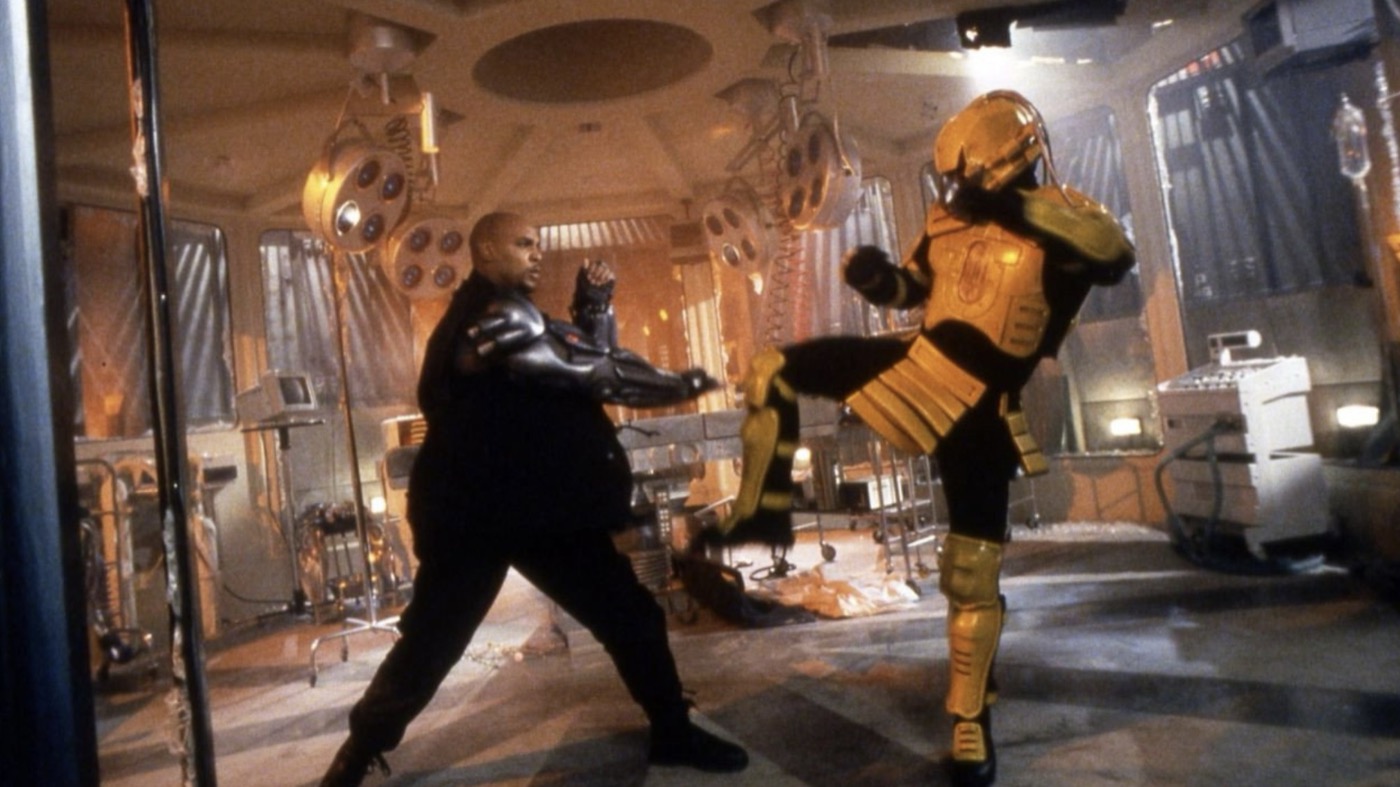
Cyber Smoke (Ridley Tsui Po-Wah) enters one scene with absolutely zero introduction, our logical questions promptly drowned out by EDM as the kicks start flying. A character can look like a Power Ranger whilst making mechanical noises, but surely the film could pause to explain why there are suddenly robots? The second cyborg, Cyrax (J.J Perry), receives a far more dramatic introduction involving explosions, shattering glass, and robotic dialogue, topped off with Jax yelling, “Who the hell is that?” All of this strongly suggests that this sequence was originally intended to precede Smoke’s entrance.
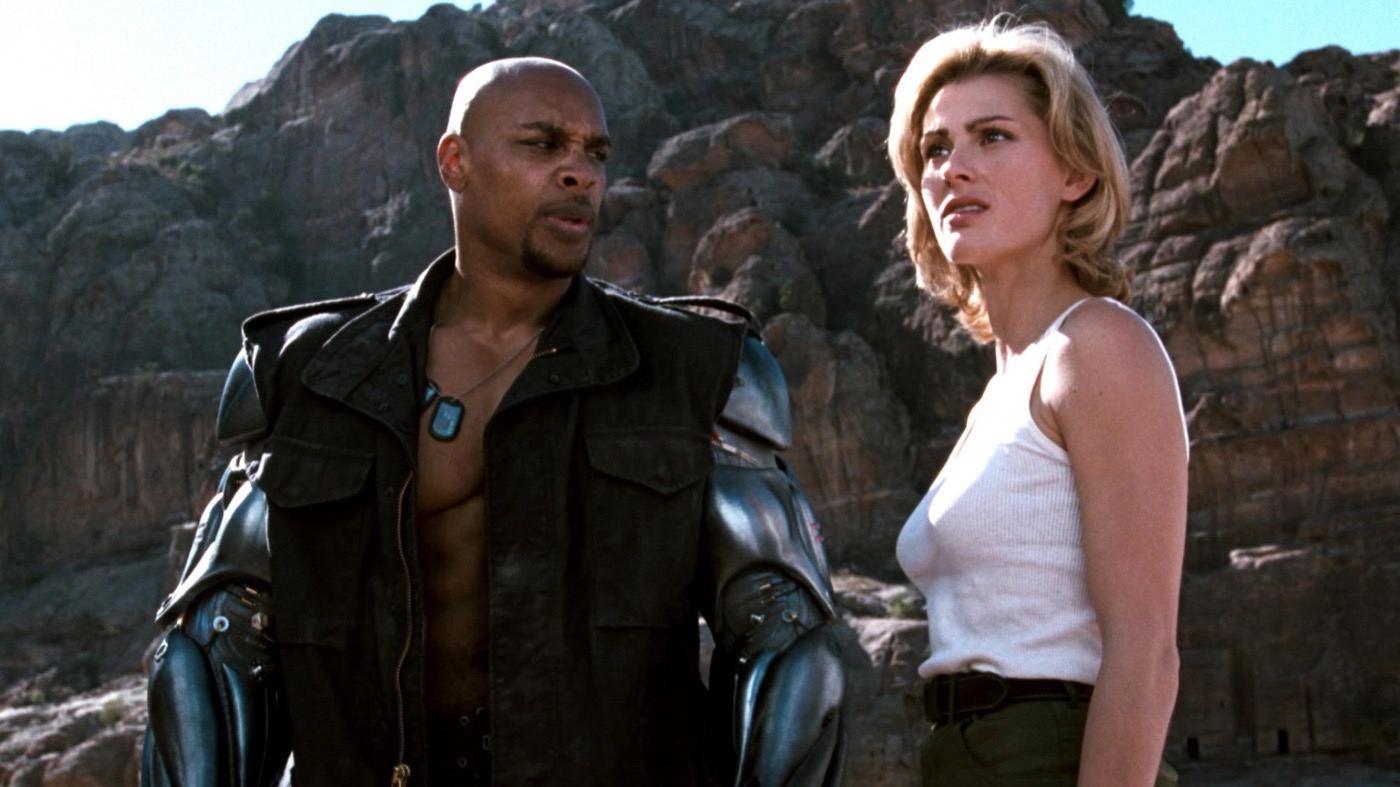
Logic within the scenes themselves collapses just as readily. Sindel (Musetta Vander) possesses the power to destroy the historic ruins of Petra with her supersonic scream, yet the blast fails to blow up our fleshy heroes. Rayden literally stops for a haircut. Furthermore, despite having known Jax for all of 30 seconds, he immediately begins lecturing him that his robot arms are his greatest weakness. In one of the film’s more baffling moments—which is saying a great deal—a giant, skinless digital monster is repeatedly punched in the ass by Jax. Elsewhere, Jade (Irina Pantaeva) and Sindel announce their villainy upon springing a trap, laugh, and simply walk away. Shao Kahn is understandably furious that they forgot the most crucial component of a trap: actually killing the targets. How did these antagonists launch a successful interdimensional conquest when they are so consistently inept?
Then there is Shao Kahn himself. While some comic book purists were disappointed that the Marvel Cinematic Universe ditched Thanos’s original motivation of desperately pining for the physical manifestation of Death, Annihilation serves as an excellent reminder of the alternative. Having your towering, muscle-bound antagonist whine and pout whilst trying to impress his deadbeat dad completely ruins the intimidation factor. Given that his daughter, Kitana (Talisa Soto), is 10,000 years old, Kahn suffers from an all-time case of arrested development.
Kasanoff maintained that he strictly adhered to the Mortal Kombat lore: “I can’t tell you how many corporate meetings I’ve been in where I’m sitting across from some toy guy, where I have to stand up and say, ‘Sorry, Shao Kahn doesn’t do that.'” Apparently, what he does do is execute one of his own generals for “claiming thousands of innocents” instead of making two of Earth’s champions beg before dying. Kahn at least kills one of the original leads to retain some sense of dominance; it is just a shame it had to be fan-favourite Johnny Cage (now briefly played by Chris Conrad).
So, the main villain is a failure, yet he still commands an invading army. Surely the kombat itself must be good? Leonetti confidently boasted at the time: “Our worst fight from this movie is better than the best fight from the last movie.”
On screen, actors are kicking and punching, the music is thumping, and magic and missiles are flying. Yet none of it possesses any real panache; it just feels… fine. Perhaps the overwhelming lack of quality simply suffocates any competent stunt work. We are treated to Sub-Zero (Keith Cooke Hirabayashi) and Scorpion fighting on a collapsing ice bridge, but the sequence fails to connect. The discordant musical scoring hardly helps; mid-fight, one track abruptly ends and another begins, as though the film’s playlist had been left on autoplay.
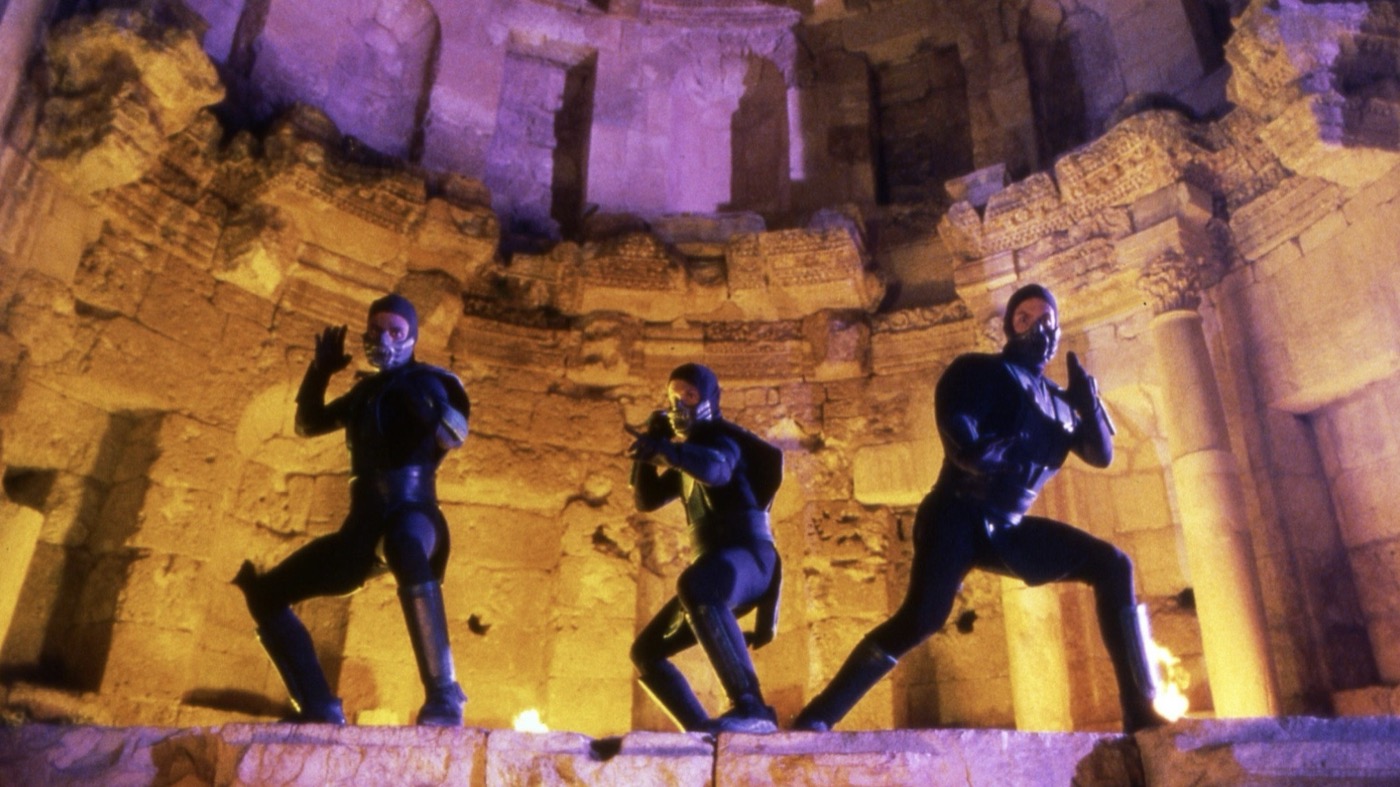
Oddly, despite the transparently sexualised framing of Sonya (Sandra Hess) and Mileena (Dana Hee) wrestling in a mud pit, their choreography is by far the most grounded and effective in the film. Then there are the fights that we don’t see. The four-armed warrior Sheeva (Marjean Holden)—serving as the female replacement for Goro—does not throw a single punch before being instantly crushed by a falling cage. Meanwhile, the film’s living MacGuffin, Queen Sindel, is defeated entirely off-screen whilst Rayden deals with three random ninjas. The film cannot even execute its “Animalities”—a mid-’90s game mechanic where fighters transform into animals—properly, as the digital creatures merely fall over and instantly revert to human form. They’re fatalities, but they don’t kill with them! Even Shang Tsung’s demise in the original film involved being impaled on spikes; here, Shao Kahn merely lands awkwardly on some stairs and is considered defeated. It’s Mortal Kombat—what actually killed him?
One only feels bad laughing because of the exceptionally hardworking cast, many of whom pulled double duty in multiple costumes to execute the stunts. Martial arts legend Tony Jaa doubled for Shou and remains criminally underappreciated. Perry filmed his Scorpion fight on a severely injured ankle, sustained when he tripped over a loose power cable during his scenes as Cyrax. He could barely see out of the bulky helmet, and between those visual limitations and Williams’s massive cybernetic arm prosthetics, Perry and Williams “really beat the piss out of each other”.
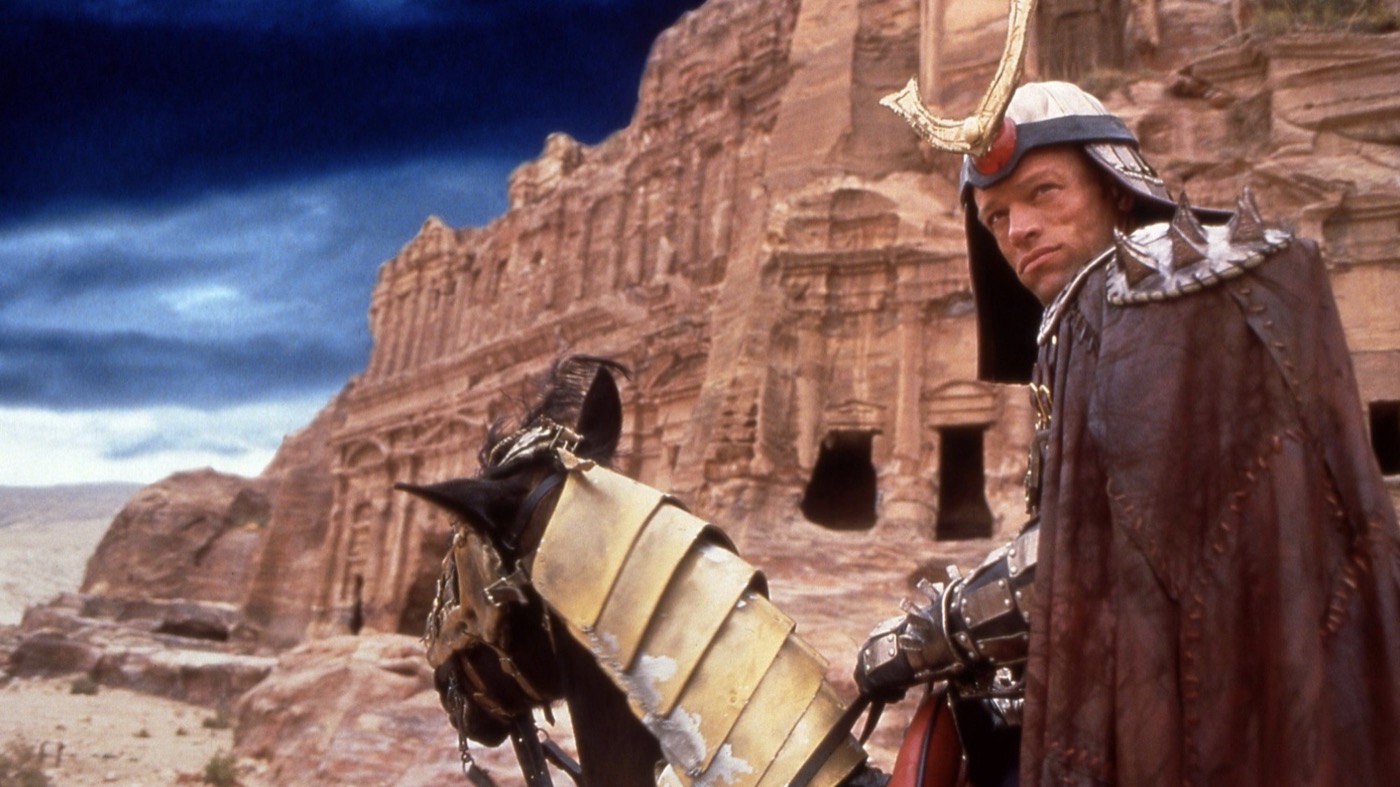
But what of the grand narrative lessons we are meant to take away from Annihilation? Rayden learns to appreciate mortality by pointlessly dying; Jax realises his mechanical upgrades were holding him back and punches a demonic centaur with his bare fists; Kitana confronts her mother’s death by kicking her mother’s ass; Sonya avenges Johnny—or perhaps learns to let go of her anger—and Liu Kang learns the power of teamwork and peace by transforming into a terrible, computer-generated dragon.
Kasanoff boldly claimed before release: “Annihilation is three times more ambitious than Mortal Kombat. Our theme for the sequel is to shoot for more—more fights, more special effects, more Outworld, more everything.” The old adage of quantity over quality rings painfully true here; the only metric they received less of was the box office. On a $30M budget, the film grossed just $51.3m worldwide. A direct threequel was swiftly cancelled, and the property languished in development hell until the Elder Gods themselves seemingly intervened, destroying the New Orleans pre-production sets via Hurricane Katrina.
Saddled with a devastating 4% rating on Rotten Tomatoes, Annihilation was not only savaged by critics at the time, but the dead horse was continuously flogged for years as early internet meme culture blossomed. One YouTube video, “Mortal Kombat Annihilation: Worst/Funniest Scenes”, has amassed 4.7m views, while a clip titled “The Worst Line in Scriptwriting History”—uploaded back in 2008—boasts 25M views for a mere eight seconds of Sindel’s infamous retort: “Too bad… you… will die!” It is a genuine shame that Musetta Vander became the public face of this disaster, especially since the veteran television and B-movie actress delivered a performance suggesting she was the only person on set who knew exactly how laughable this sequel truly was.
USA | 1997 | 95 MINUTES | 1.85:1 | COLOUR | ENGLISH

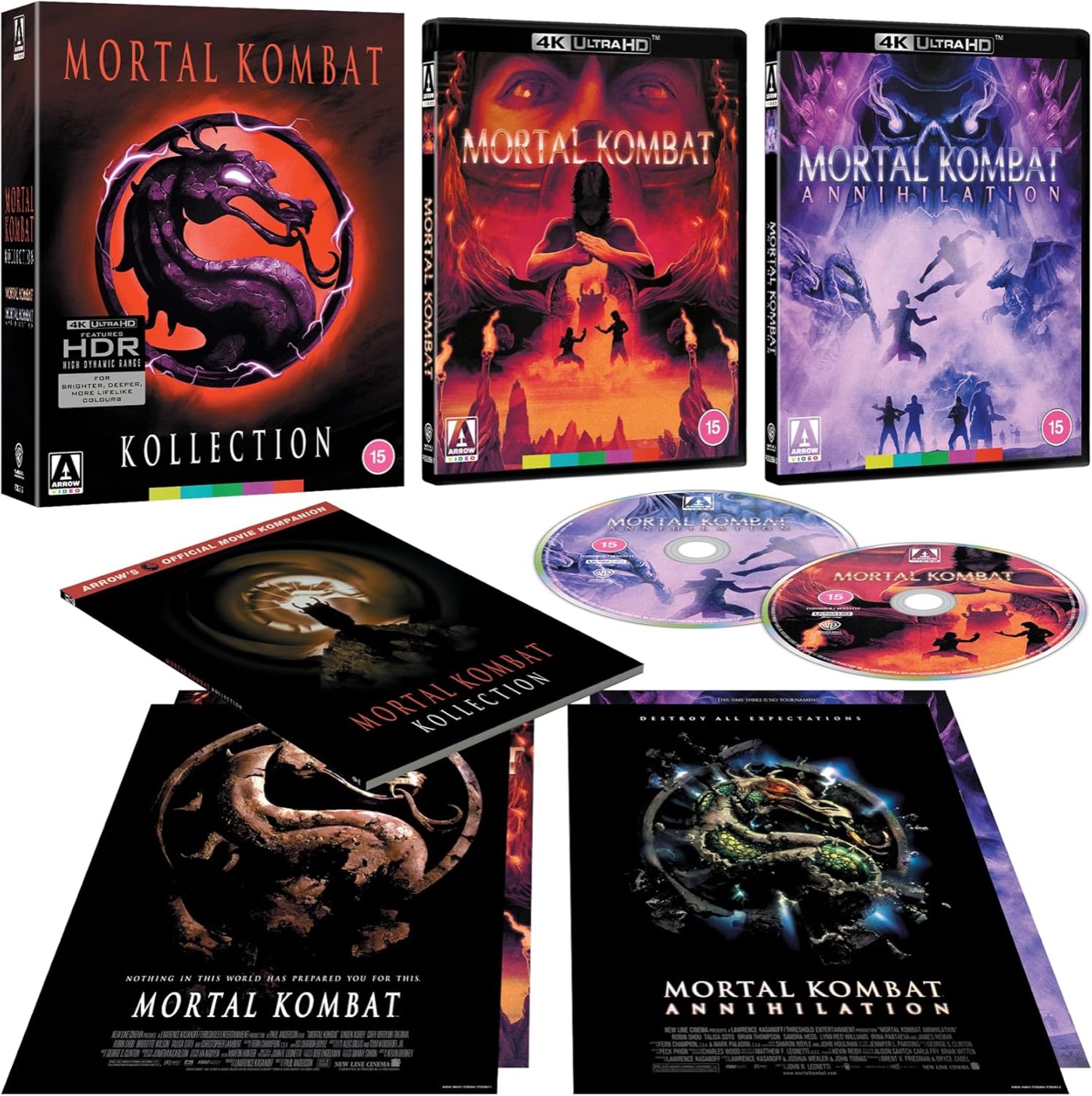
The retrospective on how these two films affected both the monumental video game franchise and blockbuster adaptations as a whole can be further explored across a bounty of newly produced special features from Arrow Video. Cast and crew members gladly accept praise for elevating Mortal Kombat into a multimedia empire, whilst reminiscing on fond times spent making films they had no idea would still be talked about over 30 years later.
However, if you are expecting the sharp dichotomy of these two films to be explored with retrospective honesty, prepare yourself for a slight disappointment. On the surface, it may seem that each disc has been granted equal coverage, yet very little of the sequel’s infamy is explored through a critical lens. This feels like a glaring oversight, given that the target audience for this kollection knows exactly what they are buying when it comes to these two films. It almost feels as though Arrow Video feared the licensing deal would be ripped away from them if they offended anyone involved by simply broaching the subject of the sequel’s abysmal quality.
Perhaps, though, Arrow hold a genuine affection for this entire duology, as both films are beautifully presented in a new 4K restoration. In special-effects-heavy scenes, every layer of background vista, practical set, cast member, and optical magic looks better than ever before. Even the ropier computer-generated disasters of Annihilation almost appear passable now that they have been preserved with such razor-sharp clarity.
What particularly pops in both features is the gorgeous mélange of colour, from the costuming to the lighting, all operating in sync to dazzle the audience with the strange and beautiful fantasy worlds of Mortal Kombat. To keep that kinetic energy going, Arrow have put equal care into the DTS-HD MA 5.1 surround lossless stereo audio to properly punctuate George S. Clinton’s multifaceted soundtrack. His vigorous score is captured with the same crisp precision as the visuals.

director: Paul W.S Anderson (Mortal Kombat) • John R. Leonetti (Annihilation)
writer: Kevin Droney (Mortal Kombat) • Brent V. Friedman, Bryce Zabel (Annihilation) • (both based on the video games by Ed Boon and John Tobias).
starring: Robin Shou, Bridgette Wilson, Linden Ashby, Cary-Hiroyuki Tagawa, Talisa Soto, Trevor Goddard, Chris Casamassa & Christopher Lambert (Mortal Kombat) • Robin Shou, Talisa Soto, James Remar, Sandra Hess, Lynn “Red” Williams, Brian Thompson, Reiner Schöne, Musetta Vander, Irina Pantaeva, Deron McBee, Marjean Holden, Litefoot, Chris Conrad, J. J. Perry, Dana Hee, Ed Boon & Keith Cooke Hirabayashi (Annihilation).