MY BEAUTIFUL LAUNDRETTE (1985)
An ambitious Pakistani Briton and his white boyfriend strive for success and hope when they open a glamorous laundromat.

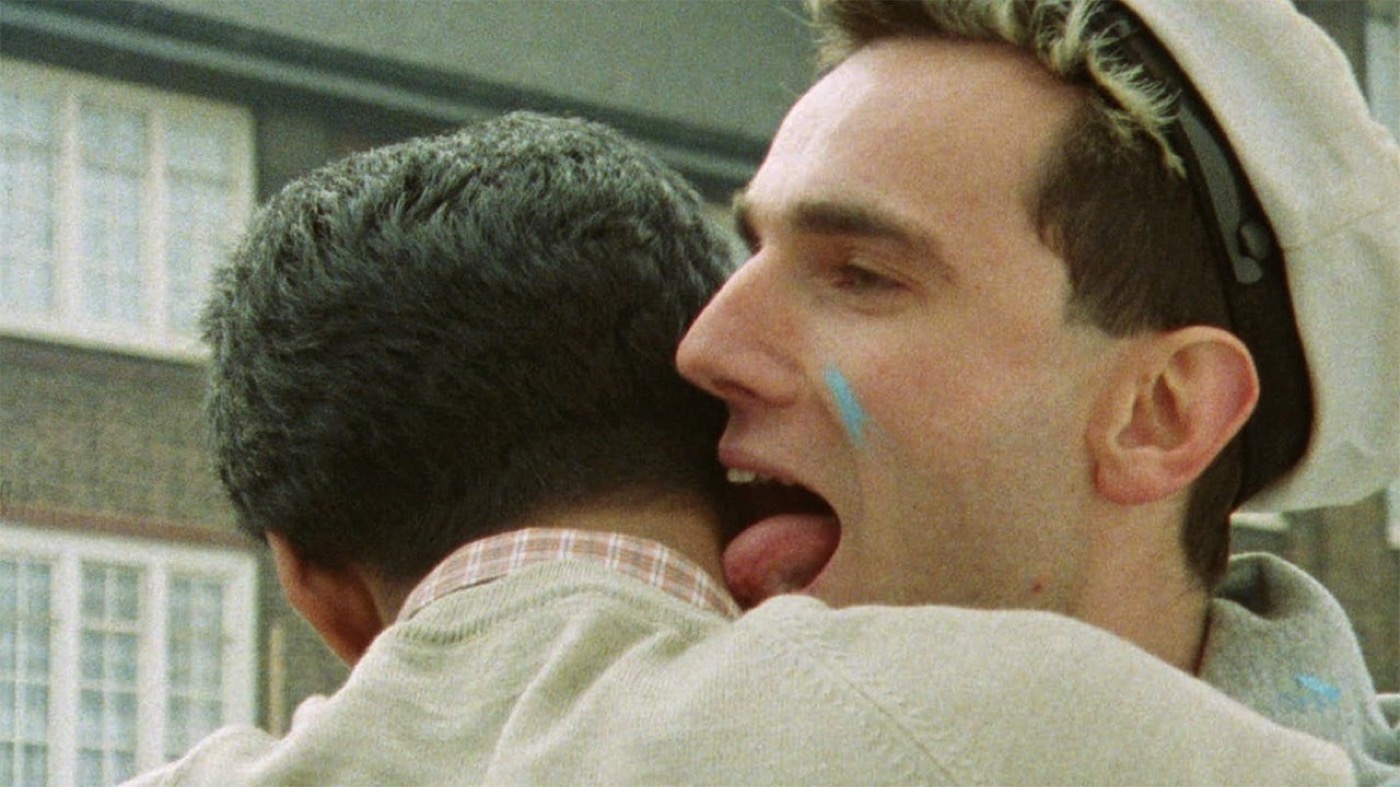

An ambitious Pakistani Briton and his white boyfriend strive for success and hope when they open a glamorous laundromat.
Somewhere between the twin poles of the British Sex Comedy and the Kitchen Sink Drama—seemingly the only films you could get released in the UK from the 1960s onwards—is My Beautiful Laundrette, the 1985 landmark that threw it all into the wash with a rejuvenating irreverence.
Written by acclaimed playwright and novelist Hanif Kureishi and set under the austere, smoke-grey skies of Thatcher’s London, the film follows a young Pakistani-British school-leaver, Omar (then-newcomer Gordon Warnecke in his feature film debut). He’s young, handsome, and brash with a twinkle in his eye, his voice carrying a lilting persuasiveness, always ready to charm.
He uses this voice on his ageing, vodka-loving father, Hussein (Roshan Seth), whenever he pesters his son to enrol in college or start looking for a proper job. Squeezed together in a small, shambling flat in Vauxhall, there are strains here of the quiet tragedy that has typified some of the nation’s most enduring exports, from the sitcom squalor of Steptoe and Son (1962-1974) to the tough-living tragedy of Kes (1969).
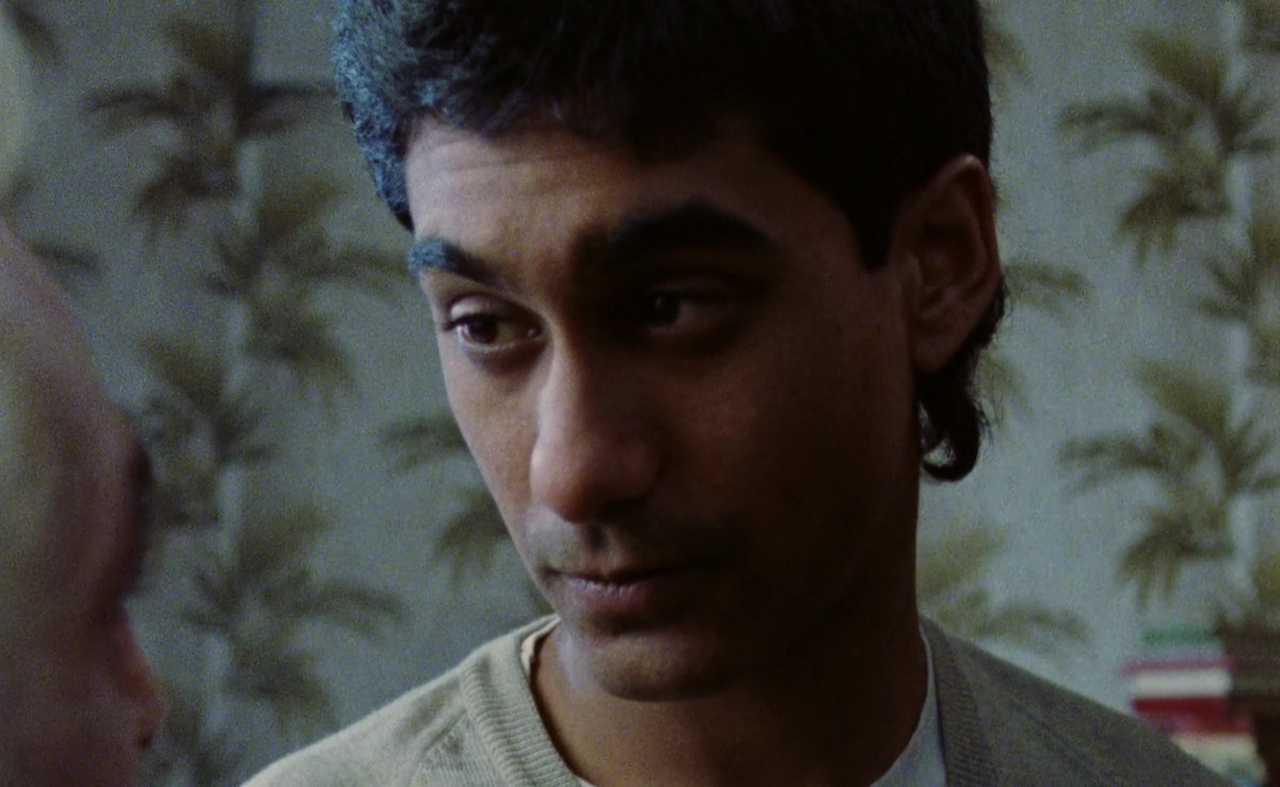
A balcony attached to the back of the property looks out over bisecting railway lines, diesel engines choking their way into the city, the seat of power and money invisible just the other side of the rolling river. The father and son hang their laundry out to dry on the balcony, where it absorbs the city’s fumes and grime. Later, we find out that Omar’s scarcely mentioned mother jumped to her death from this very balcony.
Just down the road, a group of young, white, far-right punks are waking up in an abandoned Victorian townhouse they have been squatting in. The landlord is kicking down the door, forcing them to make off through a ground floor window. It seems everyone is looking for an emergency exit, whether it’s a plummet from a balcony or an escape into the cold morning streets.
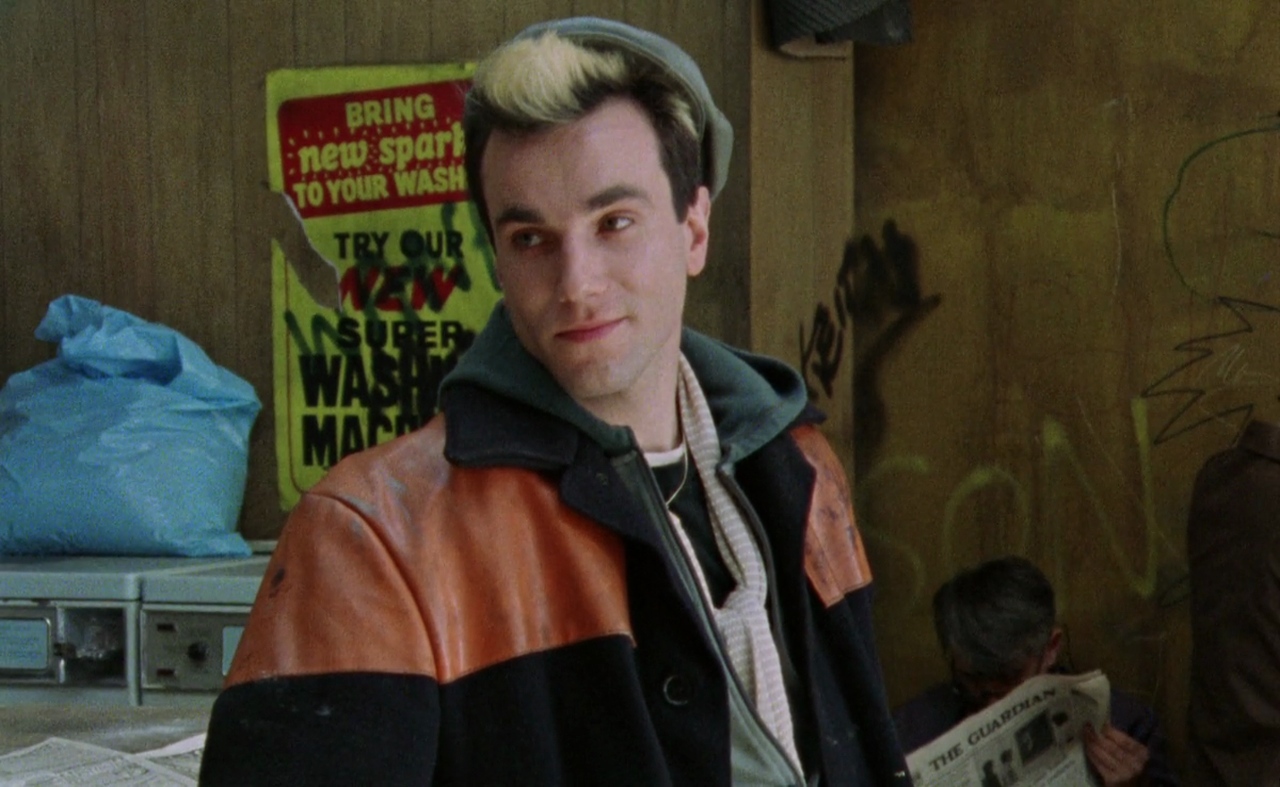
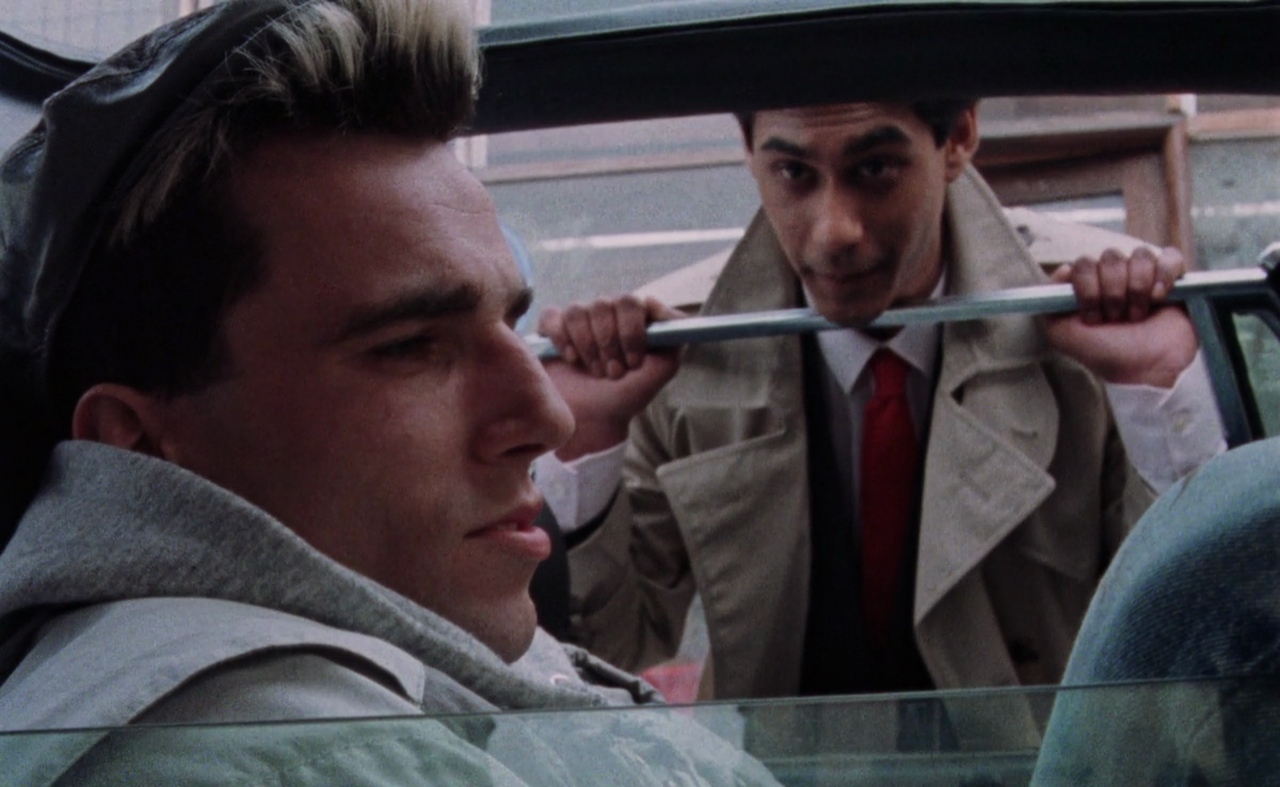
Presiding over the feckless gang of fascists with detached, watchful poise is Johnny, the blonde-haired, cabbie-capped enigma with a strikingly beautiful face. Daniel Day-Lewis, in what was his breakout role, is slinky and cat-like; while Omar can talk anyone into anything, Johnny is the one whose trap you don’t realise you’re in until the moment he pounces.
Director Stephen Frears handles the introductions to these young men with a gentle-handed parallelism. These are two disparate yet equally frustrated chancers who, having been failed by the system, have wound up on seemingly diverging paths, but who share a common ethos: have fun, have sex, make money.
Johnny’s disillusionment has landed him among racist thugs—a deeply pathetic roost to rule over. When he spits out a slur, it’s self-conscious and unconvincing, betraying the vulnerabilities it attempts to paper over. His gang hang out under railway bridges, smash shop windows, and attack cars that roll to a stop at traffic lights.
Here, they are something like a mid-1980s incarnation of Alex and his droogs in A Clockwork Orange (1971). But if the borderline cartoonish presentation of Johnny’s gang lessens some of the impact of their violence (Day-Lewis gives the only truly convincing performance among them), the weight is still felt by the mere fact that this wasn’t a film depicting a theoretical dystopia—it was a film reflecting the country as it was, and often still is.
Johnny and his gang wouldn’t slow down if they saw Margaret Thatcher crossing the street, yet they’ve swallowed her rhetoric hook, line, and sinker. This is the prime minister who, on national television, claimed “Britons are afraid that the country might be swamped by people of a different culture”.
Thatcher would echo the words and intent of Enoch Powell, exploiting the country’s dark seed of xenophobia and white supremacy to usher in sweeping British citizenship laws, further segregating a nation that already saw immigrants and their descendants as unwanted interlopers.
At the same time, the government’s full-throated endorsement of greed and self-actualisation via conspicuous consumption bred a generation of yuppies and craven capitalists for whom the goal was to make it up the ladder before quickly pulling it up behind them.
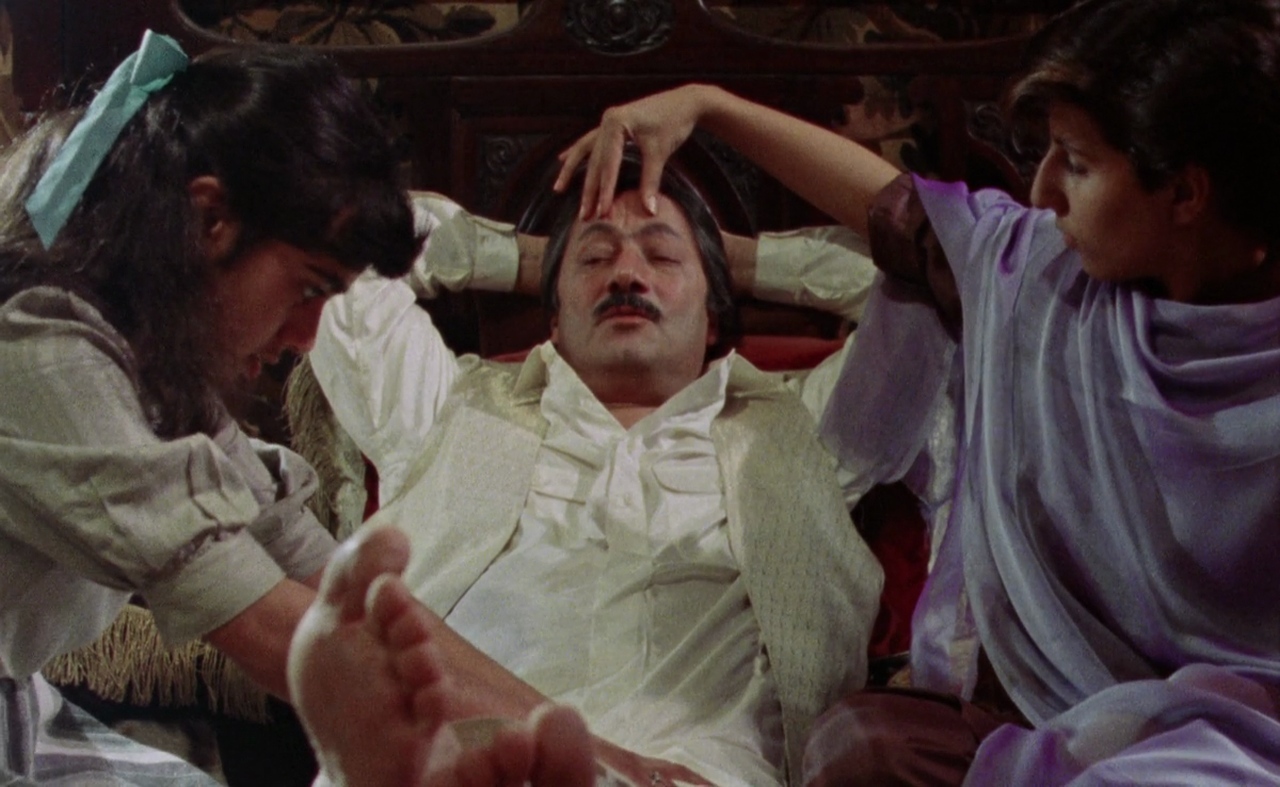
Hanif Kureishi’s witty and incisive script mentions Thatcher by name, but is wise enough to imbue the reference with a tongue-in-cheek irony. Omar gets a job washing luxury cars in the basement of his Uncle Nasser’s sunless multi-storey car park, where the aspiring businessman (played by the scene-stealingly funny Saeed Jaffrey) sighs to his nephew with relief: “You won’t be on the dole queue anymore. Mrs Thatcher will be happy with me.”
These people are beyond loving or hating the conditions under which they live; there is simply no time to sit and worry about that when there is loads (or at least a bit) of money to be made. Uncle Nasser has loud sex with his white mistress in the back office, while another relative, the coiffed and sharply turned-out Salim (Derrick Branche), runs cocaine from Heathrow, smuggled under the mesh of fake beards.
The unspoken part of the self-made myth of the Thatcher years is on full display here, where the wheels are greased not with hard graft, but dodgy deals, rip-offs, and a limitless supply of workers to exploit. Omar folds it all into dreams too large for his car-washing career and passionless potential marriage to contain. It seems everything was ignited the moment he first ran into Johnny.
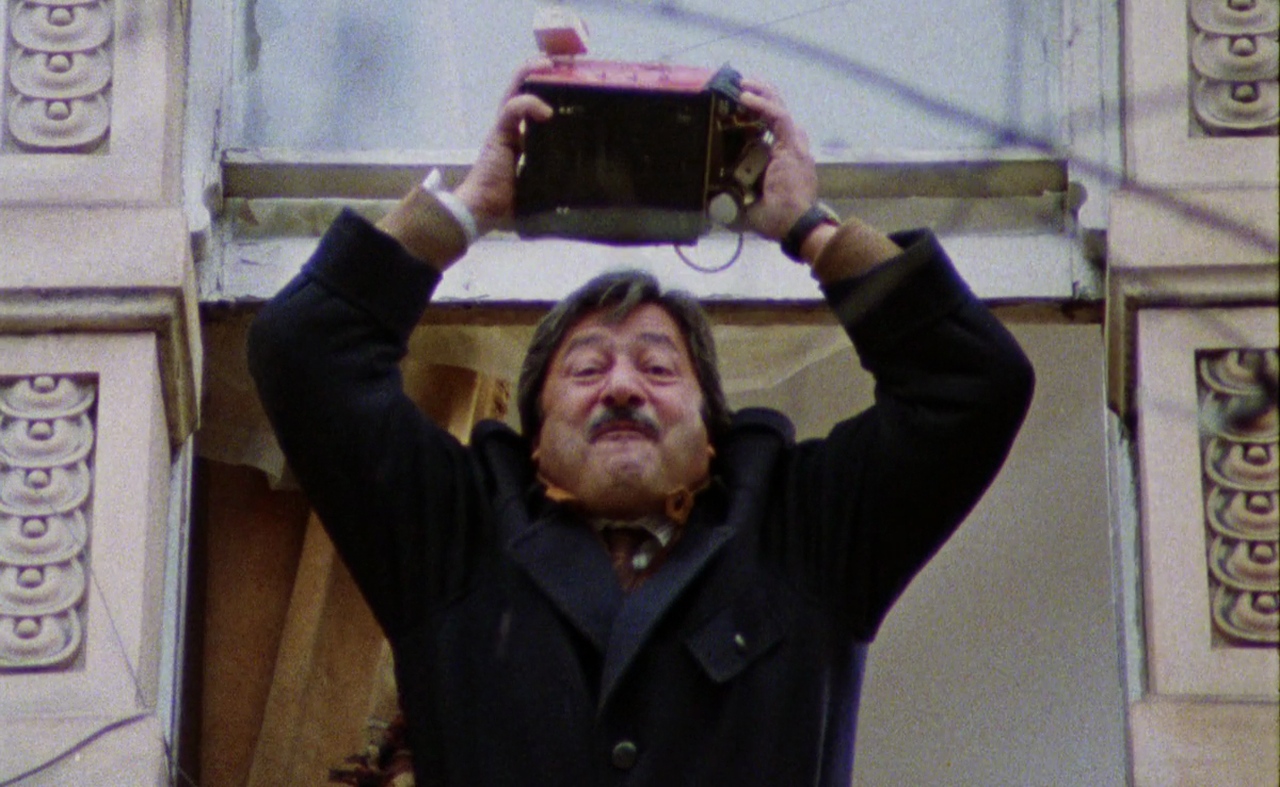
Omar and his relatives stop at a traffic light under a railway bridge, where they are besieged by Johnny’s gang. They press their bare arses against the car’s windows, rocking the vehicle back and forth as their dramatic, disproportionate shadows splash against the brick walls of the tunnel.
Johnny stands apart from the gang, smirking, hands in pockets, the car headlights lighting him up like a holy statue. Omar is grinning as he gets out of the car and walks towards his supposed enemy, almost hypnotised.
Frears, whose film breaks from the realism of the British New Wave, shoots the scene with both woozy romance and alluring danger, the camera tracking alongside Omar as the mayhem continues off-screen. It could be a scene from a musical. Johnny is a siren calling Omar to the rocks and his potential doom, but it’s a danger Omar is familiar with.
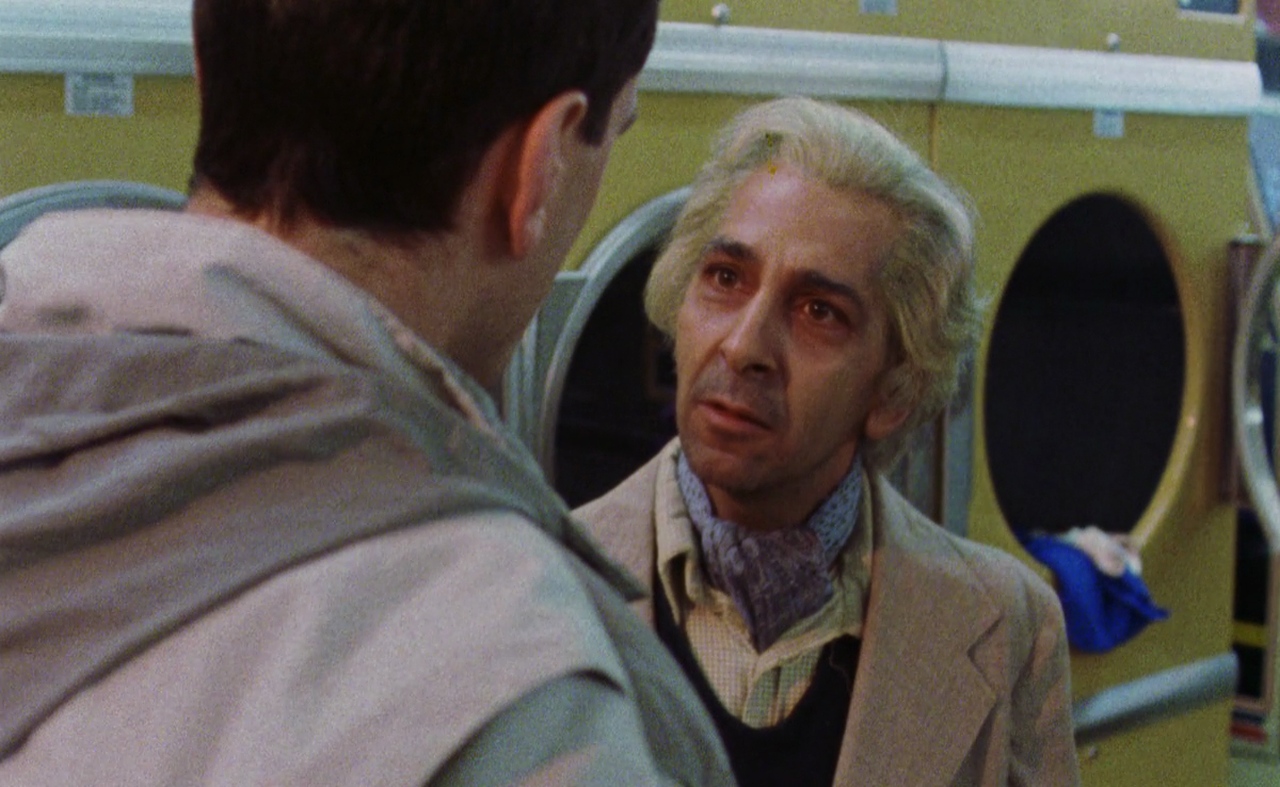
The two, it turns out, were childhood friends. There are hints as to what their relationship was like, but we mostly learn about them through the way they look at each other. Omar, though disgusted by Johnny’s right-wing extremism, can only see his friend standing before him—the one who makes him break out in a boyish grin—while Johnny looks on with a knowing smoulder.
Immediately, the sparks flare with the live-wire electricity of the Tube tracks that rumble underfoot, stirring deep in the earth. Omar, who has set his sights on refurbishing and managing his uncle’s dilapidated high street laundrette, finds a way to make his rekindled relationship with Johnny seem practical. He needs a muscle man who will turf out the kids who vandalise the place, as well as a handyman who will gut the ancient fixtures and install the expensive new machines.
Omar, with stars in his eyes, dreams of a laundrette “as big as the Ritz”, and is dazzled by the modest neon sign that Johnny installs above the shop, the flashing light bouncing off the winter-wet streets. The laundrette and Johnny himself tumble around together in Omar’s imagination—glamorous and sexy, the act of scrubbing people’s skid-marks far from his mind as the place reopens with a ribbon cutting and a queue stretching down the street.
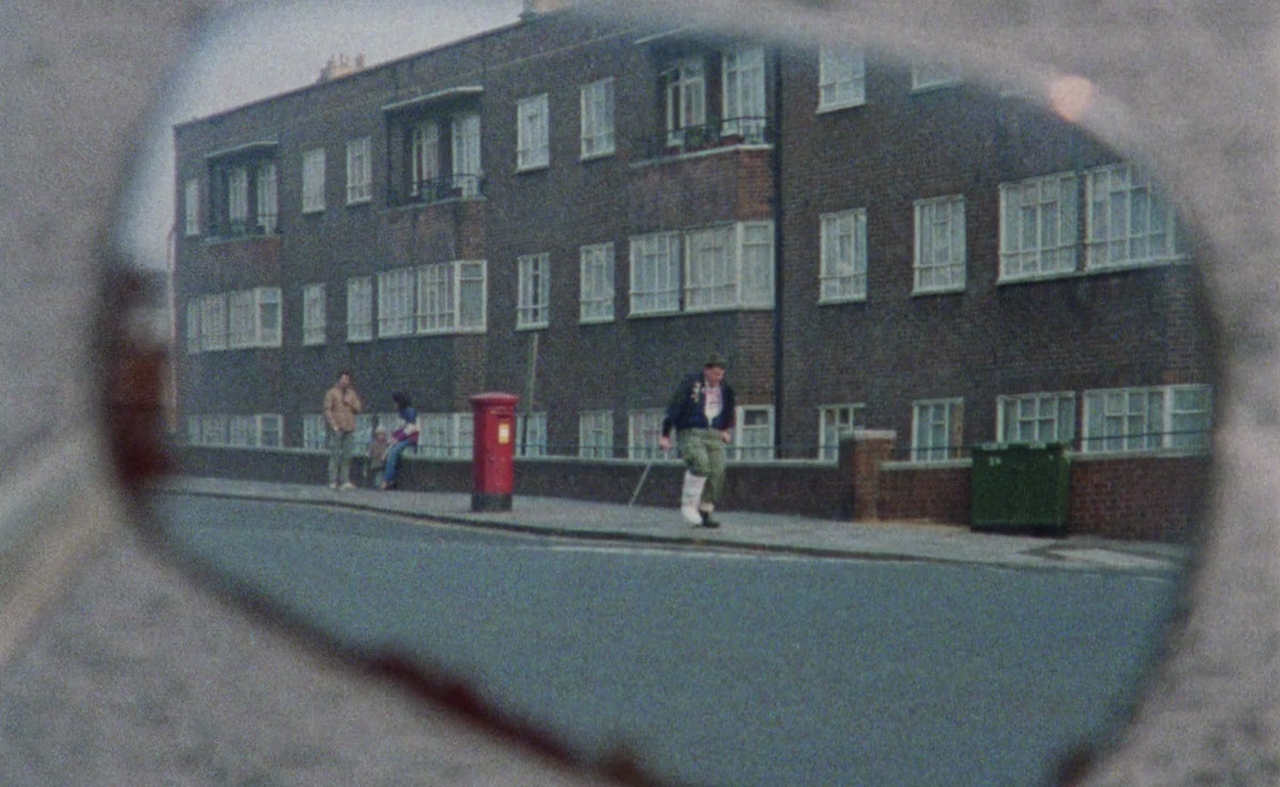
That Johnny and Omar’s sexual relationship blossoms (or perhaps, we wonder, is rekindled) without fanfare is perhaps the most radical and refreshing thing about My Beautiful Laundrette. The suffering, self-loathing, and eventual tragedy depicted in much of the queer cinema of the time was an expression of true feeling, but here there is a rhapsodic weightlessness to the romance that is just as viable.
The men do not wrestle with their desire; they are not tortured by their feelings for each other. They enjoy each other. While their exact relationship isn’t labelled in the film (neither, incidentally, is their sexuality), there is a giddy thrill for them in both keeping it a secret and parading it under the noses of the more close-minded.
Kureishi’s script isn’t one for grand declarations or spectacles—instead, everything just keeps on moving, actions speaking loudest, and we are left to guess how much Johnny and Omar’s friends and families know about their romantic relationship. Johnny’s now ex-gang sneer and spit at him as he cleans the windows of the laundrette, Omar smiling proudly at his modern day stable boy.
In the backrooms, between making love and counting cash, Omar does reflect a little. He remembers the racist abuse he suffered at the hands of Johnny and his friends in childhood. Would Johnny still treat him this way if he hadn’t fallen in love with him? “Now you’re washing my floor,” Omar grins.
My Beautiful Laundrette possesses an almost endless wealth of perspectives, each of which would be enough to fuel its own film: rich and poor, white, brown and black, gay and straight, male and female, left and right, English, Pakistani and Jamaican—and here, as Omar and Johnny’s relationship progresses, that of master and servant. It holds potency for the men—does it sting for Johnny to work for “one of them”? Does it turn him on?
That the film works these ideas into its storytelling, that it resists the urge to pause and condescend to us with didacticism, is what gives it its ever-churning sense of life. There is a real feeling of London here—not an idealised London, nor a monolithic one, but the actual one: a city made up of boroughs and neighbourhoods, each broken down to the street and flat level, compartmentalised yet all existing as part of some larger tapestry.
It refuses to shy away from the city’s—and the country’s—shameful past. The Lewisham Riots, in which the far-right National Front incited racial violence on the streets of southeast London in 1977, are invoked by name. Hussein, Omar’s father who haunts the younger family with reminders that the country and its government do not have their best interests at heart, can perhaps see more than we realise from his perch on the balcony.
Omar “Must go to college”, his father says, “if we are to see clearly what is being done to whom in this country”. And there, when the last spin cycle is done, when the thugs have all gone home for their tea, when the neon lights are switched off for the night, is the fundamental option presented to Omar, and to anyone trying to make it in society and city such as this: do you want to be good, or do you want to make money?
UK | 1985 | 97 MINUTES | 1.66:1 | COLOUR | ENGLISH URDU

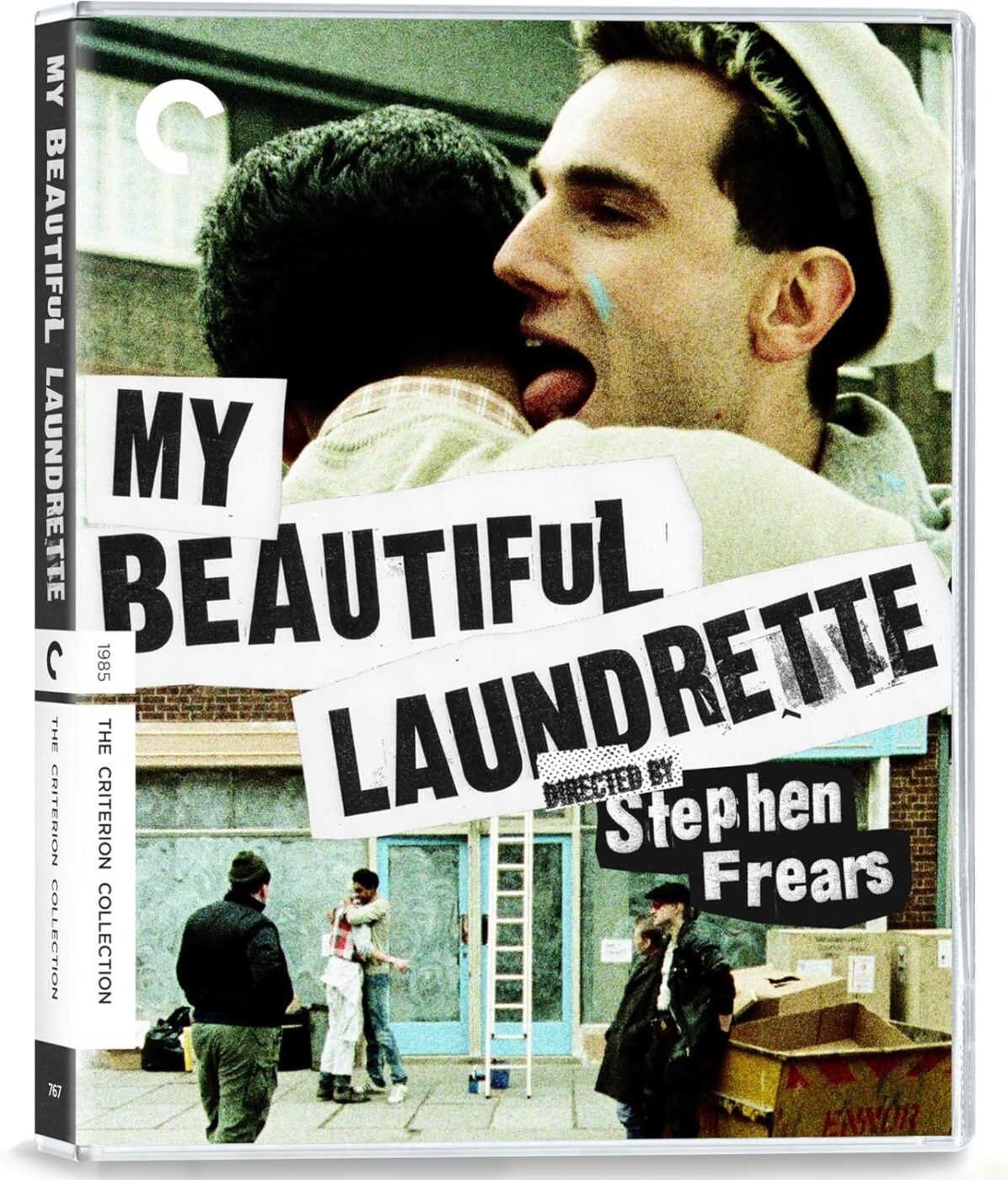
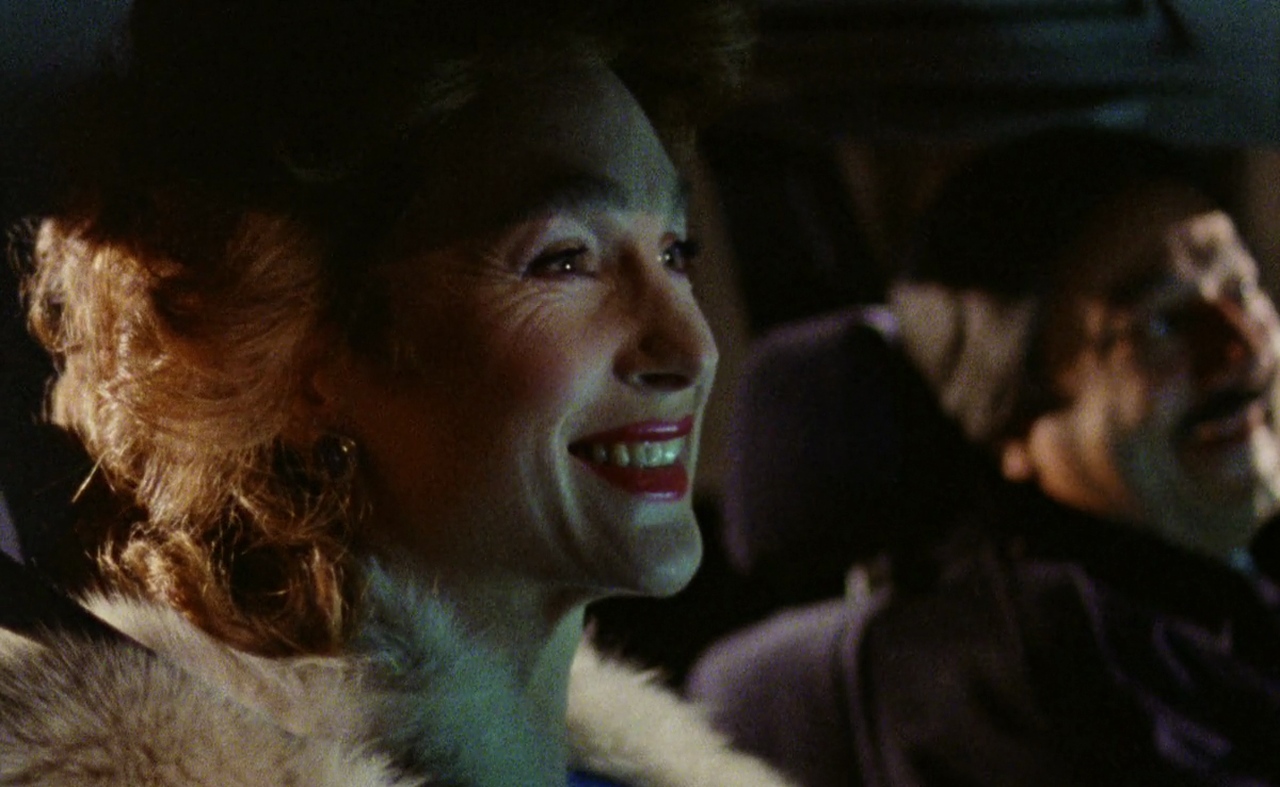
My Beautiful Laundrette was made on a shoestring budget and shot on 16mm, originally intended to be broadcast as a television film on Channel 4. As such, the film is largely unshowy yet still quietly beautiful to behold. Director of Photography Oliver Stapleton utilises dramatic reds and oranges, particularly in the film’s nocturnal meet-ups, which are drenched in neon and shadow.
This restored 2K transfer from the Criterion Collection is tastefully done—a case where pushing it up to 4K would be totally unnecessary, not to mention antithetical to the 16mm format. The image remains sharp and clear throughout, while the grit and grain of the film stock give it a pleasingly eighties feel. The audio track sounds perfectly fine, with a young Hans Zimmer providing a bubbly, ever so slightly dated score.

director: Stephen Frears.
writer: Hanif Kureishi.
starring: Saeed Jaffrey, Roshan Seth, Daniel Day-Lewis, Gordon Warnecke, Shirley Anne Field, Derrick Branche, Rita Wolf, Souad Faress, Richard Graham & Stephen Marcus.