ROADGAMES (1981)
A laid-back American truck driver in south Australia suspects a man with a green van of killing young women along his route, and becomes embroiled in a game of cat-and-mouse to catch him.

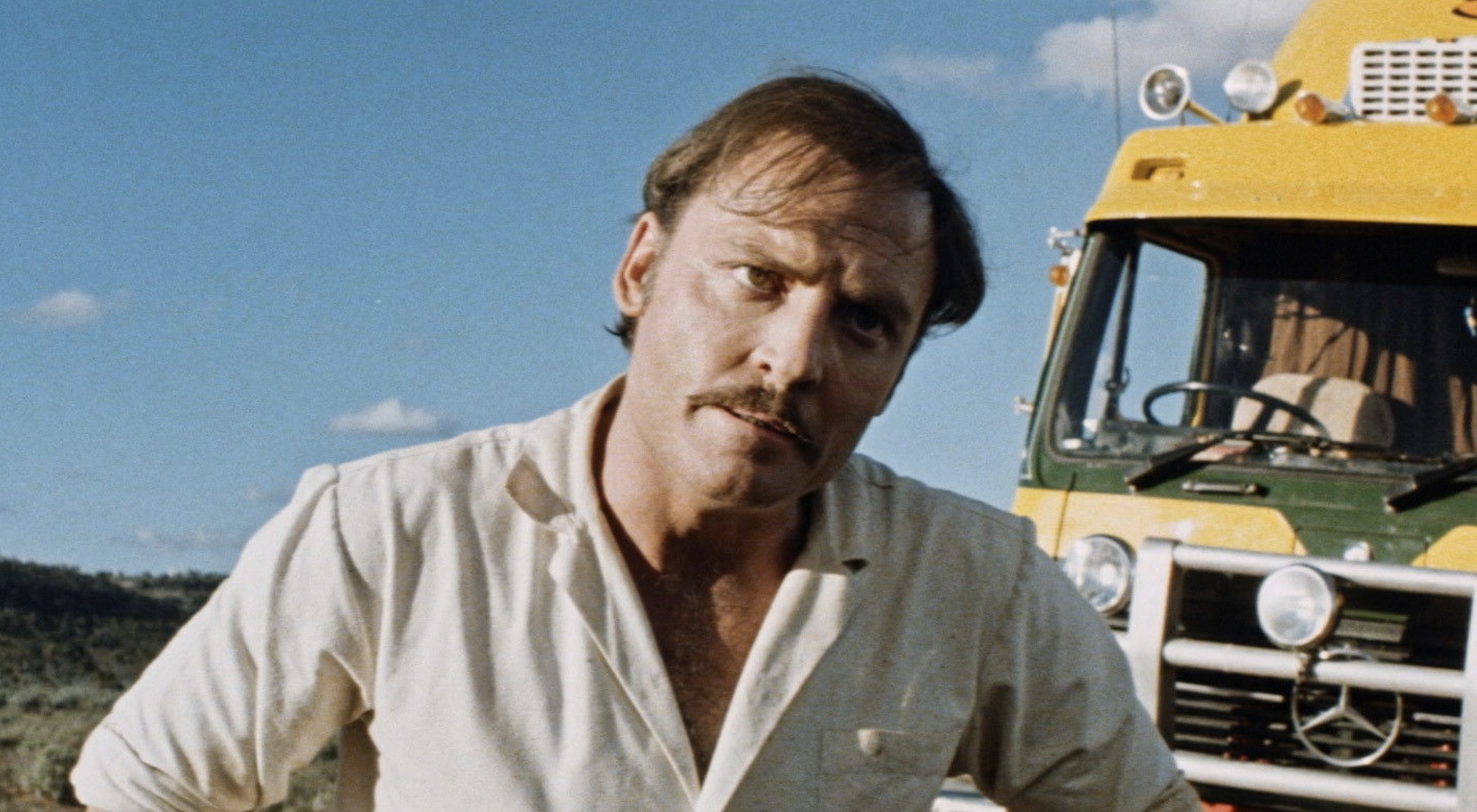

A laid-back American truck driver in south Australia suspects a man with a green van of killing young women along his route, and becomes embroiled in a game of cat-and-mouse to catch him.
Roadgames is a serviceable thriller directed by Richard Franklin, starring Stacy Keach as a truck driver and Jamie Lee Curtis as a runaway who becomes entangled with a serial killer on Australia’s backroads. It’s an enjoyable watch, though it’s stronger in its first half than its second and feels somewhat tonally confused. While the music and general atmosphere are suspenseful, they remain a little too easygoing as the narrative reaches its midpoint. The film could’ve used more tension, especially since the final twist (really just the final shot) is nasty enough to belong in a slasher film. Still, the characters are well-drawn, and the opening half offers a compelling, mysterious, and character-driven atmosphere.
The tone is perhaps the most interesting point of discussion as Roadgames prepares to celebrate its 45th anniversary this year. Franklin was a devotee of Alfred Hitchcock and, off the back of this film, went on to direct Psycho II (1983) just two years later. This was despite the fact that Roadgames was a massive box office bomb, recouping just A$100,000 from a A$1.75M budget. That’s a bruising loss by any standard.
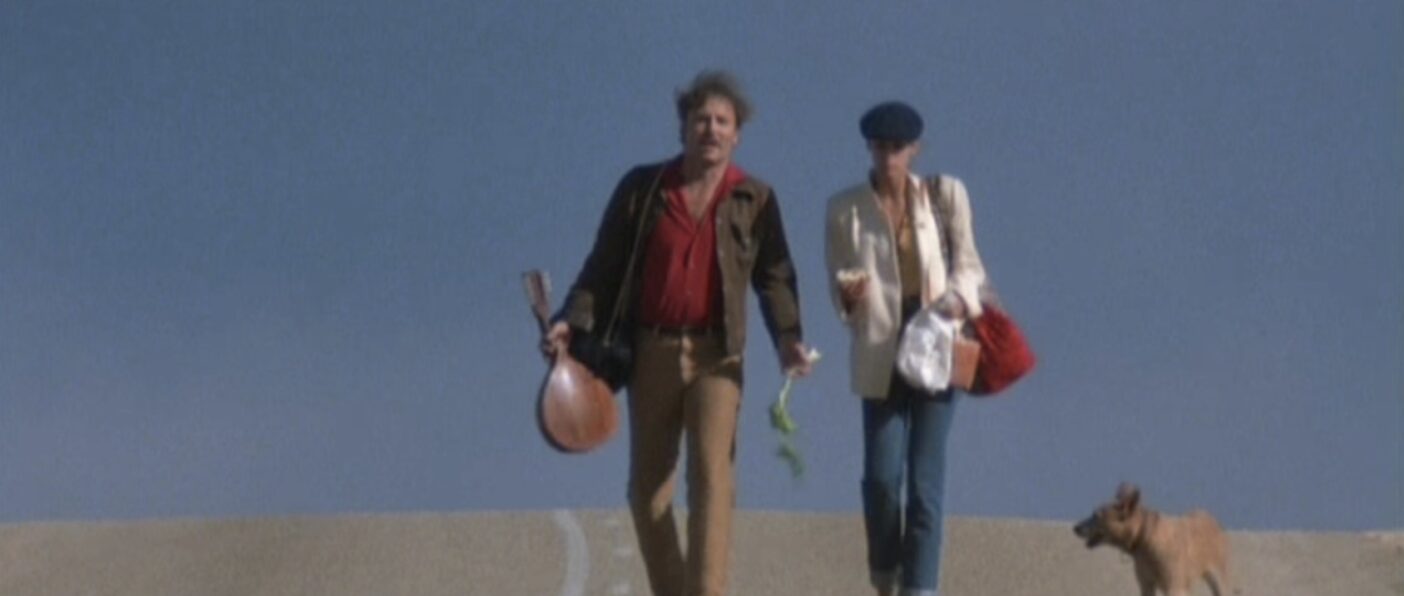
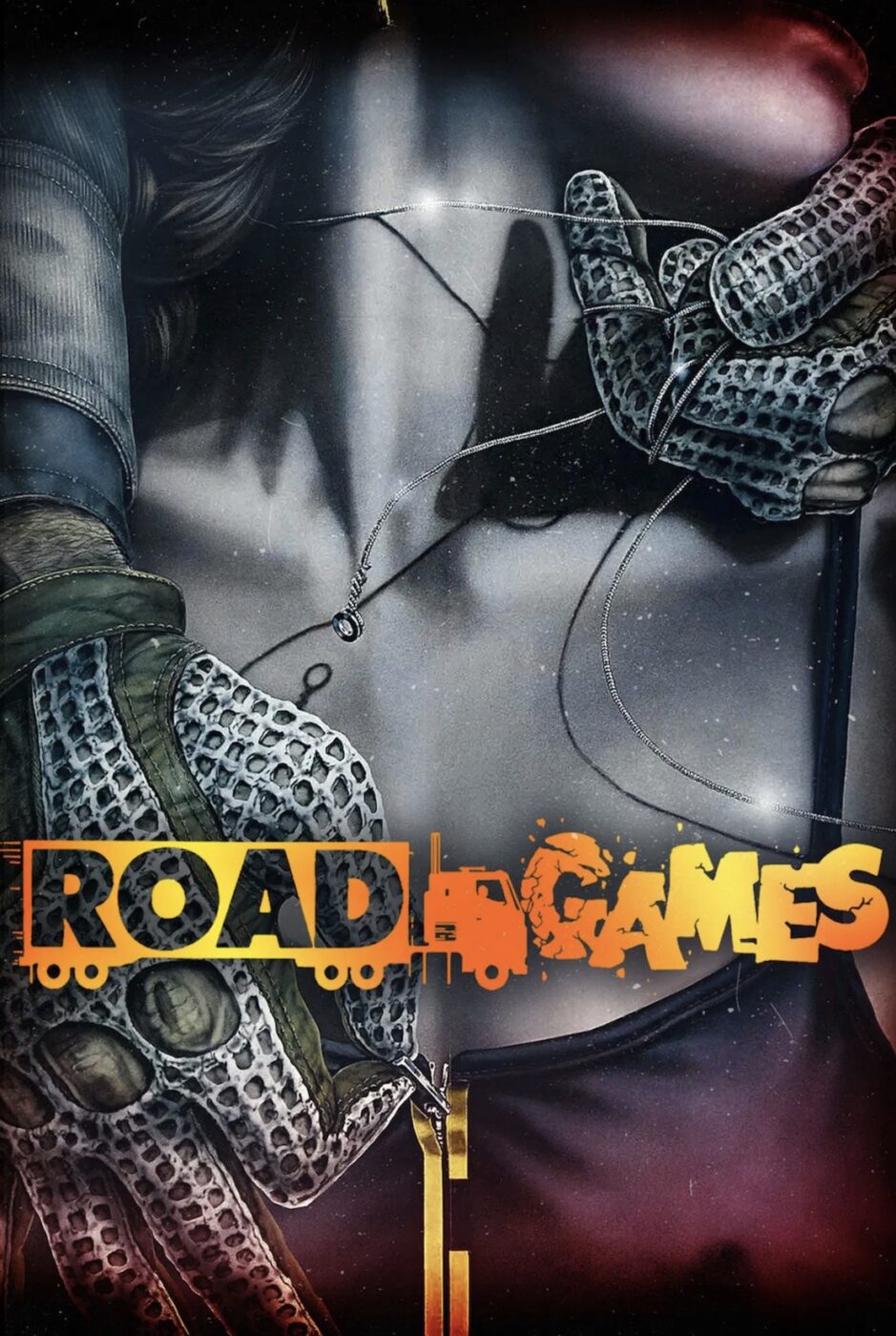
Franklin blamed the failure on the film’s marketing as a slasher, and it’s easy to see his point. The theatrical poster promised “sleazebucket” sex and violence, featuring a gloved hand tracing road markings up the blouse of a woman. The presence of Jamie Lee Curtis further fuelled this expectation; she was already the reigning “scream queen” following The Fog (1980), Prom Night (1980), and Terror Train (1980). Even today, Google categorises it as “Horror/Mystery,” and Wikipedia lumps it in with Curtis’s slasher CV. If I’d been a youngster in 1981 looking for another “slice ‘n’ dice” featuring the girl from Halloween (1978), I’d have walked out of Roadgames disappointed.
Returning to the Hitchcock influence, the tone is much closer to North by Northwest (1959) than Psycho (1960), following an innocent man wrongly accused who flees the law while chasing the actual villain. It also shares DNA with Hitchcock’s penultimate film, Frenzy (1972), though—aside from that final shot—Roadgames is less violent. It doesn’t really characterise the killer, treating him almost like a MacGuffin despite a brief exchange where Keach and Curtis discuss his motives. This works to an extent, but the film suffers slightly from failing to “commit to the bit.” At its heart, Roadgames is an adventure film trying to wear the clothes of something darker and weirder.
It’s possible Franklin wasn’t able to be as macabre as Hitchcock. Of course, for all his genius, Hitchcock could be notoriously misogynistic—extremely so in his private life, if we credit Tippi Hedren’s allegations of harassment during the filming of The Birds (1963). In his review of the 2012 biopic Hitchcock, Roger Ebert shared a disturbing anecdote: Hedren refused the director’s advances, and he responded by sending her young daughter, Melanie Griffith, a doll of her mother displayed in a tiny coffin.
One could argue this misogynistic streak allowed Hitchcock to be cruel to his female characters in a way Franklin couldn’t stomach. Roadgames’ final shot feels like it was lifted directly from Frenzy, a movie about the “Necktie Murderer” that’s remarkably no-holds-barred. It can be a punishing experience for an audience seeking light entertainment. (Michael Caine famously turned down the lead role because he found it disgusting; a wise move, as the required rape scene might’ve ended his career as a leading man.)
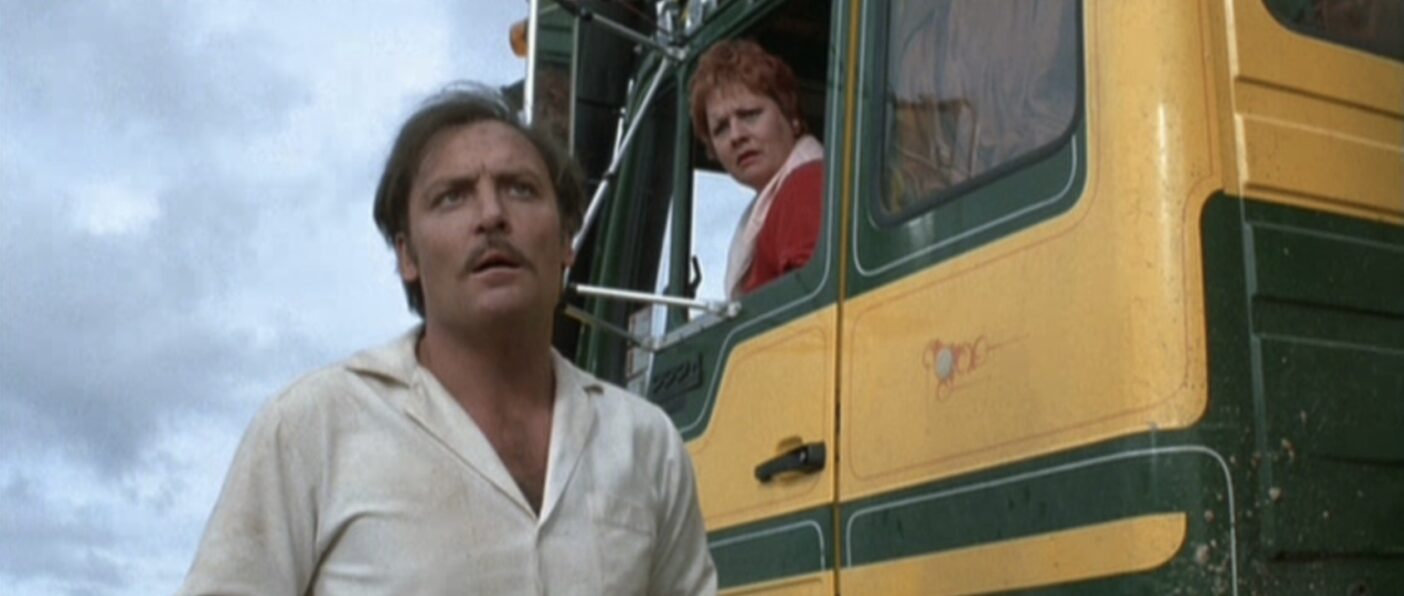
By contrast, Roadgames is generally character-based and even humorous. I particularly liked Marion Edward as Madeleine Day, a fussy woman forced to hitch a lift from Pat Quid (Keach). The film is set during a meat-packers’ strike—Keach is transporting pork—and Madeleine’s husband is an accountant affected by the industrial action. She has a nuanced backstory and is brought to life with great energy by Edward; strangely, she might be the most sympathetic character in the film.
She could have been played as a “Karen” parody—the stereotypically entitled woman (a somewhat sexist pejorative, in my view, as there’s no real male equivalent)—but Edward gives her a real soul. The forthright way she responds to life’s stresses has a certain poignancy. A more interesting film might’ve been made with her as the protagonist, though that would’ve been impossible to produce at the time. Would a plump, middle-aged woman be cast as the lead in a thriller even today?
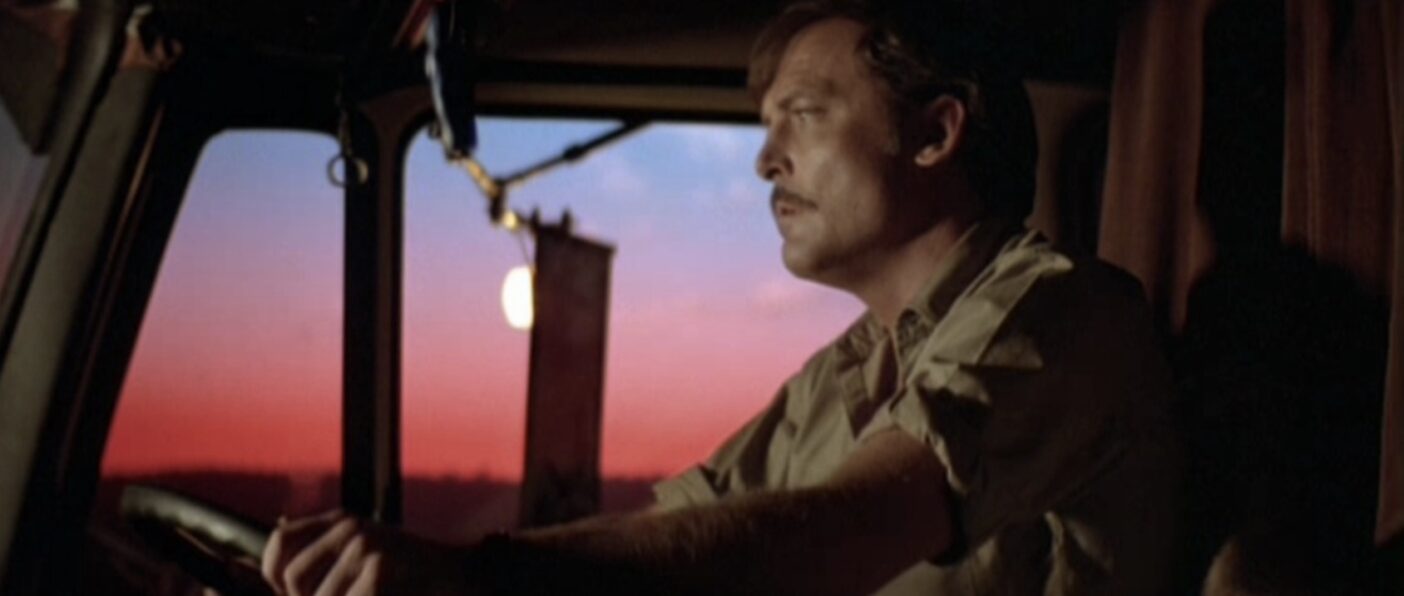
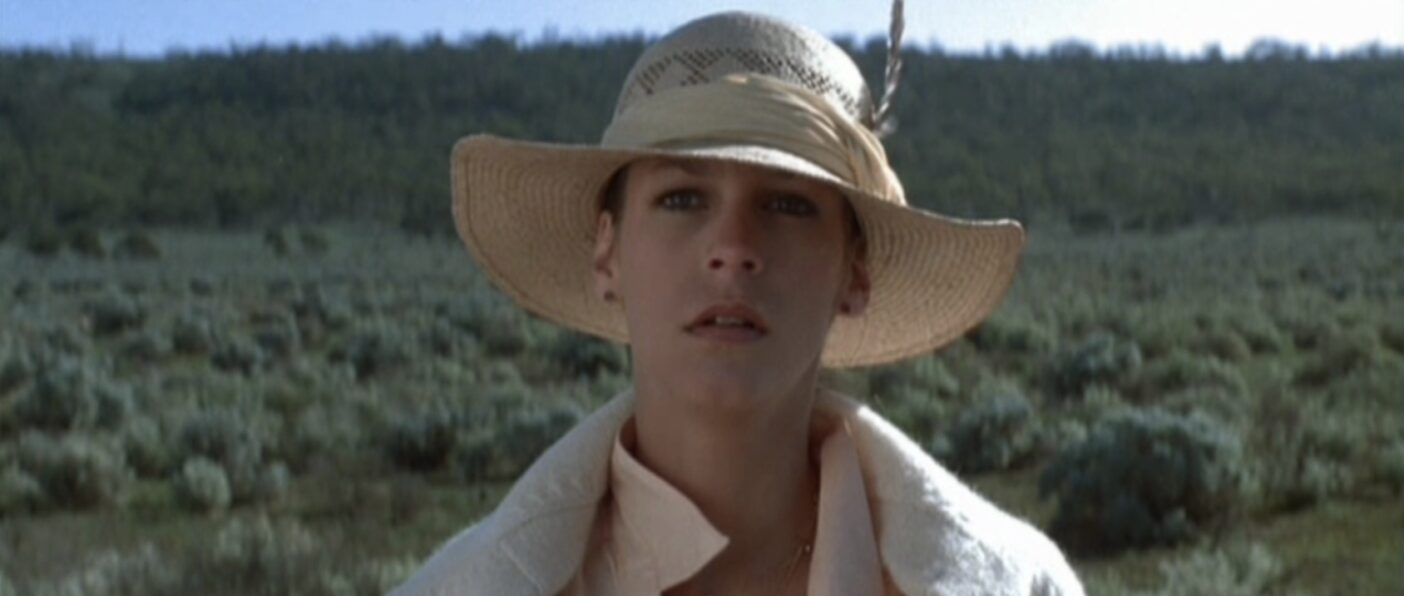
Keach and Curtis are excellent. Keach has a touch of Burt Reynolds about him, bringing a realistic, “everyman” quality to his role; he isn’t innately heroic and acts morally only with occasional reluctance. Curtis’s character feels better suited to a comedy-adventure. As a politician’s daughter, you never feel she’s in real danger—she’s unlikely to end up at the bottom of a well like the girl in The Silence of the Lambs (1991). Her fireside scene with Keach feels more like a slice-of-life study than a tension-builder. It’s a sweet moment, vaguely recalling David Lynch’s The Straight Story (1999). Franklin wisely avoids “over-egging” the romantic tension, portraying Keach’s character as a guy who is somewhat aloof but fundamentally decent.
The lack of characterisation for the villain might be annoying in a film where he was the focus—such as M. Night Shyamalan’s Trap (2024)—but in Roadgames, the killer is played by a stuntman, Grant Page. The film is about as interested in his motivations as it would be in a volcano or an earthquake. While that makes the experience less intense, Roadgames remains notable for its charming characters and the gentle, classic build-up of its plot.
AUSTRALIA | 1981 | 101 MINUTES | 2.35:1 | COLOUR | ENGLISH

director: Richard Franklin.
writer: Everett De Roche (based on a story by Everette De Roche & Richard Franklin).
starring: Stacy Keach, Jamie Lee Curtis, Marion Edward, Grant Page & Alan Hopgood.