HUDSON HAWK (1991)
A cat burglar is forced to steal Leonardo works of art for a world domination plot.



A cat burglar is forced to steal Leonardo works of art for a world domination plot.
Despite searching for behind-the-scenes articles, every search result for Hudson Hawk yields remarkably similar think pieces titled: “Resurrecting the Hawk”, “Loving the Bomb”, “Screwball Disaster”, “Analysis of a Flop”, and “Of Course, Hudson Hawk Is Ridiculous. That’s the Point.” Written largely a decade or more ago, these articles coincided with the decline of Bruce Willis’s career rather than his health. Many of his twilight choices were simply a matter of securing financial security for his family, before his aphasia and frontotemporal dementia (FTD) diagnoses in 2023 marked a sombre end to his acting life. Yet back in 1991, Willis was just getting started. The blockbuster success of Die Hard (1988) had given him carte blanche to pave his own unique way into Hollywood.
Willis then stumbled through a staggering number of infamous early flops: The Bonfire of the Vanities (1990), Color of Night (1994), and North (1994). Yet these were brushed aside with a carefree charisma and overshadowed by intelligent successes that resisted typical tough-guy trappings. Alongside playing John McClane, he voiced a baby in Look Who’s Talking (1989). Given which of those films made more money, it’s no wonder Willis braved strange choices. He cashed in his most audacious blank cheque with Hudson Hawk—a character that practically shared the audience’s disbelief that the fella from Moonlighting (1985–89) was meant to be an action star.
Fresh from prison, the world’s greatest cat burglar ends both of his heists by alerting the guards, raising the alarms, and dodging gunfire as he falls off a building. He’s forced into a madcap caper by twisted billionaires who want to destroy the economy, CIA agents named after chocolate bars, a special agent nun from the Vatican, and his best friend from Jersey who croons alongside him while they steal priceless artefacts. Critic and author Matt Singer summed up the plot on Letterboxd as “The Da Vinci Code For Assholes.”
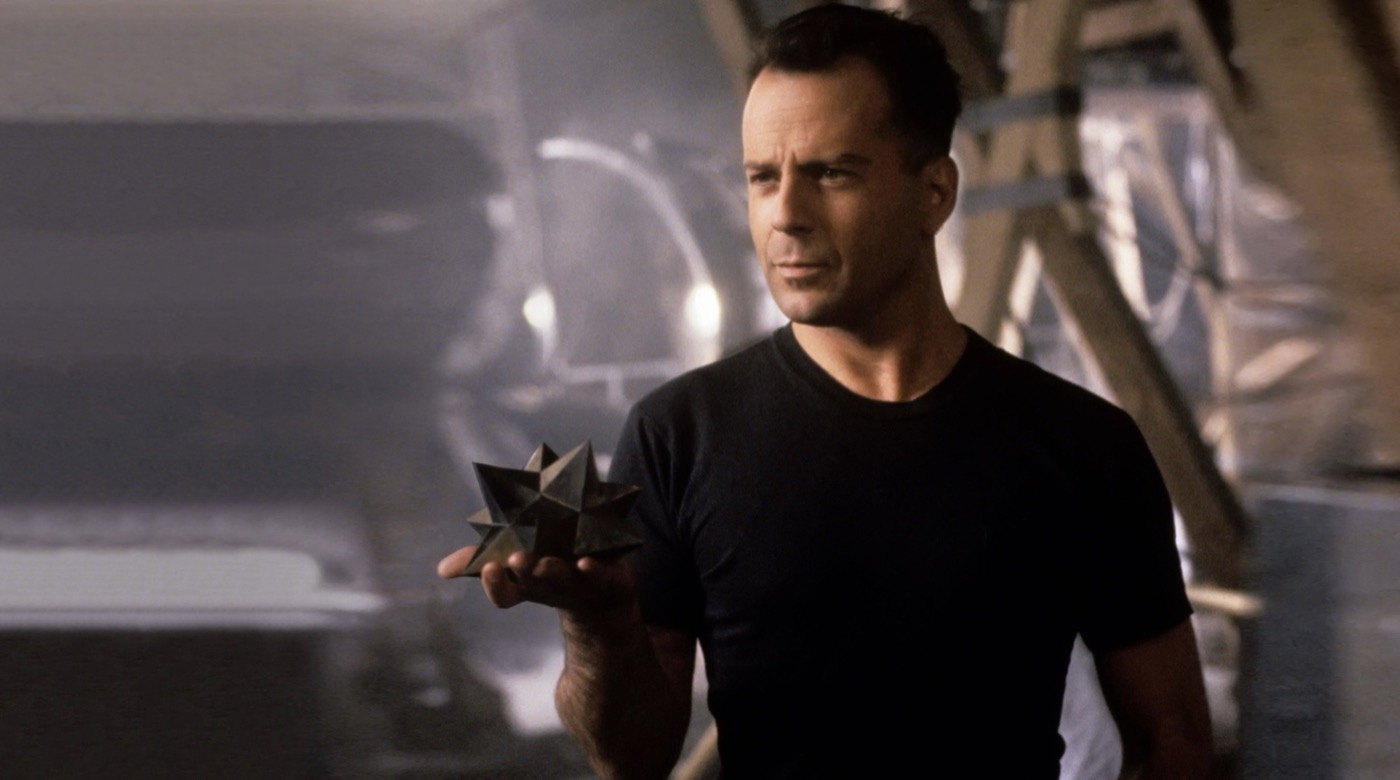
That’s a lot to keep up with, and the film wastes time by starting in 1491. Here, Leonardo da Vinci juggles the construction of his gold machine while painting the Mona Lisa (who has a terrible smile, har har) and testing his flying machine. Showing a successful flight up front is indicative of the entire venture; it ensures there’s zero tension when Hawk has to rely on the contraption in the finale. One might think a six-minute prologue could be better spent establishing our lead, but the gold machine cost over $1M before being shipped to Europe, so the film was going to make the most of it. Sinking egregious amounts of money into a project with the thoughtless idea that putting it onscreen will equal profit is a running theme with Hudson Hawk.
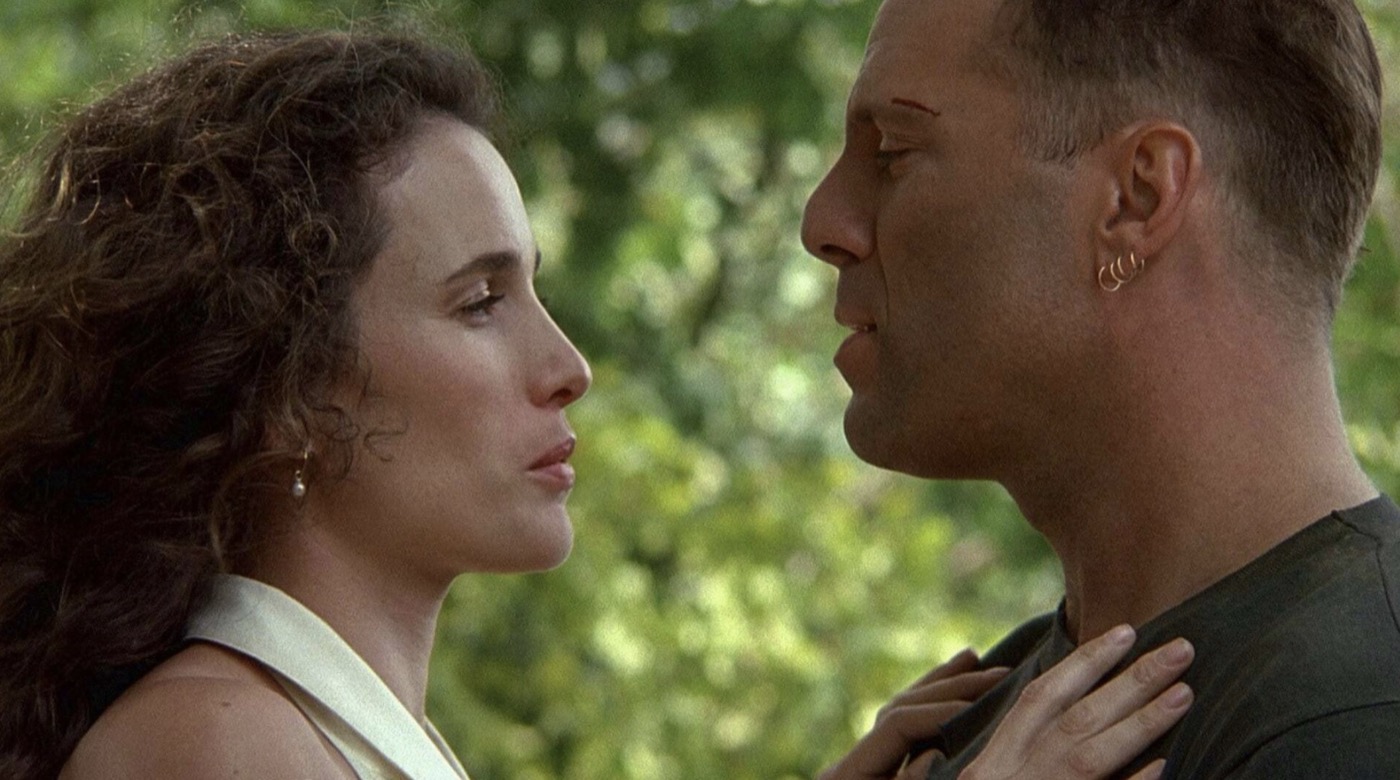
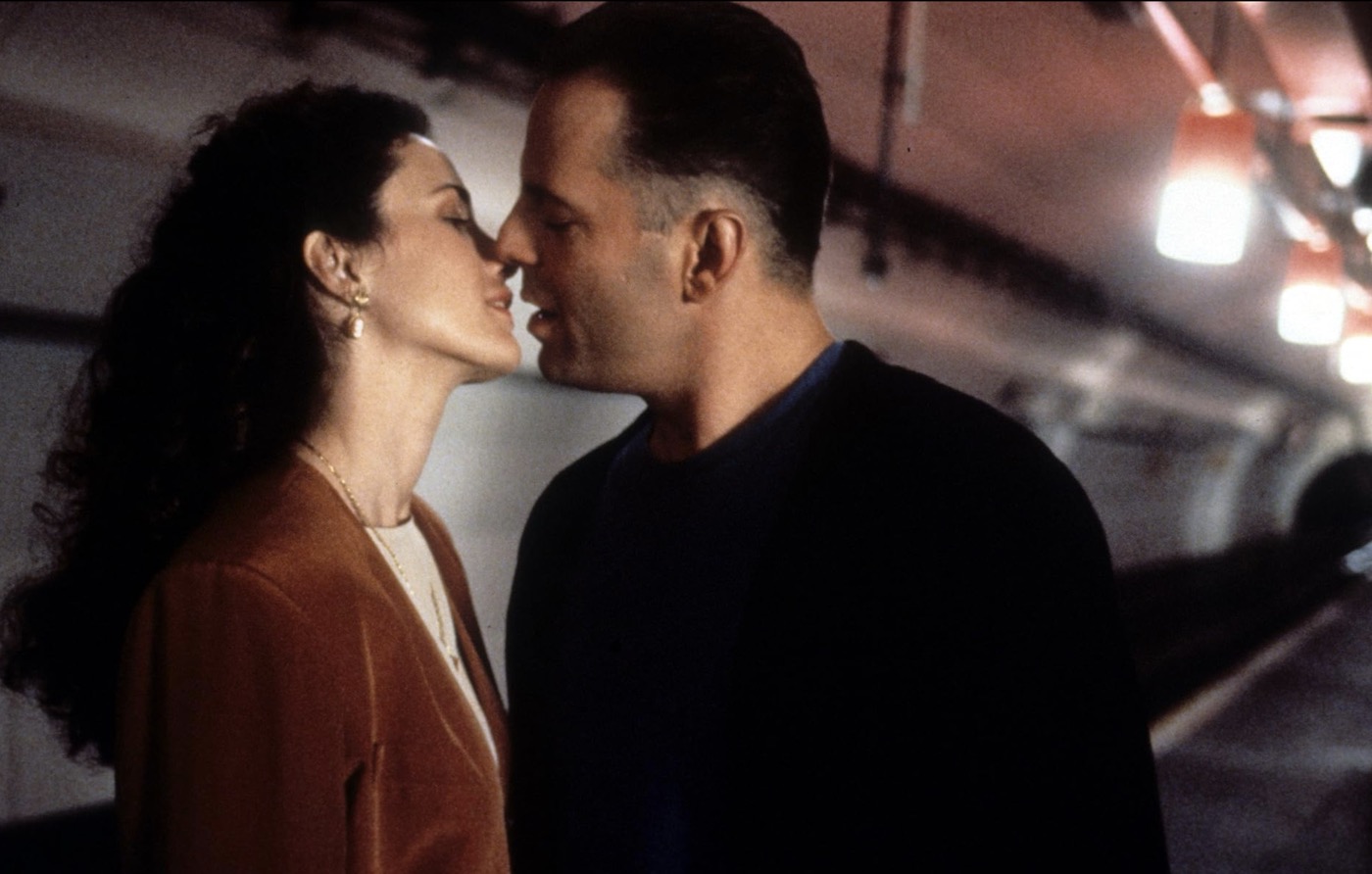
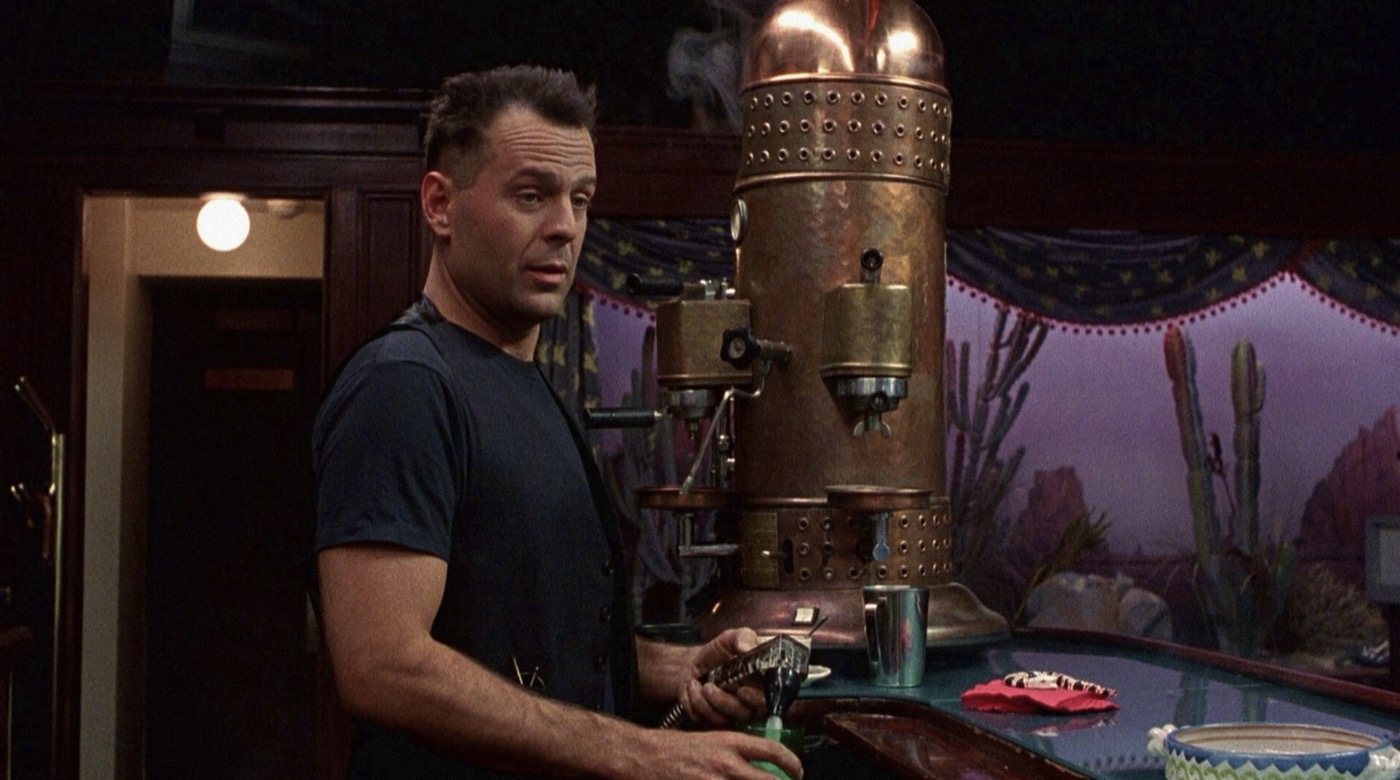
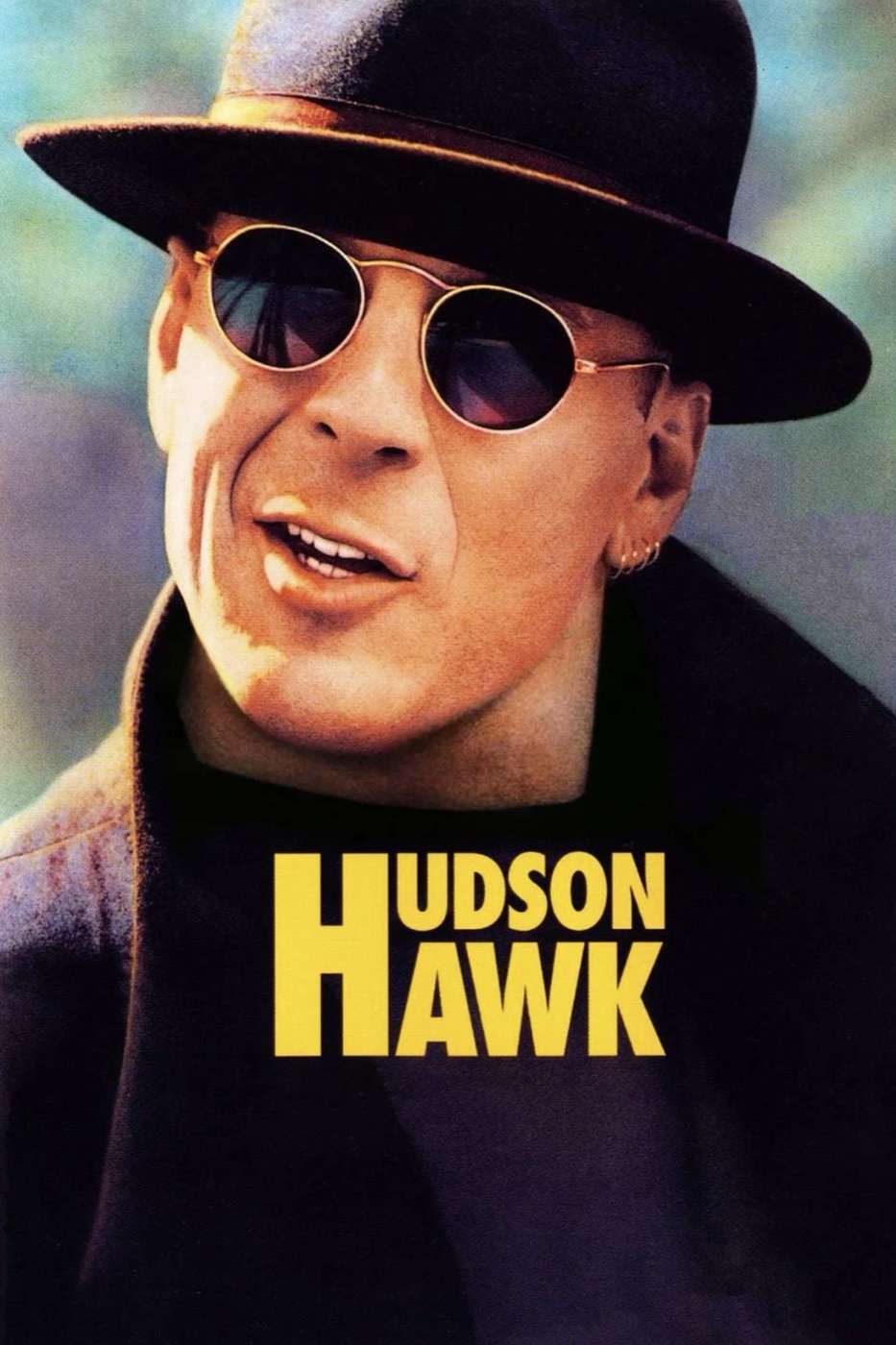
Take the line where Hawk flirts with Andie MacDowell and jests, “Not sure if I remember how to kiss girls… not that I ever kiss guys.” His short-back-and-sides haircut, T-shirt and vest combo, and four gold earrings in one ear say otherwise. It’s hard to tell if looking like an aging hipster cosplaying as The Spirit is meant to be cool and mysterious, laughably lame, or some post-ironic blend. But the confusion goes deeper than appearances. He’s dismayed that his old watering hole is now a trendy, expensive bar, yet Hawk looks fit to step onstage and play the flute like Ron Burgundy. What kind of down-and-dirty bar catered to his obsession with cappuccinos? His “masculine European” drink reflects a style as subtle as Joe Camel.
More than anything, it’s the conceited performance that jeopardises the laughs. Hawk dives into the dirt when a car backfires, yet doesn’t flinch when his coffee cup shatters from a bullet. Comic moments are randomly assigned one of precisely two reactions: a ‘DreamWorks Face’ smirk or an incredulous, YouTube-thumbnail eye-bulge. The scant slapstick that borders on clever—like Hawk and Tommy (Danny Aiello) being half-paralysed yet overcoming two assassins—is a ghost of the old-school adventure from Steven E. de Souza’s original screenplay (the writer behind Die Hard and Die Hard 2). Instead, the Looney Tunes exaggeration injected by co-writer Daniel Waters and director Michael Lehmann (who previously made 1988’s Heathers) recklessly abuses the suspension of disbelief, alienating the audience entirely.
The first heist is a joke in itself. Not only are the guards total putzes, but Hawk and Tommy escape by jumping 40 stories safely onto an entrance awning. When a low-ranking goon gets his neck slashed in the very next scene, are we supposed to suddenly take things seriously? People do get killed here—shot in the head, decapitated, blown up—and they all say “fuck” a lot. It’s a massive tonal dissonance alongside the childish antics, but then again, the contrast is meant to be the joke. “You want me to rape them?” asks a dim-witted CIA agent, who then struggles to read Green Eggs and Ham.
Perhaps that made you laugh, and perhaps frenzied A-to-C comedy tickles your funny bone. Hudson Hawk comes off too smart by dancing gleefully around the alphabet, but the relentless shortcoming is that it’s never smart enough to make a satisfying coherent B link between two random happenings. As Nathan Rabin observed for The A.V. Club: “The central joke of Austin Powers is that its hero is a randy, sexist libertine in a politically correct era. That culture-clash gave the film a satirical edge missing from Hudson Hawk, whose premise is essentially, ‘Hey, what if a New Jersey Bruce Willis-kinda guy got involved in all sorts of international mystery and stuff?'”
From Woody Allen in Casino Royale (1967) to Melissa McCarthy in Spy (2015), mismatched protagonists usually create comedy through conflict. The off-the-wall styling here feels closer to Michael Jordan in Space Jam (1996), yet Willis is so eager to mug for the camera that he ruins the culture clash entirely. Rabin’s issue lay primarily with the writing, which is counterintuitive to Willis’s own enthusiasm. The actor once remarked that “people were mad about it or something, they were mad that we were trying to make them laugh.” But were they really trying? The core concept is half-baked, and Willis’s self-aware performance constantly needles the audience with an implicit ‘Isn’t this funny?’ Some viewers might nod along, but many felt unconsciously slighted at having to invent punchlines for unfinished jokes.
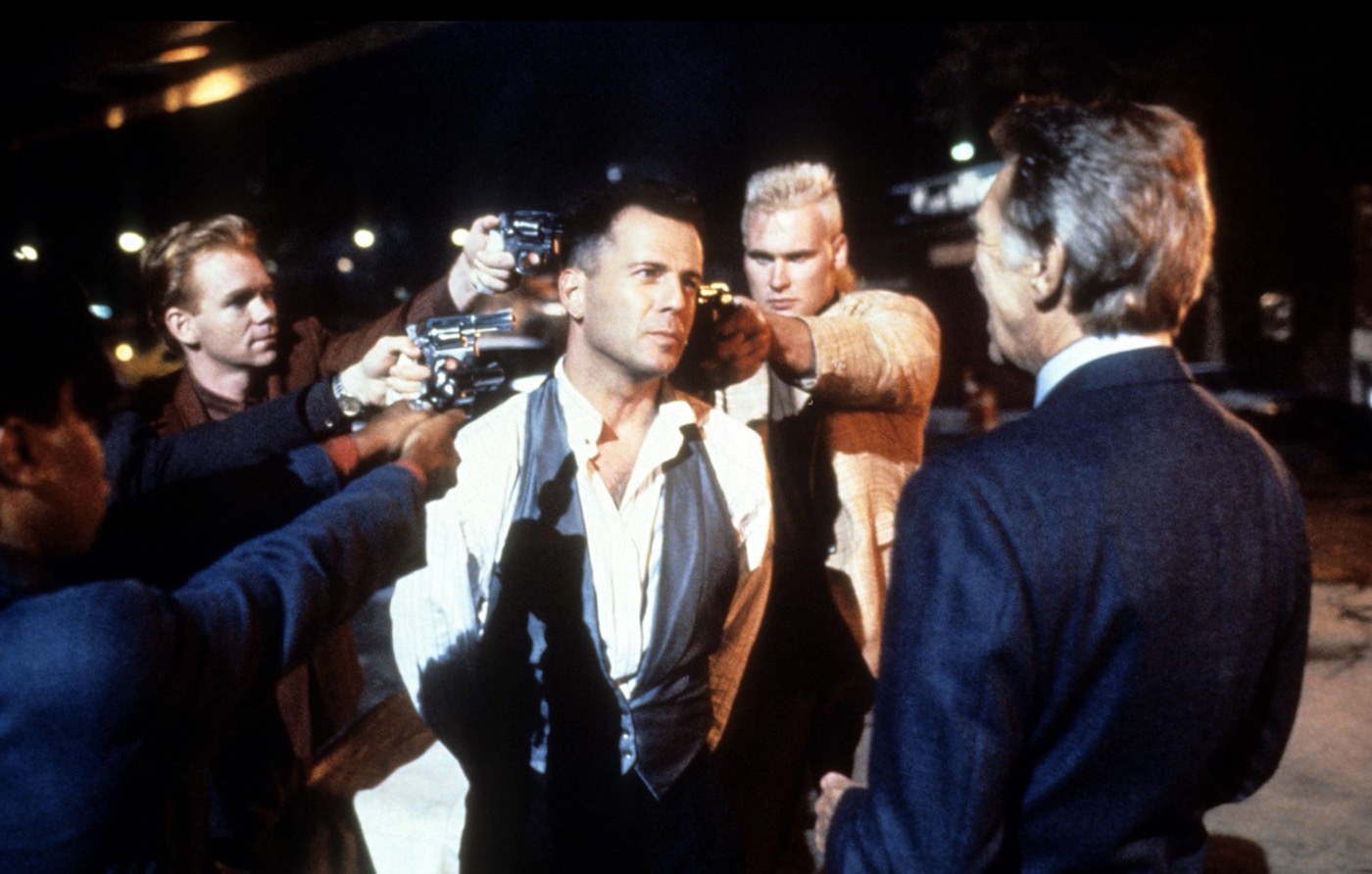
Even underqualified cinematic spies usually answer the call to adventure in classic Hero’s Journey fashion. They naturally reject the call at first, which is a fine comedic vein to mine. Hawk is dragged and drugged through the entire runtime to an exhausting degree. If he doesn’t want to be there, why should we? It echoes the well-trodden critique of Raiders of the Lost Ark (1981)—that the story would’ve soldiered on with or without Indiana Jones. Indeed, our villains here pull off the third and final heist themselves after Hawk refuses. But whereas Indy would at least feel bad that his refusal led to the deaths of the security guards, Hawk never once falters from his smug bravado.
There have been many revisionist attempts to define the comedy of Hudson Hawk. Though critics admit it isn’t a straight parody, it has been compared to Austin Powers. Critic Jonathan Rosenbaum traced its roots to 1960s genre spoofs like Our Man Flint (1966) and Modesty Blaise (1966). Even Waters himself recognised the trouble mid-production, recalling: “Oh my God, it is Casino Royale, but not in a good way!”
Detractors have derided the inscrutable humour as one big inside joke—a case of Willis and his writers finding things funny enough to parody without ever explaining the joke to the audience. This may be the most curious instance of a parody based on a movie that doesn’t actually exist. De Souza’s screenplay was, by all accounts, a more straight-laced affair; the final product seems to be subverting and satirising serious moments that only the crew ever saw. It’s like Austin Powers existing before James Bond.
Hudson Hawk seems rotten to the core. Was this just a bad script the actors shackled themselves to, as Willis has done later in life? Over a decade earlier, an aspiring songwriter told an aspiring actor (then a bartender) about a character inspired by the biting winter wind that blows from the Hudson River across Manhattan, reminding him of the wind off Lake Michigan in Chicago called ‘The Hawk’. Even the origin story is long-winded. That bartender was Willis, who became fast friends with credited co-writer Robert Kraft, who also produced Willis’s 1987 rhythm and blues album, The Return of Bruno. Yes, Bruce Willis has four albums—well, two real ones, and somehow two compilations titled Classic Bruce Willis and The Ultimate Collection.
Flash forward to the production of Hudson Hawk, and Willis wasn’t just requesting dialogue tweaks or heroic close-ups; he was hand-crafting his baby. An anonymous crew member revealed to The New York Times: “There was no mistaking it. Michael [Lehmann] might suggest a dolly shot, and Bruce would say, ‘That’s no good; let’s do this.’ And we’d have to make the adjustment and do it Bruce’s way.” All the musical heist scenes are entirely his, fuelling his “Bruno” persona. Earlier revisions suggested switching a male villain to a female one, possibly Audrey Hepburn, but Willis nixed the stunt casting. Instead, he decided both characters should exist and be married—perhaps his only sound idea, as Richard E. Grant and Sandra Bernhard absolutely shoot for the moon.
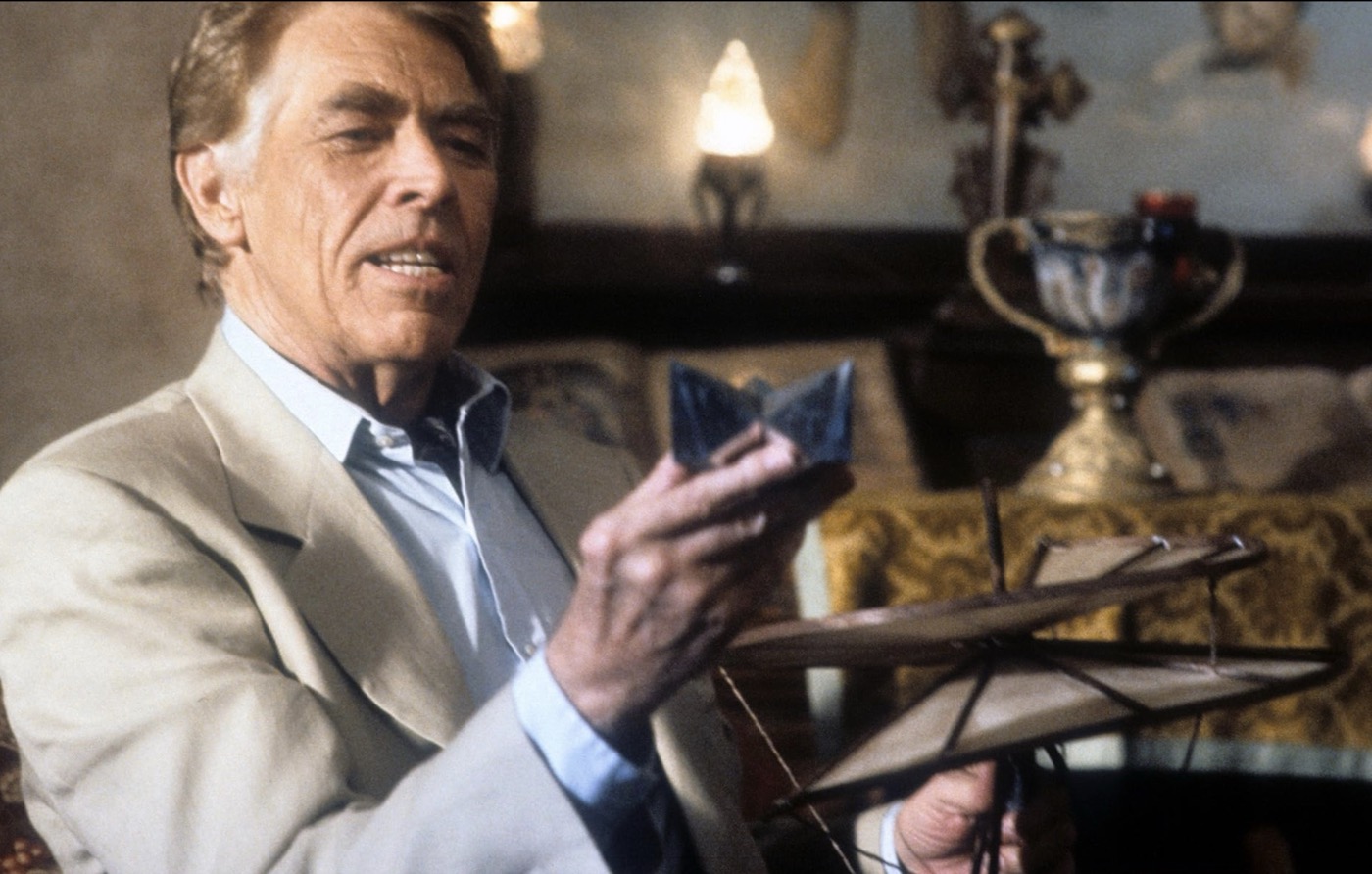
These scattershot impulses led to an initial rough cut of two hours and forty minutes. It was a screening Willis unconfidently insisted upon, determined to try every single joke they had filmed. One entire subplot missing from the final cut involved Hawk’s pet monkey, who gets killed offscreen by James Coburn. If you look closely as Coburn’s character plummets to his death, a photo of that very monkey is stuck to his head.
“The phone rings and it’s [then Warner Bros. exec] Mark Canton calling Bruce Willis, ‘We just had a test screening of The Bonfire of the Vanities. You tested through the roof. We are recutting the movie to make your part bigger.’ Joel Silver kicks me and says, ‘Fucking Mark Canton just fucked his movie and ours. Watch what happens this week.’ Bruce decided the movie should get crazier and crazier and brought in Dan Waters. Finally the studio called me up, ‘You get along with Bruce. We’re sending you, your wife, all expenses paid. You’ve got to take the pencil out of Bruce’s hand.’ Silver says, ‘Bruce hired us. It’s not our job to tell him he can’t make the movie he wants. It’s the studio executive’s’ This guy finds three days in a row to avoid belling the cat. So nobody tells Bruce to stop rewriting the movie and also directing the movie.”—Steven E. de Souza, screenwriter.
Made for $65M—though some individuals involved nudge that figure as high as $71M as production languished—Hudson Hawk grossed just $17M domestically, alongside $97M internationally. Ty Burr predicted for Entertainment Weekly in 1991: “I suspect it’s going to rent surprisingly well. Home video’s economy and privacy make it the perfect medium for guilt-free screening, and besides, people are fascinated when something smells this bad.” Willis claims the film did eventually get into the black through home markets, and the media landscape is so different now that a notorious Hollywood bomb like Hudson Hawk is readily available across several streaming services.
It no doubt fares worse for clicks today than most other Willis films of the 1990s. After all, how many people are discussing Mercury Rising (1998) in any more depth than, “Was that the one where the kid uses autism to crack into the CIA?” And yes, it was. Had Hudson Hawk been produced using de Souza’s original screenplay, there is a chance it could have been one of the actor’s greats. But isn’t it better to be a fascinating novelty than just another forgotten obscurity?
“I like it a lot. I still take pride in that film,” Willis said years later. “We were trying to make each other laugh — make the actors laugh.” One does not relish joining the frenzied mob of critics kicking a man while he’s down, but that latter statement is precisely what allowed a self-indulgent vanity project to take root. The triumph of Die Hard was that John McClane possessed none of the self-assured invulnerability of past action giants like Stallone or Schwarzenegger. Yet Willis nevertheless swaggered into a string of subsequent bombs, coasting on the mistaken confidence that audiences wanted a man at the absolute top of his game, rather than the scrappy underdog who won them over in the first place.
“Bruce Willis used to be funny. I feel like I killed the humour in him with this movie. He’s pretty good in it and you get to see his comic chops. But after the film, if you look at his movie career, he did the most serious and solemn films, with a few exceptions. Something inside of him died after Hudson Hawk.”—Daniel Waters, screenwriter.
Retrospectives and Willis himself have declared Hudson Hawk a cult film. Yet it remains neither a true hit nor a universal favourite; even within the cult scene, it feels rather like a younger brother loitering on the fringes of his sibling’s friend group. The gonzo joie de vivre of this live-action cartoon is reminiscent of Speed Racer (2008)—another bold venture where the Wachowskis dared to reconstruct a cinematic language that audiences initially struggled to decipher. Crucially,producer Joel Silver was behind that passion project too. Beyond its aesthetic hurdles, the enduring audience for Speed Racer connected with universal themes: a love for the race, for family, and for how those anchors support you in finding your purpose. There is nothing behind Bruce Willis smirking at the camera other than a desperate plea: “Don’t you love me?”
Given that this is Willis’s only writing credit, it is easy to presume his subsequent on-screen persona of unassuming quietness developed once he simply stopped trying. Kevin Smith shared a story from the set of Live Free or Die Hard (2007) where Willis responded to a proposed script change with a self-assured ultimatum: “Who is your second choice to play John McClane?” Even so, Smith felt such an intoxicating charisma from the star that he accepted reduced pay just to direct Willis—whom he later called “a fucking dick”—in the “soul-crushing” comedy Cop Out (2010).
This difficult behaviour manifested years before his official aphasia diagnosis in 2022, and well before the late-career, direct-to-video period defined by visible earpieces and obvious body doubles. No one, outside of his immediate family, may know precisely when the actor wouldn’t then couldn’t act. Eventually, there came a point where the Bruce Willis we knew was simply no longer there. Despite all the legitimate criticisms and grievances directed at the actual filmmaking, we can look back at Hudson Hawk with a certain wistful fondness. It allows us to experience a bygone era when an actor, musician, and singular personality—warts and all—truly wanted to be there.
USA | 1991 | 100 MINUTES | 1.85:1 | COLOUR | ENGLISH • ITALIAN

director: Michael Lehmann.
writers: Steven E. de Souza & Daniel Waters (story by Bruce Willis & Robert Kraft).
starring: Bruce Willis, Danny Aiello, Andie MacDowell, James Coburn, Richard E. Grant, Sandra Bernhard, Donald Burton, Don Harvey, David Caruso, Andrew Bryniarski, Lorraine Toussaint & Stefano Molinari.