THE DARK CRYSTAL (1982)
On another planet in the distant past, the last of the Gelfling race embarks on a quest to find the missing shard of a magical crystal and to restore order to his world.

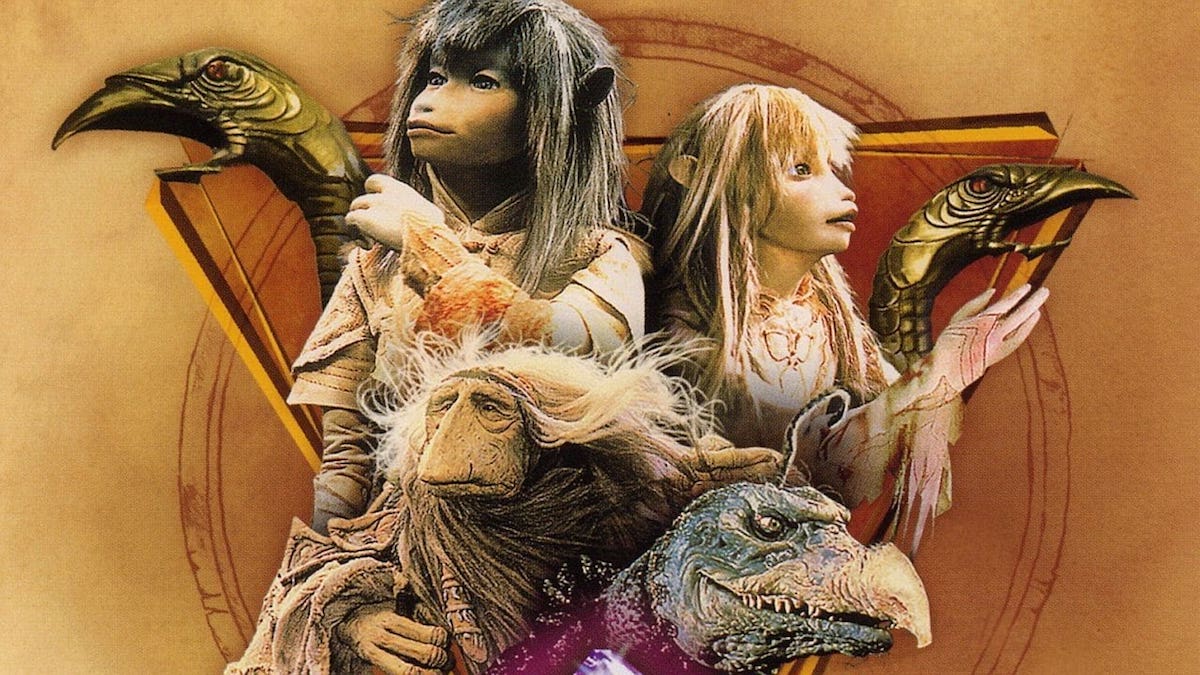

On another planet in the distant past, the last of the Gelfling race embarks on a quest to find the missing shard of a magical crystal and to restore order to his world.
For many, The Dark Crystal is a beloved icon of their childhood: a film that drew them into another world, fuelled their imaginations, thrilled them… and gave them recurring nightmares. Now, All the Anime presents Sony’s stunning 4K Ultra HD scan, taken directly from the original camera negatives and fully restored, in a choice of collector’s packaging. It’s the perfect opportunity for loyal fans to revisit, and for a fresh audience to discover, this classic of imaginative fantasy.
It was a weird and wonderful Wizard of Oz (1939) for the fledgling millennial generation. I was in my late teens when I first saw it, so I was okay with most of the rather intense content. But, be warned: for a PG film populated with puppets, it contains pretty dark themes and genuinely disturbing imagery. That’s probably why I love it so much!
Perhaps because The Dark Crystal is such an unusual film, it’s stood the test of time and looks as amazing as it ever did—and just as quirky. If you haven’t seen it before, I’m not sure how to sum it up. It’s a fantastic example of immersive world-building, on par with the Lord of the Rings trilogy (2001–03) and the Avatar movies. The brisk pacing is perfect, and it feels like you really get to know the world of Thra and its mythic history in just 93 minutes—somewhat shorter than modern fantasy audiences have been conditioned to expect!
The unique world it conjures holds together as a cohesive reality much better than most I can think of, except perhaps The NeverEnding Story (1984), which also employed mechanical effects and large-scale puppetry. In many ways, it’s an even greater feat of imagination, as every element of its mythos, every animal and plant, and every detail of its characters was created from scratch, and there are no humans to be seen. It’s probably so effective because it was written and designed to be a film, rather than adapted from literature.
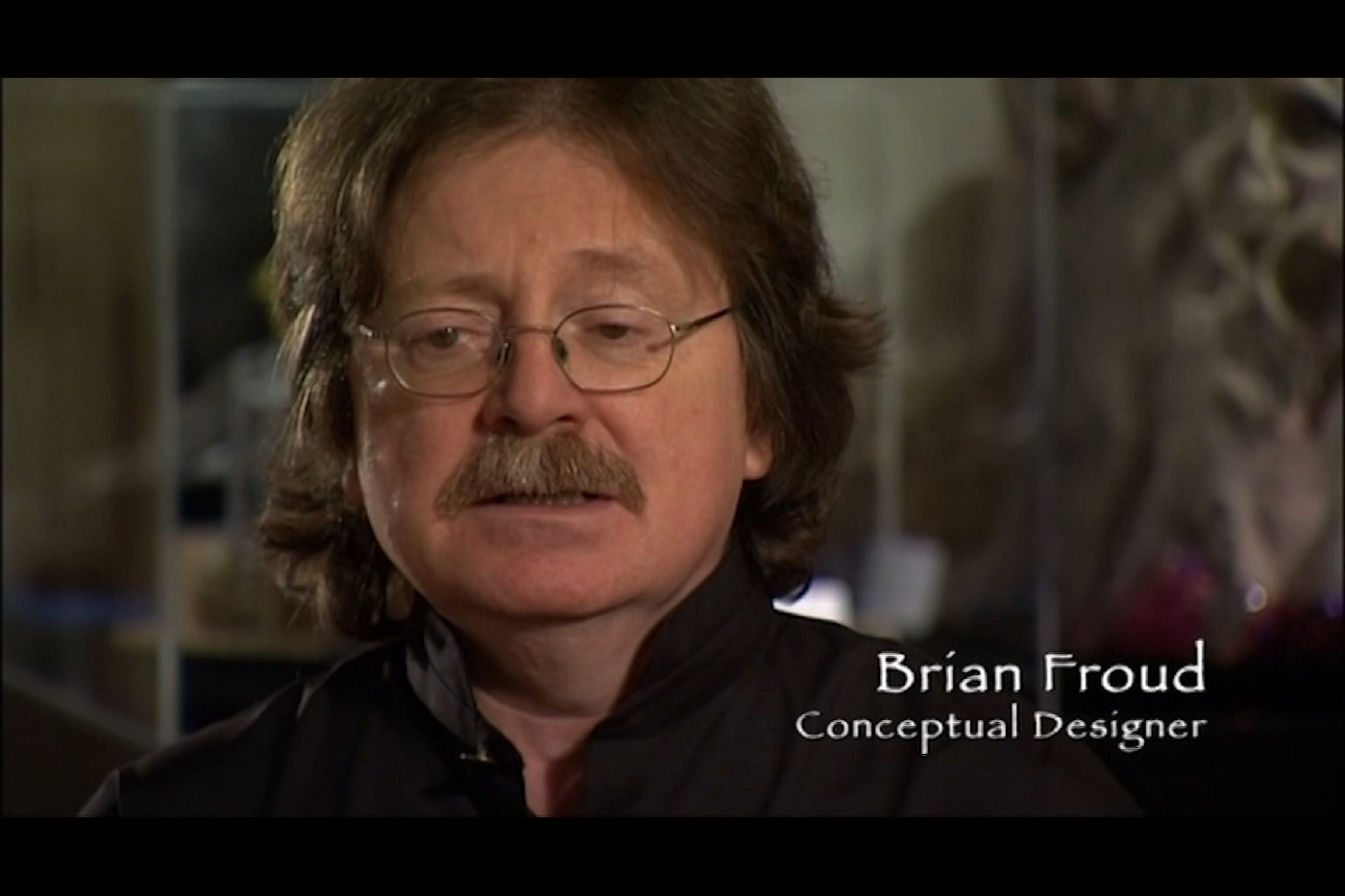
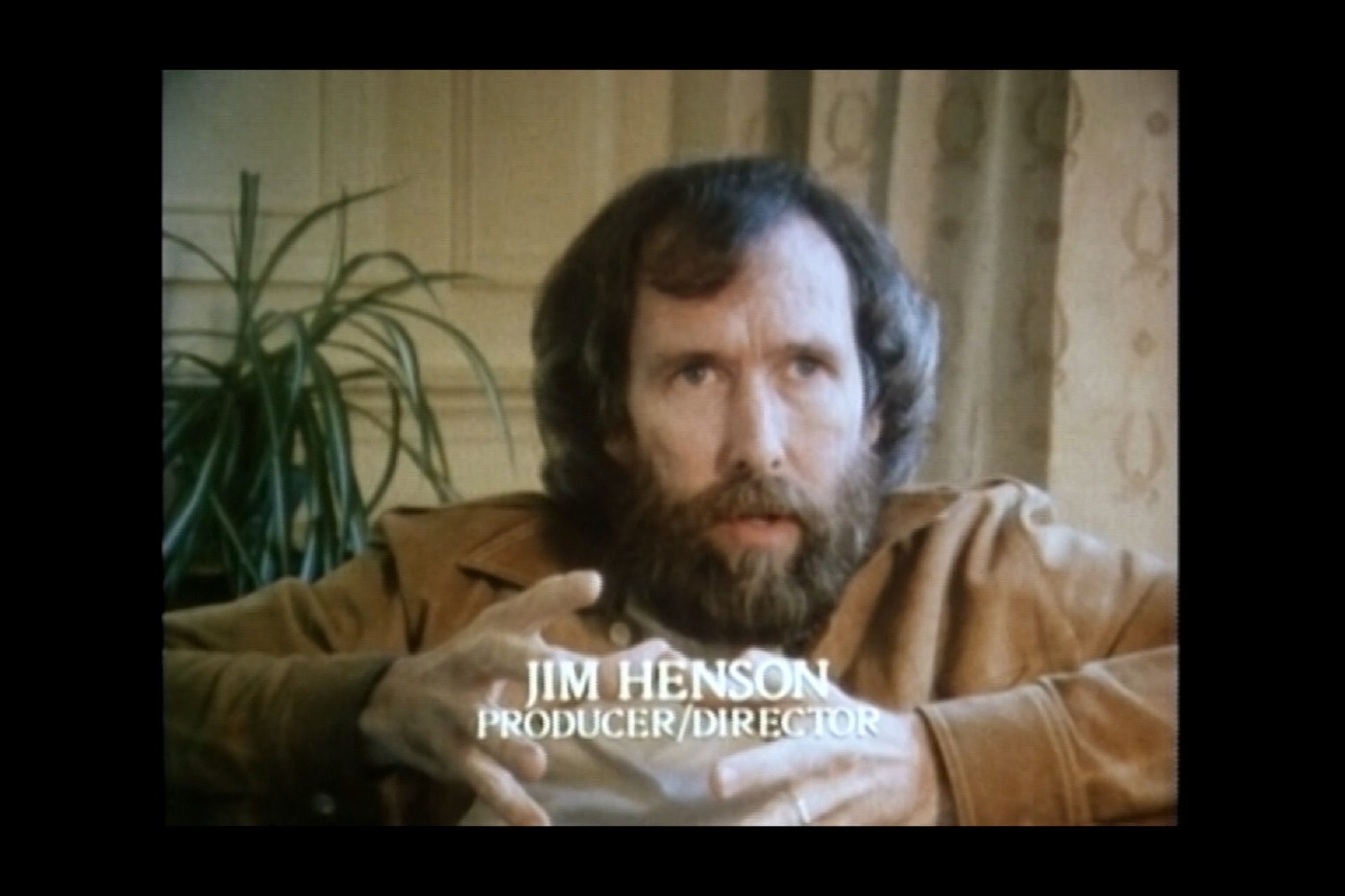
Nothing quite like it had been seen before, and audiences weren’t expecting an epic fantasy with dark Gothic undertones to come from the imagination of Muppet maestro Jim Henson. Back in 1976, Henson started developing ideas for a serious fantasy film that could build on the techniques he was using for the first series of The Muppet Show (1979-1981). He was aware of the fantasy art of British illustrator Brian Froud and made contact with him to suggest a possible collaboration. The following year, they sealed a deal to develop the film together.
Their approach to pre-production was unusual, too. For one thing, they took their time over it: nearly six years from initial ideas to premiering the finished film. To begin with, Froud and Henson created the world. They mapped it,evolved its flora and fauna, and populated it with creatures and characters. As the world took form, the stories began to grow from it, creating a rich and intricate mythos.
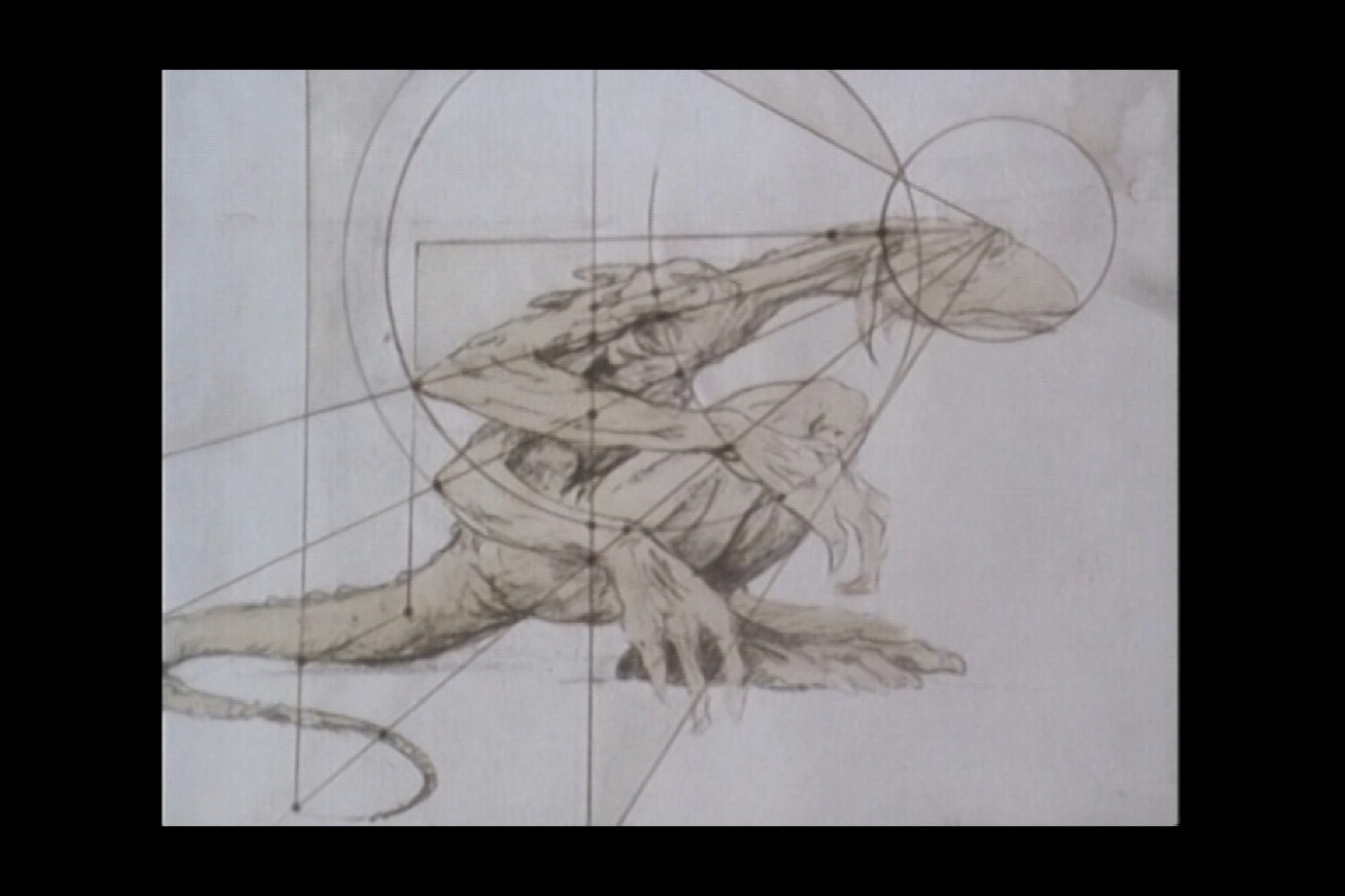
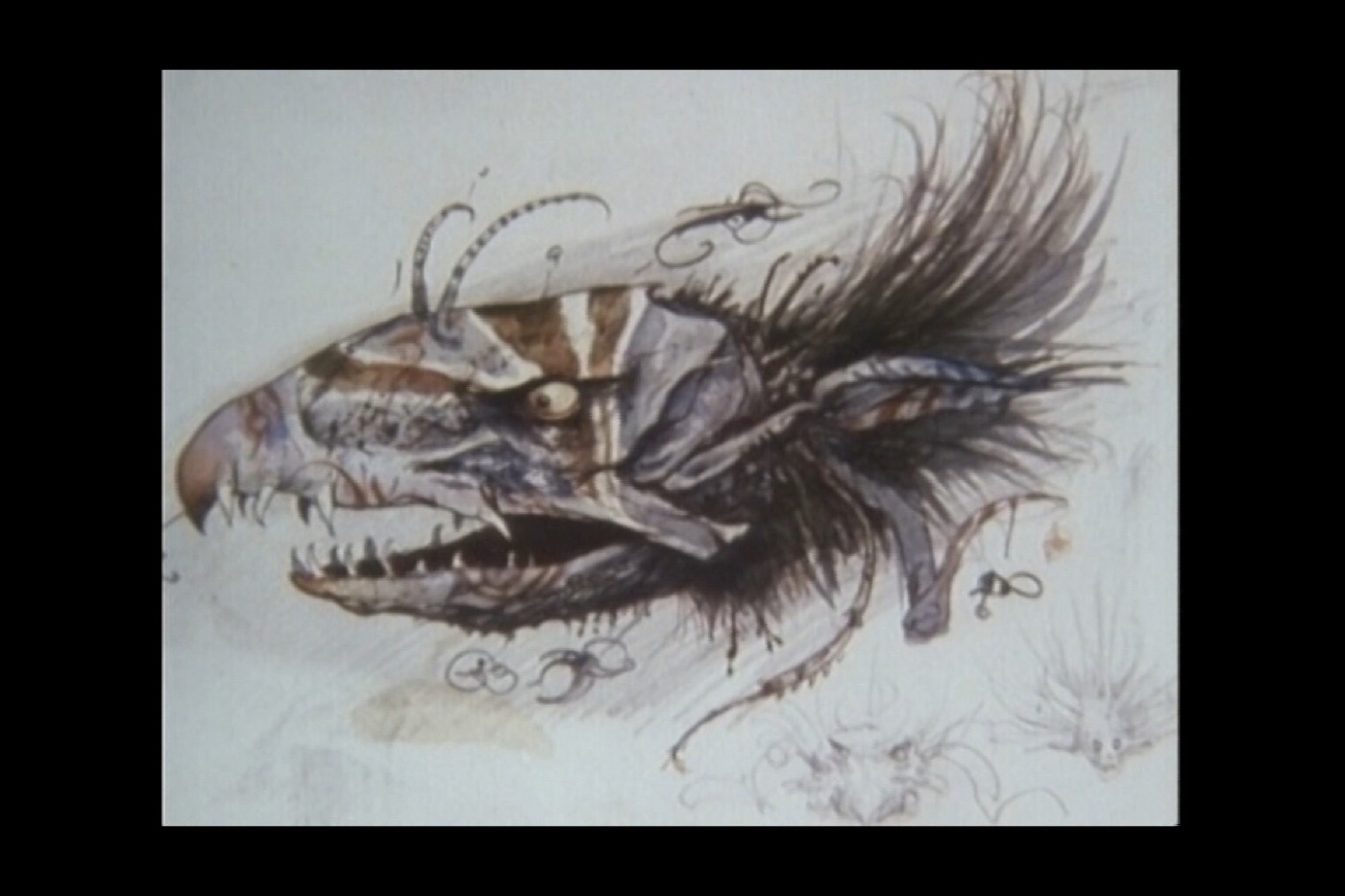
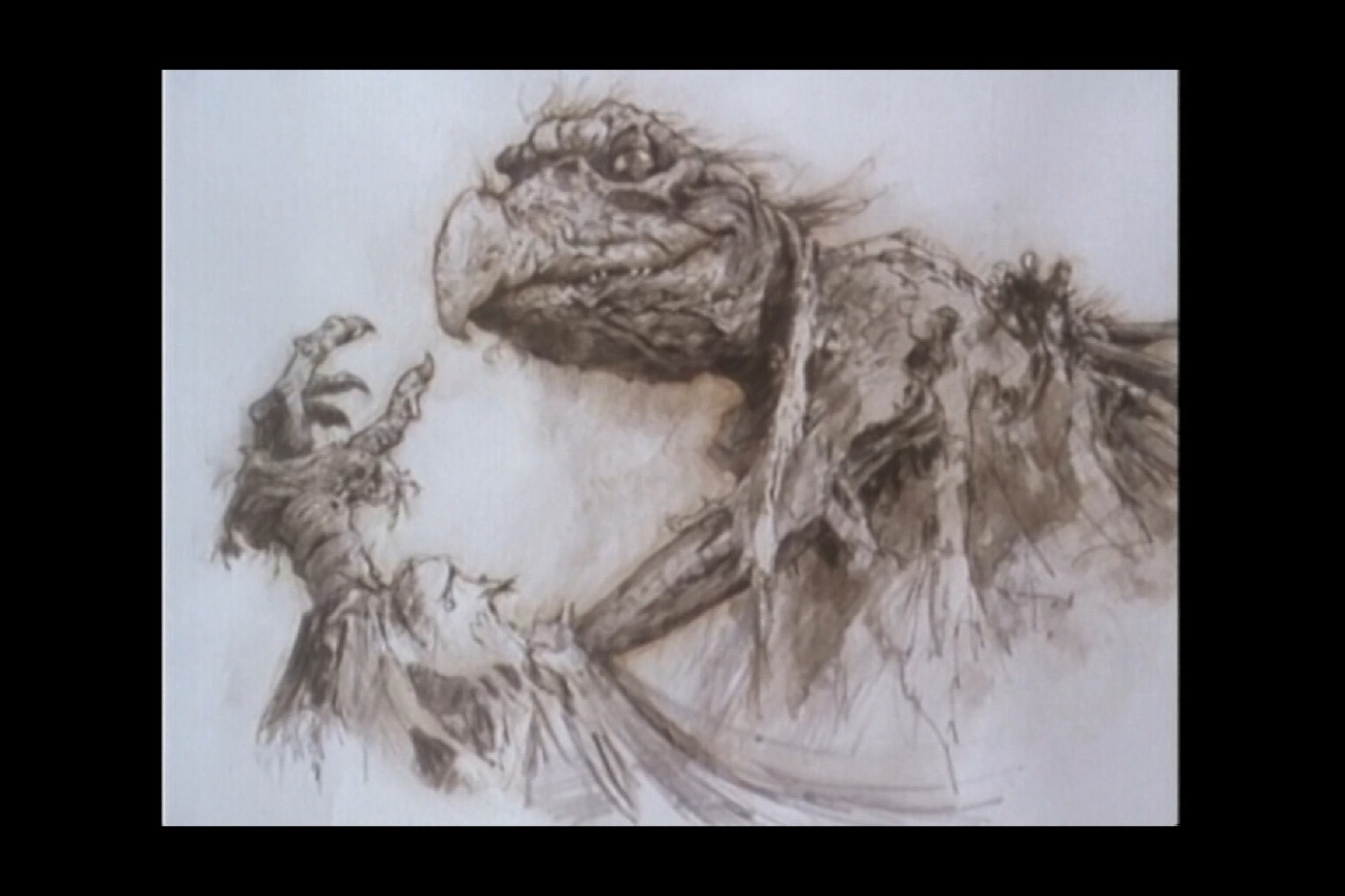
The look was very much influenced by Froud’s existing artwork and the Devon landscape that surrounded him. Henson would come up with ideas for the characters, describing their psychological and spiritual aspects and what they had to do in the story; Froud would then draw them. When pre-production began in earnest, he joined the small team in New York, where his concept drawings and design sketches were taken to the art department so maquettes could be modelled, adapting the designs where necessary. The hands-on modellers and prop-makers would then feed back to Jim and Brian, and the design process became a thriving creative collaboration. Ideas and concepts were granted time to ferment, grow, and mature into a world with a convincingly rich history.
This amount of lead-time for world-building is a rare luxury. The world of Peter Jackson’s Lord of the Rings, for instance, had already precipitated through the mind of J.R.R Tolkien after centuries of development rooted in Norse mythology. With The Dark Crystal, Henson and Froud were starting with a clean slate.
In modern cinema, the only original film work that competes with the abundant intricacies of The Dark Crystal might be James Cameron’s Avatar franchise. Interestingly, Cameron was already working on his first ideas and concept art at the same time Henson and Froud were creating Thra in their New York design studio. By comparison, six years in the making is stunningly efficient next to the three decades it took to bring the first Avatar (2009) movie to the screen—and it’s debatable which is the more immersive.
Two advantages that The Dark Crystal has are that the mechanical effects still seem magical. Seeing real things move in real time has a fascination all its own, and it also forces the viewer to engage their imagination, drawing us deeper into the world. The electronic video effects are the only aspects that date it at all, but they’re used sparingly, and at points when we’re too invested in the storytelling to be distracted.
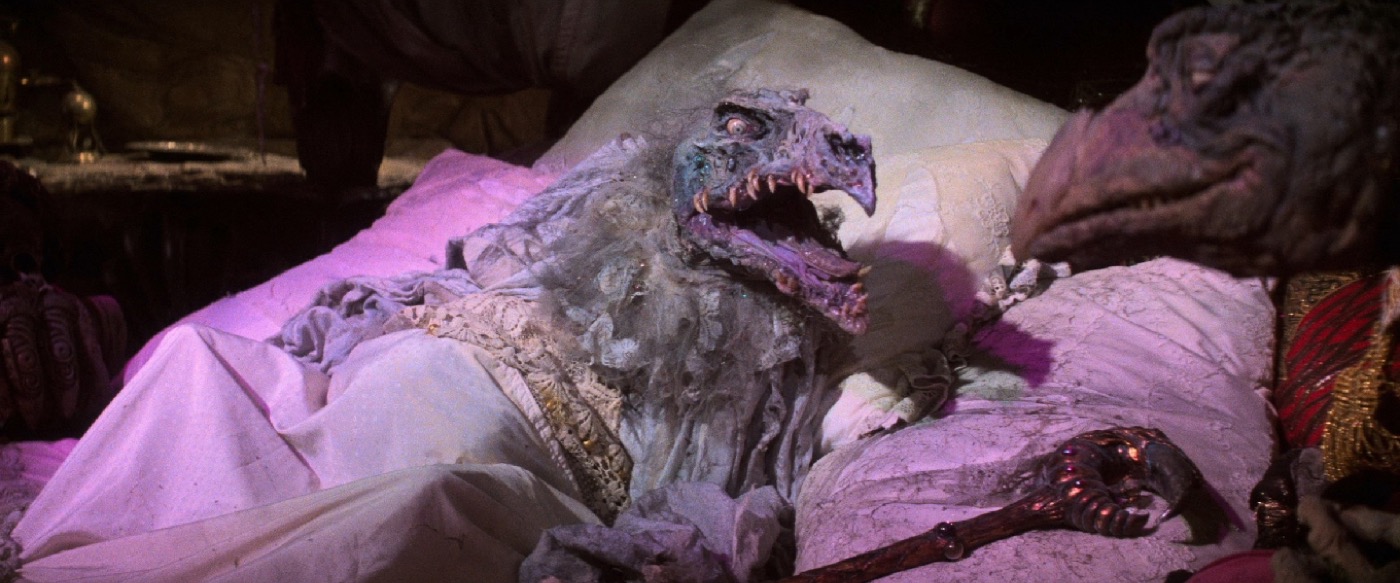
The other significant strength is the deft deployment of folkloric structure. The film opens with an extensive narration of events that, having occurred a millennium earlier, are already legendary tales in the world of Thra. We’re told of a cracked crystal of power and a shard that was lost. The event heralded the arrival of two races of strange beings: the urRu, known as ‘Mystics’, and the delightfully disgusting Skeksis, who dwell in the castle of the crystal. There, they’ve learned how to use its power to extract life essence from the defenceless Podlings to extend their own lives. It may seem that the film’s extended opening exposition lays too many cards on the table, but don’t worry—there’s plenty more mystery and suspense to come. The purpose seems to be to establish a foundational myth. Immediately, the film takes on the gravitas of a culturally defining folktale.
Those familiar with the hero’s journey described by psychologist Carl Jung will be able to spot several stops on the quest that follows. Incidentally, it was this same theory of the archetypal mythic tale that inspired George Lucas to follow the same structure when writing Star Wars (1977)—also produced by Gary Kurtz, who co-produces here with Jim Henson.
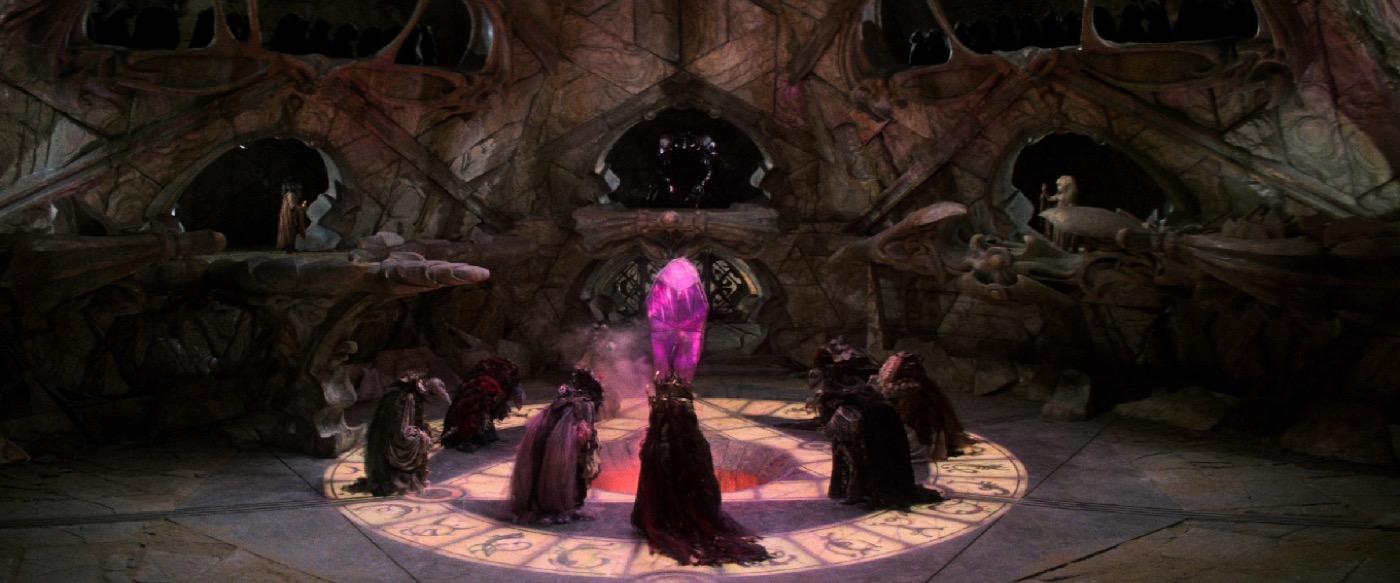
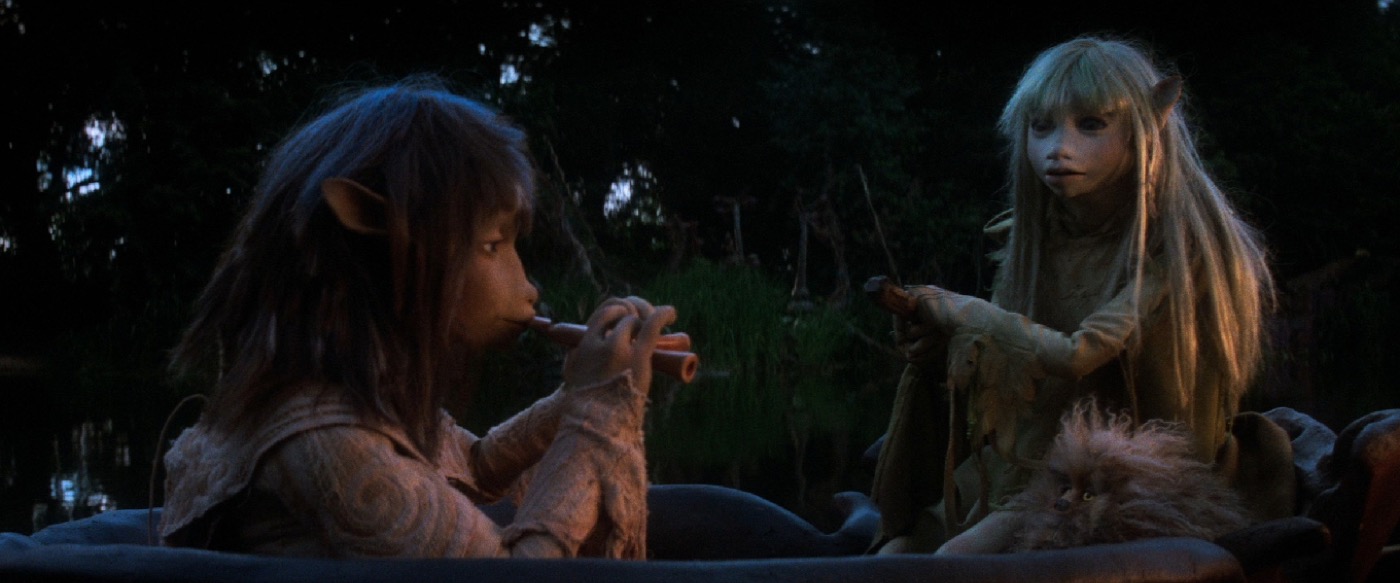
Our hero is Jen (voiced by Stephen Garlick, puppeteered by Jim Henson), who believes he’s the last Gelfling—a race of good, fairy-like people—and is set on a mission by his dying master to avert disaster. Before a foretold celestial alignment, he must stop the Skeksis from permanently transforming the crystal of power into… you guessed it, the dark crystal that will consolidate their evil reign of terror for another millennium.
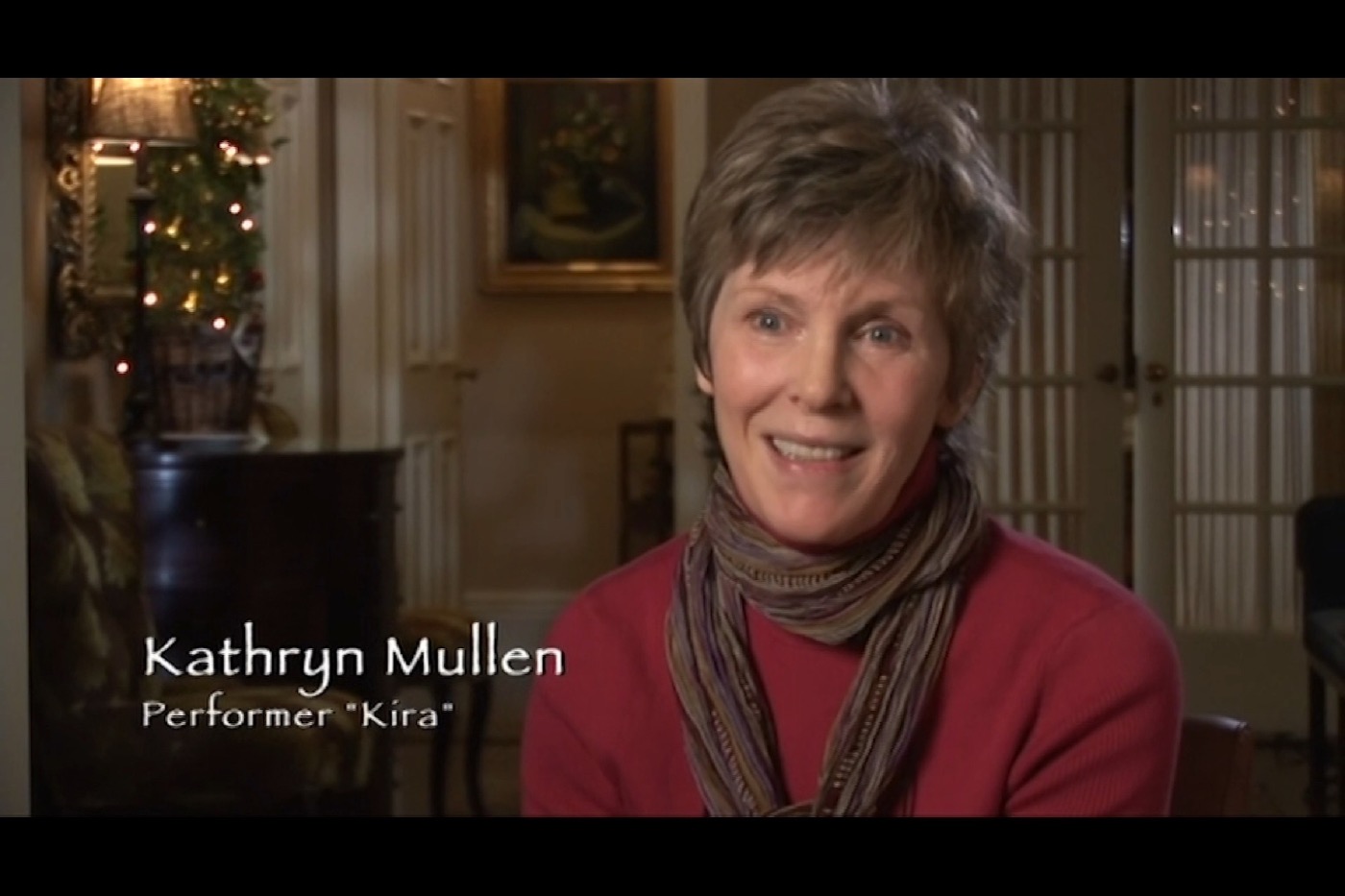
Of course, the gender imbalance is addressed and duality restored when he meets Kira (voiced by Lisa Maxwell, puppeteered by Kathryn Mullen) along the way, another Gelfling who thought herself to be the last of their kind. They take up the calling together. Of all the creatures, the Gelflings are the least strange and intentionally resemble young humans. To match our idea that goodness equates with beauty, their features are simple and smooth, necessitating that the puppeteers perform mainly through gesture and posture. They may skirt the uncanny valley, but they never slip into it.
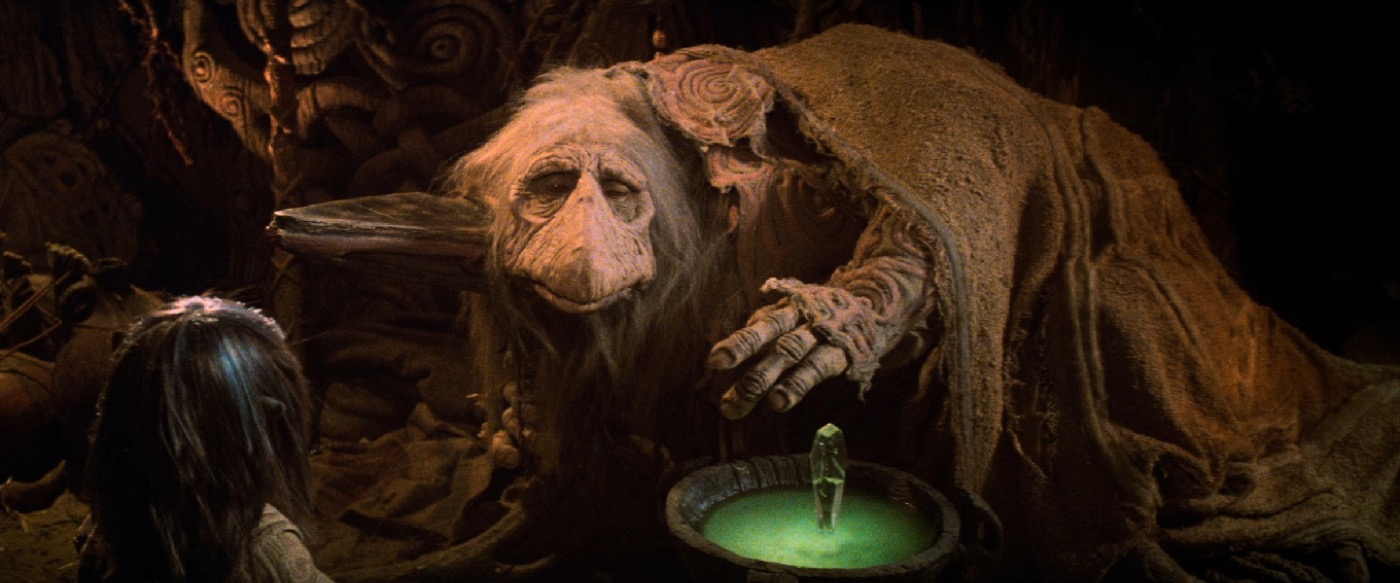
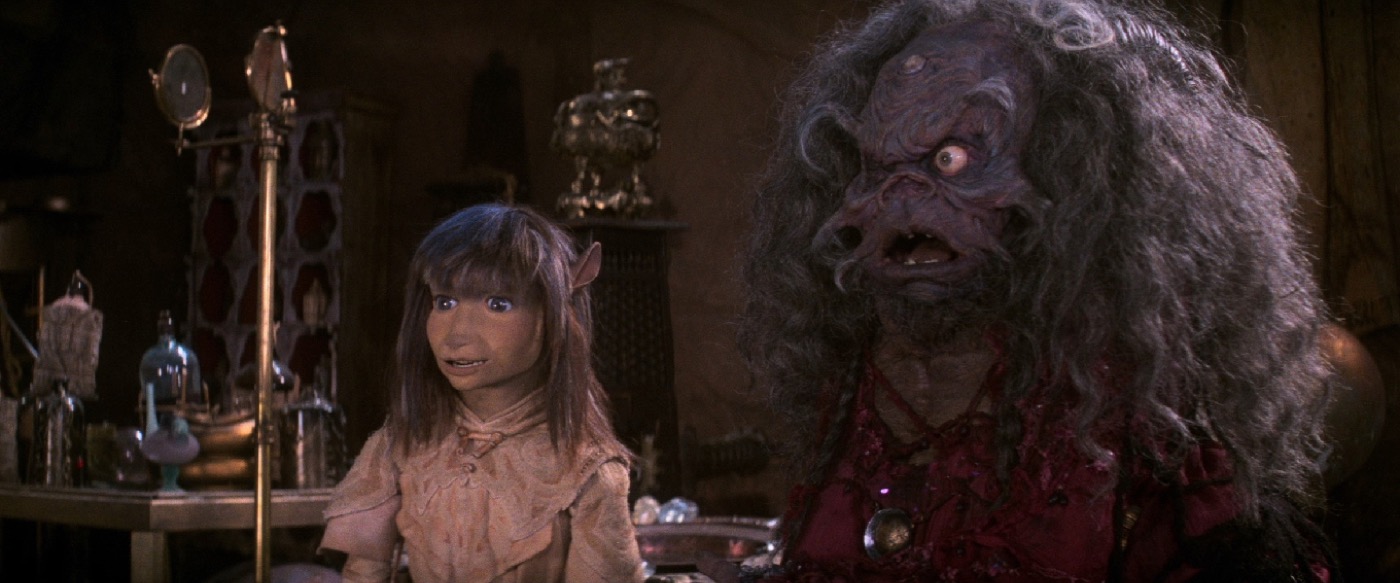
The idea of goodness and beauty being harmonious is soon shattered when we meet Aughra (voiced by Billie Whitelaw), a fierce, witch-like shaman. Just like the three Graeae Witches of ancient Greek mythology who shared one eye between them, she too has a single, removable eye—perhaps also a wink to the one-eyed Odin of Norse tales. She is an expressive character design operated by Frank Oz and, in retrospect, is reminiscent of Yoda, playing a similar role as a facilitator on the hero’s journey.
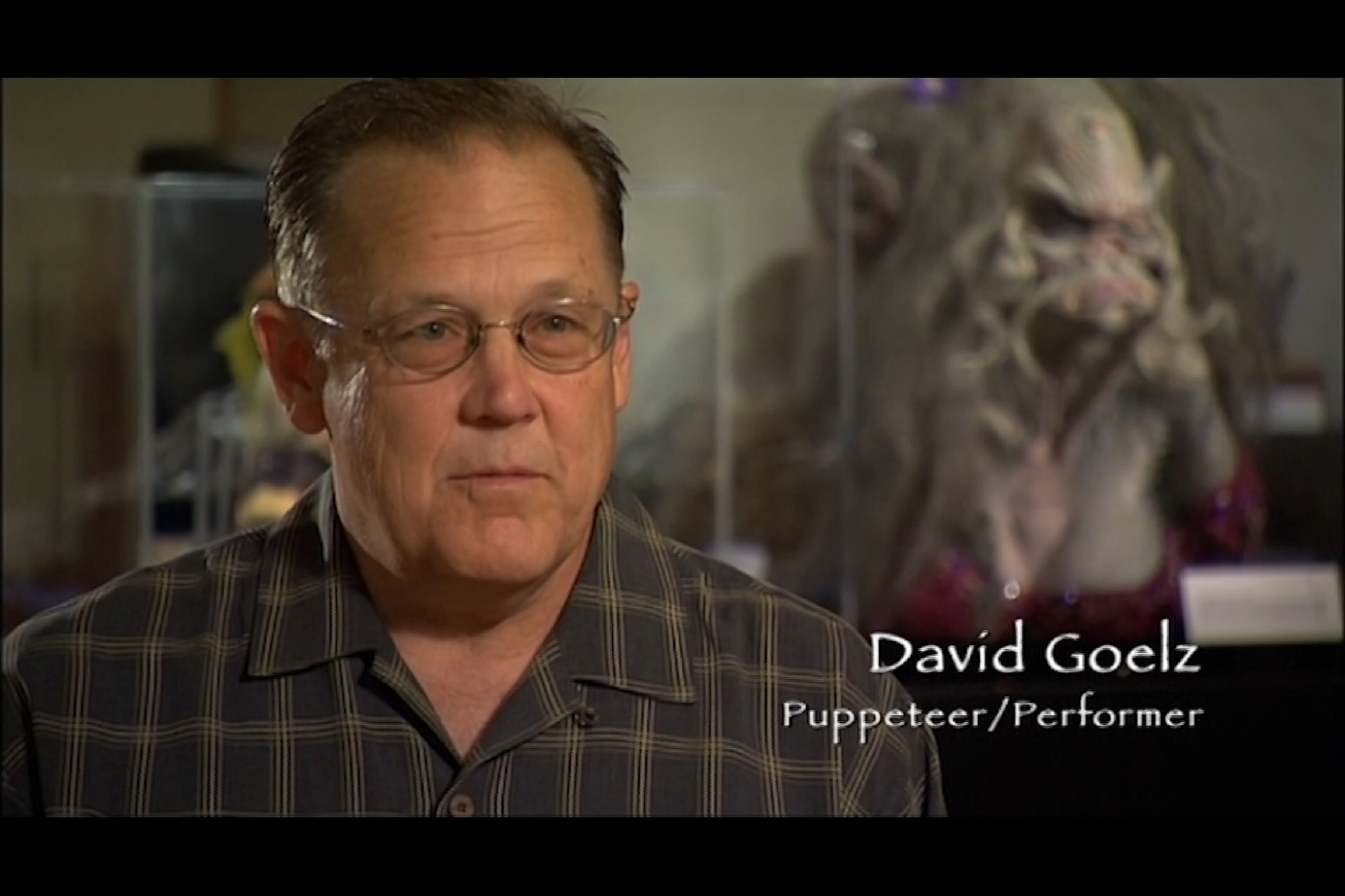
The unfettered imagination in the character designs pushed the boundaries of what was achievable. New animatronic techniques were devised, new materials experimented with, and new kit developed. Take the Skeksis, for example. They’re villainous creatures that look like a hybrid of dinosaur, vulture, and dragon. To make them believable, new methods were required to make their lips, brows, eyes, and hands mobile. It ended up taking five or six operators for each Skeksis. There were two actually in the suit, both using a specially designed mini-monitor to see what was going on so they could react to other characters and move the head in the right direction. Then, crawling around the hems of their grand gowns, were three or four more puppeteers controlling the hands and other elements. The facial expressions and eye movements were radio-controlled by another operator. The mind boggles at the logistics of moving all those people around when there were nine of the creatures dynamically interacting, without causing injury or appearing in shot!
Understanding the physical demands placed upon the performers really helps one appreciate the dedication it took to make the puppets do more than just work. They don’t merely function; they move smoothly, they’re expressive, and they actually perform. They end up being as emotive and believable as many human actors. This is the heart of the film’s success: you soon forget you’re watching puppets. For me, this was a problem with Henson’s follow-up, Labyrinth (1986). Much as I’m a huge fan of both David Bowie and Jennifer Connelly, the juxtaposition of human talent with puppet performers drew negative attention to the illusion. That’s what The Dark Crystal successfully pulls off: a grand illusion. There are very few ‘special effects’ in the film. Almost everything we see was actually there in front of the lens, playing out in real time. What would now be done with digital effects was achieved with miniatures and matte paintings on glass, merged with the live action.
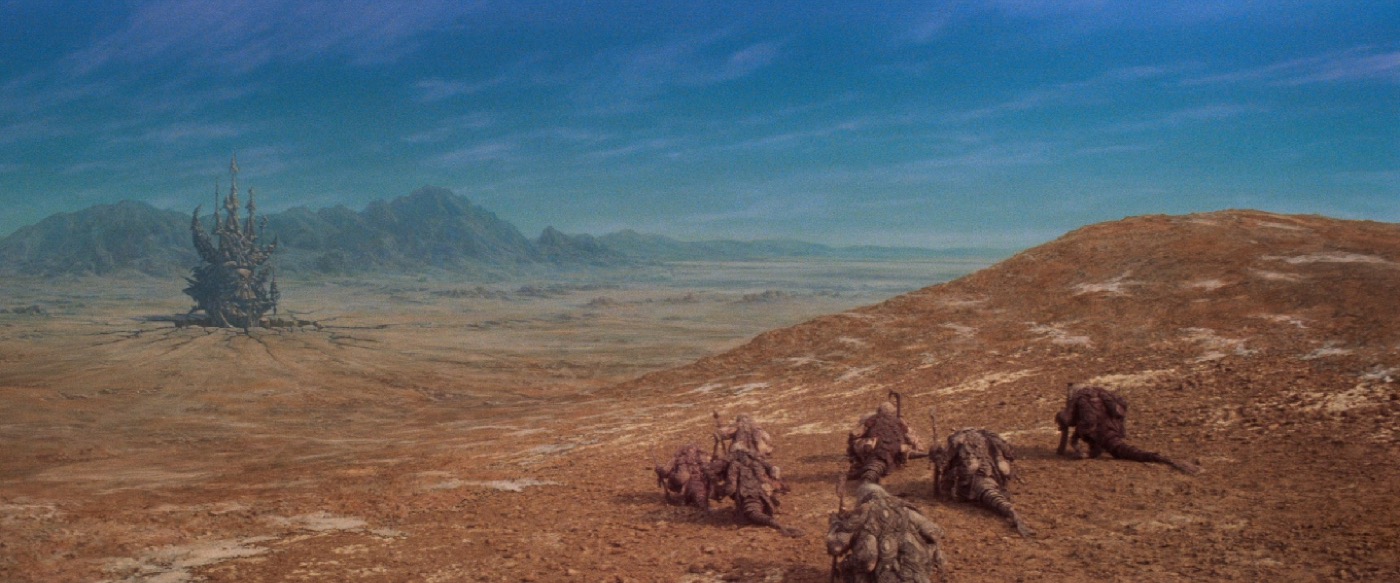
The Dark Crystal was a great cinematic achievement. It introduced new mechanical effects that were used in the original Star Wars trilogy to bring Jabba the Hutt and Yoda to life, but taken to a whole new level. Henson would use techniques innovated for The Dark Crystal in Labyrinth, the later Muppet movies, and The Storyteller (1987) TV series. Although The Dark Crystal didn’t test well, and its budget spiralled from an initial $13M to $25M, it opened to a warm reception and was immediately welcomed by genre fans, winning a couple of festival awards. It was a slow-burner at the box office, however, losing much of its audience to E.T. the Extra-Terrestrial (1982). Shortly after release, it began to draw negative criticism for its unexpectedly dark themes. Some parents expected something similar to the Muppets and resented its traumatising effects on younger children. It did earn a respectable profit, though, returning $40M and pushing into the US Top 20 for the year.
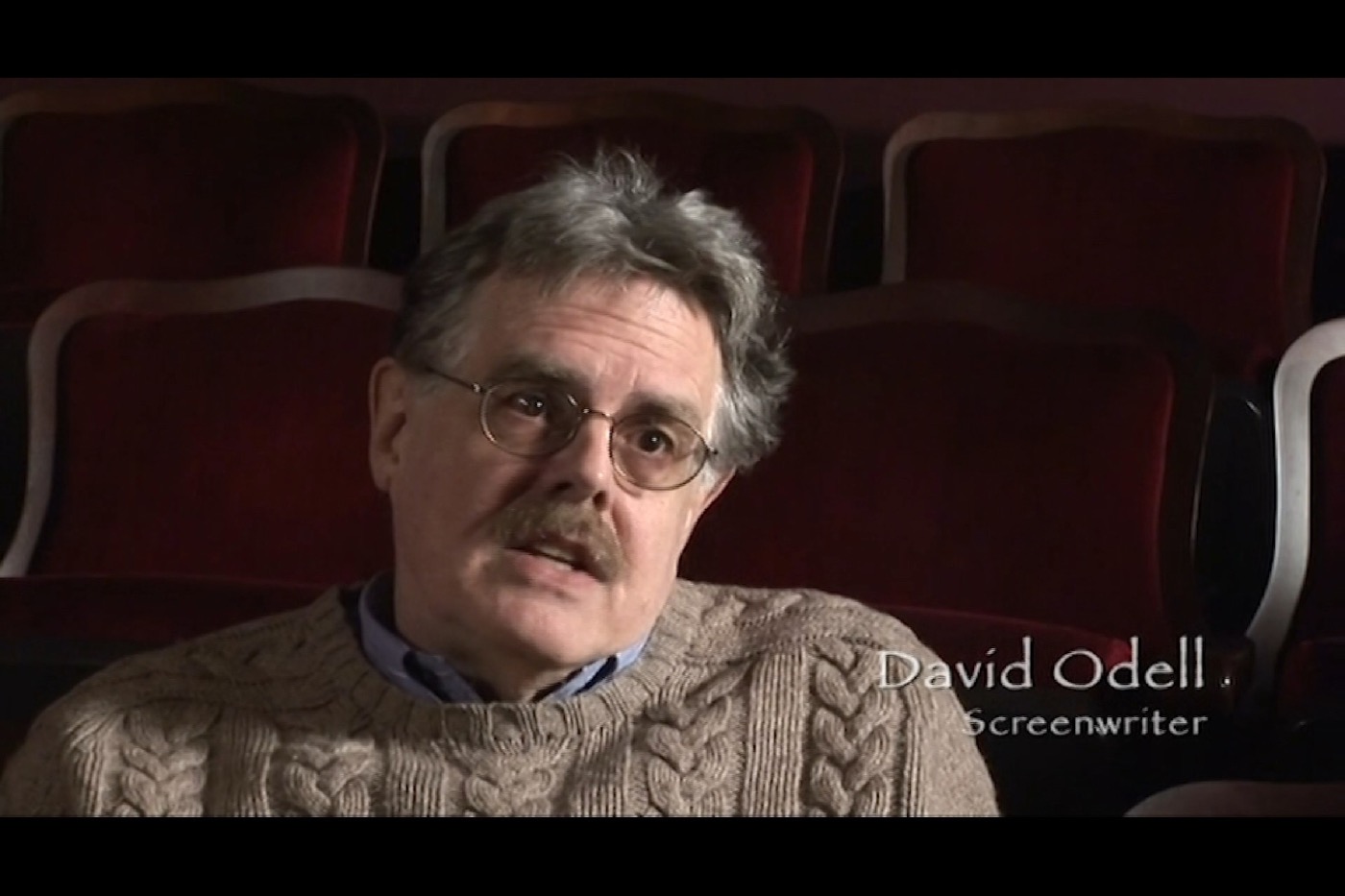
Now, 44 years on, it’s loved by legions of loyal fans. During the long interim, more stories from the world of Thra have been told. There was a series of graphic adaptations with art by Kelly and Nicole Matthews, written by Simon Spurrier and based on the original, unproduced screenplays by David Odell, Craig Pierce, and Annette Duffy. River Horse released two tabletop RPG games—one parallelling the events in the movie and a second set in the world of The Dark Crystal: Age of Resistance (2019). Louis Leterrier helmed that outstanding series for Netflix, but the planned two-season arc fell foul of the COVID-19 pandemic, and what would’ve been the second season concluded in the form of graphic novels.
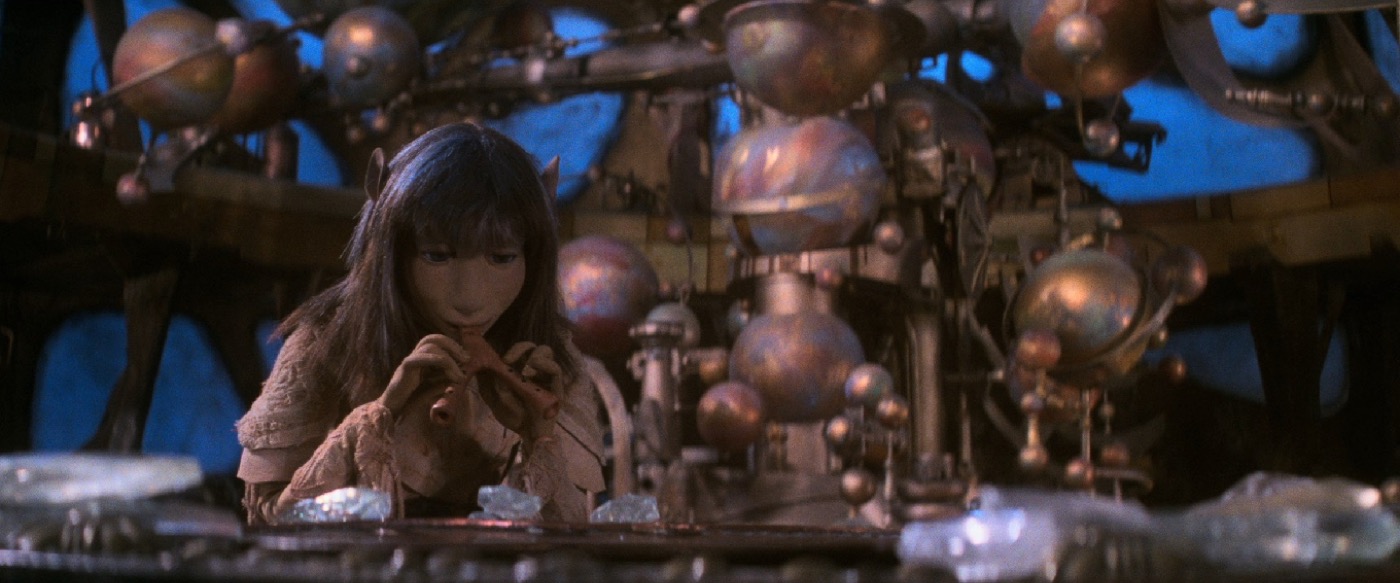
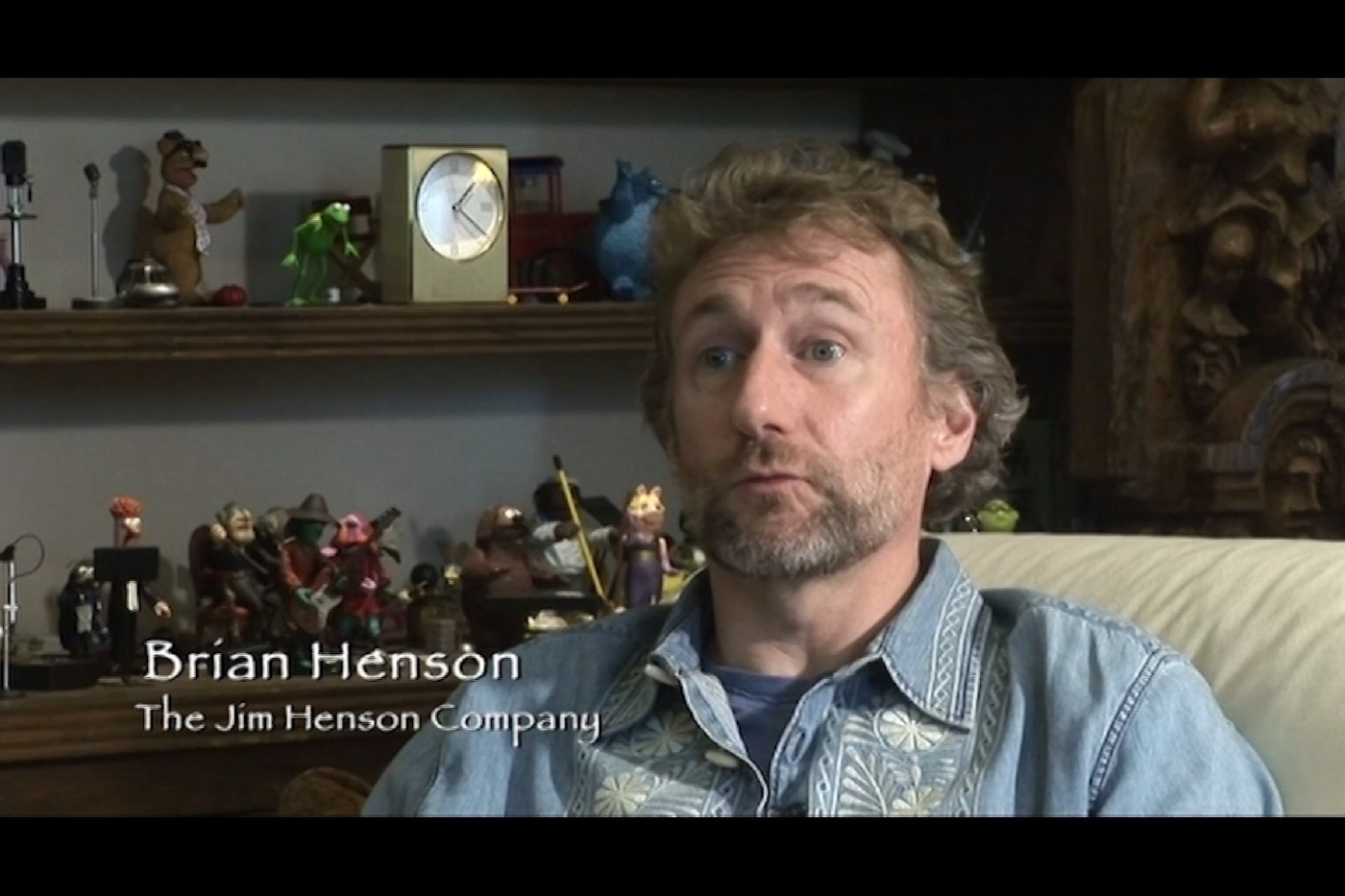
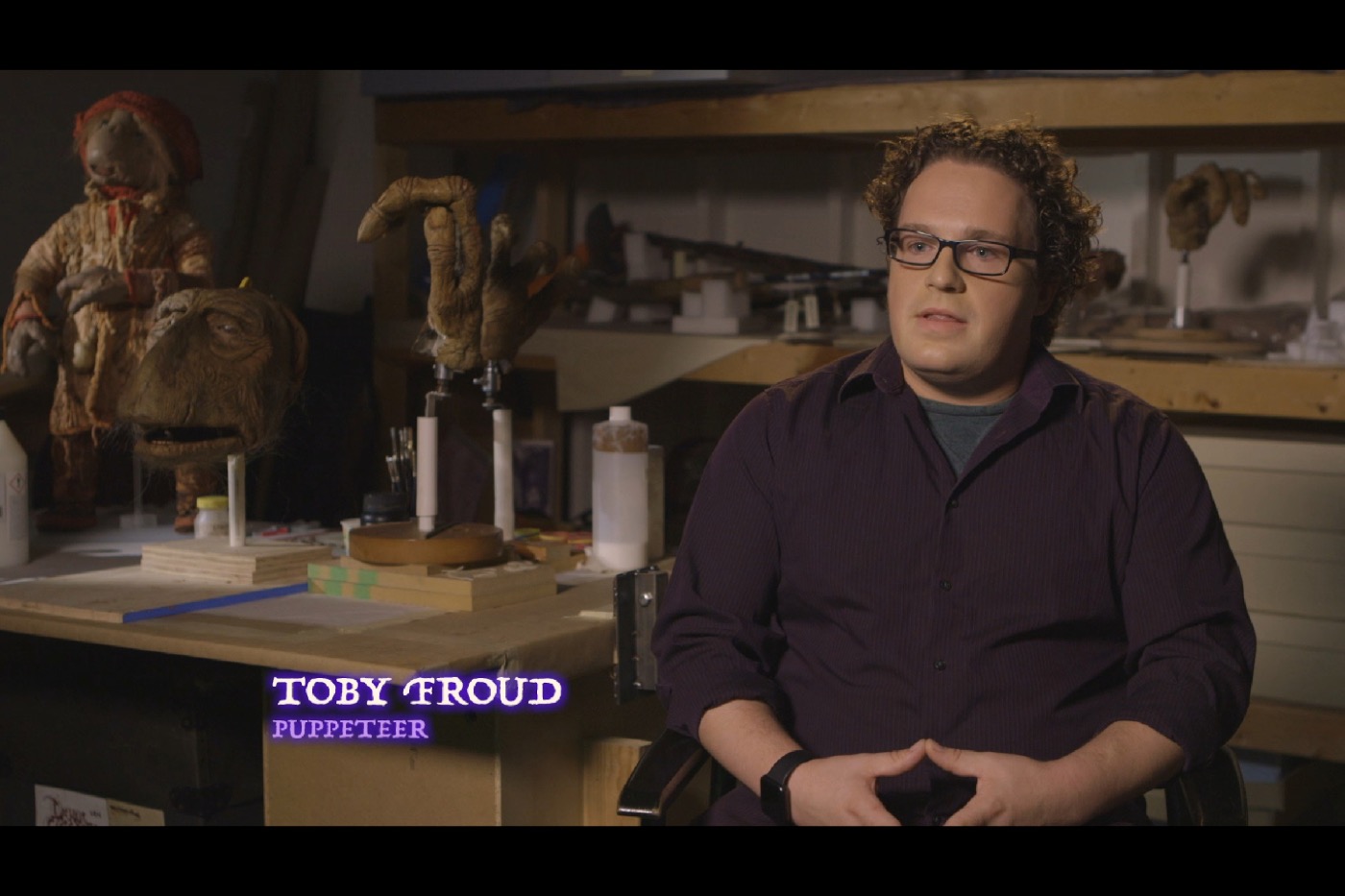
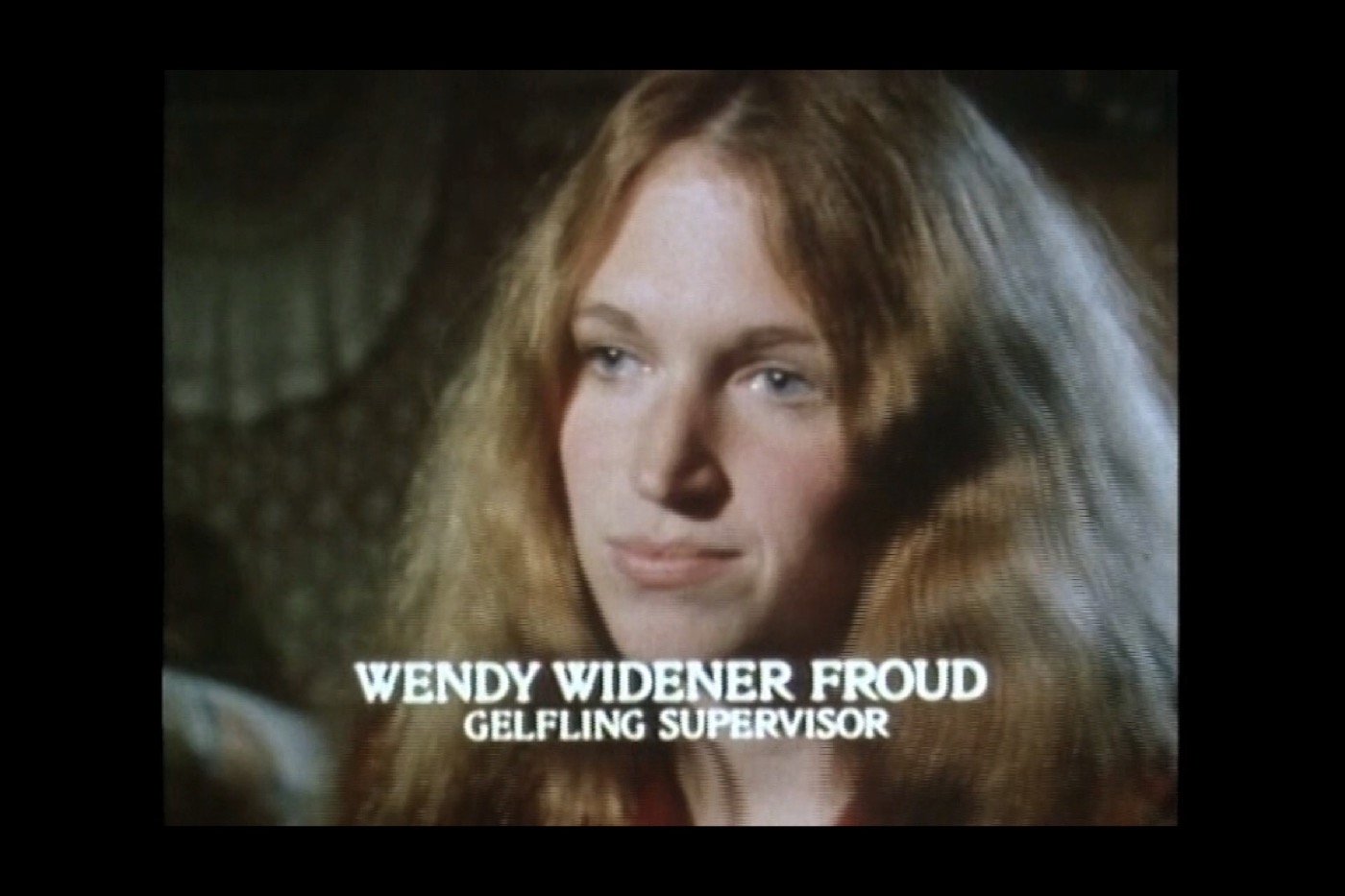
The extras made for the 25th anniversary DVD release in 2007 are all included here. There are two featurettes looking back on the production with contributions from Brian and Wendy Froud, Brian Henson, and Kathryn Mullen. There are also informative anecdotes and reminiscences, making it feel like a Dark Crystal convention with a great guest line-up. To celebrate the new Blu-ray restoration and 4K Ultra HD debut, there is also a new featurette, The Myth, Magic and Henson Legacy, which looks back on the production, placing it within a modern context.
Although there’s no official announcement, Brian Henson has teased in recent interviews that The Jim Henson Company is exploring new avenues for the franchise and that these projects are actively in development. Hopefully, last year’s theatrical re-release of the 4K restoration and these new collector’s edition and Blu-ray releases from All the Anime will rekindle enough industry interest to get a new chapter underway.
The world of Thra has so many more tales to tell, and I, for one, look forward to returning to it!
UK • USA | 1982 | 93 MINUTES | 2.39:1 | COLOUR | ENGLISH

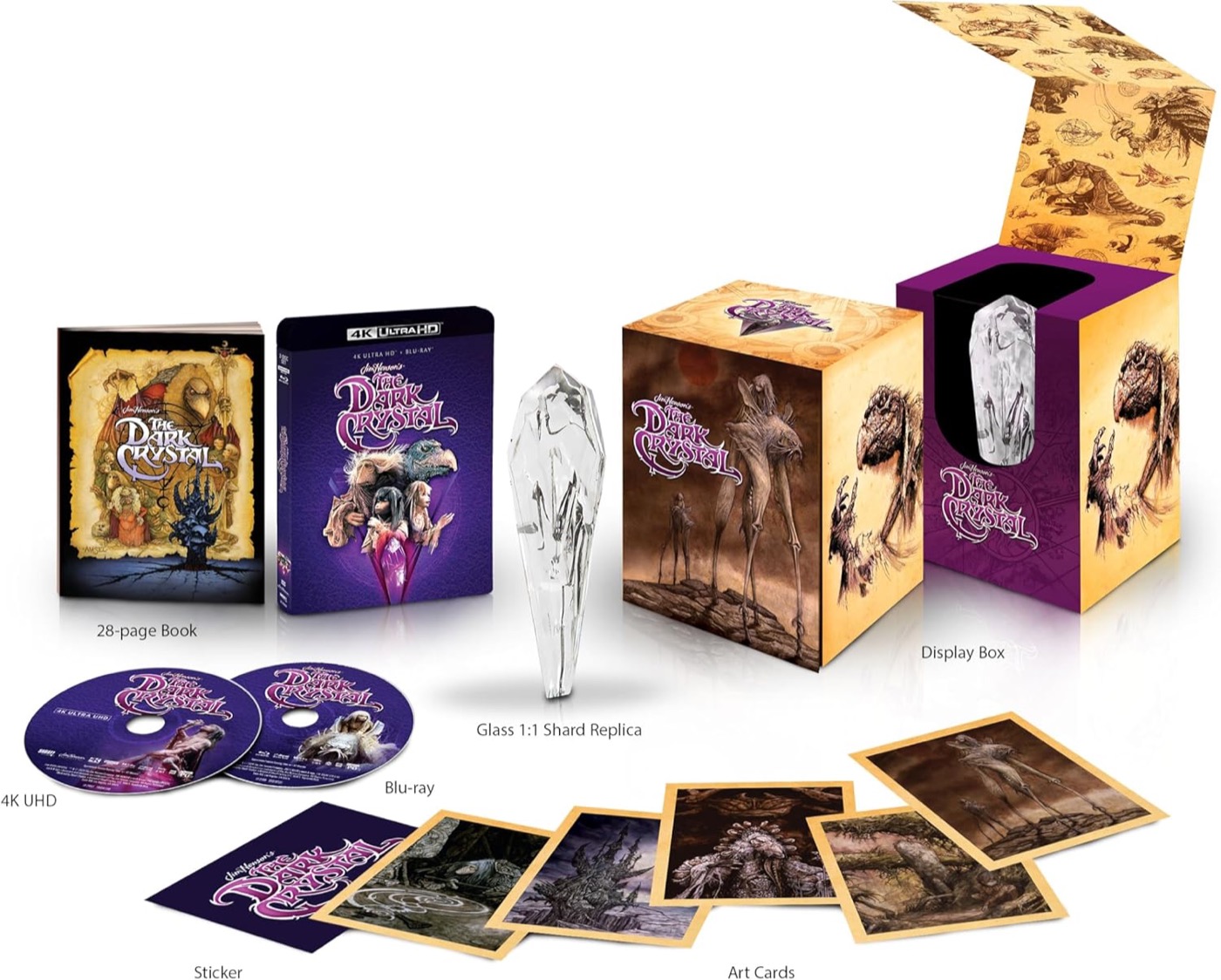
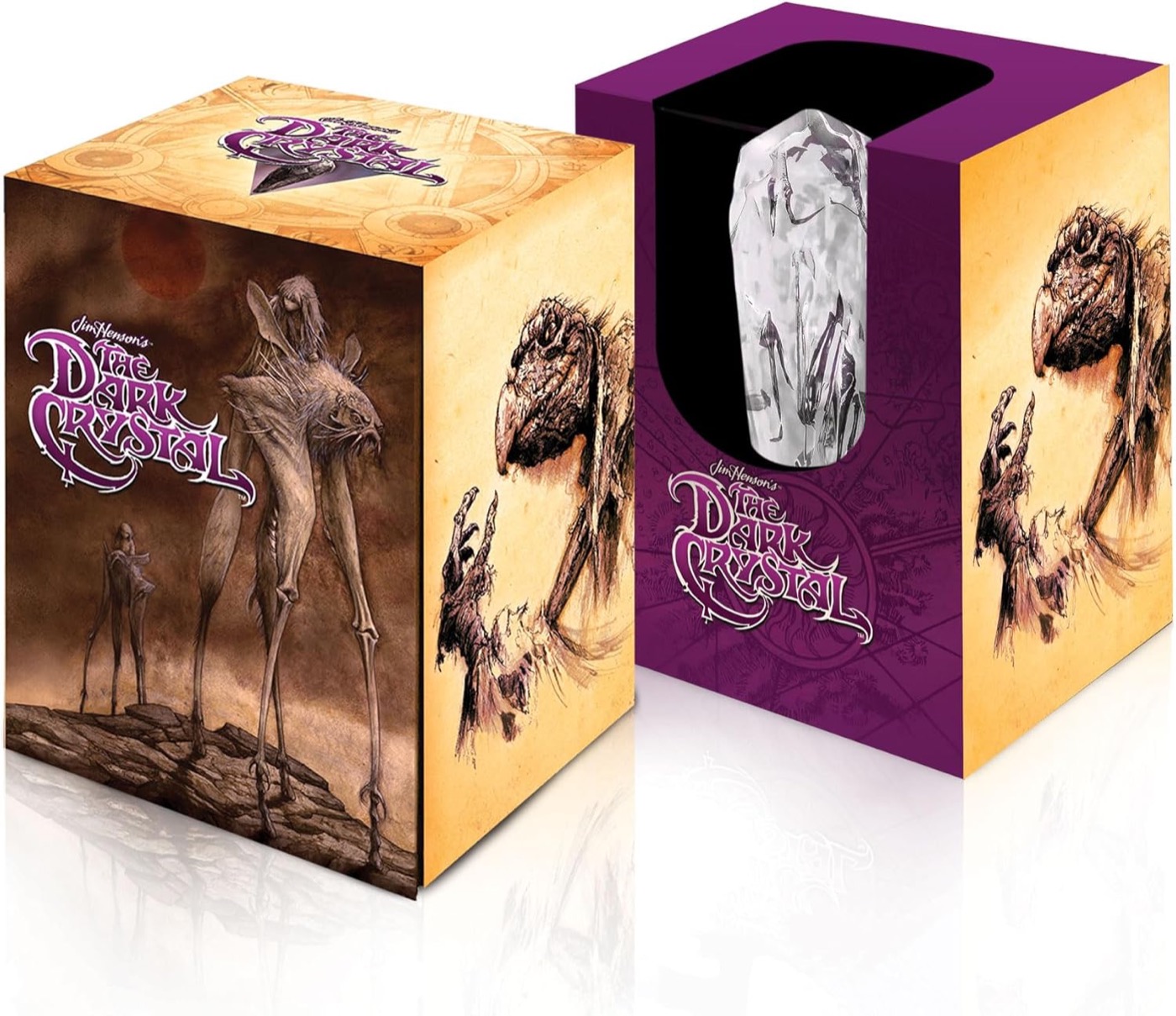
Pretty much all you want to know, about the making of Dark Crystal, is covered in an excellent array of extras with these new editions, much of it legacy material from earlier releases.
directors: Jim Henson & Frank Oz
writer: David Odell (story by Jim Henson).
voices: Stephen Garlick, Lisa Maxwell, Billie Whitelaw, Percy Edwards & Barry Dennen.