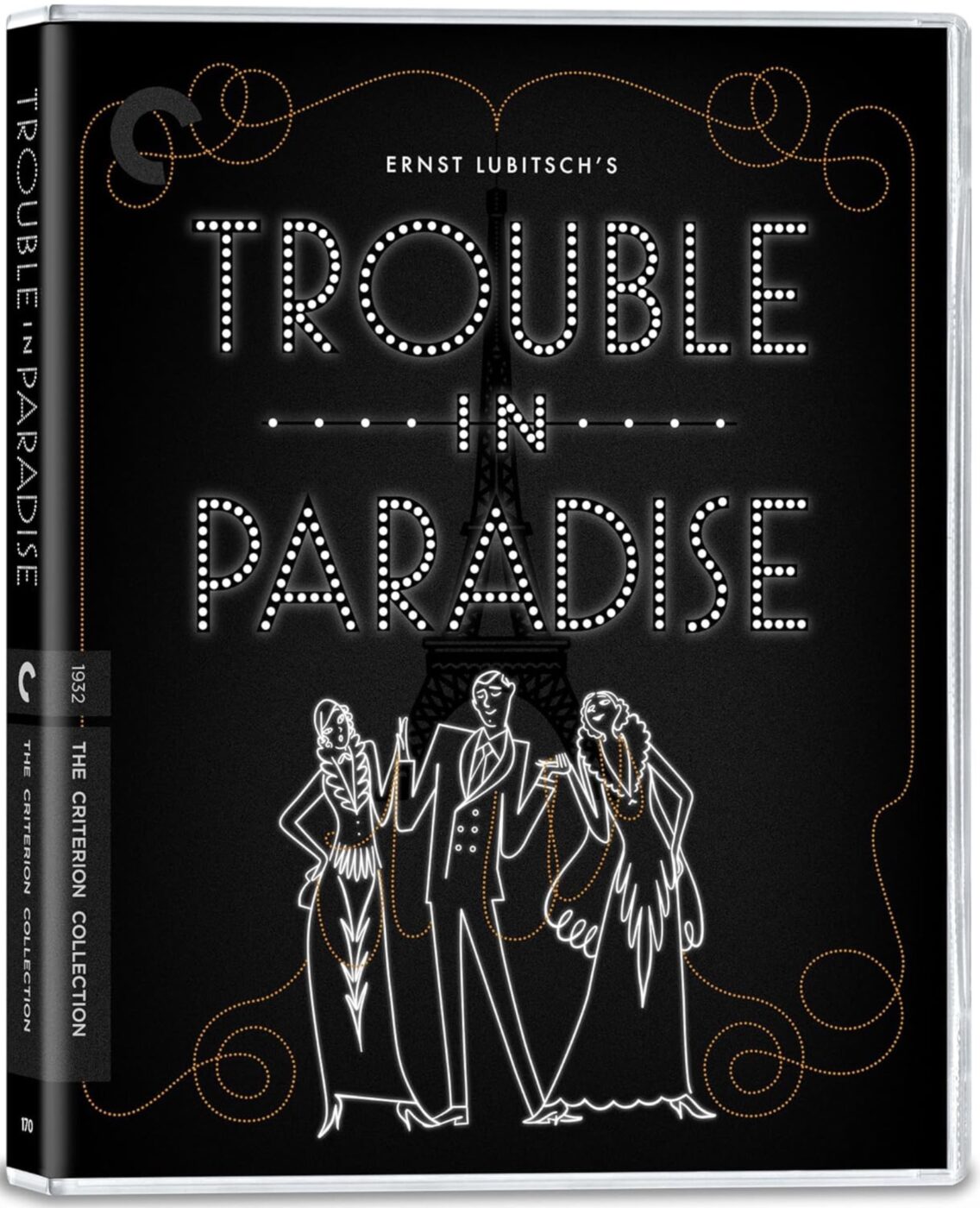
TROUBLE IN PARADISE (1932)
A gentleman thief and a lady pickpocket join forces to con a beautiful perfume company owner....

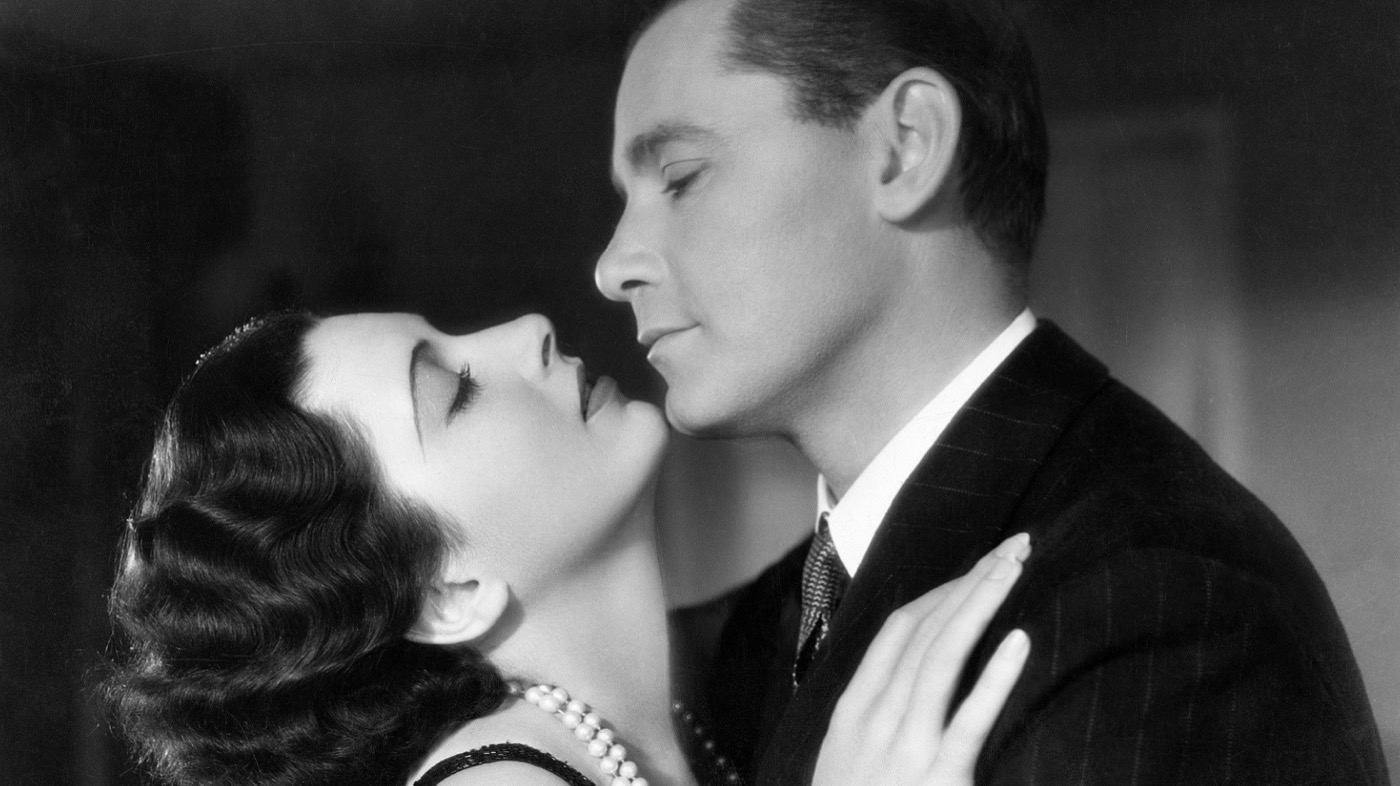

A gentleman thief and a lady pickpocket join forces to con a beautiful perfume company owner....
This classic comedy of manners is a fine example of stylish staging and witty scripting that’ll appeal to those who love the glamorous golden age of Hollywood. It’s often described as a ‘pre-Code gem’ but, in stylistic terms, it’s astonishingly modern. I hope this beautiful new 4K restoration, joining the Criterion Collection on Blu-ray and 4K Ultra HD, is discovered by a fresh, younger audience—even if they have to add their own pinch of irony because it’s so wonderfully of its time. That said, times changed a couple of years later when the Hays Motion Picture Production Code came into effect, and the film was banned until 1968. It seems it truly was ahead of its time.
The sophisticated humour begins immediately with the opening credits. The first part of the title, ‘Trouble in…’, appears on screen alongside a double bed, creating an instant double entendre: are we getting ‘into bed with trouble’, or will there be trouble in the bedroom? Both interpretations fit perfectly. After a pause, the word ‘Paradise’ completes the title, implying that romantic relationships can, indeed, lead one into trouble, paradise, or both.
The opening sequence, following the credits and warbling theme song, is deservedly famed for its inventive structure and technical achievement. Apparently, legendary director Ernst Lubitsch would often write a scene ‘by the book’, using the established visual codes of the era. He would then call in his trusted writer—Samson Raphaelson, in this case—and ask how they could do things entirely differently while remaining visually literate. It took three days of solid reworking for them to produce what is so superbly realised on screen.
How does one establish the romantic setting of Venice? Perhaps an alley at night with a scruffy dog sniffing at a rubbish bin? Under the glamour and gloss of any city, the refuse must be cleared, and Lubitsch opens by highlighting the class divide that informs much of the action. A working-class man collects a bin but, to our surprise, empties it into a gondola waiting near a distinctive covered bridge. To signal the film’s healthy sense of irony, he lets rip in full voice, belting out “O Sole Mio”. We then move from this mundane human scale to a sweeping shot of a sleepy Venice as he punts off down the canal.
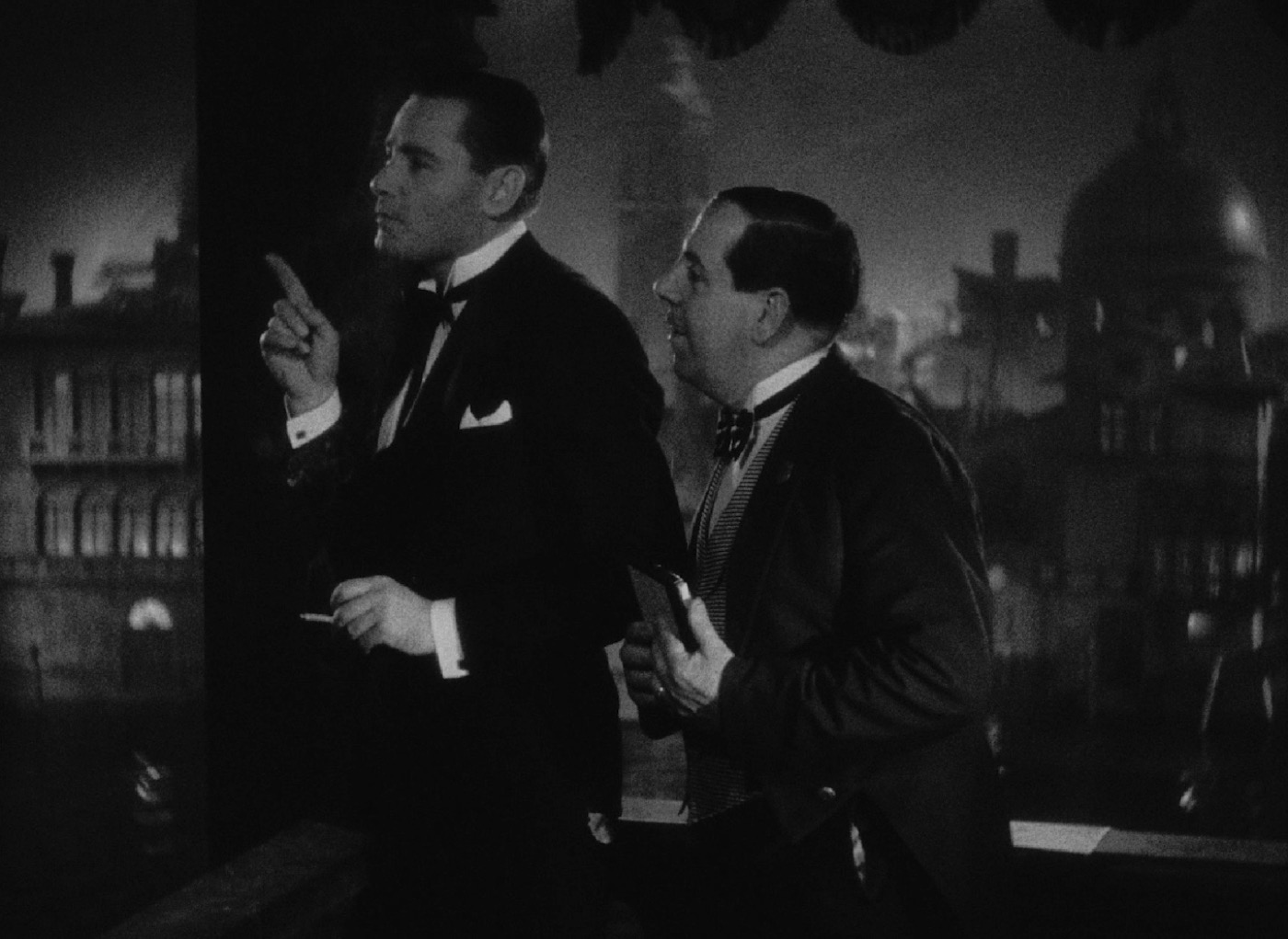
The logistics of the ensuing tracking shot are mind-blowing; the cumbersome camera moves fluidly around an impressive construction of miniatures and sets. There may be cleverly concealed cuts, but none jolt the eye as we rise from sea level, across grand facades and invitingly lit windows, to a balcony. There we find ‘The Baron’ (Herbert Marshall) enjoying a cigarette—possibly to disguise the smell of rubbish drifting up from the canal as he contemplates the moon.
The first lines of dialogue are cleverly self-aware. A hotel waiter asks, ‘What shall we start with, Baron?’ and receives the response, ‘Beginnings are always difficult.’ They are, of course, discussing a dinner plan, and the Baron delivers a beautifully crafted morsel of dialogue that could have come from the pen of Oscar Wilde or Noël Coward. It’s a mere appetiser for the gentle humour and frivolous fun to follow.
The dinner is shared with a beautiful society debutante (Miriam Hopkins in her breakthrough role), but during the evening it becomes clear that neither is who they pretend to be. He is the notorious Gaston Monescu; she is simply Lily. In reality, they are thieves and grifters who had targeted each other as marks. They learn this at the same pace as the audience, then have fun stealing items from one another before handing them back and—quite obviously—falling in love.
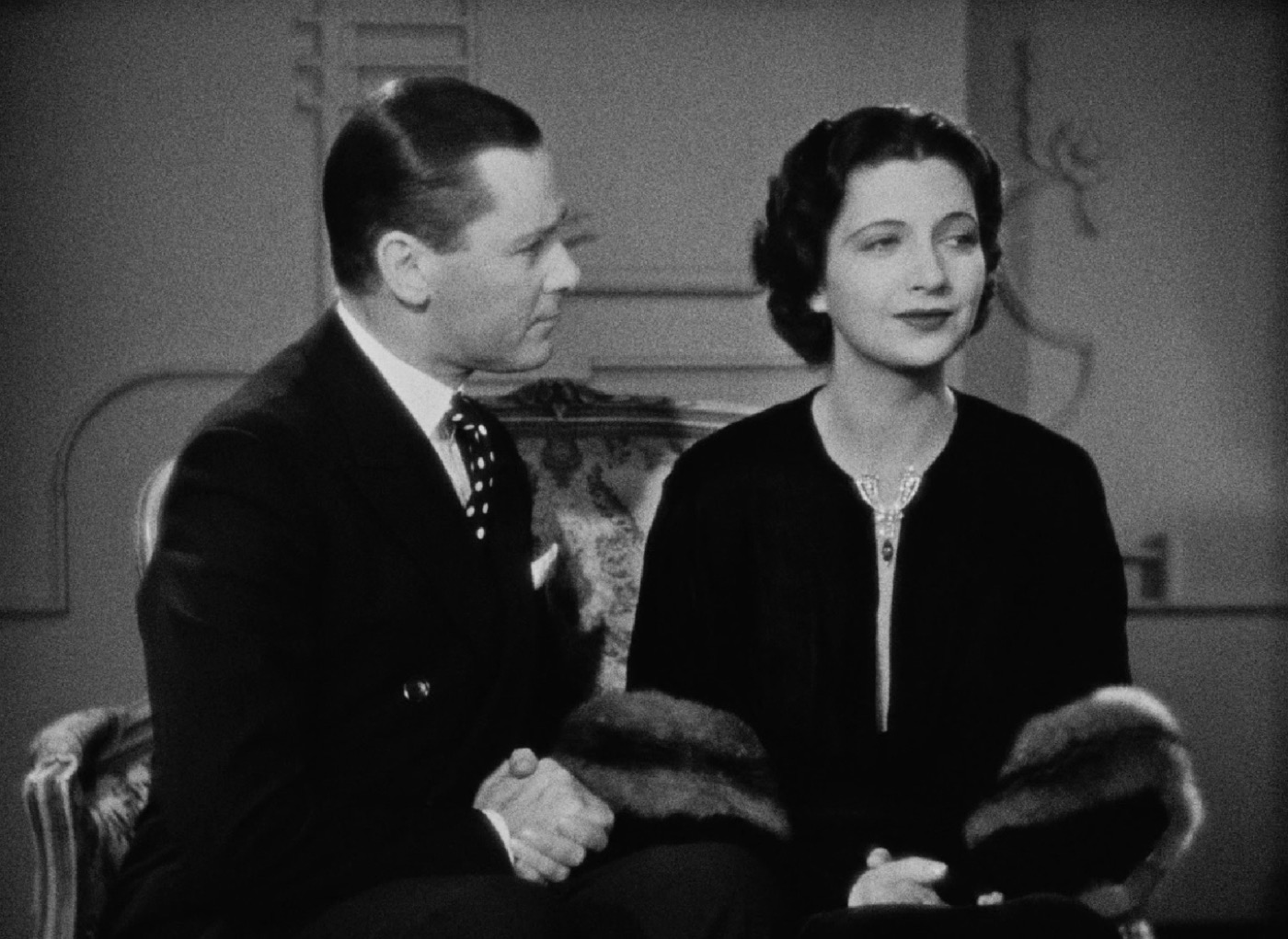
Flash-forward a couple of years and they’re working as a team. Their current target is Mariette Colet (Kay Francis), who has just spent over $100,000 on a designer handbag which Gaston and Lily snatch at the opera. However, the item is so unique it would be difficult to fence, so they decide to return it for the reward money. This leads to a complex plan to inveigle themselves into Mariette’s social circles to ‘redistribute’ her excess wealth. Predictably, a love triangle solidifies, and Gaston finds his fake feelings for Mariette may be real. The set-up prefigures the screwball comedy genre but is written with deeper emotional intelligence than most. It’s also a fantastic showcase for three actors on the cusp of superstardom.
The trope of the ‘gentleman thief’ was already well established by the character Arthur Raffles, created by E.W. Hornung in response to the Sherlock Holmes stories written by his brother-in-law, Sir Arthur Conan Doyle. In fact, the ‘amateur cracksman’ was second only in popularity to the ‘consulting detective’ in British fin de siècle fiction. There had already been several screen adaptations; Raffles (1930) was the first ‘talkie’ in the franchise, starring Ronald Colman opposite Kay Francis. This likely influenced Lubitsch to insist on Francis for the similarly aristocratic love interest here.
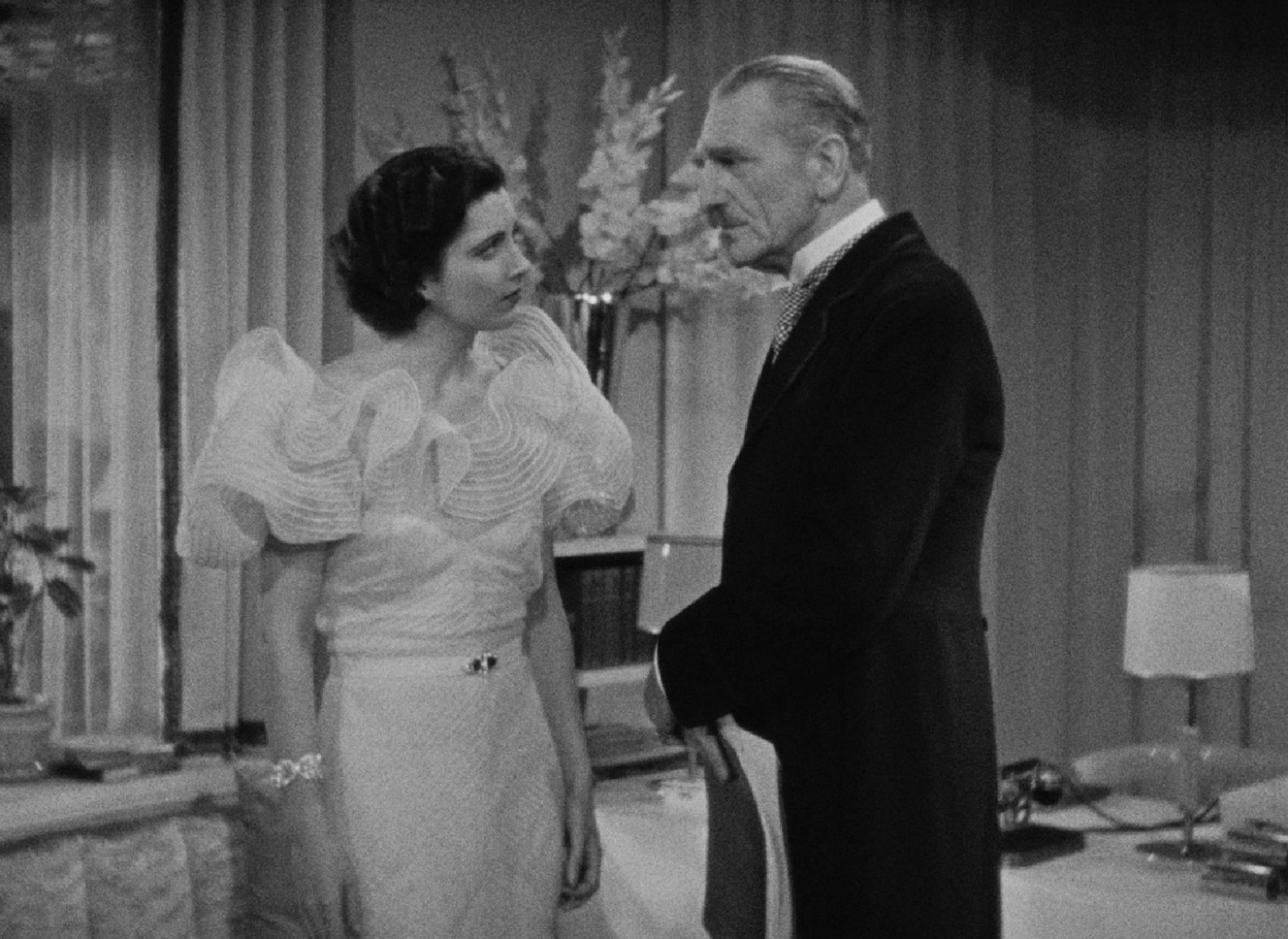
Kay Francis was a rising star, poached from Paramount by Warner Bros with the promise of high-profile roles and a massive salary. Paramount sued their rivals and, as part of the settlement, she was loaned back for Trouble in Paradise. Shortly after this controversy—which generated plenty of press—her star went supernova. She became one of the highest-paid actors in Hollywood, reportedly commanding fees six times higher than Bette Davis.
While there are narrative parallels with Raffles, Trouble in Paradise is elevated by its stylistic superiority and the fact that the gentleman thief meets his match in Lily. A heroine who’s just as strong and morally ambiguous as her male counterpart was a revelation in an age when women were typically cast as damsels in distress, idealised wives, or femmes fatales. Lily takes traits from these stereotypes but refuses to fit the mantle of any. Lubitsch famously used stereotypes as shorthand to introduce characters, only to subvert them into something believable with real emotional weight.
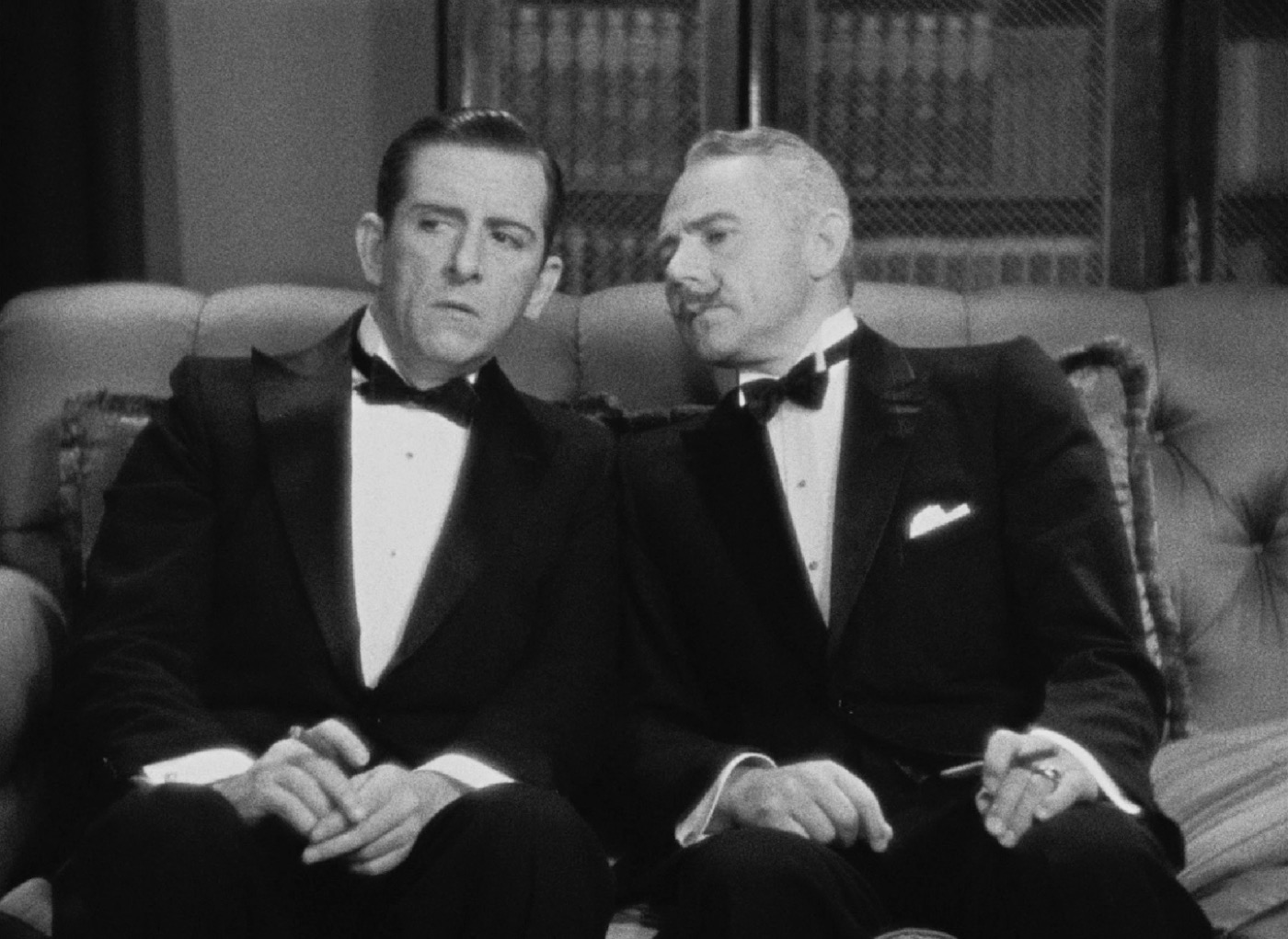
The film’s other draw is the pure visual pleasure it affords. This is evident not just in the craft, but in the elegant Art Deco sets designed by Hans Dreier, whom Lubitsch convinced to join him from Germany. Travis Banton designed the fabulous fashions for Kay Francis; he would later dress Carole Lombard in My Man Godfrey (1936), which addressed similar themes despite the imposition of the Hays Code. Banton was a titan of his field, having designed Mary Pickford’s wedding dress and costumes for the Ziegfeld Follies.
One of the movie’s greatest strengths is that nearly all the dramatis personae are likeable, with the exception of one true villain. Suffice to say, even nefarious deeds exist on a spectrum. There can be honour among thieves, as Raffles believed, but exploiting the trust of friends is a different matter. A fraudster is more despicable than an old-fashioned ‘honest’ cracksman. Much of the tension arises when Gaston must decide which woman to love and which to exploit. Can he extricate himself with honour?
The casting of Herbert Marshall is particularly poignant. He had embarked on a promising stage career when the First World War broke out, serving in the same regiment as Claude Rains and Basil Rathbone. He spent 10 months in the trenches of the Western Front before being shot in the left leg, which was subsequently amputated. He learned to walk with a prosthetic, returned to the stage, and eventually took the lead in Alfred Hitchcock’s third talkie, Murder! (1930).
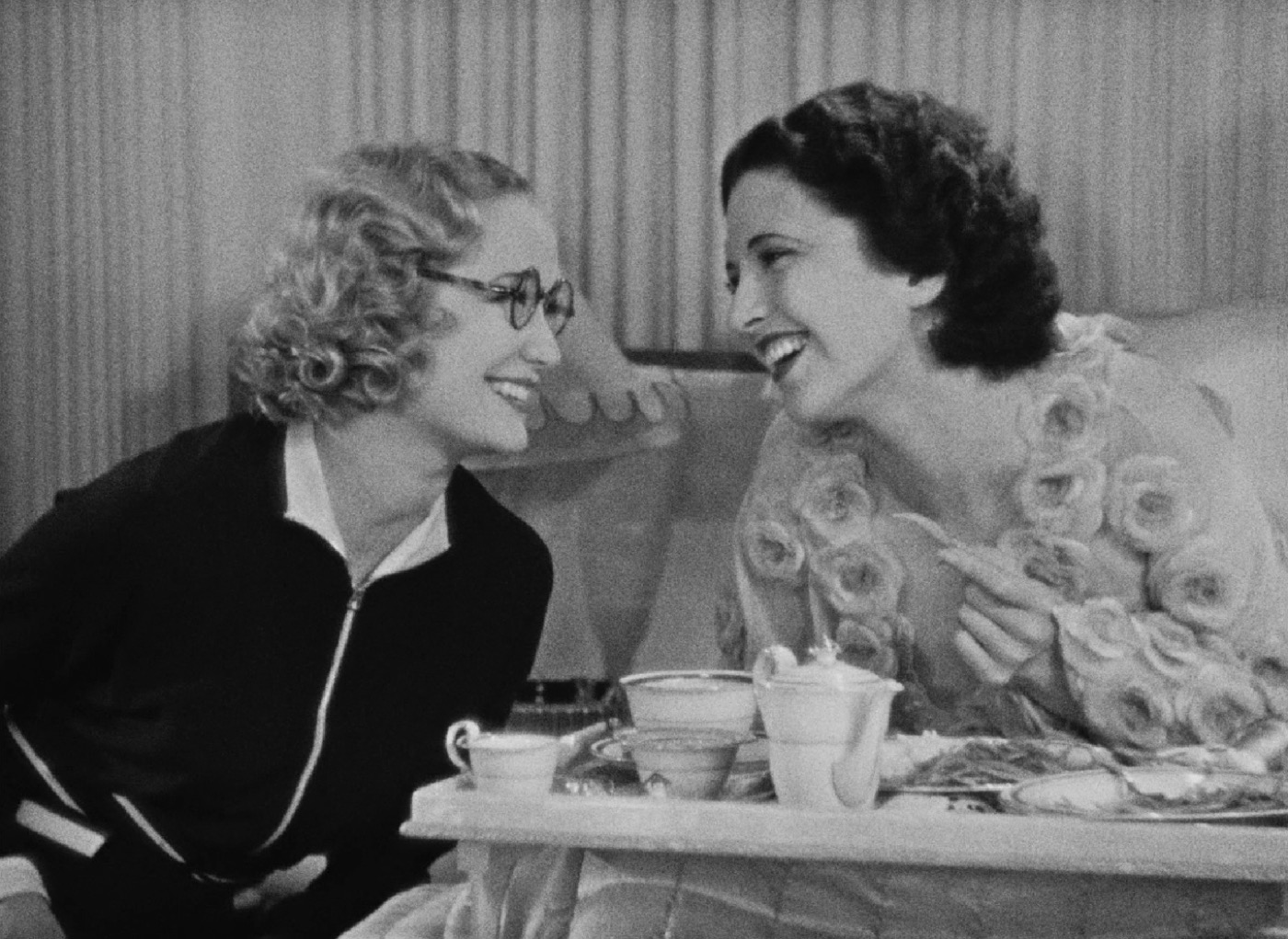
His breakthrough Hollywood role was opposite Marlene Dietrich in Blonde Venus (1932). While studio executives suggested Cary Grant for Trouble in Paradise, Lubitsch wanted an older actor with an air of experience. Within two years, Marshall had completed a ‘hat-trick’ of legendary directors: Hitchcock, von Sternberg, and Lubitsch.
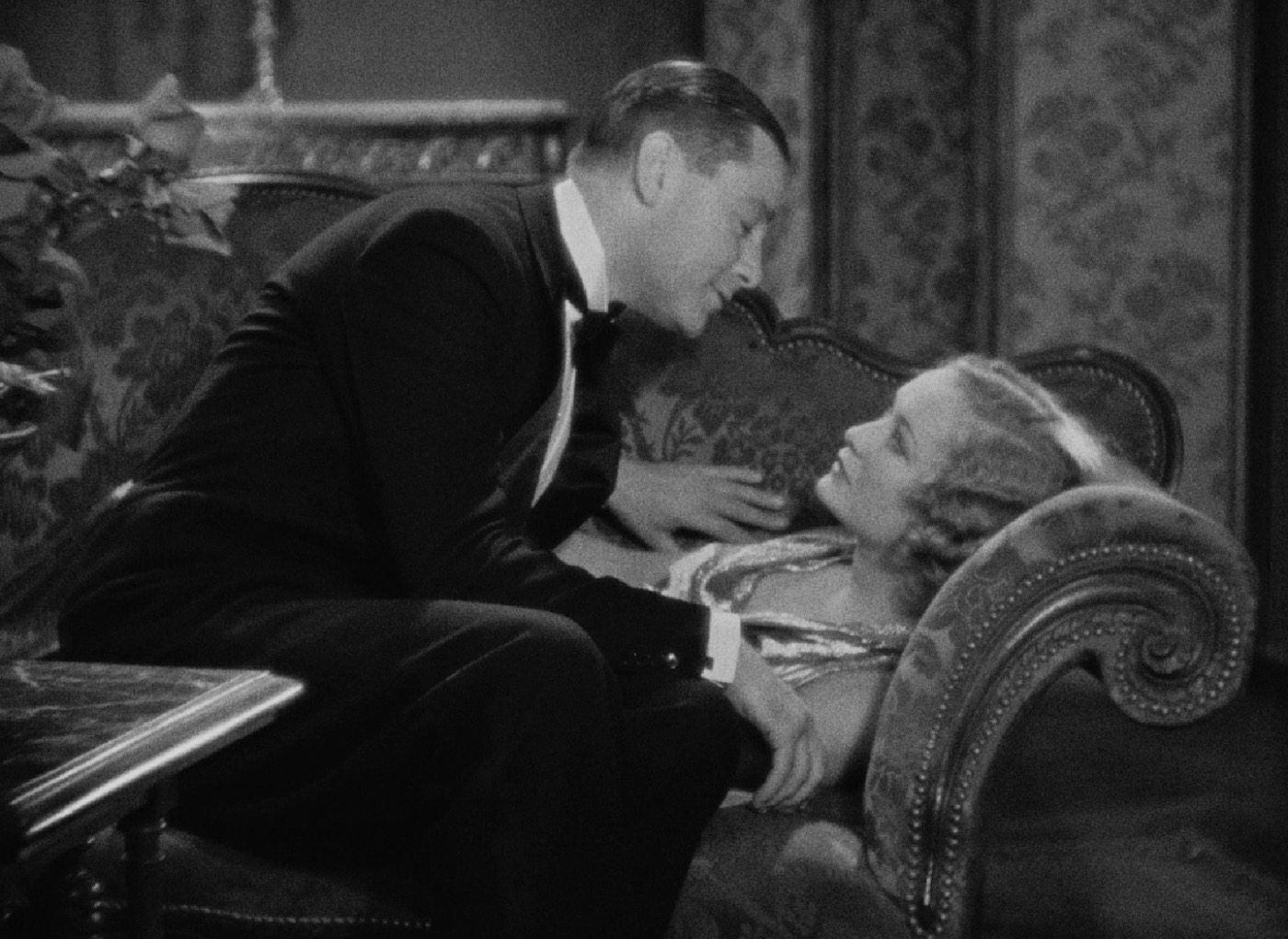
Due to Marshall’s prosthetic, Lubitsch reworked many scenes to avoid him having to sit or stand on camera, minimising his walking. To keep the film’s flow consistent, he treated the entire cast similarly, which led to a new, visually dynamic style and the clever use of cuts. This likely encouraged the inventive handling of risqué material. For example, when Gaston and Lily embrace on a chaise longue, Lubitsch dissolves to an empty couch, implying they have retired to the bedroom. Later, when Gaston kisses Mariette, we see the embrace reflected in a mirror, then simply their shadows cast across the bed.
Interestingly, the innuendo wasn’t what upset the Hays Office most; it was the fact that criminals were portrayed as sympathetic, likeable human beings. Once the Code came into full force, any illegal activity had to be punished. Here, however, we have no heavy-handed moralising to spoil what is a truly intelligent comedy of ethics.
USA | 1932 | 83 MINUTES | 1.37:1 | BLACK & WHITE | ENGLISH • ITALIAN • FRENCH • SPANISH • GERMAN

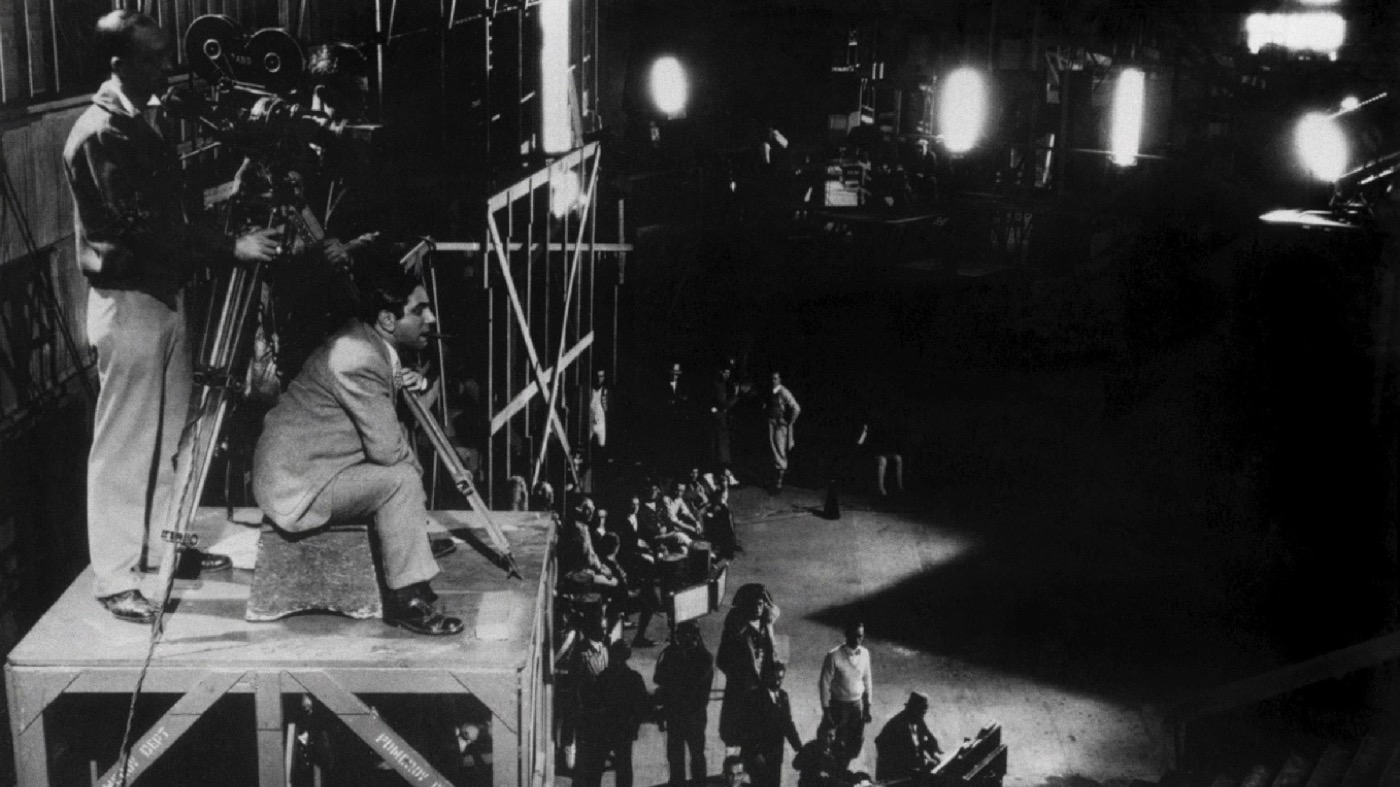
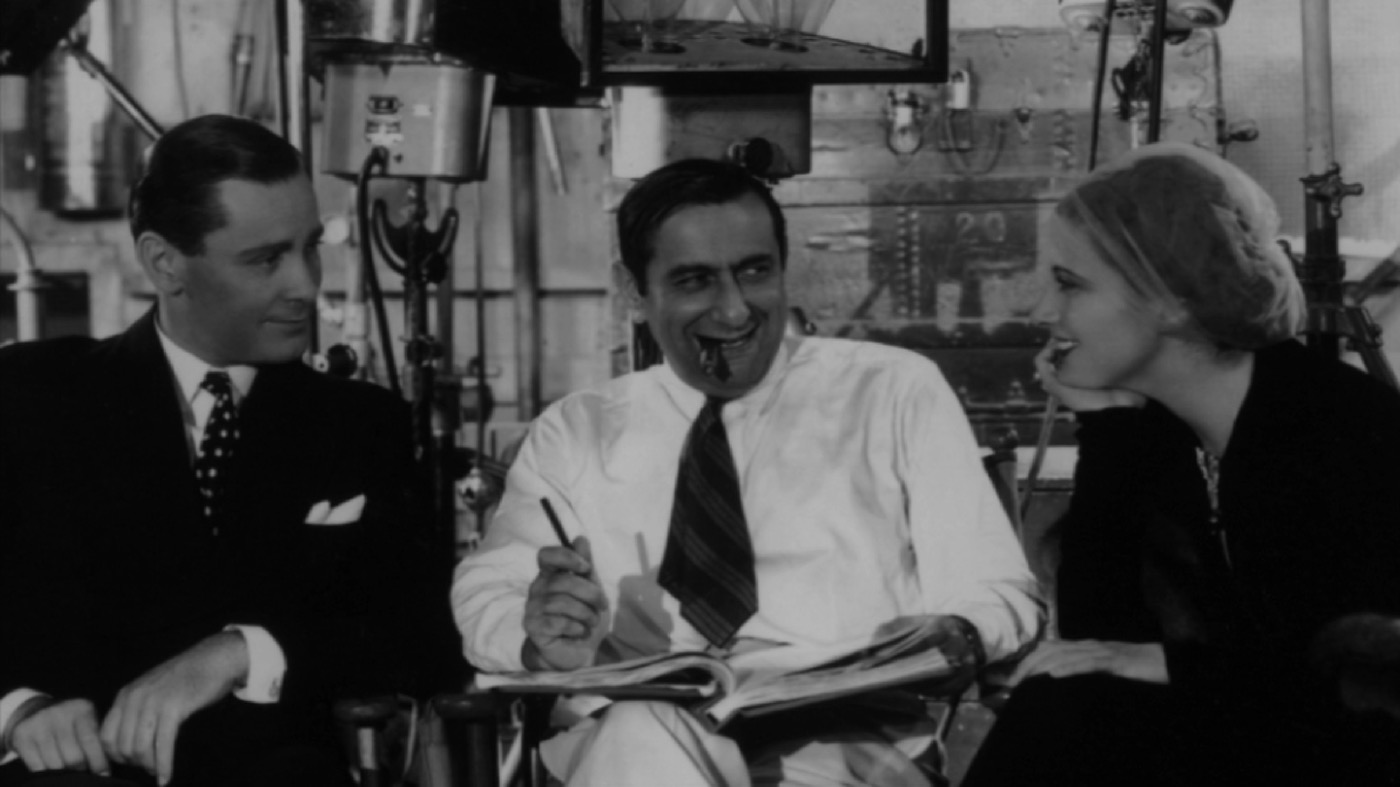

director: Ernst Lubitsch.
writers: Samson Raphaelson & Grover Jones (based on the 1931 play ‘ Becsületes Megtaláló‘ by Aladár László).
starring: Miriam Hopkins, Kay Francis, Herbert Marshall, Charlie Ruggles, Edward Everett Horton.