THE PANIC IN NEEDLE PARK (1971)
Follows the lives of heroin addicts who frequent "Needle Park" in New York City.

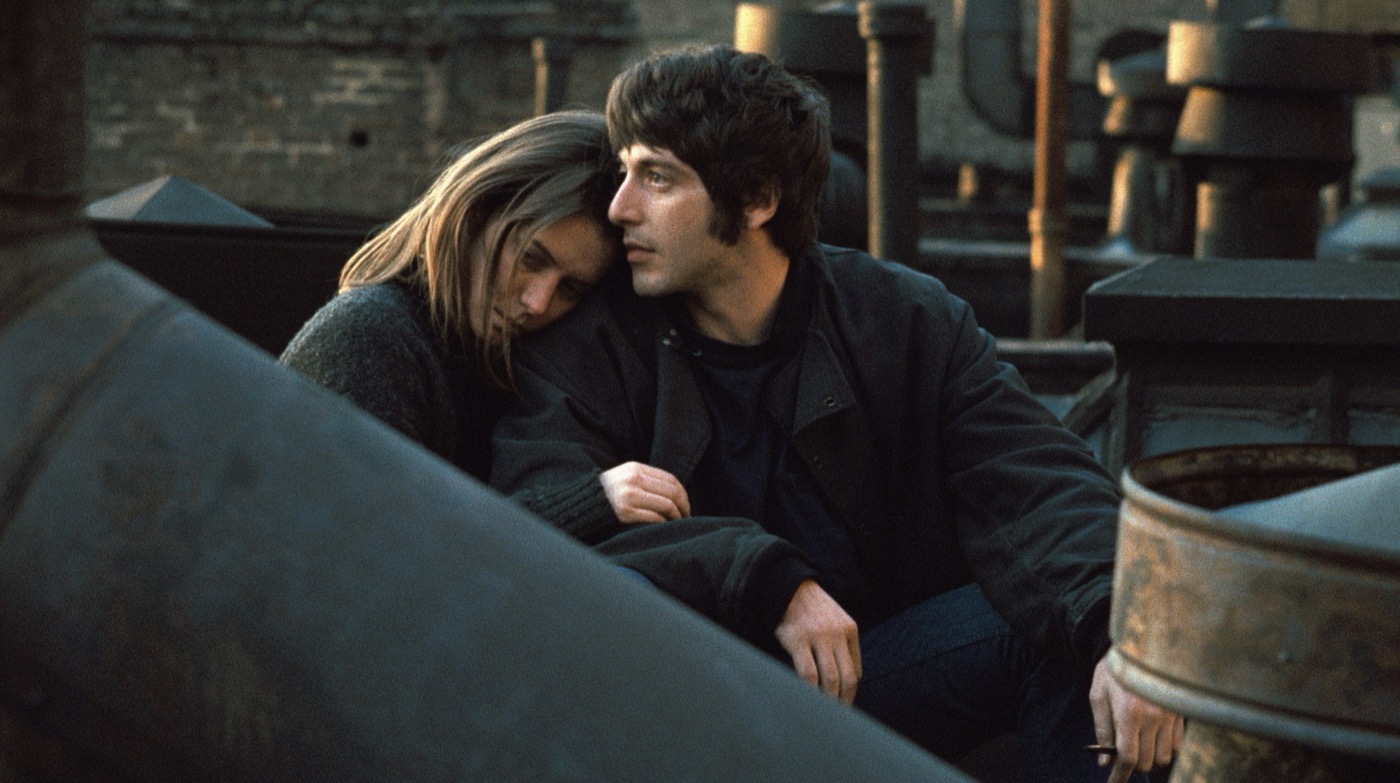

Follows the lives of heroin addicts who frequent "Needle Park" in New York City.
Ned Rorem, a prolific contemporary classical composer, was hired to score Jerry Schatzberg’s The Panic in Needle Park. It would have been the Pulitzer-winning composer’s only work for film, but it was not to be; it was later decided that the film would work best with no music whatsoever. Rorem’s score may have been a masterpiece, but the cold,harrowing silence in the film is a formidable match as we watch two helpless lovers tumble down a web of addiction and betrayal. The sly hustler Bobby (Al Pacino) is already ensnared by addiction, and it isn’t long before his new beau, Helen (Kitty Wynn), winds down the same path.
Helen isn’t a noble or awful person, nor does she have a quintessentially perfect life at the film’s outset. This makes it easier to imagine her as someone you could pass on the street, or who might even be in your own family—a necessity given the film’s approach as a cautionary tale. In the very first scene of The Panic in Needle Park, we catch glimpses of her in a subway, looking confused. The editing flits uncertainly between people observing her—or is she doing the observing?—and shots of Helen looking as though she doesn’t quite know who she is or what has led her to this point.She is a confused, helpless stranger, surrounded by people who cannot understand and will not help her.
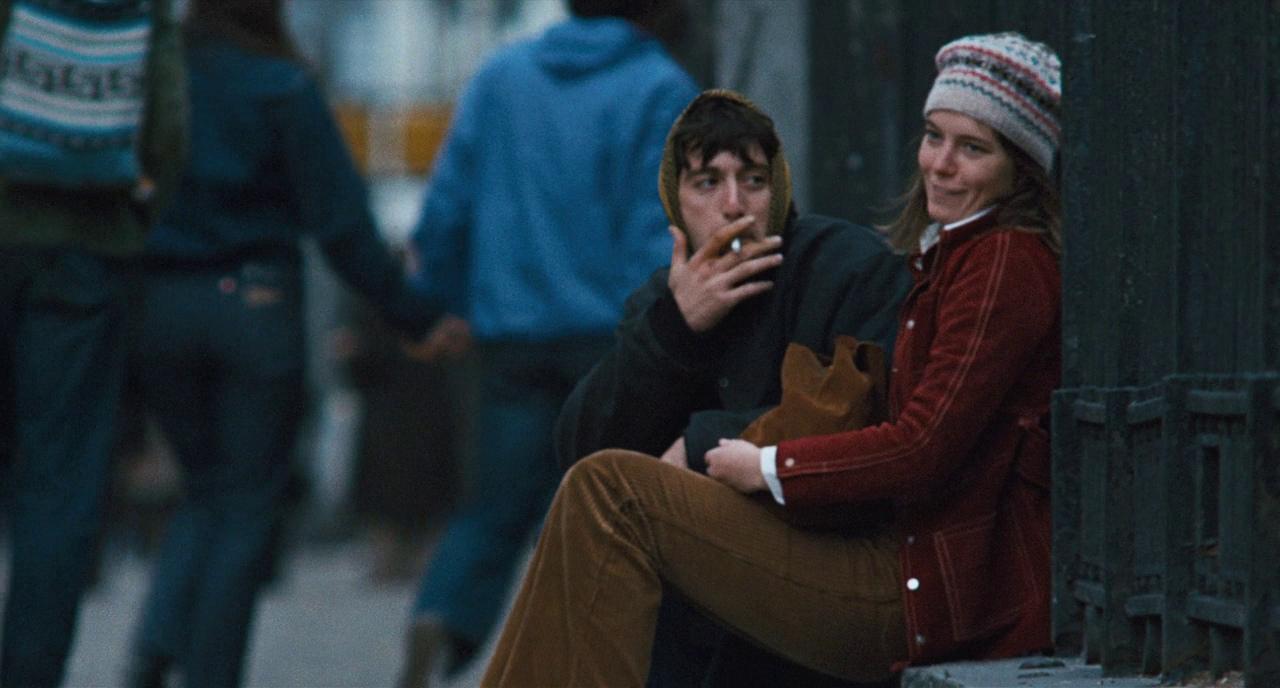
That feeling of coldness between Helen and these strangers is compounded by something we learn moments later: she has just undergone an illegal abortion. Suddenly, that sense of insecurity and vulnerability gains renewed depth, as if these strangers could see into Helen’s eyes and realise exactly what she has done. It is shame fully embodied, given physical form through handheld camera work and quick cuts. While The Panic in Needle Park is rarely centred on shame, it does revolve around stark depictions of the grim reality of drug addiction, from needles slipping into skin to squalid living conditions and tortured psyches.
But for as much as the film operates as a cautionary tale, it remains respectful of its characters’ lives. There is no empty moralising here, nor explicit preaching of any kind. It depicts this world frankly, with no need for excess frills for the sake of cheap melodrama. Helen is no saint at the start of the film, but at no point does Schatzberg—or screenwriters Joan Didion and John Gregory Dunne—turn her into a pariah for having had an abortion. It’s something that happens, just like drug addiction, and the film refuses to shy away from the emotions surrounding these heavy topics.
In doing so, it resists cheap ploys to manipulate its audience, employing a documentary-like visual approach that is all the more harrowing. There are times when it’s easy to forget you’re watching characters on a screen, so realistic are these dingy environments and the figures occupying them. Of course, it doesn’t start out that way. Helen is quick to recover from the ordeal of her abortion, both physically and psychologically, largely due to the arrival of Bobby. He is the type of man who would make a fool of himself in the middle of the street just to make her laugh, bystanders’ opinions be damned.
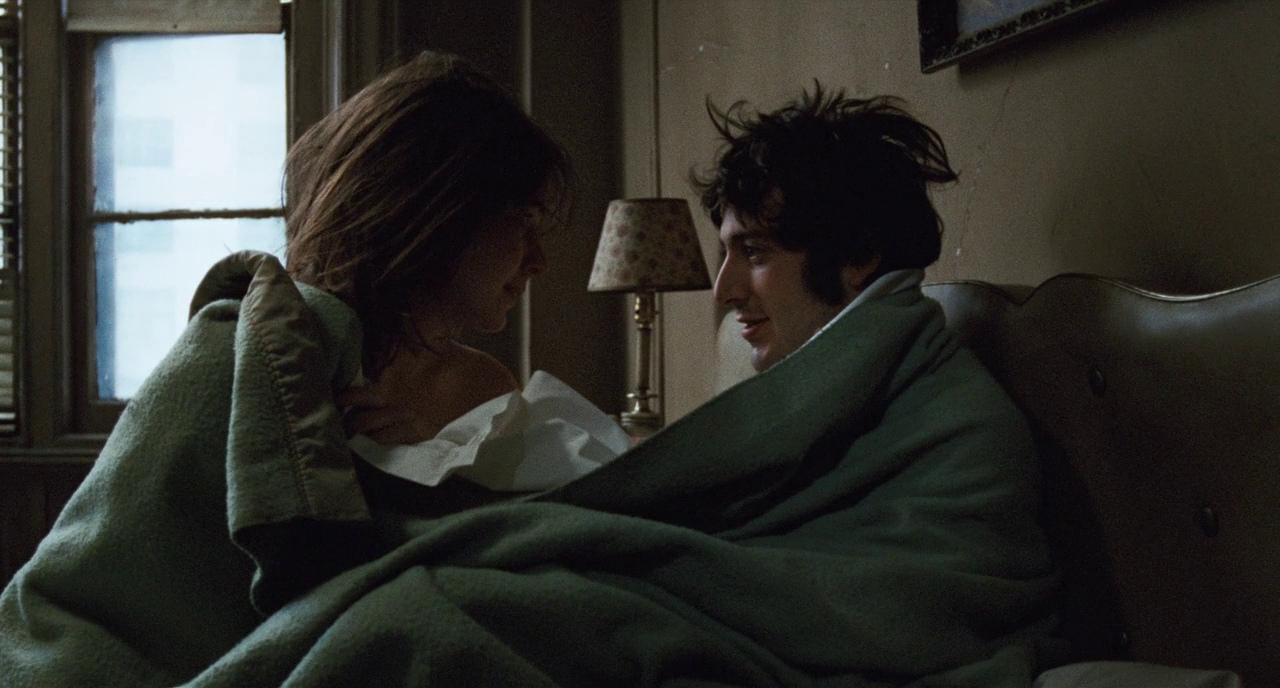
He’s a natural jester, with a personality too large to be contained by his physicality. It’s a meaty role, one that seems so characteristic of Pacino’s endless on-screen energy. But it is all the more interesting for being the genesis of that vivacious spirit, as this was his first-ever role in a feature film. You’d never think it; he takes on the character of Bobby with such confidence that it’s impossible not to notice the young man’s swagger. Bobby’s entire personality is a middle finger to a normal existence. Like him, Helen lives on the peripheries of society, removed from the hustle and bustle of men and women in work clothes marching through the streets of New York City. As these two young adults navigate a road less travelled, their love becomes intertwined with their habitual heroin use.
But a crisis is sweeping through ‘Needle Park’, the informal term at the time for the Verdi Square–Sherman Square area in Manhattan. In truth, there is always panic amongst these characters, since the life of a drug addict is a precarious scramble for income to procure their substance of choice. Everything else—even accommodation or love—is secondary. A series of betrayals tears through this central relationship, yet the filmmakers never judge their characters.They employ a radical acceptance of their behaviour, confident that audiences will afford them the same charity. For a movie that styles itself as a cautionary tale, it takes a remarkably mature approach, especially compared to some of the more contrived cinematic offerings in this vein, such as Christiane F. (1981).
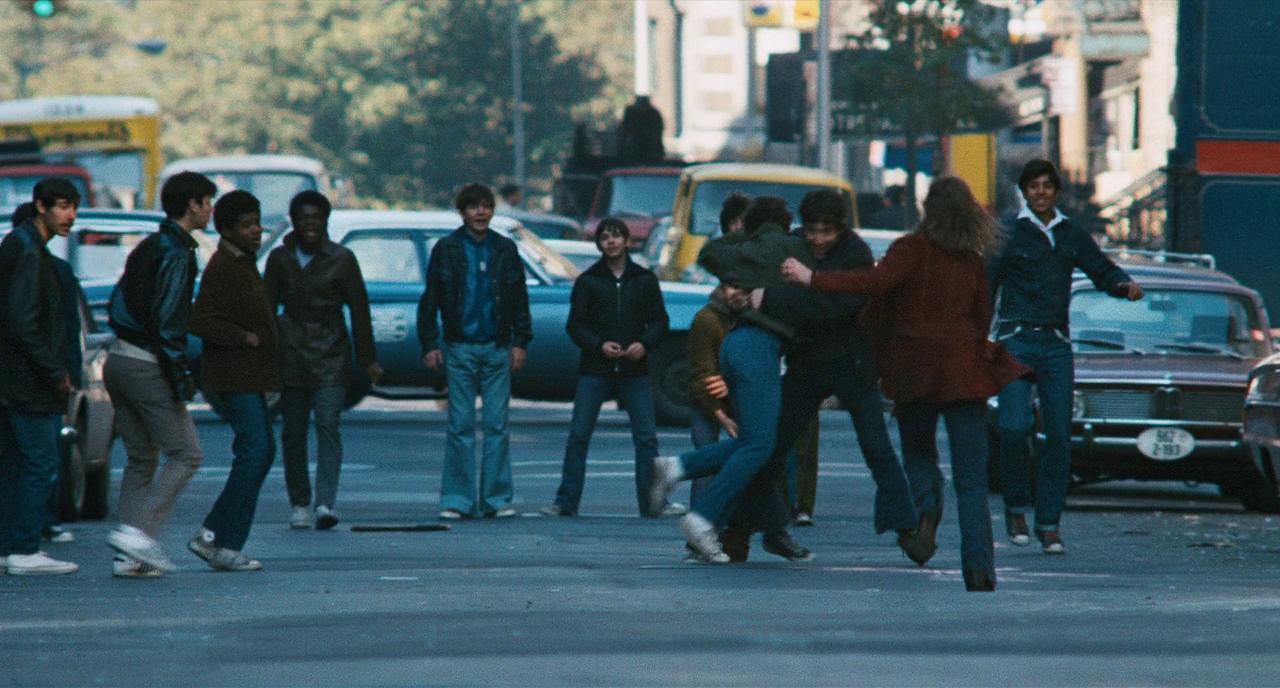
Helen often does things that should irritate viewers, but there’s enough authenticity in her dire circumstances and desperation to make her actions understandable. The film’s uncomfortably realistic direction and intimate style also place it squarely in the subgenre of bleak New York City films, which, despite waning in relevance in recent decades,has been reinvigorated by the work of the Safdie brothers. The brothers’ feature Heaven Knows What (2014)—another drug addiction narrative—was even programmed by them in double-feature screenings alongside The Panic in Needle Park.
Both films are designed to make you shudder and wince. Both are unabashed in their pursuit of making you sit within the ambience of their environments, observing life in the gutters or on the margins of society. They’re also united by a strong female lead performance, made more impressive by the fact that neither actress had starred in a feature film before. Wynn is a marvel in The Panic in Needle Park, with expressive eyes that, unlike in most drug addiction stories,don’t dim over time. Instead, they do the exact opposite: widening in alarm, they encompass the horror that surrounds Bobby and Helen—a horror the couple are too scared and naive to fully acknowledge. Wynn’s best quality, though, is her ability to make Helen feel as though she could be anyone, as if any poor soul could wind up down this path.
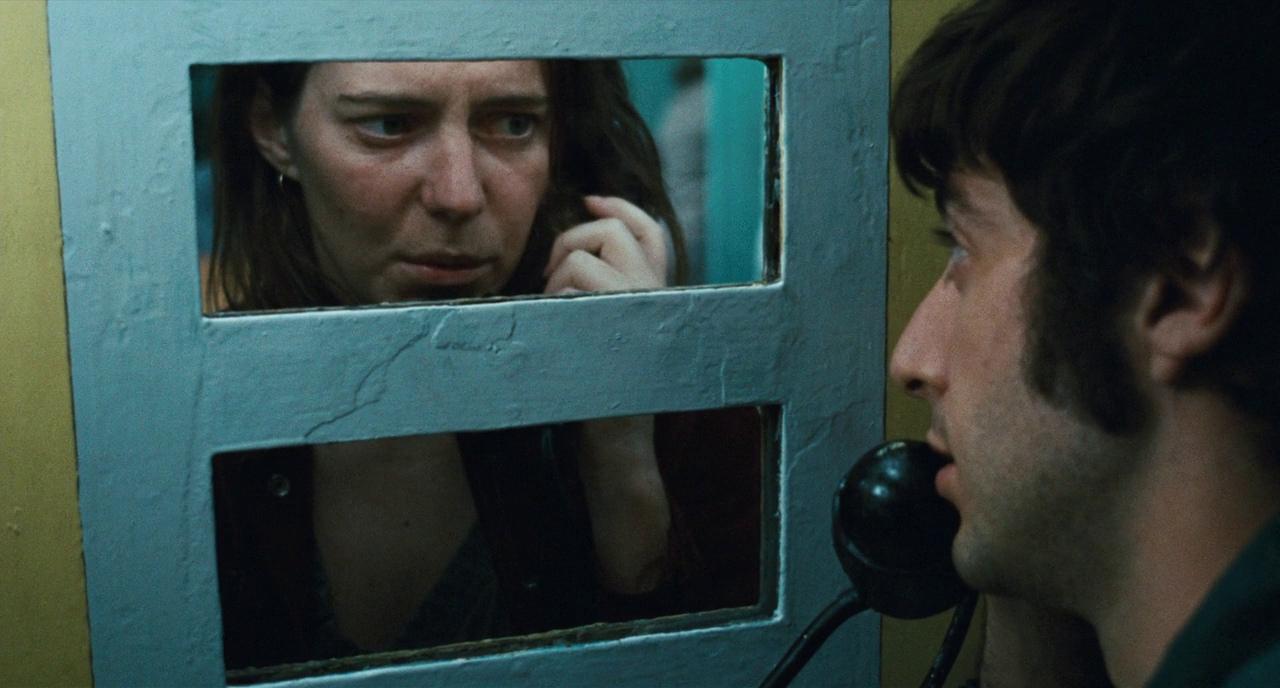
When she and Bobby clash, or betray one another, it feels inevitable. There is no room for loyalty when they’re both in the throes of an all-consuming addiction. The Panic in Needle Park isn’t thrilling, exciting cinema; it is a slow burn towards oblivion, executed with a cinema vérité style. It is a patient, rewarding film that might not always prove absorbing because of its uncompromising realism. But its stylisation is also exactly what is needed to hammer home its message.
The Safdie brothers, who consulted with Schatzberg for Heaven Knows What and asked for his blessing to make it,envisioned their film as a contemporary approach to this subject matter. They didn’t produce a better film in every respect, but theirs is an even more intimate piece of cinema. It features an unconventional narrative structure that more keenly maps onto everyday life than the cautionary message-movie approach taken in The Panic in Needle Park.Instead, Heaven Knows What is attuned to the rhythm of the everyday, where its presentation of the depths of addiction is all the more harrowing for it.
It is a more nuanced film that sits more comfortably in contemporary cinema, especially its independent wing, which has only grown more empathetic towards struggling characters over the last few decades. But it, and so many other intimate, uncomfortable, stark films, wouldn’t exist without being able to stand on the shoulders of the cinematic giants of yesteryear. The Panic in Needle Park isn’t a traditional classic, but it has still found a way to sink its claws into the annals of cinema history—both for its own merits and for the films and filmmakers it has gone on to influence. For anyone seeking a distinctly feel-bad experience, or film lovers looking to trace the origins of Pacino’s legendary career, it’s a rich and rewarding watch that refuses to compromise.
USA | 1976 | 110 MINUTES | 1.85:1 | COLOUR | ENGLISH

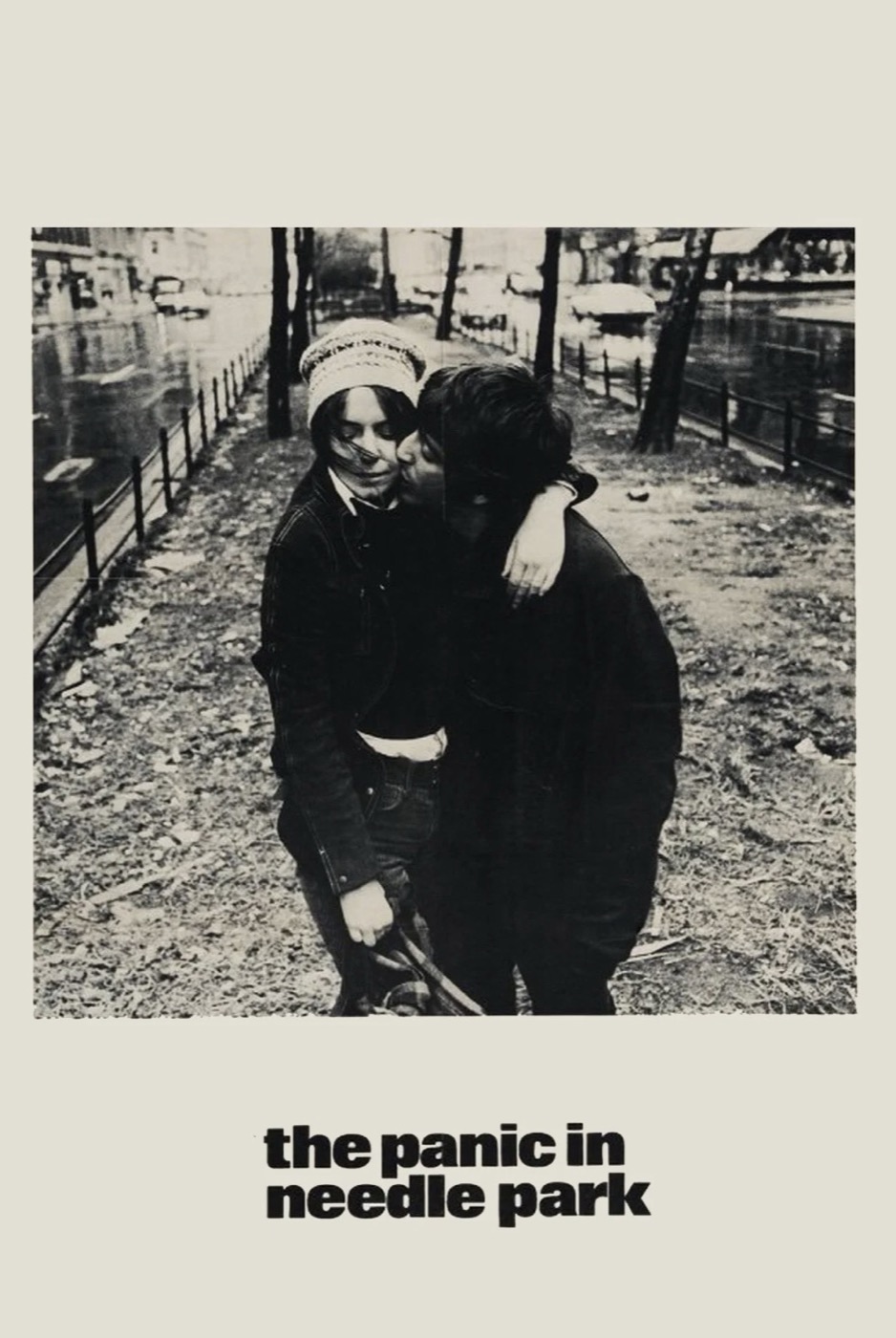
director: Jerry Schatzberg.
writers: Joan Didion & John Gregory Dunne (based on the 1966 book by James Mills).
starring: Kitty Winn, Al Pacino, Alan Vint, Richard Bright, Kiel Martin, Michael McClanathan, Warren Finnerty & Marcia Jean Kurtz.