OFFSIDE (2006)
The struggle of women in a country that excludes them from entering stadiums.


The struggle of women in a country that excludes them from entering stadiums.
It’s difficult to resist the urge to unduly compliment films that explore taboo subject matter, particularly when we know their filmmakers are taking great risks. It does not take an appreciation of art to mourn these restrictions, but it certainly helps. Even the smallest act of creative subversion committed within the borders of repression is an act of bravery that should inspire and inflame the spirit. It extends a degree of charitability—a desperate hope for the project in question to succeed on its own merits.
But that alone does not make a great film. It’s with great pleasure, then, that I can report that Jafar Panahi, like the best artists, does not just make do with limitations; he figures out ways for them to enhance his work. Forced to operate under a filmmaking ban, the Iranian director has been arrested multiple times by his government and has resorted to hunger strikes on more than one occasion to secure his release. Legal constraints are no surprise to a filmmaker who had to jump through hoops just to get Offside / آفساید made, which included submitting a fake script about a group of young men going to a football match to government officials.
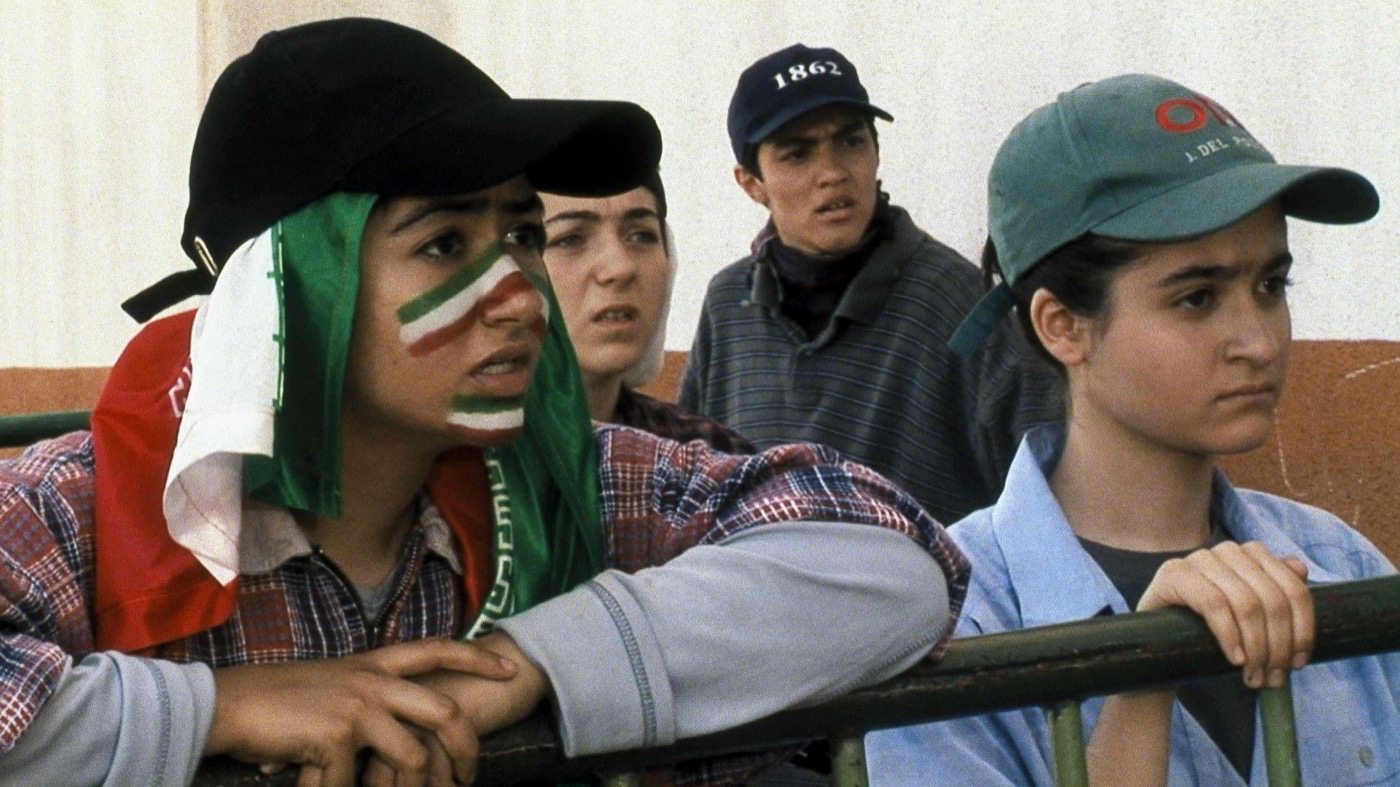
Yet Panahi did not just have these restrictions on his mind. There was also the complicated matter of filming on location during the match depicted in the film: the 2006 Third Round World Cup qualifier between Iran and Bahrain. Part of the movie was shot during the actual game, while the entire narrative hinges on a handful of young women and girls—most of whom do not know one another—who sneak into the stadium and are subsequently detained just beyond the eyeline of the pitch. Panahi, who has faced a litany of restrictions on his filmmaking and personal freedom over the years, must have related strongly to the uniquely agonising torture of being so unbearably near, yet so far, from the source of one’s dreams.
In a sense, the story ends there; each of these girls had a unified goal, and they were all unsuccessful. But for Panahi, that is only the beginning. What is far more tantalising is not the girls’ pursuit, but the way the restrictions surrounding it expose the dehumanisation of women in Iran. The oft-cited reason for banning women from these sporting events is that it will expose them to the bare skin and vulgar comments of men, destroying their purity. There is no room for passion, nor for humanity—just strict gender roles that subjugate women by purporting to uphold them as pure and innocent. To save them from moral corruption, they are treated like women in fairy tales: cast aside in high towers or imprisoned under lock and key, supposedly for their own protection.
At first, we follow just one of the girls as she disguises herself as a boy and attempts to infiltrate the throngs of people entering the stadium. There is a swell of optimism and verve in these crowds, with the match potentially guaranteeing Iran’s place in the qualifying stages of the World Cup. A country’s hopes hinge on the game, yet that gravity is suddenly rendered arbitrary when it comes to allowing these girls to watch it—a space where their existence as delicate objects in need of commandeering could easily be ignored for just a few hours. Instead, the girls are detained and watched at all times by guards who initially appear callous. Gradually, what emerges is a clash between the girls’ passion for this immense sporting occasion and the indifference of the guards detaining them. They are simply following orders, even if the restriction defies any reasonable standard of logic.
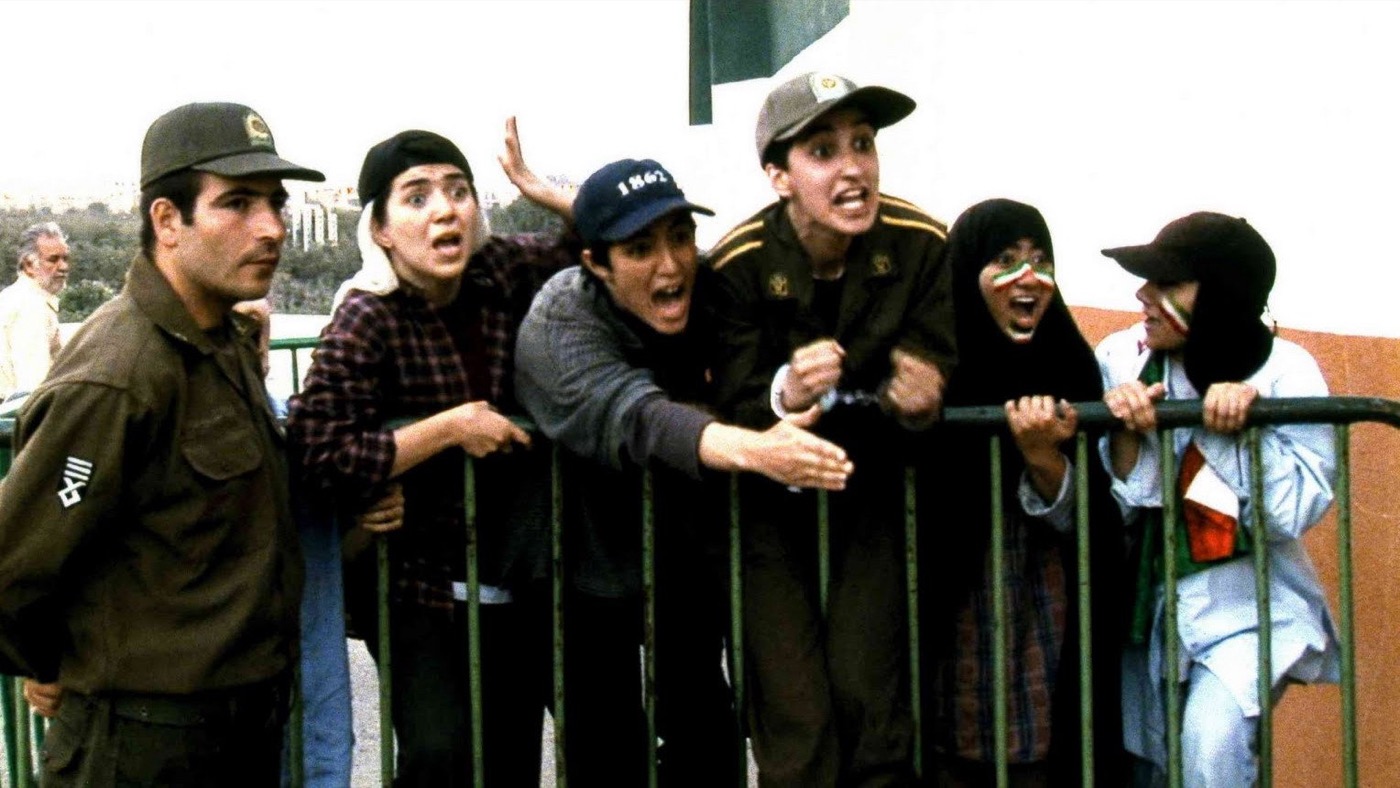
Panahi manages a difficult balancing act throughout the film, using digital cameras to move quickly through crowded areas, lending a documentary feel to the unfolding conversations. Arguments flow so freely and conflicts are so naturally introduced that it really does feel as though you are witnessing authentic discussions, yet there is never a single moment in Offside that feels unfocused. The characters are always gently being guided down a new emotional avenue or towards a different way of exposing the hypocrisy and inhumanity of these football bans.
The girls are passionate but never crass; their defiance in words and attitude does not mean they must be innocent waifs or naturally insubordinate rule-breakers. They appeal to their captors’ humanity until it becomes clear that the men keeping them detained are just as frustrated by the rules as they are. The guards appear abrasive and defensive, and while they never fully let their guard down, there is so much humanity flowing through their interactions that it gradually breaks down the resolve of both sides. Some of these guards are barely past their teenage years, thrust into a world whose strict rules they must submit to, even if that requires being an enforcer. They too are standing at a distance from the all-important match, when they could be resting at home or enjoying it from a much better view.
Panahi is a sensitive, insightful filmmaker, effortlessly skewering the hypocrisy behind these arbitrary rulings and how they stifle joy. Yet he’s never morbid in Offside, creating little vestiges of resilience and pushback by slowly weaving in a sense of solidarity between the girls and the guards, uniting them in ways their home country’s government would never dream of. Films like Offside are viewed as crude, impure, and dangerous by regimes like the Iranian government, yet this PG-rated film is as warm, rich, and human as any other.
At first, we follow just one of these girls as she attempts to infiltrate the security checkpoints. However, once detained, she remains near-silent for much of the film, swallowed up by the chorus of young women united in their passion and imprisonment. It’s a fluid transition, expertly matched by the blossoming humanity that emerges from the stone-faced guards. As specific characters dip in and out of focus, a small but forceful chorus of warmth—often antagonistic but always threaded with sympathy where it’s most needed—begins to emerge.
Offside is too pragmatic to be angry; instead, it positions itself around the joys found in minor concessions, the points of contact between segregated groups, and how a spirit of rebellion can be fostered through the simplest of actions. Though its cinematography is not conventionally pretty to behold, it lends itself beautifully to the naturalistic dialogue and visuals. You can easily imagine this dilemma unfolding in real life, especially as it unfolds mostly in real time across the film’s 93-minute running time, where not a single precious moment is wasted. The acting is stellar across the board, with performances as effortlessly naturalistic as Panahi’s direction.
Specific plot details sound like a dry regurgitation of a depressing reality if explained here, but fear not, as Panahi draws the audience into such an intimate storytelling environment that the tensions of an entire country are gradually illuminated. What seem like minor interactions are suddenly threaded with unease, warmth, or a mixture of the two. Watching Panahi work his magic with these alchemic concoctions of emotional texture is a reminder of the power of cinema—made even more perceptive and essential because of the conditions in which it was created.
IRAN | 2006 | 93 MINUTES | 1.85:1 | COLOUR | PERSIAN

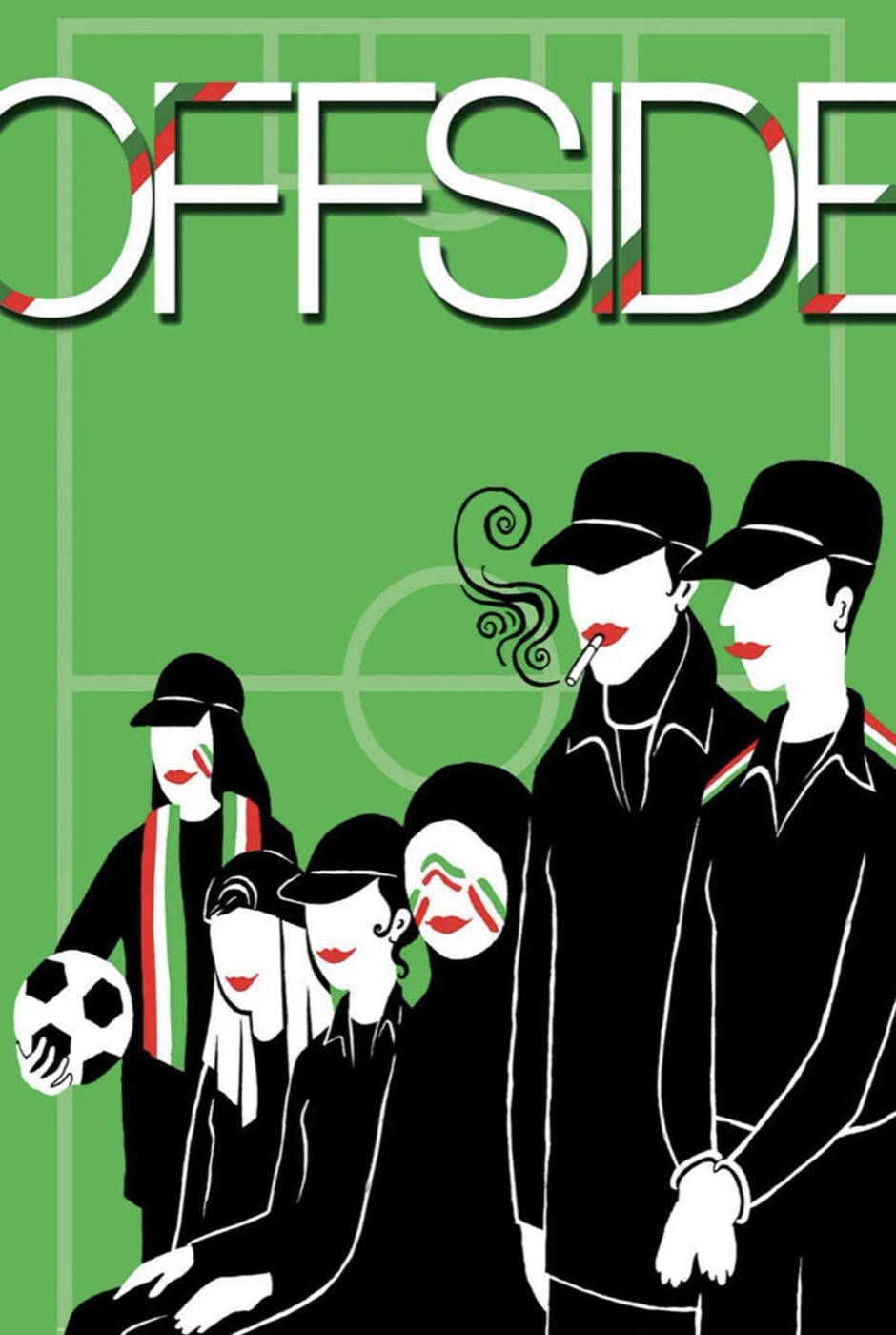
director: Jafar Panahi.
writers: Jafar Panahi & Shadmehr Rastin.
starring: Sima Mobarak-Shahi, Shayesteh Irani, Ayda Sadeqi, Golnaz Farmani, Mahnaz Zabihi, Nazanin Sediqzadeh, Mohammed Kheyrabadi, Masad Kheymeh Kabood, Hadi Saeedi & Mohsen Tanabandeh.